

Average Cost of a Website: Complete Data Breakdown (2026)
By Josh Ternyak

April 22, 2026
Complete 2026 website cost guide with data by type, provider, and total cost of ownership.
Average Cost of a Website: Complete Data Breakdown (2026)
Website cost is one of the most frequently searched and least clearly answered questions in digital business. The honest answer — "it depends on what you need" — is accurate but frustrating. This guide provides the specific data that makes "it depends" actionable: the real cost ranges for each type of website, what drives cost within those ranges, and how to evaluate whether a quote represents fair market value for what's being delivered.
Website Cost Ranges by Type (2026)
Website TypeDIY BuilderTemplate + DesignerCustom DesignFully Custom DevSimple brochure site (5–8 pages)$0–$500/yr$1,500–$4,000$4,000–$10,000$10,000–$25,000Business service site (10–20 pages)$300–$800/yr$3,000–$7,000$7,000–$18,000$18,000–$45,000E-commerce (50–500 products)$800–$2,000/yr$4,000–$12,000$12,000–$30,000$30,000–$80,000Corporate / enterprise siteN/A$8,000–$20,000$20,000–$60,000$60,000–$200,000+SaaS product websiteN/A$5,000–$15,000$15,000–$40,000$40,000–$150,000+Blog / content site$0–$300/yr$1,500–$4,000$4,000–$10,000$10,000–$25,000
What Drives Cost Within Each Range
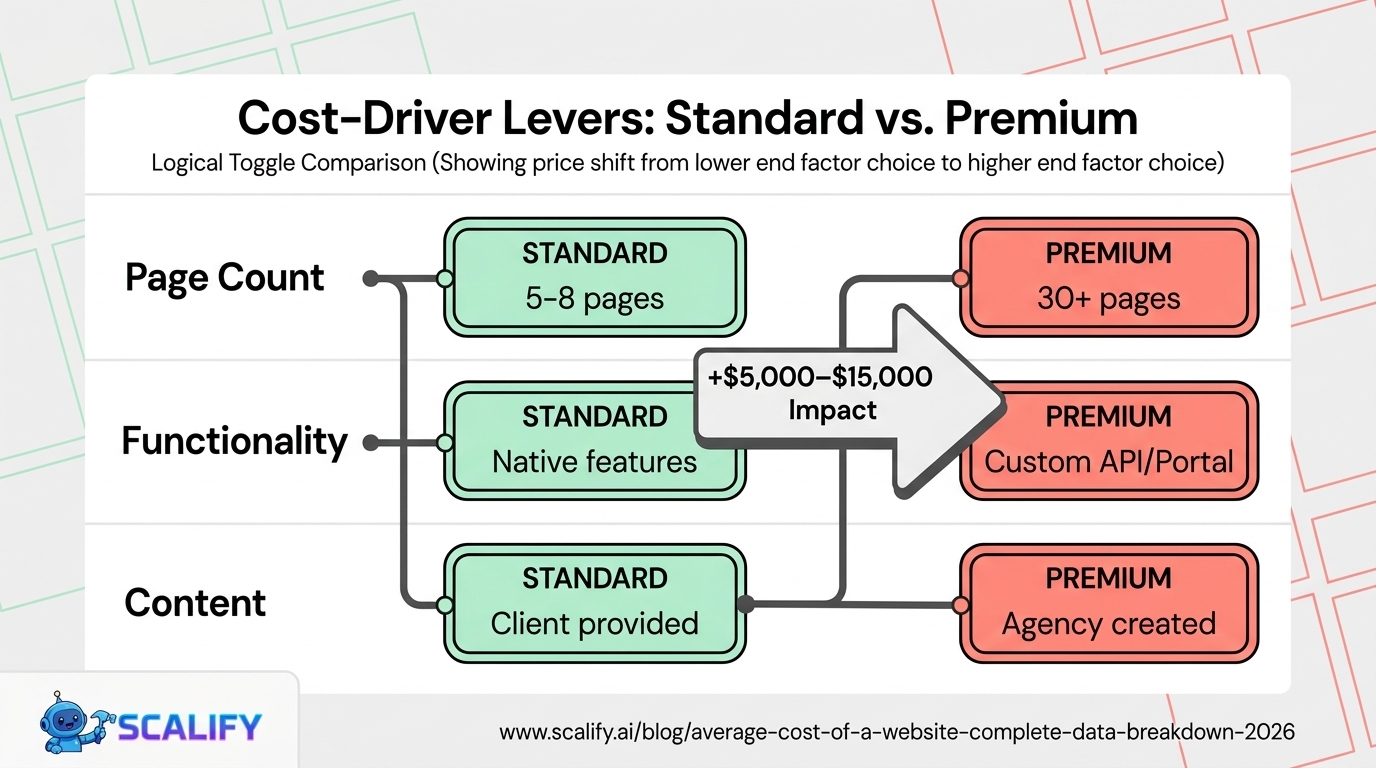
Within any category, cost varies based on specific factors that each add to or reduce the scope of work:
FactorLower Cost EndHigher Cost EndApproximate ImpactPage count5–8 pages30+ pages$300–$500 per additional pageCustom functionalityPlatform-native features onlyCustom booking, portal, calculator$2,000–$15,000 per custom featureThird-party integrationsNone or basic formsCRM, payment, custom API$500–$5,000 per integrationContent provisionClient provides all contentAgency writes all copy, sources photos$2,000–$8,000 for full content creationDesign complexityClean, modern, relatively standardAward-winning, highly unique2–3x design cost for premiumTimelineStandard 6–12 week timelineRush delivery (2–4 weeks)20–50% rush premiumProvider typeFreelancerFull-service agencyAgencies typically 40–80% higher rate
Average Cost by Provider Type
ProviderTypical Business WebsiteProsConsDIY (Squarespace, Wix)$300–$900/yearLowest cost; full controlTime intensive; quality ceilingFreelance designer (domestic)$2,000–$10,000Personal attention; cost-effectiveRisk of single-point failure; less processFreelance designer (international)$500–$3,000Very cost-effectiveCommunication barriers; QA challengesSpecialized web design agency (SMB)$5,000–$20,000Process; accountability; broader capabilityHigher cost; less personalFull-service digital agency$20,000–$80,000+Full-service; enterprise capabilitySignificant cost; may over-engineerTemplate-first service (e.g. Scalify)$2,500–$6,000Fast (10 days); professional; predictableLess customization than fully custom
What You Actually Get at Each Price Point
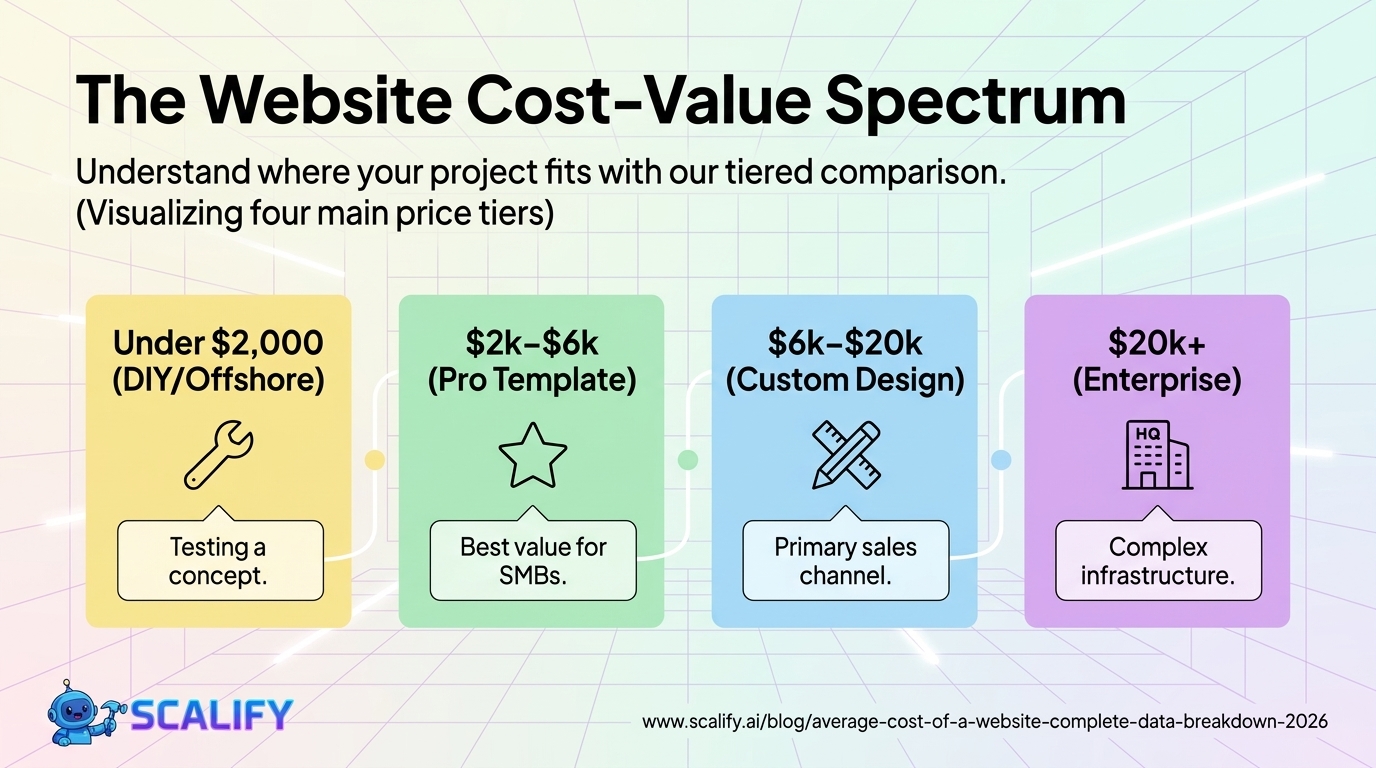
Under $2,000: A DIY builder site, a freelance template customization, or an offshore build. This range is appropriate for testing a business concept, a personal portfolio, or a very simple service business with minimal requirements. Quality ceiling is real — the design will likely look like a template, and ongoing support is minimal to nonexistent.
$2,000–$6,000: A professionally designed template-based site from an experienced designer or specialized agency. This range provides professional quality, a proper CMS, and appropriate functionality for most SMB requirements. This is the best-value range for most businesses that need a professional website but don't have unique functional requirements.
$6,000–$20,000: Custom-designed website with bespoke visual design, a comprehensive CMS, and custom functionality for specific business needs. Appropriate for businesses where the website is a primary sales channel, where brand differentiation matters commercially, or where specific features (booking systems, complex e-commerce) require custom development.
$20,000+: Full custom development with unique functionality, enterprise-grade architecture, or complex integrations. Justified for businesses whose website is a primary product (SaaS, marketplace, platform) or for enterprises where brand and technical capability both demand the investment.
Red Flags in Website Quotes
Warning signs that a quote represents poor value or hidden risks:
Getting an Accurate Quote
The most common reason for inaccurate website quotes — on both sides — is an incomplete brief. Developers can't quote accurately without knowing what they're building. Before requesting quotes, document: the complete list of required pages, all functionality needed, CMS requirements, timeline, and any specific integrations. This brief enables accurate comparison between quotes from different providers, prevents scope-creep-driven cost overruns, and signals to quality developers that you're a serious client worth investing time in.
The Bottom Line
Professional business websites cost $3,000–$20,000 for most SMBs, with the best-value range at $3,000–$8,000 for professionally built, platform-based websites on Webflow, WordPress, or Squarespace. The factors that drive cost to the high end — custom functionality, large page counts, content creation, and premium visual design — each have specific business justifications and should be evaluated against their ROI. Anything under $2,000 for a professional business website involves either significant quality compromises or offshore work with quality and communication risks. Any quote over $20,000 for a standard business website deserves detailed justification of what's driving the cost above the market norm for the deliverable described.
At Scalify, we build professional websites in 10 business days starting at transparent, flat pricing — eliminating the uncertainty of hourly quotes and the risk of scope-driven overruns.
Top 5 Sources
Platform Costs Included in Build Quotes
One of the most frequent sources of confusion in website cost comparisons is whether platform costs are included in build quotes. A Webflow website quoted at $5,000 typically includes only the design and development time — the Webflow hosting plan ($14–$42/month) is separate. A Shopify store quoted at $8,000 includes design and setup, but Shopify's monthly fees ($29–$299/month) continue indefinitely. A self-hosted WordPress site may include server setup but not the ongoing hosting cost ($15–$100/month). Always ask explicitly: "Is hosting included in this quote, and if not, what will I pay monthly after launch?" The answer significantly affects the true cost comparison between options with different build prices.
Domain Name Cost: What to Expect
Domain registration is typically $10–$20/year for common .com domains through registrars like Namecheap, Google Domains, or GoDaddy. Premium TLDs (.io, .ai, .co, .app) cost $30–$80/year. New TLDs (.agency, .studio, .design) cost $20–$50/year. If the .com you want is already registered and you need to acquire it from the current owner, the cost varies from free (if the owner isn't using it and is willing to transfer for minimal cost) to $1,000–$50,000+ for highly desirable business domains. Domain acquisition cost should be included in website budget planning for businesses that don't already own their target domain.
Photography and Visual Content Costs
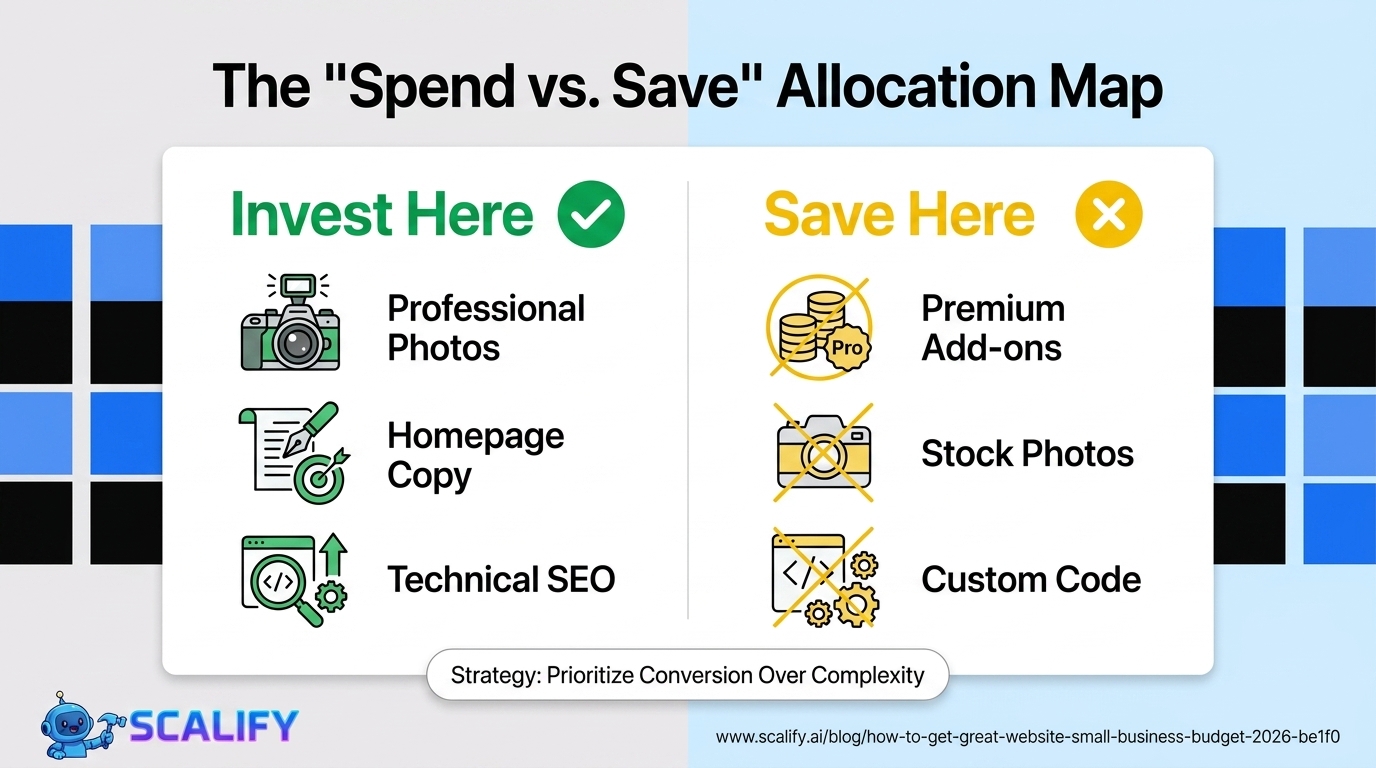
Professional photography is one of the most frequently omitted items in website budgets — discovered post-launch when placeholder images need to be replaced with actual business photography. Professional website photography costs: $500–$2,500 for a half-day shoot producing 20–40 usable images for a service business or restaurant; $1,500–$5,000 for a full-day product photography session for e-commerce; $2,000–$8,000 for architectural photography for real estate or corporate sites. Stock photography is a lower-cost alternative ($0 from Unsplash/Pexels for general imagery; $15–$50 per image from Getty, Shutterstock for commercial licensing) but lacks the authenticity of real business photography, which consistently produces better conversion rates for service and hospitality businesses.
Logo and Brand Identity: The Pre-Website Investment
A professional website requires a professional logo and brand identity. If these don't already exist, they're a necessary pre-website investment: professional logo design costs $500–$3,000 from a skilled designer, and a complete brand identity (logo, color palette, typography, usage guidelines) costs $2,000–$8,000. These costs are separate from website build costs and often discovered during the website project when the designer needs brand assets that don't exist yet. Budget for brand identity separately if it's not already established — it's not a cost the website developer typically includes in their quote.
The Right Way to Compare Website Quotes
Comparing website quotes from different providers without a standardized scope is one of the most common and costly procurement mistakes businesses make. A $4,000 quote that includes professional copywriting, stock photography licensing, 12 pages, and CMS training is not comparable to a $4,000 quote for 5 pages with placeholder content and no training. To compare quotes accurately: provide all developers with the same detailed brief specifying pages, functionality, platform preference, and deliverables, then compare quotes against that identical scope. Separately identify what each quote includes and excludes — ask every developer to itemize hosting, maintenance plan, and content provision in their quote alongside the build cost. This produces genuine apples-to-apples comparison rather than a lowest-bid selection that produces scope surprises mid-project.
International vs. Domestic Developer Costs
International web development costs are 60–80% lower than domestic US rates for equivalent capability in some markets — specifically India, Eastern Europe (Ukraine, Romania, Poland), and Latin America (Colombia, Argentina, Mexico). A website that costs $8,000 with a US-based developer may be completable for $2,000–$3,000 with a developer in these markets. The trade-offs: communication complexity (timezone differences, language barriers for nuanced scope discussions), quality variability (individual developer quality varies enormously; portfolio review and reference checking are essential), and lack of local accountability if problems arise post-delivery. For straightforward template-based builds from experienced offshore developers with strong portfolios and client references, international hiring can produce good outcomes at significantly lower cost. For complex custom builds requiring intensive client collaboration, the communication overhead typically makes domestic development more cost-effective when all time is accounted for.
Website Maintenance Costs: The Annual Budget
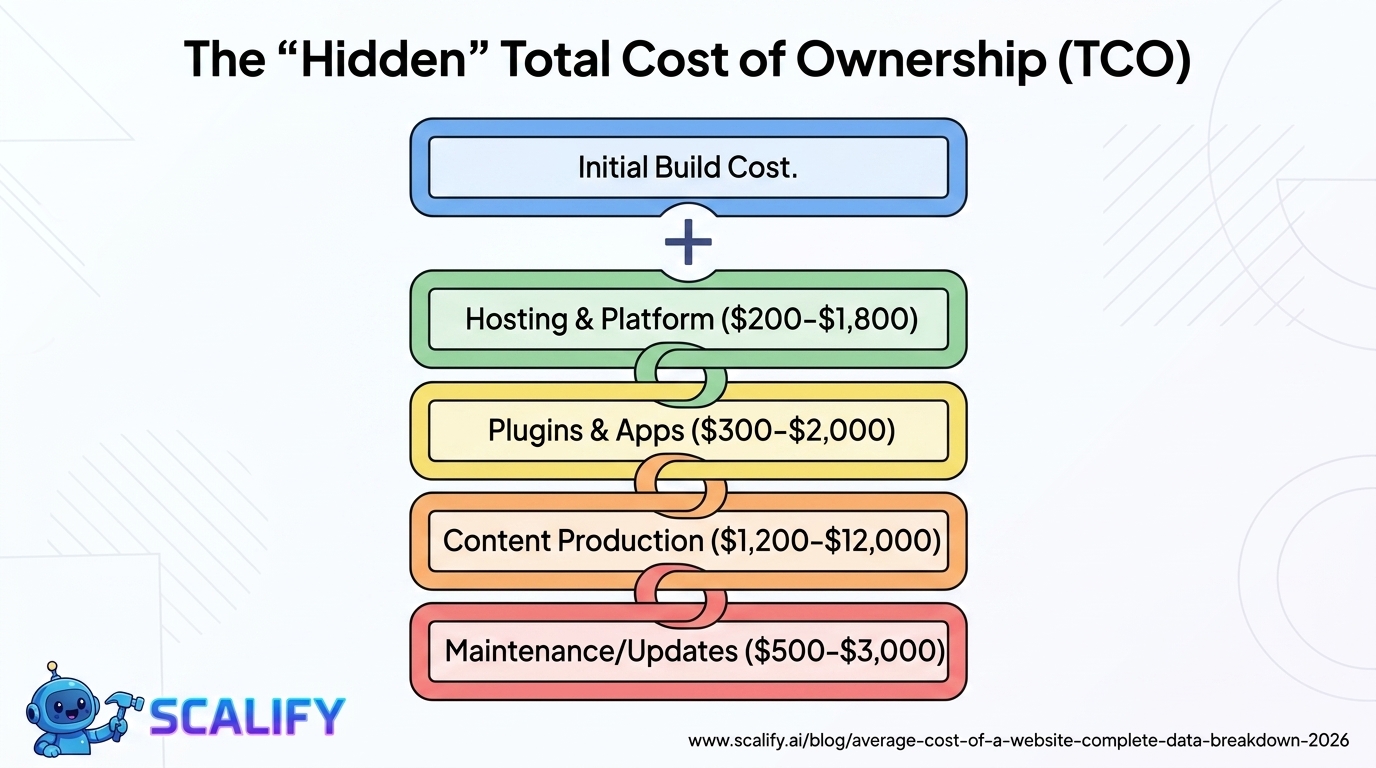
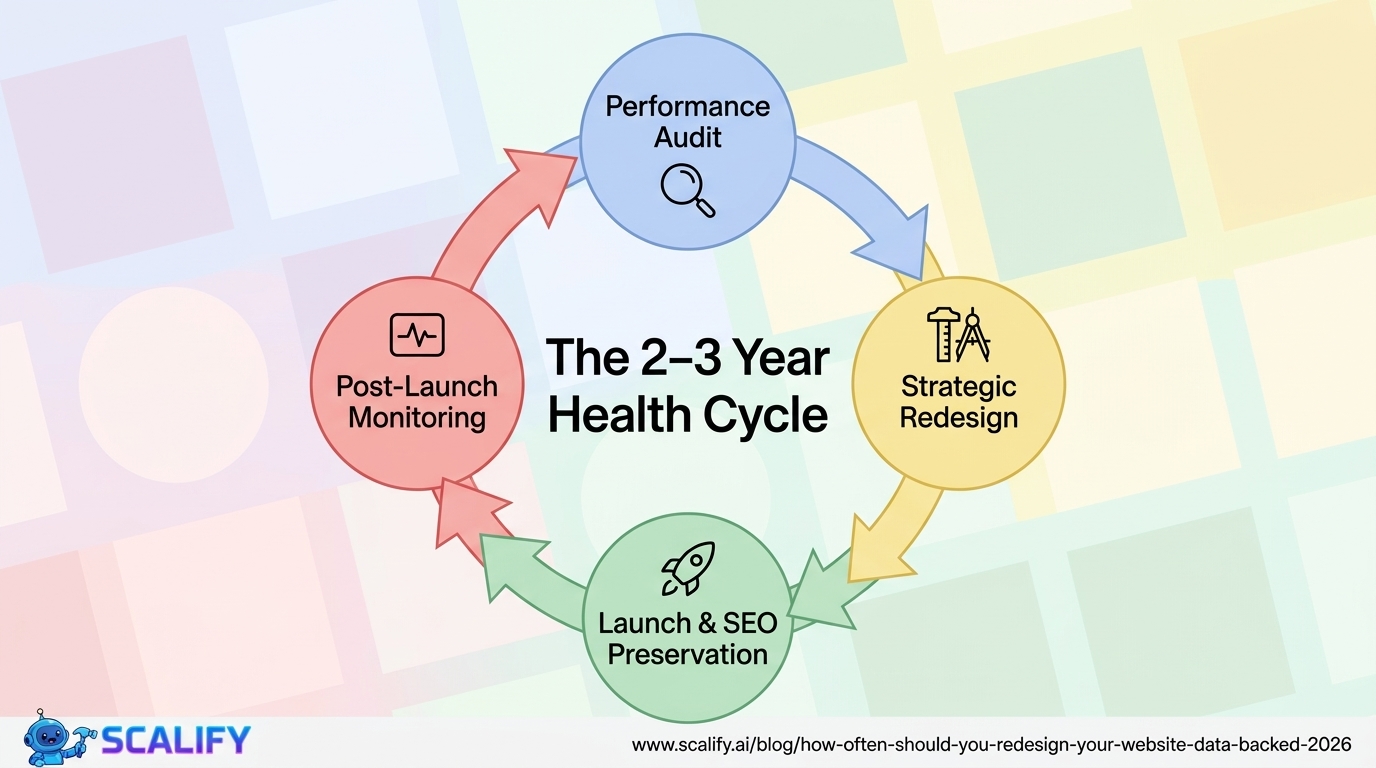
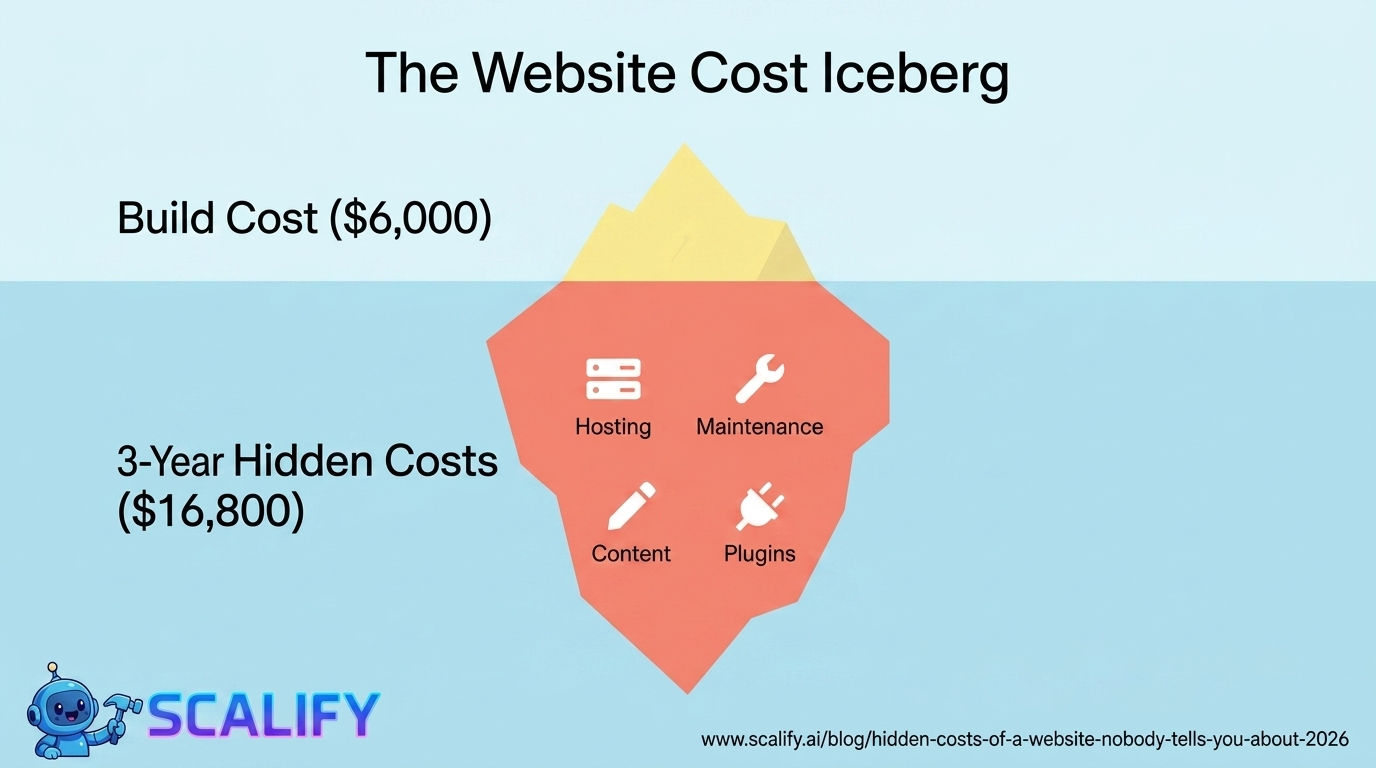
Once a website is live, ongoing costs are unavoidable. Building a realistic annual maintenance budget prevents the accumulated technical debt that comes from deferred updates and ignored performance issues. Annual website maintenance budget framework: hosting and platform fees ($200–$1,800/year depending on platform and scale), plugin/app subscriptions ($300–$2,000/year for functional requirements), developer time for updates and fixes ($500–$3,000/year for minor ongoing work), content production ($1,200–$12,000/year for active SEO content programs), and a 3-year redesign reserve ($1,500–$7,000 amortized annually). Total annual maintenance budget for a professional business website: $4,000–$26,000/year depending on scale, content investment, and technical complexity. This number, added to the amortized build cost, gives the true annual cost of website ownership — the number that should inform ROI calculations, not the build cost alone.
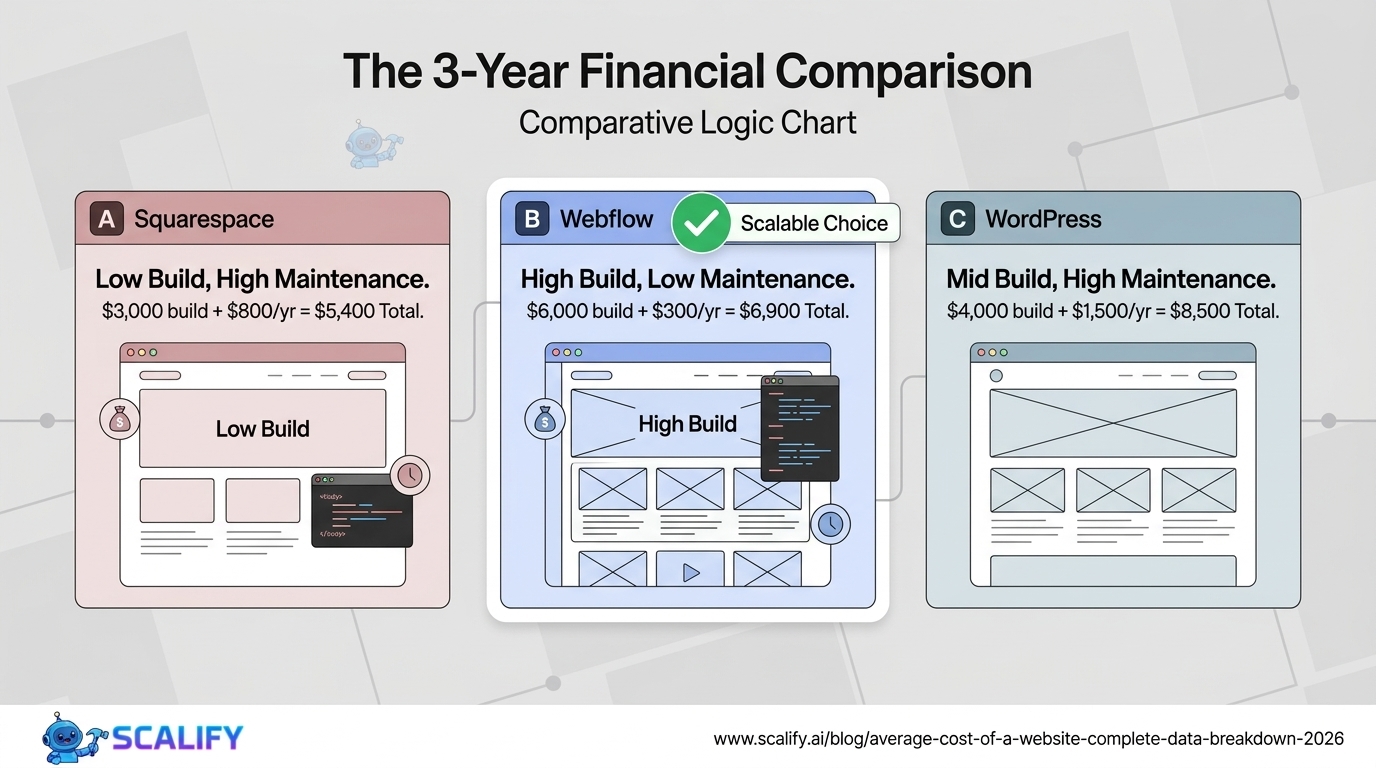
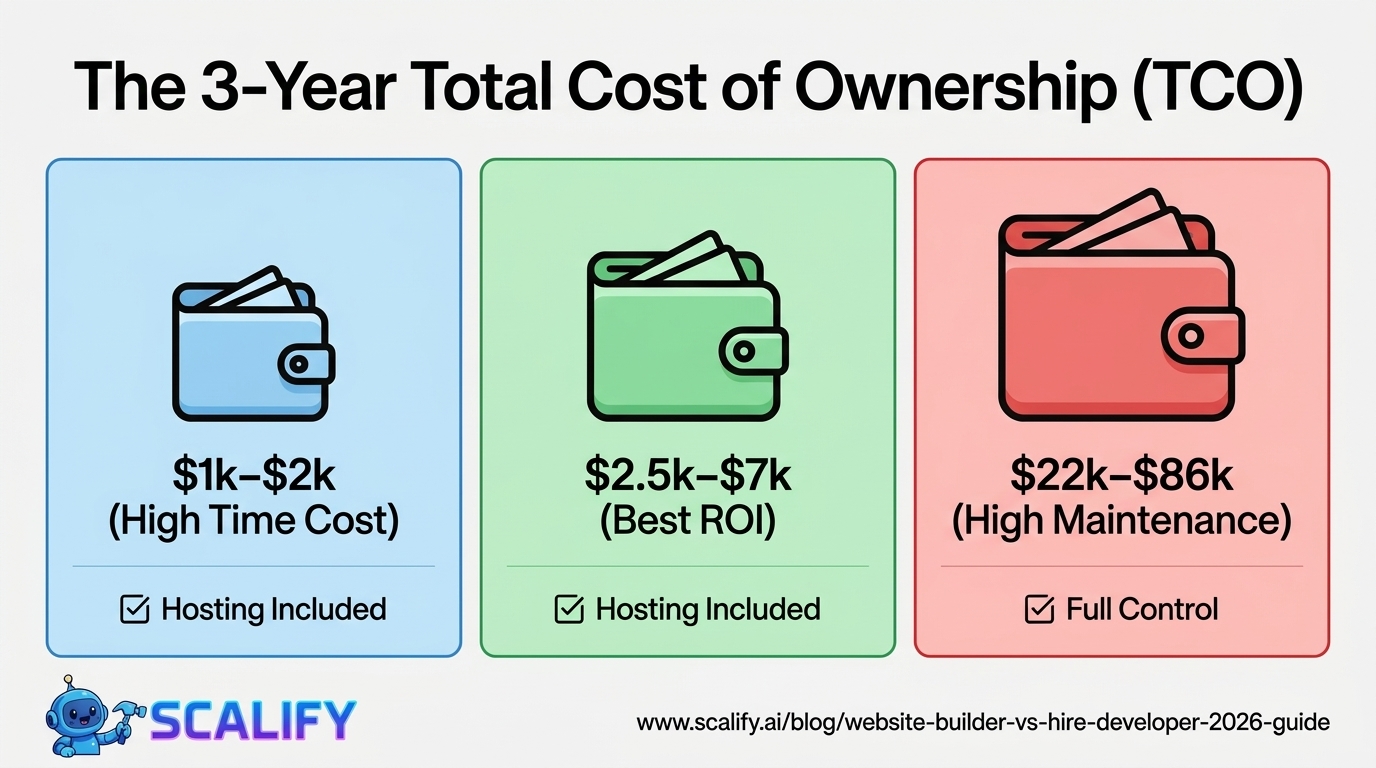
Understanding total cost of ownership — initial build plus 3 years of maintenance — is the most financially rational basis for website investment decisions. A $3,000 Squarespace site with $800/year in ongoing costs has a 3-year total cost of $5,400. A $6,000 Webflow site with $300/year in ongoing costs has a 3-year total of $6,900. A $4,000 WordPress site with $1,500/year in ongoing costs has a 3-year total of $8,500. The lowest-cost-to-build option is not always the lowest-cost-to-own option — and the right choice depends on which combination of initial investment and ongoing management overhead best fits the business's resources and priorities.
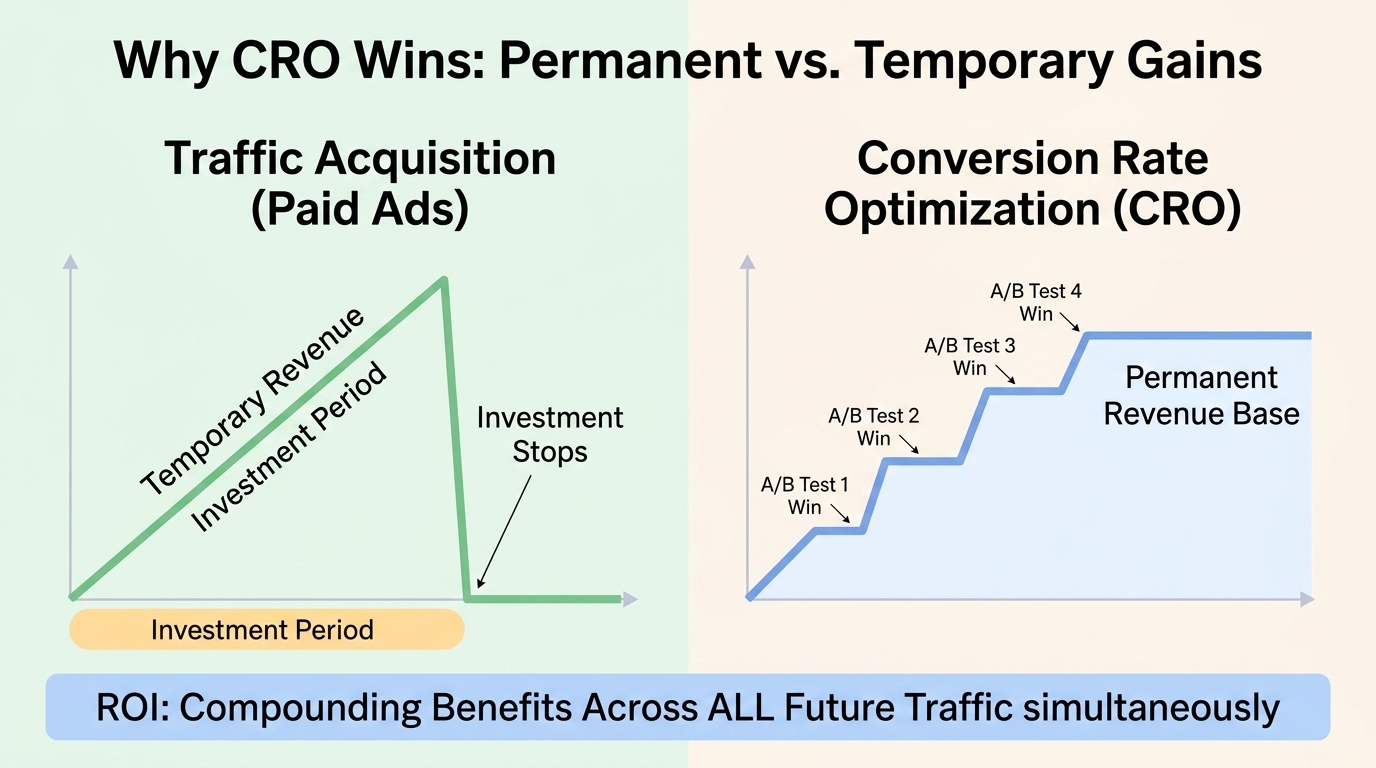
The most financially rational approach to website investment: determine the minimum viable website that will achieve your primary business goal, build it at that level, and invest the savings in traffic and conversion optimization that generates measurable ROI. Then expand the website's scope and cost as the business validates which features and investments actually drive revenue. This incremental approach beats both under-investing in a website that can't perform and over-engineering a website that requires years to justify its cost through the business outcomes it generates.
Website cost transparency benefits everyone — businesses make better purchasing decisions, developers compete on value rather than price, and the industry produces better outcomes overall. Use the ranges in this guide as anchors for evaluating quotes, ask every developer to itemize their deliverables completely, and budget for the full 3-year cost picture rather than just the initial build. The website investment that fits your budget AND your objectives is the right one — not the cheapest available or the most impressive spec sheet.


.jpeg)
.jpeg)




78 SW 7th St, Miami, FL 33130