

ROI of a Professional Website: Is It Worth the Investment? (2026)
By Josh Ternyak

April 18, 2026
Professional websites generate 34% more revenue than DIY sites; $1 in UX design returns $100. This comprehensive guide covers the ROI calculation framework, revenue attribution by channel, break-even analysis by business type, what determines website ROI (SEO structure, conversion optimization, content strategy, performance), compounding organic search ROI, common failure modes, ROI by business size, measurement infrastructure setup, and long-term compounding vs short-term perspective.
ROI of a Professional Website: Is It Worth the Investment?
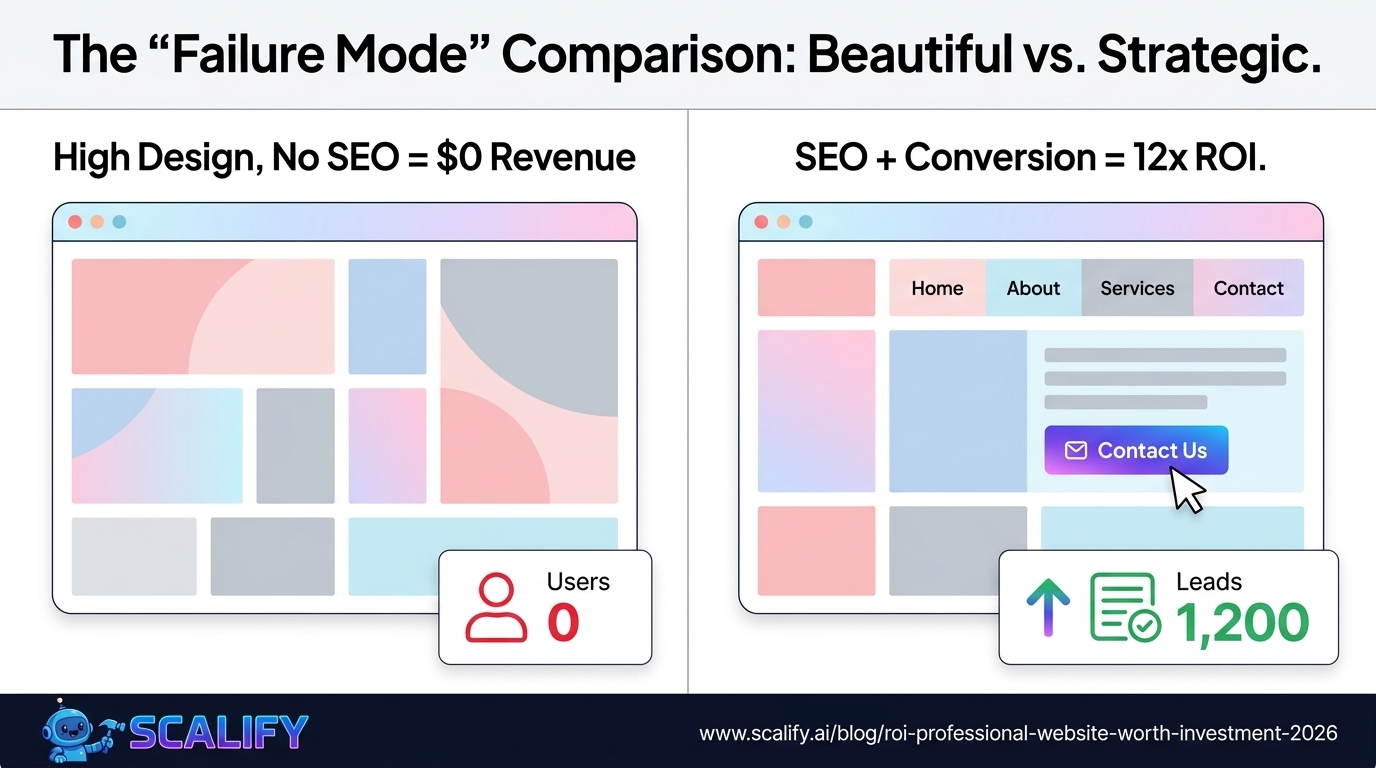
The ROI of a professional website is one of the most frequently asked — and most frequently misunderstood — questions in digital marketing. A $15,000 website that generates $180,000 in annual revenue through organic search, direct bookings, or lead capture has a 12x ROI. A $5,000 website that generates no additional business because it was built without SEO structure, conversion optimization, or a clear value proposition has an ROI of negative $5,000. The return on website investment is not determined by how much you spend — it's determined by how strategically the investment is made and how effectively the resulting website serves its commercial purpose.
Key Website ROI Statistics
The ROI Calculation: A Framework
Website ROI = (Revenue Generated by Website - Total Website Investment) / Total Website Investment × 100
To calculate this, you need to know: how much revenue is attributable to the website, and what the total investment (build + ongoing maintenance + content + marketing) is. Most businesses don't track this carefully enough, leading to both overestimates and underestimates of website contribution to revenue. The most accurate measurement requires Google Analytics 4 conversion tracking connected to actual revenue — tracking which website visitors ultimately become customers and what they spend.
Revenue Attribution by Channel
Revenue TypeHow to CalculateAttribution ApproachDirect online sales (e-commerce)Transactions × AOV via websiteDirect GA4 e-commerce trackingLeads converted to salesWebsite leads × conversion rate × average deal valueCRM tracking from website lead to closed dealOnline bookings/appointmentsBookings × average booking valueBooking system integration with analyticsOrganic search traffic valueOrganic sessions × CVR × average order valueGA4 channel attributionReduced customer service costSupport tickets deflected by website FAQSupport ticket reduction after content additions

The Break-Even Analysis: When Does a Website Pay for Itself?
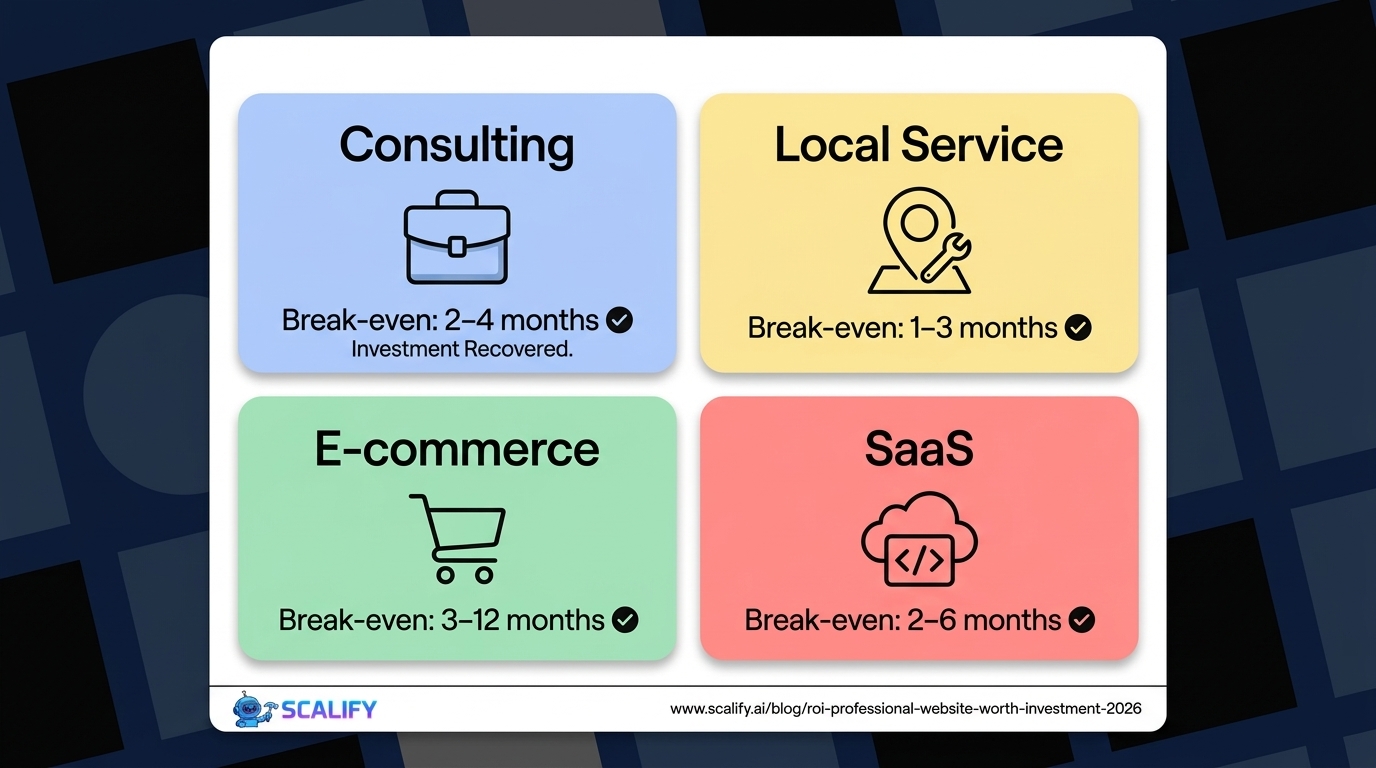
Website TypeTypical InvestmentRealistic Monthly Revenue AttributionBreak-Even TimelineProfessional service firm (consulting)$8,000 – $20,000$3,000 – $8,000/month (1 new client)2–4 monthsE-commerce store$5,000 – $25,000Variable — depends on traffic and AOV3–12 monthsLocal service business$3,000 – $8,000$2,000 – $5,000/month (5–10 new customers)1–3 monthsSaaS / software company$15,000 – $50,000$5,000 – $25,000/month (5–10 new subscriptions)2–6 monthsRestaurant / hospitality$3,000 – $8,000$1,000 – $3,000/month (20–40 bookings)2–6 months
What Determines Website ROI
Not all websites generate equivalent ROI. The factors that determine whether a website investment compounds in value or sits dormant:
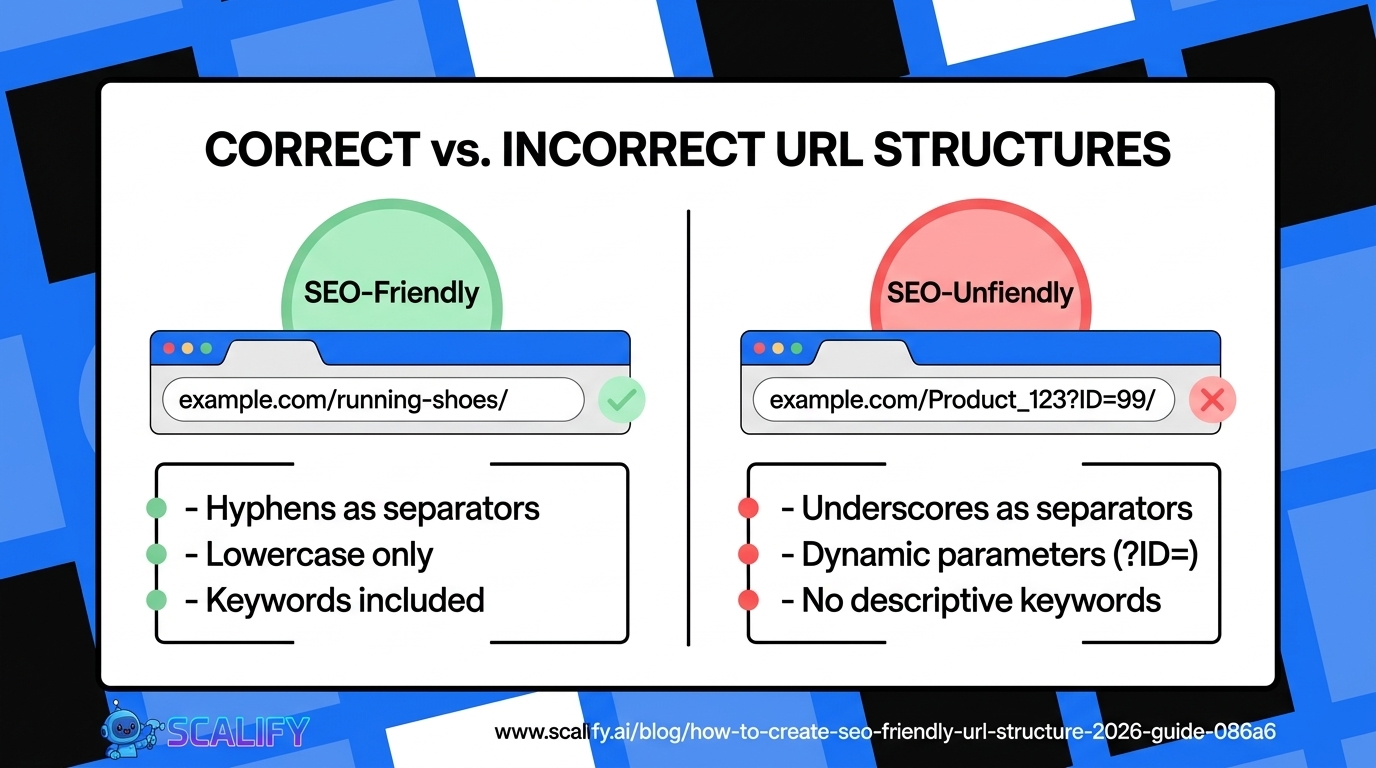
SEO structure from day one. A website built without SEO fundamentals — proper URL structure, meta tags, canonical tags, schema markup, Core Web Vitals compliance — starts from a significant ranking disadvantage that is expensive to fix retroactively. Websites with proper SEO architecture begin accumulating organic traffic and ranking equity from launch; those without can remain invisible in search for years until technical issues are resolved.
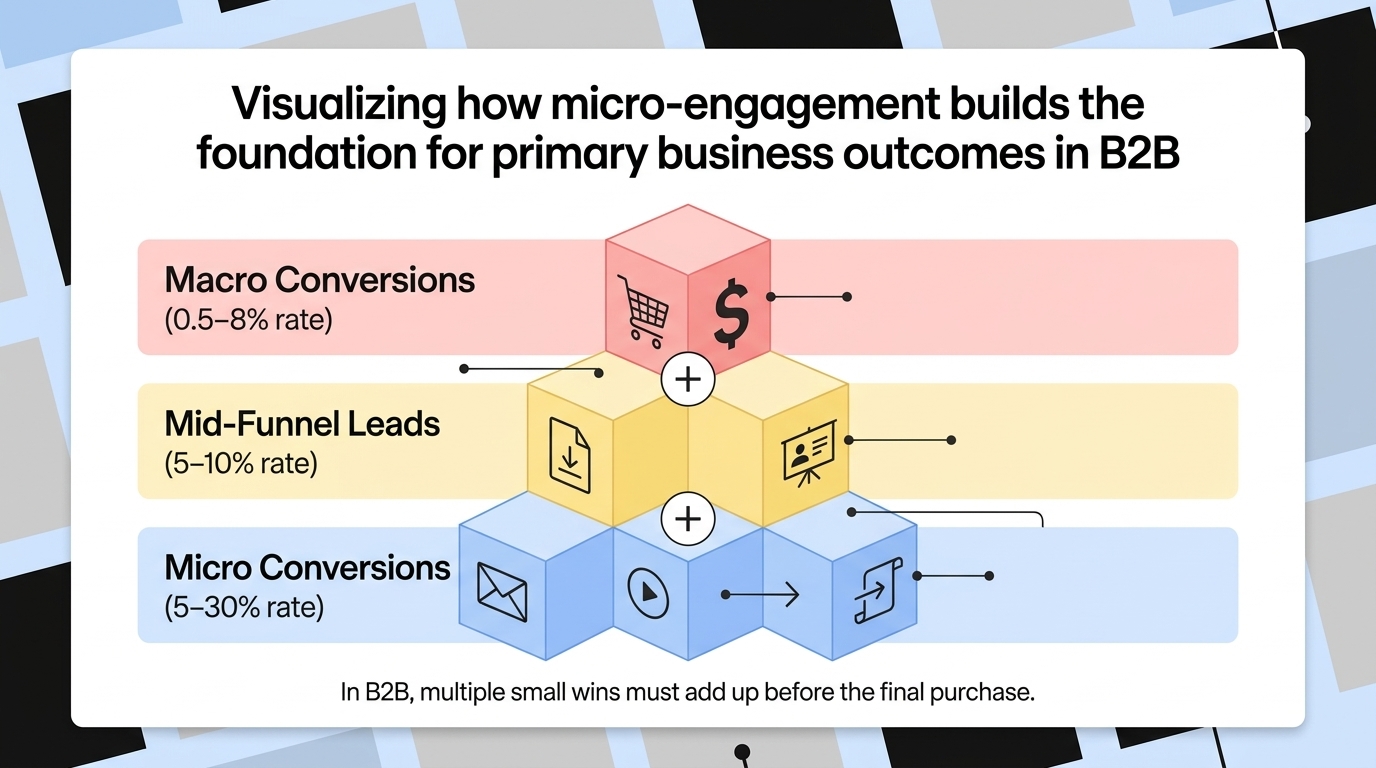
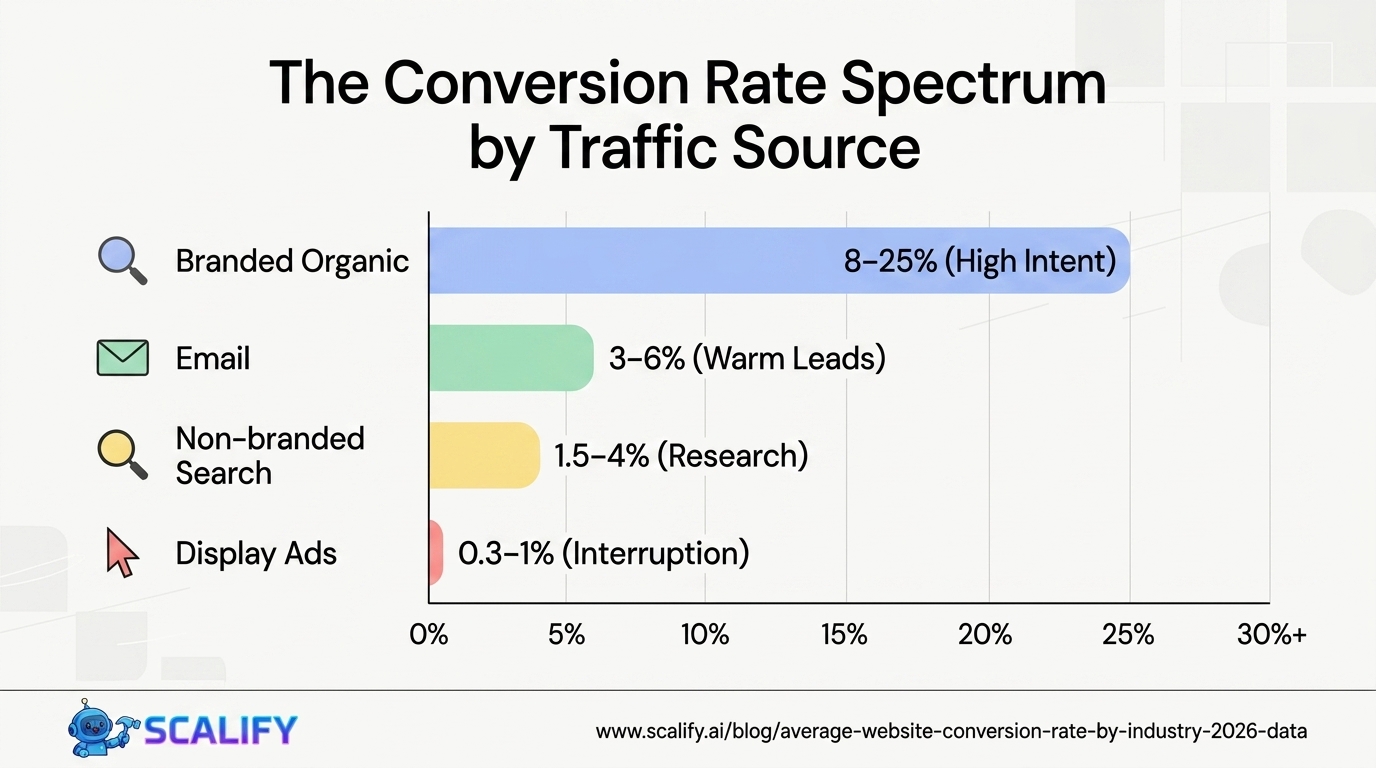
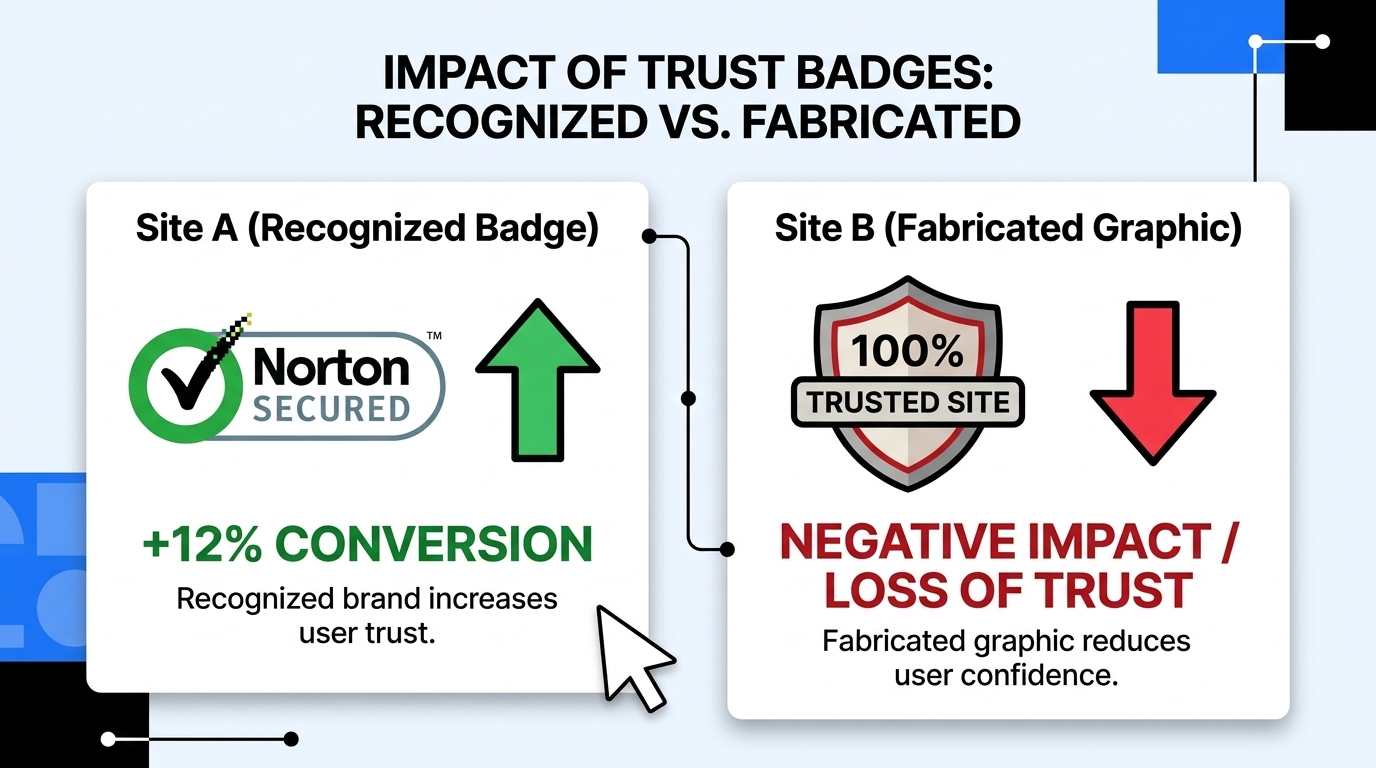
Conversion optimization. Traffic without conversion is just cost. A website with 10,000 monthly visitors and a 0.5% conversion rate generates 50 leads/month. The same traffic with a 2.5% conversion rate (achievable through proper CTA placement, trust signals, and value proposition clarity) generates 250 leads/month — five times the revenue from the same investment in traffic acquisition.
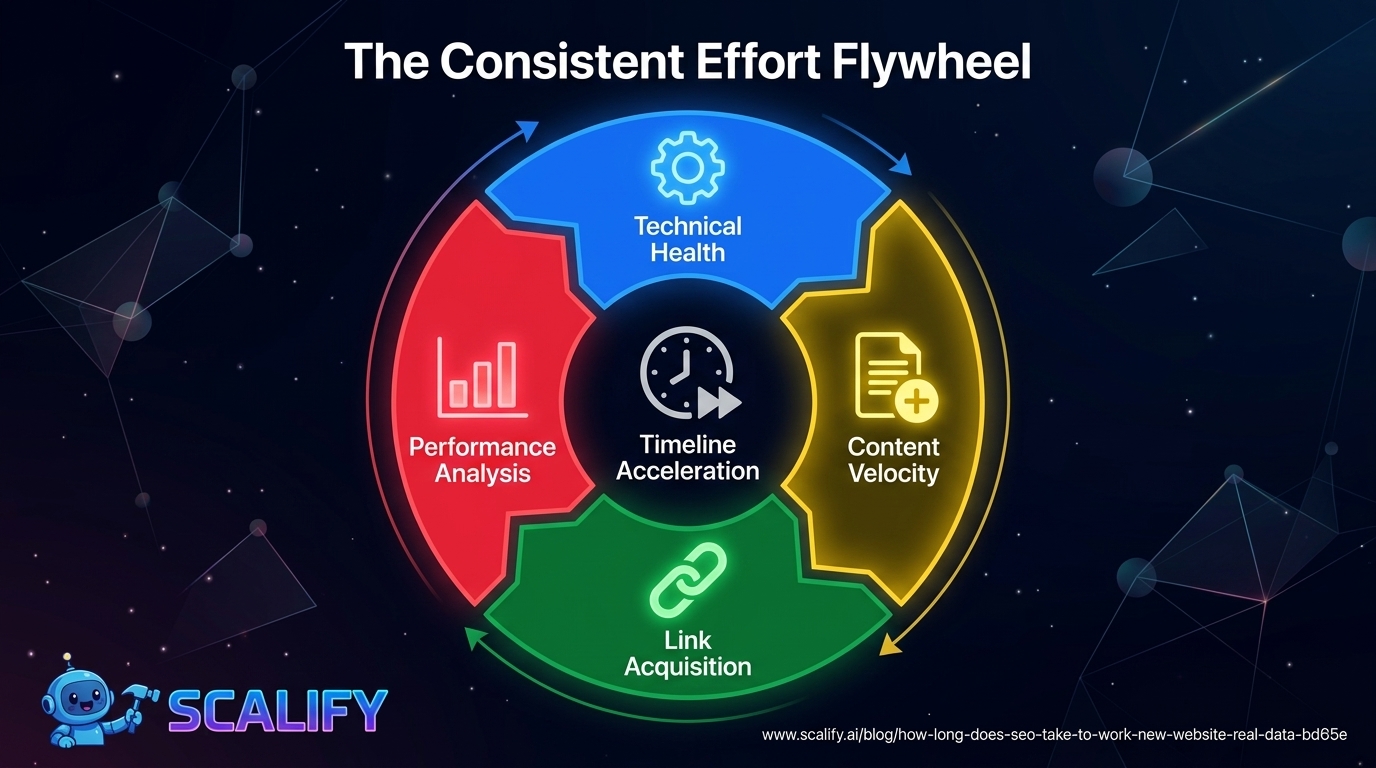
Content strategy. Websites with ongoing content marketing — publishing comprehensive articles targeting specific search queries their audience uses — compound their organic traffic over time. Each ranking article generates traffic for months or years. A website that publishes no content after launch peaks in traffic at launch and declines as competitors build content libraries. The long-term ROI of website investments that include content strategy consistently outperforms those that don't.
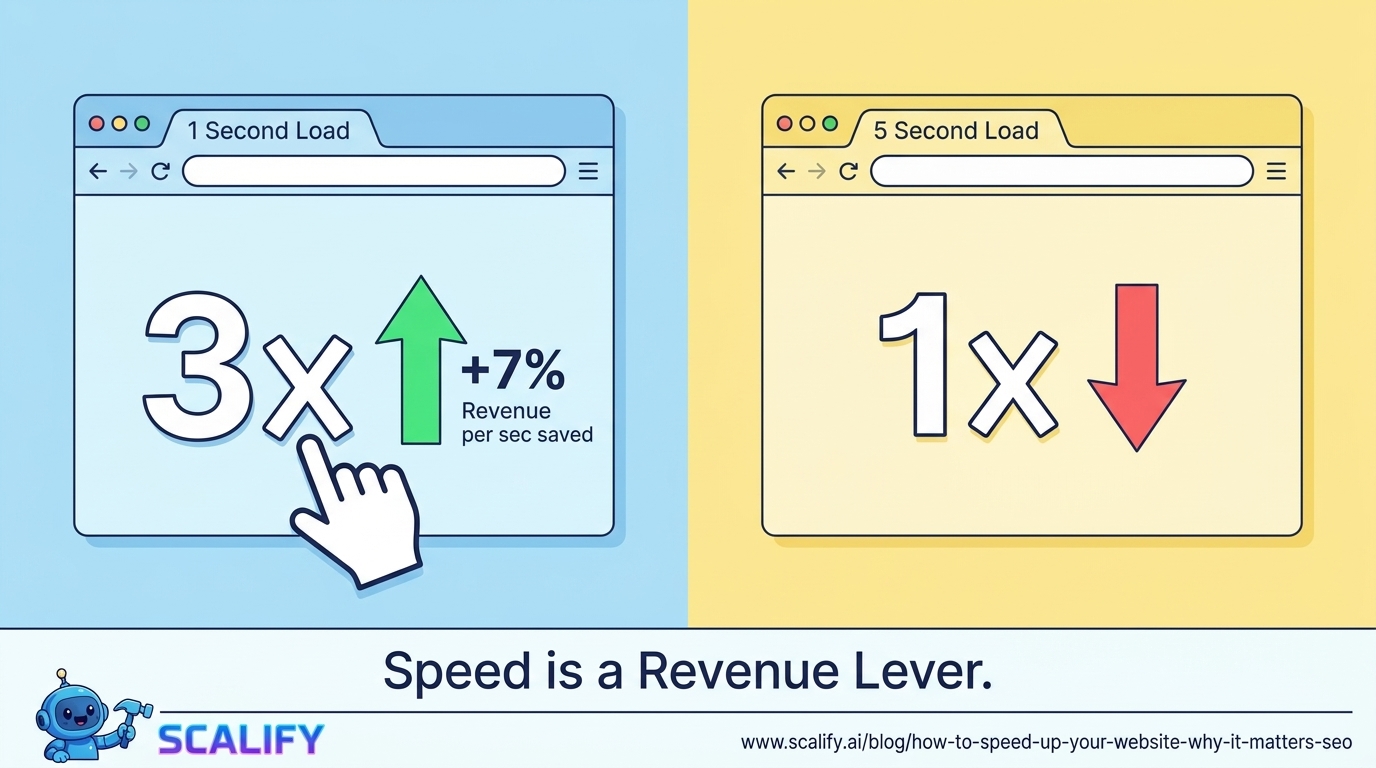
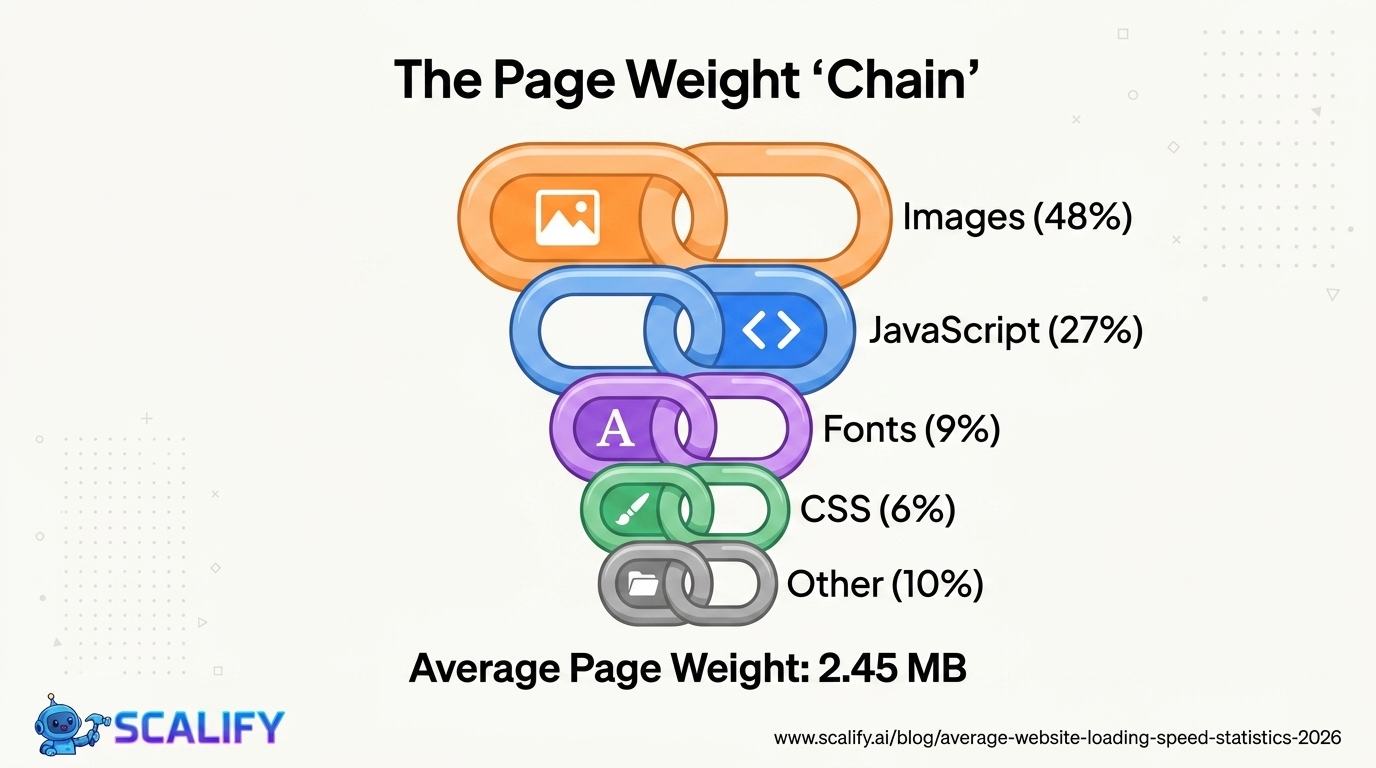
Technical performance. Page speed directly affects both conversion rate (7% per second of delay) and SEO rankings (Core Web Vitals are ranking factors). A slow website loses conversion value on every visit — multiplied across all traffic sources. The ROI of a fast website vs. a slow one with equivalent content and traffic is meaningfully different over 3 years of operation.
The Compounding ROI of Organic Search
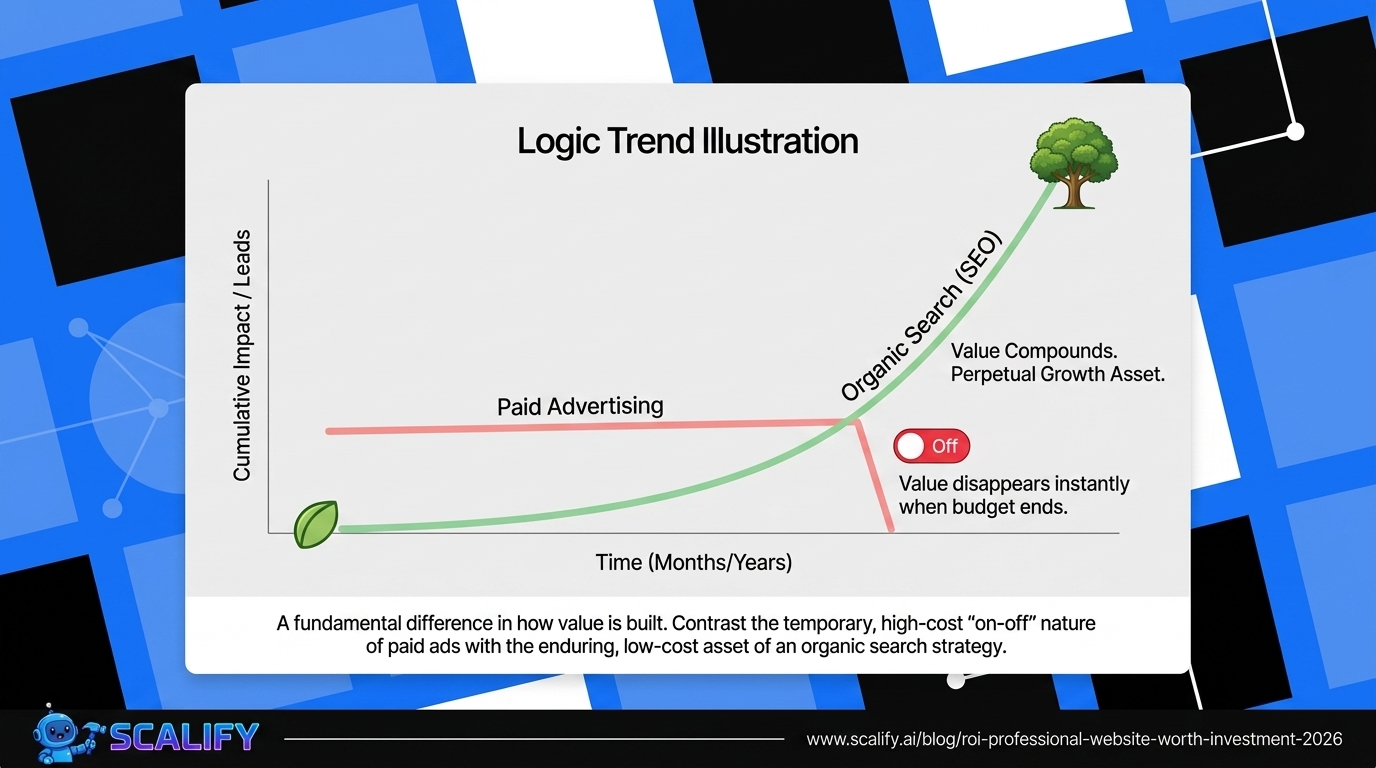
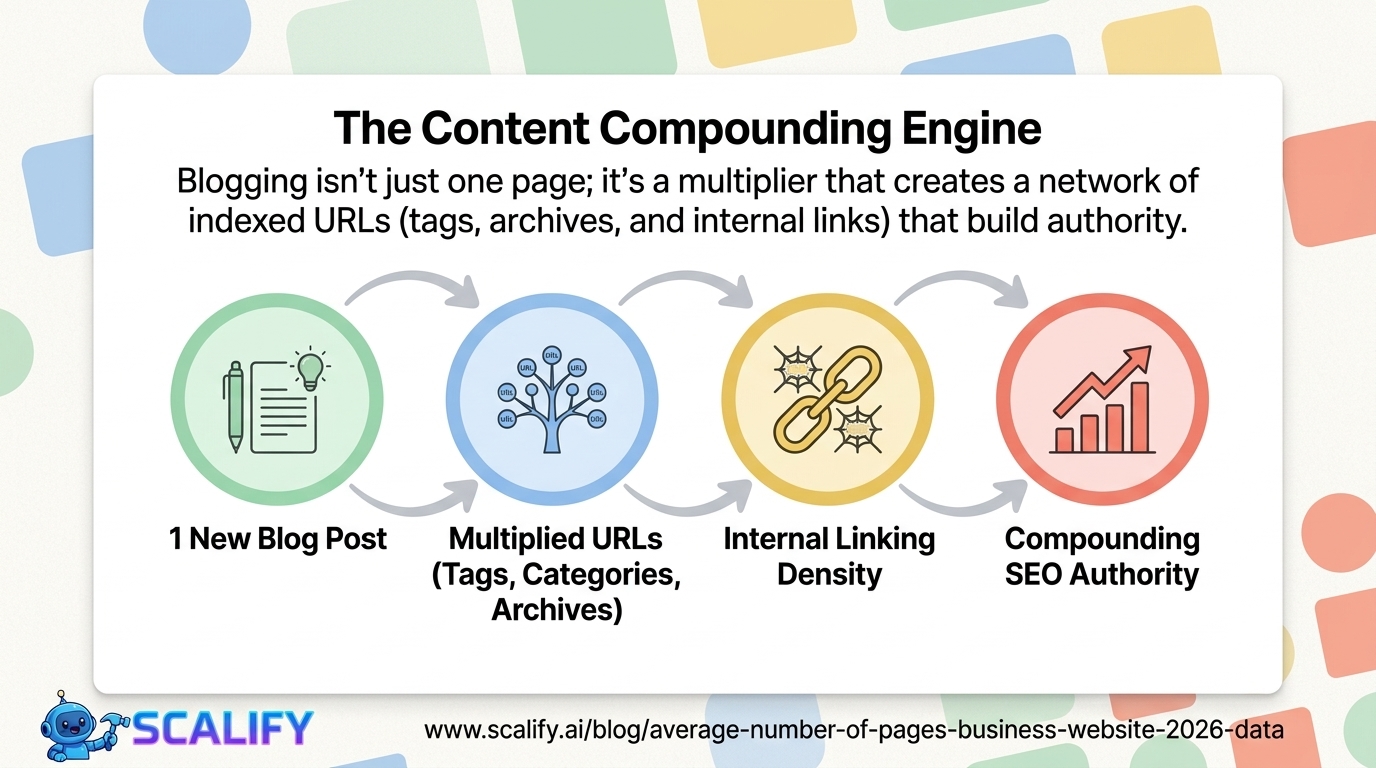
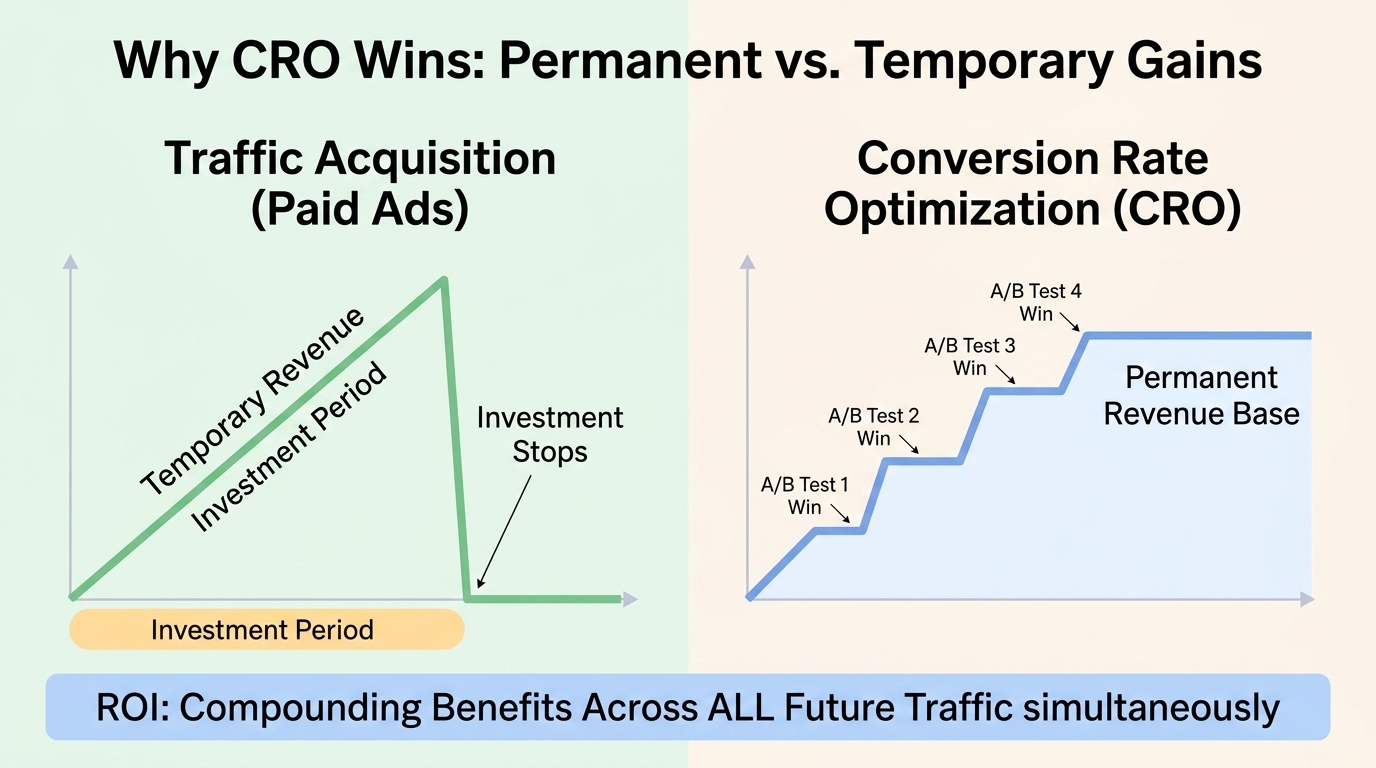
The most compelling ROI argument for professional websites is the compounding nature of organic search investment. Unlike paid advertising that stops generating traffic the moment budget is cut, organic traffic earned through SEO and content investment continues generating value indefinitely with maintenance investment only. A website that achieves 50,000 monthly organic visits through 2 years of consistent content and SEO investment continues generating those visits and the associated revenue without ongoing ad spend — indefinitely. The cost-per-acquisition through organic search drops continuously as the denominator (total organic revenue) grows while the numerator (investment) grows more slowly. At scale, businesses with established organic search presence have customer acquisition costs 61% lower than outbound channels — a permanent structural margin advantage that compounds over years.
When Website ROI Is Low: The Common Failure Modes
Not all website investments produce strong ROI. The failure modes that produce negative or near-zero return:
Beautiful website, no traffic. A visually excellent website that wasn't built for SEO and receives no paid traffic generates zero revenue regardless of design quality. Conversion optimization is meaningless without visitors to convert.
Traffic, no conversion. A high-traffic website with unclear value proposition, weak CTAs, missing social proof, or poor mobile experience generates traffic costs without corresponding revenue. Investment in conversion rate optimization typically produces the highest ROI of any website improvement at this stage.
Wrong audience. Traffic from fundamentally mismatched queries — visitors who found the site but are not actually potential customers — produces traffic metrics without business value. A home services company ranking for "DIY how-to" queries generates traffic but few leads. Traffic quality must match the offer for any revenue to result.
The Bottom Line
Professional website ROI ranges from negative (poorly planned, no traffic, no conversion strategy) to exceptional (well-built, SEO-optimized, conversion-focused sites in commercial markets). The factors that determine outcomes are: whether the website was built for organic search from day one, whether conversion optimization was applied, whether content strategy is ongoing, and whether technical performance meets the threshold that affects both search rankings and conversion rates. For most businesses in competitive markets, a professionally built, SEO-ready, conversion-optimized website produces break-even within 2–6 months and compounds in value for years — making it one of the highest-ROI marketing investments available when the investment is made strategically.
At Scalify, we build professional websites in 10 business days — optimized for organic search, conversion, and technical performance from day one.
Top 5 Sources
Website ROI by Business Size
Small Business ROI (Under 10 Employees)
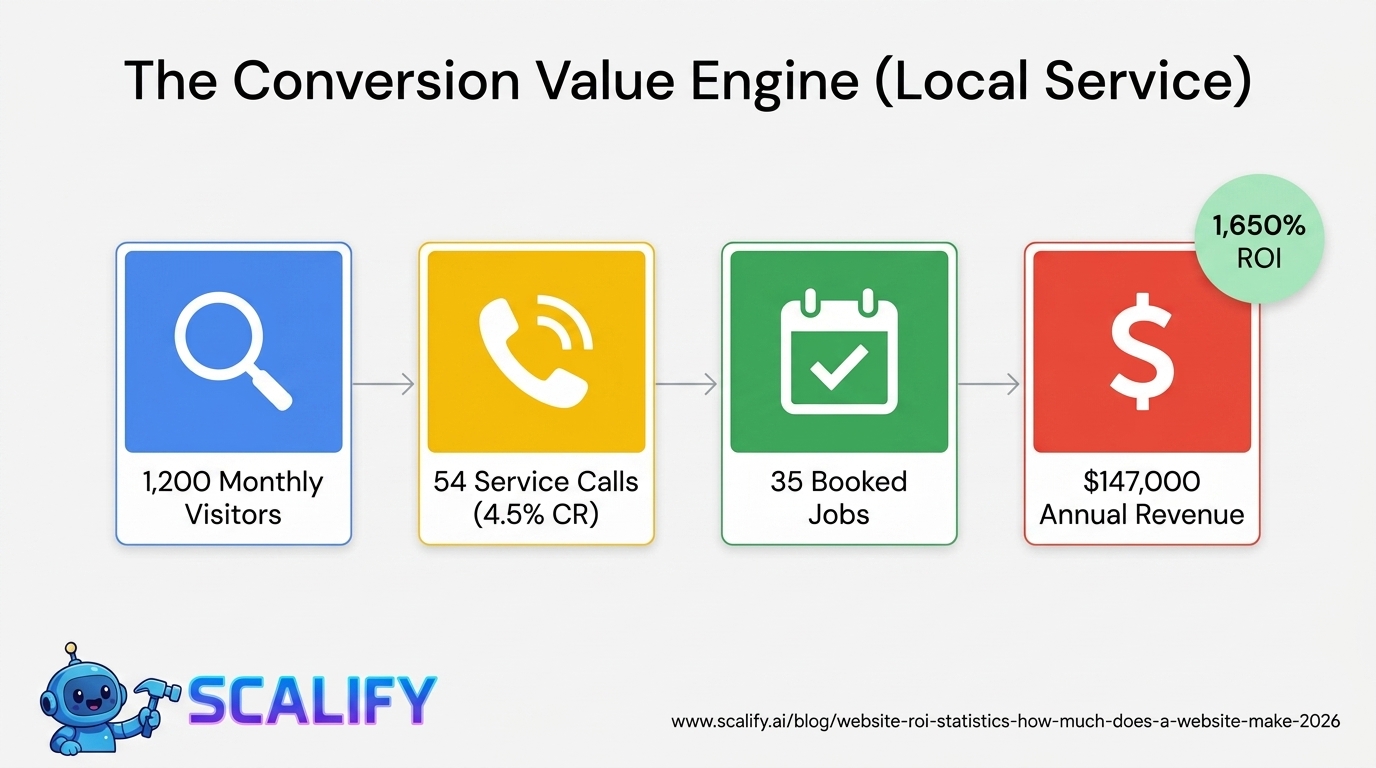
For small businesses, a professional website's ROI is often most visible in replacing less efficient customer acquisition channels. A local contractor spending $2,000/month on Yellow Pages ads and generating 15 leads could instead invest $5,000 in a professional website with local SEO and generate 20–30 organic leads/month within 6–9 months — at near-zero ongoing cost. The break-even is approximately 3 months; the ongoing ROI after that is extraordinary because organic leads cost almost nothing to acquire compared to paid directory advertising.
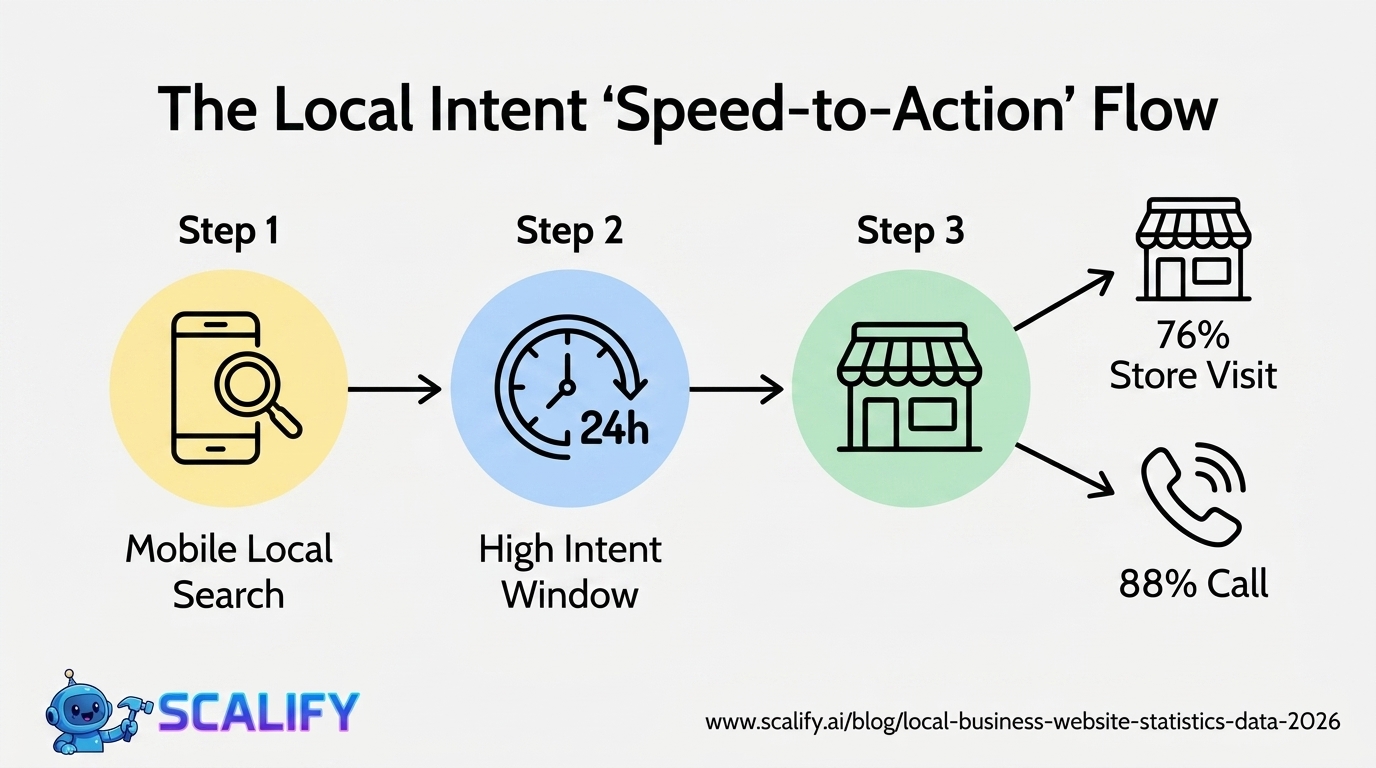
Small business website investments have the clearest ROI when they target specific local search queries with genuine commercial intent — "plumber Miami," "tax accountant Boston," "wedding photographer Chicago" — where ranking on the first page captures customers who are actively ready to hire. The investment in a $4,000–$8,000 professionally built, locally optimized website typically pays back in 2–4 new customers, which for most service businesses happens within the first month of ranking.
Mid-Size Business ROI ($1M–$20M Revenue)
For mid-size businesses, website ROI should be modeled against the current cost of acquiring the same leads through paid channels. If a company is currently spending $80/lead through Google Ads for their target keywords and generating 100 leads/month, that's $8,000/month in paid acquisition. A $15,000 website investment in organic SEO content targeting those same keywords, producing 50 organic leads/month at $0/click within 12–18 months, represents approximately $4,000/month in saved acquisition cost — break-even at month 3 of organic traction, with ongoing compounding savings thereafter.
Enterprise ROI
Enterprise websites with $100K+ development investments are typically evaluated against very different benchmarks: brand value, talent acquisition (a poorly designed site repels candidates), partner and investor perception, and the cost of NOT having web infrastructure that scales with the business. Enterprise website ROI calculations often include: reduction in customer service cost through improved self-service content, lead quality improvement through better qualification messaging, and conversion rate improvement across high-traffic commercial pages where even 0.1% conversion rate improvement compounds to significant revenue at scale.
Measuring Website ROI: Setting Up the Infrastructure
Accurately measuring website ROI requires measurement infrastructure set up at or before launch. The minimum tracking setup for accurate ROI measurement:
Businesses that set up this infrastructure before launch have quantitative ROI data available within 90 days of launch. Businesses that don't track end up estimating ROI from qualitative impressions — and those impressions are reliably less accurate than actual data. The measurement infrastructure investment is typically $50–$200/month for small businesses and pays for itself in the quality of marketing decisions it enables.
Long-Term Compounding vs. Short-Term ROI
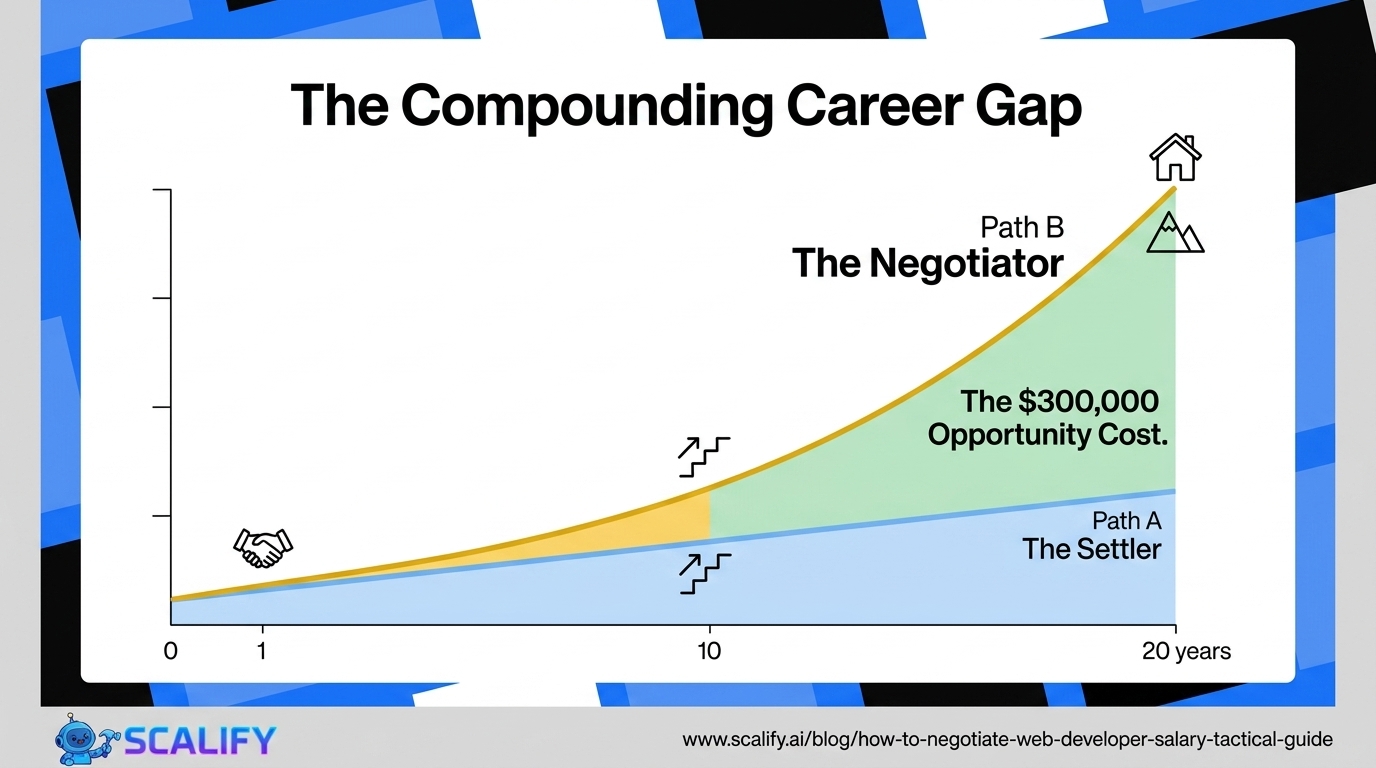
Website ROI is better evaluated over 3–5 years than over 3–6 months. In the first 3–6 months, organic traffic is building, content is ranking, and the website is still within the "new domain authority" period where rankings are suppressed relative to established sites. The return in months 1–6 often looks poor. By months 12–18, organic traffic is growing meaningfully, conversion optimization is producing measurable improvements, and the investment is clearly producing return. By year 3, a well-built website has compounding organic traffic, established domain authority, and a content library that continues generating leads without additional investment — producing an ROI that would be impossible to achieve through any paid channel at the same total cost. The businesses that recognize this compounding structure make the initial investment even when early returns are modest; those that evaluate website ROI on 90-day performance often abandon investments that would have generated 500%+ ROI over 3 years.
The question "is a professional website worth it" almost always answers itself when the business models the specific numbers: what a single additional customer acquired through the website is worth, how many additional customers the website needs to generate per month to break even, and how quickly organic search can realistically produce that result. For most businesses in most markets, the answer is that a well-executed professional website investment breaks even within 2–6 months and produces compounding returns for years — making it one of the most financially justified marketing investments available to growing businesses.


.jpeg)
.jpeg)



78 SW 7th St, Miami, FL 33130