

How to Do On-Page SEO for Any Website (Complete 2026 Guide)
By Josh Ternyak

April 18, 2026
Complete on-page SEO guide.
What Is On-Page SEO?
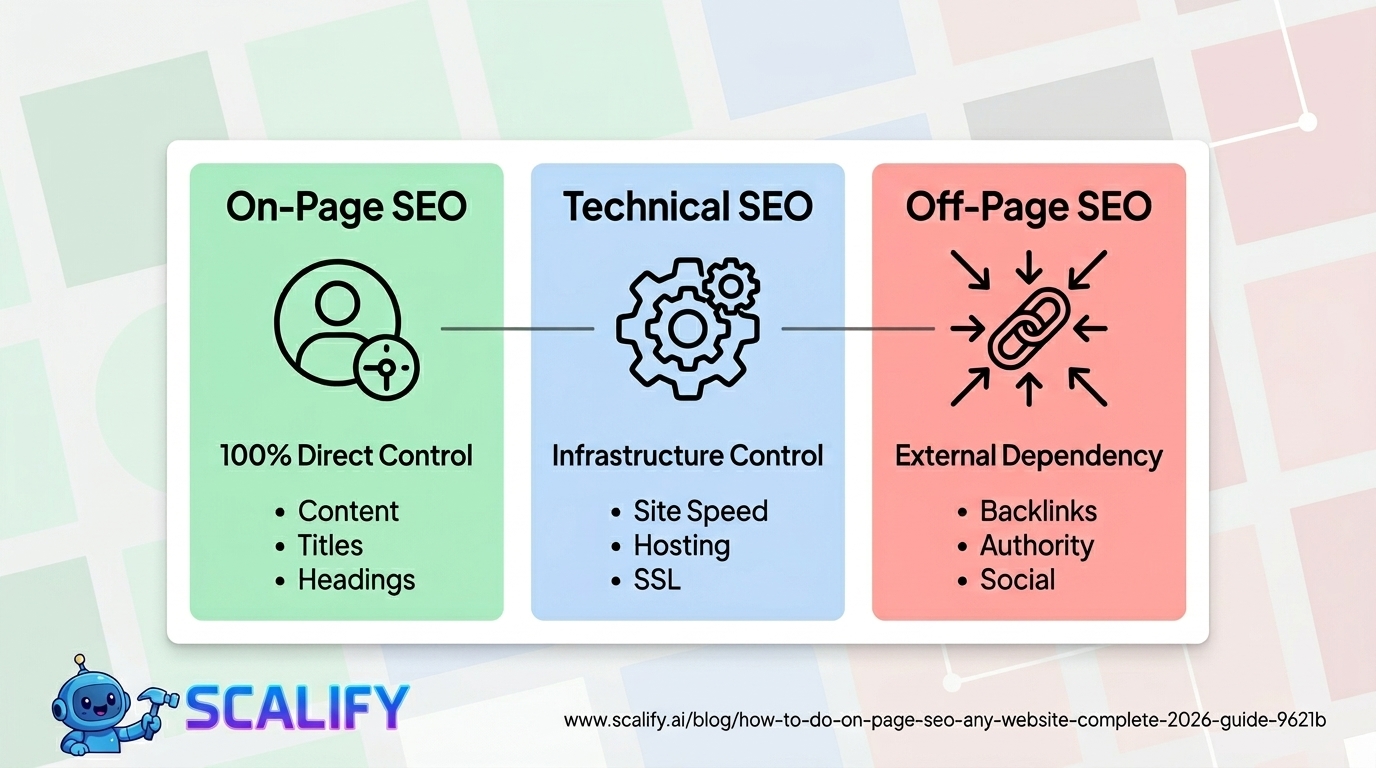
On-page SEO refers to the optimizations you make directly on a webpage to help it rank higher in search results. Unlike technical SEO (which focuses on site infrastructure) and off-page SEO (which focuses on backlinks and authority), on-page SEO is about the content and code of individual pages — what they say, how they say it, and how they're structured for both search engines and users.
On-page SEO is the SEO category with the most direct and immediate control. Every change you make to a page's title tag, heading structure, or content quality is something you can implement today — no dependency on external links or hosting configurations.
Key On-Page SEO Statistics
The Complete On-Page SEO Checklist
1. Title Tags: The Highest-Impact On-Page Element
The title tag is the clickable headline that appears in search results. It's the single highest-weight on-page ranking signal and the primary determinant of whether someone clicks your result.
Title Tag Best PracticeWhy It MattersExampleInclude primary keyword, ideally near the frontSearch engines weight earlier words more heavily"On-Page SEO: Complete Guide for 2026" vs "Complete Guide: On-Page SEO"Keep under 60 characters (600px display width)Longer titles truncate in search resultsCount in a tool like Moz Title Tag PreviewMake it compelling, not just keyword-stuffedCTR affects rankings; write for humansInclude a benefit, year, or unique angleUnique title for every pageDuplicate titles confuse search enginesNo two pages should have identical titlesDon't use your brand name for every page's primary keywordTarget query, not brandUnless brand has strong recognition value
Title tag formulas that work:
2. Meta Descriptions: CTR Optimization
Meta descriptions don't directly affect rankings — but they affect click-through rate, which indirectly affects rankings. A compelling meta description is an ad for your page in the search results.
Meta Description Best PracticeNotesKeep under 155–160 charactersLonger descriptions are truncated mid-sentenceInclude the primary keyword (Google bolds it in results)Makes result more visually prominent for searchersInclude a clear value proposition or call to action"Learn exactly how to..." or "Get the complete data..."Make it specific to that page's contentDon't use the same template for every pageWrite for the searcher's intent, not for botsGoogle may rewrite your description anyway — write for humans
3. H1 and Heading Structure
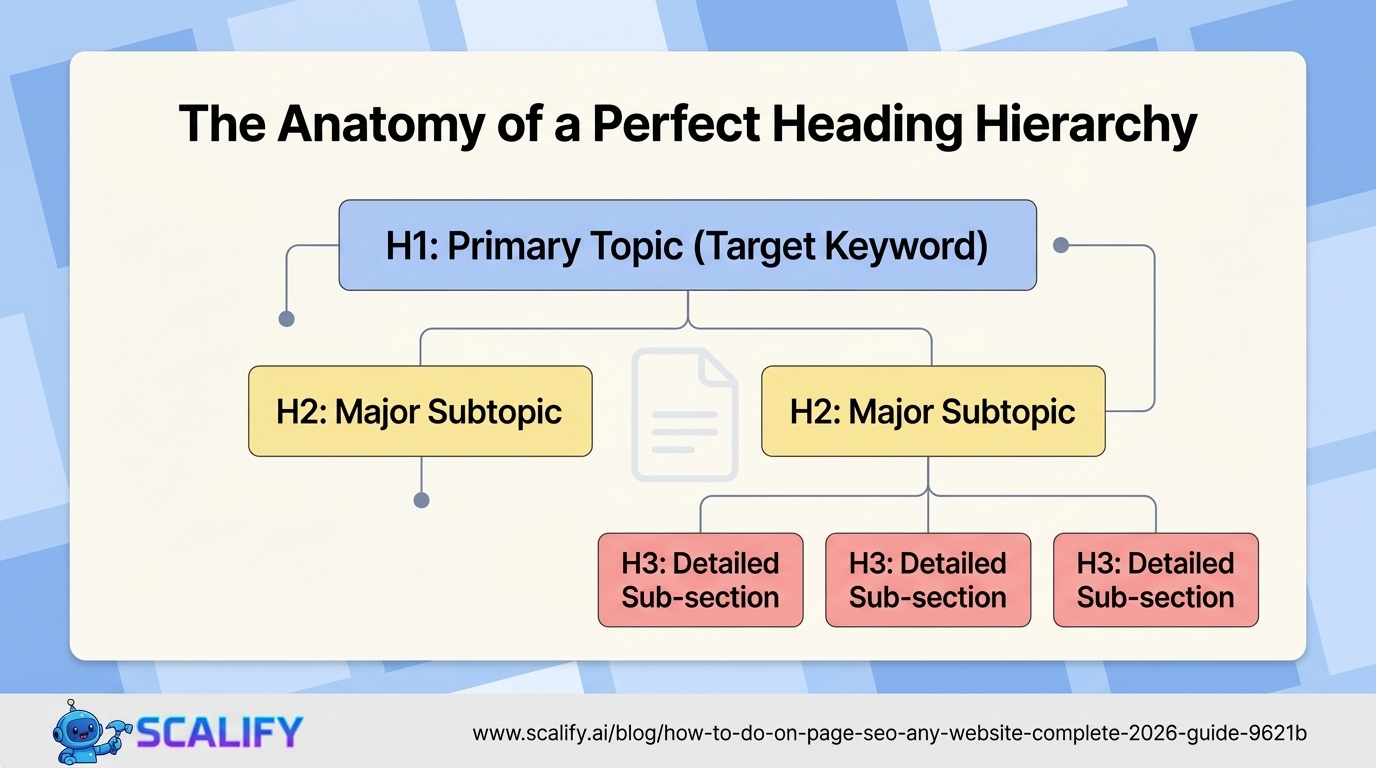
Heading TagBest PracticeCommon MistakeH1One per page, includes primary keyword, describes the page topic clearlyMultiple H1s, H1 that doesn't match page topic, missing H1H2Major section headers, include secondary and related keywords naturallyUsing H2 for styling rather than structureH3Subsections within H2 sectionsSkipping heading levels (H1 → H3)Heading hierarchyLogical nested structure H1 → H2 → H3Using headings randomly based on visual appearance
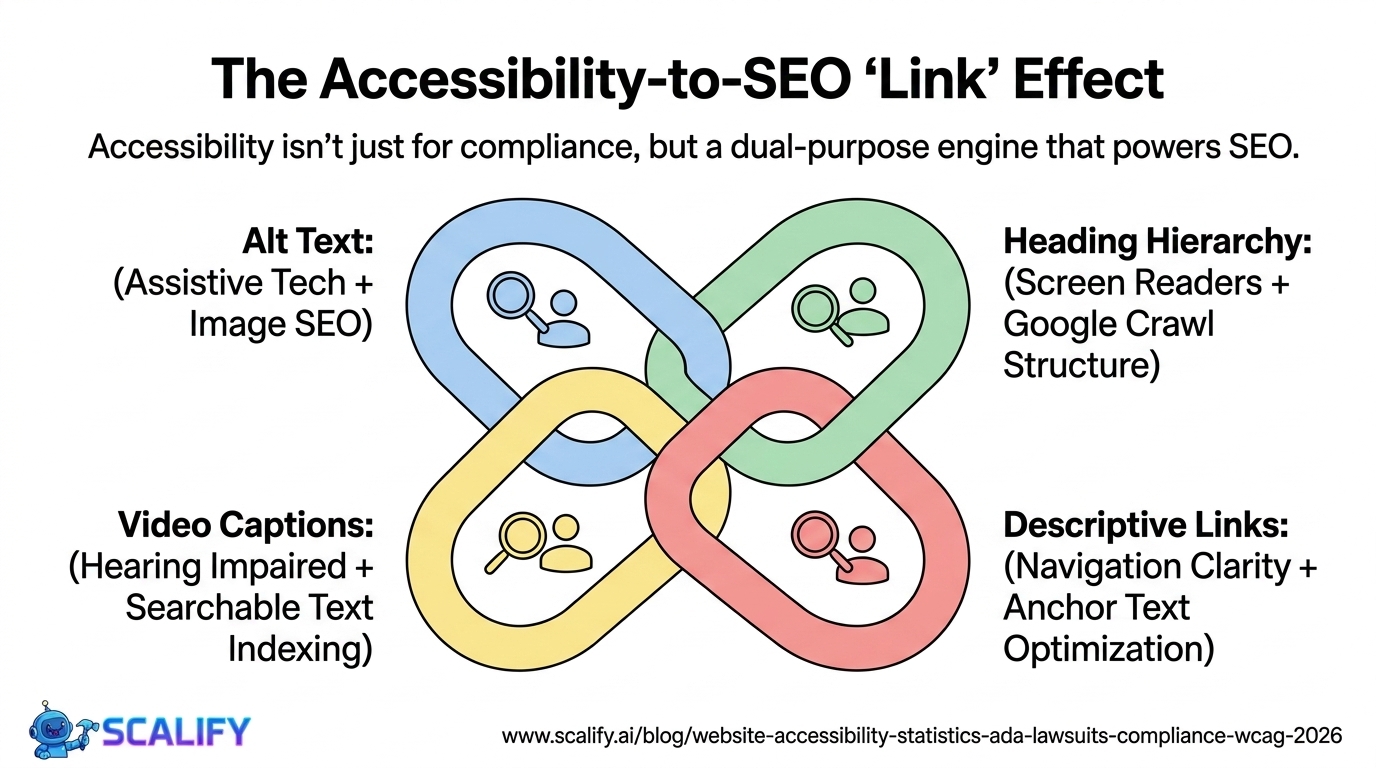
The heading structure serves two purposes: it helps search engines understand the page's topic hierarchy, and it helps readers navigate the page. Both are important. A page about "on-page SEO" should have H2s covering the major subtopics (title tags, meta descriptions, content, internal links) — signaling to search engines the comprehensive scope of the page's coverage.
4. Keyword Optimization: Modern Best Practice
The era of exact-match keyword stuffing is long over. Google's algorithms (especially BERT and MUM) understand semantic relationships — they evaluate whether a page comprehensively covers a topic, not whether a specific phrase appears a specific number of times.
Keyword Strategy2026 Best PracticePrimary keyword placementTitle, H1, first 100 words, naturally throughout — don't force itKeyword densityNo target number — write naturally, keyword appears where it makes senseSemantic keywordsInclude related terms, synonyms, and entities — cover the topic comprehensivelyLSI keywordsResearch by looking at what terms top-ranking pages use for your target topicLong-tail variationsAnswer related questions the primary keyword-searcher might also haveKeyword cannibalizationDon't target the same keyword on multiple pages — consolidate or differentiate
5. Content Quality and Depth: The Core Ranking Signal
Content Quality FactorWhat Search Engines EvaluateComprehensivenessDoes the page answer the full question a searcher has, including follow-on questions?Accuracy and freshnessAre claims accurate? Is time-sensitive information current?Expertise signalsAuthor credentials, cited sources, depth of knowledge demonstratedReadabilityClear writing, appropriate reading level for the target audienceOriginal insightsDoes the page say something different or better than pages already ranking?Format appropriatenessTables, lists, and images used where they make content clearerUser engagementDwell time, bounce rate — indirectly signals content quality
The most important content question to answer: if someone searches the target keyword and lands on this page, do they get a complete, satisfying answer — or do they need to go back to Google and look for more? Pages that fully satisfy searcher intent stay ranked. Pages that partially answer force searchers back to the results page, which signals poor content quality.
6. URL Structure
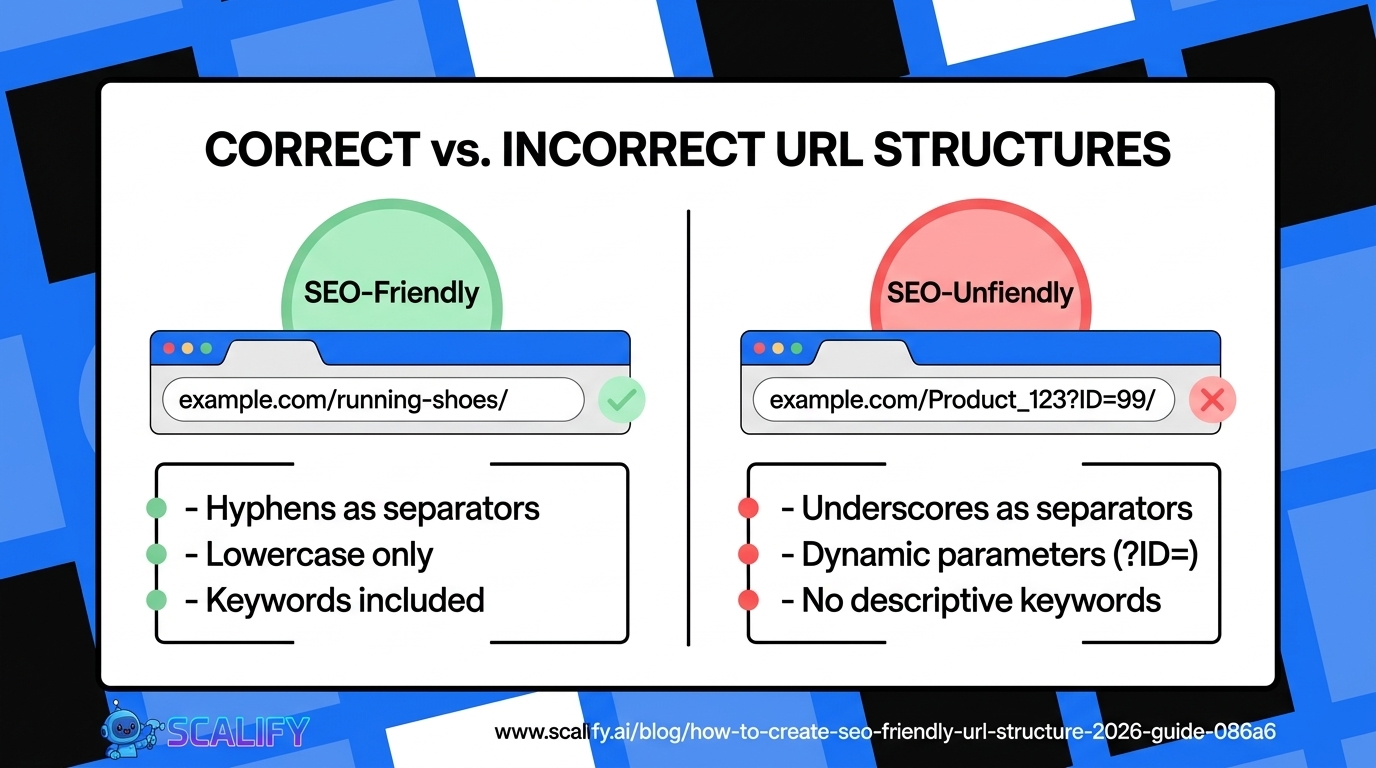
URL Best PracticeExampleInclude primary keyword/on-page-seo-guide vs. /blog?p=1234Use hyphens, not underscores/on-page-seo not /on_page_seoKeep it short and descriptive/website-speed-tips not /2026/01/15/how-to-make-your-website-faster-in-2026Use lowercase onlyAvoid /On-Page-SEO — case variations create duplicate URL issuesDon't change URLs of established pagesURL changes require 301 redirects and lose some link equity
7. Image Optimization
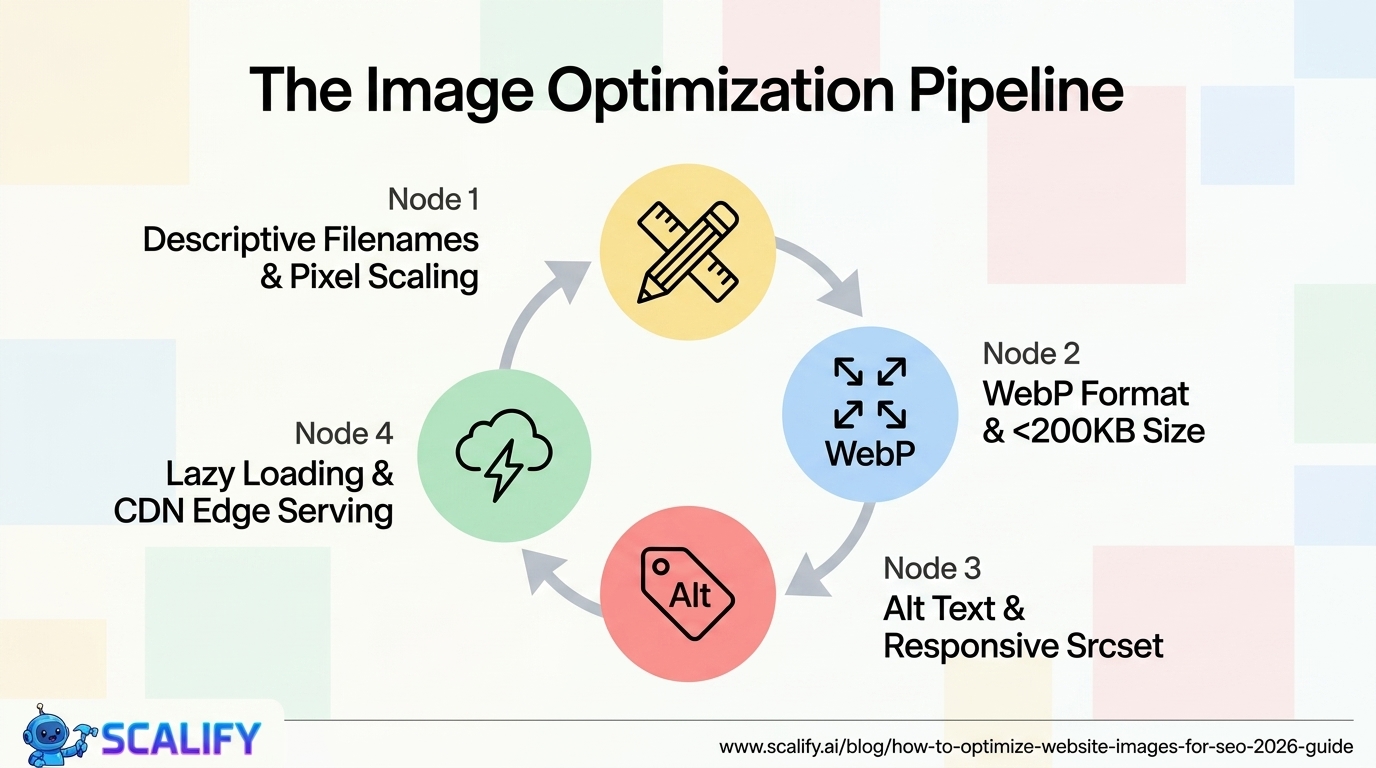
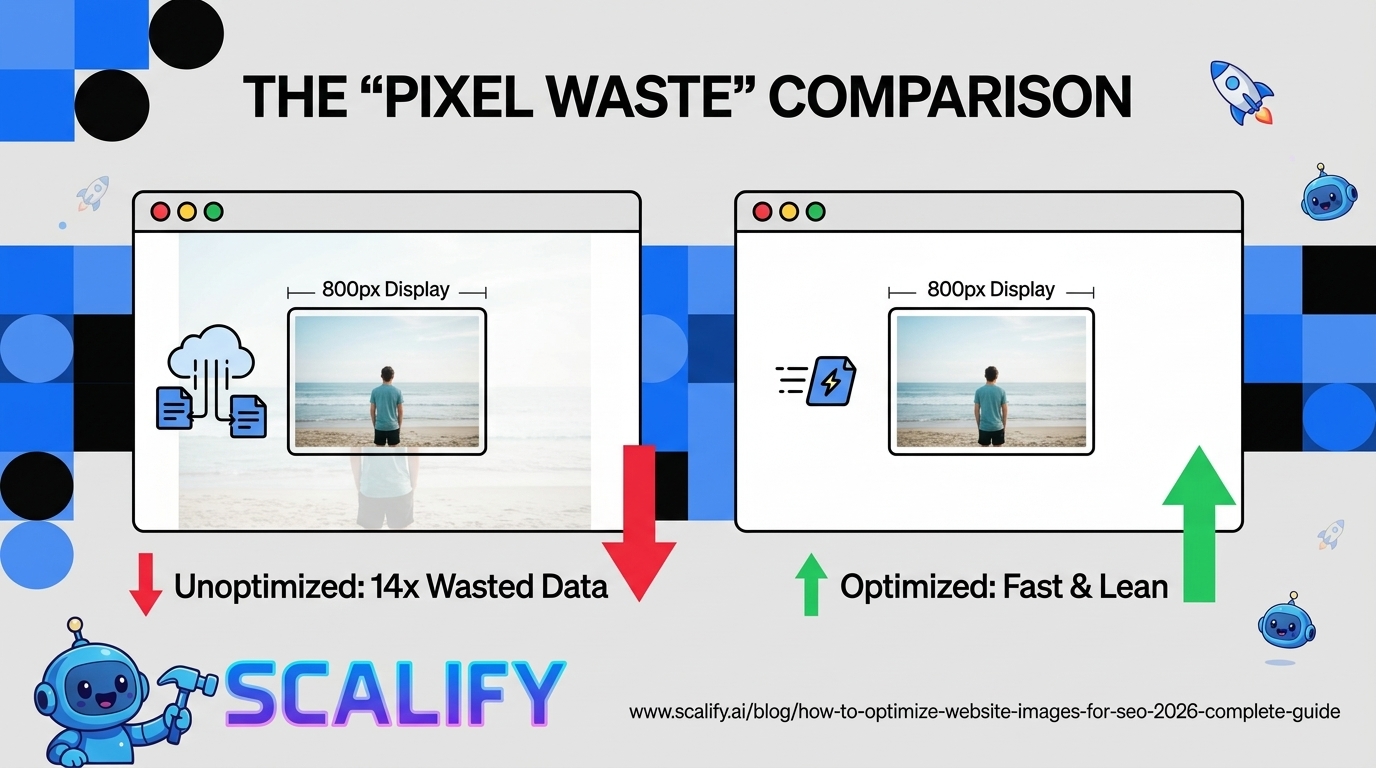
Image SEO ElementBest PracticeAlt textDescribe the image accurately, include keyword where natural — not keyword-stuffedFile namedescriptive-name.jpg not IMG_4821.jpgFile sizeCompress before upload — no image should exceed 200KB without good reasonFormatWebP preferred, JPEG for photos, PNG for graphics with transparencyDimensionsSpecify width and height attributes to prevent CLSCaptionCaptions are read — they improve engagement and can include keywords naturally
8. Internal Linking
Internal links connect your pages to each other, serving two SEO functions: they help search engines discover and crawl all pages on your site, and they pass PageRank (link authority) from high-authority pages to pages that need ranking support.
Internal Linking Best PracticeWhy It MattersUse descriptive anchor text"on-page SEO guide" not "click here" — anchor text signals topic relevanceLink to related content contextuallyLinks within body content pass more value than navigation linksLink from high-traffic pages to lower-traffic onesDistributes authority to pages that need ranking helpEnsure no orphan pagesEvery page should be reachable through internal links3–5 internal links per piece of contentNatural linking density — not forcedUpdate old posts to link to new related contentHelps new content get discovered and ranked faster
9. Page Experience Signals
Google's Page Experience algorithm incorporates user experience signals beyond just content:
10. Schema Markup
Schema markup (structured data) tells search engines explicitly what your content means. Implementation on key pages enables rich results that improve click-through rates:
On-Page SEO Workflow: How to Optimize a Page
The Bottom Line
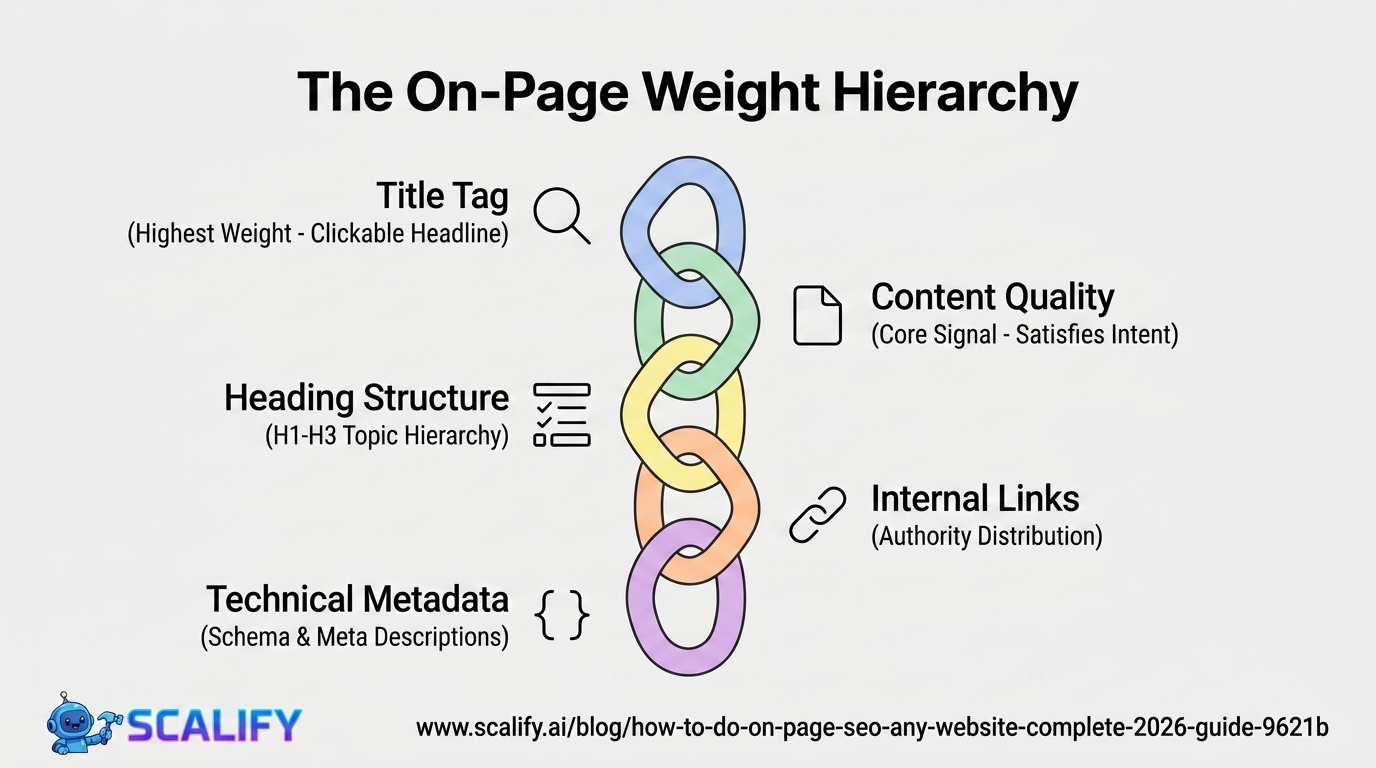
On-page SEO is the most actionable category of SEO because every element is directly in your control and every change can be implemented immediately. The highest-impact on-page factors in priority order: title tag optimization (primary ranking signal), comprehensive content that satisfies search intent (the core quality signal), heading structure (helps search engines understand topic hierarchy), internal linking (distributes authority and improves crawlability), and image optimization (performance and additional ranking signals). Run every new page through this checklist before publishing and revisit existing pages to update them as search intent and competition evolve.
At Scalify, every website we build includes proper on-page SEO foundations from day one — optimized title tags, heading structure, image optimization, and schema markup built into the delivery process.
Top 5 Sources
On-Page SEO: Putting It All Together
On-page SEO works as a system — no single element alone guarantees rankings, but all elements working together create the relevance signals that Google uses to match pages to queries. The hierarchy of on-page SEO elements: primary keyword in the title tag and H1 are most important; comprehensive content coverage addressing the full topic is second; URL structure and meta description for CTR are third; and structured data, internal linking, and multimedia support are fourth. Implementing all levels of this hierarchy for your most commercially important pages — and maintaining them through regular content audits — is the practical definition of comprehensive on-page SEO execution.
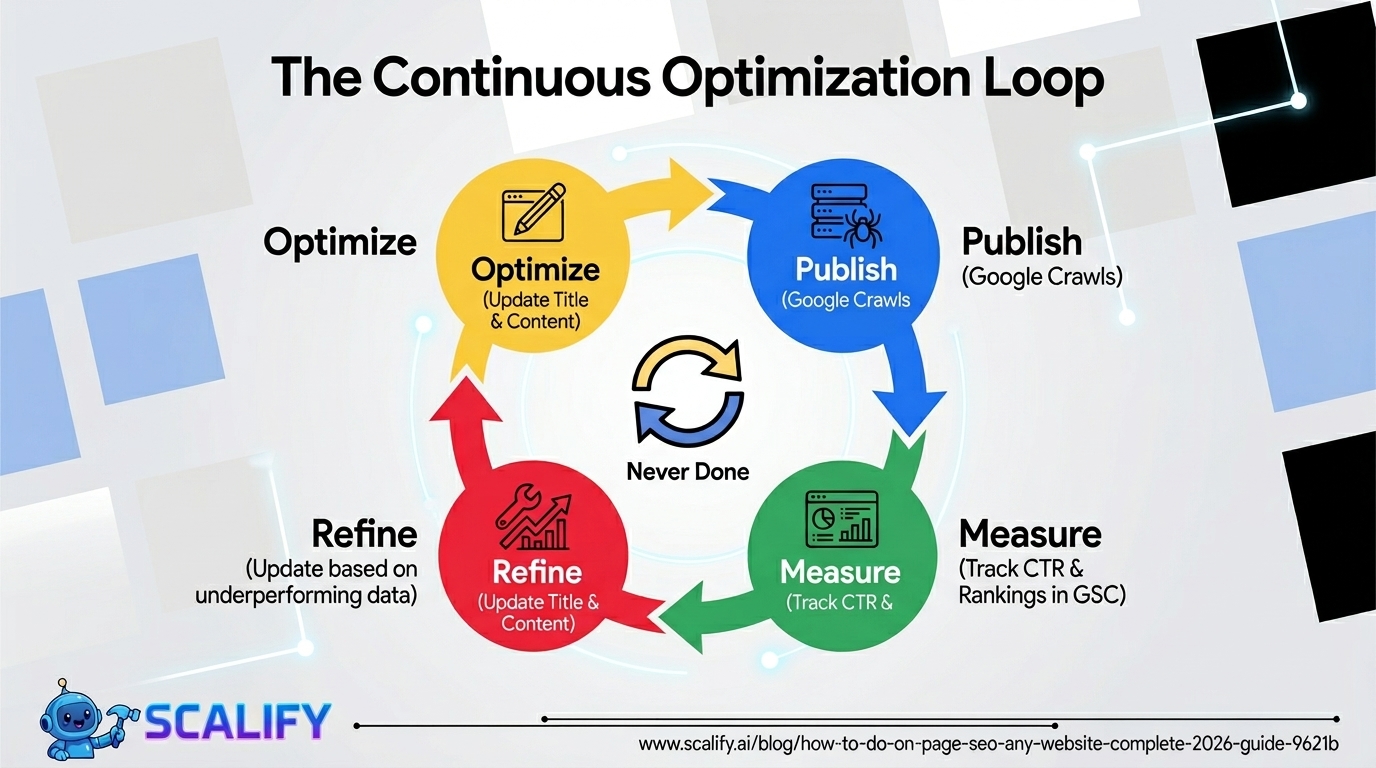
On-page SEO is never truly "done" — it requires maintenance as queries evolve, competitors improve their content, and Google's understanding of topics deepens. The highest-ranking pages in competitive niches are those that treat on-page optimization as an ongoing practice rather than a one-time setup: revisiting title tags and H1s when rankings plateau, expanding content when search demand grows around new subtopics, and updating data and statistics when fresh information becomes available. This iterative investment in on-page quality is what sustains page-1 rankings over years in the face of continuous competitive pressure.
Advanced On-Page SEO: Moving from Basics to Page-1 Quality
The basics of on-page SEO — keyword in title, H1, and URL — are table stakes that most competing pages already get right. Advanced on-page SEO differentiates page-1 results from page-2 results through: topical depth (covering the topic more comprehensively than competing pages, including subtopics and questions that searchers commonly have), expertise signals (named author with relevant credentials, citations from authoritative sources, original research or data), content freshness (updating statistics, examples, and guidance as the topic evolves), and user experience quality (fast load time, clean reading experience, good information architecture with clear headings). These advanced elements don't show up in a basic on-page SEO checklist — they're the factors that separate pages that rank page 2 forever from those that break into the top 3.
Measuring on-page SEO effectiveness requires tracking both ranking position and organic click-through rate for target keywords. A page ranking position 5 with a 12% CTR is outperforming its position, indicating strong title and meta description quality. A page ranking position 3 with a 4% CTR is underperforming, indicating title or description quality problems regardless of its ranking. Google Search Console's performance report provides both position and CTR data at the query and page level — checking this quarterly and optimizing underperforming titles and descriptions is one of the most time-efficient on-page SEO investments available for established content.


.jpeg)
.jpeg)

78 SW 7th St, Miami, FL 33130