

Freelance Web Developer Rates: How Much to Charge in 2026
By Josh Ternyak

April 22, 2026
Freelance web developers should charge $75-$150/hr for general work and $150-$250+ for AI integration and specialized expertise. This comprehensive guide covers rate benchmarks by specialization, the minimum viable rate calculation, hourly vs project vs value-based pricing, how to raise your rates, retainer income model, finding clients, handling negotiations, geographic rate setting, and top freelance platforms.
Freelance Web Developer Rates: How Much to Charge in 2026
Setting your freelance web development rate is one of the most consequential business decisions you make. Charge too little and you're trading skilled work for less than the market will pay — leaving thousands of dollars per month on the table, attracting clients who see you as a commodity, and building a business that's difficult to sustain. Charge too much without the portfolio and specialization to justify it and you won't close work. The goal is finding the rate that accurately reflects your market value — and most freelance developers who've been in the market for any length of time have concluded they undercharged in their early years.
Key Freelance Web Developer Rate Statistics
Freelance Rate Benchmarks by Specialization
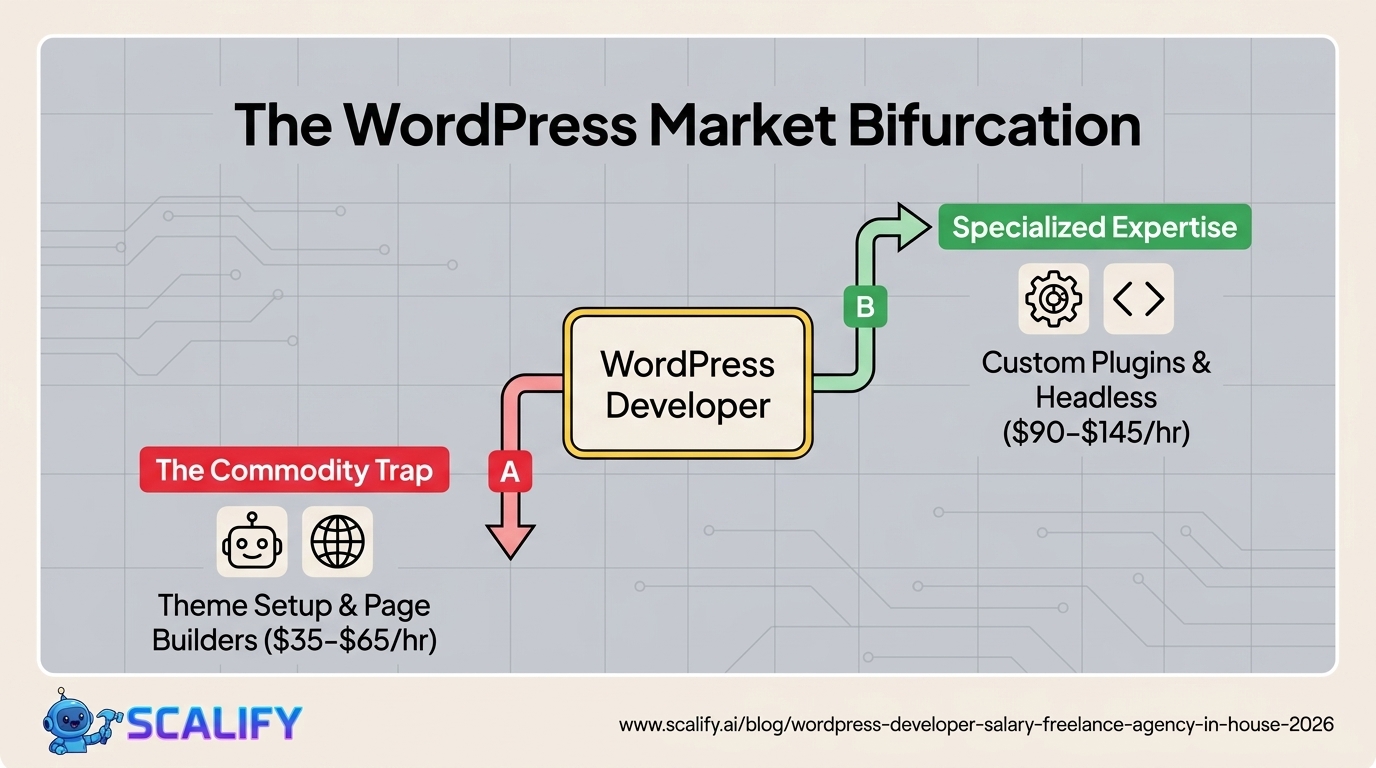
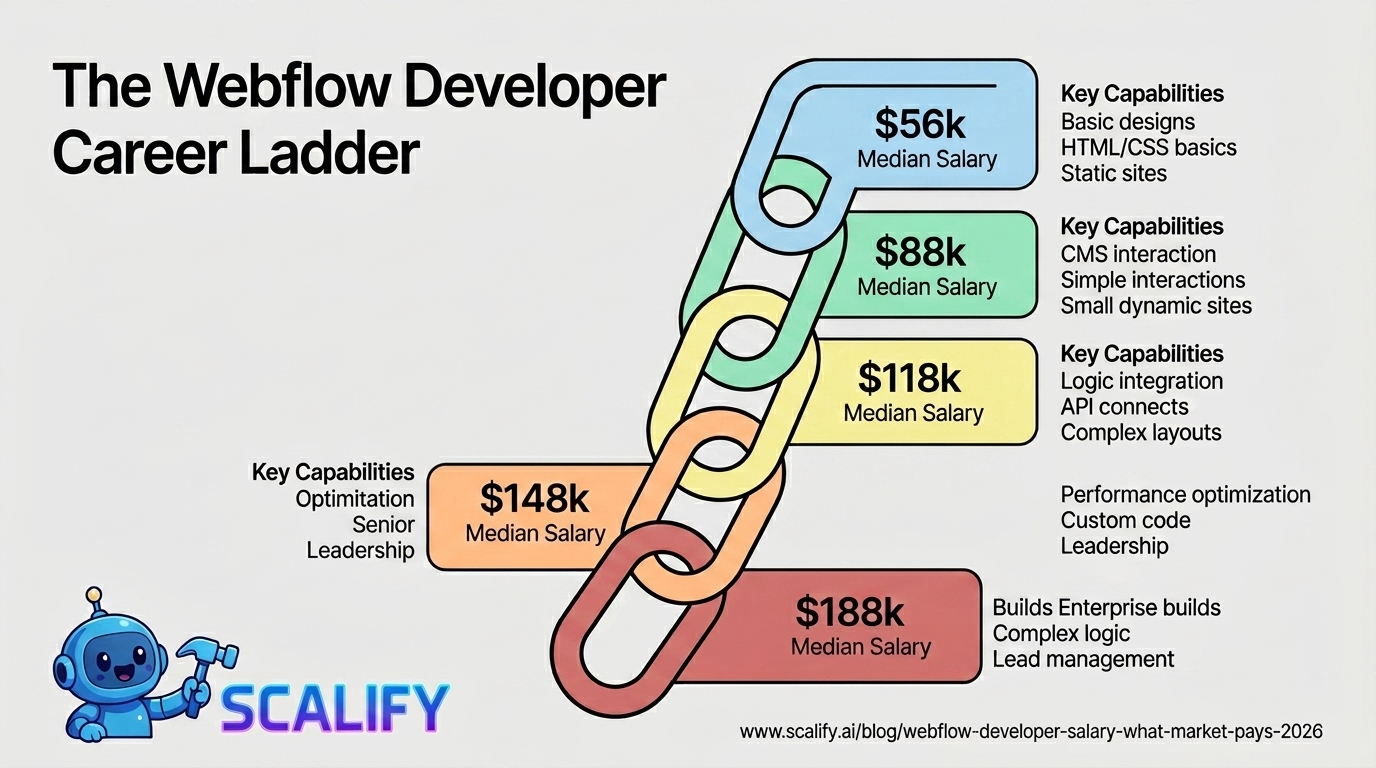
SpecializationEntryMid-LevelSenior/ExpertDemand TrendGeneral Web Development$40–$65/hr$75–$115/hr$115–$150/hrStableReact / Front-End$55–$80/hr$90–$130/hr$130–$175/hrGrowingNext.js / Full-Stack React$65–$90/hr$100–$145/hr$145–$190/hrGrowingNode.js / Back-End$55–$80/hr$88–$130/hr$128–$170/hrStable/GrowingPython / FastAPI$65–$95/hr$100–$145/hr$145–$195/hrStrongly GrowingAI/LLM Integration$95–$130/hr$140–$185/hr$185–$260/hrVery High — fastest growingWebflow Development$45–$70/hr$70–$110/hr$110–$155/hrGrowingShopify Development$60–$85/hr$95–$135/hr$135–$178/hrStable-GrowingWordPress Development$35–$60/hr$65–$100/hr$100–$140/hrStable/DecliningDevOps / Infrastructure$75–$105/hr$110–$155/hr$155–$210/hrVery HighPerformance Optimization$80–$110/hr$115–$160/hr$160–$215/hrHighTechnical Architecture ConsultingN/A$120–$165/hr$165–$250/hrHigh
The Rate Calculation: How to Set Your Number
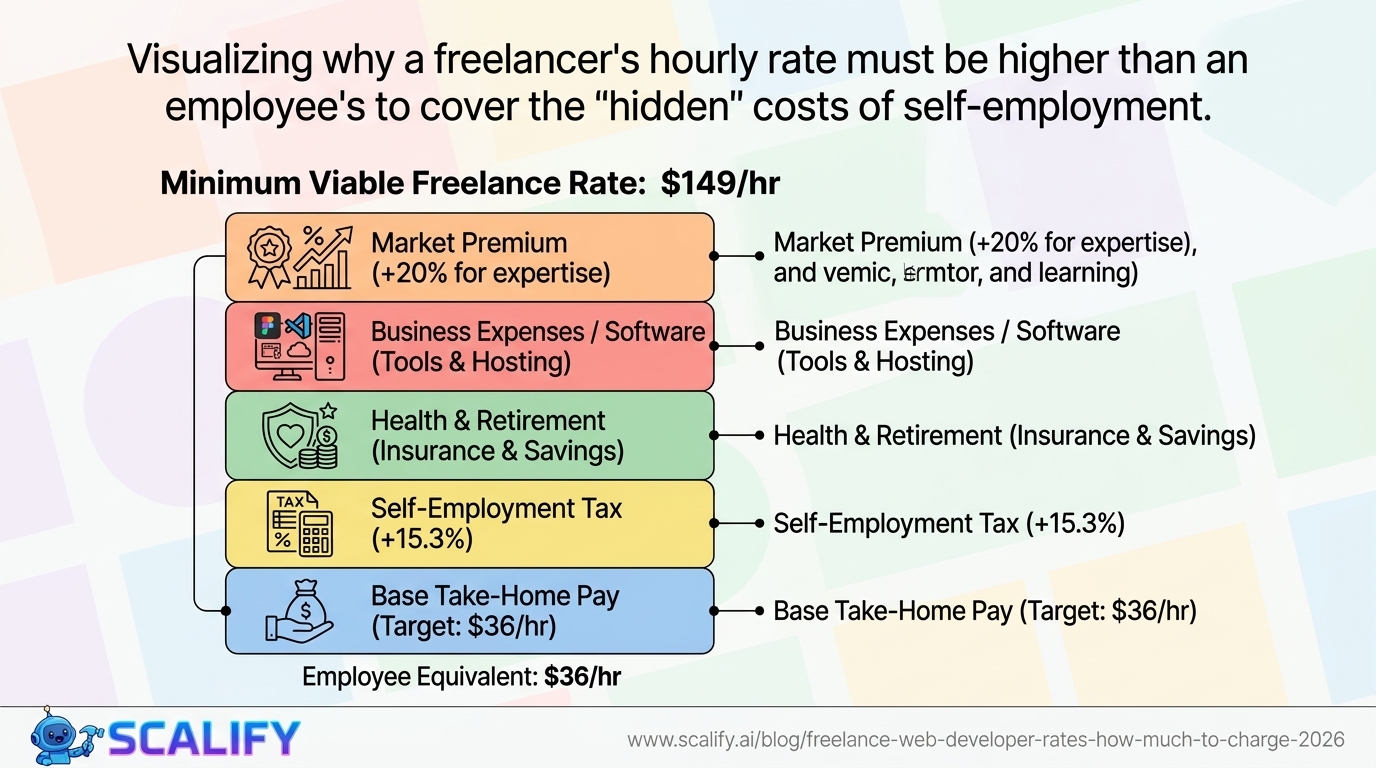
Setting a sustainable freelance rate requires calculating the minimum hourly rate needed to meet your financial goals — and then adding the market premium that reflects your actual value positioning.
FactorExample CalculationYour NumberTarget annual take-home income$120,000$________+ Self-employment tax (~15.3%)+$18,360+$________+ Health insurance+$9,600+$________+ Business expenses (software, equipment, accounting)+$5,000+$________+ Retirement contributions+$12,000+$________= Required gross annual billing$164,960$________÷ Billable hours (46 weeks × 30 hrs avg)÷ 1,380÷ ________= Minimum viable hourly rate$119/hr$________/hrMarket premium (add 15–25%)$137–$149/hr$________/hr
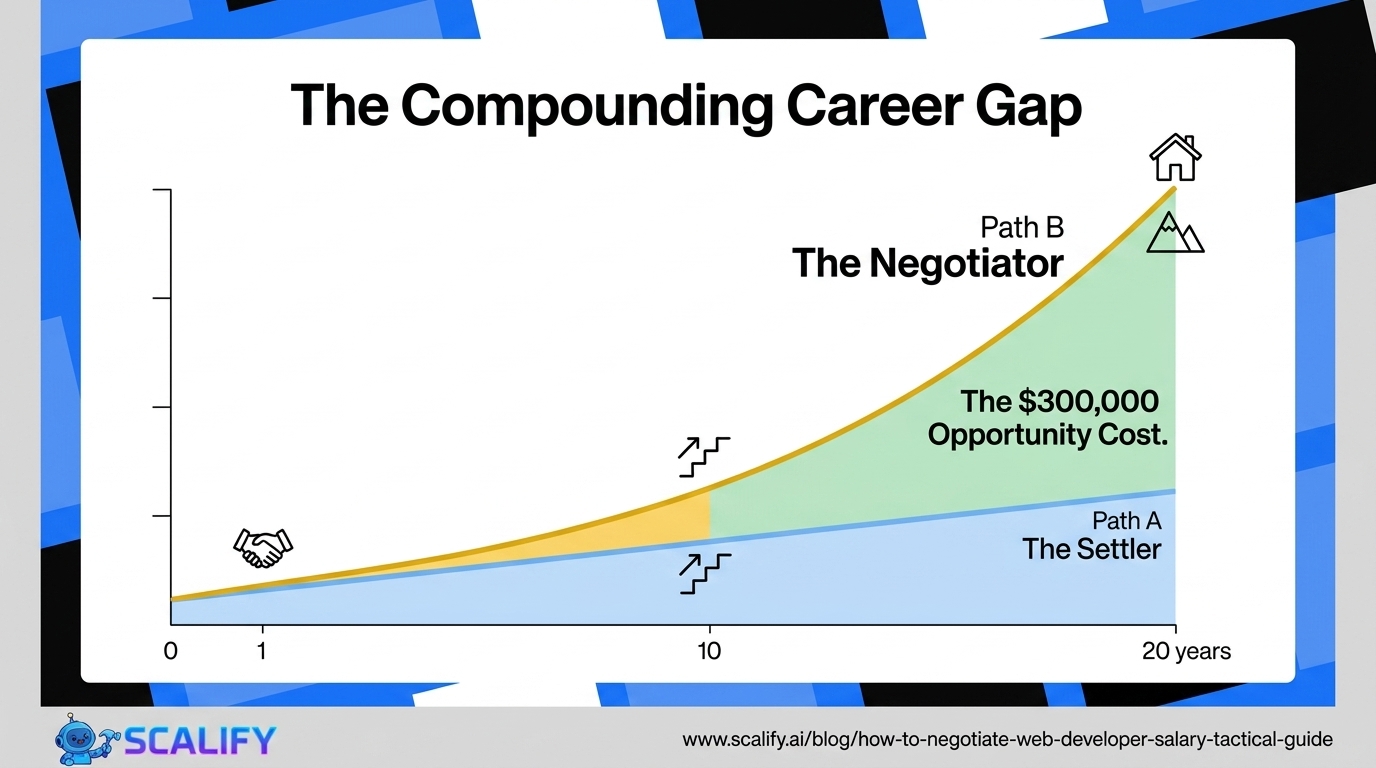
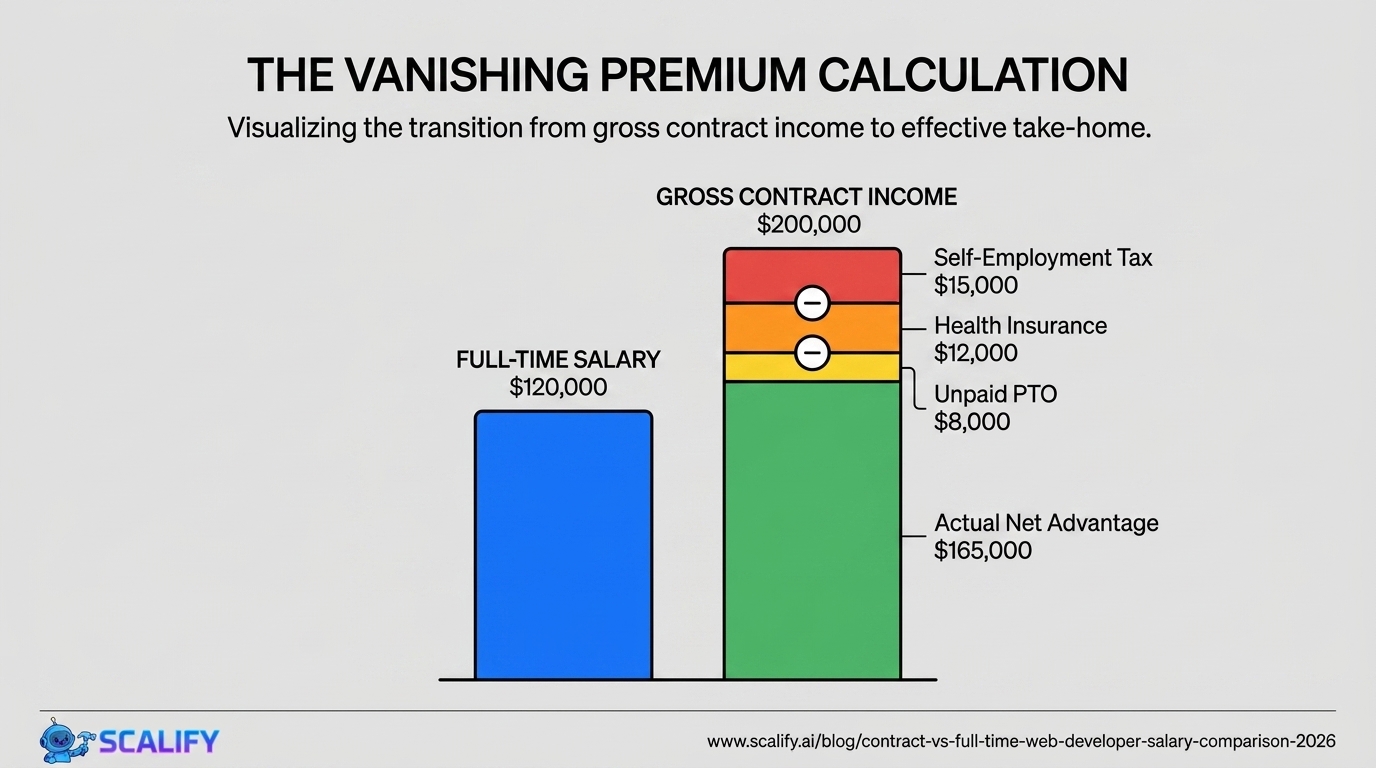
This calculation reveals why so many developers undercharge: they compare their hourly rate to their employee hourly equivalent ($75,000 / 2,080 hours = $36/hr) without accounting for the additional costs they bear as self-employed individuals. A freelancer charging $65/hour when the calculation shows they need $119/hour is effectively earning $40,000 less than a full-time employee in an equivalent role — while carrying all the administrative burden and income risk of self-employment. Understanding the full cost structure is the foundation of appropriate freelance pricing.

Hourly vs. Project Pricing: Which Earns More?
Pricing ModelAverage Earnings PremiumBest ForRisk ProfileHourly billingBaselineAmbiguous scope, ongoing work, new client typesLow — protected from scope creepFixed-price project+20–35% vs hourlyWell-defined scope, familiar project typesMedium — scope creep risk if underestimatedValue-based pricing+50–200% vs hourlyHigh-ROI work (e-commerce, lead gen, conversion)Low — priced on outcome, not timeMonthly retainer+10–20% vs hourlyOngoing maintenance, steady relationship clientsLow — predictable income
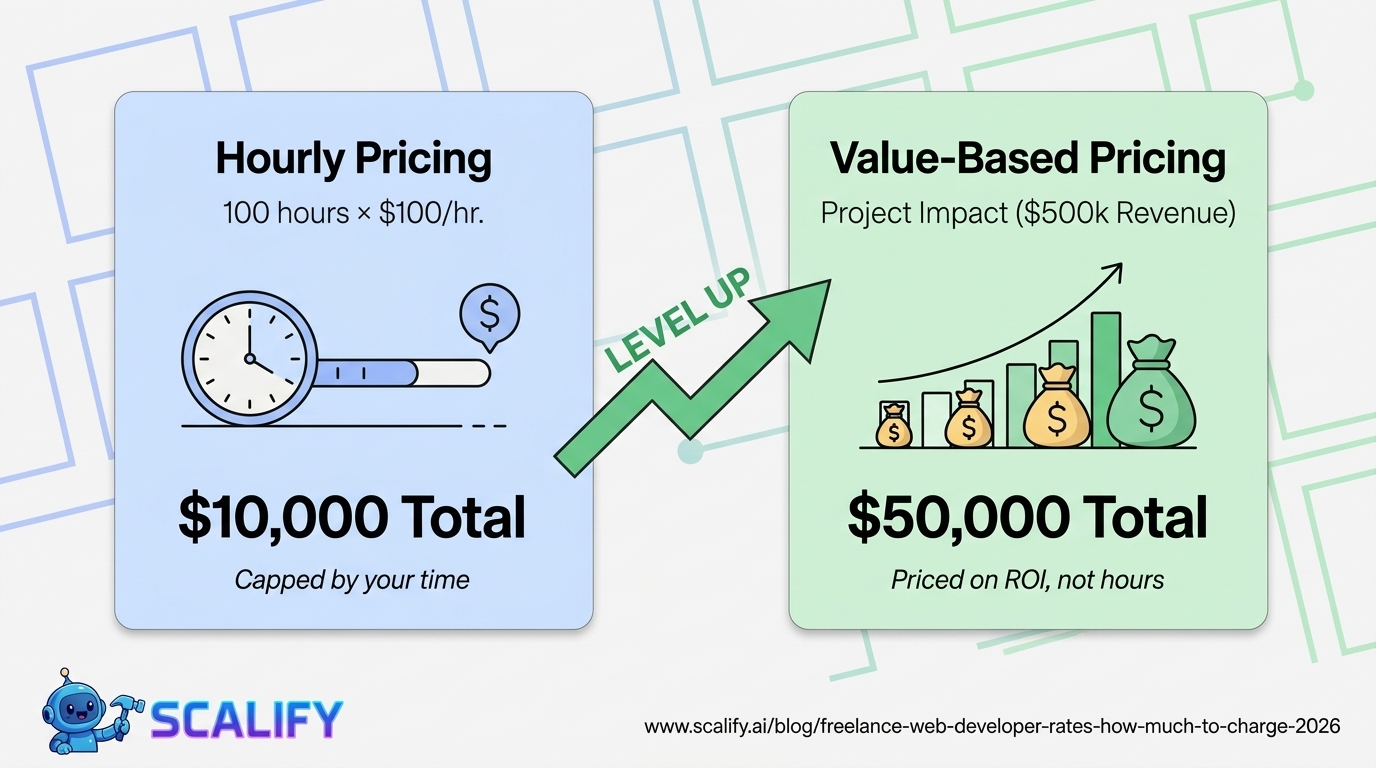
Value-based pricing is the highest-earning model available to freelance web developers, but it requires confidence in quantifying your work's business impact. A developer who builds an e-commerce website that generates $500,000/year in online sales should not be pricing their work at $10,000 based on hours at $100/hr — the value delivered is worth $30,000–$80,000 to the client. The developer who can articulate this value case and price accordingly earns dramatically more per project than one who bills hourly regardless of business impact.
How to Raise Your Freelance Rate
Most freelance developers who have been working at the same rate for more than 18 months are undercharging relative to their current market value. Skills improve, portfolio strengthens, and market rates shift upward — but rates don't automatically follow unless you raise them. The most effective approaches:
Raise rates for new clients immediately. The easiest way to test a higher rate is to quote it to new prospective clients without changing what you charge existing ones. If 8 out of 10 prospects accept a rate 30% higher than your current rate, you have strong evidence that you're significantly undercharging.
Give existing clients advance notice. Long-term clients who receive a rate increase notice 30–60 days in advance have time to budget for the change and understand it's a professional decision rather than an abrupt surprise. A brief email explaining that your rate is increasing to reflect your expanded expertise, with the new rate and effective date, is professional and expected in any long-term business relationship.
Position the increase as a value upgrade. "My rate is increasing from $95 to $125/hour" is less effective than "My rate is increasing to reflect my expanded TypeScript and performance optimization expertise — you'll get faster implementations with better long-term maintainability." Connecting the rate increase to specific capability improvements frames it as additional value rather than pure cost increase.
Building Retainer Income: The Freelance Stability Model
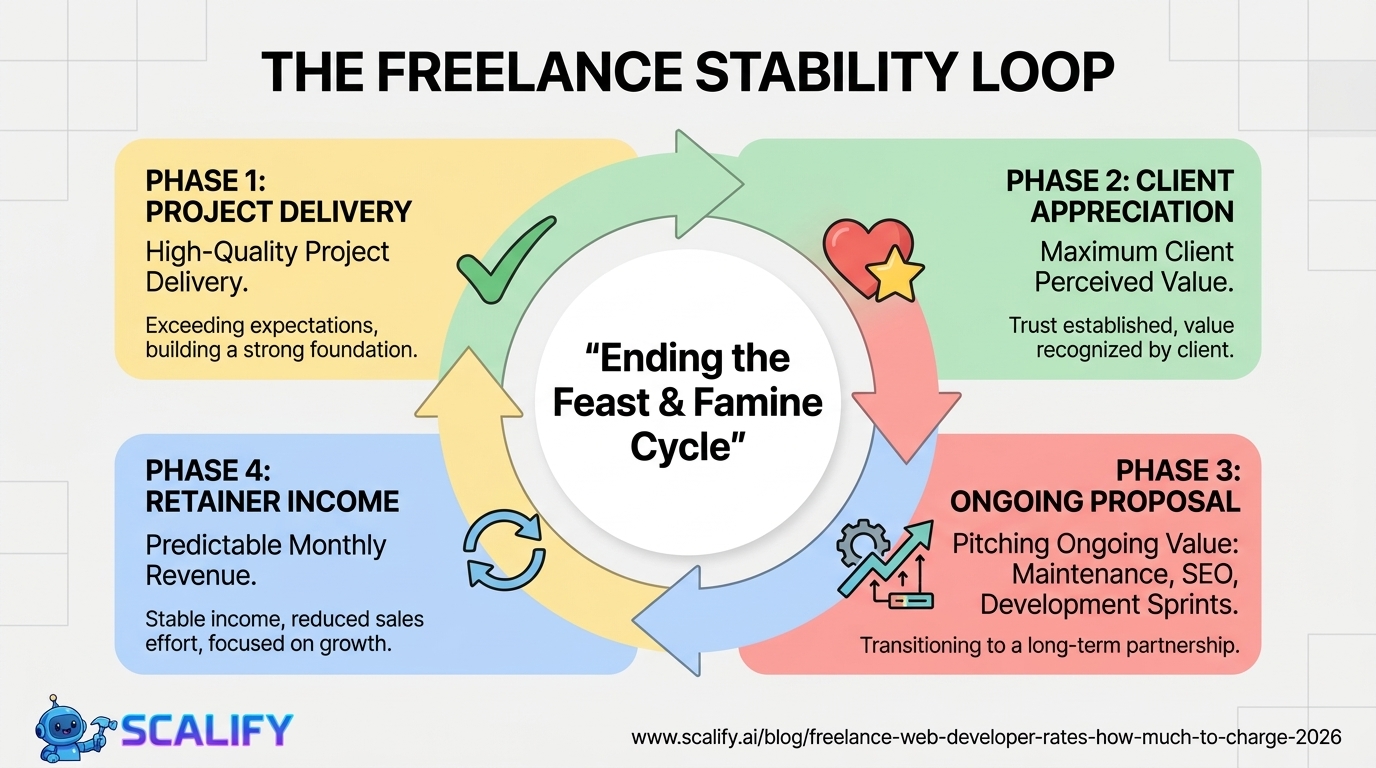
The most financially stable freelance web developer businesses are built on a foundation of retainer relationships — clients who pay a fixed monthly amount for defined ongoing services. A developer with 3–4 retainer clients at $2,000–$4,000/month each generates $72,000–$192,000 annually in predictable, recurring income before any project work. The retainer model solves the feast-and-famine cycle that makes many developers leave freelance for employment: when retainer income covers baseline expenses, project work becomes entirely upside rather than survival income.
Retainer services that work well for web developers: ongoing maintenance and security updates for WordPress or other CMS sites, monthly content additions to CMS-managed sites, performance monitoring and optimization, A/B testing implementation and reporting, SEO progress reporting and content implementation, and monthly new feature development sprints for growing products. The key to retainer client acquisition is converting project clients into retainer relationships by proposing ongoing value delivery after the project ships — when the client has maximum appreciation for your work and the transition is natural.
The Bottom Line
Freelance web developers should charge $75–$150/hour for general web development and $150–$250+ for specialized expertise in AI integration, performance engineering, or React architecture. The minimum viable rate calculation — accounting for self-employment tax, health insurance, retirement, and overhead — almost always reveals that most developers can charge significantly more than they currently do. Specialization, project-based pricing, value-based pricing for high-ROI work, and retainer client development are the primary levers for reaching $150,000–$250,000+ in annual freelance income. The developers who achieve this consistently aren't the most technically talented — they're the ones who charge what their work is worth.
At Scalify, we work with independent developers and growing agencies — building professional websites in 10 business days that help freelancers present their expertise and win better clients.
Top 5 Sources
Finding Freelance Web Development Clients
The most common reason talented developers earn below their market rate as freelancers isn't that they charge too much — it's that they don't have enough qualified prospects to develop negotiating leverage. When you need the next project, you accept the first offer. When you have a pipeline of prospects, you can decline underpriced work and close at rates that reflect your actual value.
Inbound Channels (Work Comes to You)
ChannelSetup TimeLead QualityLead VolumeBest ForPortfolio website with SEOHigh initially, then passiveHigh — prospects find you for your specialtyLow-MediumLong-term sustainable inboundLinkedIn optimizationMediumHigh — professional contextMediumB2B clients, agencies, recruitersWebflow/Shopify Expert MarketplaceLow (apply and qualify)Very High — platform clientsMedium-HighPlatform-specific specialistsReferrals from past clientsNo setup — results from delivery qualityVery High — pre-sold on youLow-Medium initially, growsAll freelancers — highest ROI channelContent marketing / technical blogVery High — ongoing creationHigh — demonstrates expertiseLow-MediumDevelopers who enjoy writing
Outbound Channels (You Go to Them)
Direct outreach to businesses whose websites could be improved — restaurants with Squarespace sites that don't rank, e-commerce stores with slow load times, service businesses with no clear conversion path — is one of the most direct ways to generate freelance leads. A brief, specific email that identifies one concrete improvement to their website and offers to implement it is dramatically more effective than generic "I'm a web developer looking for clients" outreach. The specificity signals both that you've looked at their site and that you have a specific solution to a specific problem — which is exactly the positioning that commands project work rather than rate-shopping.
Geographic Considerations for Freelance Rate Setting
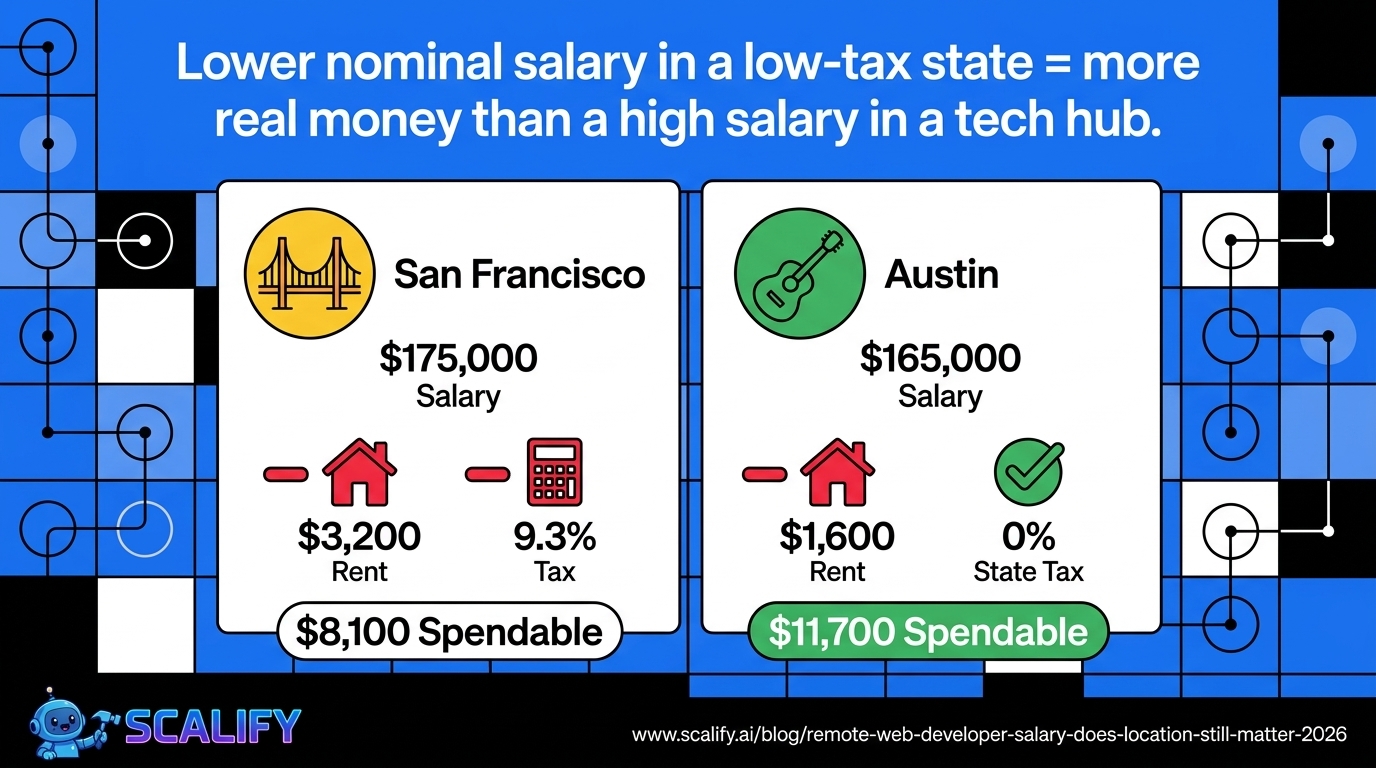
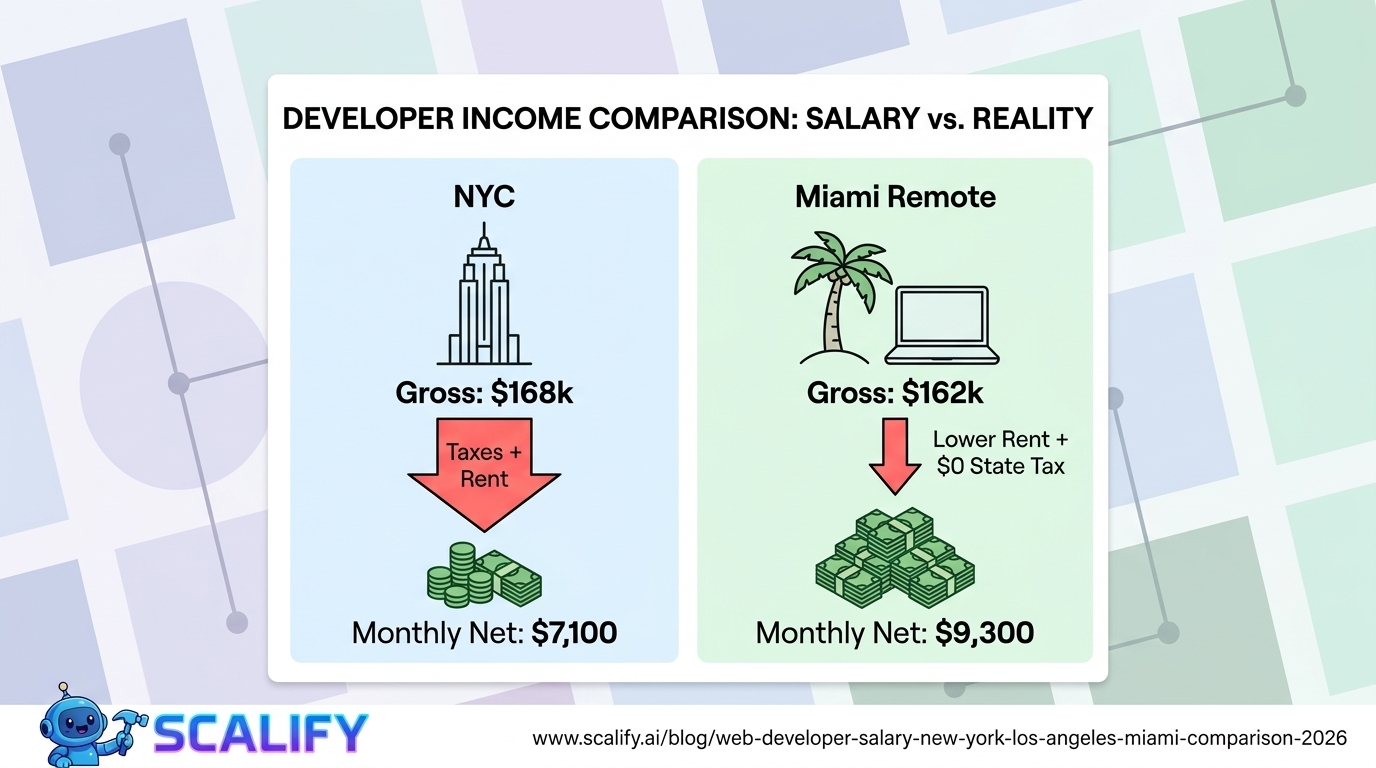
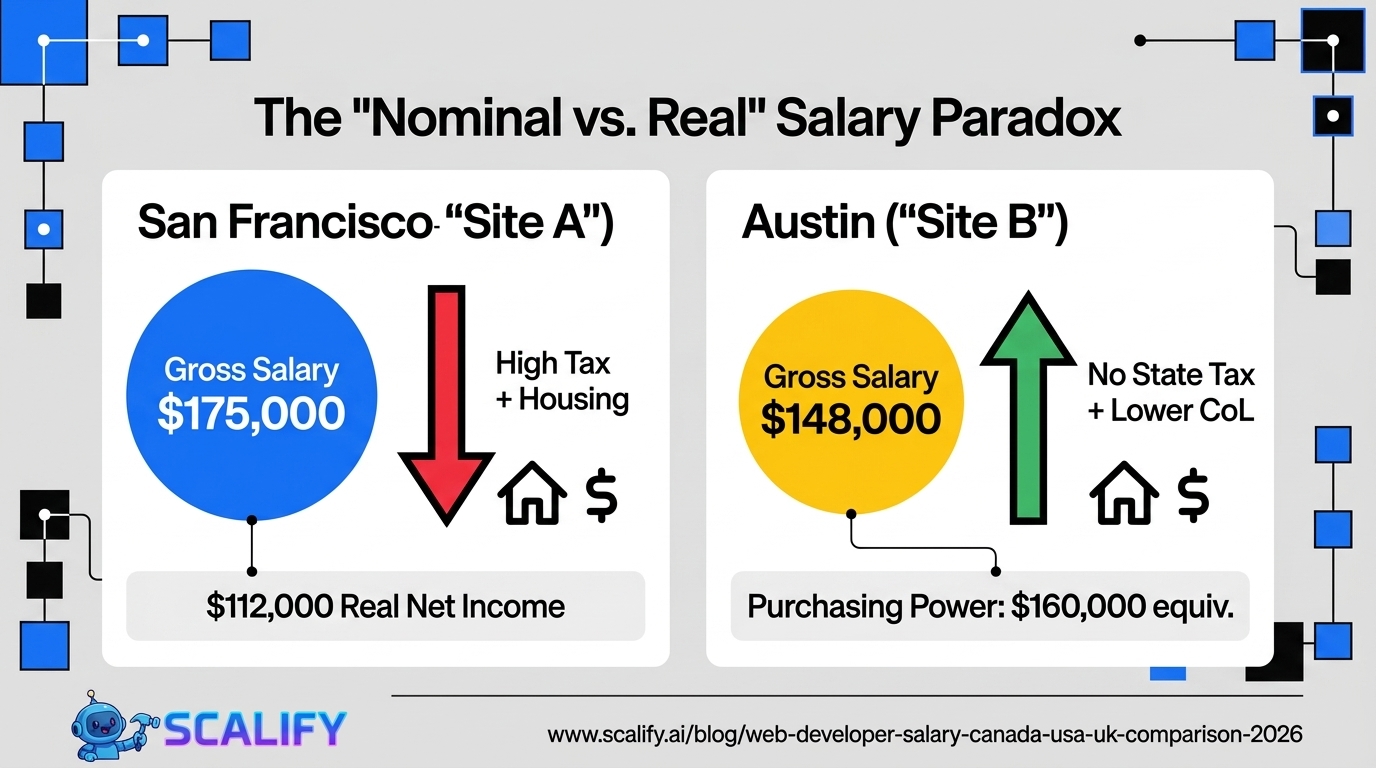
Freelance web developers are not geographically constrained in the way that full-time employees of geographic-tiered companies are. A freelancer in rural Montana can charge San Francisco market rates for specialized React development work delivered remotely — clients who want the specialization pay the market rate for that specialization regardless of where the developer is located. This geographic flexibility is one of the most compelling aspects of freelance web development: the ability to earn top-of-market rates while living wherever cost of living and lifestyle preferences dictate.
Practical rate geography: US-based freelancers should charge US market rates regardless of where they live. Developers in lower cost-of-living areas who charge lower rates because they think clients expect it are leaving significant income on the table for no strategic reason. The client cares about the quality and reliability of the work — not the developer's zip code or what it costs them to live there. Rate yourself on the value you deliver to clients, which is independent of your personal cost structure.
Handling Rate Negotiations With Clients
When clients push back on your rate, the response depends on the nature of the pushback. Budget constraint ("That's more than we budgeted") is different from value skepticism ("That seems high for this type of work").
For budget constraint: rather than discounting, explore scope reduction. "I understand the budget constraint — here's what we can accomplish at $X that will deliver the highest-priority outcomes for your business. The full scope would be $Y, and we could approach the remaining elements in a second phase when budget allows." This preserves your rate, delivers real value within their budget, and positions a follow-on engagement. Discounting trains clients that your rate is negotiable and sets a lower baseline for every future conversation.
For value skepticism: address it with specifics rather than defensiveness. "My rate reflects my specialization in [TypeScript/React/AI integration] and my track record of [specific outcome for a client]. The complexity of what you're describing requires [specific expertise], and the alternative — spending 20% less on a developer without that expertise — typically costs more in rework and longer timelines than the initial rate difference." Concrete specificity about the value you deliver is more persuasive than general statements about quality or experience.
Platforms for Freelance Web Developers
PlatformRate CeilingClient QualityCompetition LevelBest SpecializationsToptal$200+/hr achievableVery High — enterprise clientsLow — rigorous vettingAll specializationsUpwork$150+/hr for top-ratedMixed — varies widelyHigh — global competitionAll — requires strong profileWebflow Experts$155/hr average for expertsHigh — Webflow usersMediumWebflow specialistsShopify Partners$140+/hr for custom theme workHigh — e-commerce focusedMediumShopify developersGun.io$125–$200/hrHigh — vetted clientsLow-MediumSenior React, Node, PythonArc.dev$100–$175/hrHigh — pre-screenedMediumFull-stack, senior engineers



.jpeg)
.jpeg)



78 SW 7th St, Miami, FL 33130