

How Often Should You Redesign Your Website? Data-Backed Answer (2026)
By Josh Ternyak

April 18, 2026
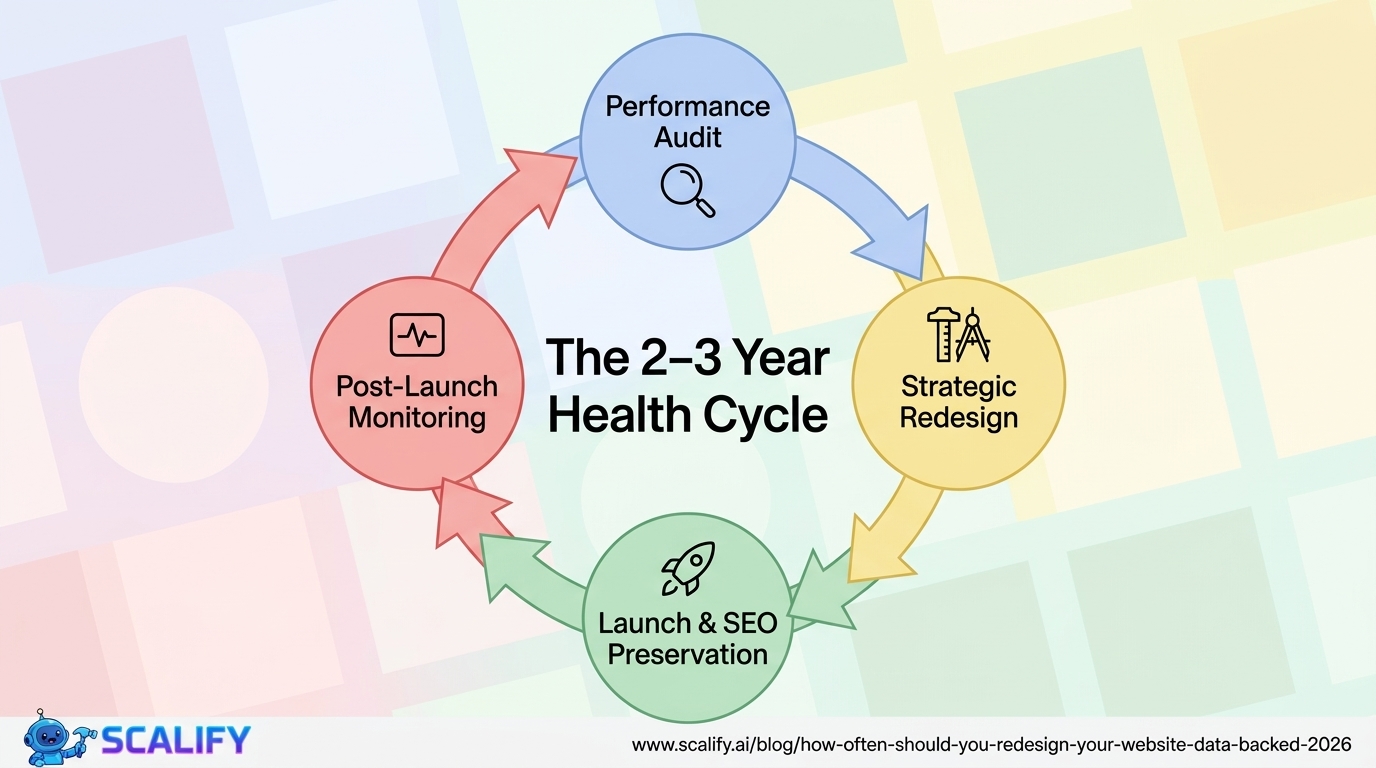
Websites need redesign every 2-3 years on average, but the trigger should be performance data not calendar time. This comprehensive guide covers the decision framework (7 data-backed questions), signals a redesign is overdue, signals you don't need one yet, the redesign vs optimize alternative, planning a redesign properly (analytics review, URL preservation, content migration), the good redesign process, red flags that signal failure ahead, and tactical timing guidance.
How Often Should You Redesign Your Website? Data-Backed Answer
The question of when to redesign a website is one that most businesses answer either too soon (redesigning out of aesthetic boredom when the existing site is still performing) or too late (letting an outdated site continue costing them conversions long after it should have been refreshed). The data-backed answer is that most business websites need a significant redesign every 2–3 years — but the actual trigger for redesign should be performance data, not calendar date or competitor envy.
Key Website Redesign Statistics
The Redesign Decision Framework
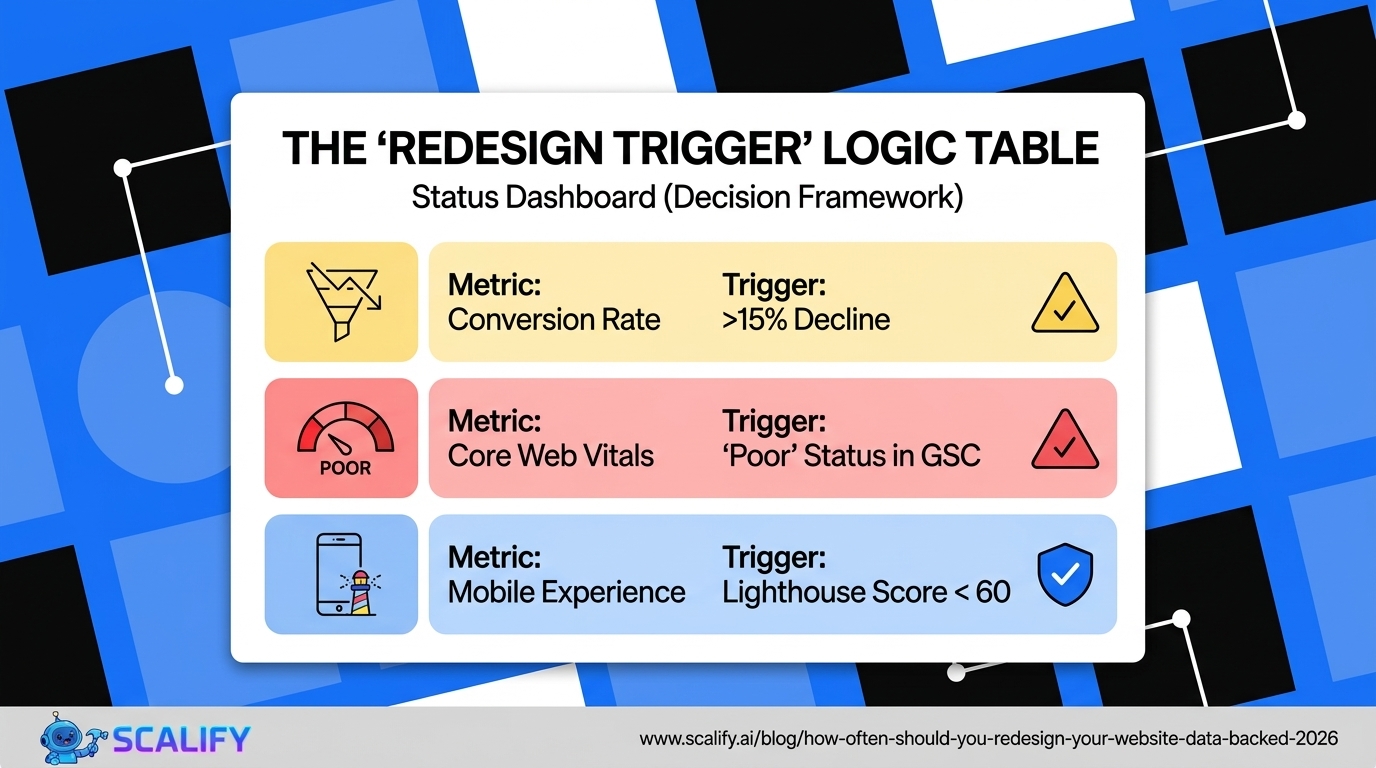
Rather than using calendar time as the primary redesign trigger, use performance data. A website that's 4 years old but still performs well on all key metrics doesn't need redesign. A website that's 18 months old but has failing Core Web Vitals, low conversion rates, and outdated design patterns needs attention regardless of age. The questions that actually determine whether a redesign is needed:
QuestionIndicator That Redesign May Be NeededData SourceIs conversion rate declining?More than 15% decline over 6 monthsGoogle Analytics 4Is organic traffic declining?Consistent decline despite content maintenanceGoogle Search ConsoleIs mobile experience poor?Mobile Lighthouse score under 50; high mobile bounce ratePageSpeed InsightsAre Core Web Vitals failing?Any metric in "Poor" status in Search ConsoleSearch Console CWV reportDoes the design feel outdated?Prospect feedback; comparison to current competitorsUser research / observationsDoes the site serve business needs?Missing features causing lost leads or frictionCustomer/team feedbackIs the CMS/platform limiting you?Important changes require developer involvement; slow updatesOperational experience
Signals That a Redesign Is Overdue
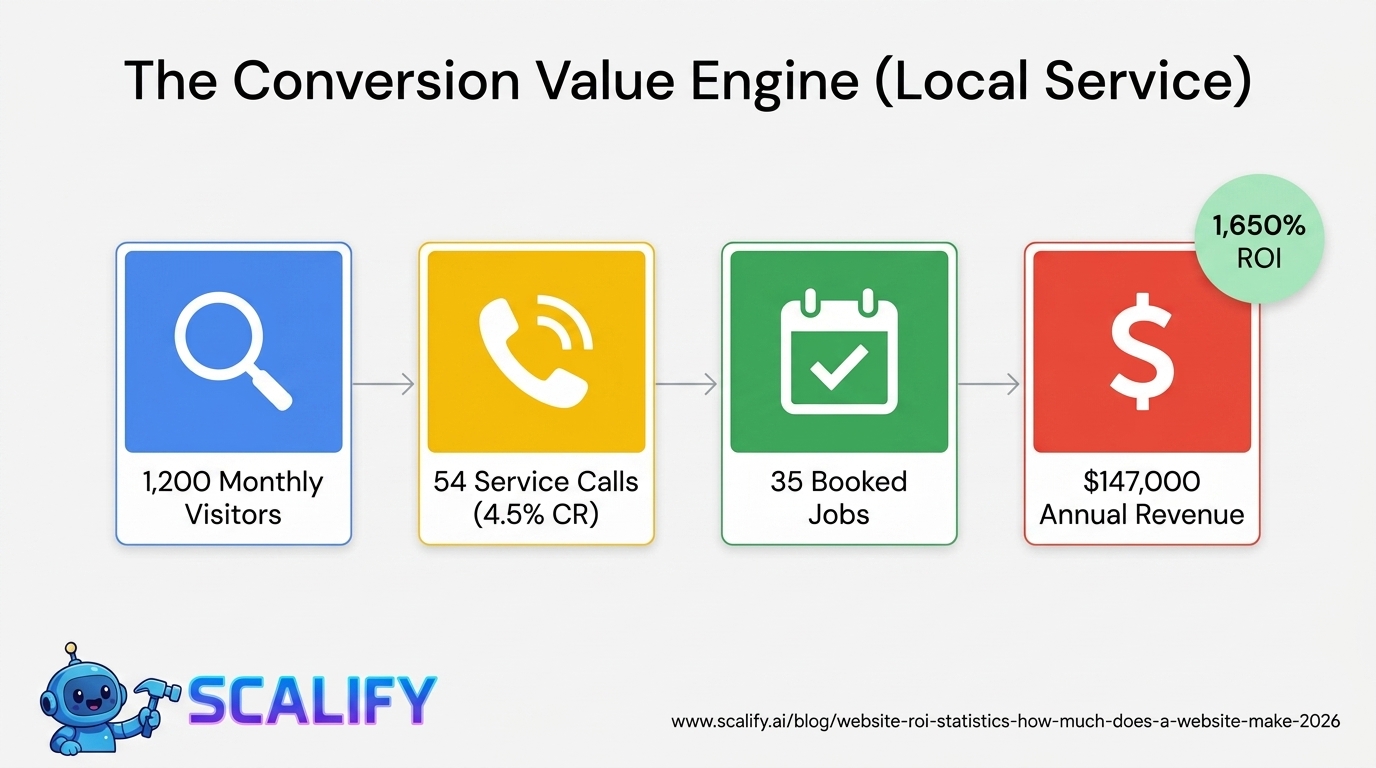
Conversion rate has declined without a clear external cause. If your website is sending the same traffic to the same pages but conversion rates have fallen over 6–12 months without a business reason (pricing change, service change, market shift), the website itself is likely the problem. User behavior changes faster than websites — what converted visitors 3 years ago may no longer work for today's audience expectations.
Competitors have significantly upgraded their sites. If your primary competitors have launched modern, well-designed websites while yours has remained static, you may be losing business to perception alone. Prospects often evaluate multiple vendors in the same session — a dated website compared to a modern competitor signals inferior quality regardless of actual service quality.
Mobile experience is poor. A website built before 2020 may have received a responsive design update but still have fundamental issues: text too small to read without zooming, buttons too close together for accurate tapping, images that don't adapt properly to mobile dimensions. If your mobile Lighthouse score is below 60, your site is actively losing mobile visitors who represent the majority of most websites' traffic.
You've outgrown the original design. A company that started as a 3-person web design shop and now has 25 employees with enterprise clients needs a website that reflects that evolution. A startup website built to attract seed investors is wrong for a Series B company attracting enterprise buyers. Misalignment between website positioning and business reality actively signals the wrong story to the right prospects.
Signals That You Don't Need a Redesign Yet
Conversion rate is stable or improving. If the website is converting visitors at or above industry benchmarks and conversion rate trend is positive, the website is working. Redesigning a performing website introduces risk — the new design may underperform the existing one, which has been validated by real user behavior over time.
SEO performance is strong. A website with established organic rankings has built authority that carries partially through a redesign but can be damaged by URL structure changes, technical issues introduced during migration, or loss of existing content. Strong SEO performance is a significant argument for incremental improvement over full redesign.
Technical foundations are solid. If Core Web Vitals are passing, the site is mobile-friendly, and the CMS allows efficient content management, the technical case for redesign is weak. Target improvements to conversion and content optimization within the existing technical framework.
Redesign vs. Optimize: The Alternative Approach
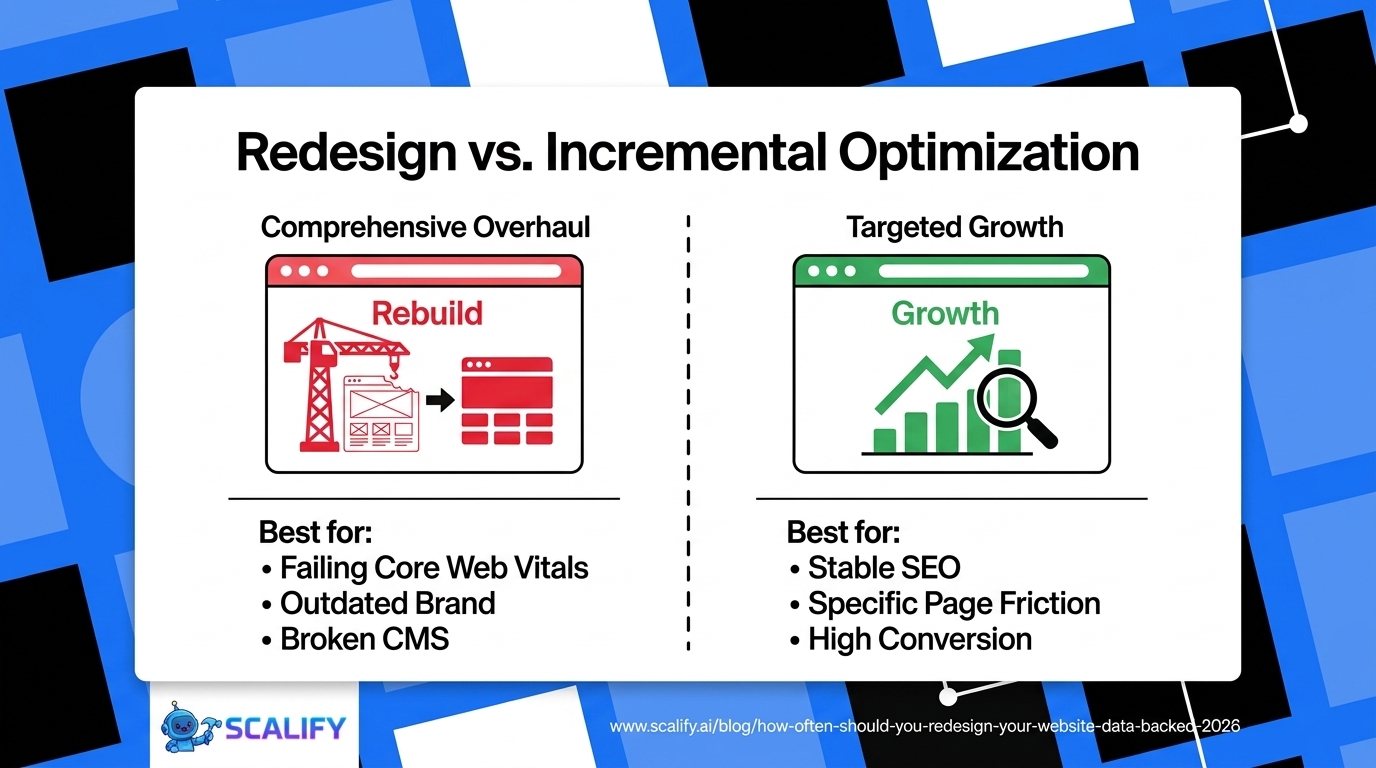
Many websites that "need" a redesign actually need targeted optimization — specific changes to conversion rate, page speed, or content that can be made without a full redesign's cost and disruption. The incremental optimization approach: audit the site's performance by page and conversion step, identify the highest-impact specific issues, and fix them one by one. This approach produces cumulative improvement over time while preserving established rankings, design equity, and operational continuity.
The optimization-first approach makes most sense when: the site's overall structure and brand are still appropriate, the primary issues are specific (one page with a low conversion rate, one technical issue causing poor mobile performance, one key page that needs content updating), and the cost of a full redesign isn't justified by the expected improvement. Full redesigns are justified when multiple dimensions need improvement simultaneously — technical, visual, and structural — such that incremental optimization would cost more than rebuilding efficiently.
Planning a Website Redesign
When a redesign is justified, planning it properly determines whether it produces the intended improvement or introduces new problems. The planning elements most commonly skipped — and most consequential when missed:
Analytics review before starting. Understanding which pages generate the most traffic and conversions before the redesign ensures these pages receive the most attention in the new design. Redesigns that don't study existing analytics often improve pages that didn't matter while inadvertently degrading pages that drove most of the business value.
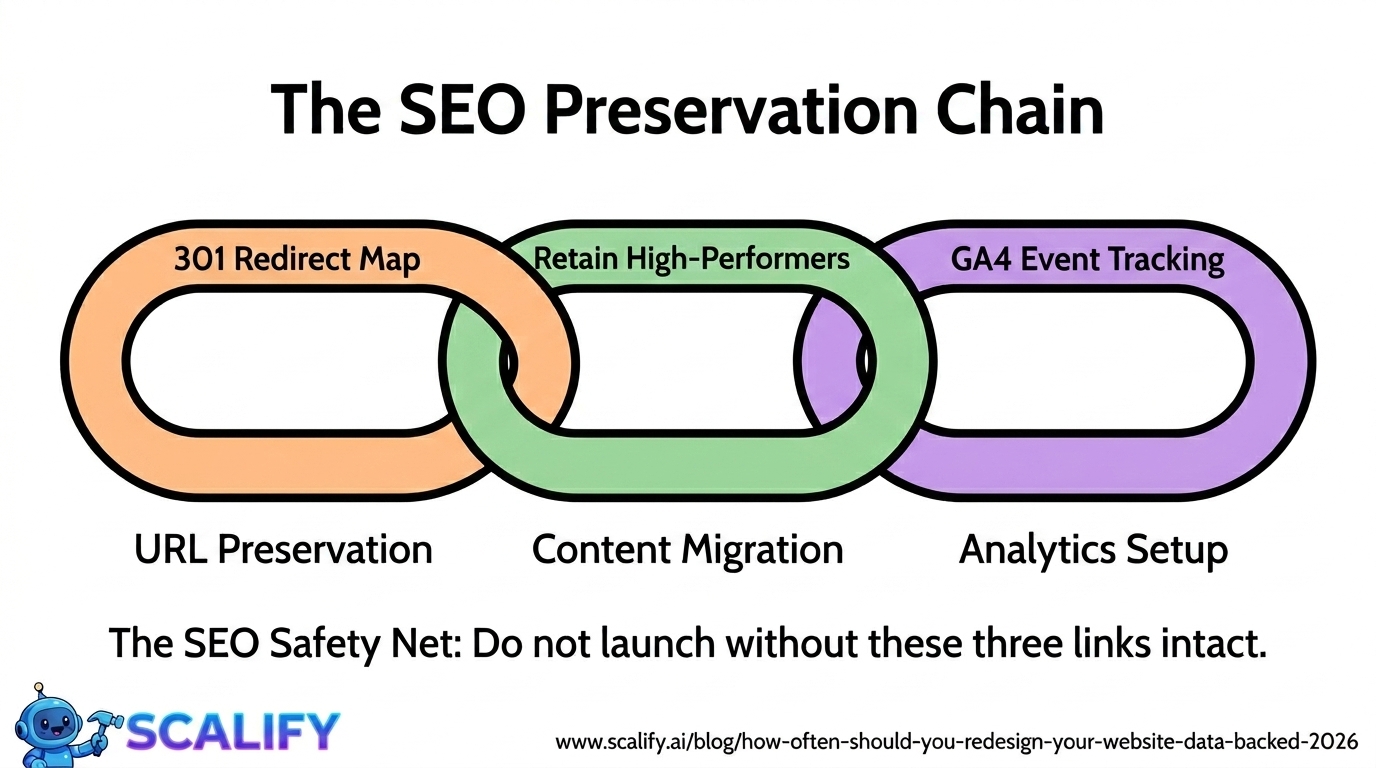
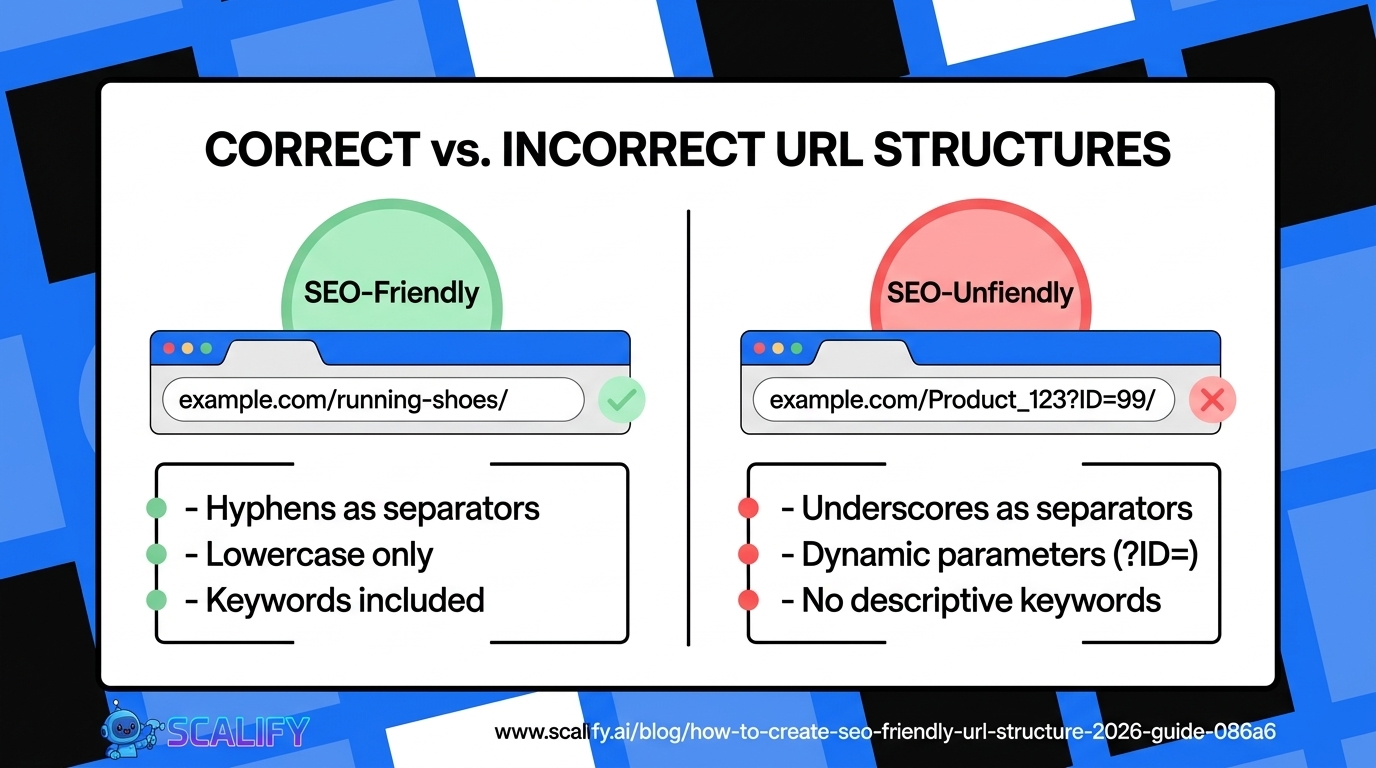
URL preservation and redirects. Every URL that has earned backlinks or organic rankings should be preserved exactly in the new site, or permanently redirected to its equivalent. Redesigns that change URL structures without 301 redirects lose accumulated SEO equity — sometimes dramatically. Create a URL map before the new site launches and verify every important URL has either been preserved or properly redirected.
Content migration strategy. Content that performed well on the old site (high organic traffic, high conversion) should be migrated and retained, not rewritten as default. A redesign brief should specify which content is being preserved, which is being updated, and which is being retired — with SEO implications considered for each category.
The Bottom Line
Most business websites need redesign every 2–3 years — but the decision should be triggered by performance metrics (declining conversion, failing Core Web Vitals, outdated mobile experience, misaligned positioning) rather than calendar time or competitor envy. Incremental optimization is often more cost-effective than full redesign for sites with specific performance issues. When redesign is warranted, plan it with analytics review, URL preservation, and content migration strategy to ensure the new site improves on the old one rather than trading known performance for unknown results.
At Scalify, we help businesses assess whether their website needs optimization or redesign — and deliver professional website redesigns in 10 business days when the time is right.
Top 5 Sources
The Redesign Process: What Good Looks Like
A well-executed website redesign follows a process that significantly improves the probability of the new site outperforming the old one. The stages of a good redesign process:
Discovery and analysis (2–3 weeks): Comprehensive analytics audit (which pages drive traffic and conversions), user research (surveys, interviews, session recordings to understand why users are or aren't converting), competitive analysis (what are top competitors doing that you're not), technical audit (speed, SEO, Core Web Vitals, crawl errors), and content audit (what content is performing well and should be preserved vs. what needs updating or retiring). This phase produces the evidence base that drives every subsequent decision.
Strategy and information architecture (1–2 weeks): Based on the discovery findings, define the new site's information architecture, navigation structure, and page hierarchy. What content lives where? What's the primary user journey from landing to conversion? What are the 3–5 pages that matter most for business outcomes? This strategic phase is where most redesigns fail — designers jump to visual work before understanding the structural decisions that visual design must support.
Design and validation (3–6 weeks for mid-size sites): Wireframes before visual design; visual design review at multiple stages; user testing of prototypes before full development. The validation steps add cost but dramatically reduce the risk of launching a beautiful new site that converts worse than the old one. A 2-hour usability test on Figma prototypes before development can save 40 hours of developer revision time after launch.
Development with SEO preservation (4–8 weeks): Build the new site with the complete URL redirect map in place from day one, test all redirects before launch, verify Search Console is tracking the new site's indexing, and ensure analytics conversion tracking is correctly configured on the new site before switching traffic.
Post-launch monitoring (30 days minimum): Monitor Search Console for any new crawl errors, watch conversion rates daily for the first 2 weeks compared to pre-launch baselines, check for any Core Web Vitals regressions introduced during development, and fix issues within 48 hours of discovery.
Website Redesign Red Flags
These are the warning signs that a website redesign project is headed for poor outcomes:
"We want it to look modern." Visual modernity with no performance goals attached produces beautiful websites that don't improve conversion. Every redesign should have measurable outcome goals — specific conversion rates to achieve, specific organic traffic targets, specific Core Web Vitals scores — not just visual aspirations.
No SEO review before changing URLs. URL structure changes during redesign without proper 301 redirects are responsible for many case studies of businesses that redesigned their website and watched organic traffic drop 40–60% in the months following launch. Every URL change must be mapped and redirected.
Launching without analytics in place. A new website launched without GA4 event tracking, conversion goals, and form submission tracking is operationally blind — you'll have no data to tell you whether the redesign improved or harmed conversion rates, and no baseline for future optimization.
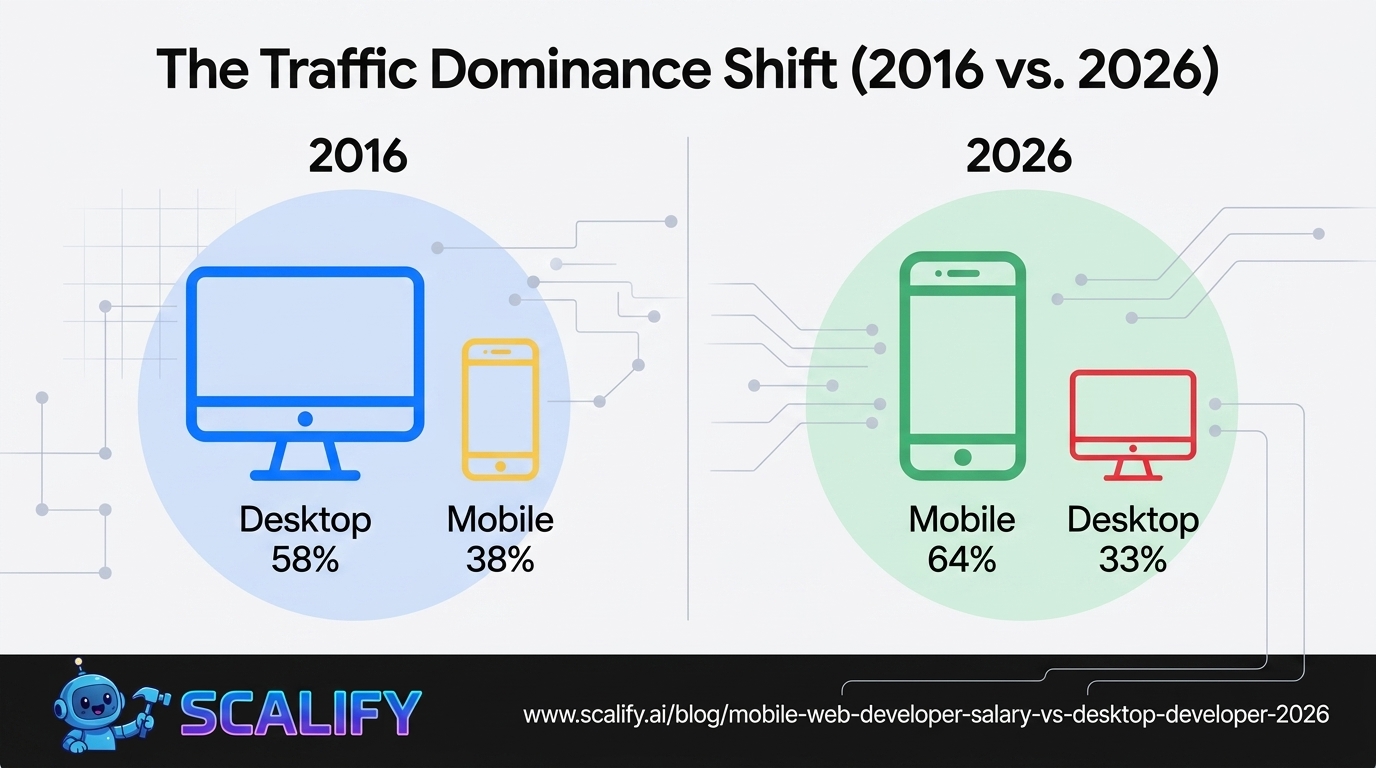
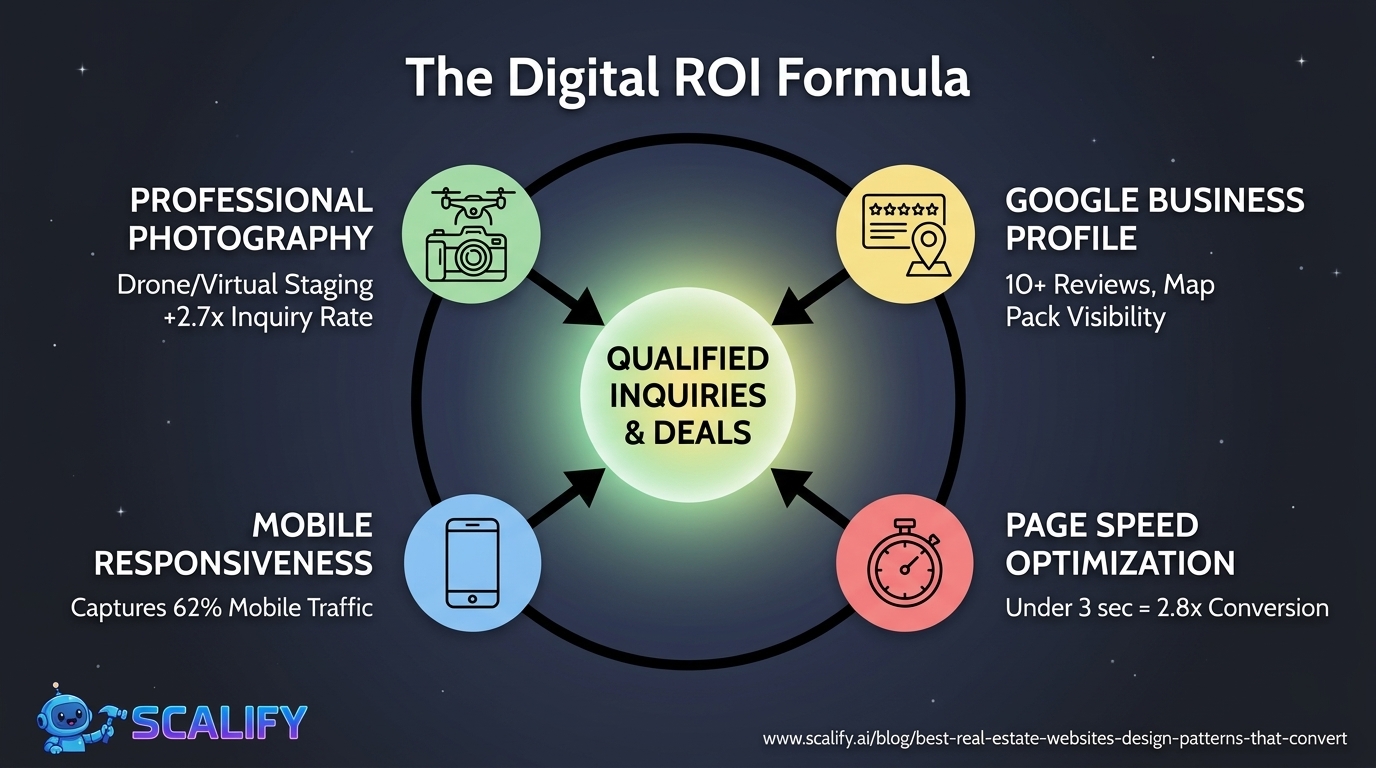
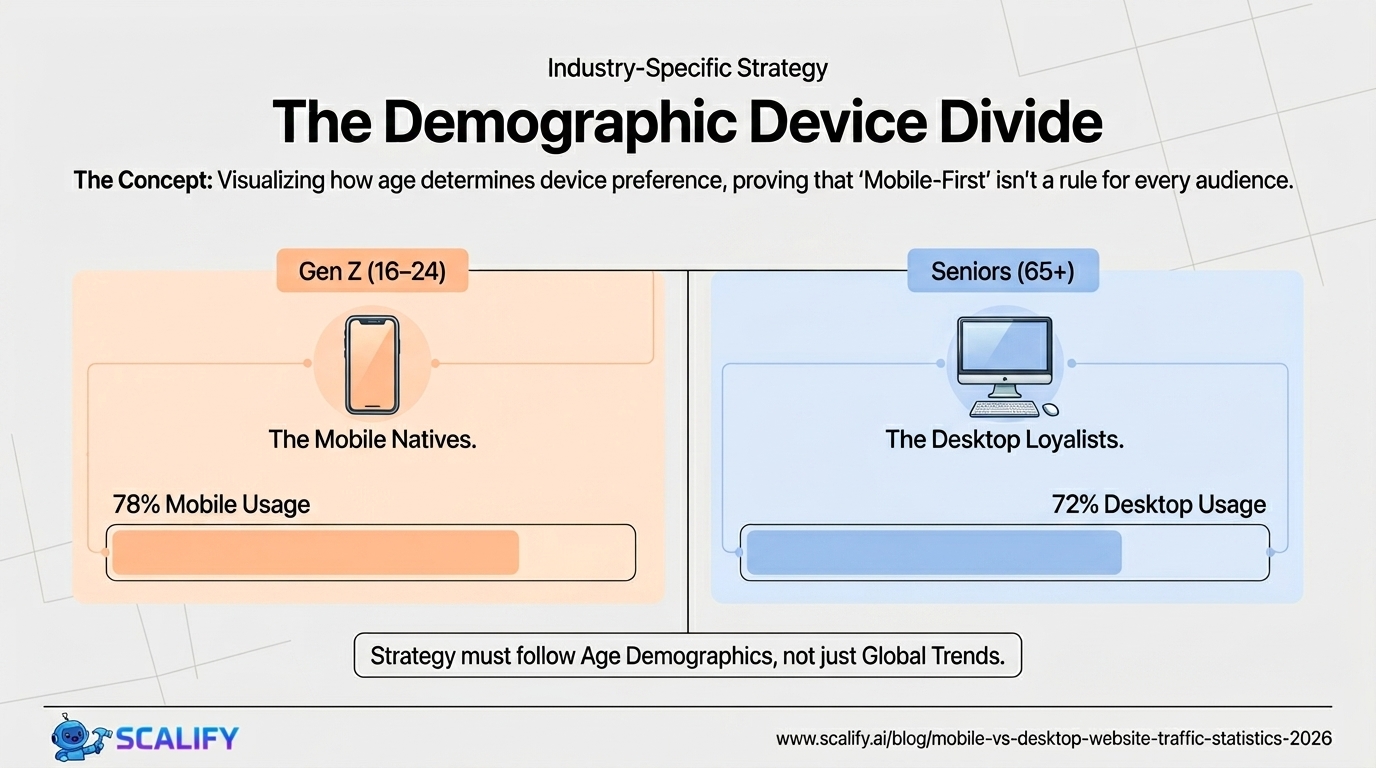
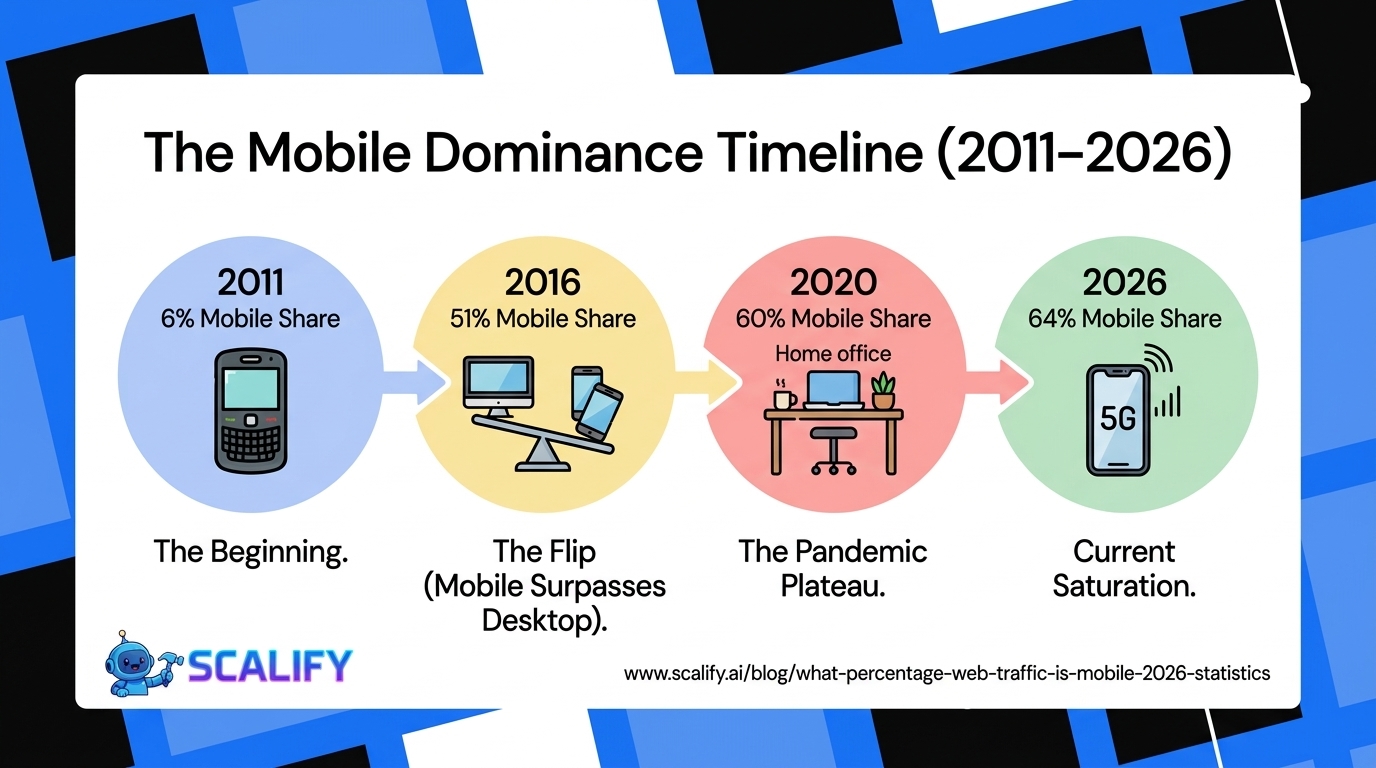
Ignoring mobile during the design process. Designing primarily for desktop and "making it responsive" during development consistently produces inferior mobile experiences. With 62% of traffic on mobile, mobile design should be the primary design context, not an afterthought.
Timing a Website Redesign
Beyond the "when is it needed" question is the tactical "when is the right time" question. The best timing for a website redesign: when your calendar has a defined endpoint (not "as soon as possible"), when you're not in a peak revenue period that can't afford conversion disruption, when key stakeholders have availability for review and approval, when you've gathered the analytics data needed to make informed decisions (minimum 6 months of GA4 data), and when the team has budget and bandwidth for post-launch monitoring and quick-fix iteration. The worst time to redesign: 4 weeks before a major trade show or product launch, in the middle of a significant SEO content push, or without the post-launch bandwidth to fix issues quickly.



.jpeg)
.jpeg)





78 SW 7th St, Miami, FL 33130