

How to Build Backlinks to a New Website (2026 Guide)
By Josh Ternyak

April 17, 2026
Comprehensive 2026 guide: How to Build Backlinks to a New Website (2026 Guide)
The New Website Link Building Challenge
Building backlinks to a new website is categorically different from building links to an established site. You have no domain authority, no existing relationships with other website owners, no content history that other sites are familiar with, and no proven track record. The strategies that work for an established site — content that earns links naturally over time, journalist outreach that relies on your reputation — work more slowly or not at all in the early months.
This guide focuses on the specific tactics that produce backlinks for new websites — starting from zero authority — ranked by practicality and effectiveness for sites in their first 6–18 months.
Step 1: Foundation Backlinks (Start Here — Week 1)
Before any outreach, secure the baseline backlinks that every business website should have. These are easy to get, take 1–2 days, and establish the initial referring domain count:
Foundation Link SourceHow to Get ItDA/DR RangeTime RequiredGoogle Business ProfileCreate/claim and verify your listing — includes website linkDA 10030 minutesBing PlacesCreate business listing at bing.com/businessHigh DA20 minutesFacebook Business PageCreate page, add website in bioDA 10030 minutesLinkedIn Company PageCreate page, add website URLDA 9830 minutesYelp Business ListingClaim or create listing with website URLDA 9320 minutesApple MapsSubmit via Apple Business ConnectHigh DA20 minutesYellow PagesCreate free listing at yellowpages.comDA 8120 minutesBetter Business Bureau (if applicable)Apply for accreditation — includes linkDA 921 hourIndustry-specific directoriesSubmit to 3–5 key directories in your nicheVaries1–2 hours
Completing this foundation in Day 1 gives a new website its first 10–15 referring domains from high-authority sources — a legitimate start that establishes the site as a real business rather than a spam domain. These links won't produce page-one rankings for competitive keywords, but they do signal legitimacy to Google and provide the baseline from which link building efforts compound.
Step 2: Local Citations (Week 1–4, Local Businesses)
For local service businesses, citation building is one of the most impactful early investments:
Citation TierKey SourcesTimelineTier 1 (Essential)Google Business Profile, Yelp, Facebook, Apple Maps, Bing PlacesComplete in Week 1Tier 2 (Data Aggregators)Foursquare, Neustar Localeze, Data AxleWeek 2–3Tier 3 (Industry-Specific)Houzz (home), Healthgrades (medical), Avvo (legal), Clutch (agencies)Week 2–4Tier 4 (Local)Chamber of Commerce, city directories, local newspapersMonth 1–2
Critical: NAP (Name, Address, Phone) must be identical across all citations. Even small variations (Ste vs Suite, St vs Street) create citation inconsistency that reduces local ranking signals.
Step 3: Link-Worthy Content Creation (Month 1–3)
The most sustainable link building strategy is creating content that other websites genuinely want to link to. For new websites, the most link-attractive content types in order of effectiveness:
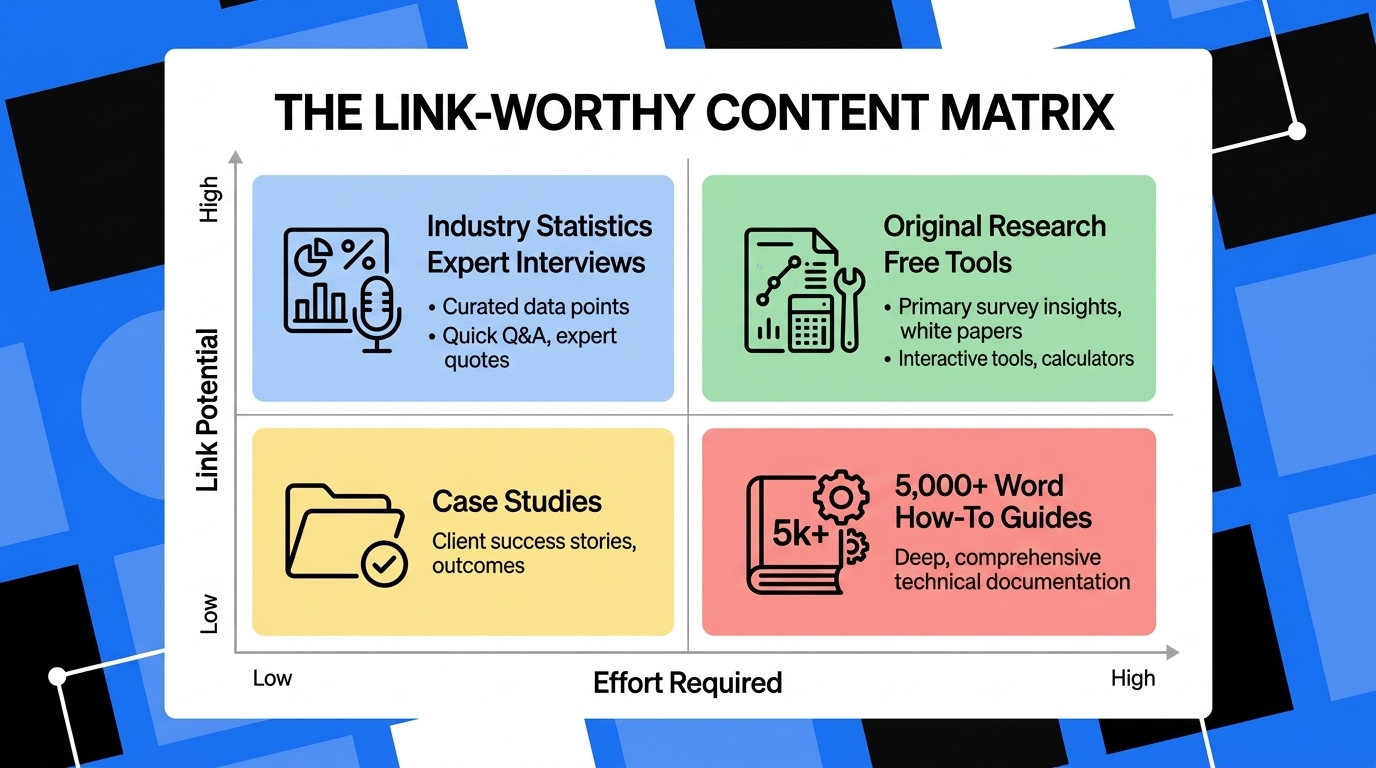
Content TypeLink Attraction PotentialEffort RequiredNotesOriginal industry research / surveysVery HighHighSurvey 100+ people; publish data findingsFree tools / calculatorsVery HighHighWebsite cost calculator, ROI calculatorComprehensive industry statistics pagesHighMediumAggregate existing data with proper attributionDefinitive how-to guides (5,000+ words)HighMedium-HighBetter and more comprehensive than existing guidesVisual content (infographics, charts)HighMediumData visualization that's sharable and embeddableIndustry expert interviewsMedium-HighLow-MediumInterviewed experts often share and link to published interviewsCase studies with specific resultsMediumMediumClients often share case studies about them
Step 4: Guest Posting (Month 1–6)
Guest posting — writing content for other websites in exchange for an author byline with a link back to your site — is the most reliable active link building strategy for new websites. Unlike waiting for links to come naturally, guest posting gives you direct control over the pace of link acquisition.
Finding Guest Post Opportunities
Search Google for:
Filter results by domain authority — target sites with DA 30+ for meaningful link value. Avoid obviously low-quality "write for us" pages that accept anything from anyone — these are link farms that provide minimal SEO value and potential negative association.
Guest Post Outreach Process
Guest Post Outreach Template
Subject: Guest Post Idea for [Site Name]: [Specific Topic]
"Hi [Name], I've been reading [Site Name] for a while — particularly enjoyed [specific article]. I'm [your name], [your relevant credential/experience]. I have a few topic ideas that I think would resonate with your audience: [Idea 1 — one sentence], [Idea 2 — one sentence], [Idea 3 — one sentence]. Would any of these be a fit? Happy to share a full outline for whichever interests you most. Best, [Your name]"
Step 5: HARO and Expert Sourcing (Ongoing)
HARO (Help a Reporter Out) connects journalists with expert sources. Responding to relevant HARO queries earns editorial links from publications that can have DA 60–90+:
HARO requires consistent daily attention — most queries have short response windows (hours, not days) and competition from multiple expert sources. The link quality when you do earn coverage is excellent: editorial links from press outlets are among the most valuable backlinks available.
Step 6: Broken Link Building (Month 2–6)
Find relevant content in your industry that has broken links (links pointing to 404 pages), then offer your content as a replacement. This works because you're giving the site owner something of value (helping them fix a broken link) rather than just asking for a favor.
Process:
Step 7: Relationship-Based Links (Ongoing)
The most sustainable long-term link building is built on genuine relationships in your industry:
Link Building Timeline for New Websites
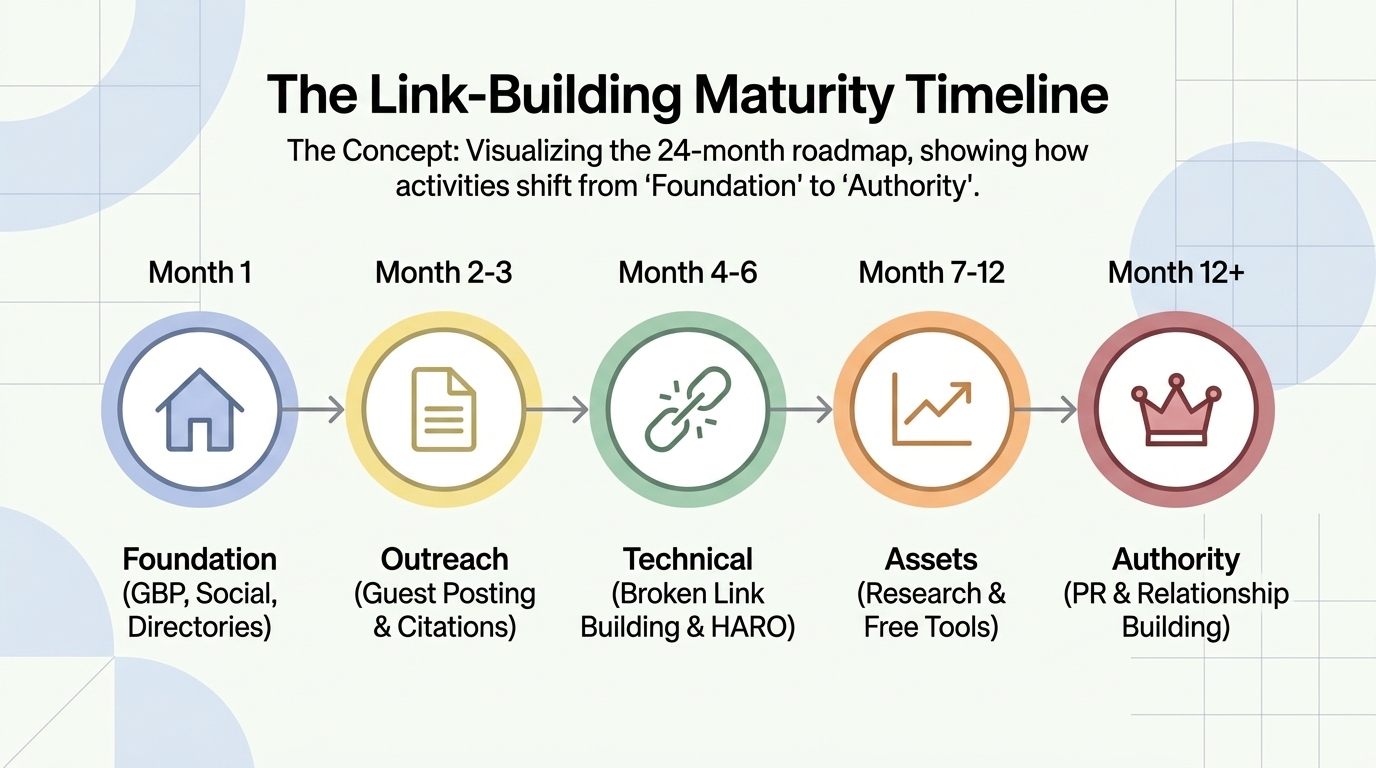
MonthReferring Domains GoalPrimary ActivitiesMonth 115–25 RDsFoundation links, citations, directory submissionsMonth 225–40 RDsGuest post outreach begins, HARO responses, local citationsMonth 335–55 RDsFirst guest posts published, relationship outreachMonth 4–650–80 RDsOngoing guest posting, HARO, broken link buildingMonth 7–1280–150 RDsLinkable content assets published and promoted, PR outreachMonth 12–24150–300+ RDsCompound growth from content links + ongoing outreach
.jpeg)
What to Avoid: Link Building Red Flags for New Websites
TacticRiskWhy New Sites Are Especially VulnerableBuying linksGoogle manual penaltyNew sites are more closely scrutinized; unnatural link profiles more obviousLink exchangesPenguin algorithm flagReciprocal linking at scale is a clear manipulation signalPBN linksDe-indexation riskPBN footprints are more visible on new, low-history domainsExact-match anchor text from all linksOver-optimization penaltyNatural link profiles have diverse, branded, and varied anchorsBulk directory submission servicesSpam associationLow-quality directory links can actively hurt new domain reputation
The Bottom Line
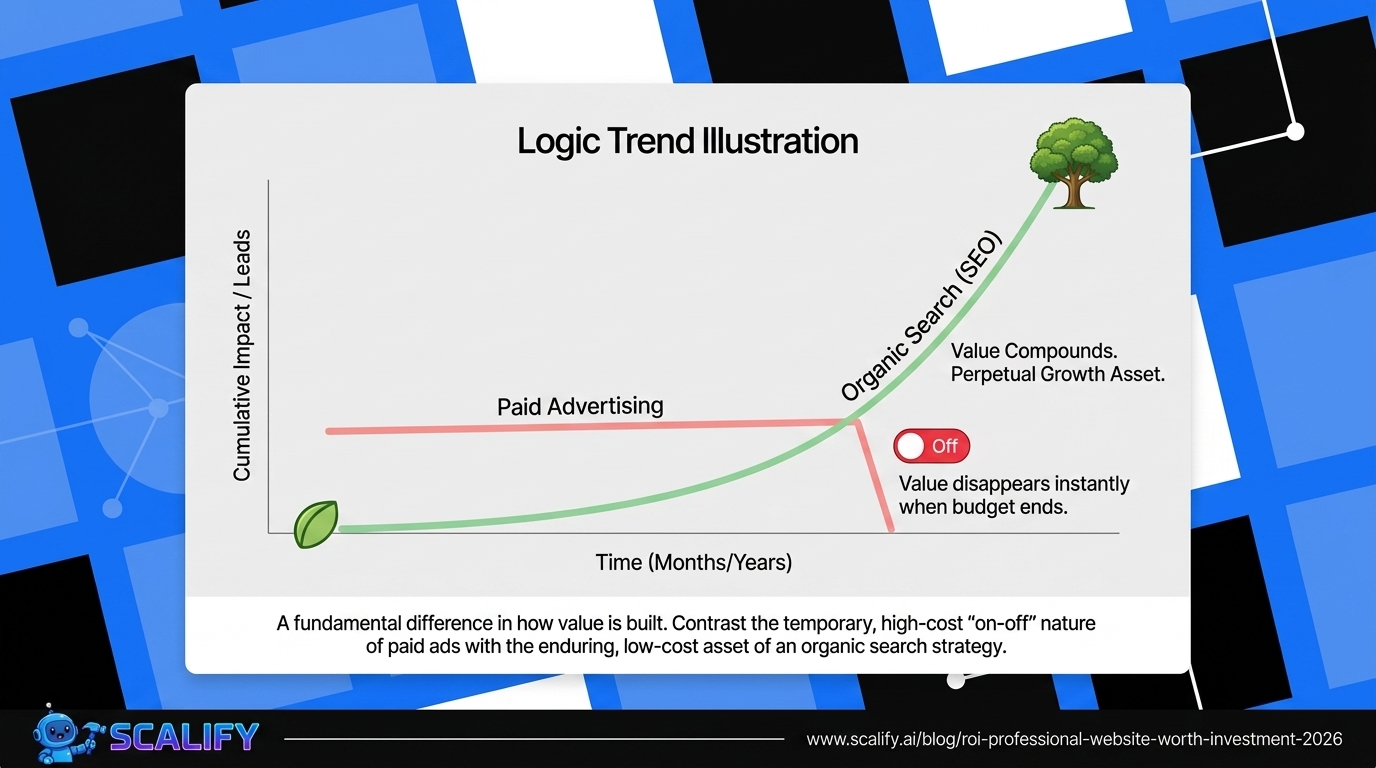
Link building for new websites is a 6–24 month process that requires consistent effort across multiple strategies rather than any single tactic. Start with foundation links (business directories, citations) in Week 1, begin guest post outreach in Month 1–2, create linkable content assets in Month 2–3, and layer in HARO and relationship-based link building as an ongoing practice. Expect DR 20–30 by Month 6 with consistent effort, DR 35–50 by Month 12–18. The compound effect of a growing referring domain count accelerates over time as domain authority increases — making each piece of content published more likely to rank and more likely to attract additional natural links, creating the self-reinforcing cycle that makes SEO the highest-ROI long-term digital marketing channel.
At Scalify, we build websites with the content structure and technical SEO foundations that maximize the ranking impact of every backlink earned — so your link building investment translates directly into organic traffic and lead generation.
.jpeg)
Top 5 Sources
Building a Sustainable Digital Marketing System
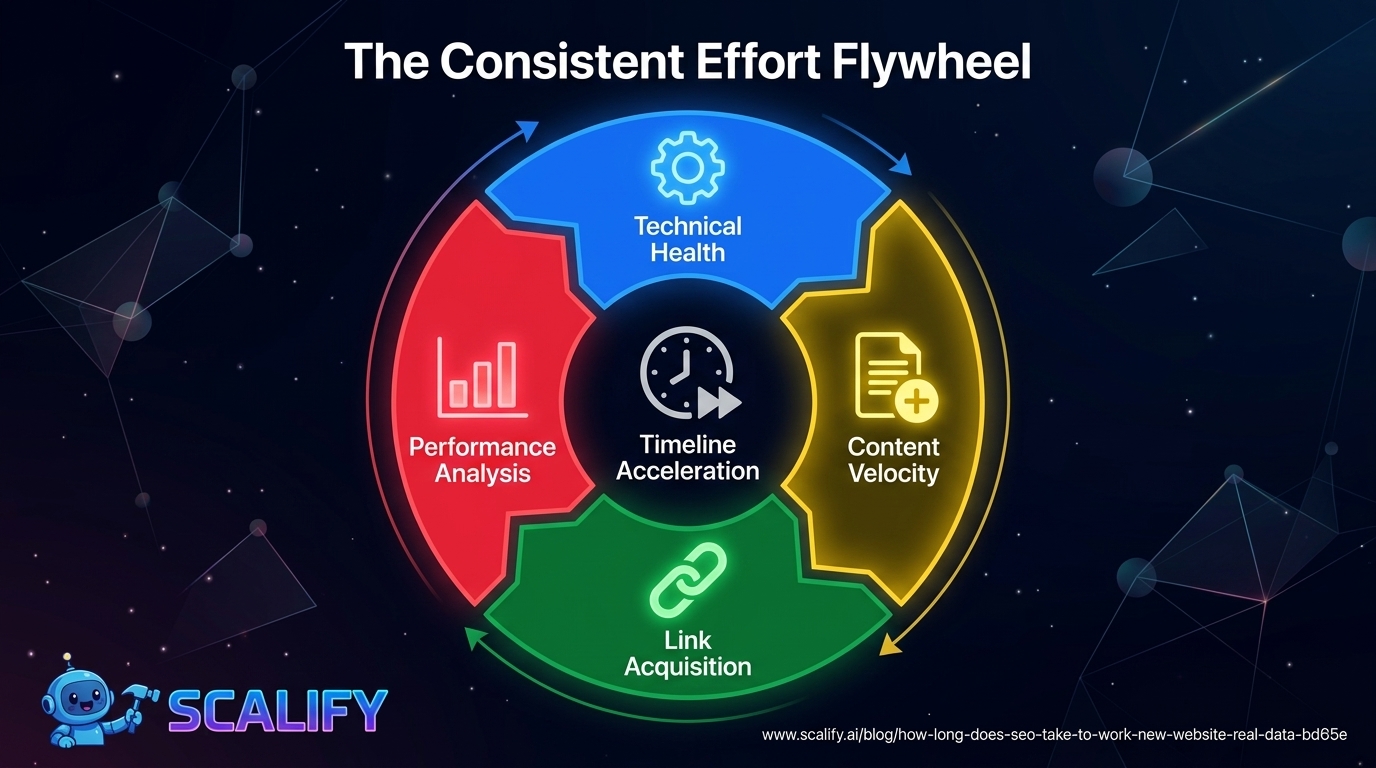
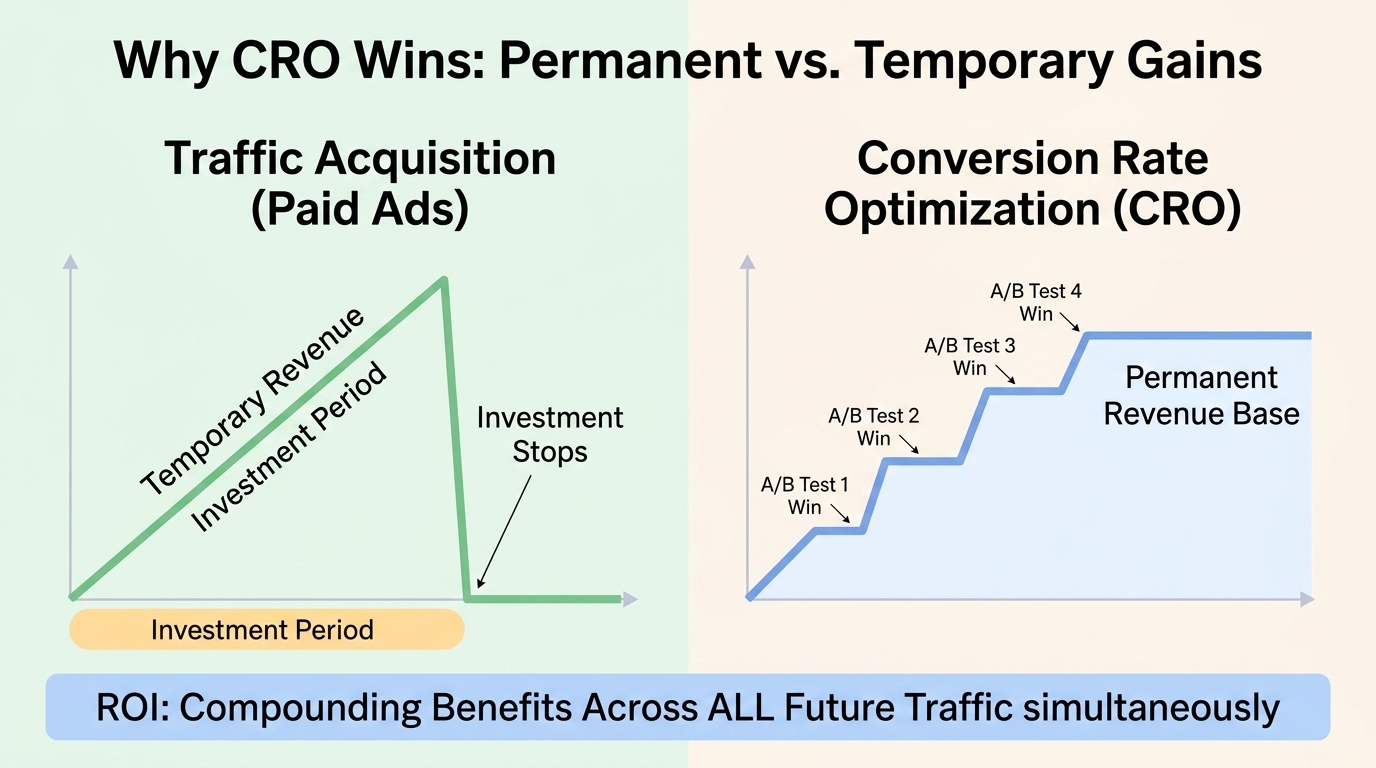
The most effective websites are not built once and left static — they're living systems that improve continuously as the business learns what resonates with its audience, what converts visitors, and what generates organic traffic. Building this improvement discipline requires three things: measurement infrastructure that makes performance visible (Google Analytics 4, Search Console, Core Web Vitals monitoring), a regular cadence of improvement work (monthly or quarterly audits and optimization cycles), and the willingness to make changes based on what the data shows rather than aesthetic preferences or past decisions.
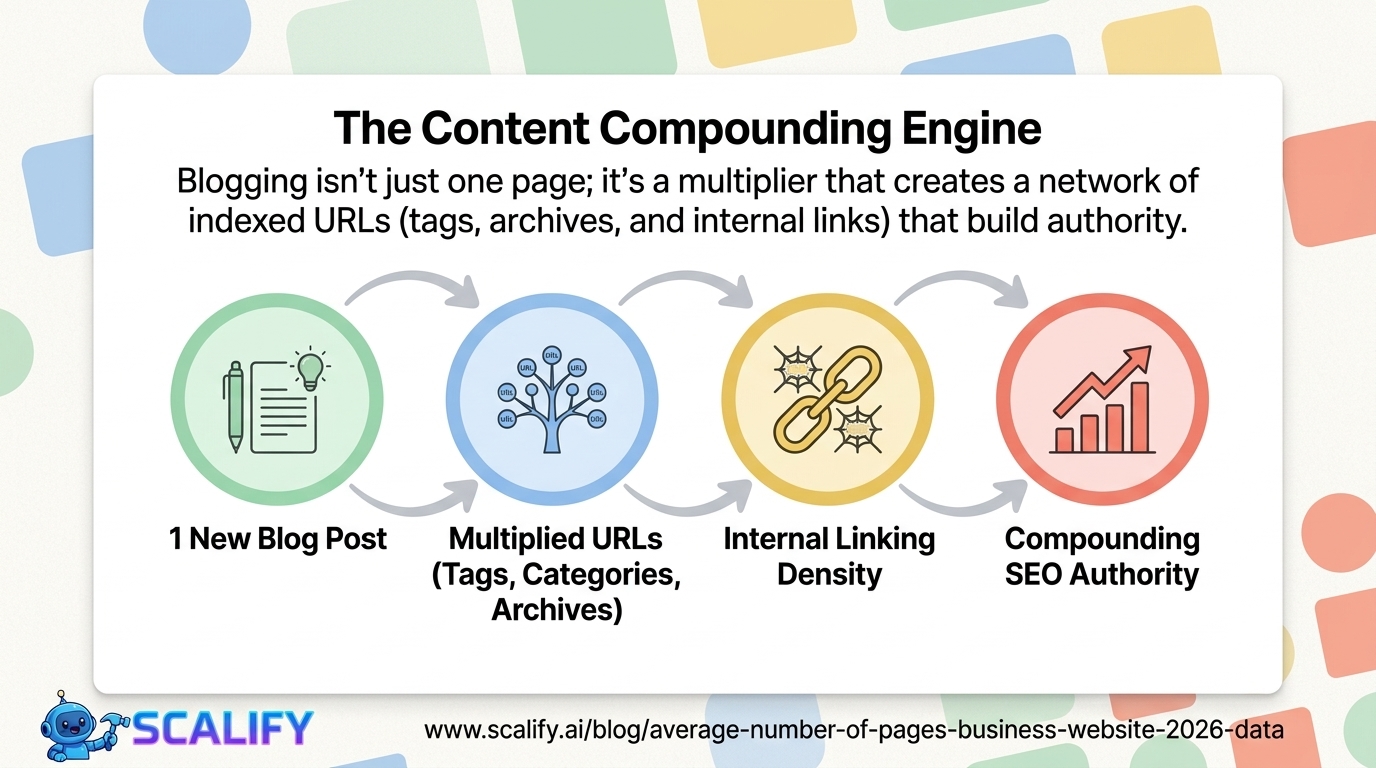
The businesses that achieve the strongest digital marketing outcomes over 3–5 years are consistently those that treat their website as a compounding investment — not a cost that was incurred and is now sunk. Each improvement builds on previous ones: content that ranks brings organic traffic that generates leads that fund more content investment. Backlinks earned improve rankings for future content. Performance improvements make every marketing dollar more efficient by converting more of the traffic those campaigns generate. This compounding structure means the businesses that start investing systematically earliest build the most durable competitive advantages — and those that defer the investment face increasingly expensive catch-up costs as competitors accumulate authority that takes time to replicate.
The practical starting point for any business that hasn't yet built this system: set up Google Analytics 4 and Search Console if not already in place, establish baseline metrics for organic traffic, conversion rate, and Core Web Vitals, and identify the single highest-impact improvement available based on those metrics. Implement that improvement, measure the result after 30 days, and plan the next improvement. This iterative discipline, maintained consistently, produces the compounding returns that transform a business's digital marketing from a cost center into one of its most valuable revenue-generating assets.
At Scalify, our websites are built with analytics, performance optimization, and SEO foundations that give every business the starting point for this compounding improvement discipline — delivered professionally in 10 business days.


.jpeg)
.jpeg)

78 SW 7th St, Miami, FL 33130