

The Best Personal Trainer and Fitness Websites: What Gets Clients Signed Up
By Josh Ternyak

April 22, 2026
Comprehensive guide: The Best Personal Trainer and Fitness Websites: What Gets Clients Signed Up
Standing Out in the Most Crowded Personal Service Market
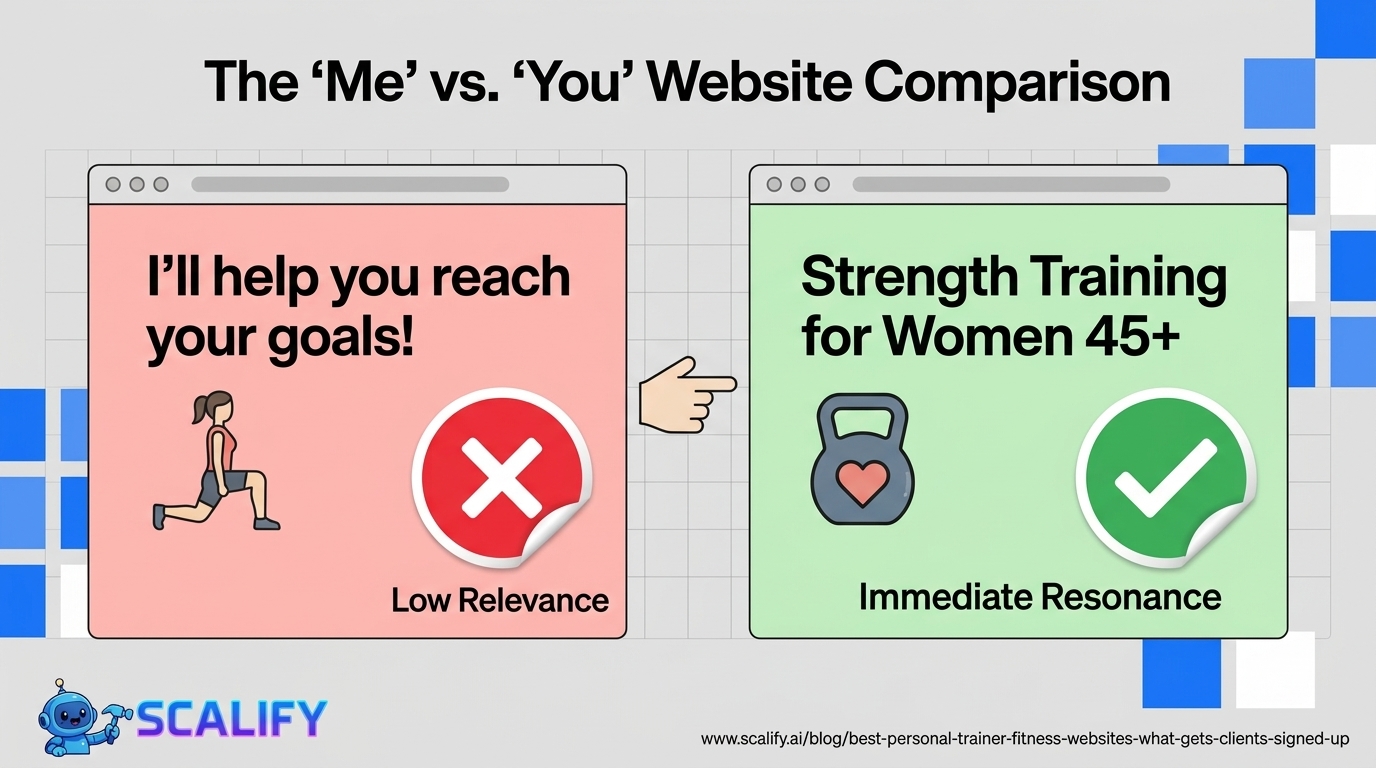
The personal training and fitness coaching market has never been more competitive. Online coaching platforms have made geographic barriers irrelevant. Social media has made fitness expertise a content commodity — thousands of trainers giving away programming and advice for free to build audiences. The rise of app-based fitness (Peloton, Noom, Future) has created well-funded alternatives to traditional personal training. In this environment, a generic personal trainer website that says "I'll help you reach your goals!" with some stock photos of someone doing lunges is invisible.
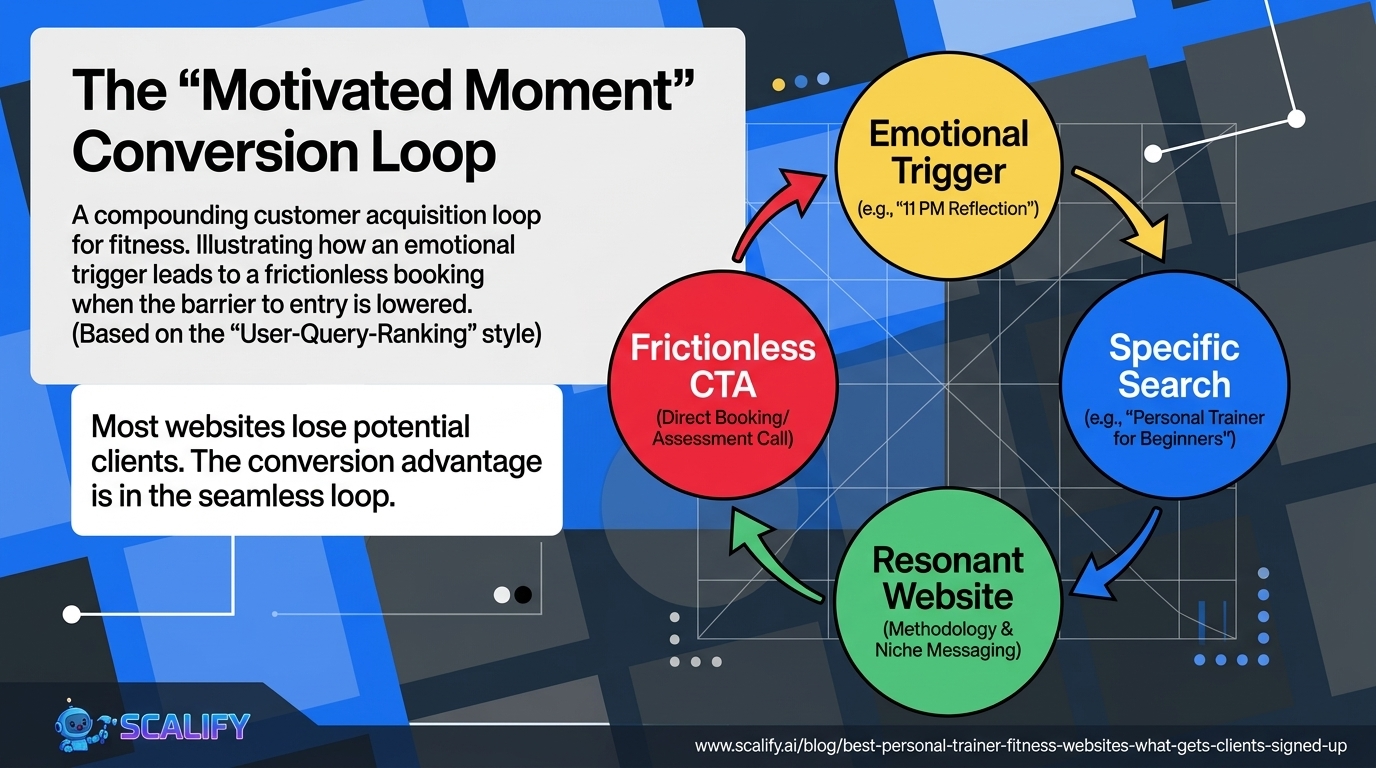
The personal trainer websites that actually convert clients do something different: they establish specific expertise, they communicate a distinct methodology, they build emotional connection with the right prospective client, and they lower the barrier to starting far enough that a visitor who found them on a Tuesday afternoon at 11pm can actually take the first step right then.
This guide examines what separates fitness professional websites that consistently fill their client rosters from the majority that generate occasional inquiries but rarely close them.
The Core Problem with Most Fitness Websites
Most personal trainer websites fail at the same fundamental level: they describe the trainer rather than connecting with the client's specific situation. The website talks about the trainer's certifications, the trainer's methods, the trainer's philosophy — when the only question the prospective client has is: "Can this person actually help me with my specific problem?"
A 52-year-old woman who has never consistently exercised but has been told by her doctor she needs to address her metabolic health is not searching for "NASM-certified personal trainer." She's searching for something closer to "how to start exercising at 50" or "personal trainer for beginners who are out of shape." She has anxiety about walking into a gym with fit people. She's failed at exercise programs before and is skeptical she'll stick to something. She has time constraints she's not sure she can work around. She needs to see someone who understands her specific situation — not a generic trainer who works with everyone.
The trainer who speaks directly to her — "I specialize in helping women 45+ who've never been athletic build consistent fitness habits that fit around real life" — doesn't just attract her attention; they create immediate relevance that begins the trust relationship before any communication has happened.
Niche and Specialization: The Highest Conversion Variable
Every fitness professional is told they need to niche down, and most resist because they fear losing potential clients. The evidence says the opposite: specificity attracts better-fit clients at higher rates than generality does, commands higher prices, and produces better long-term relationships because the trainer is actually well-suited to serve those clients.
Effective fitness niches:
The website for a niche-focused trainer speaks in the language of that specific audience — it references their specific anxieties, their specific barriers to consistency, their specific goals. This resonance is visible to the right visitor immediately and creates a sense of "this person gets me" that generic trainer sites never achieve.
The Critical Elements of High-Performing Fitness Websites
Transformation Stories with Real Detail
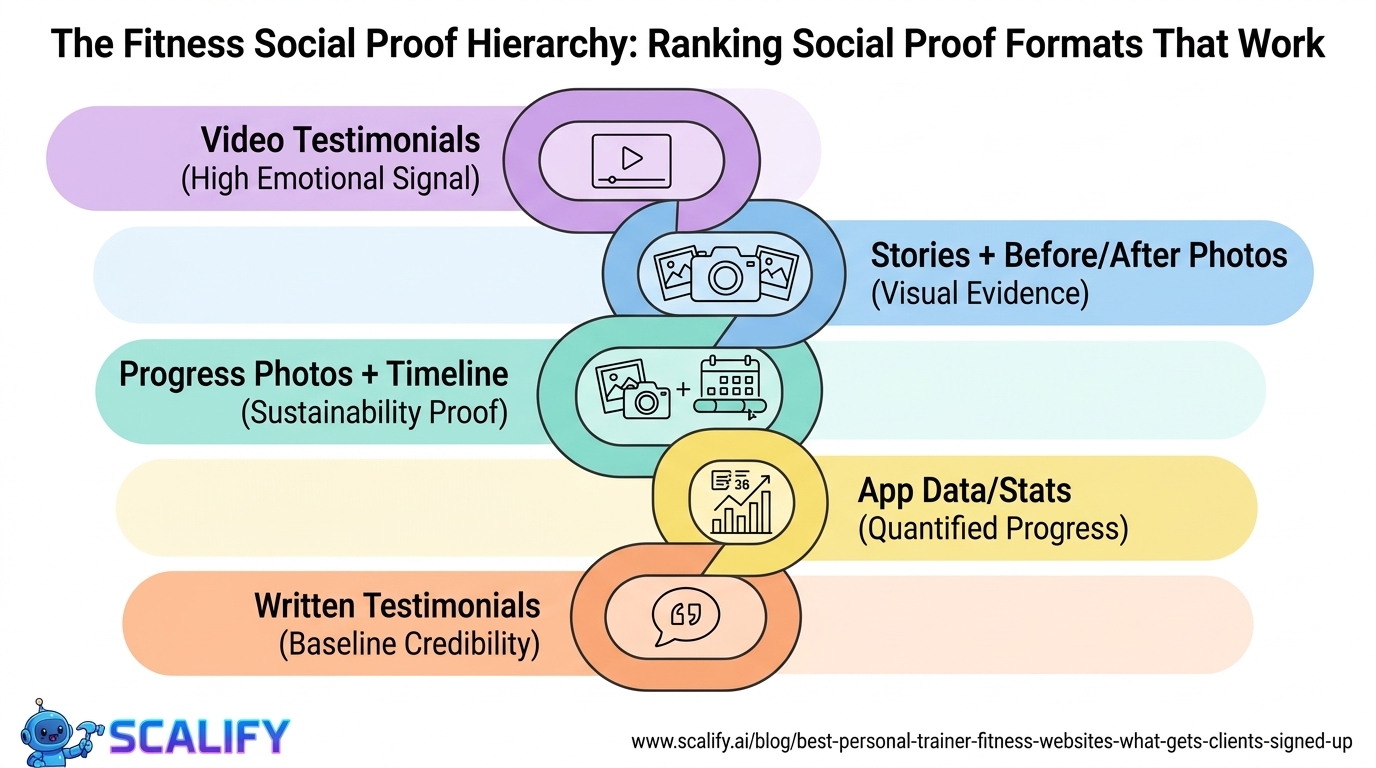
The most powerful content on any fitness professional's website is specific client transformation stories. Not "John lost 35 pounds and feels great" but a substantive case study: John's starting point, what had failed before, what was different about this approach, the specific timeline, and what his life looks like now. The before/after photos are part of this, but the story is more important than the photos — the photos provide visual evidence, but the story provides the emotional and rational case for why this trainer's approach works.
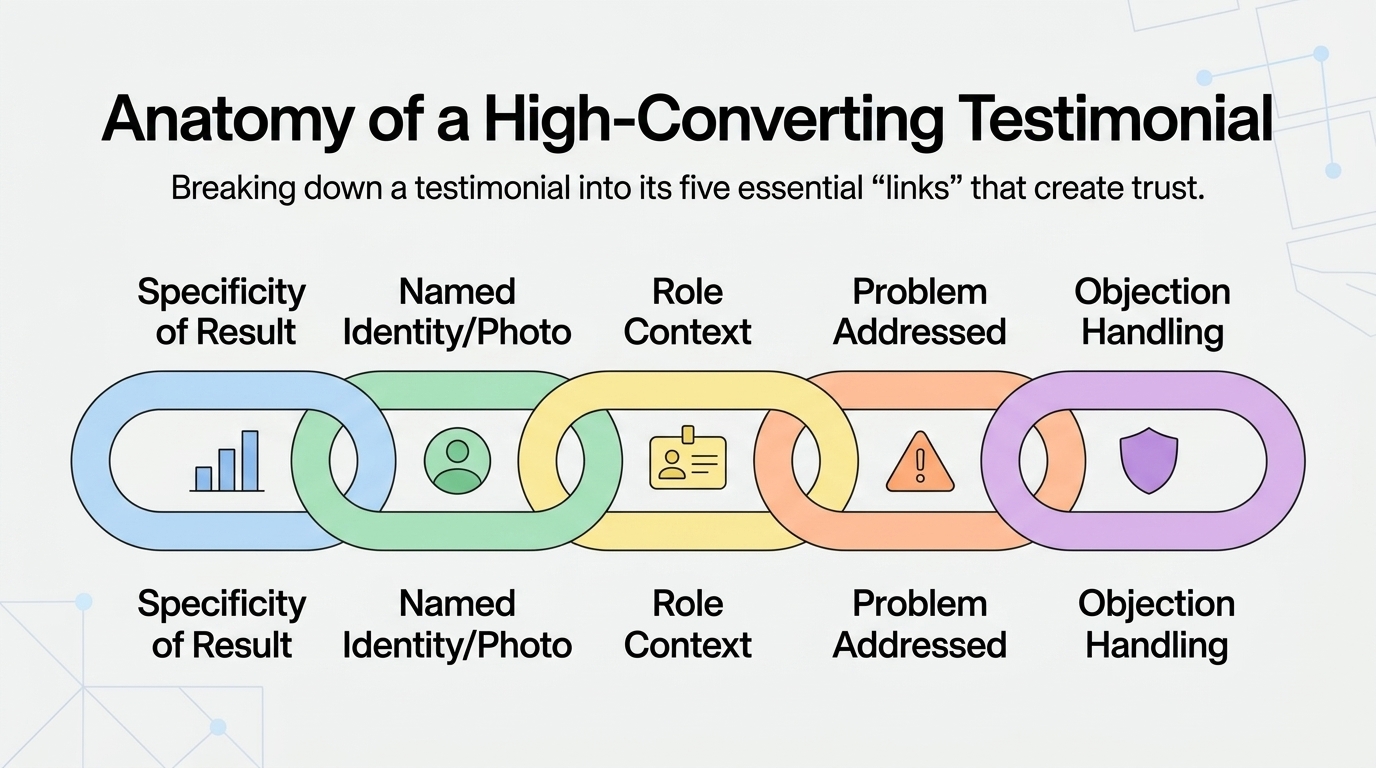
Client testimonials should be specific enough to address the anxieties of prospective clients who are in similar situations. "I thought I was too old to change my body, and the first six weeks felt impossible. But the structure gave me something I'd never had before..." resonates with every prospective client in the same demographic who shares those beliefs.
Video testimonials are significantly more persuasive than written testimonials — the combination of visual, auditory, and emotional signals creates credibility that written text can't match. Even a brief, informal video of a client speaking authentically about their experience outperforms a polished written testimonial in conversion terms.
Clear Methodology: What Makes This Trainer Different
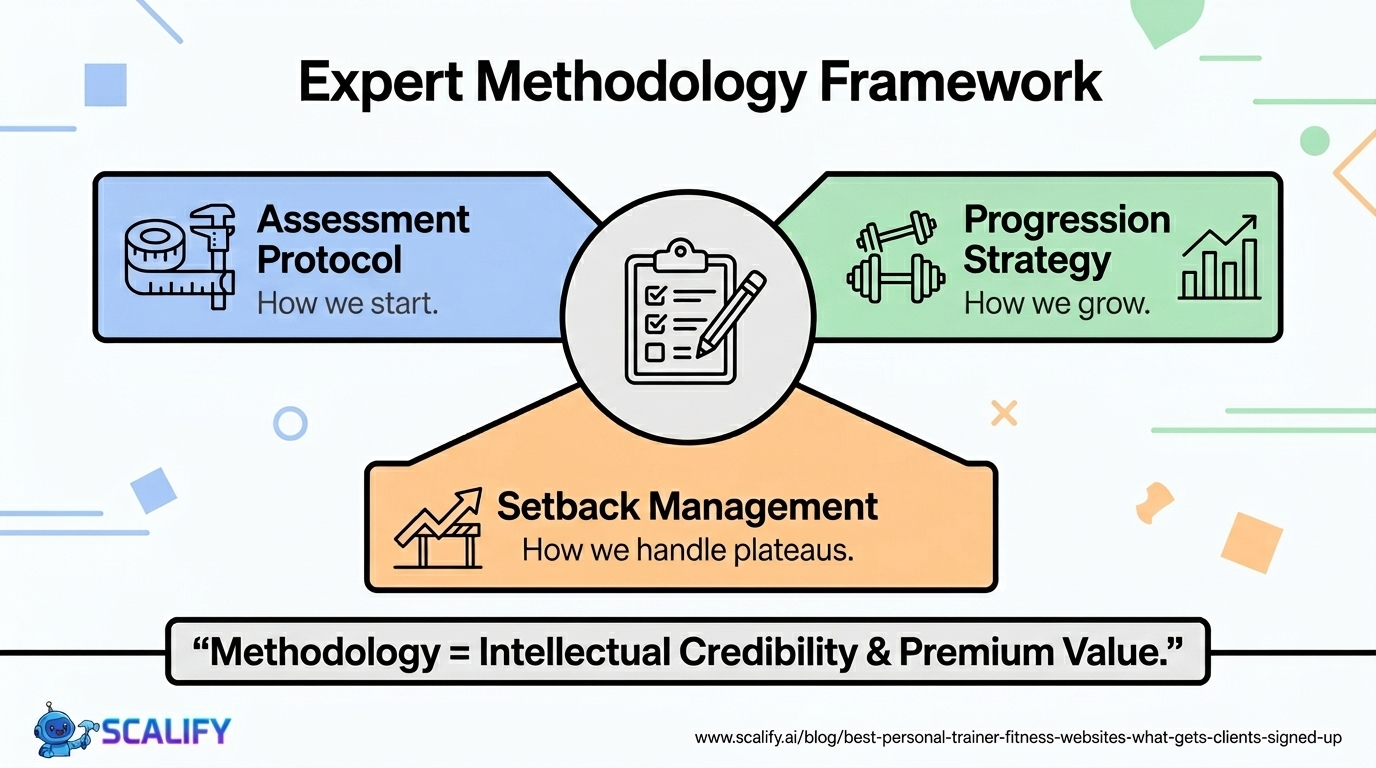
Every trainer claims to create "personalized programs" and to "help you reach your goals." These claims are so universal they communicate nothing. The trainer who explains specifically how they assess clients, how they structure programming progression, how they handle inevitable setbacks and plateaus, and what their specific evidence-based philosophy is — this trainer is communicating real expertise that differentiates them from the generic field.
The methodology section doesn't need to be a technical literature review. It needs to communicate: this trainer thinks carefully about their approach, they've developed it based on experience and evidence, and they can explain what they do and why it works. This intellectual credibility is part of what justifies premium pricing — clients paying $250/session expect a level of expertise and deliberateness that $50/session trainers may not communicate.
Trainer Credentials and Authenticity Combined
Certifications matter for credibility (NASM, NSCA-CSCS, ACE, ACSM, Precision Nutrition) — they signal professional investment and verifiable competency. But credentials alone don't convert clients. The trainer's personal story — why they chose this work, what their own fitness journey looked like, what drove them to specialize in their specific niche — creates the human connection that credentials can't.
Trainers who share their own story authentically — including the struggles, the failures, the learning curves — build the kind of trust that professional credentials support but can't create alone. A trainer who describes their own struggle with consistency, or their recovery from injury, or their experience as a former athlete, or their personal connection to a specific health condition creates a human story that prospects connect with.
The photo of the trainer is critical and often underinvested. Not a stiff, formal professional headshot — a genuine photograph that communicates personality, warmth, and approachability. The trainer smiling in a gym context. The trainer working with a client. The trainer in motion. The prospect is essentially deciding "do I want to spend time with this person?" and the photograph is the primary evidence available.
Pricing Transparency
Fitness is a category where pricing anxiety is real — people fear calling to ask about pricing, feeling pressured to sign up, or discovering that the service is far outside their budget after investing emotional energy. Trainer websites that show pricing (or at minimum pricing ranges) consistently convert at higher rates than those that require contact to discover pricing.
The fear that showing pricing will lose clients who would have paid more if they'd first gotten on a call is rarely justified. More commonly, pricing transparency attracts better-fit clients (those who can afford the service and have already made peace with the investment before contact) and reduces the friction that prevents under-committed prospects from reaching out.
Simple Booking or Contact Mechanisms
The decision to hire a personal trainer often happens in an emotionally motivated moment — after a doctor's visit, after seeing photos from a vacation, after a difficult night of not sleeping. Capturing this moment requires that the conversion path be immediately accessible and frictionless.
The best fitness website CTAs:
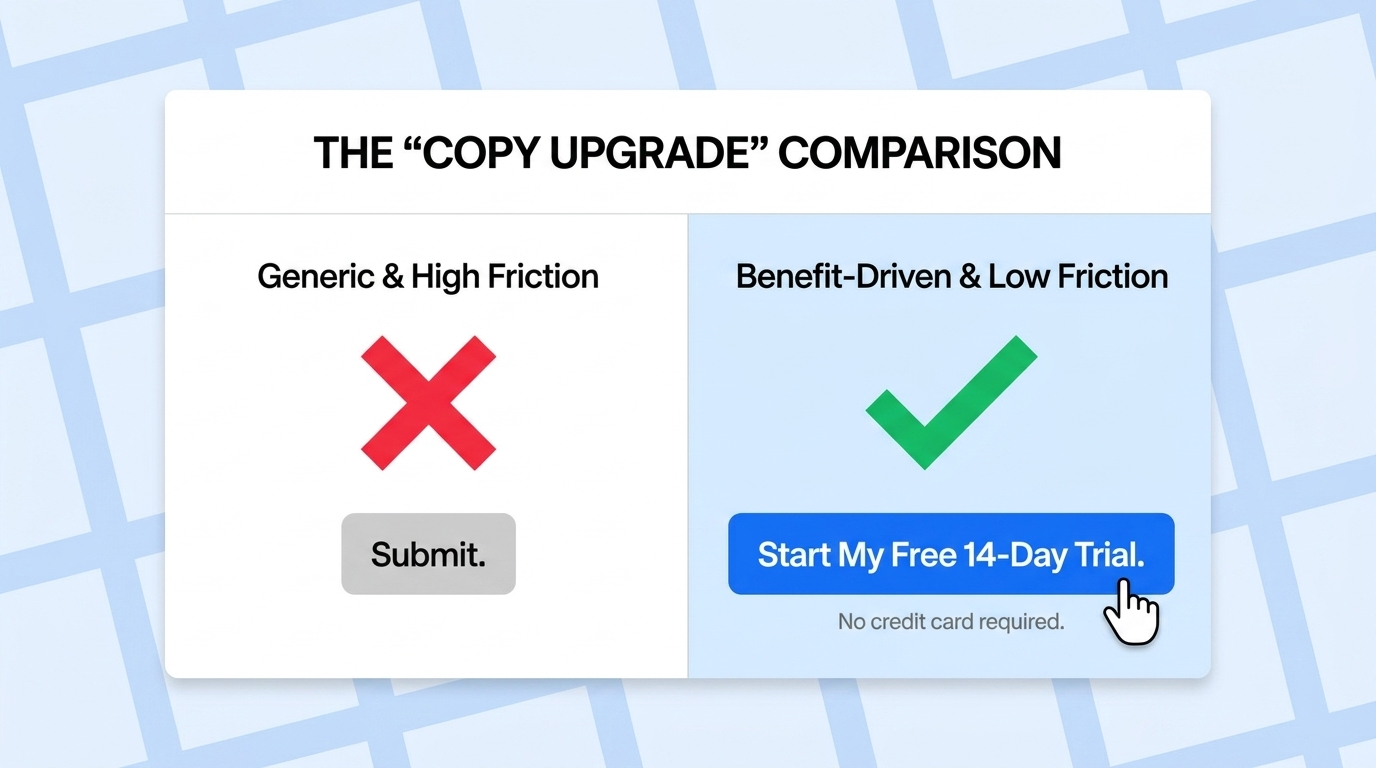
What doesn't work: a generic contact form with "I'll get back to you within 2 business days." By the time the trainer follows up, the motivated moment has passed.
Online vs. In-Person vs. Hybrid: Clear Website Architecture for Each
Many fitness professionals offer multiple service formats, and the website needs clear information architecture for each:
In-person training: Location (gym or home/travel), service area, session pricing, package structures. Photographs of the actual training space (if a private studio) or the gym. Availability for new clients clearly stated.
Online coaching: Specific delivery mechanism (app-based programming, video calls, check-in protocol), how check-ins work, how programming is delivered and modified, how communication happens between sessions. This format requires more education because it's less familiar to many prospective clients — what exactly does "online coaching" look like in practice?
Group training or bootcamps: Schedule, location, format, what a typical class/session involves, pricing for drop-in vs. package vs. membership.
Each format should have its own page or clear section with specific information. Conflating multiple service formats on a single page without clear separation creates confusion and slows conversion.
SEO for Fitness Professionals
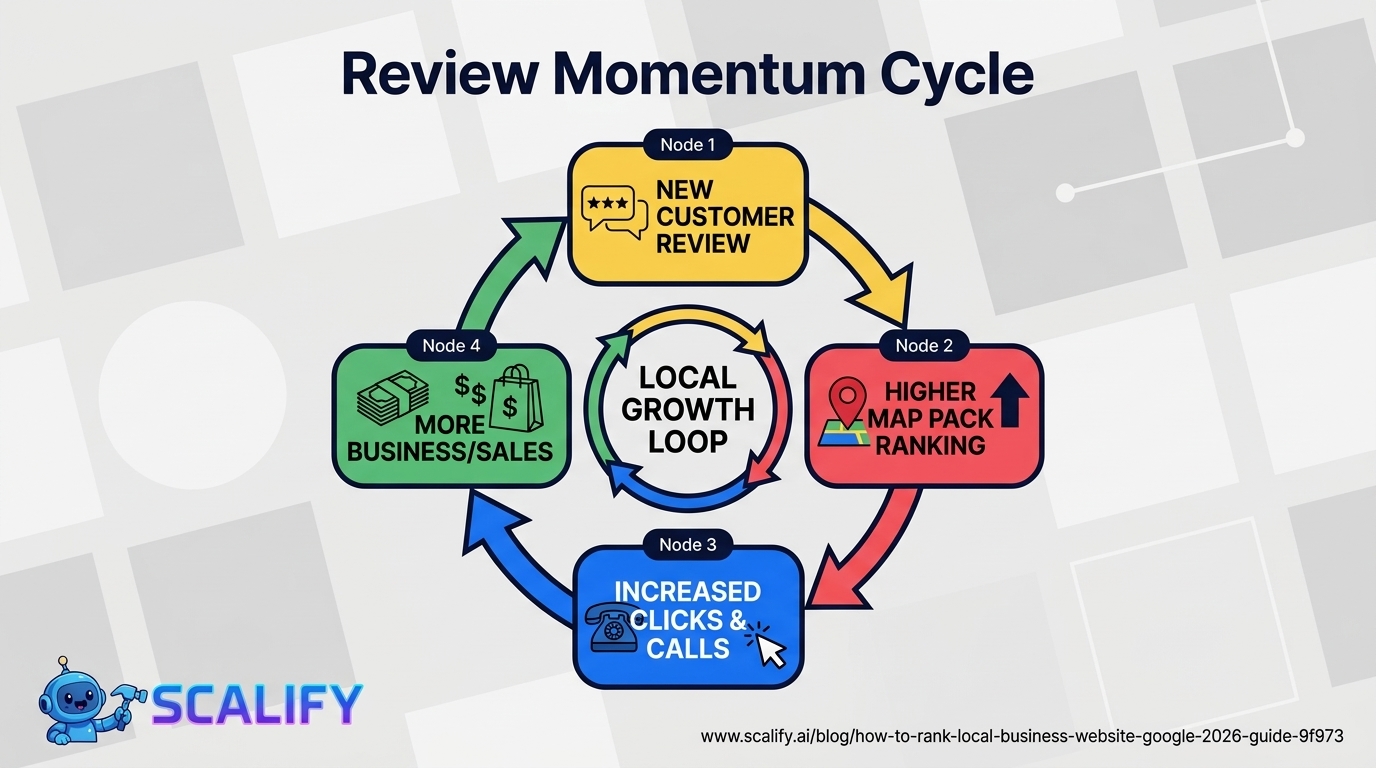
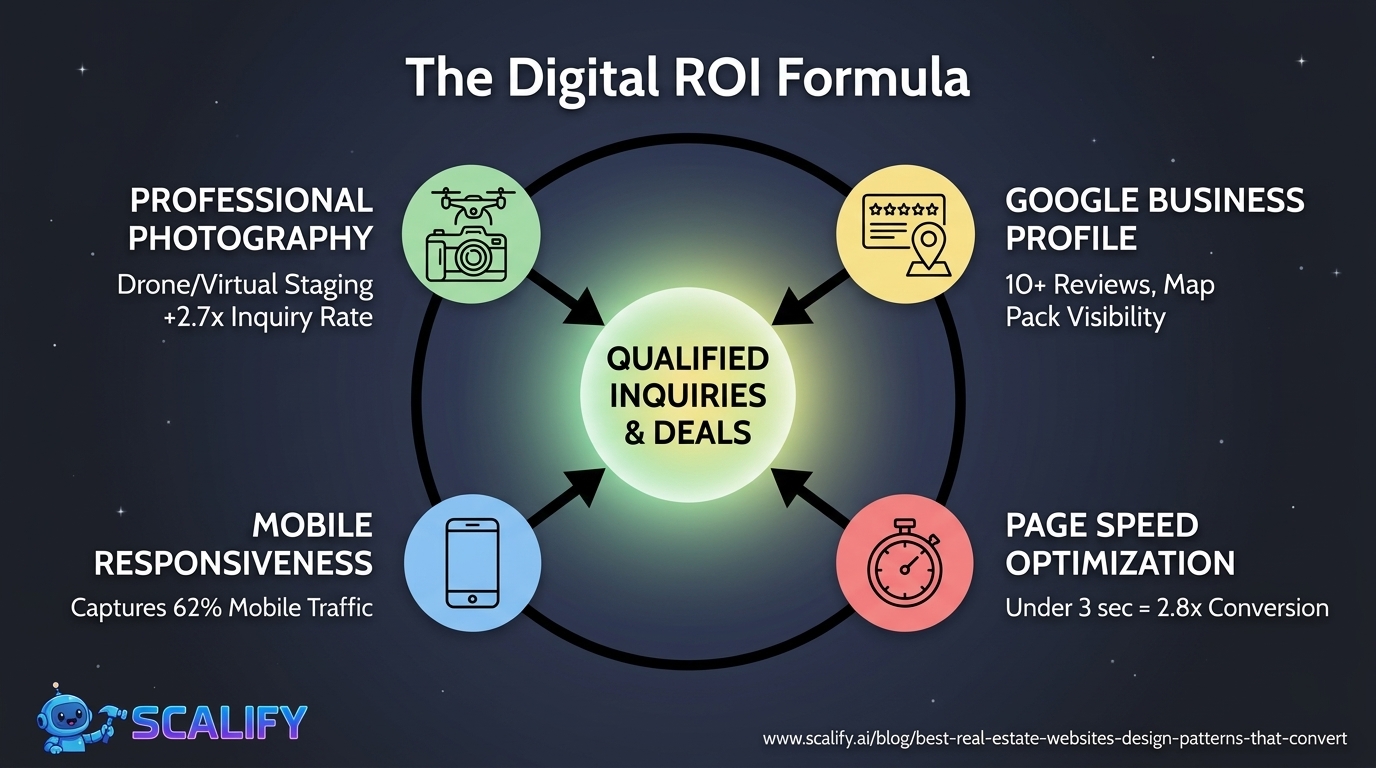
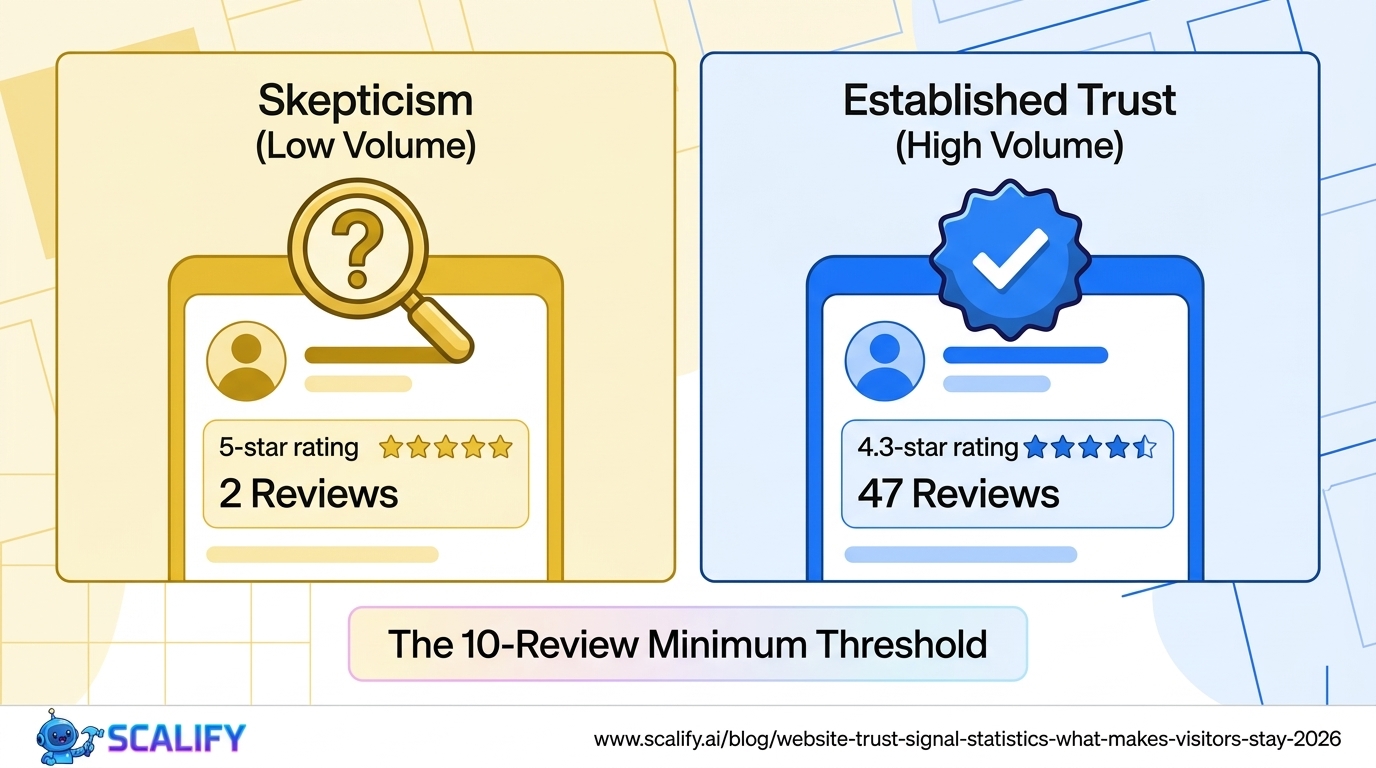
Local SEO is the primary organic channel for in-person fitness businesses. The Google Business Profile is often the most important single digital asset — it drives map pack visibility for local searches ("personal trainer [city]," "gym [neighborhood]") and aggregates Google reviews that are the primary trust signal for local service searches.
Key local SEO elements:
For online coaches, content SEO targeting specific health concerns and fitness goals builds organic authority: "how to build muscle after 50," "best strength training for women beginners," "how to lose weight with a busy schedule" — these searches have significant volume and connect directly with prospective coaching clients.
Social Proof Formats That Work for Fitness
Beyond written testimonials, fitness has specific social proof formats that are particularly persuasive:
Before and after photography: The most visually compelling evidence available. Requires client consent and thoughtful presentation. Should be accompanied by the client's story — "before" and "after" stats (weight, body fat percentage, strength numbers) plus the timeline and the brief narrative of how it happened.
Progress photos with timeline: Monthly progress photos showing consistent, sustainable change over 3–12 months are often more persuasive to realistic prospects than dramatic transformation shots, because they communicate sustainable methodology rather than extreme intervention.
Video client stories: A 60–90 second video of a client speaking authentically about their experience is the most persuasive content format available for fitness businesses. Even informally shot, it outperforms written testimonials.
Screen-captured app data: Workout consistency data, strength progression, body composition tracking over time — quantified evidence of real progress that goes beyond the subjective testimonial.
The Bottom Line
The personal trainers and fitness coaches with the most consistent client rosters don't have better certifications or more dramatic transformations to show than their competitors — they have websites that speak specifically to the right clients, build trust through authentic storytelling, and make starting easy enough that the motivated visitor converts immediately rather than putting it off.
Specificity, authenticity, and frictionless conversion are the consistent elements of high-performing fitness websites. The trainer who occupies a specific niche, shows real results with real stories, and lets prospects book a discovery call from the homepage at 11pm is systematically filling their calendar while the generic trainer with the same skill level wonders why their website doesn't generate leads.
At Scalify, we help fitness professionals build websites that reflect their genuine expertise, speak specifically to their ideal client, and make the first step toward working together as easy as possible — because the website's job is to get qualified prospects to a conversation, not to be a digital brochure.
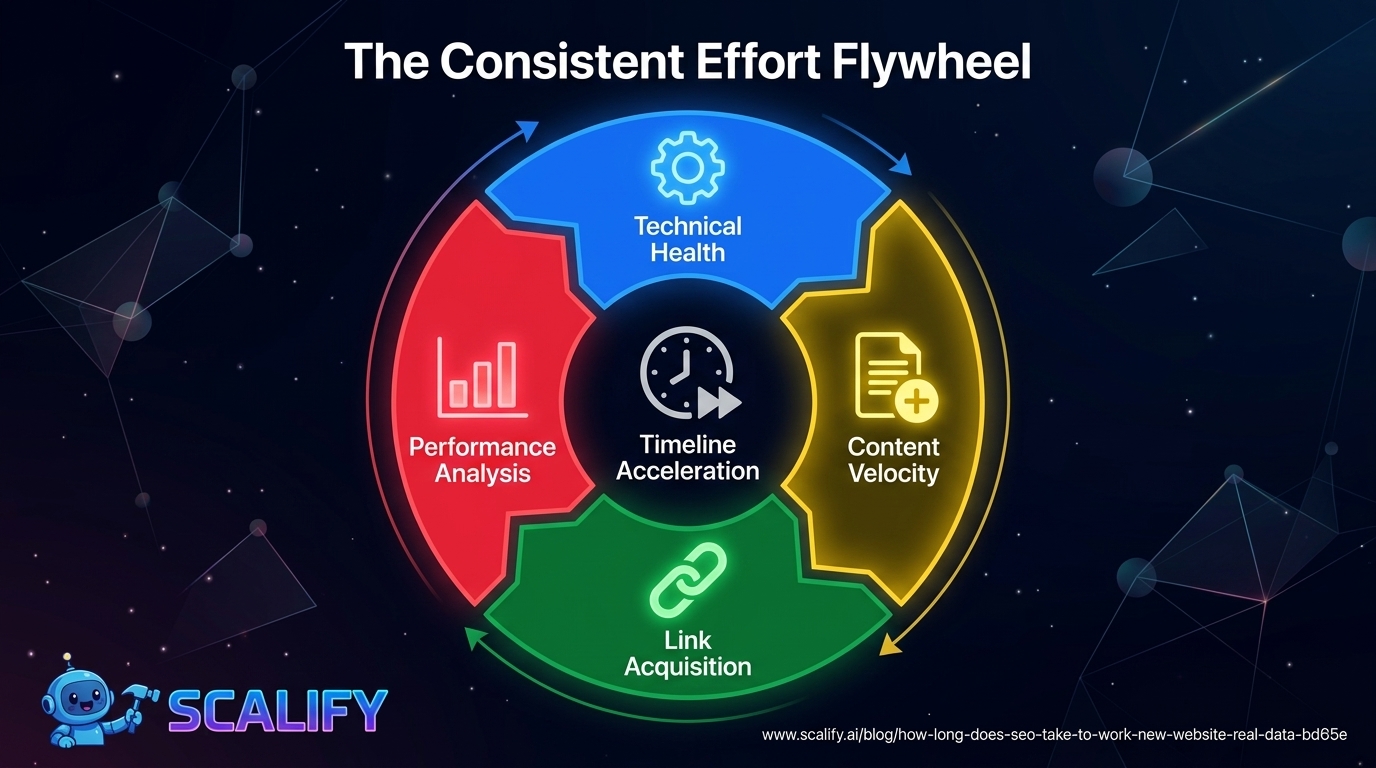
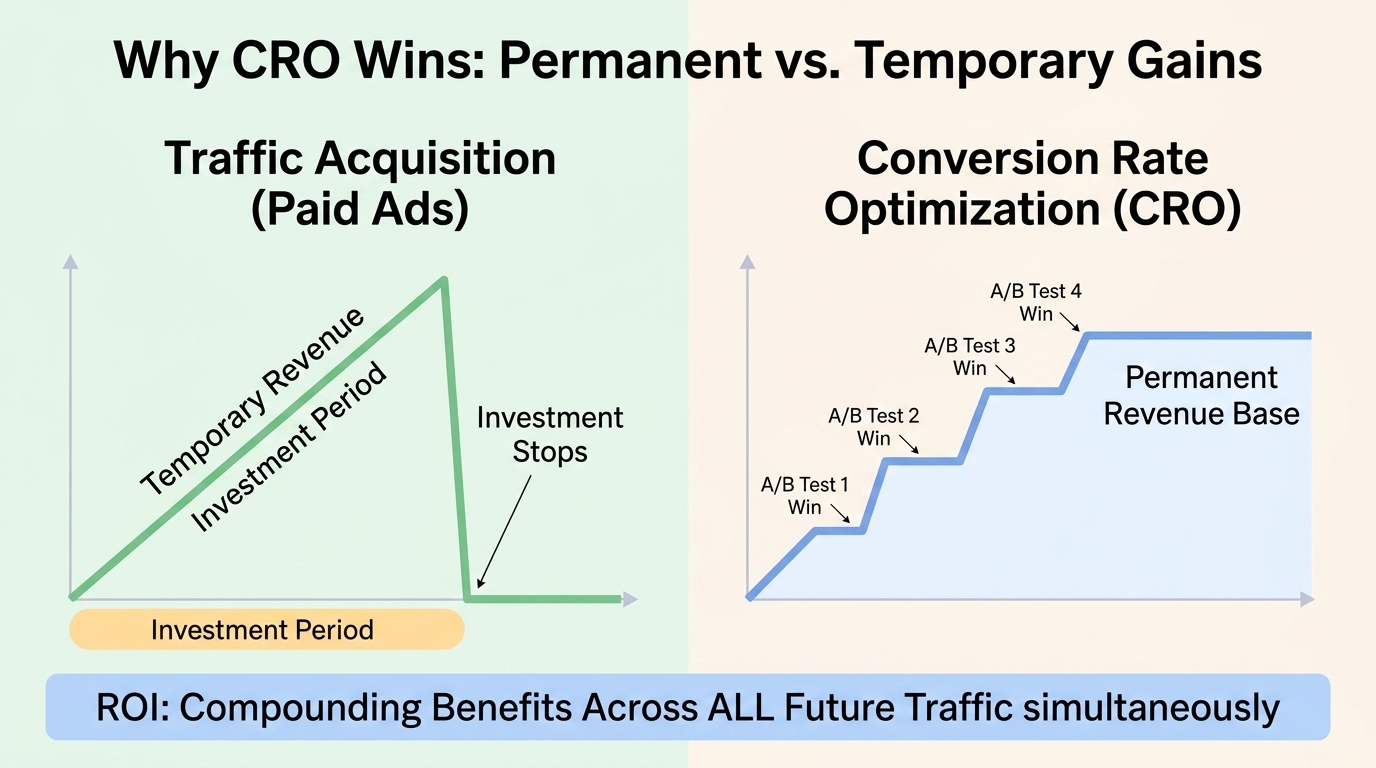
The compounding nature of consistent execution is the most important concept in digital marketing: individual tactics produce modest results; systematic implementation of multiple well-chosen tactics over 12–24 months produces transformative results. Identify the highest-impact improvements available to your specific situation, implement them with measurement infrastructure in place, and build the discipline to iterate based on what the data shows rather than intuition or industry trends that may not apply to your specific business and market.



.jpeg)
.jpeg)



78 SW 7th St, Miami, FL 33130