

How Many Websites Are on the Internet? (2026 Statistics)
By Josh Ternyak

April 17, 2026
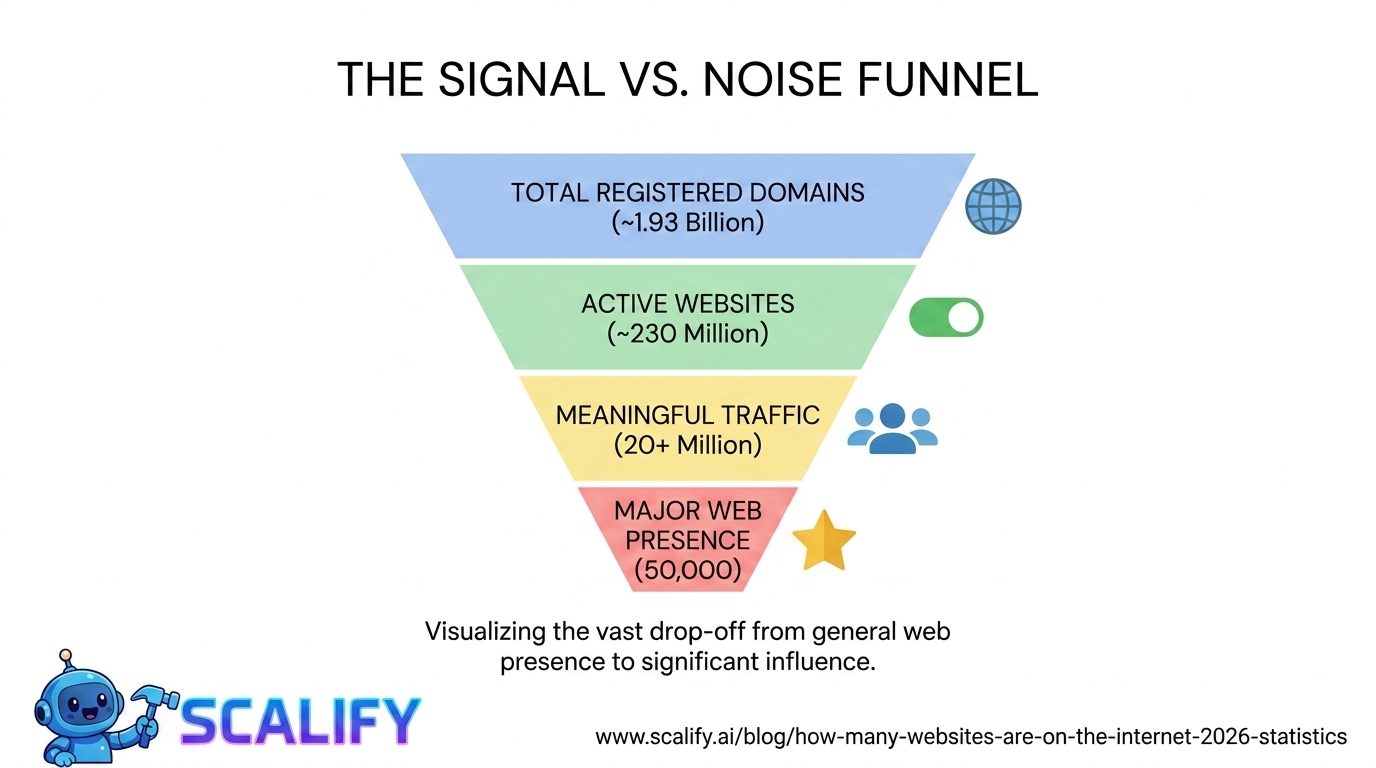
There are 1.93 billion registered domains but only 200-250 million active websites in 2026, with WordPress powering 43.5% of the web. This comprehensive guide covers active vs inactive sites, CMS platform market share, domain extension breakdown, the extreme traffic power law, website growth history, AI content's effect, geographic distribution, the invisible web, and what these numbers mean for SEO strategy.
How Many Websites Are on the Internet? (2026 Statistics)
The number of websites on the internet is one of those figures that seems straightforward but becomes complex the moment you try to define it precisely. Does "website" mean a registered domain? An active, publicly accessible URL? A site with at least one page of original content? Depending on the definition, the answer ranges from under 200 million to over 1.9 billion — a 10x difference that reflects genuinely different ways of counting the same phenomenon. Understanding the full picture — total registered domains, active websites, websites with meaningful traffic, and the platform breakdown — paints a more useful picture than any single headline statistic.
Key Statistics: Websites on the Internet in 2026
Active vs. Inactive Websites: Understanding the Real Number
CategoryEstimated CountDescriptionTotal registered domains~1.93 billionAll registered .com, .net, .org, ccTLDs, new TLDsDomains resolving to active websites~200–250 millionReturns an HTTP response when visitedWebsites with original content~170–200 millionHas more than a placeholder or error pageWebsites updated in the past year~100–130 millionShows signs of active maintenanceWebsites with 1,000+ monthly visitors~20–25 millionReceives meaningful trafficWebsites with 100,000+ monthly visitors~200,000–300,000Significant audienceWebsites with 1M+ monthly visitors~30,000–50,000Major web presence
CMS Platform Market Share
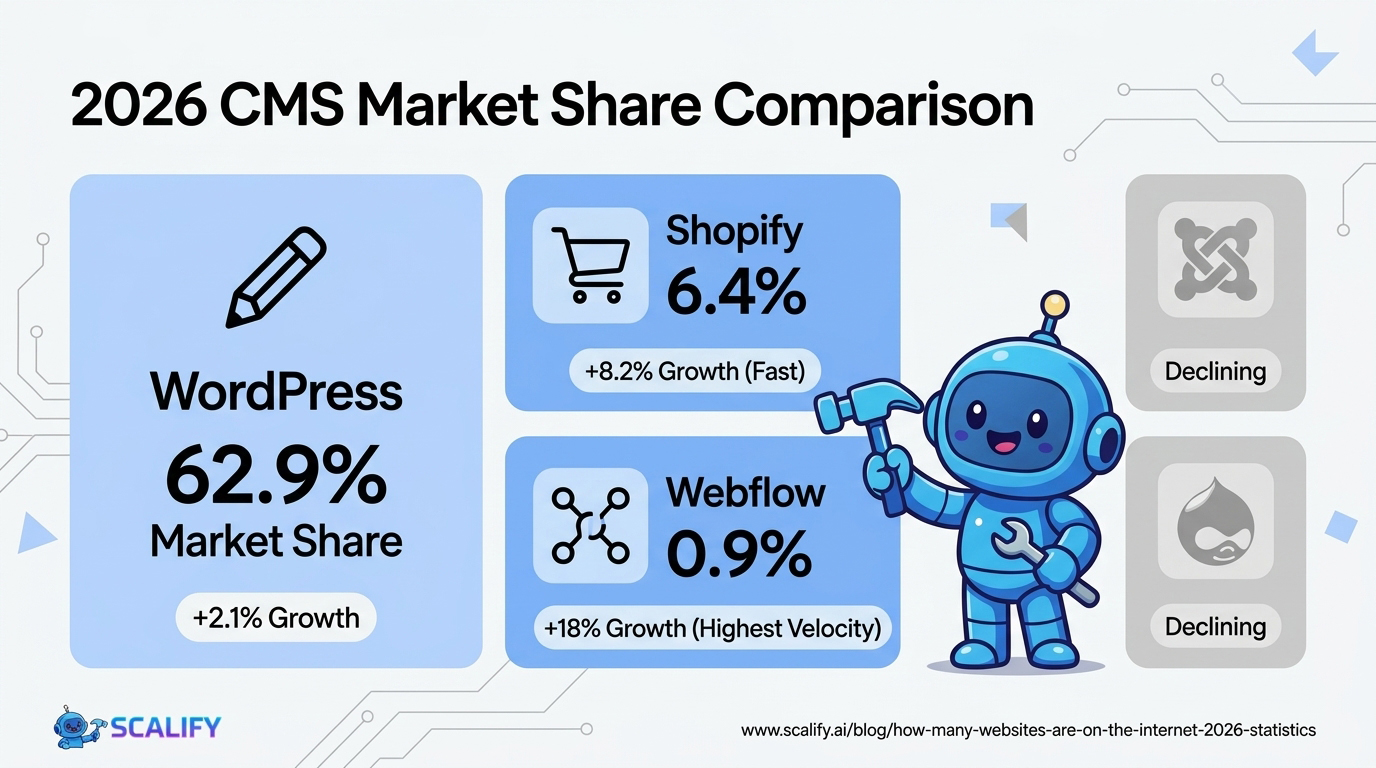
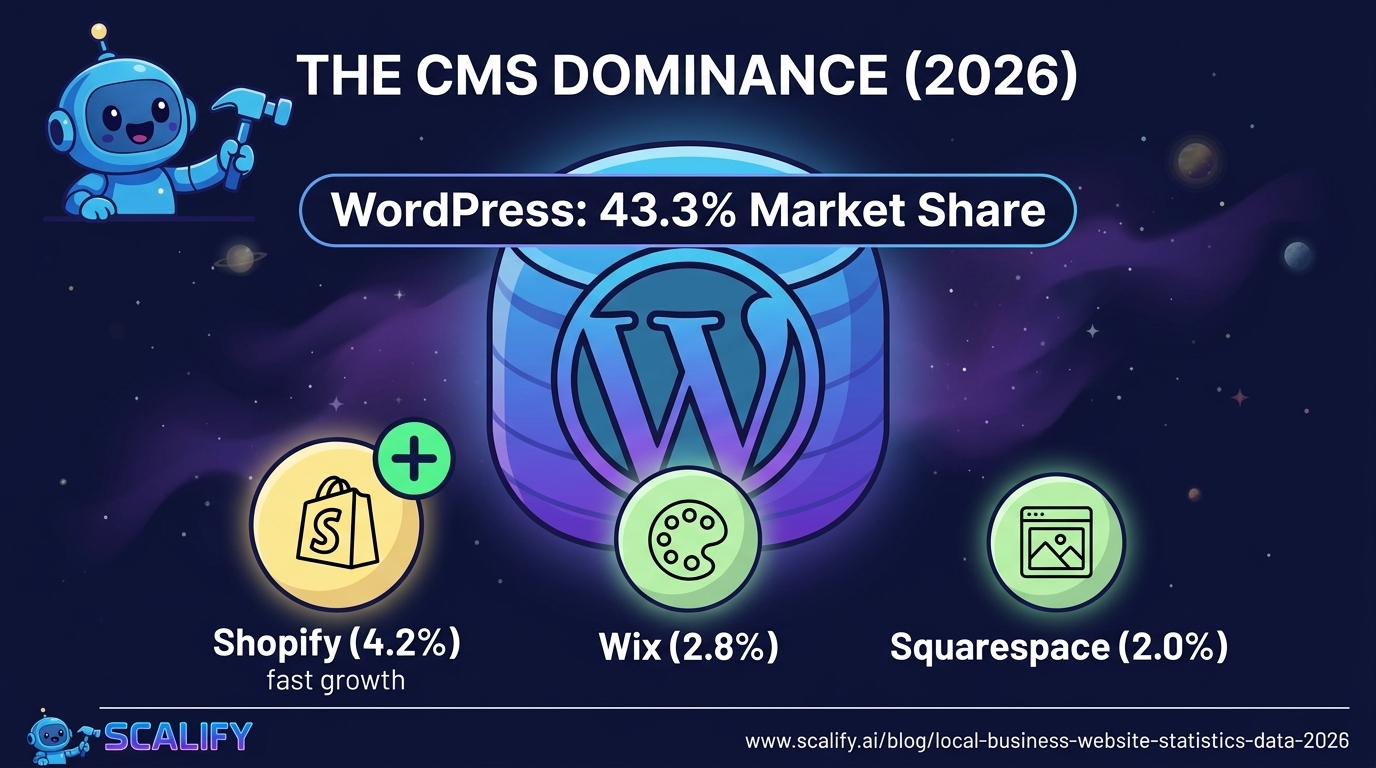
PlatformMarket Share (of CMS websites)Number of Websites (est.)YoY GrowthWordPress62.9%~86 million active+2.1%Shopify6.4%~4.5 million active+8.2%Wix3.7%~220 million total (many inactive)+3.5%Squarespace3.1%~4.7 million active+4.1%Webflow0.9%~390,000 active+18%Drupal1.9%~1.2 million-2.3% (declining)Joomla1.4%~1 million-4.1% (declining)Custom / no CMS~20%—Stable
Domain Extensions: The TLD Landscape
TLDRegistered Domains% of TotalTrend.com~160 million~47%Stable dominance.net~13.3 million~4%Slowly declining.org~10.5 million~3%Stable.cn (China)~21 million~6%Growing.de (Germany)~17 million~5%Stable.uk (United Kingdom)~11 million~3%StableNew TLDs (.io, .co, .ai, etc.)~50 million combined~15%Growing — especially .ai
The Long Tail: Why Most Websites Are Invisible
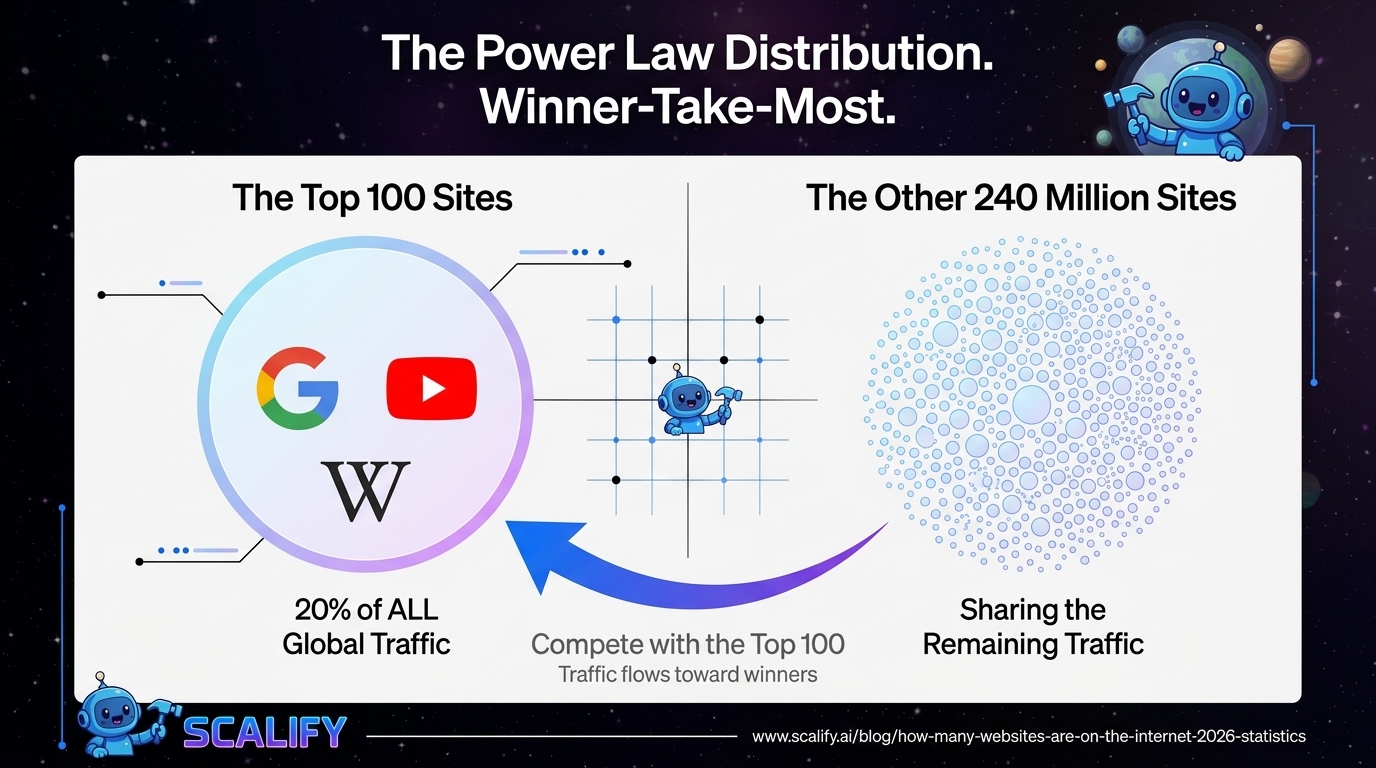
Web traffic follows one of the most extreme power law distributions of any measurable phenomenon. The top 100 websites — Google, YouTube, Facebook, Amazon, Wikipedia, Reddit, and their peers — capture an estimated 20% of all global internet traffic. The top 10,000 websites capture approximately 28%. The remaining 240+ million active websites share the remaining 72% of traffic — meaning the average website outside the top 10,000 receives a tiny fraction of a percent of global traffic.
This distribution has profound implications for website owners and digital marketers. The internet is not a level playing field where the best content automatically finds an audience — it's a winner-take-most ecosystem where established platforms and well-resourced publishers have structural advantages that are very difficult to overcome through content quality alone. SEO, email list building, social media distribution, and paid acquisition are not optional for websites that want meaningful audience; they're the mechanisms through which new websites access traffic that the default distribution would never provide them.
Website Growth Over Time
YearActive Websites (est.)Major Development1993~130World Wide Web publicly launched2000~17 millionDot-com bubble peak2005~64 millionBlog explosion; WordPress launch2010~255 millionMobile web beginning; social media growth2015~867 millionMobile-first era; WordPress dominance established2020~1.74 billionCOVID-19 accelerates digital transformation2023~1.88 billionAI-generated content begins scaling web2026~1.93 billion (registered) / ~230M activeAI content saturation; quality signals intensifying
The AI Content Effect on Website Numbers
Since 2023, AI-generated content has significantly affected both the total number of websites and the quality distribution of web content. The barrier to creating a website full of content has dropped to near zero — AI writing tools can generate thousands of articles in hours, and hosting costs are minimal. This has accelerated the growth of low-quality content sites while simultaneously making it harder for genuinely valuable websites to rank in search results that are increasingly crowded with AI-generated competitors.
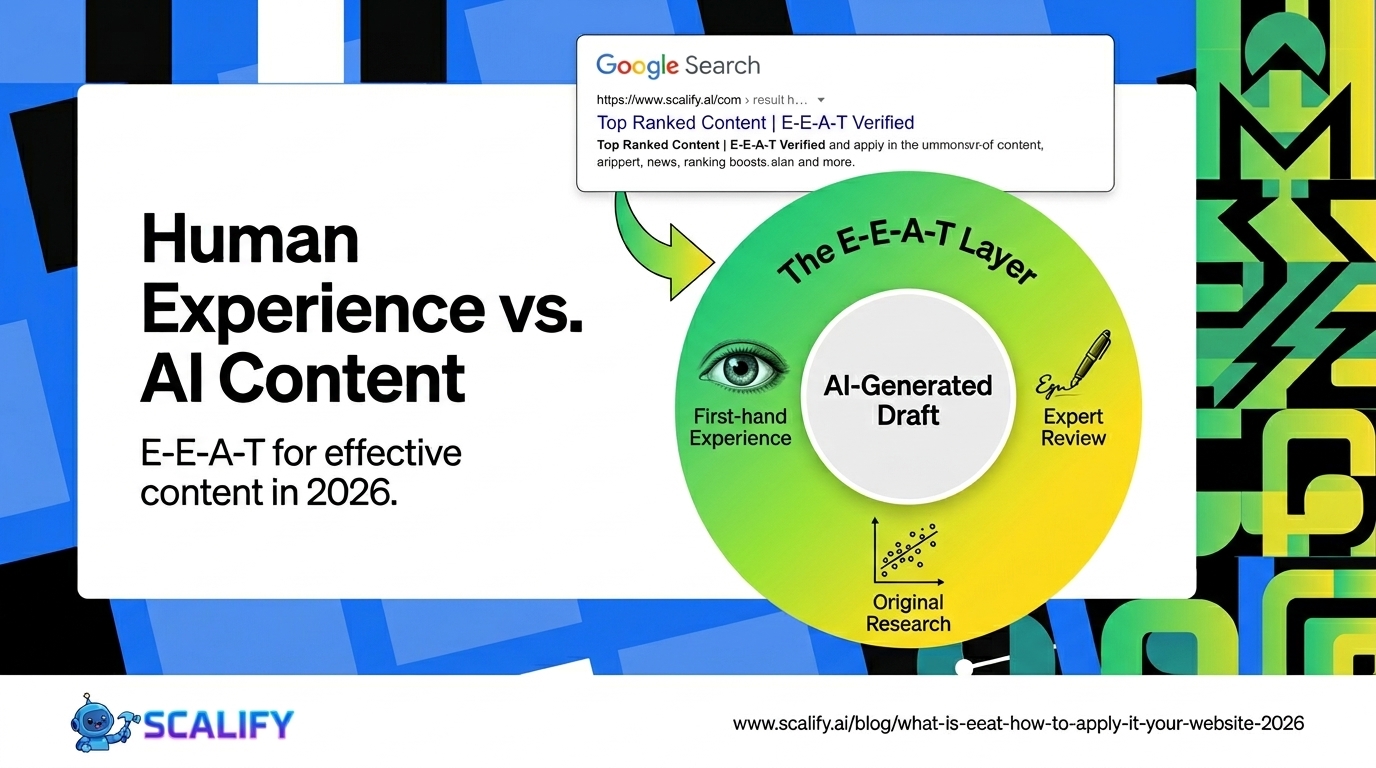
Google's response — intensifying quality signals through the E-E-A-T framework (Experience, Expertise, Authoritativeness, Trustworthiness) and through algorithm updates specifically targeting low-quality AI content — is reshaping which websites succeed in organic search. The websites that benefit from this environment are those with genuine expertise, original research and data, human-authored first-person experience, and the authority signals that come from high-quality backlinks and recognized authors. The millions of AI-content sites created since 2023 represent much of the registered domain growth but produce virtually no meaningful traffic.
What These Numbers Mean for Website Owners
The key practical insights from understanding website population data: the internet is vastly larger than most people intuit, but meaningful traffic is concentrated in a tiny fraction of websites. Creating a website is trivially easy; creating a website that receives meaningful traffic requires sustained investment in SEO, content quality, distribution, and often paid acquisition. The websites in the top 0.1% (receiving more than 1 million monthly visits) are not there because they launched and traffic found them — they're there because they systematically invested in audience building over months and years. For any business website, service website, or content website, understanding this distribution sets realistic expectations about timeline and investment required to achieve traffic goals.
The Bottom Line
There are approximately 1.93 billion registered domains in 2026, but only 200–250 million active websites and roughly 17–20 million that receive meaningful traffic. WordPress powers 43.5% of the web, .com remains the dominant TLD, and AI content has accelerated domain growth while intensifying quality-based ranking competition. The practical implication for website owners is that having a website is not enough — sustainable traffic requires deliberate SEO investment, genuine content quality, and distribution strategy that most of the web's 230+ million active sites simply don't have.
At Scalify, we build professional websites designed to stand out in a crowded internet — technically excellent, SEO-structured, and built for the 10 business days your launch can't wait beyond.
Top 5 Sources
Geographic Distribution of Websites
Websites are not evenly distributed geographically. The United States hosts the largest share of web servers and is home to the world's most visited websites, but the content of the web increasingly reflects a global distribution that English-language statistics often undercount:
Region/CountryShare of Websites HostedShare of Global TrafficKey PlatformsUnited States~34%~28%All major global platformsChina~8%~20%Baidu, WeChat, Alibaba — separate ecosystemEuropean Union~18%~15%Distributed across member statesRussia~4%~4%Yandex, VK — partly separate ecosystemIndia~4%~8%Rapidly growing; mobile-first user baseRest of World~32%~25%Diverse — often English-language platforms
China's internet is worth specific mention because it operates as a largely separate ecosystem from the global web. Baidu dominates search rather than Google, WeChat is the primary communication and commerce platform, and most US-based web services are blocked by the Great Firewall. The approximately 1 billion Chinese internet users are interacting with a parallel web infrastructure that the total-website-count statistics often don't fully account for. India's rapidly growing user base, primarily accessing the internet on mobile devices, is reshaping mobile web design standards and pushing further development of low-bandwidth web optimization techniques.
The Invisible Web: What Isn't Counted
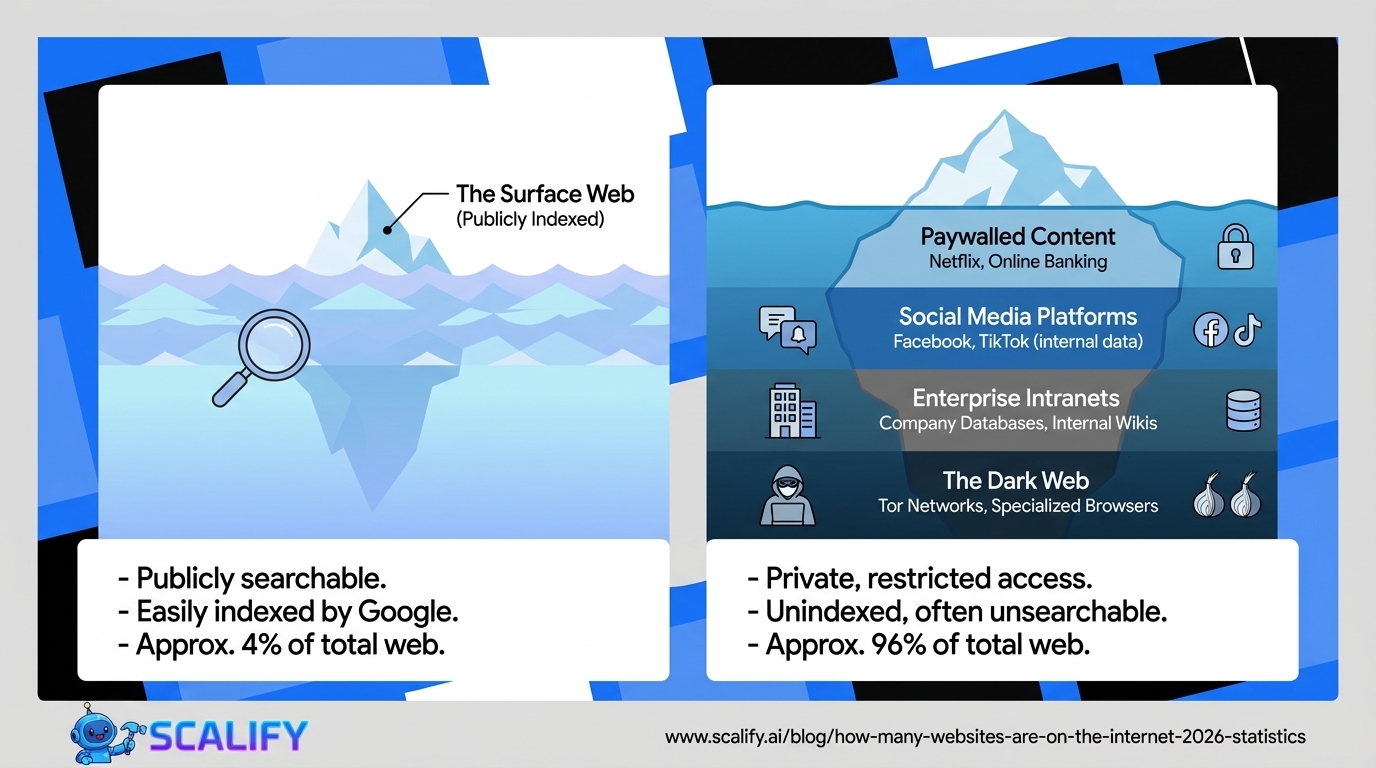
The 1.93 billion registered domain and 200+ million active website figures refer exclusively to the "surface web" — pages that are publicly accessible and can be indexed by search engines. A significant portion of internet content lives in categories that these numbers don't capture:
The dark web — content accessible only through Tor or similar anonymizing networks — is small relative to the surface web but represents a genuinely separate internet with its own sites, services, and infrastructure.
Paywalled and login-required content — Netflix, Spotify, banking sites, enterprise software, subscription newsletters, academic journals — is technically accessible via the public internet but not publicly crawlable. Google reports indexing approximately 130 trillion pages, but this represents only a fraction of the content that exists behind authentication walls.
Social media content — the billions of posts, videos, and accounts on Facebook, Instagram, TikTok, YouTube, and Twitter — is hosted on those platforms' infrastructure rather than on individual websites, so it doesn't appear in website count statistics even though it constitutes an enormous share of internet content consumption.
Enterprise intranet content — internal wikis, SharePoint sites, internal databases, and private company tools — represents an enormous volume of structured content that is never indexed or counted in public web statistics.
The total information on the internet is therefore vastly larger than the public-facing website numbers suggest — the 200+ million active public websites are the visible tip of an information iceberg that is orders of magnitude larger when private, authenticated, and platform-hosted content is included.
Website Lifespan: How Long Do Websites Last?
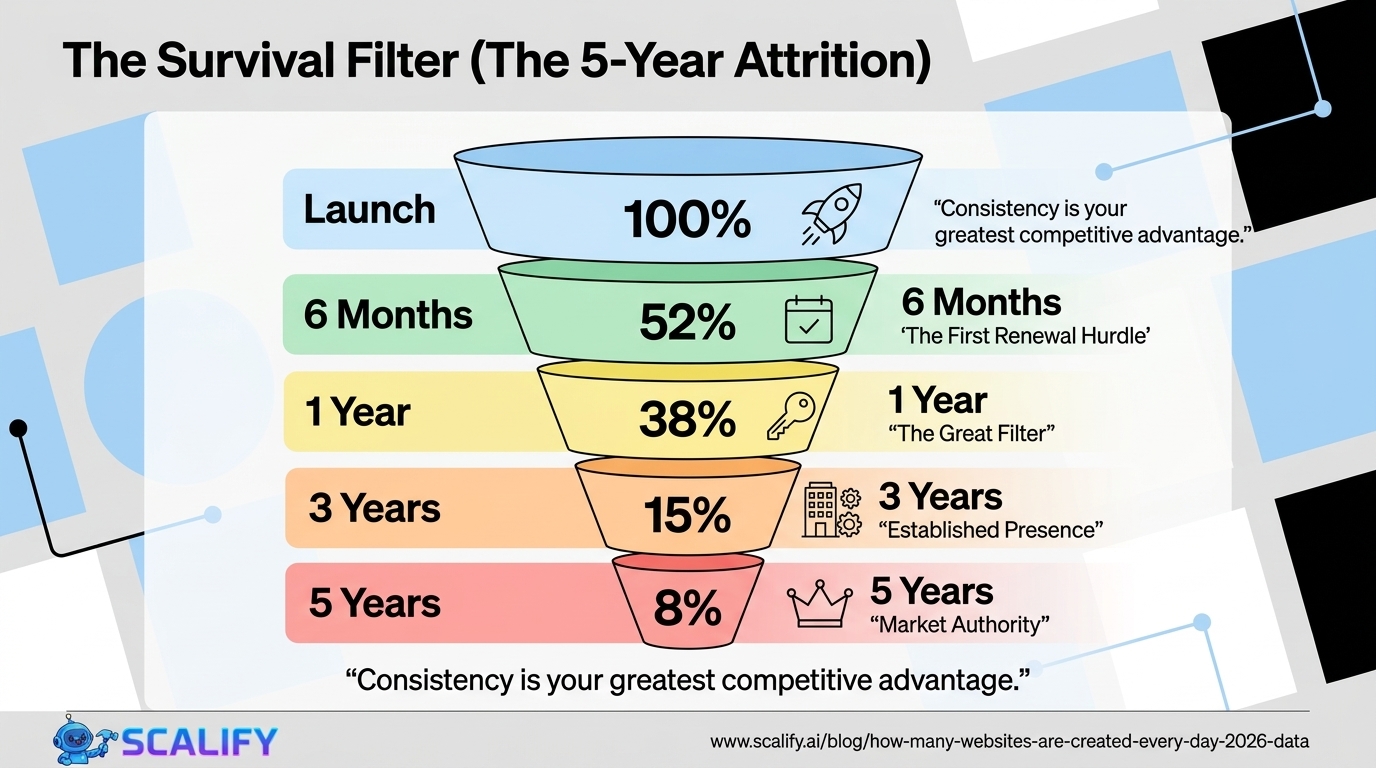
The average website has a surprisingly short lifespan. Studies of web content archiving suggest that the median age of a currently active website is approximately 2.5–4 years, and that approximately 80% of websites that existed 5 years ago have either changed their URL structure enough to break historical links or have gone offline entirely. This high turnover rate is why dead links are ubiquitous on the web — the web grows faster than it maintains its existing content, and most websites are not built with long-term URL stability as a design principle.
Websites that achieve exceptional longevity typically share common characteristics: they're operated by institutions (universities, governments, foundations) rather than individuals or startups, they're built on well-maintained platforms rather than custom solutions that become orphaned when development stops, and they receive regular content updates that signal active maintenance to both users and search engines. For anyone building a website intended to last decades rather than years, these longevity factors are worth designing for from the start.
What Website Numbers Mean for SEO and Organic Search
Understanding how many websites compete for search engine attention is essential context for setting realistic SEO expectations. With approximately 130 trillion indexed pages and hundreds of millions of active websites, ranking well in Google's search results for competitive commercial queries is genuinely difficult and requires sustained, strategic investment — not just technically adequate websites with decent content. The dramatic expansion of web content since 2020 (particularly AI-generated content since 2023) has made search result quality harder to achieve, not easier, and has shifted Google's ranking systems increasingly toward authority, expertise, and original contribution over keyword optimization alone.
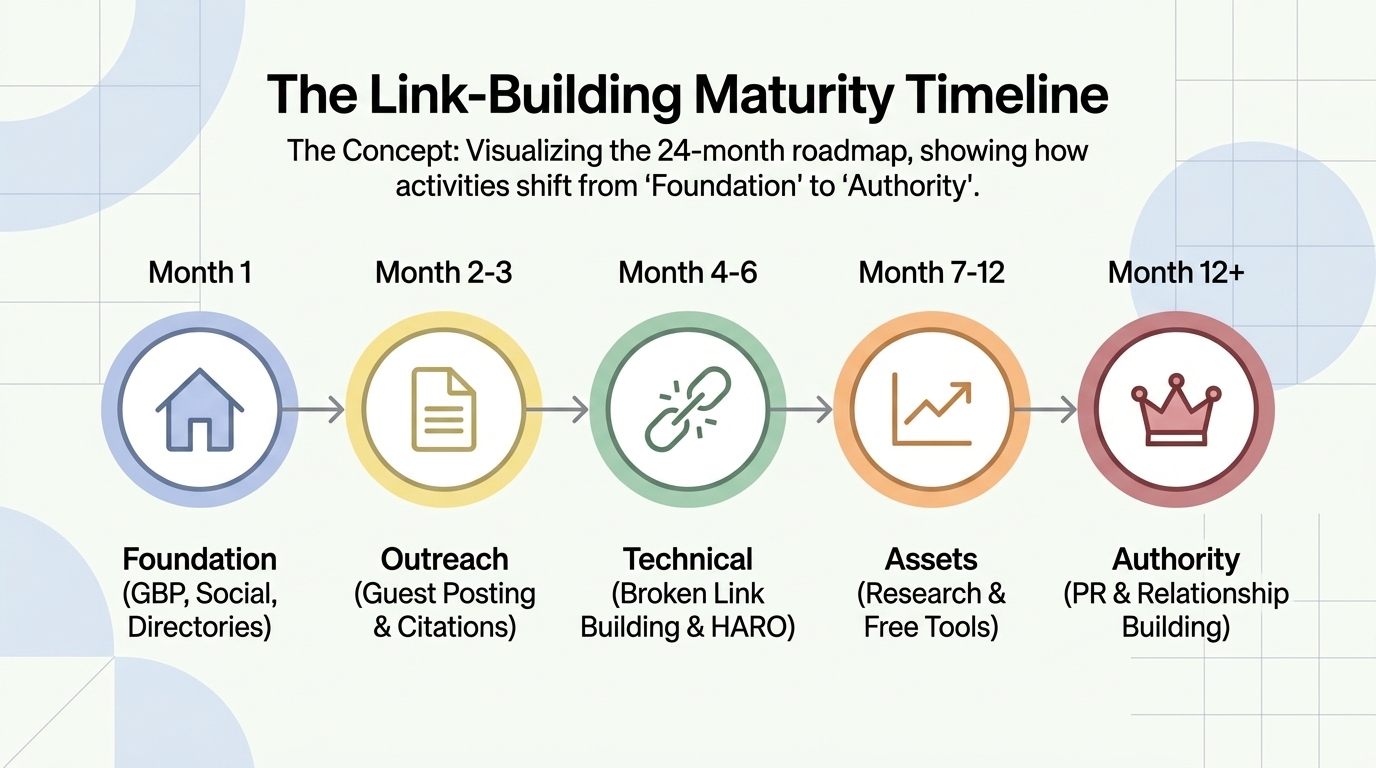
The websites that perform best in search are those that invest in building genuine topical authority over months and years — not those that try to rank through optimization tricks. The sheer volume of competition means that any query with commercial value has dozens to thousands of websites competing for the first page, and only the most genuinely authoritative, technically sound, and user-satisfying content consistently ranks in the top positions. This competitive reality is why professional SEO — as a sustained investment in content quality, technical excellence, and link acquisition — produces better outcomes than the assumption that a well-built website will naturally find its audience in a web of 200+ million competitors.






















.jpeg)

.jpeg)






78 SW 7th St, Miami, FL 33130