

How to Increase Your Web Developer Salary: A Practical Guide
By Josh Ternyak

April 20, 2026
The gap between market-rate and below-market developer salaries is almost never about skills — it's about strategy. This comprehensive guide covers 7 highest-impact salary strategies: job switching ROI, premium specialization premiums table, tech company vs agency employer migration, using competing offers as leverage, negotiation tactics, building visible technical authority, no-income-tax state relocation, plus annual review tactics, freelance ceiling, startup equity, and remote work geographic arbitrage.
How to Increase Your Web Developer Salary: A Practical Guide
Most web developers are earning below their market value — not because they lack skills, but because they haven't systematically applied the strategies that move compensation to market rate. The gap between a developer who manages their career deliberately and one who relies on passive tenure and hoped-for annual raises can be $40,000–$80,000 annually at mid-career. This guide covers the specific, actionable tactics that produce real salary increases — not career platitudes, but practical moves with documented track records.
The 7 Highest-Impact Strategies
1. Switch Jobs Every 2–3 Years
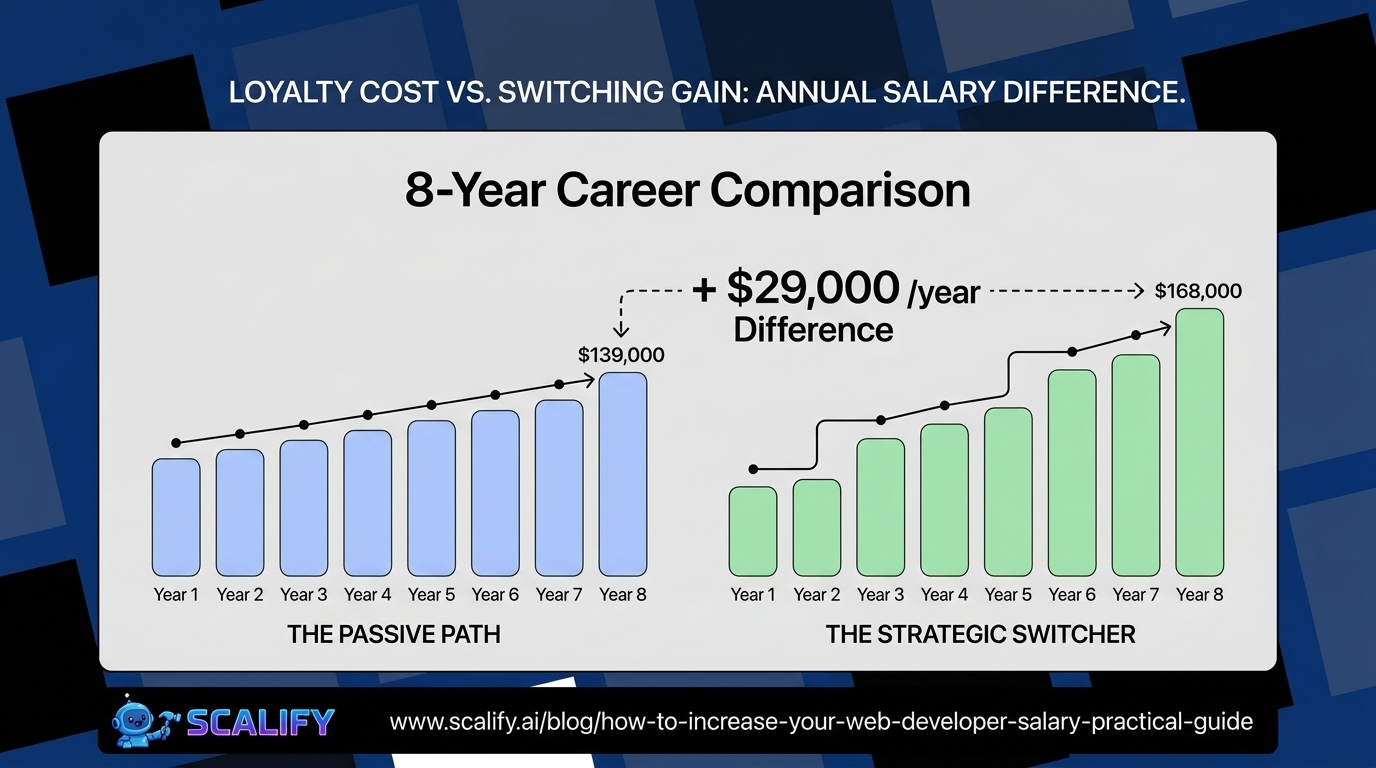
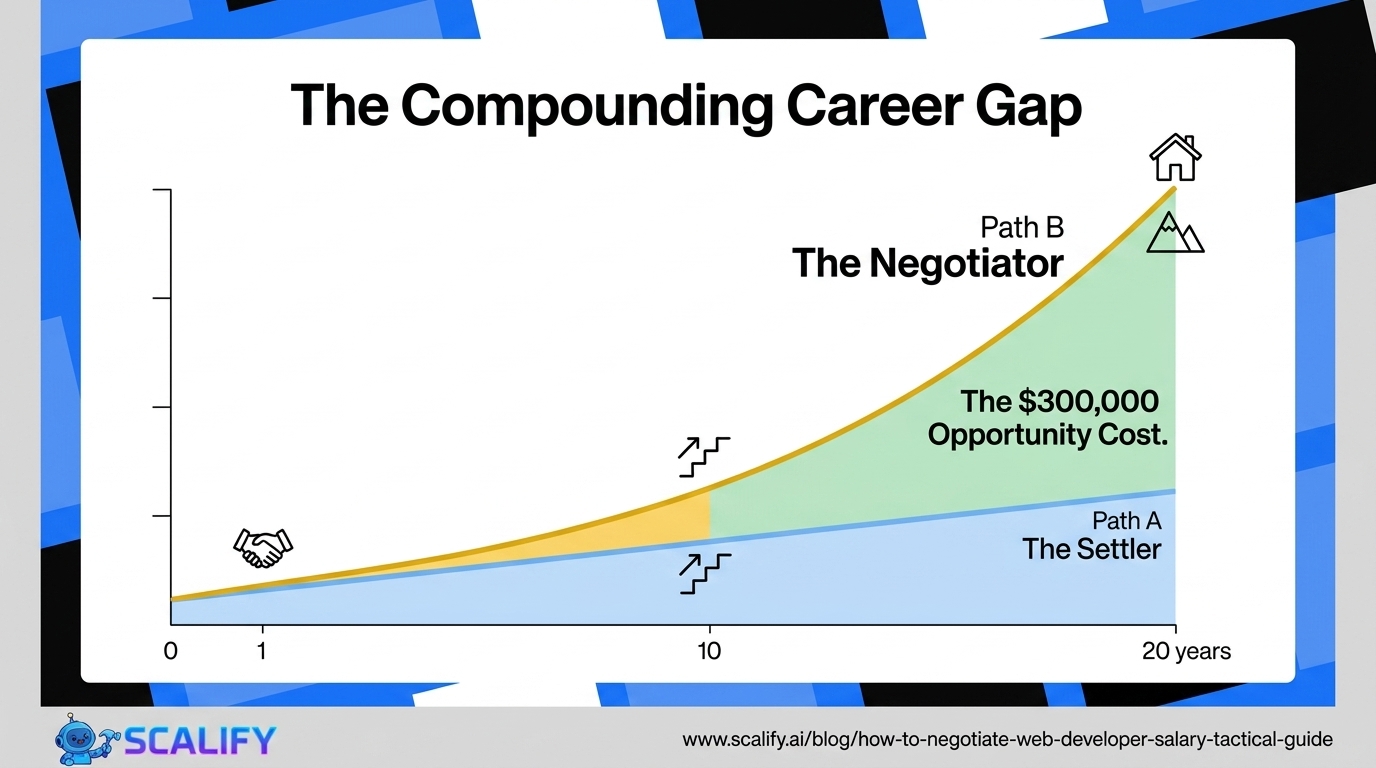
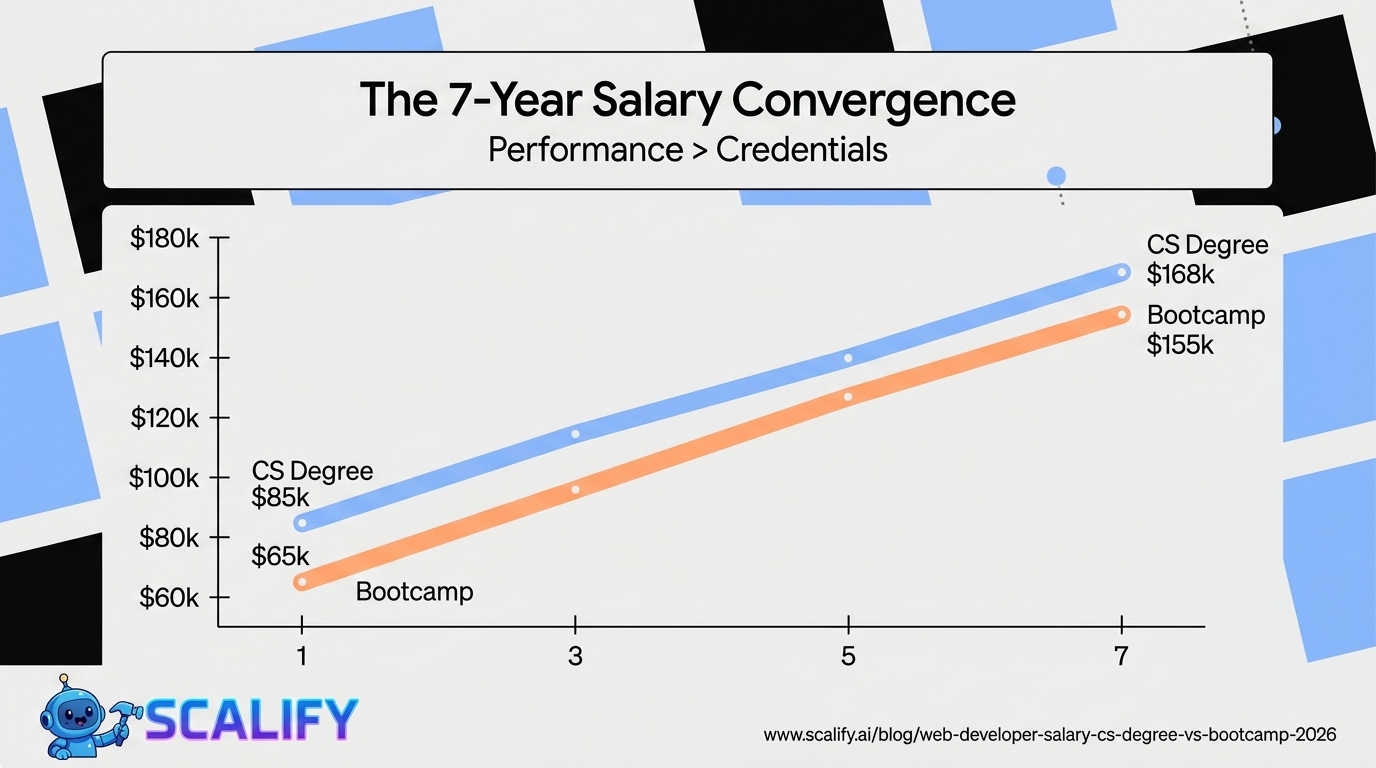
Job switching is the single highest-ROI salary strategy available to most developers. Internal raises average 3–5% annually; switching jobs captures the full market rate for your current skills — typically 15–25% more than your current compensation. A developer who stays at one company for 8 years receiving 4% annual raises ends up earning $139,000 starting from $100,000. The same developer switching jobs twice in that 8 years (at year 2 and year 5 with 20% jumps each time) earns $168,000 by year 8 — a $29,000 annual difference from the same skills. Over a 20-year career, the compounding difference can exceed $500,000 in total earnings.
The psychological barrier to job switching — loyalty to current employer, comfort in familiar environment, risk aversion about change — costs developers more money than almost any other career decision. Companies pay market rate to hire; they don't volunteer to pay market rate to retain unless forced by competing offers.
2. Develop Premium Specializations
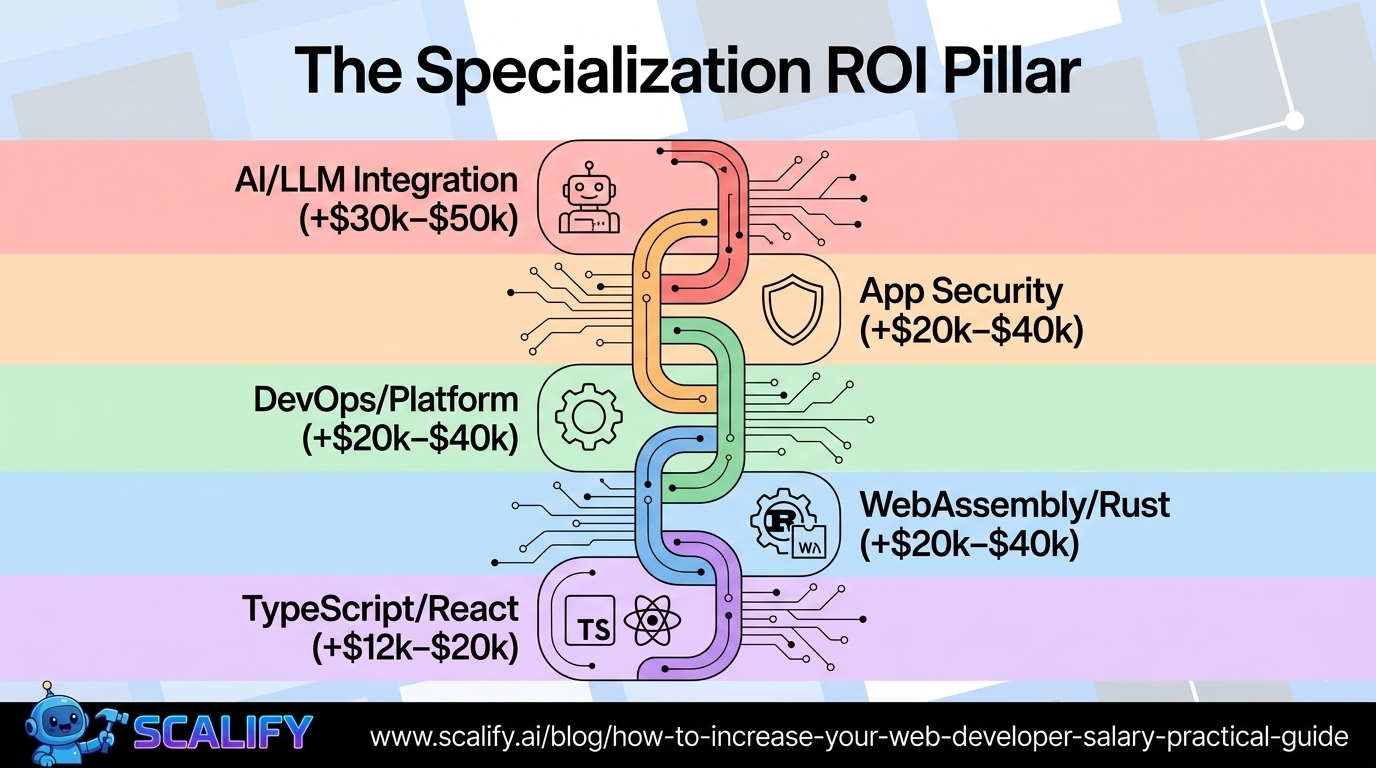
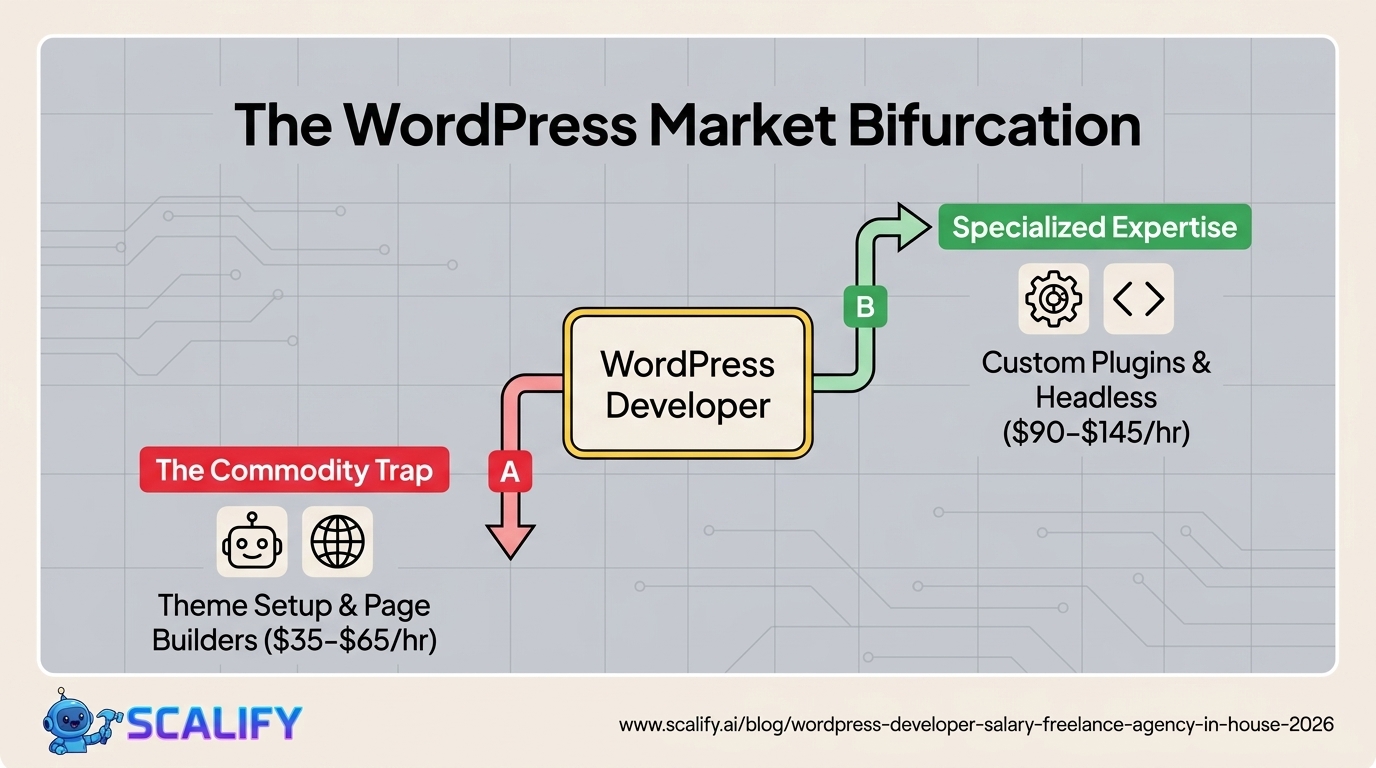
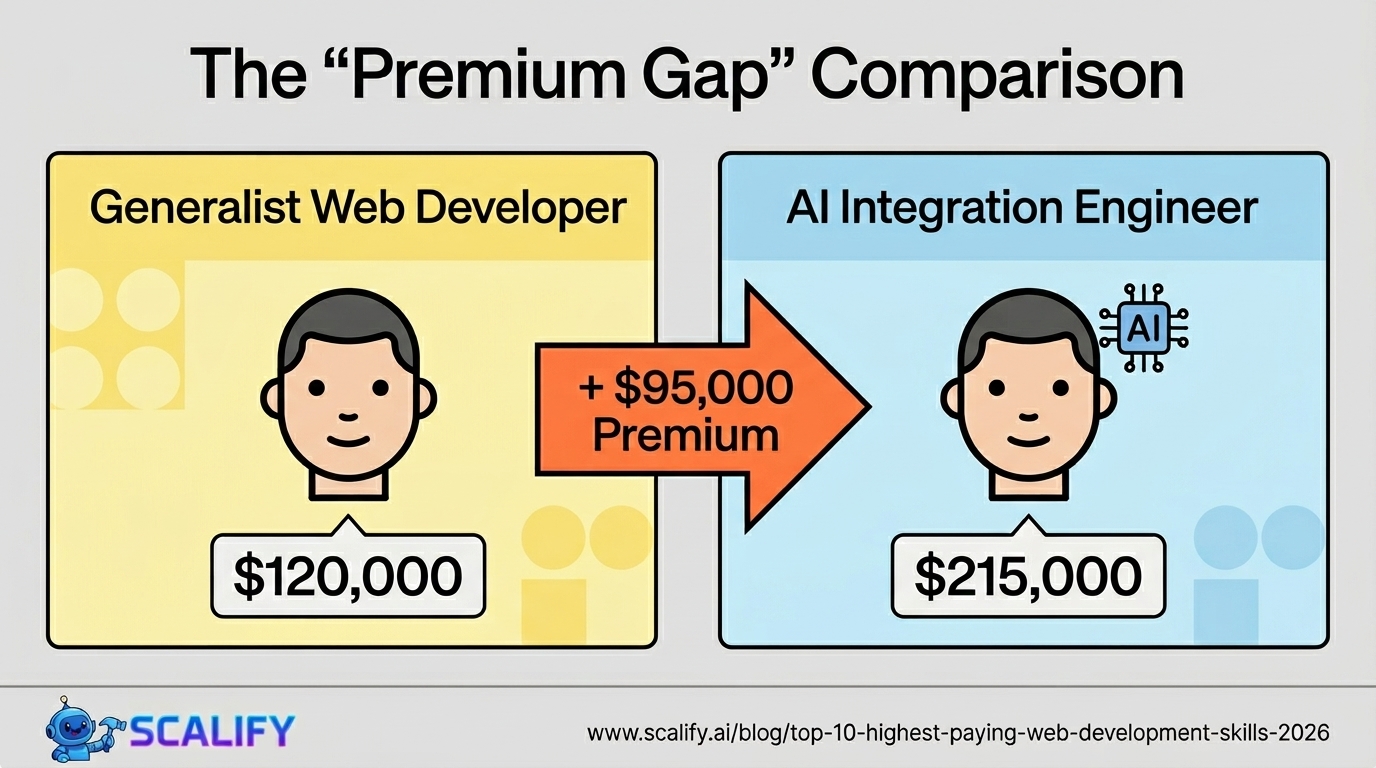
General web development competence is increasingly commoditized. The salary premiums in 2026 concentrate in specific technical specializations:
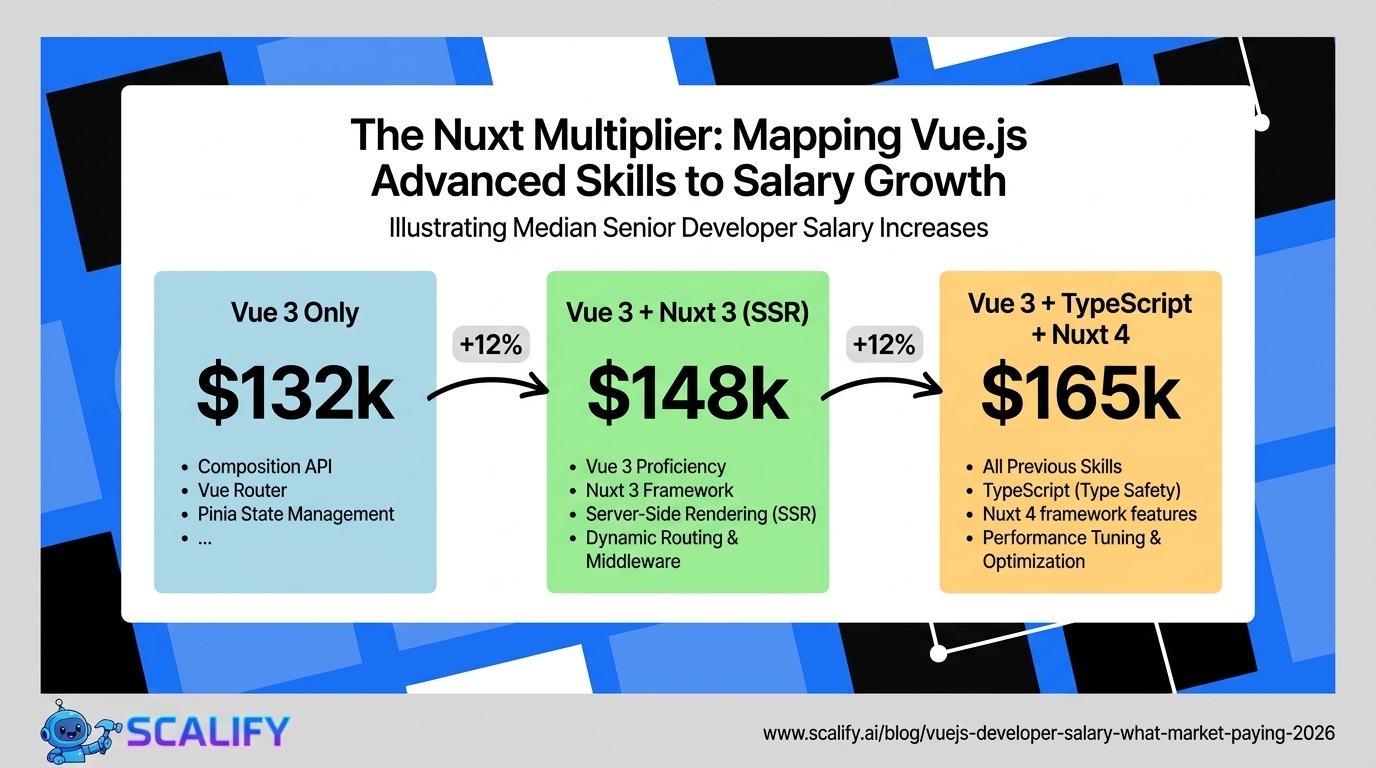
SpecializationSalary PremiumTime to Learn (from web dev baseline)AI/LLM Integration+$30,000 – $50,0003–6 monthsDevOps / Platform Engineering+$20,000 – $40,0006–12 monthsTypeScript (React + Node)+$12,000 – $20,0002–4 monthsApplication Security+$20,000 – $40,0006–12 monthsPerformance Engineering+$15,000 – $30,0004–8 monthsWebAssembly / Rust+$20,000 – $40,0006–12 months
The highest-ROI specialization for most mid-level developers is TypeScript expertise — the learning curve is 2–4 months, the premium is $12,000–$20,000, and 78% of serious React job postings now require it. This is baseline maintenance of market relevance, not advanced specialization. AI integration is the fastest-growing premium but requires more investment to develop genuine production-level capability.
3. Move to Tech Company Employers
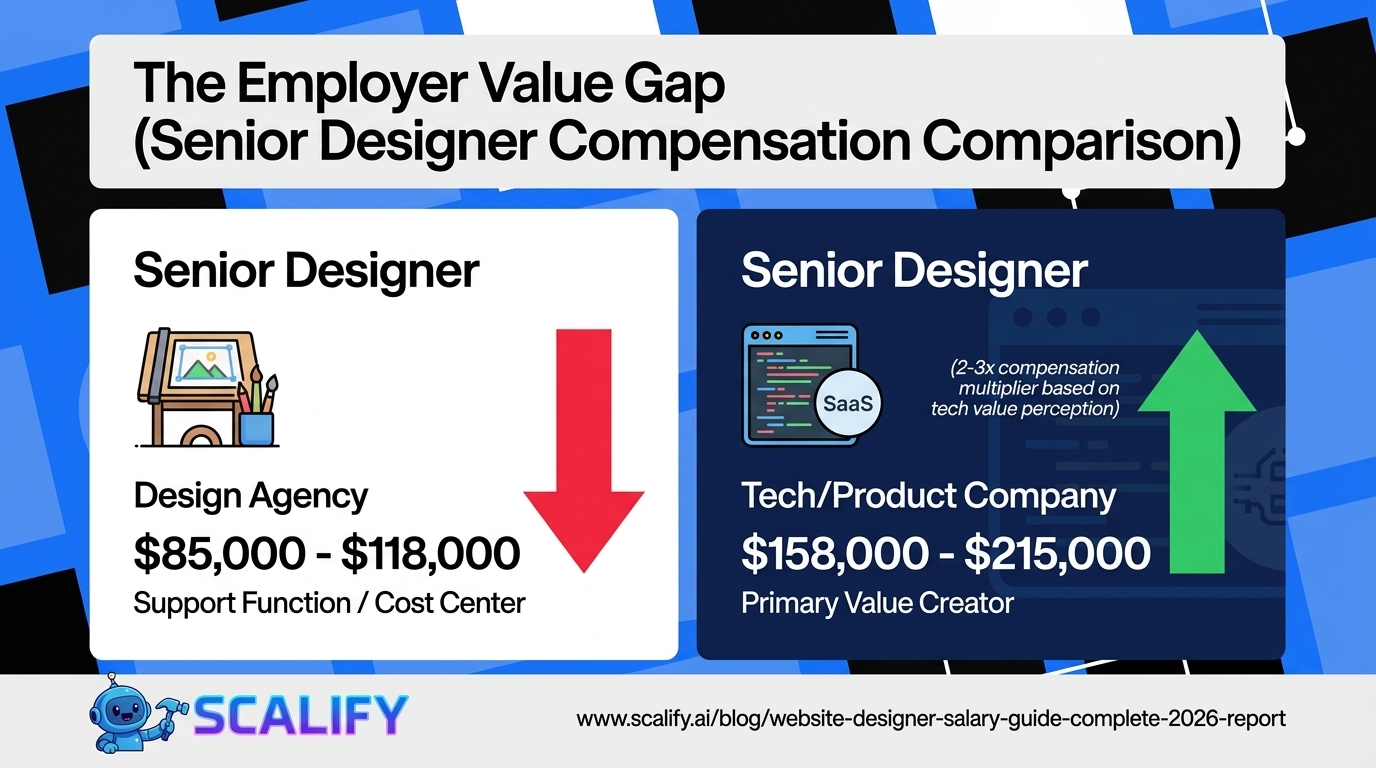
Employer type is one of the largest salary determinants — larger than most specialization premiums. The gap between equivalent developers at agencies vs. tech companies:
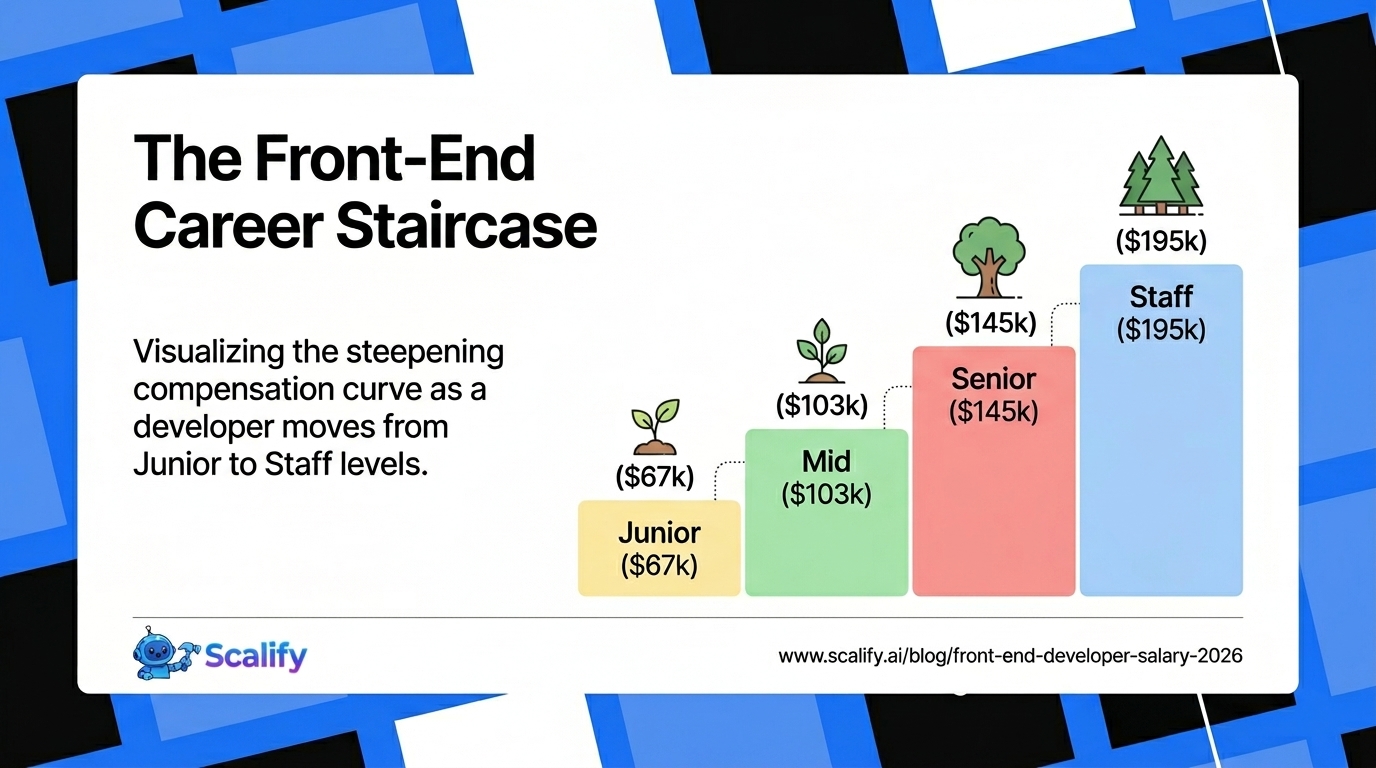
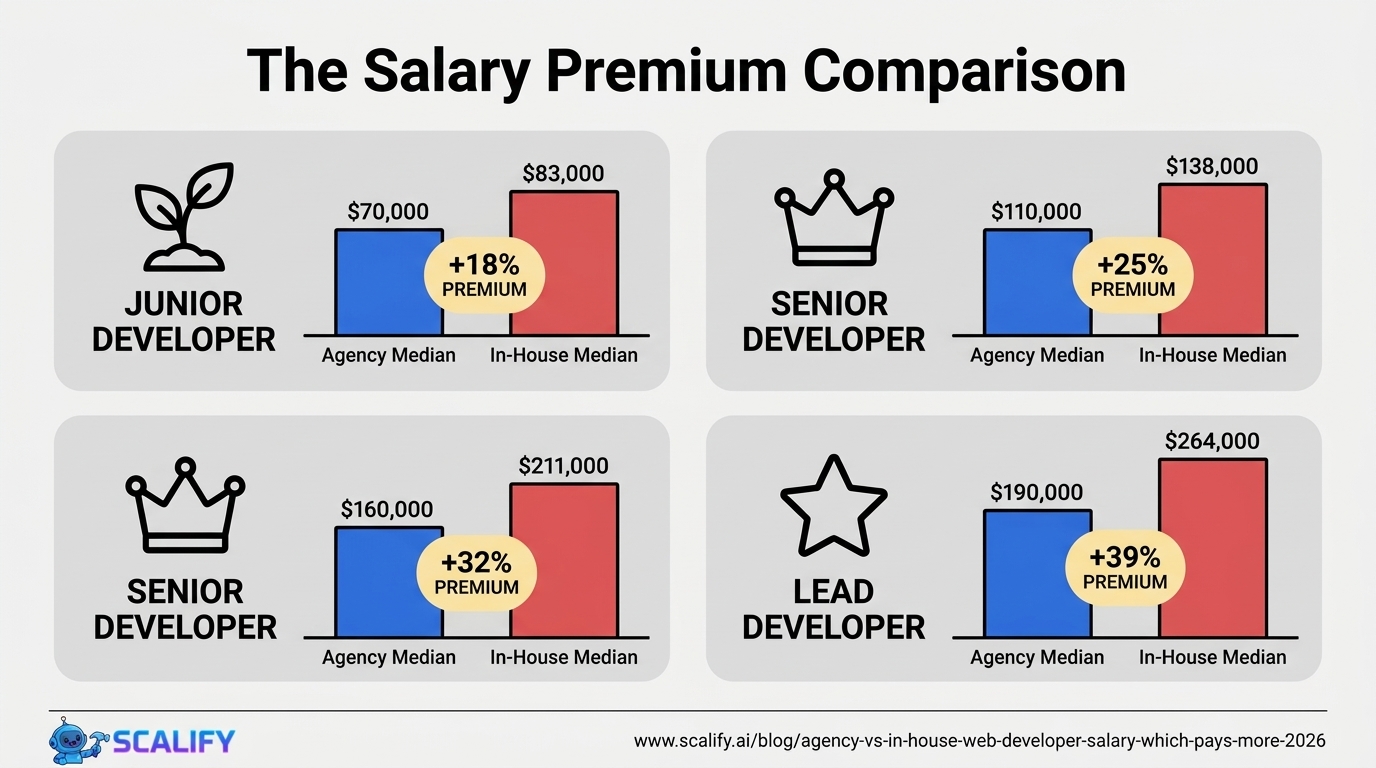
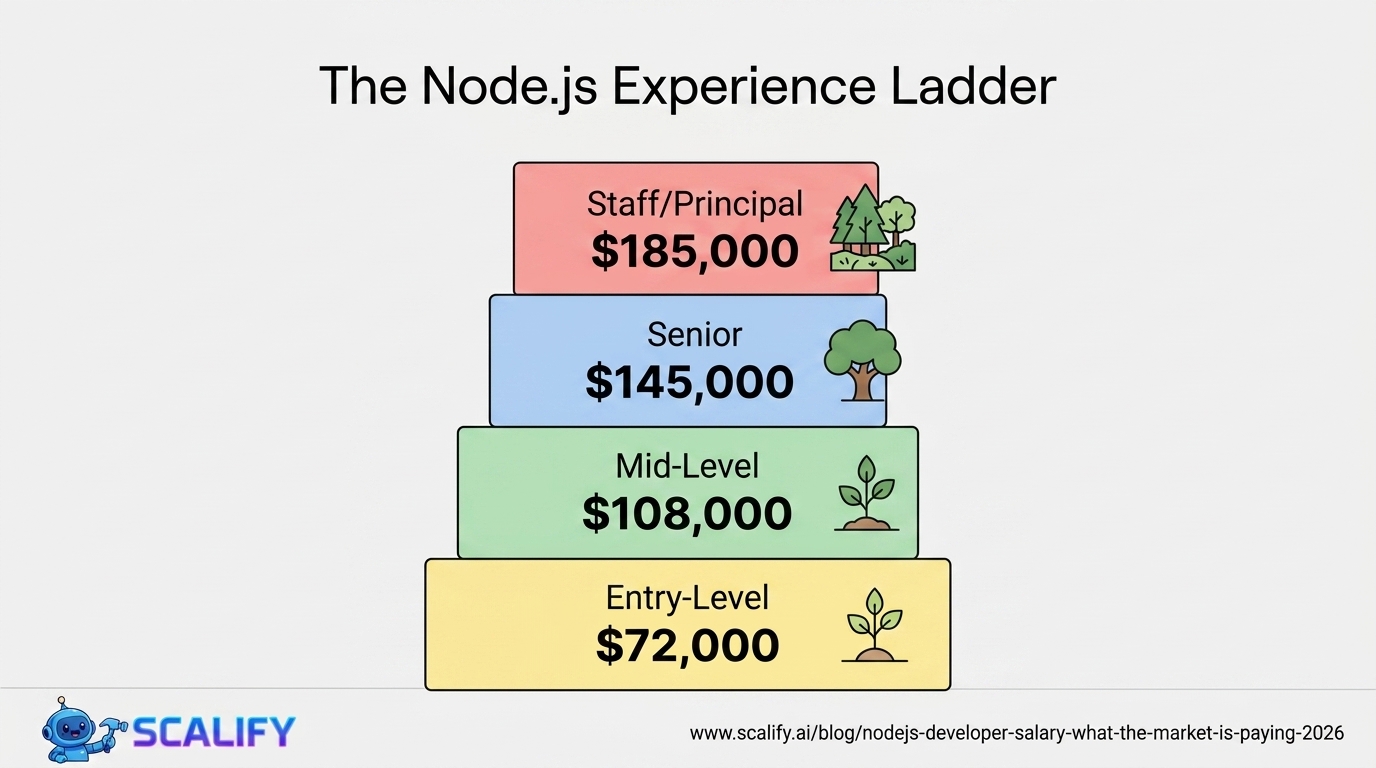
Employer TypeSenior Developer MedianGap vs. Tech CompanyFAANG / Top Tech$310,000 – $490,000 total compCeilingGrowth Startup (Series A–C)$175,000 – $265,000 total comp~$100k below FAANGMid-Size Tech Company$155,000 – $215,000Moderate gapEnterprise / Fortune 500$145,000 – $195,000Moderate gapAgency / Consultancy$95,000 – $135,000$50,000–$80,000 below techNon-Tech Company$88,000 – $125,000Largest gap
Agency developers moving to tech companies typically see 30–50% salary increases for the same skills and experience. The move requires a portfolio that demonstrates product engineering capability (not just client project delivery), but the ROI on making this transition is one of the highest available career moves for developers currently in agency structures.
4. Use Competing Offers as Leverage
The most effective leverage in any salary negotiation is a competing offer from another company willing to pay more. A competing offer does three things: proves your market value with objective evidence rather than your own assertion, creates urgency for your current employer to act, and gives you a real alternative if negotiation fails. Interview at 2–3 companies simultaneously when seeking a raise — not because you necessarily want to leave, but because the competing offer data is your negotiation foundation. "I've received an offer at $X from [Company Y]" is the most persuasive salary argument available, and it consistently produces counter-offers from current employers who want to retain you.
5. Negotiate Every Offer (And Never Accept the First One)
70% of developers accept the first offer without countering. The developers who negotiate receive $5,000–$15,000 more on average. Employers make initial offers expecting negotiation — not countering signals to the employer that you either don't know your market value or lack confidence in advocating for yourself. Neither is a great signal for a new employment relationship.
The practical negotiation script: receive the offer → express genuine enthusiasm ("This is exciting — I'm very interested in joining") → ask for time ("Could I have 48 hours to review the full details?") → research the company's typical range on Glassdoor/Levels.fyi → counter with a specific number supported by market data ("Based on comparable roles in this market and my specific expertise in TypeScript and AI integration, I was expecting something closer to $X"). The counter will succeed approximately 60–70% of the time at some level — even partial success ($3,000–$5,000 of a $10,000 counter) computes to meaningful lifetime earnings improvement.
6. Build Visible Technical Authority
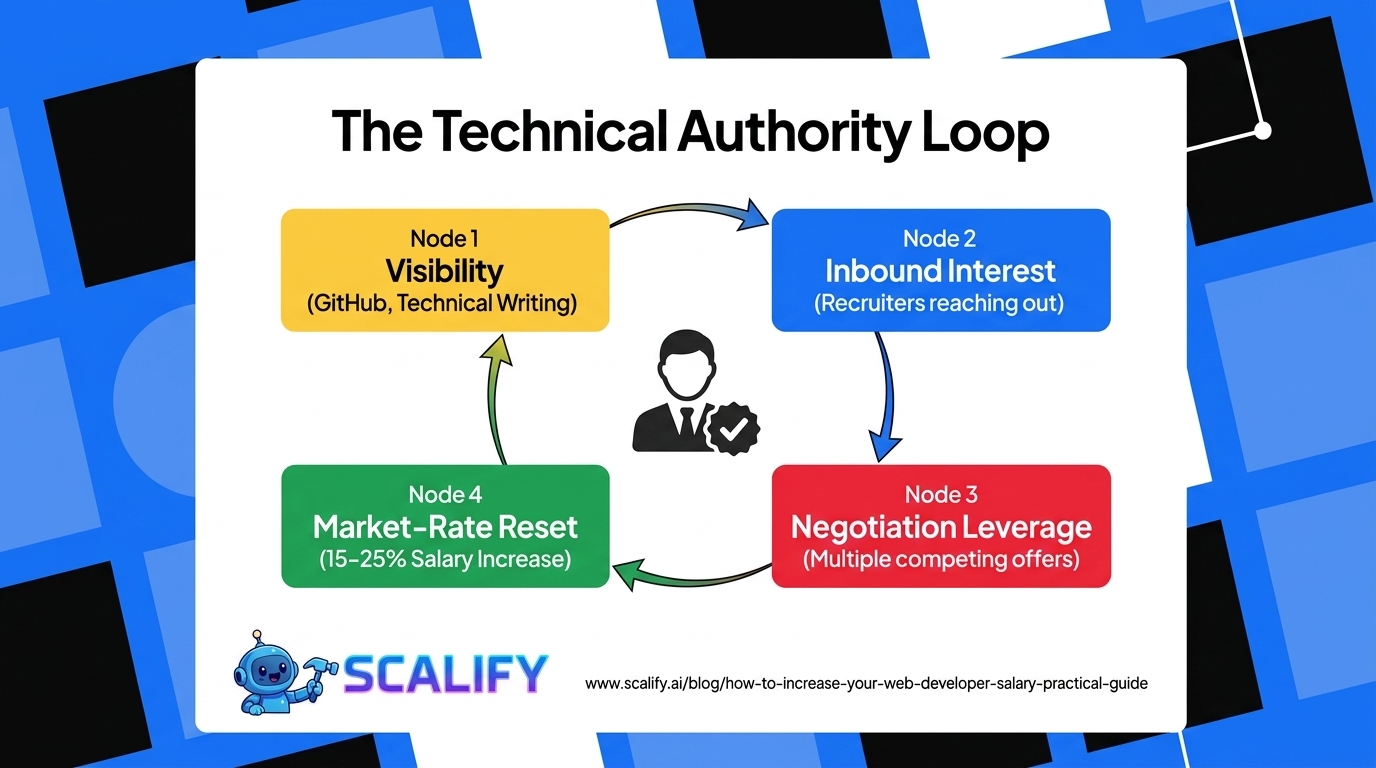
Developers who are visible in the technical community — through GitHub contributions, technical writing, conference talks, or open source work — consistently command higher salaries than equivalent developers who work well but aren't visible. Visibility creates inbound opportunities (recruiters reaching out), provides portfolio evidence that supplements resume claims, and builds the professional reputation that makes hiring managers willing to pay premiums for people they've encountered before seeing an application.
The highest-ROI visibility investments: a well-maintained GitHub profile with active contribution history to real projects, a technical blog with 10–15 substantive posts on your area of specialization, and LinkedIn profile with specific skills listed (recruiters filter by keywords, not by reading profiles). Contributing meaningfully to a popular open source project in your tech stack — fixing genuine bugs, adding documentation, implementing small features — puts your name in front of every developer who encounters that project.
7. Move to a No-Income-Tax State
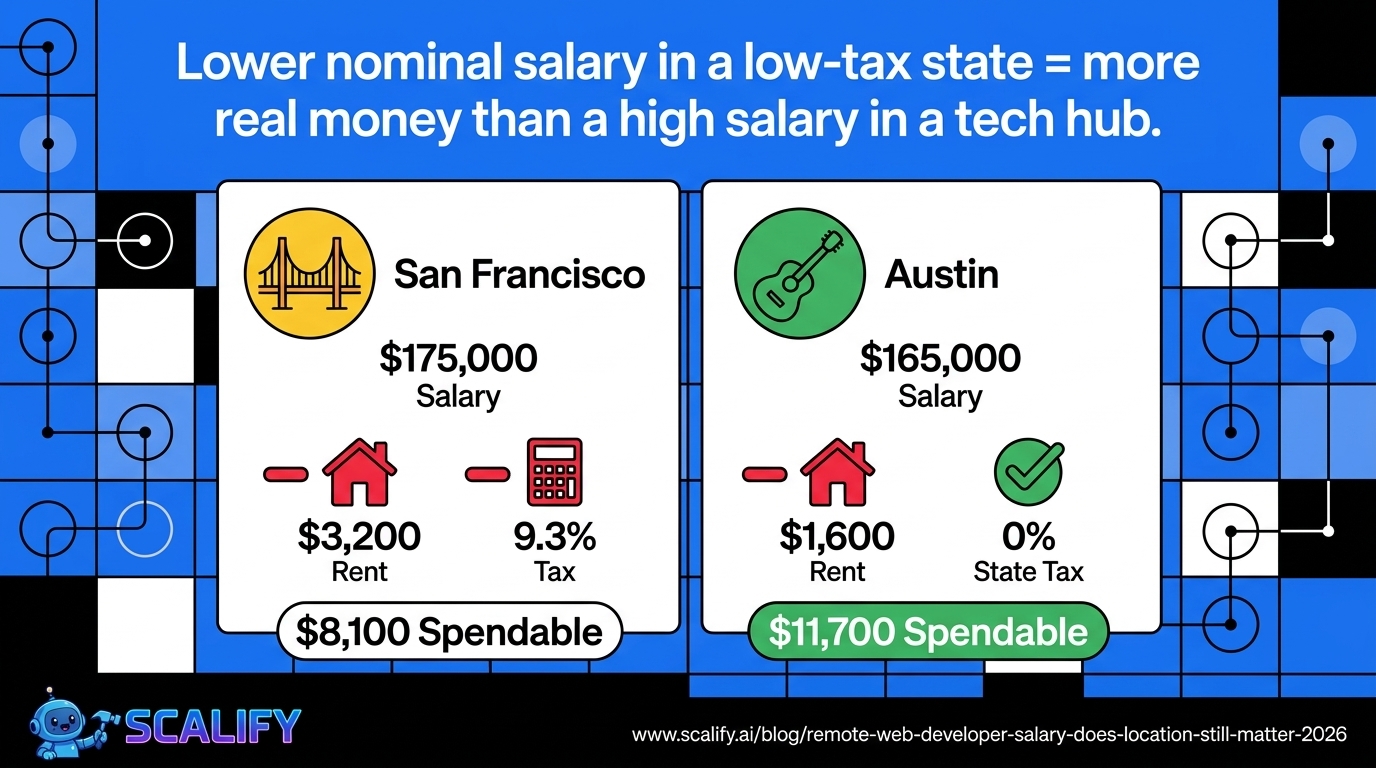
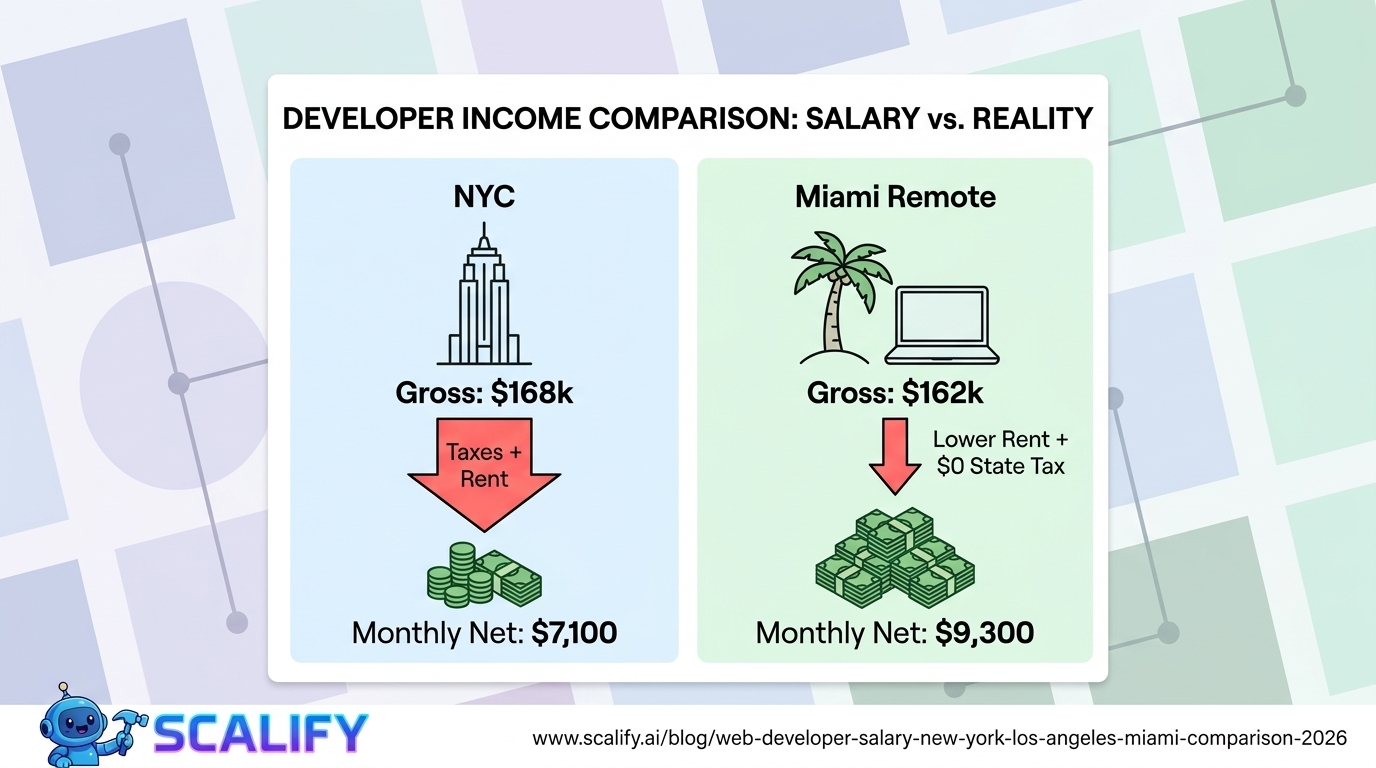
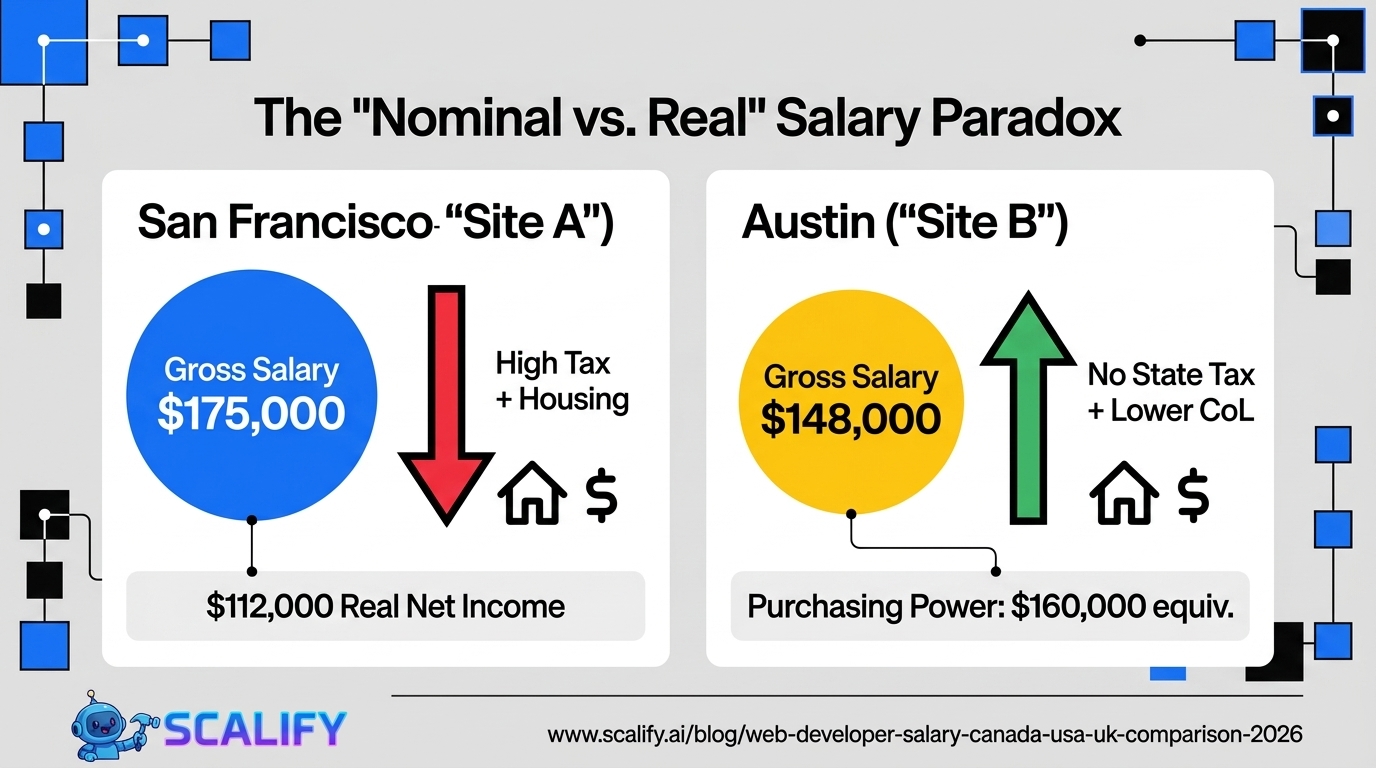
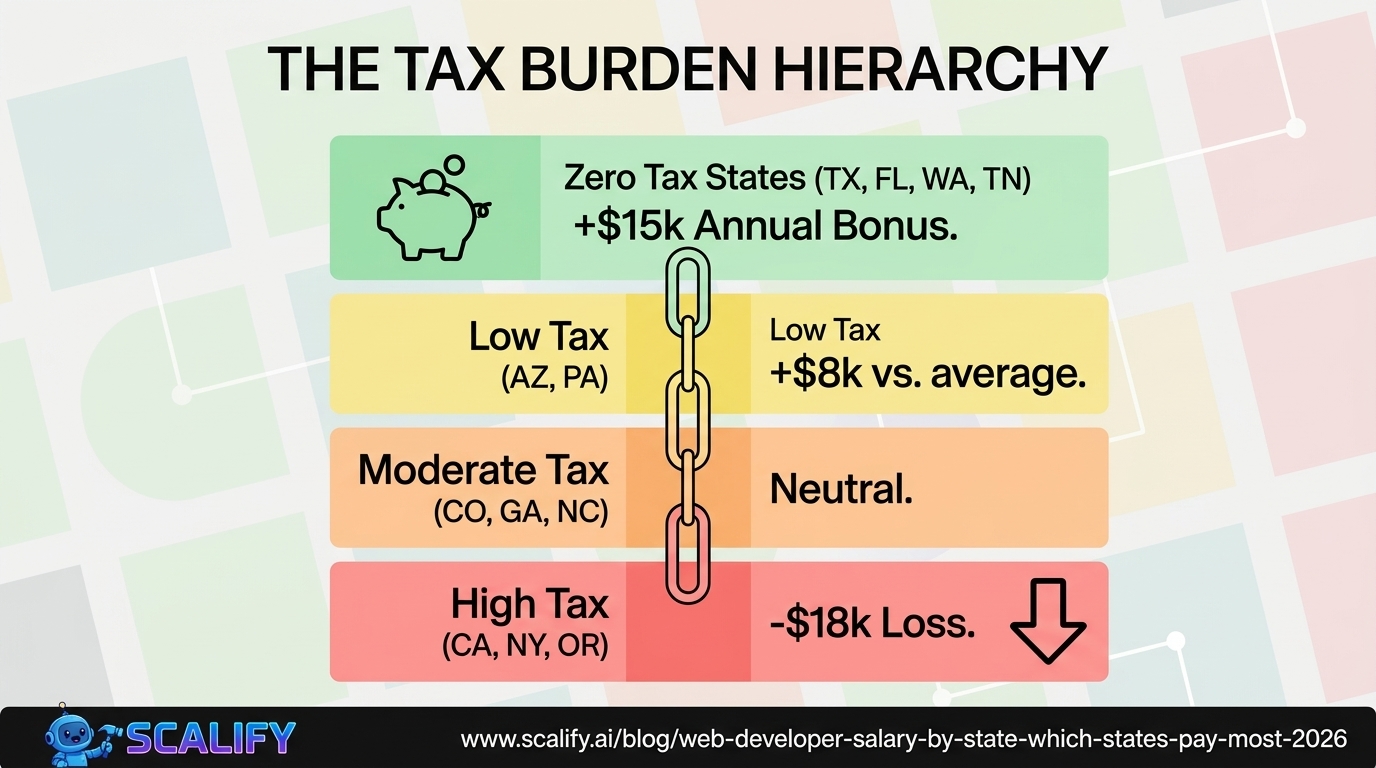
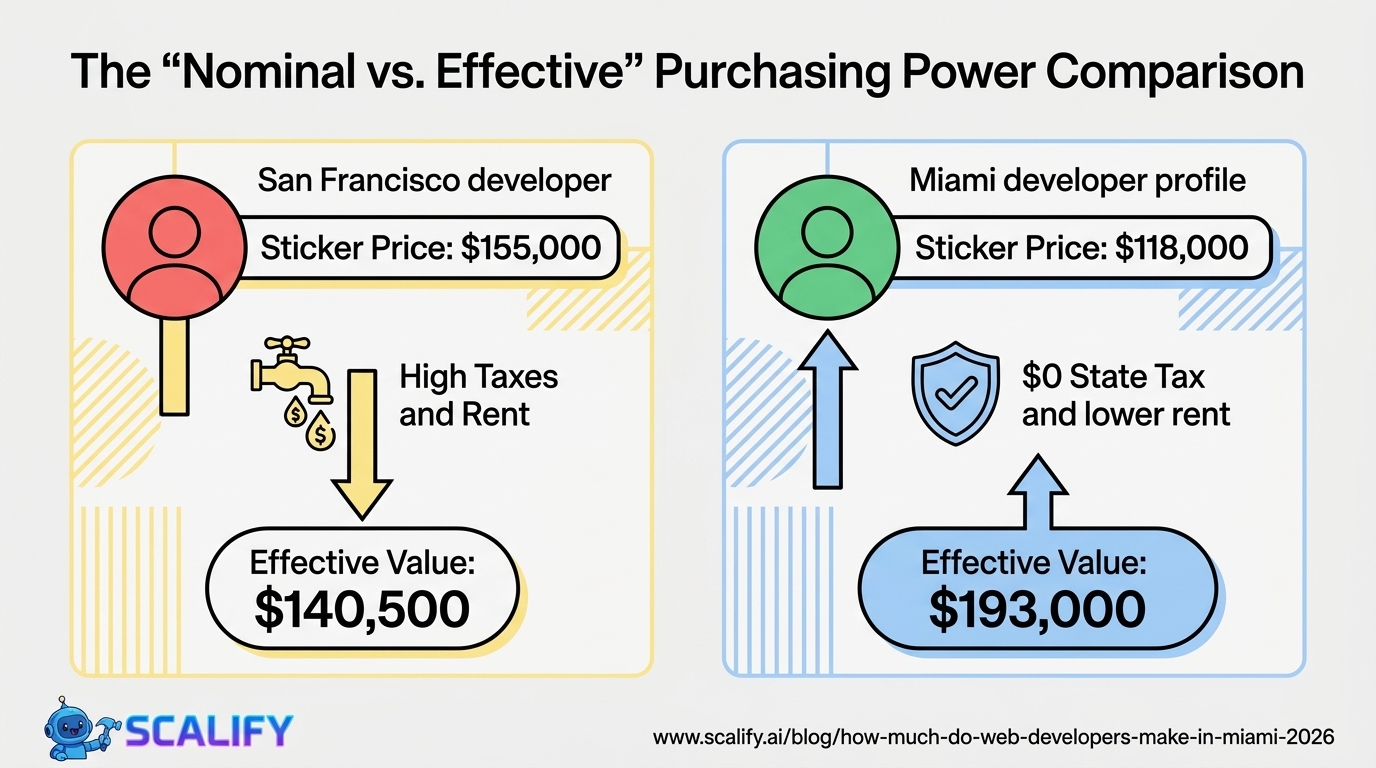
For remote developers working for US companies, relocating to a no-income-tax state (Texas, Florida, Washington, Tennessee, Nevada) produces an immediate salary equivalent of 4–10% annually without any negotiation. A developer earning $150,000 in California (9.3% state income tax) pays approximately $14,000/year in state income tax. Moving to Texas or Florida immediately recovers that $14,000 — equivalent to receiving a $14,000 raise without any negotiation. Combined with the lower cost of living in many no-income-tax states, this strategy can produce $25,000–$40,000 in effective compensation improvement annually for remote developers with geographic flexibility.
The Annual Salary Review: How to Get More From Your Current Employer
Before switching jobs, it's worth understanding how to negotiate effectively with your current employer — because the easiest and least disruptive raise comes from the company that already employs you. The annual review is your primary lever, and preparing for it with the same rigor as a job interview is the difference between 3% and 15% raises.
Document your impact, not your activities. "I worked on the checkout flow" is an activity. "I reduced checkout abandonment by 23%, contributing approximately $180,000 in recovered monthly revenue" is impact. Quantified impact is the most persuasive basis for a raise request because it frames compensation as a fraction of value delivered rather than a cost.
Research your market rate before the conversation. Salary data from Glassdoor, Levels.fyi, LinkedIn Salary, and Stack Overflow Developer Survey for your specific role, location, and specialization provides the market context that turns "I want more money" into "the market is paying $X for my skills and experience." Market data removes subjectivity from the conversation.
Request the meeting, not just the raise. Don't bring up compensation in a regular 1:1 without context — request a dedicated meeting: "I'd like to schedule some time to discuss my compensation and professional development. Can we find 30 minutes in the next couple of weeks?" This signals the topic in advance, gives your manager time to prepare, and creates a professional context for the conversation.
Skills to Develop in the Next 12 Months
Based on current market demand and salary premium data, the highest-ROI skill investments for web developers in 2026:
The Bottom Line
The most effective salary increase strategies — job switching, premium skill development, employer type migration, and negotiation — are available to any developer willing to invest the time and manage some career discomfort. The difference between a developer who earns market rate and one who earns 30% below it is almost never skills — it's the deliberate application of these strategies vs. waiting for recognition to materialize passively. Start with negotiating your next offer (zero cost, immediate impact), build TypeScript expertise (2–4 months, $12,000+ premium), target tech company roles (30–50% salary improvement), and plan your next job switch to capture the market-rate reset that internal raises never provide.
At Scalify, we hire experienced web developers — and we pay market rates for genuine expertise in Webflow, React, and full-stack web development.
Top 5 Sources
The Freelance Option: Unlimited Salary Ceiling
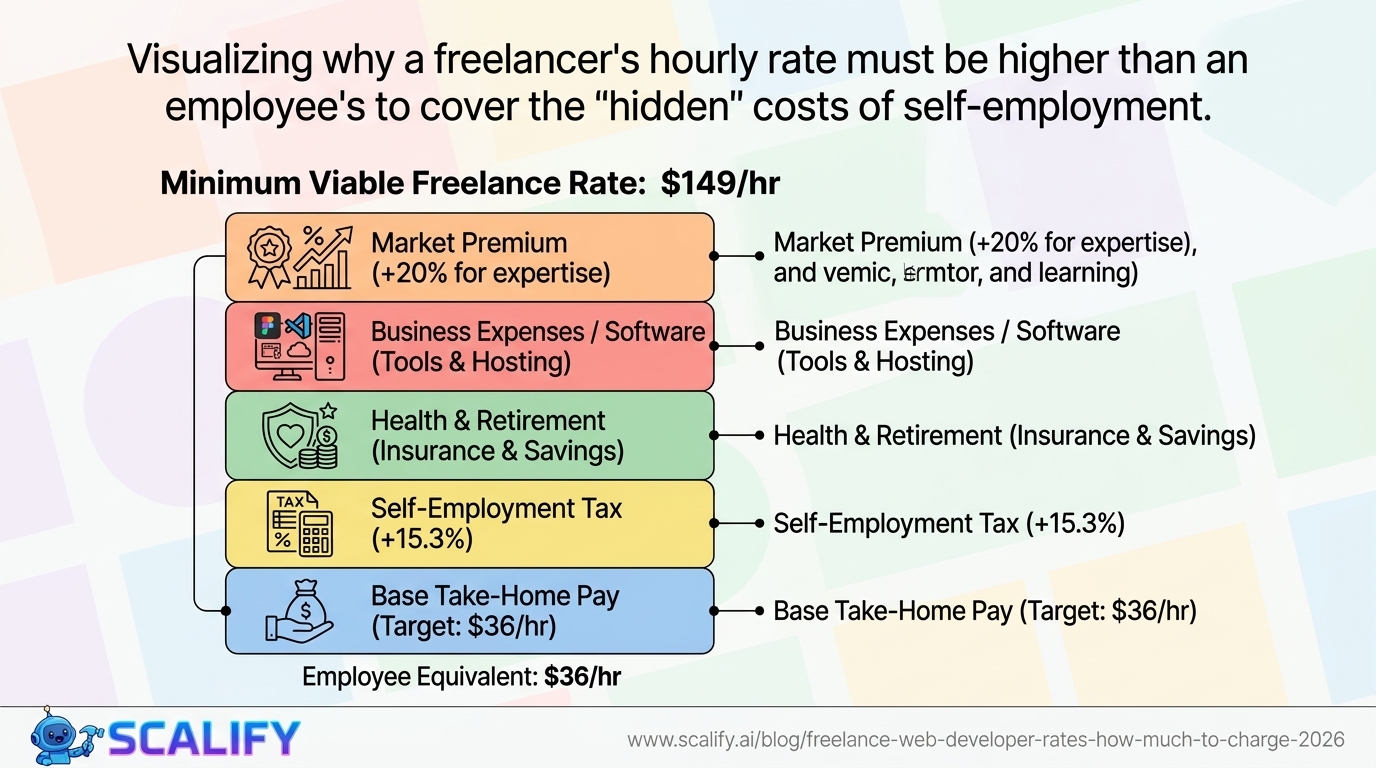
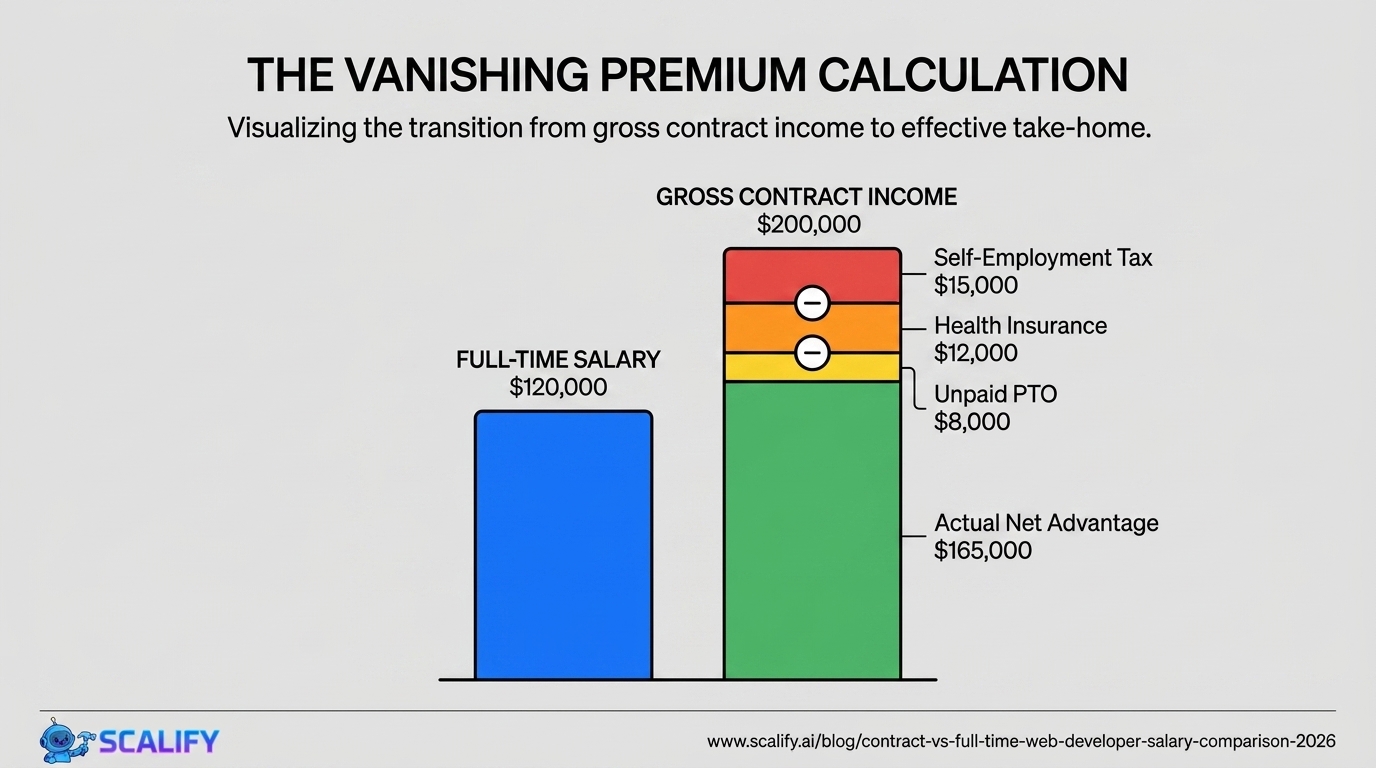
For senior developers who have developed premium specializations and strong client management skills, freelancing provides a salary ceiling that employment cannot match. The math: an employed senior developer earning $155,000 is compensated at roughly $75/hour equivalent. A freelance senior developer billing $150/hour for 1,400 hours/year earns $210,000 gross — before accounting for the tax deductions available to self-employed contractors that employed developers don't have access to. At $175/hour for specialist work, the annual gross is $245,000.
Freelancing is not suitable for all developers or all life stages — it requires business development skills, income variability tolerance, self-management discipline, and the overhead of running a small business. But for senior developers who have established clear specializations, have 2–3 strong client relationships or a clear outreach strategy, and value income ceiling over employment stability, freelancing often represents the highest-earnings scenario available in web development. The developers who succeed in freelancing are those who treat it as running a professional services business — not those who treat it as doing the same job as an employee but independently.
Negotiating Equity: The Startup Path to Maximum Earnings
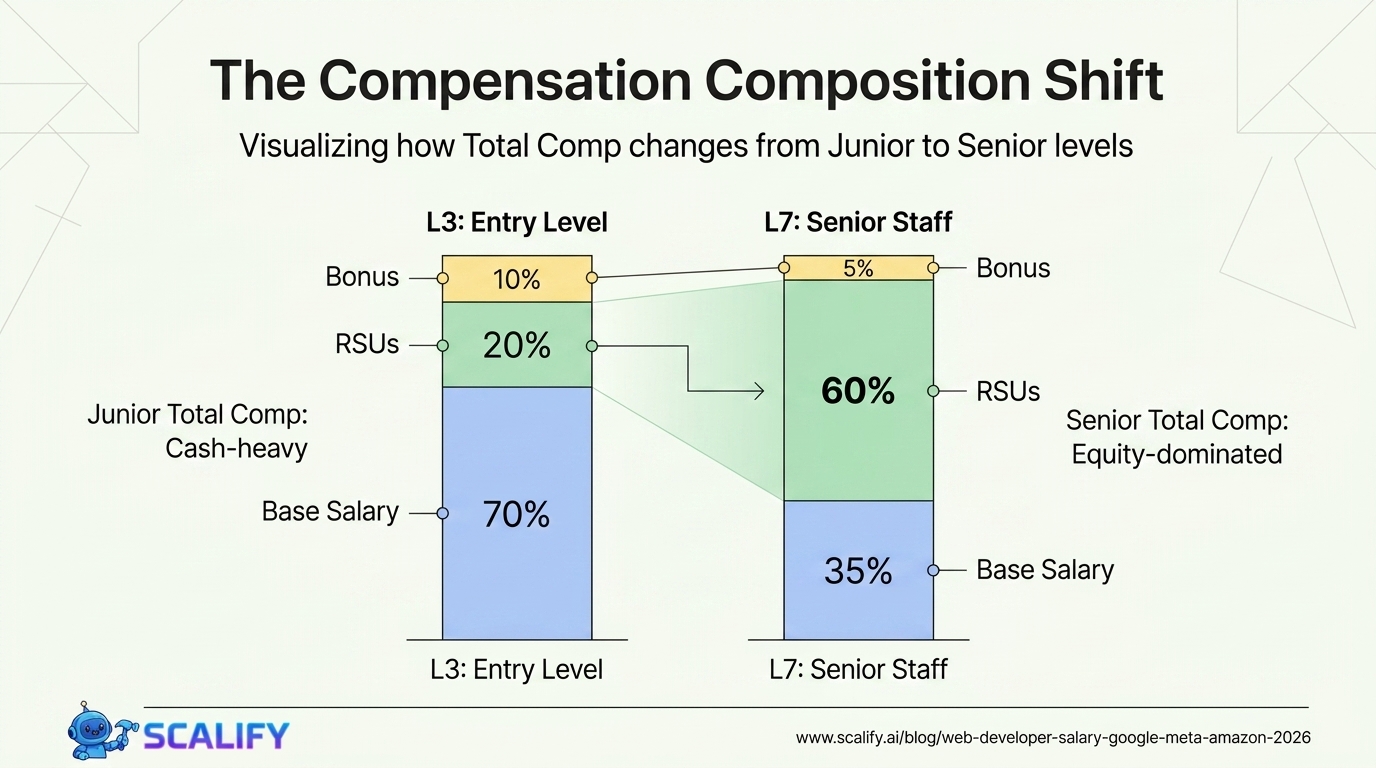
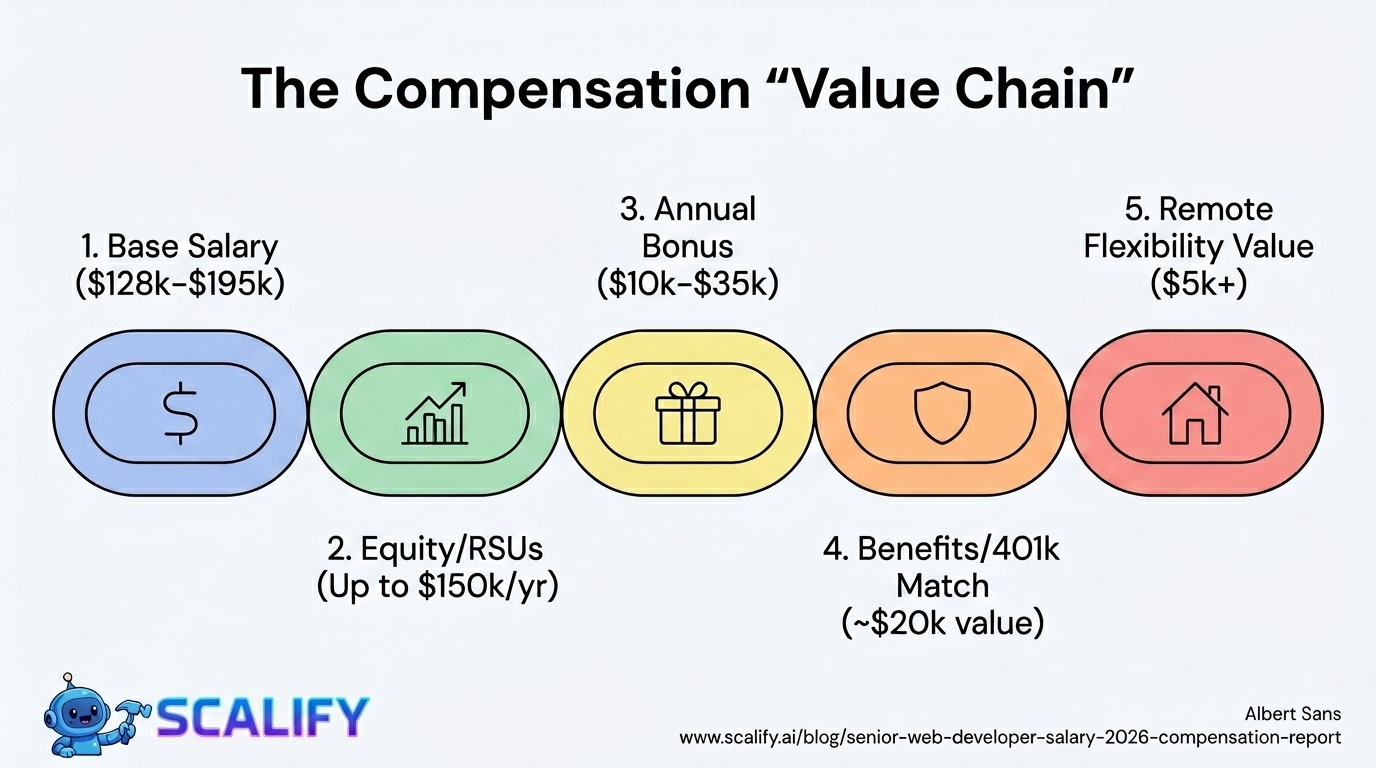
For developers willing to accept income risk in exchange for outsized upside, equity compensation at early-stage startups represents the most financially transformative path available. The structure: early employees at startups receive equity packages (typically 0.1–1% for senior engineers at seed-to-Series A stage) that can be worth nothing or worth tens of millions depending on the company's exit. The expected value calculation is highly uncertain — most startups fail, making equity worth $0 — but the cases where it works produce wealth that salary accumulation never achieves.
Evaluating startup equity offers requires: understanding the vesting schedule (typically 4-year with 1-year cliff), the current cap table and dilution trajectory, the valuation at which you'd need the company to exit for your equity to be meaningfully valuable, and the team's execution credibility. Developers who joined Stripe in 2015, Figma in 2017, or Canva in 2016 at senior levels with meaningful equity stakes created life-changing wealth through equity that employment-focused salary optimization can't approach. The expected value of this path is lower than pure salary optimization — but the upside scenario, when it occurs, is transformative.
Remote Work Arbitrage: Geographic Optimization
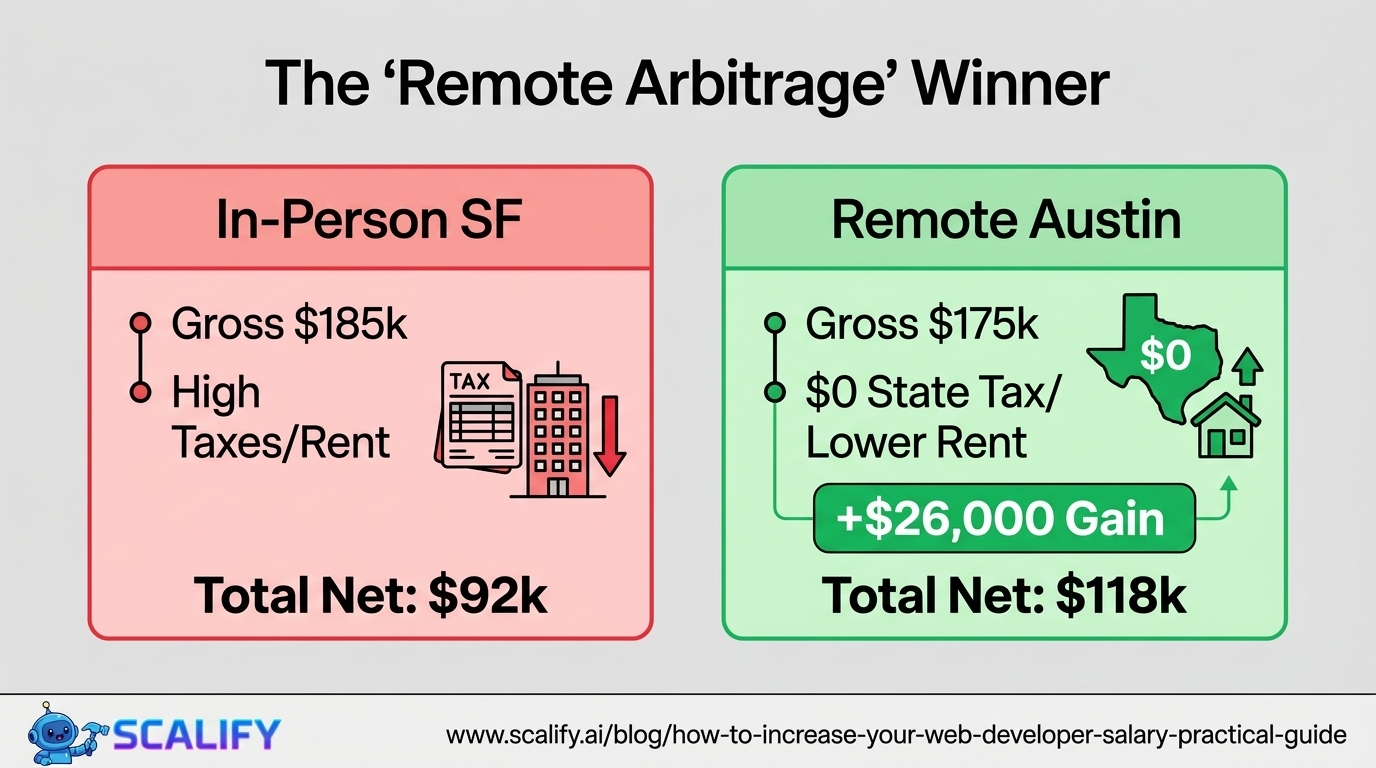
The ultimate developer salary optimization combines the highest accessible salary (national-market remote role at a location-agnostic company) with the lowest accessible cost of living and tax burden (no-income-tax state with below-national-average housing costs). The financial impact modeled over 10 years:
ScenarioAnnual SalaryState TaxHousing (annual)Annual Net10-Year NetSan Francisco, in-person$185,000~$17,000 CA~$42,000~$92,000~$920,000Austin TX, remote SF-rate$175,000$0~$22,000~$118,000~$1,180,000Miami FL, remote national-rate$158,000$0~$28,000~$103,000~$1,030,000
The Austin remote scenario produces $260,000 more in cumulative net income over 10 years than the San Francisco in-person scenario — with a $10,000 lower gross salary. The tax and cost-of-living advantages of the remote + no-income-tax state combination dwarf any salary difference at the level of compensation most senior developers receive. This is the most financially optimized position available in the current developer job market, and it's available to any developer who can access national-rate remote work opportunities.


.jpeg)
.jpeg)



78 SW 7th St, Miami, FL 33130