

Front-End Developer Salary: What You Can Expect in 2026
By Josh Ternyak

April 22, 2026
Comprehensive guide: Front-End Developer Salary: What You Can Expect in 2026
What Do Front-End Developers Actually Earn?
Front-end development is one of the most in-demand specializations in tech — and the compensation reflects it. But "front-end developer salary" covers an enormous range. A junior developer at a small agency earns something fundamentally different from a senior React engineer at a company like Vercel or Stripe. Experience, location, company type, and your specific tech stack all move the needle significantly.
This guide gives you real numbers across every dimension so you know exactly where you stand — and where you should be headed.
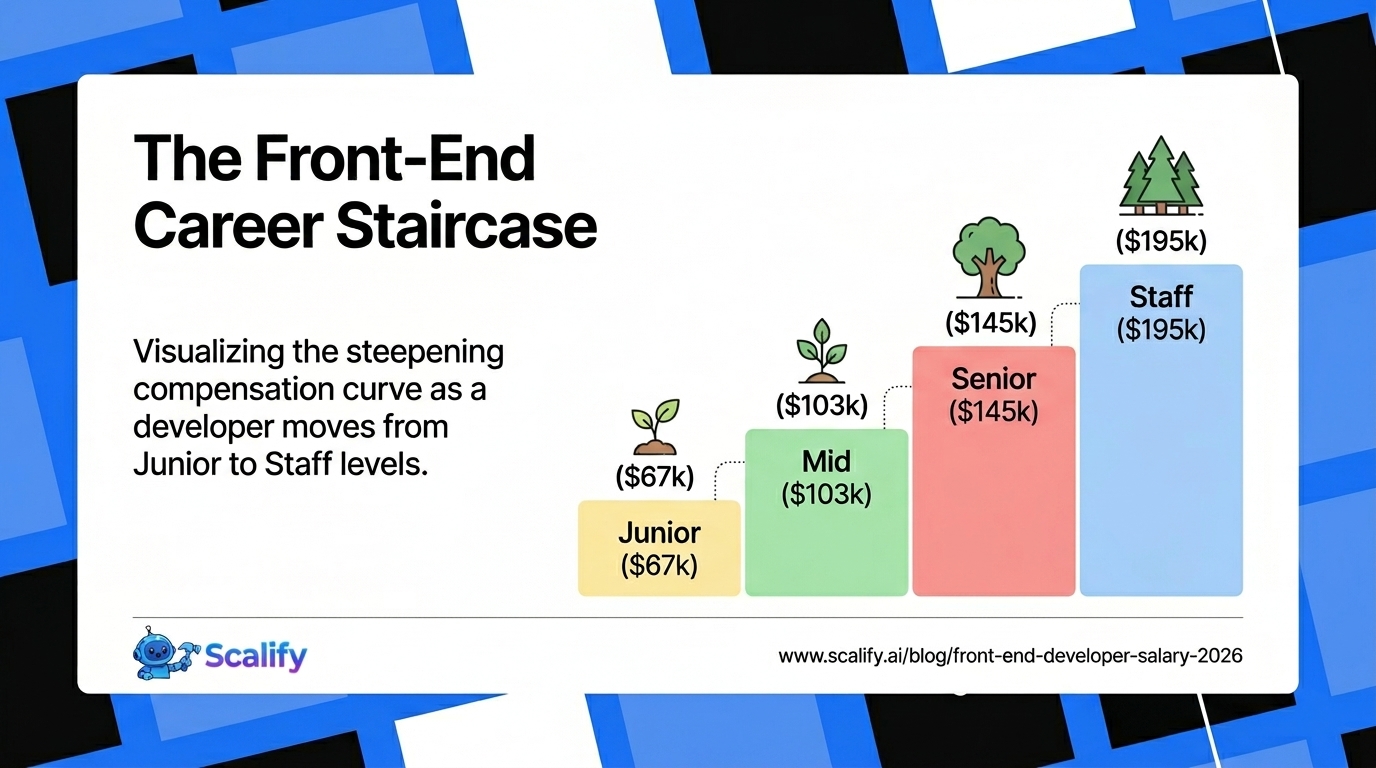
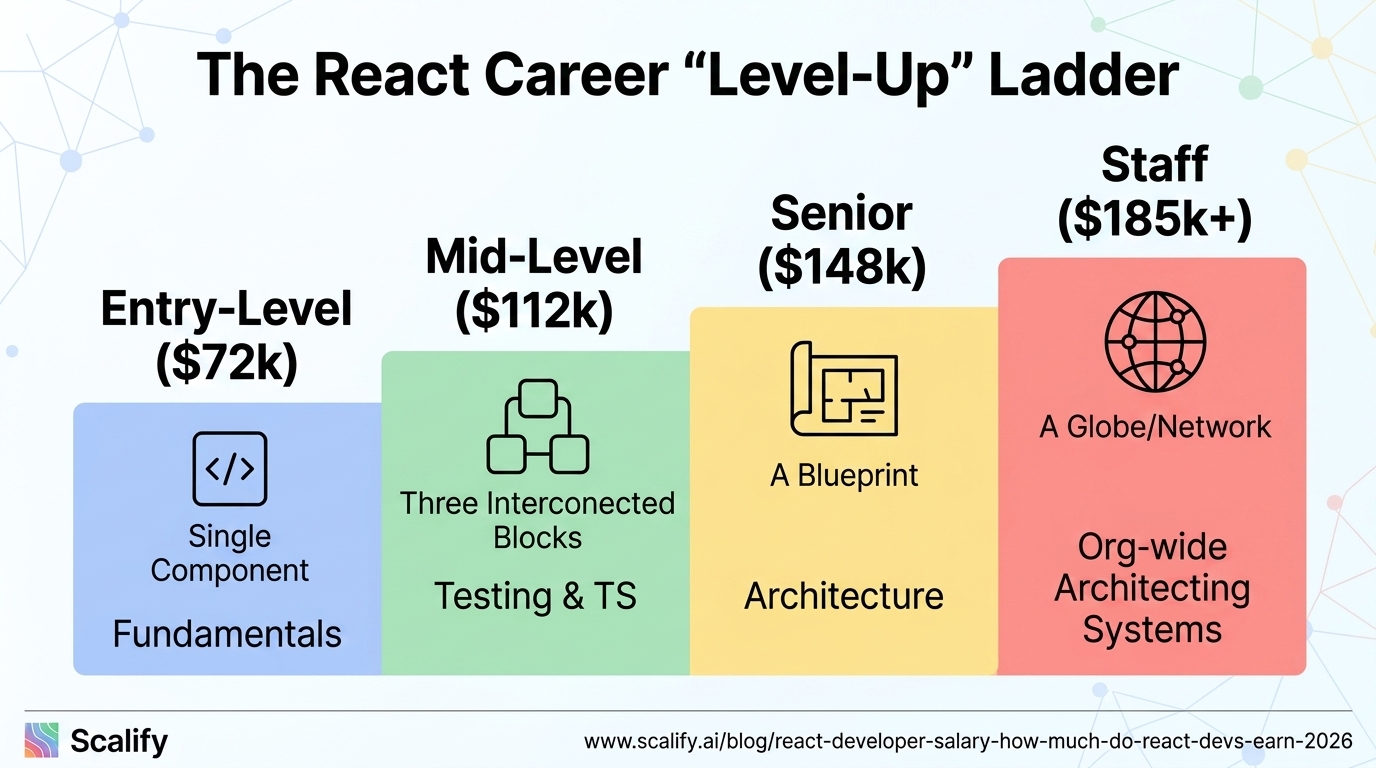
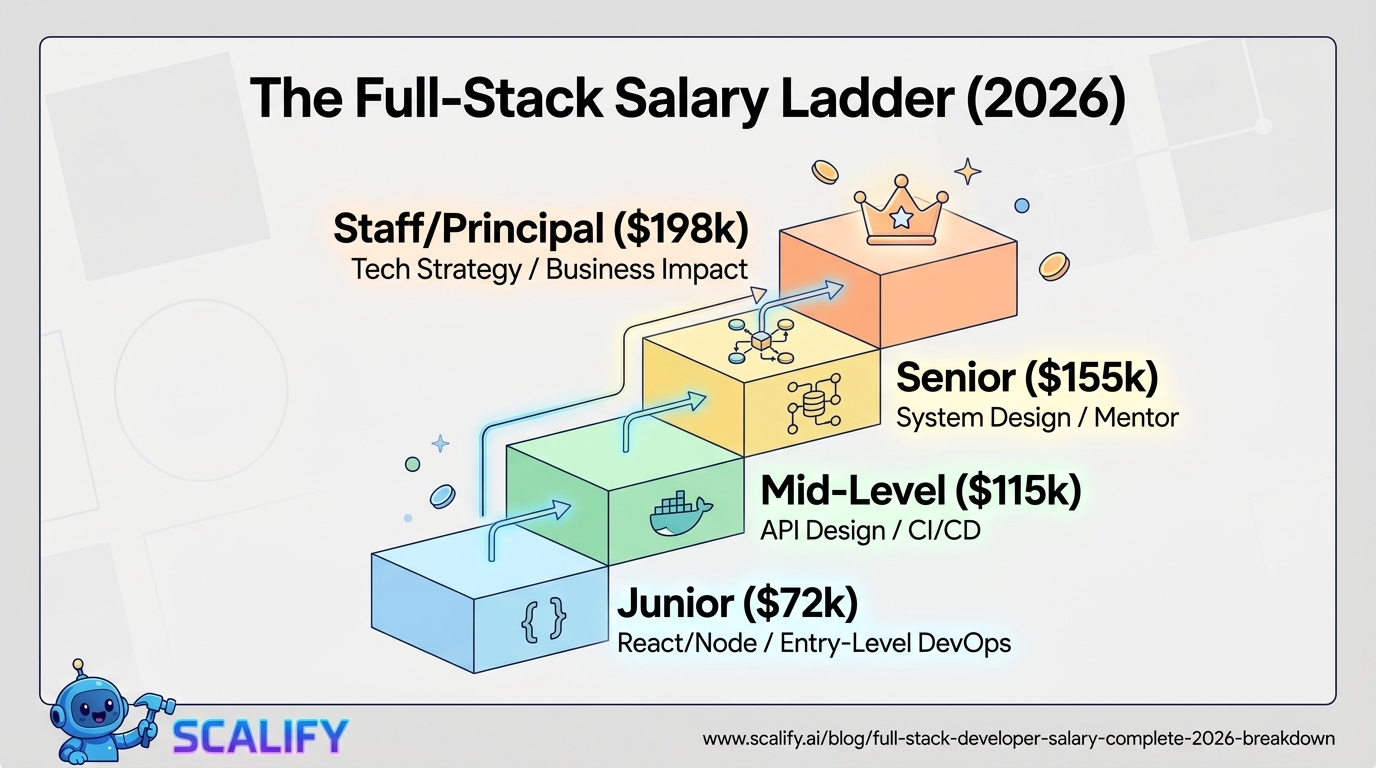
Front-End Developer Salary by Experience Level (2026)
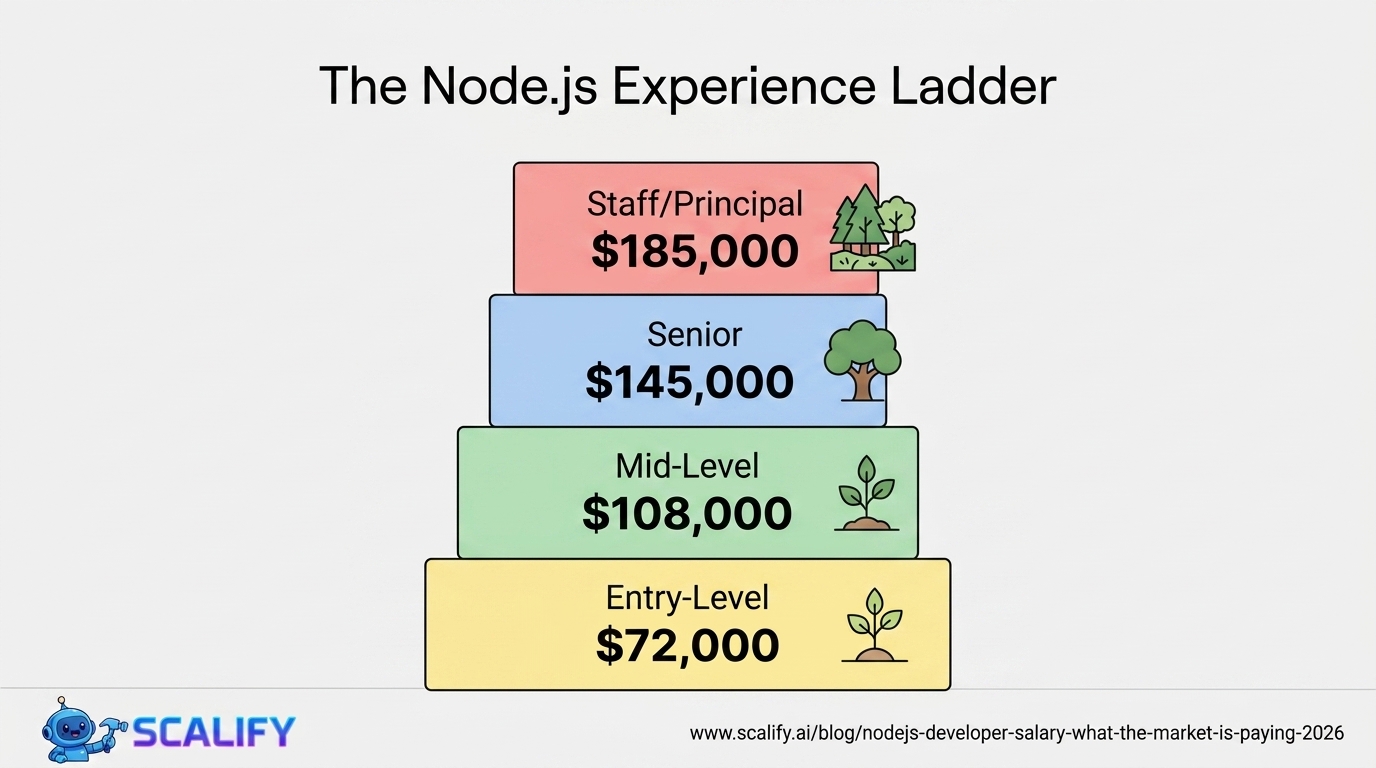
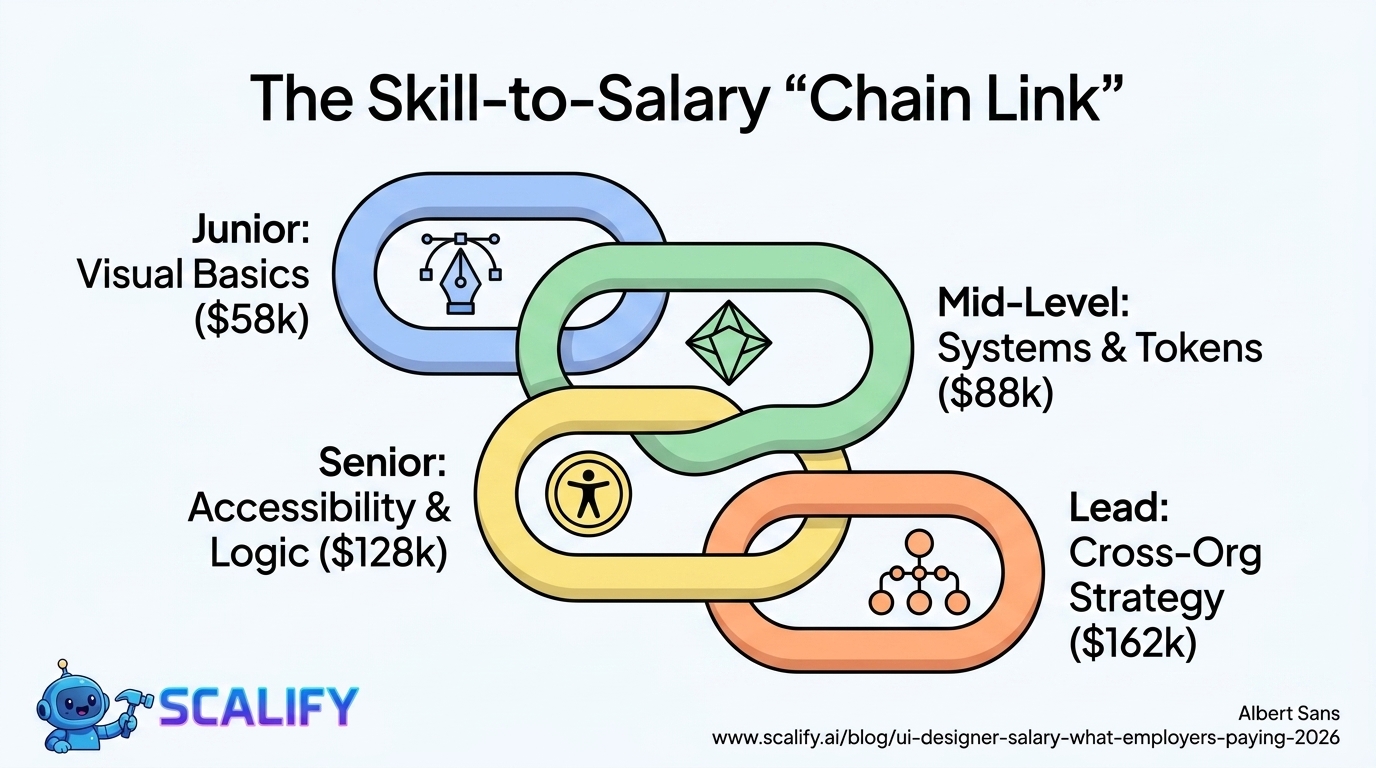
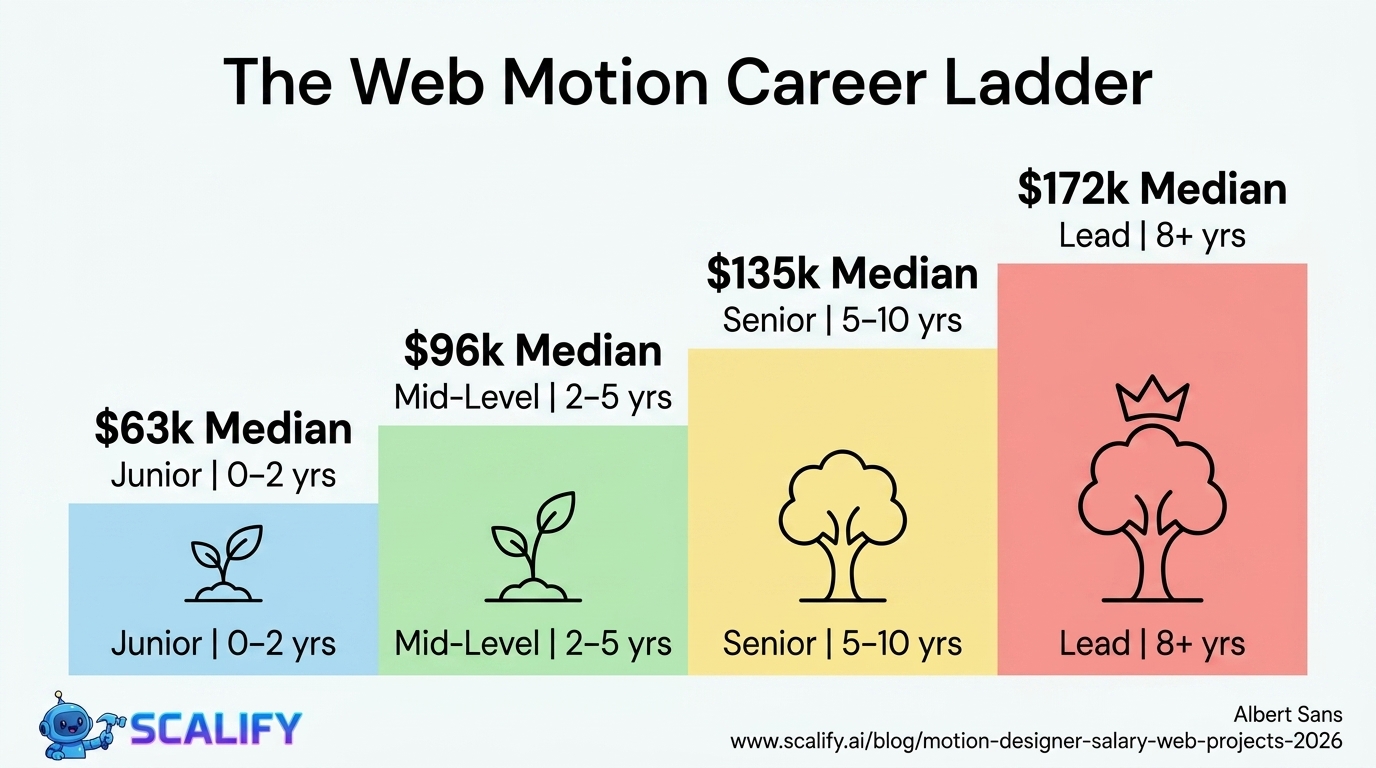
Experience LevelYears ExperienceSalary RangeMedianJunior / Entry-Level0–2 years$58,000 – $78,000$67,000Mid-Level2–5 years$85,000 – $125,000$103,000Senior5–10 years$120,000 – $175,000$145,000Staff / Principal8+ years$160,000 – $260,000+$195,000
Junior / Entry-Level Front-End Developer: $58,000 – $78,000
At entry level you're implementing Figma designs into components, fixing bugs, writing CSS, and working inside established codebases rather than architecting new ones. The variation in this range is driven almost entirely by geography — the same role in Austin pays 30–40% more than a comparable role at a small agency in a secondary market.
What gets you out of entry level fastest: TypeScript fluency (it's now essentially required at mid-level at most product companies), shipping real projects beyond tutorial clones, and developing genuine depth in at least one area — whether that's performance optimization, accessibility, animation, or testing.
Mid-Level Front-End Developer: $85,000 – $125,000
This is where the compensation curve steepens sharply. The jump from junior to mid typically represents a 25–40% pay increase — and it's where the difference between developers who've been sharpening skills versus coasting becomes financially significant. At mid-level you own features end-to-end: you take requirements from product or design, make implementation decisions, write tests, and ship with minimal supervision. You're reviewing junior code and starting to think about architecture rather than just execution.
Senior Front-End Developer: $120,000 – $175,000
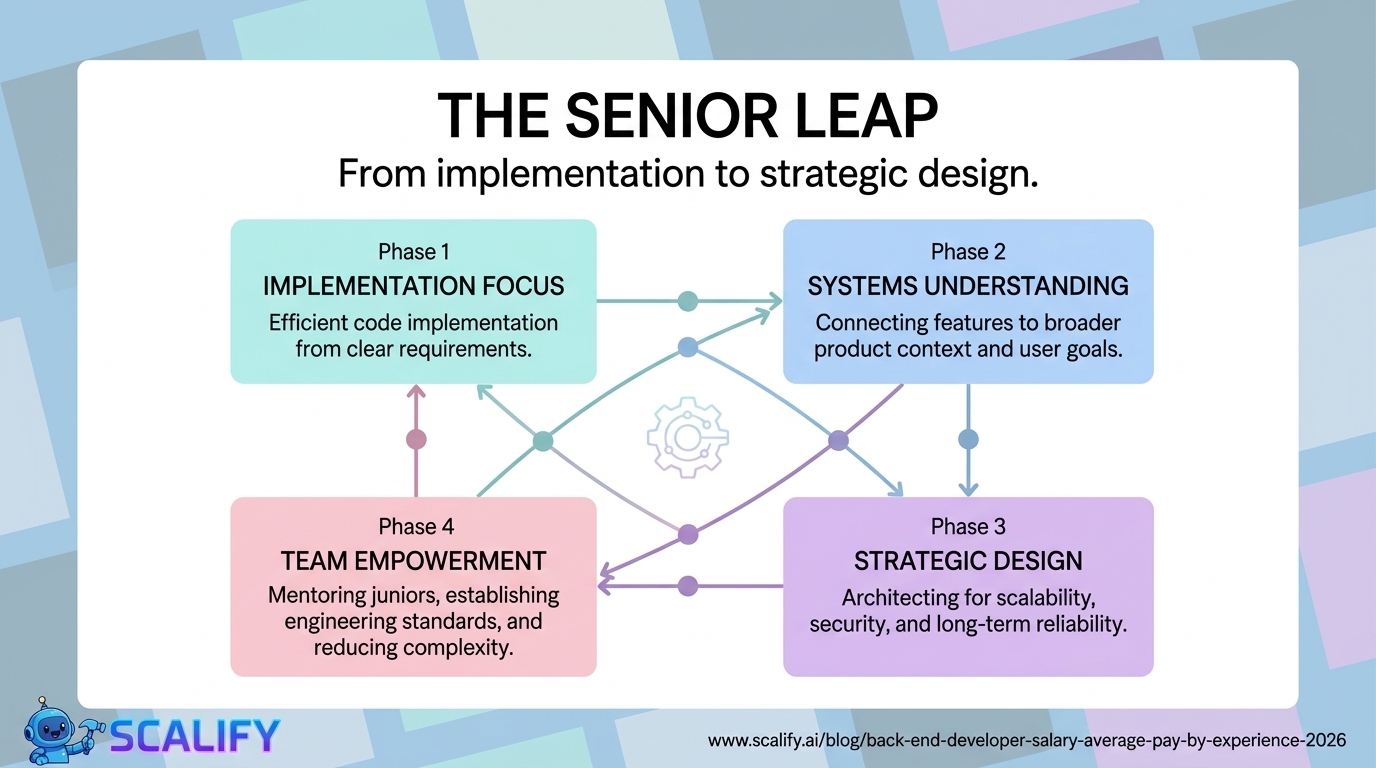
Senior compensation reflects technical depth combined with organizational leverage. You're architecting component libraries, setting performance budgets, establishing team coding standards, mentoring mid-level developers, and collaborating directly with product and design on technical feasibility. At major tech companies — Meta, Stripe, Airbnb, Vercel — senior front-end engineers reach $200,000–$280,000+ in total compensation when equity and bonus are included.
Staff / Principal Engineer: $160,000 – $260,000+
These roles exist primarily at larger tech companies and are intensely competitive. Your impact extends across multiple teams — you're setting the front-end technical direction for the organization, your architectural decisions have multiplicative effects on team productivity, and you're solving problems that no individual senior engineer could tackle alone.
Front-End Developer Salary by City
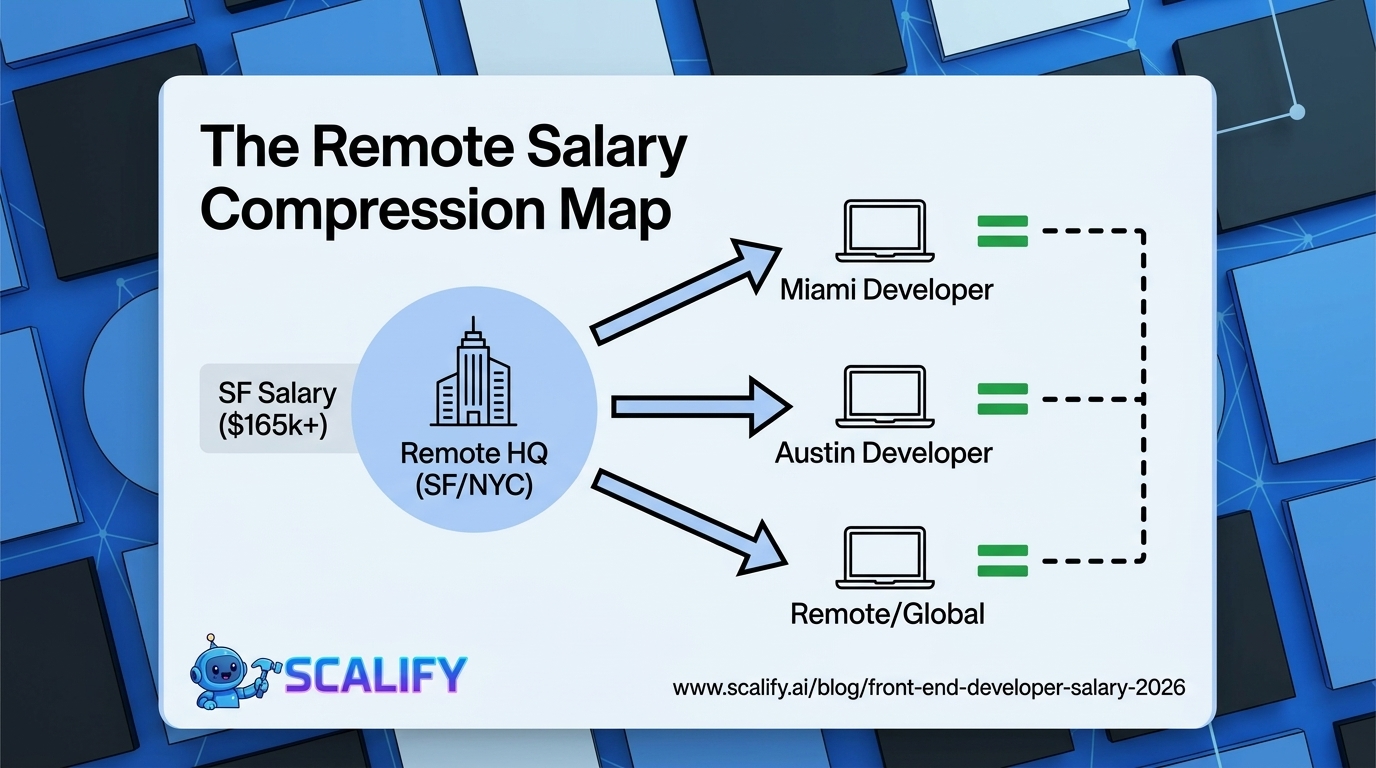
CityMid-LevelSeniorNotesSan Francisco Bay Area$115,000 – $145,000$165,000 – $220,000+Highest market; FAANG drives ceilingNew York City$105,000 – $135,000$150,000 – $190,000Strong fintech and media presenceSeattle$105,000 – $130,000$145,000 – $185,000Amazon and Microsoft anchor the marketBoston$95,000 – $125,000$125,000 – $160,000Strong biotech and SaaS demandAustin$90,000 – $120,000$120,000 – $155,000Rapidly growing tech hubDenver / Boulder$88,000 – $115,000$115,000 – $148,000Growing startup sceneMiami$80,000 – $110,000$100,000 – $135,000Rising tech scene; remote workers earn moreChicago$85,000 – $115,000$110,000 – $145,000Strong enterprise and agency marketNon-tech hub markets$65,000 – $95,000$85,000 – $120,000Agency and non-tech employer dominated
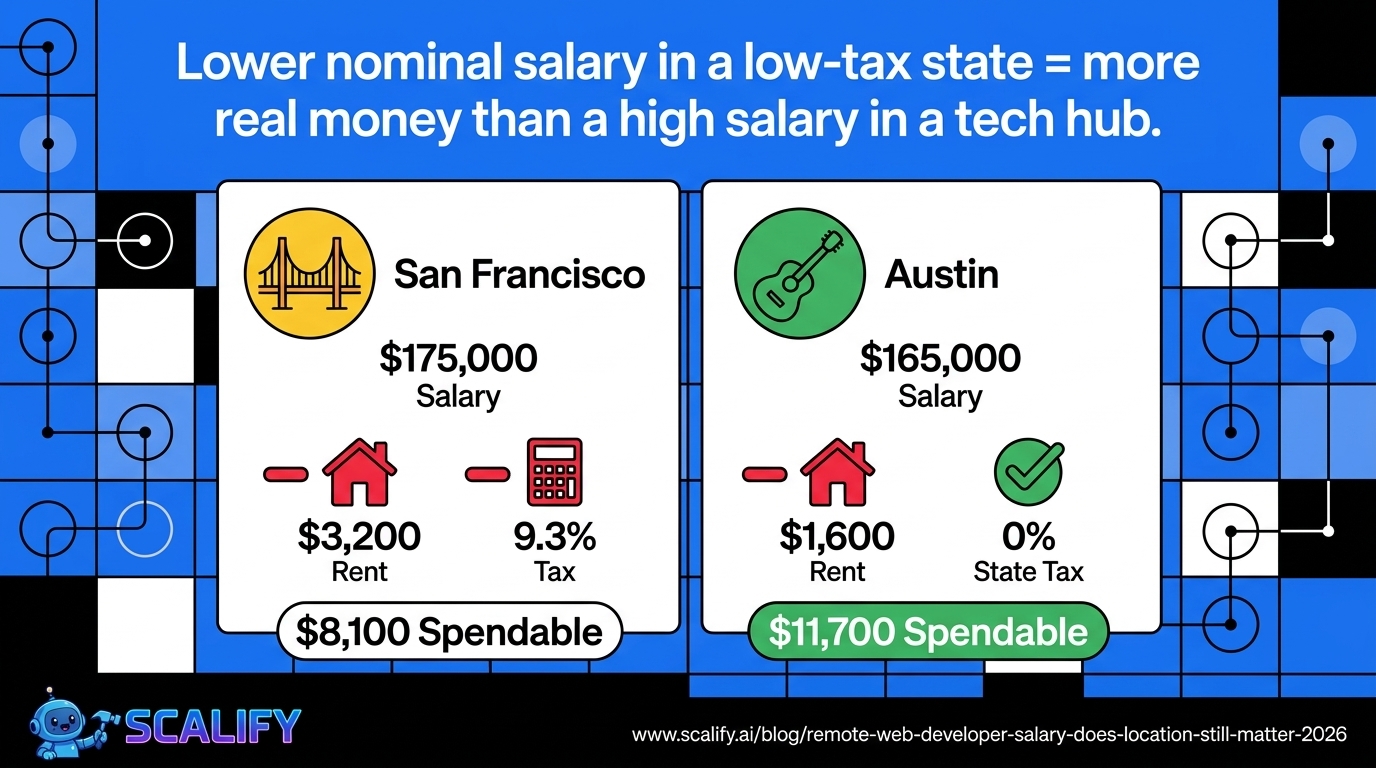
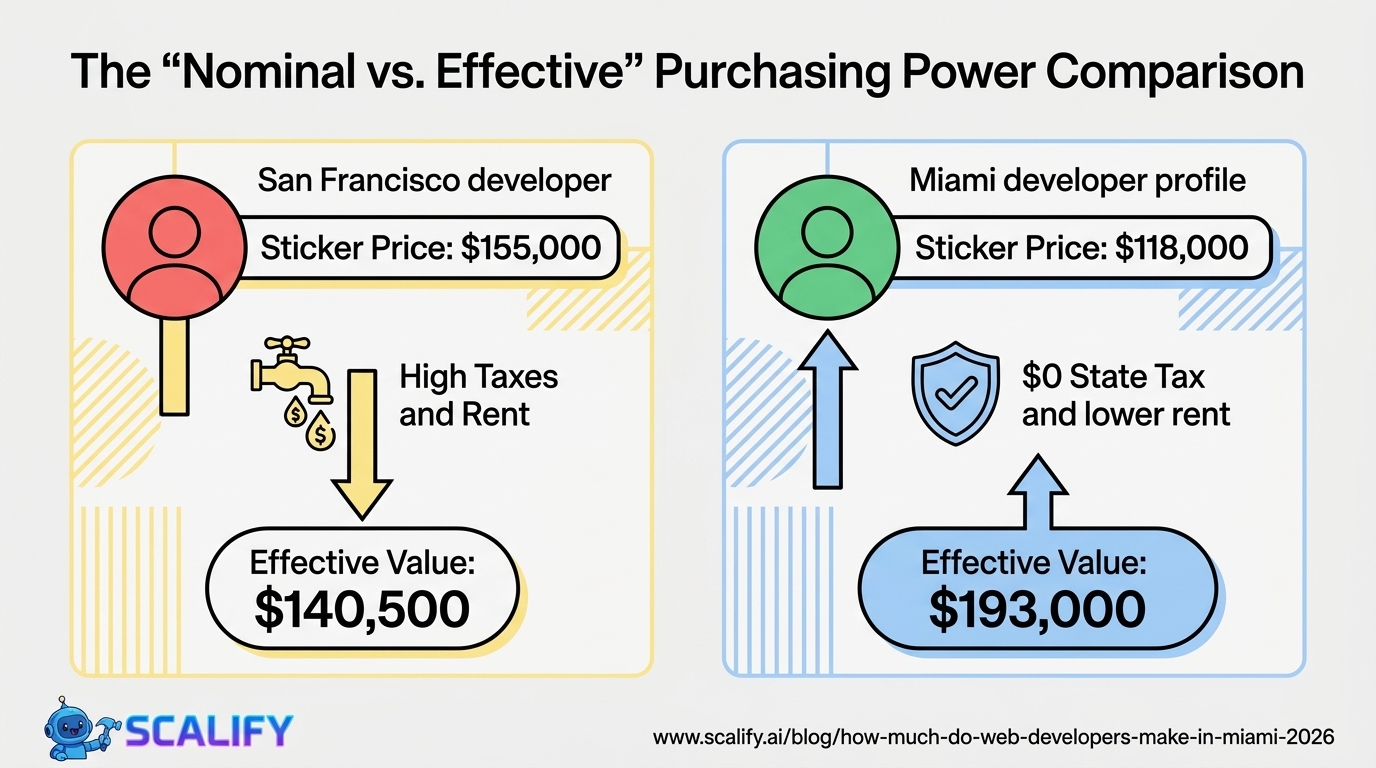
Remote work has partially compressed these geographic differences. A developer in Miami working remotely for a San Francisco company often earns close to SF market rates — especially at larger companies that use national pay bands. At smaller companies, remote pay is typically pegged to the company's HQ location.
Front-End Developer Salary by Company Type
Company TypeMid-Level BaseSenior BaseEquity / Total CompFAANG / Big Tech$135,000 – $165,000$175,000 – $220,000Very high (RSUs can 2–3x base)High-Growth Startups (Series B+)$110,000 – $145,000$140,000 – $180,000High potential, illiquidEstablished SaaS / Product$100,000 – $135,000$130,000 – $170,000Moderate, more predictableNon-Tech Enterprises$85,000 – $115,000$110,000 – $145,000Low equity, better stabilityWeb Agencies$70,000 – $100,000$90,000 – $120,000Little to no equity
Front-End Developer Salary by Specialization
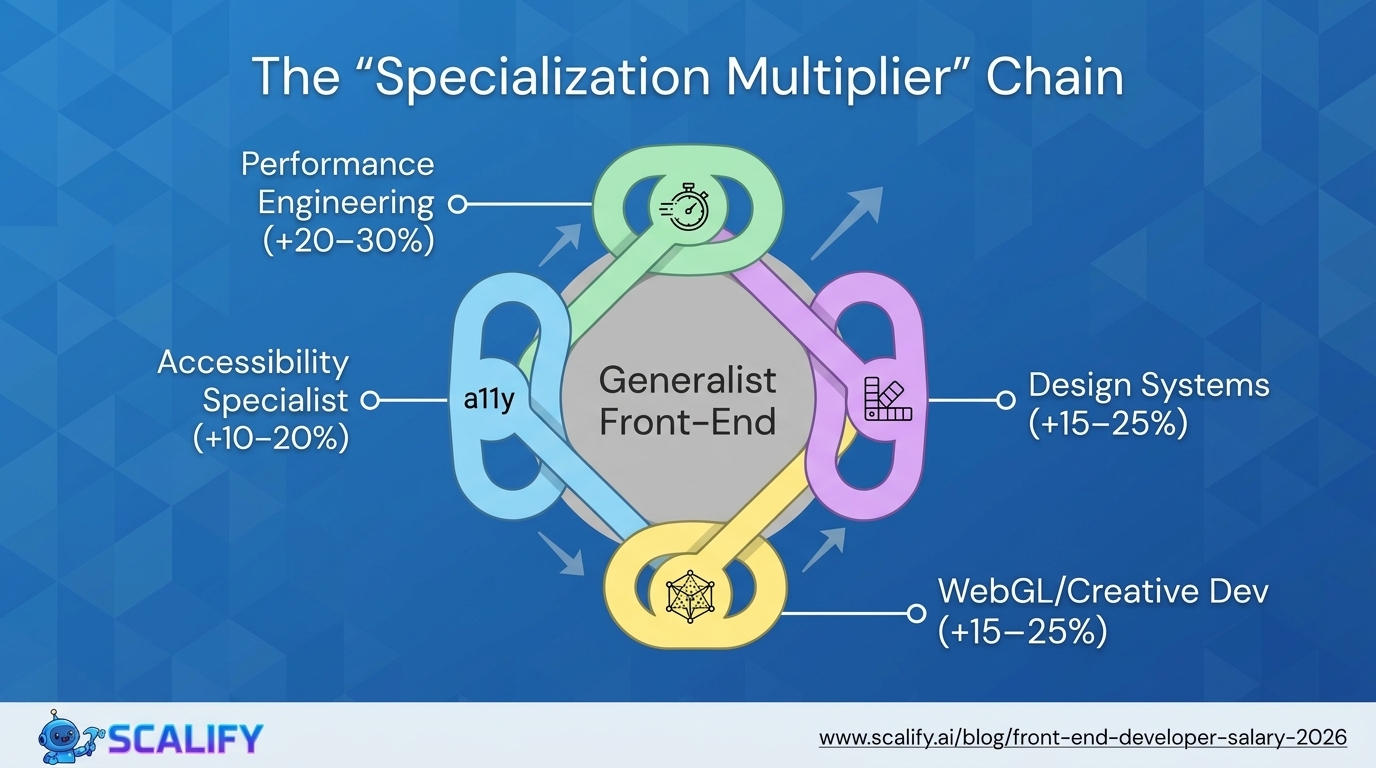
Not all front-end work commands the same rates. Specializing in a high-demand, lower-supply area can shift your compensation 15–30% above the generalist baseline.
SpecializationSalary PremiumDemand LevelReact / Next.jsBaseline (most jobs)Very HighPerformance Engineering+20–30%High, nicheDesign Systems Engineering+15–25%High at scale-upsWebGL / Three.js / Creative Dev+15–25%Niche, high ceilingAccessibility Specialist+10–20%Growing fastTypeScript / Architecture+10–15%Near-universal demand
React and Next.js Specialists
React remains the dominant front-end framework with the highest job volume and the most competitive salaries. Mid-level React developers in tech hubs typically earn $100,000–$130,000. Senior React/Next.js engineers earn $140,000–$185,000. The Next.js App Router expertise — React Server Components, streaming, server actions — is increasingly a premium differentiator given how fast it's being adopted.
Performance Engineering
Developers who specialize in Core Web Vitals, bundle optimization, rendering strategies, and load time improvement are genuinely scarce. This requires depth in browser internals, network behavior, and measurement methodology that most front-end developers never develop. Senior performance specialists earn 20–30% above general senior front-end rates at companies where performance directly affects revenue.
Design Systems Engineers
Building and maintaining component libraries, design tokens, and the internal tooling that other engineers use to build consistently — this role sits at the intersection of front-end engineering and UX design. At companies with mature design systems (Shopify, Atlassian, Salesforce), design systems engineers command $130,000–$170,000+ at senior level.
Front-End vs. Back-End vs. Full-Stack Salary Comparison
RoleMid-Level MedianSenior MedianVs. Front-EndFront-End Developer$103,000$145,000BaselineBack-End Developer$110,000$158,000+7–10%Full-Stack Developer$108,000$155,000+5–8%DevOps / Cloud Engineer$120,000$165,000+15–20%
Back-end and DevOps roles typically earn slightly more than equivalent front-end roles at the same company — reflecting the complexity of distributed systems, database optimization, and infrastructure work. That said, senior front-end engineers with genuine depth in performance, architecture, and systems design close this gap significantly.
Freelance Front-End Developer Rates
Experience LevelHourly RateAnnual Equivalent (Full Utilization)Junior Freelance$45 – $75/hr$90,000 – $150,000Mid-Level Freelance$75 – $125/hr$150,000 – $250,000Senior Freelance$125 – $200/hr$250,000 – $400,000Specialist / Expert$175 – $300+/hr$350,000+
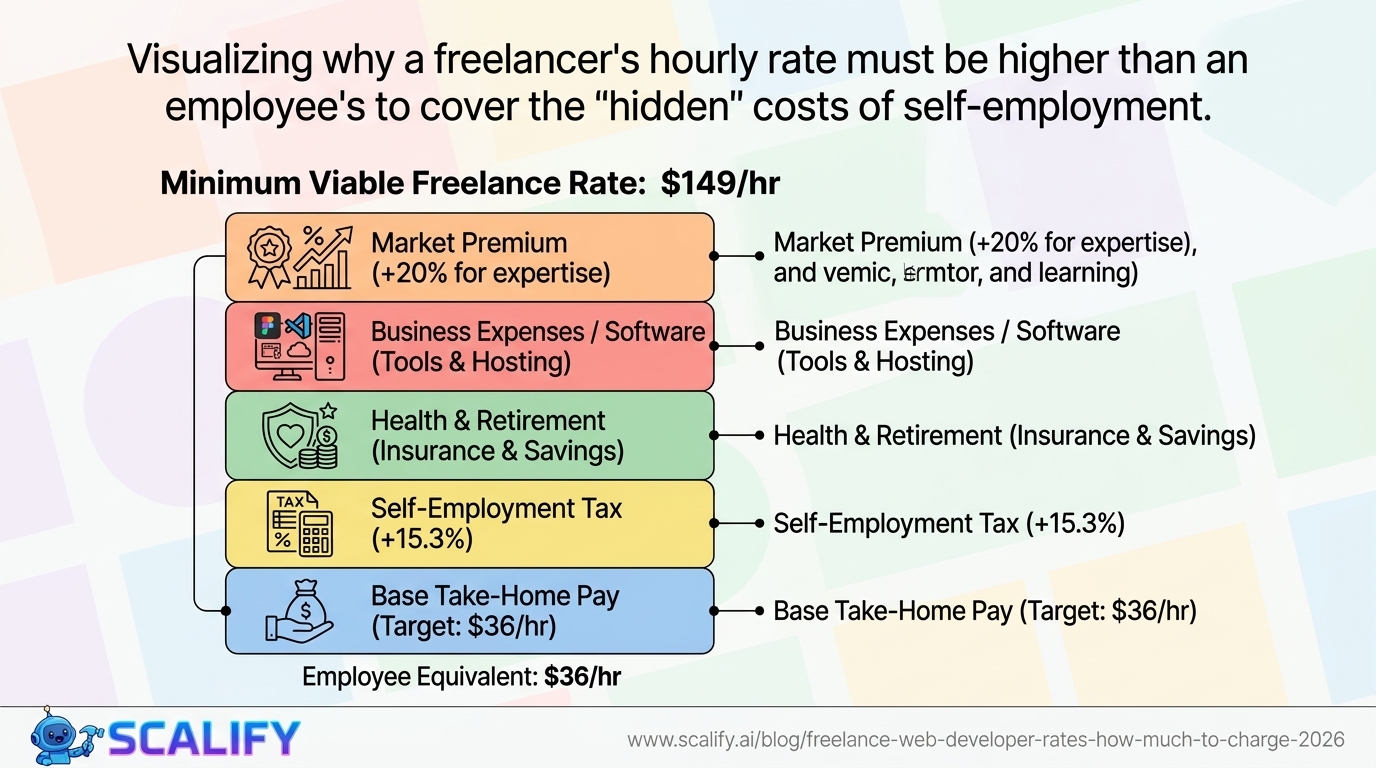
Freelance rates carry a premium over equivalent salaried roles — developers must cover their own benefits, taxes, business costs, and non-billable time. The premium is typically 40–80% above the equivalent hourly salaried rate. Specialization dramatically increases freelance ceiling: a React performance specialist charging $200/hr is not unusual in 2026.
What Skills Increase Your Front-End Salary the Most
Based on job posting analysis and compensation data, these skills produce the largest salary differentials for front-end developers in 2026:
How to Increase Your Front-End Developer Salary
The most reliable strategies for increasing front-end compensation:
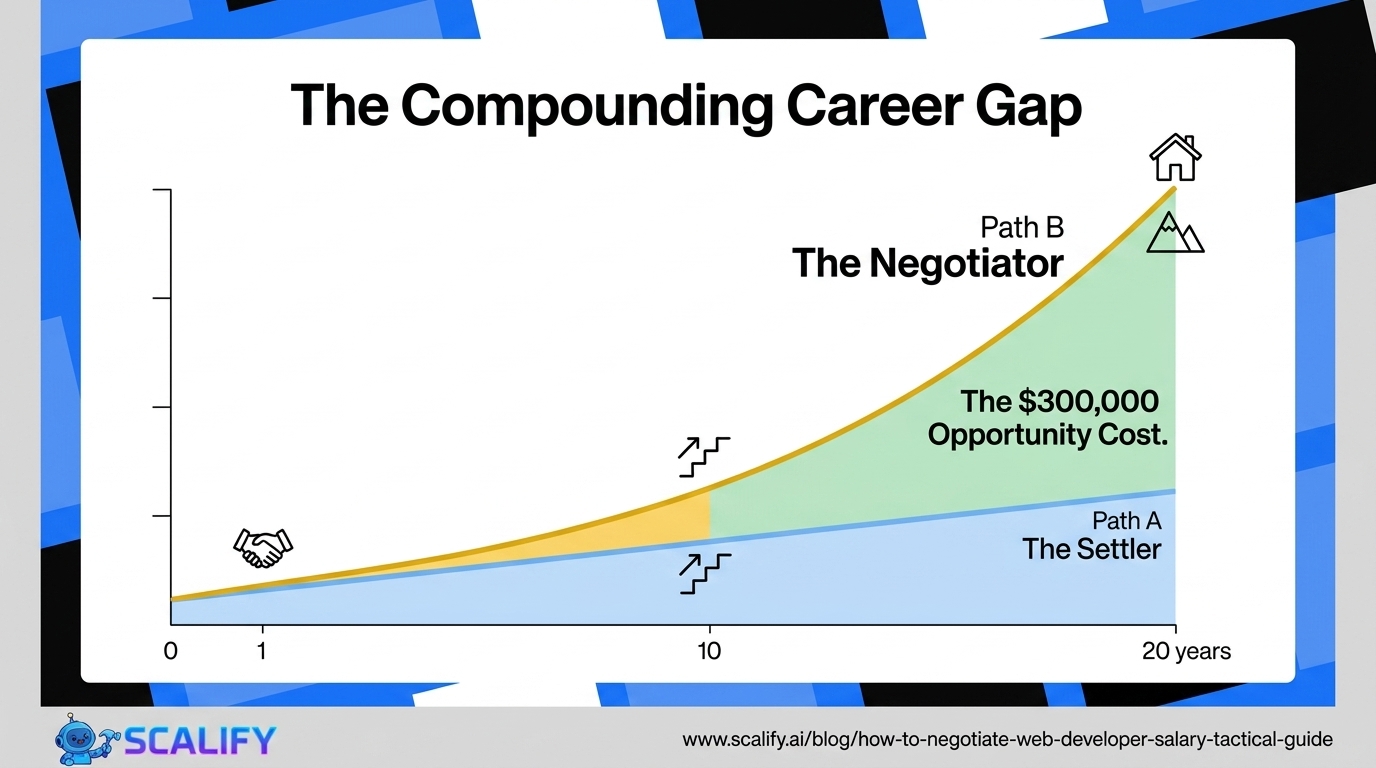
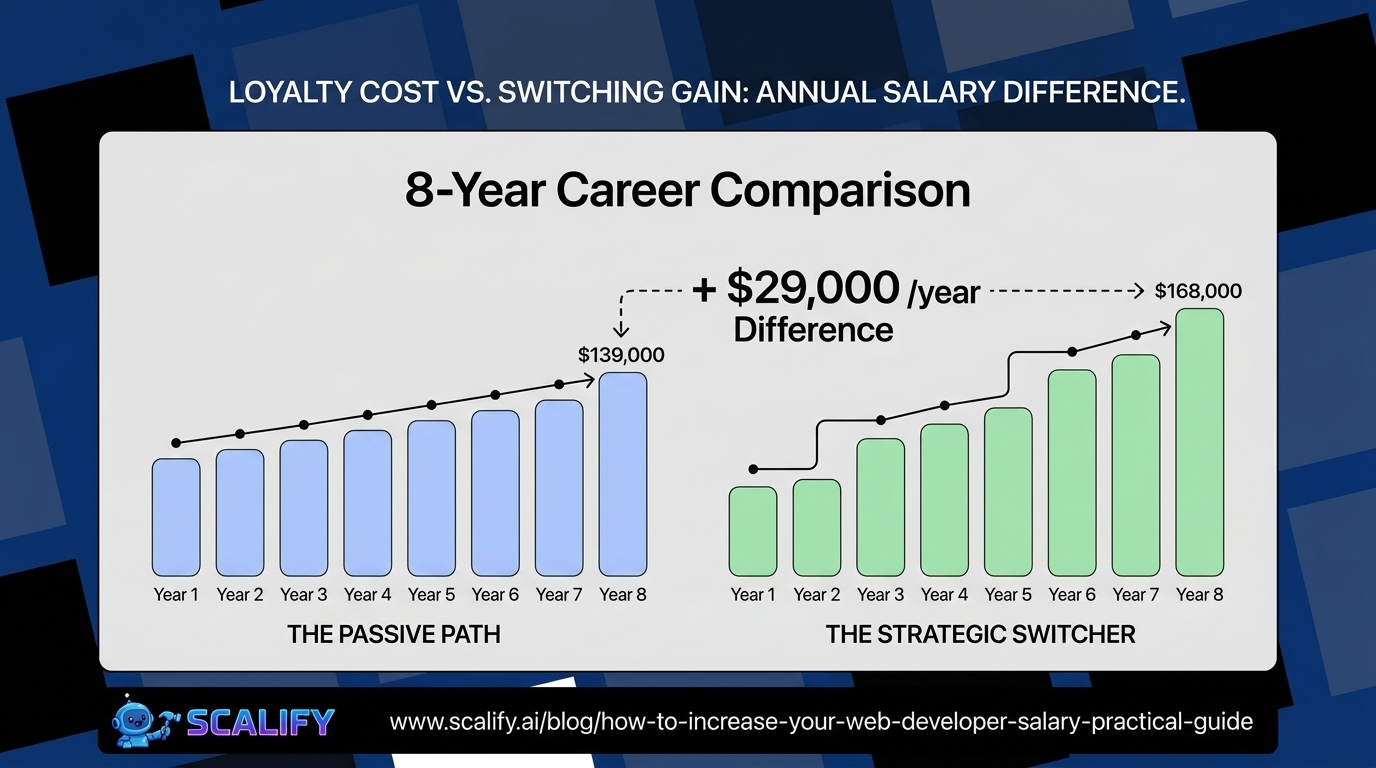
Change jobs strategically. Salary growth through internal promotion averages 3–5% annually. Salary growth through job changes averages 10–20%. Developers who change employers every 2–3 years while genuinely deepening their skills consistently out-earn those who stay put. This is not cynical — it reflects how compensation benchmarking actually works at most companies.
Specialize in a high-demand, lower-supply area. The widest salary jumps come from skills that many companies need but few developers have deeply. Performance engineering, accessibility, and creative development (WebGL/Three.js) each have stronger supply-demand gaps than general React development.
Build in public. Open source contributions, technical blog posts, conference talks, and active community participation build reputation that attracts recruiters and higher-paying opportunities. Developers who are known in their community command premium compensation — and they receive inbound opportunities rather than having to apply.
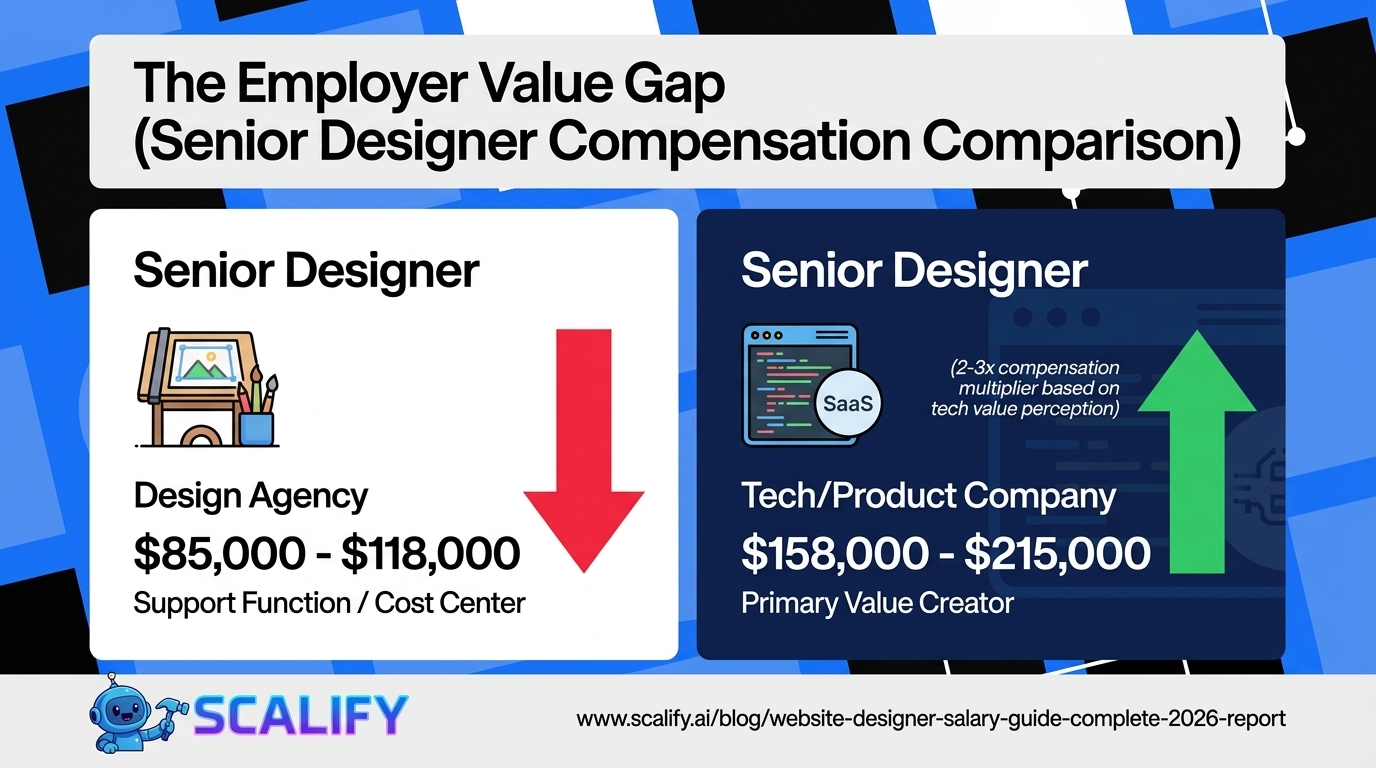
Target companies where front-end is strategic. At product-first tech companies, front-end developers are primary value creators and compensation reflects that. At companies where technology is support infrastructure, front-end compensation is lower. The same skills are worth dramatically different amounts at different employers.
Negotiate every offer. Fewer than 40% of developers negotiate their first offer. Negotiating typically adds $5,000–$20,000 in base salary with no downside risk. Counteroffers are expected — no company has ever rescinded an offer because a candidate negotiated professionally.
The Bottom Line
Front-end developer compensation in 2026 ranges from $58,000 for entry-level developers in secondary markets to $260,000+ in total compensation for staff engineers at major tech companies. The factors that move the needle most: experience level, geographic market, company type, and specialization. Developers who specialize, build publicly, and change jobs strategically consistently out-earn those at the same skill level who don't.
Building the website that showcases your work — your portfolio, your case studies, your expertise — is one of the most direct investments in your own earning potential. At Scalify, we build professional websites in 10 business days that help developers, designers, and agencies present their work at the level their skills deserve.
The Front-End Specialization Premium in 2026
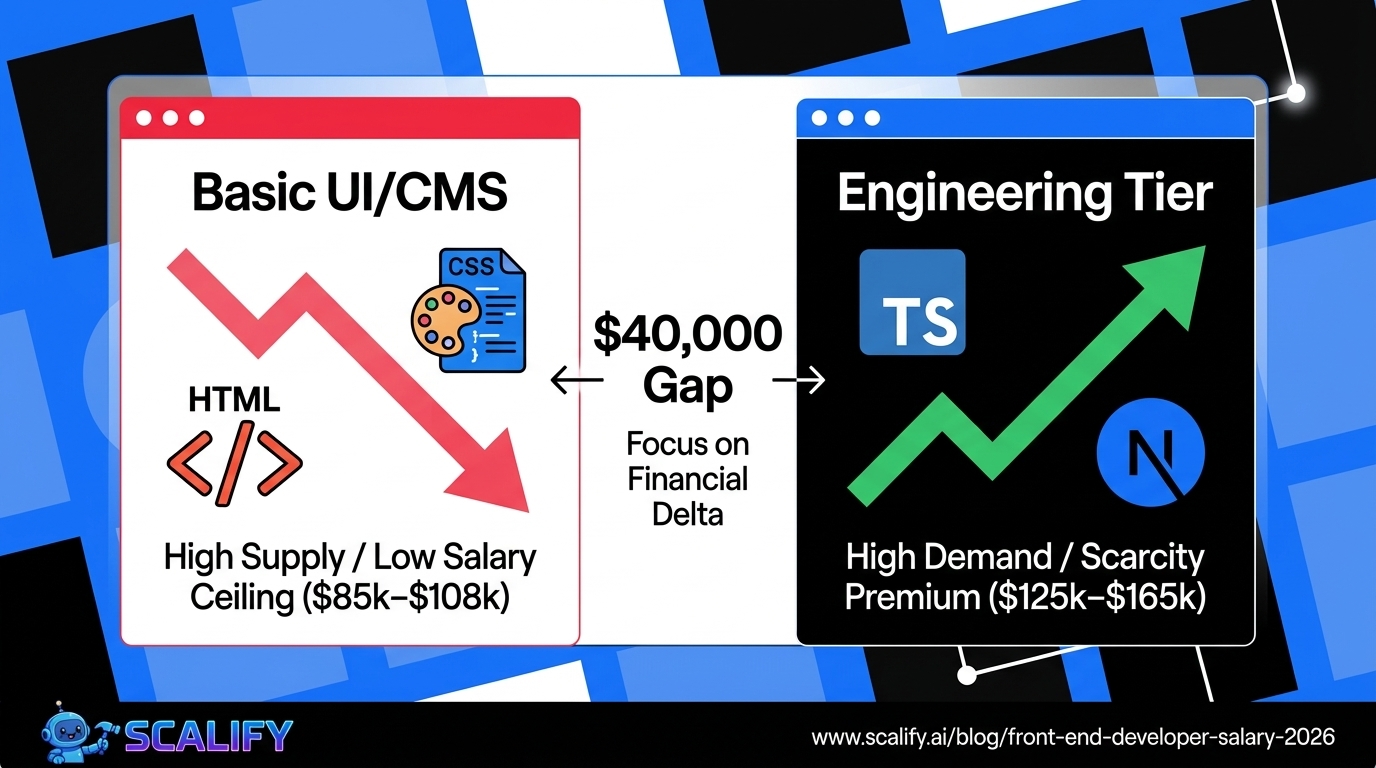
Front-end development has bifurcated into two distinct salary tiers that increasingly diverge: commodity front-end work (HTML/CSS/basic JavaScript, template customization, CMS configuration) where salaries are suppressed by high supply and increasing automation; and specialized front-end engineering (React/TypeScript, performance engineering, design system architecture, accessibility, AI integration) where demand significantly exceeds supply and salaries reflect that scarcity. Front-end developers whose work falls primarily in the commodity tier face ongoing downward salary pressure; those who move into the specialized engineering tier access the same salary range as full-stack engineers.
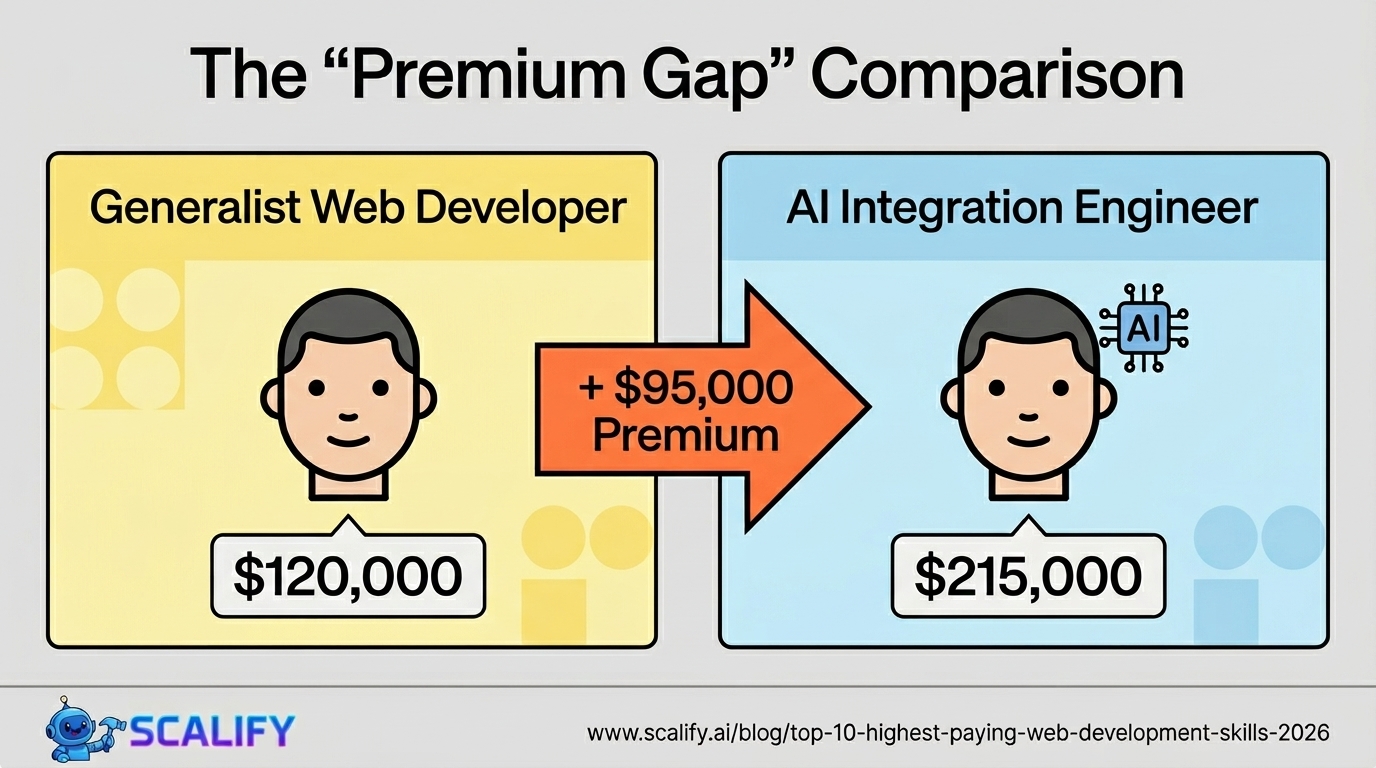
The clearest path from commodity to specialized front-end engineering: develop genuine TypeScript depth (not just basic usage, but advanced patterns including generics, conditional types, and mapped types), add Next.js production deployment experience, specialize in either performance engineering (Core Web Vitals optimization, bundle analysis) or design systems (building component libraries that enable teams of designers and developers to work efficiently), and develop AI integration capability (building AI-powered UI with streaming responses and function calling). Any one of these specializations pushes front-end compensation from the $85,000–$108,000 commodity tier to the $125,000–$165,000 specialized tier — a $40,000+ annual improvement for the same level of experience.
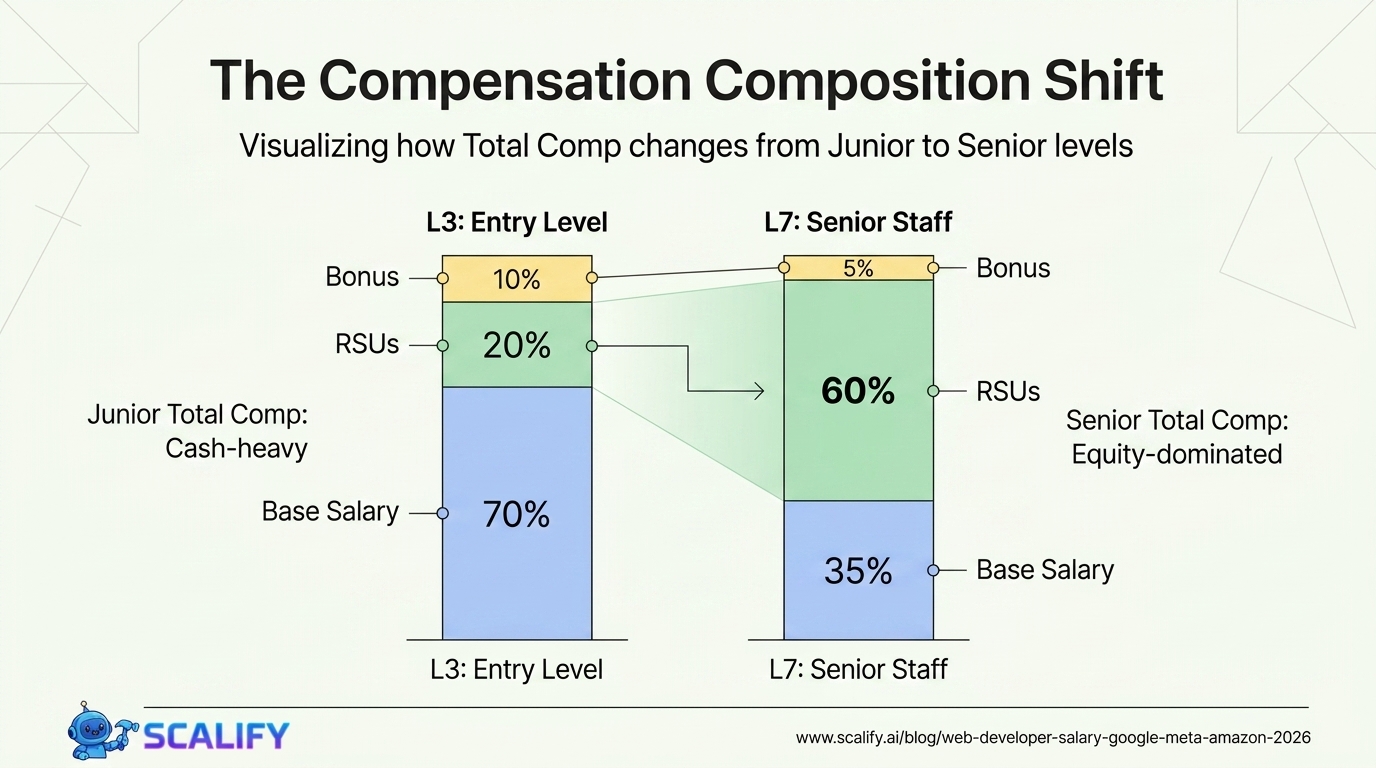
The total compensation picture for front-end engineers at tech companies includes significant equity in addition to base salary. A front-end engineer at a growth-stage startup earning $145,000 base with a 0.2% equity grant at a $50M valuation has $100,000 in equity at current valuation — potentially worth several times that in 3–5 years if the company grows. This equity component is often larger than the salary difference between companies, making employer selection as financially significant as negotiating base salary.
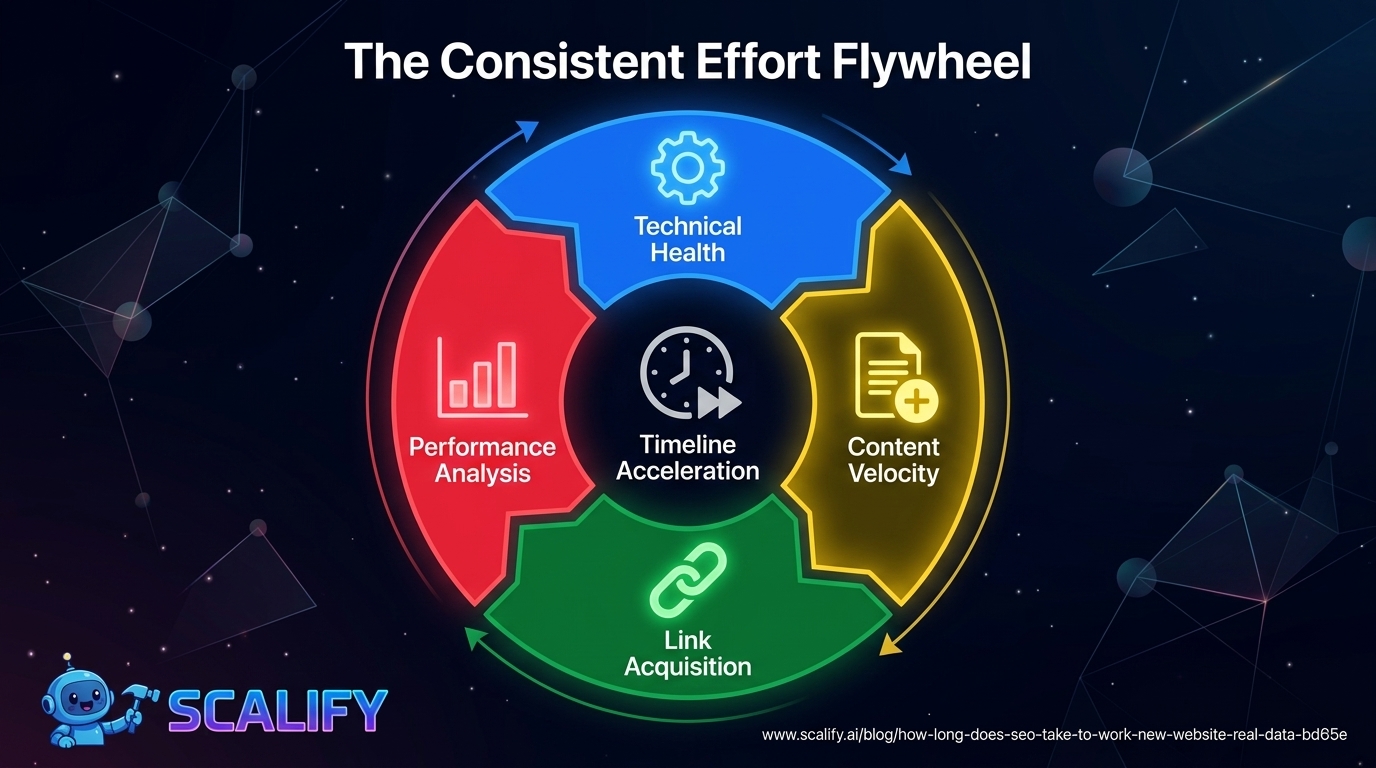
The compounding nature of consistent execution is the most important concept in digital marketing: individual tactics produce modest results; systematic implementation of multiple well-chosen tactics over 12–24 months produces transformative results. Identify the highest-impact improvements available to your specific situation, implement them with measurement infrastructure in place, and build the discipline to iterate based on what the data shows rather than intuition or industry trends that may not apply to your specific business and market.


.jpeg)
.jpeg)

78 SW 7th St, Miami, FL 33130