

Remote Web Developer Salary: Does Location Still Matter in 2026?
By Josh Ternyak

April 22, 2026
Remote web developers earn near-national-average salaries with location-agnostic companies while living in low-tax, low-cost areas for dramatically better purchasing power. This comprehensive guide covers compensation models, geographic pay tiers, the real financial impact of remote work by city, negotiation strategies, tax implications including NY convenience rule, benefits negotiation, and freelance remote as the ultimate location-flexibility model.
Remote Web Developer Salary: Does Location Still Matter in 2026?
The remote work revolution transformed web developer compensation geography in ways that are still rippling through the market six years after the pandemic forced the initial transition. The short answer to "does location still matter for remote web developers" is: less than before, but more than many developers want to believe. Understanding exactly how and where location still affects remote web developer salary is essential for negotiating effectively and making smart career decisions in 2026.
Key Remote Developer Salary Statistics
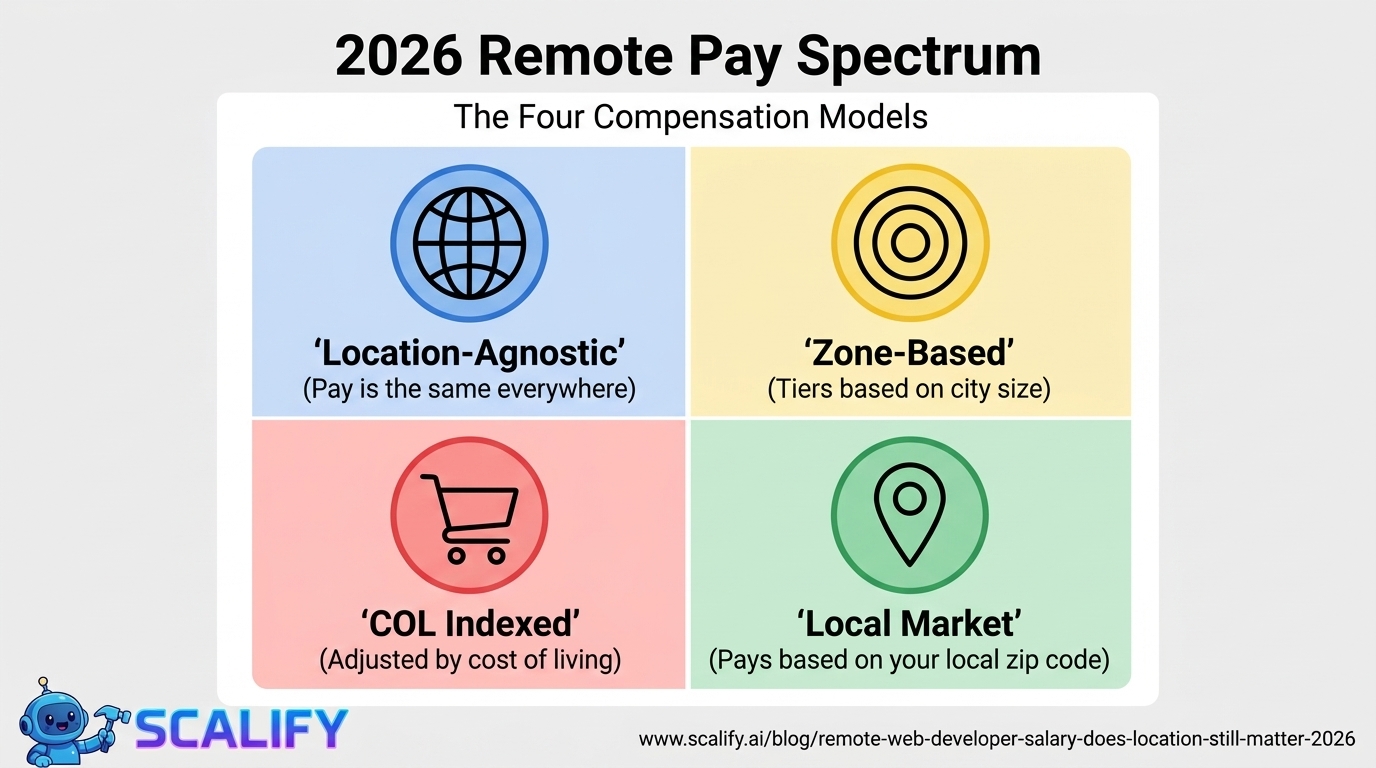
Location-Agnostic vs. Geographic Pay Tier Companies
Compensation ModelHow It WorksExample CompaniesBest For Developers InLocation-agnostic (same pay everywhere)Salary based on role/level, not locationStripe, Shopify, GitHub, Buffer, BasecampLower cost-of-living areas — maximum benefitZone-based tiers (3–4 zones)SF/NYC rate, secondary market rate, national rateGoogle, Meta, Microsoft, AmazonZone 1 cities — minimal discountCost-of-living indexedBase rate adjusted by local cost indexSome startups and consultanciesHigh COL areas — no significant impactLocal market ratePays what the local market bearsMany traditional enterprises going remoteHigh-salary metros — can be advantageous
The True Financial Impact of Remote Work by Location
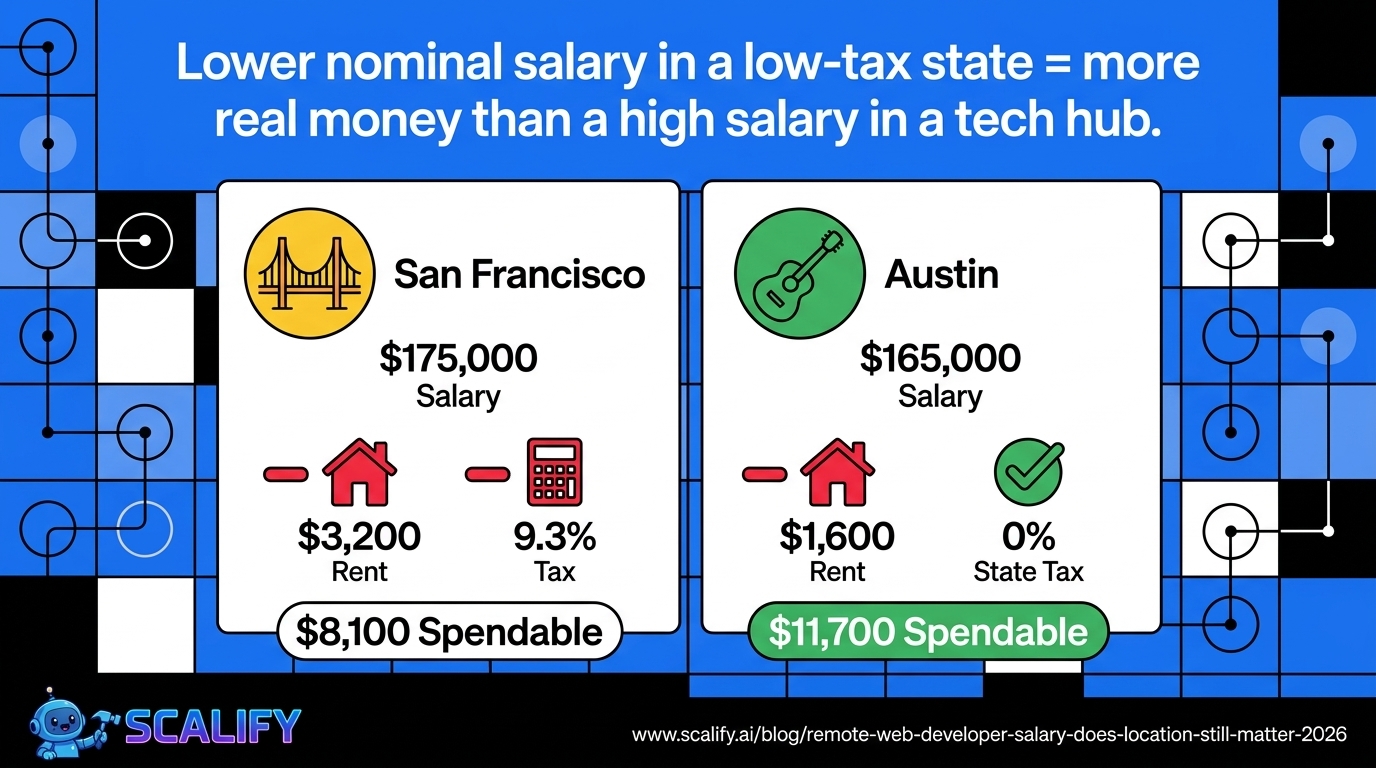
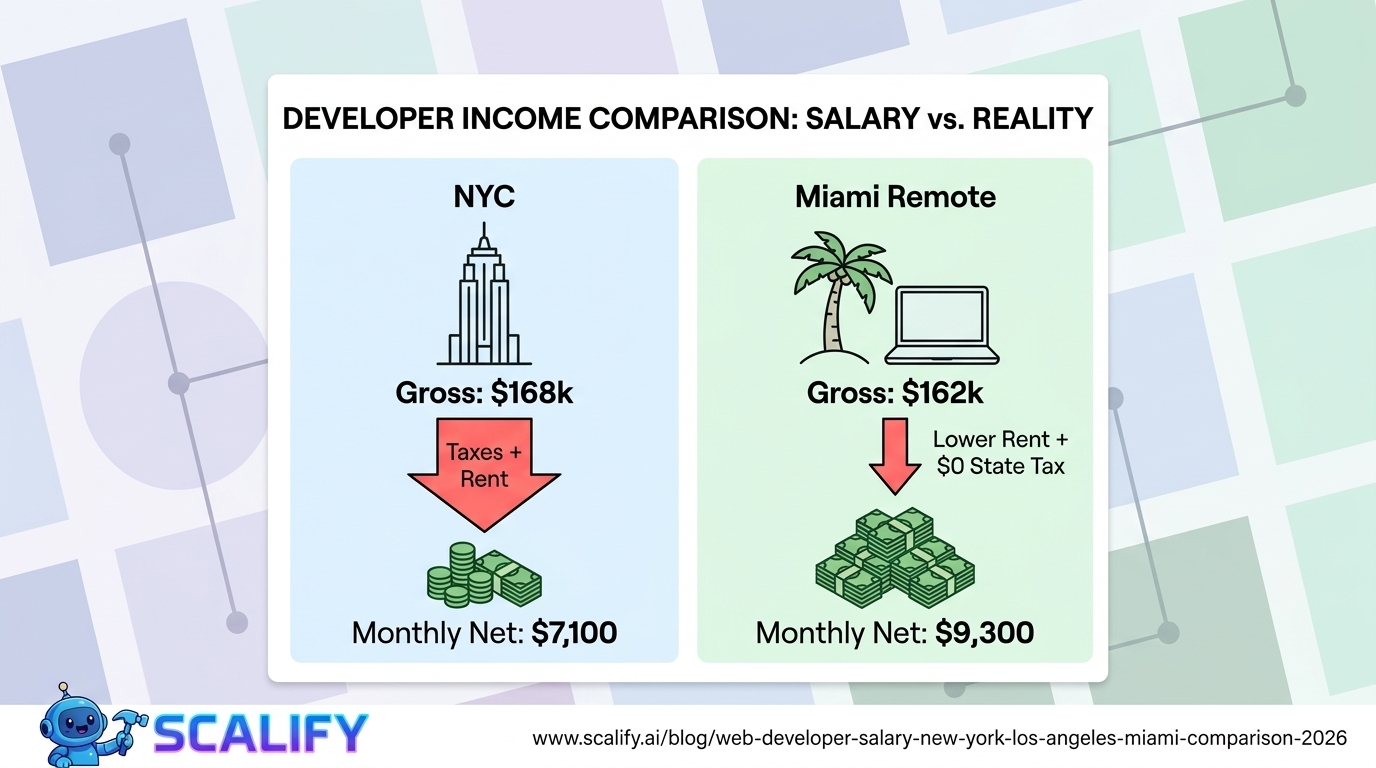
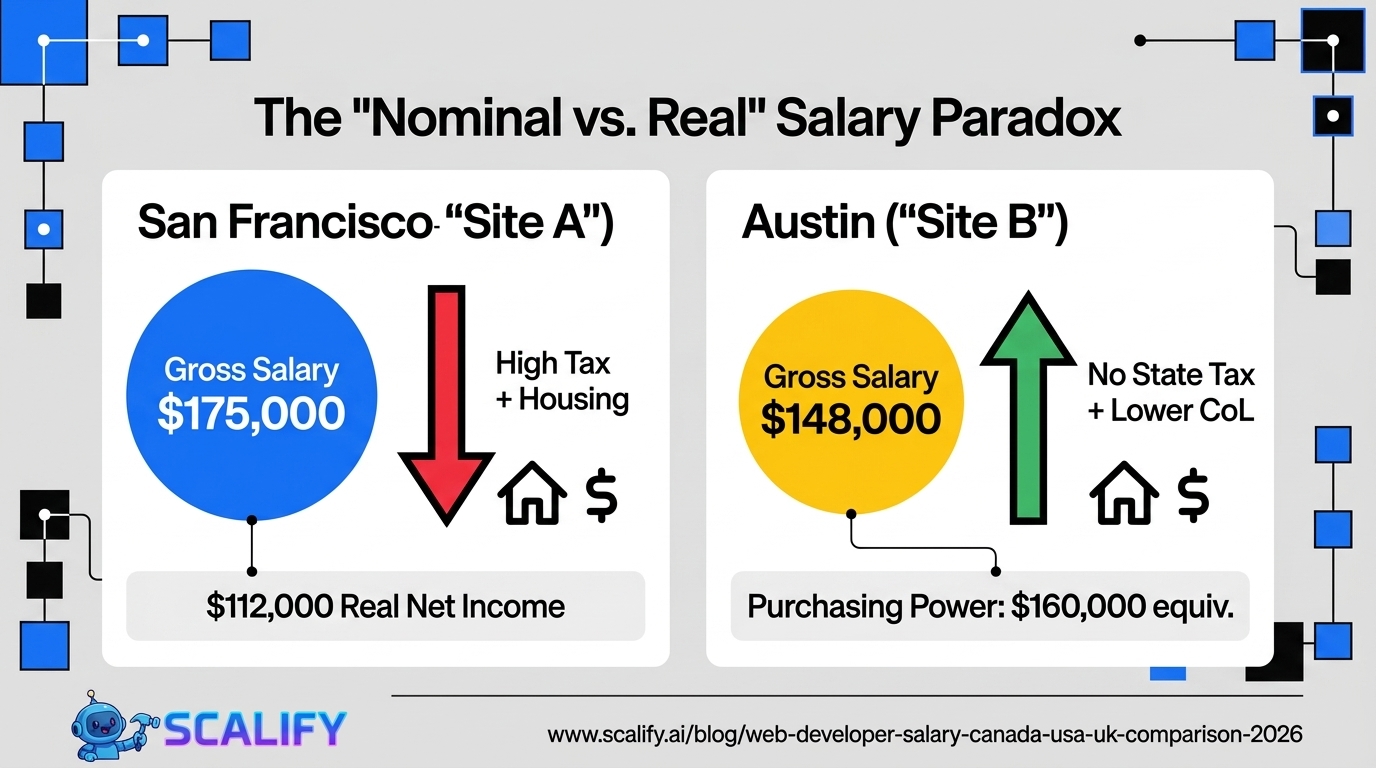
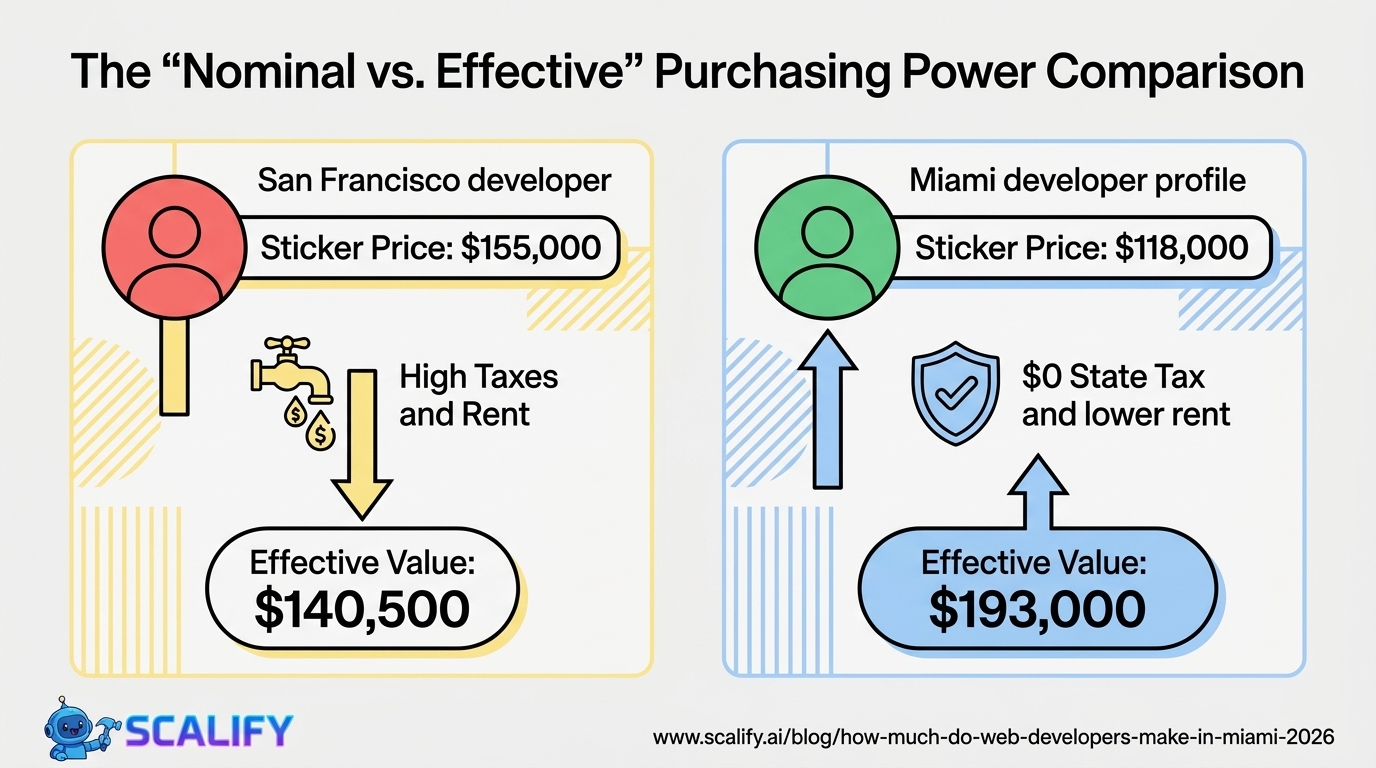
Developer LocationSalary (Remote, US company)State TaxEst. Housing CostNet Monthly SpendableSan Francisco (in-person)$175,000~9.3% CA$3,200/mo~$8,100NYC (in-person)$165,000~10.8% NY+NYC$3,500/mo~$7,400Austin, TX (remote, SF-rate)$165,000$0 TX$1,600/mo~$11,700Miami, FL (remote, SF-rate)$165,000$0 FL$2,100/mo~$11,200Nashville, TN (remote, SF-rate)$148,000*$0 TN$1,400/mo~$10,600Rural Midwest (remote, zone 3)$132,000*~5% avg$900/mo~$9,700
*Assuming geographic tier discount. The striking finding: an Austin developer earning a San Francisco-tiered remote salary at $165,000 with no state income tax and Austin's lower cost of living generates $11,700/month in discretionary income — significantly more than a San Francisco developer earning $175,000 with California's income tax and housing costs. Remote work's financial impact is not primarily about the nominal salary — it's about the combination of salary, tax, and cost of living that determines actual financial quality of life.
How to Negotiate Location-Agnostic Pay as a Remote Developer
Negotiating location-agnostic compensation when an employer uses geographic tiers requires specific preparation and positioning:
Research the company's compensation model before negotiating. Levels.fyi, Glassdoor, and direct conversations with current employees can reveal whether a company pays location-agnostic salaries or tiers. Negotiating for a location-agnostic approach is easier at companies that already have one than trying to convert a company from geographic tiers to global bands during your individual negotiation.
Anchor to your contribution value, not your location. When a company wants to apply a geographic discount, reframe the conversation around the value you're delivering rather than where you deliver it from. "The work I'd do for your Series B product would be identical whether I'm in San Francisco or Miami — the value to your company doesn't change with my zip code" is a more effective frame than arguing about fairness of geographic adjustments.
Use competing offers from location-agnostic companies as leverage. A competing offer from Shopify, Stripe, or GitHub — companies known for location-agnostic pay — sets a benchmark that geographic-tier companies need to address competitively if they want to hire you. This leverage is most effective at the offer stage rather than mid-negotiation, which is another argument for running parallel processes at multiple companies simultaneously.
Negotiate the full package, not just salary. When salary negotiation is constrained by geographic tiers, other compensation elements may have more flexibility: equipment budget, professional development allowance, remote work stipend (home office setup, coworking memberships, internet), extra PTO, and flexible hours. These have real financial value that can partially offset geographic salary adjustments.
Remote Web Developer Salary by Specialization
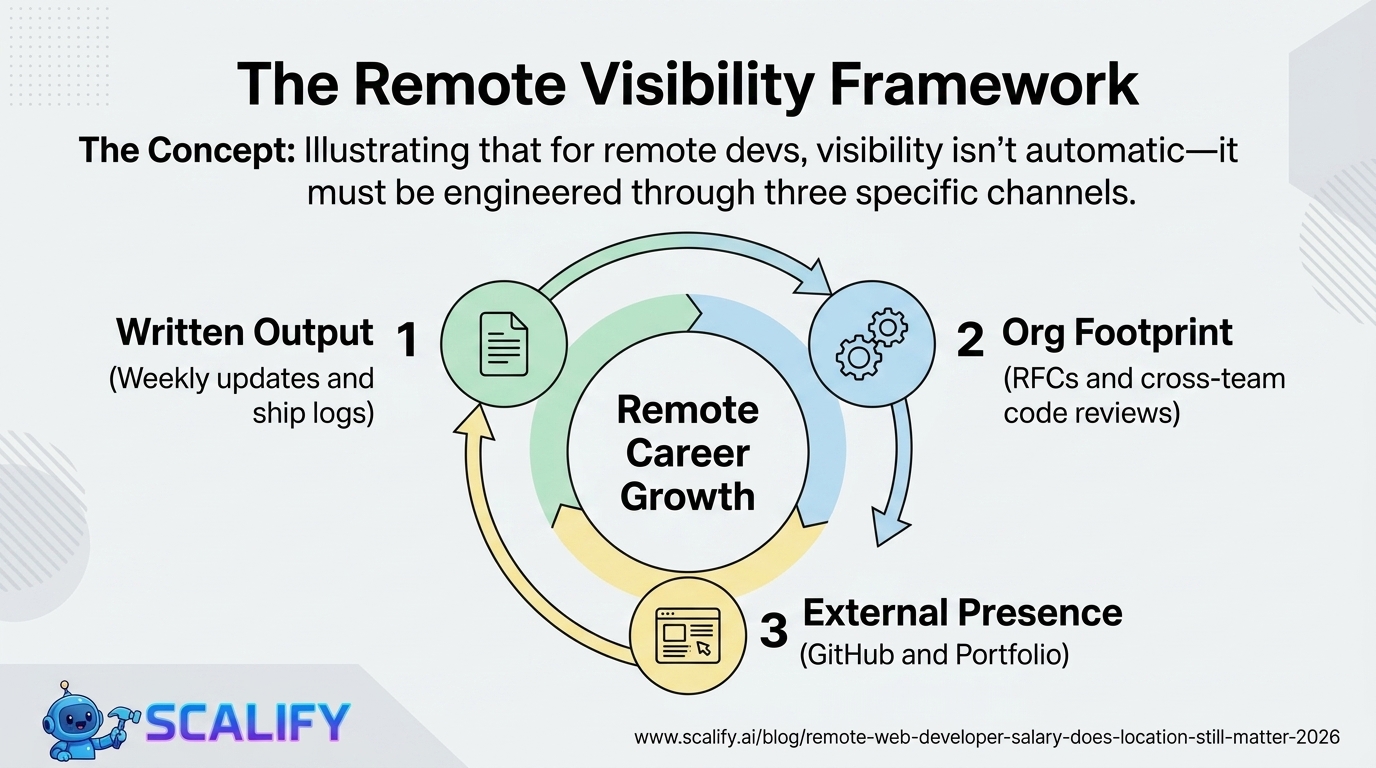
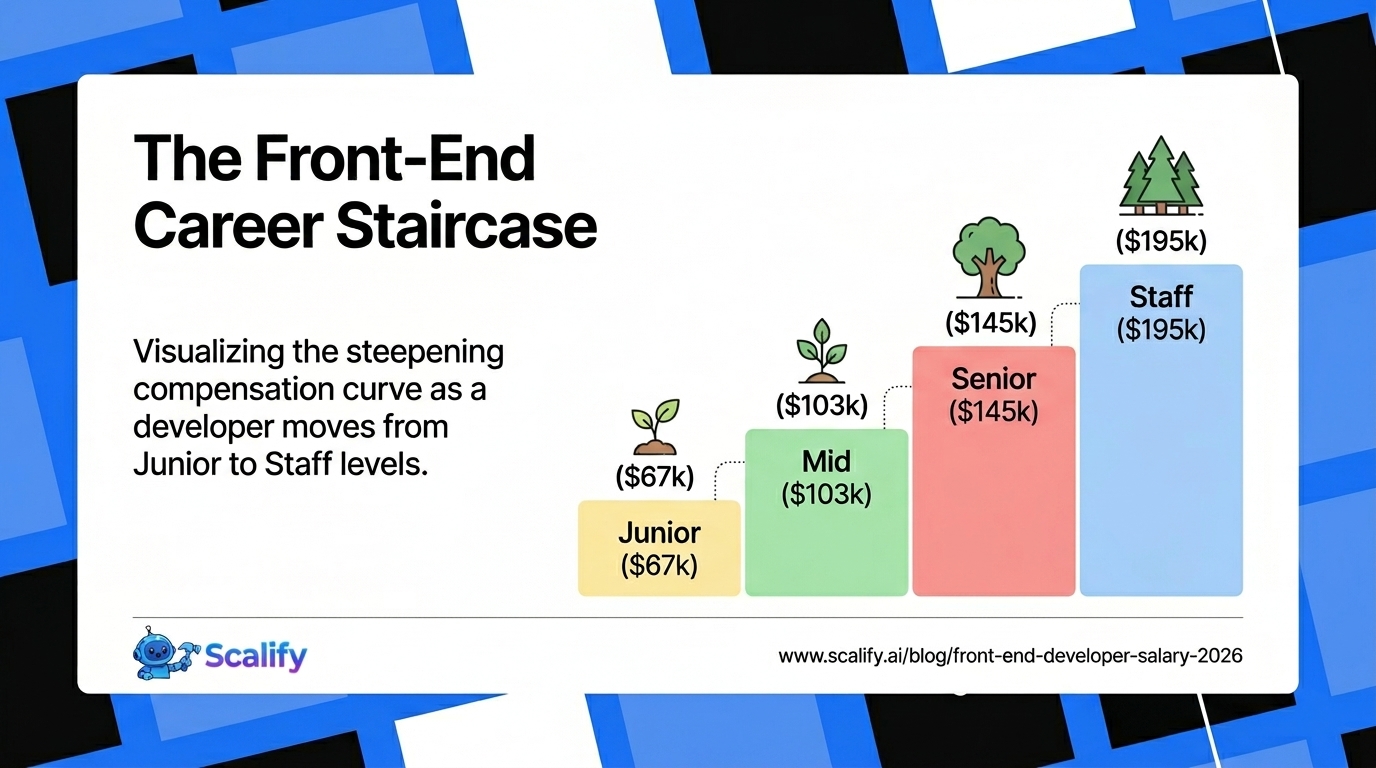
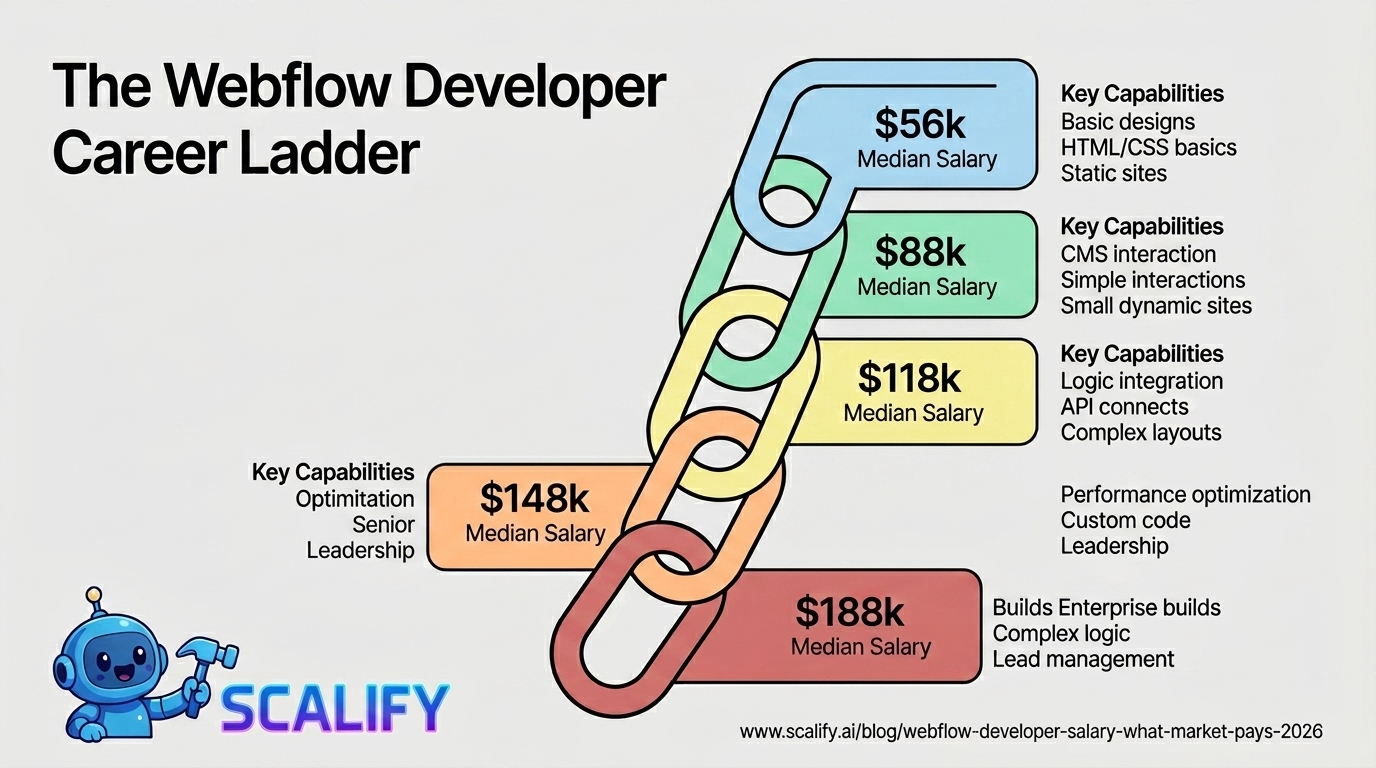
SpecializationRemote Median (US Company)Demand for RemoteTypical Work HoursSenior Full-Stack (React + Node)$152,000Very HighFlexible async + core overlap hoursSenior Front-End (React/TS)$145,000Very HighGenerally flexibleSenior Back-End (Python/Node)$155,000HighFlexible, timezone requirements varyDevOps / Platform Engineer$168,000Very High — highly remote-friendlyCore hours + on-call rotationAI/ML Integration Engineer$188,000Very High — mostly remoteFlexibleWebflow Developer (freelance)$95,000 – $180,000Very High — project-basedFully flexible
The International Remote Opportunity
The most financially compelling remote work scenario for many US developers is not domestic location arbitrage but international: working remotely for a US company while living in a country with significantly lower cost of living. A US developer earning $150,000 remotely while living in Portugal (with NHR tax status), Mexico City, or Southeast Asia can achieve a financial quality of life that would require $350,000+ to replicate in San Francisco. This opportunity is real and growing — US companies have normalized remote work, the visa pathways for digital nomads are improving in many countries, and the financial math is compelling. The practical barriers (health insurance, retirement accounts, tax complexity across jurisdictions) are manageable with proper planning and the right financial and legal advice.
The Bottom Line
Location still matters for remote web developer salaries in 2026 — but it matters primarily through the tax and cost-of-living lens rather than the nominal salary lens. The remote developers who maximize their financial outcomes are those working for location-agnostic or top-tier US companies at national market rates, while living in zero-income-tax states with lower housing costs than major tech hubs. The combination of high-rate remote employment, favorable tax treatment, and lower cost of living produces financial quality of life that pure nominal salary comparisons completely miss — and represents the most financially optimized position available to most web developers today.
At Scalify, our team works remotely across the US — building professional websites in 10 business days for businesses everywhere.
Top 5 Sources
Building a Remote Developer Career: What Matters Most
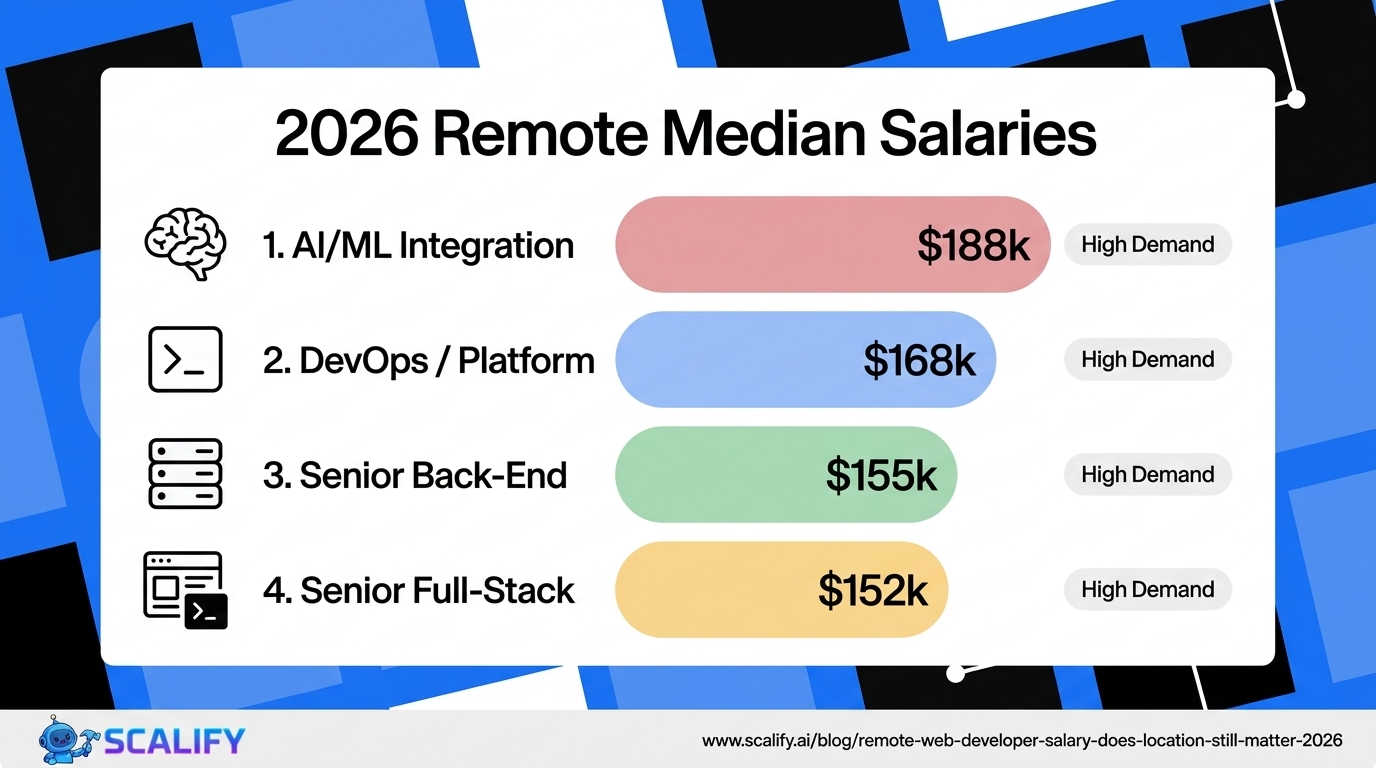
Remote web developers face distinct career development challenges that in-office developers don't — primarily around visibility and professional network development. When you're not physically present in an office, the informal trust-building that happens naturally through daily interactions, hallway conversations, and shared team lunches doesn't occur automatically. Remote developers who advance quickly in their careers and command top compensation have explicitly designed their professional visibility and network development, not left it to chance.
Visibility Strategies for Remote Developers
Communicate output frequently and specifically. In-office developers' work is visible through presence; remote developers' work is visible only through what they write down. Weekly written updates to the team that describe what was completed, what was learned, and what's next — combined with active participation in team discussions and technical decision-making — build the visibility that drives career advancement. Developers who ship good work but communicate poorly about it are invisible in remote teams; developers who ship good work and communicate well about it get promoted.
Contribute to technical discussions beyond your immediate work. Remote developers who participate in architecture discussions, write technical proposals, review code from team members they didn't write the feature with, and engage in cross-team technical conversations are building the organizational footprint that gets them considered for staff-level roles and leadership opportunities. In-office developers build this footprint through physical presence; remote developers build it through deliberate written and async contribution.
Build external professional presence. The remote developers who command the highest salaries have professional visibility that extends beyond their current employer: GitHub activity that demonstrates current and relevant work, a professional website or portfolio that explains their expertise and positions them in the market, conference presentations or technical writing, and a LinkedIn profile that accurately represents their capabilities. This external visibility creates the conditions for competing offers that are the most effective negotiating leverage — and ensures that when top companies are hiring, remote developers are findable.
Remote Work Taxes: What Every Developer Needs to Know
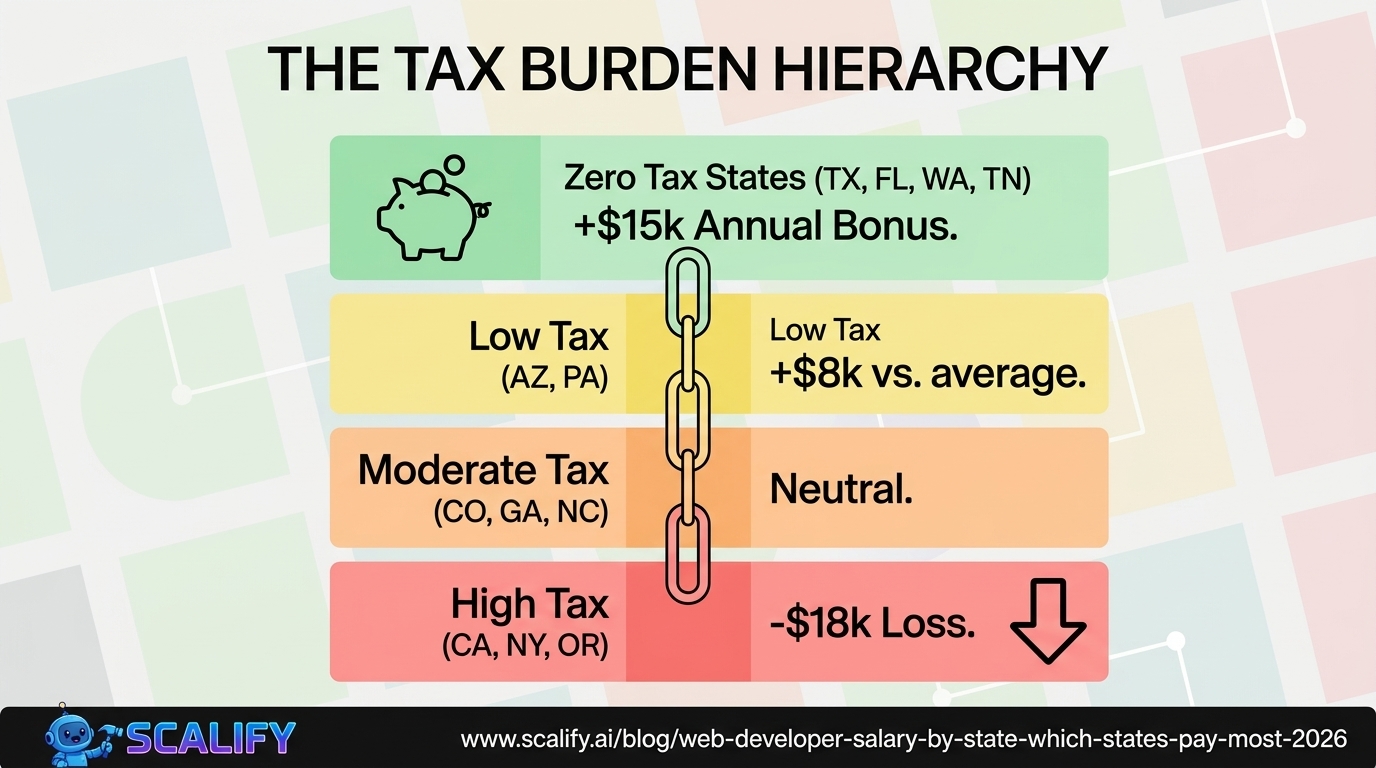
Tax complexity is the most underestimated aspect of remote work geography. Moving to a different state while continuing to work for the same employer can create multi-state tax filing requirements, trigger nexus concerns for employers, and affect benefit eligibility. The key rules remote developers must understand:
Tax SituationRuleAction RequiredWorking remotely in a new stateYou pay income tax where you live, not where your employer isNotify employer HR, update W-4 state withholdingWorking in two states during the yearPro-rated income tax in both states based on days workedFile returns in both states; credit may offset double taxationNew York employer, remote in another stateNY has "convenience of employer" rule — may still tax full salaryConsult a tax professional; NY-sourced income follows NY rulesMoving to a no-income-tax stateSignificant annual savings on state income taxNotify employer; update withholding; document move dateWorking remotely outside the USComplex — foreign tax credits, FEIE, possible double taxationEssential: consult an international tax professional
The New York "convenience of employer" rule deserves specific emphasis because it catches many remote developers off guard. New York State taxes all income of non-NY employees of NY-based employers unless the employee works remotely for the employee's own convenience rather than because the employer requires it. This means a developer who works remotely in Florida for a New York company because they prefer Florida (not because the company requires them to be remote) may still owe New York state income tax on their full salary — eliminating the Florida no-income-tax advantage entirely. Developers moving to no-income-tax states while keeping NY-based employers should consult a tax professional about their specific situation before assuming the state tax benefit applies.
Remote Developer Benefits Negotiation
Remote work creates legitimate additional costs that in-office developers don't bear — home office setup, high-speed internet, ergonomic equipment, coworking memberships when home isn't suitable for focused work, and the professional development that in-office environments often provide through proximity and informal mentorship. The strongest remote work packages include explicit benefits addressing these costs: an annual home office stipend ($500–$2,000 for equipment), internet reimbursement ($50–$100/month), a coworking membership or budget ($200–$500/month in major cities), and a professional development budget ($1,000–$3,000/year for conferences and courses).
Remote developers negotiating initial offers or annual reviews should include these benefit elements in the negotiation alongside base salary. A company that resists a $200/month coworking stipend while the developer is saving the company $20,000–$40,000/year in office space costs per headcount is revealing a negotiating posture that should inform expectations about future flexibility. The math on remote work cost offsets overwhelmingly favors employees — remote developers are right to negotiate for benefits that acknowledge the real costs they bear.
Freelance Remote: The Maximum Location Flexibility Model
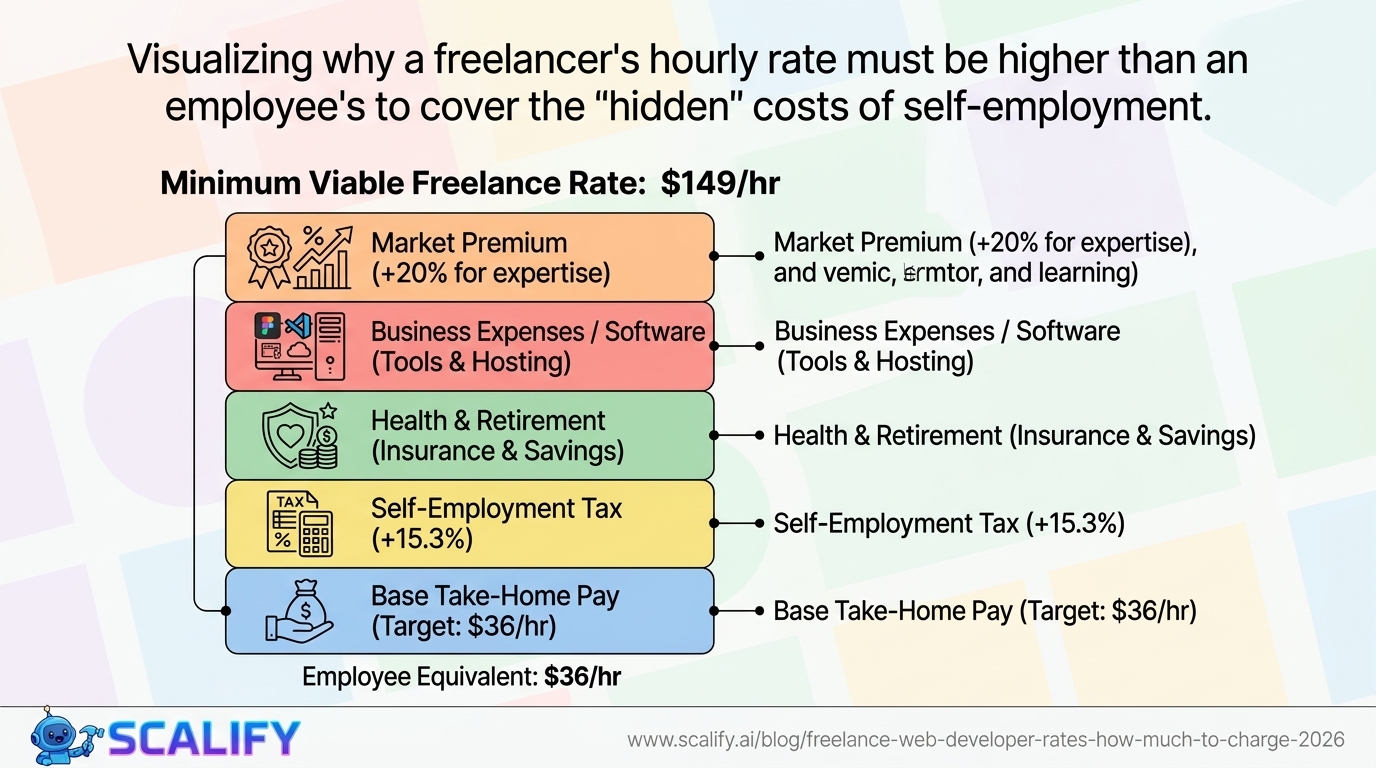
Freelance web development is the ultimate remote work model — no employer restrictions on location, schedule, or client geographic distribution. Senior freelance web developers who have established a strong client base can work from anywhere in the world with reliable internet, charging $110–$200+/hour for their specialization and setting their own schedule around both work and personal priorities. The financial model works best for senior developers with 5+ years of experience, a strong portfolio, and the business development skills to maintain a consistent project pipeline. The lack of geographic constraint combined with the ability to earn US market rates while living anywhere in the world makes freelance remote work the most financially optimized option for developers willing to accept its business development overhead and income variability.







.jpeg)
.jpeg)





78 SW 7th St, Miami, FL 33130