

How Much Does a Figma Designer Earn in 2026?
By Josh Ternyak

April 20, 2026
Figma designers earn $80,000-$178,000 mid-to-senior; design engineers reach $200,000-$280,000. This comprehensive guide covers salary by role and experience, what actually differentiates salaries (product thinking, design systems, coding), industry salary table, the design engineer role, specific Figma skills and their premiums, career progression stages, freelance design practice, UX research premium, tools alongside Figma, and credentials.
How Much Does a Figma Designer Earn in 2026?
Figma proficiency has become the most ubiquitous professional design skill — and the one that employers most commonly list as required rather than preferred. Understanding what Figma designers earn, which additional skills produce the largest premiums, and how Figma expertise fits into a broader design career trajectory helps designers make informed decisions about skill development and salary negotiation.
Key Figma Designer Salary Statistics
Salary by Role and Experience
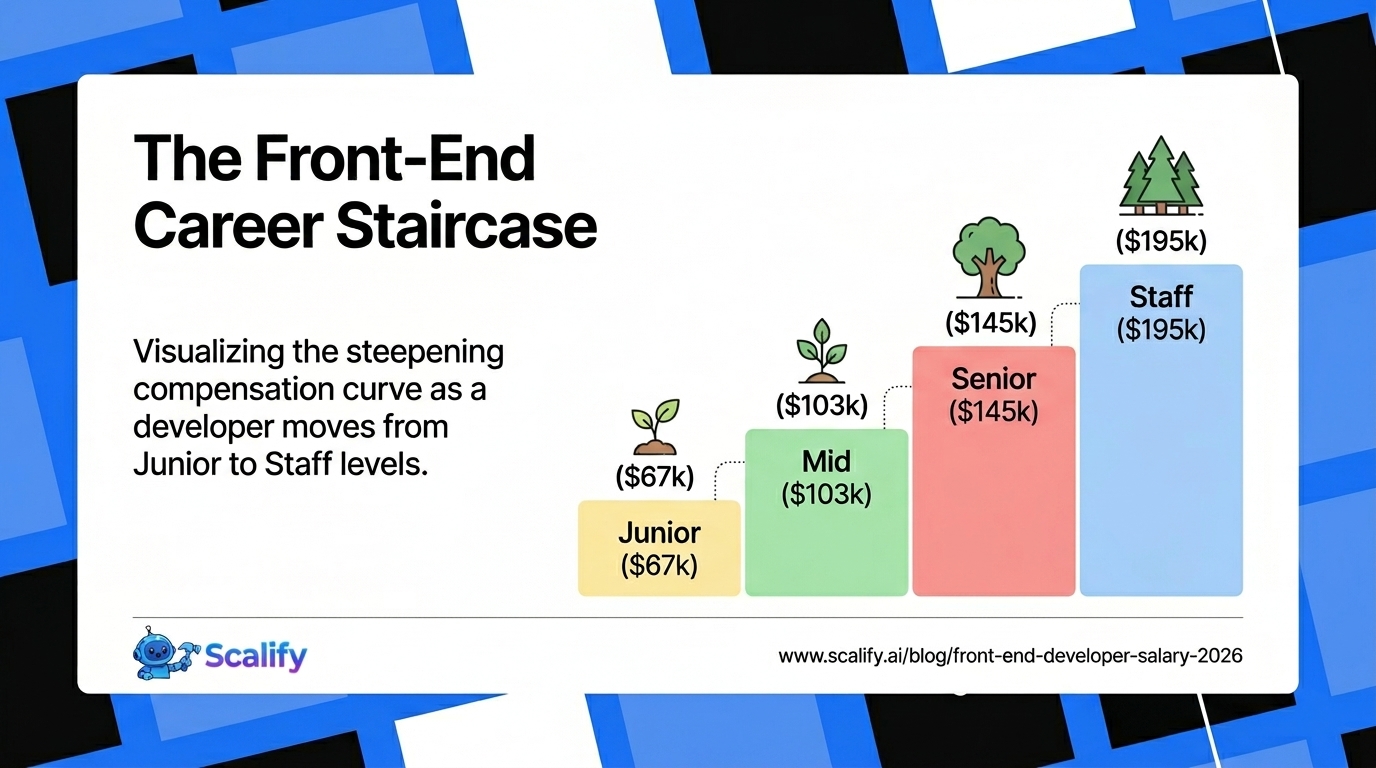
RoleEntry-LevelMid-LevelSeniorPrincipal/LeadUI Designer (Figma primary)$55,000 – $75,000$80,000 – $112,000$112,000 – $148,000$148,000 – $185,000UX Designer$62,000 – $82,000$88,000 – $120,000$118,000 – $158,000$155,000 – $198,000Product Designer$68,000 – $88,000$98,000 – $135,000$132,000 – $172,000$168,000 – $215,000Design System DesignerN/A$102,000 – $142,000$140,000 – $185,000$182,000 – $225,000Freelance Figma Designer$45–$65/hr$75–$115/hr$115–$165/hr$155–$220/hr
What Actually Determines Figma Designer Salary
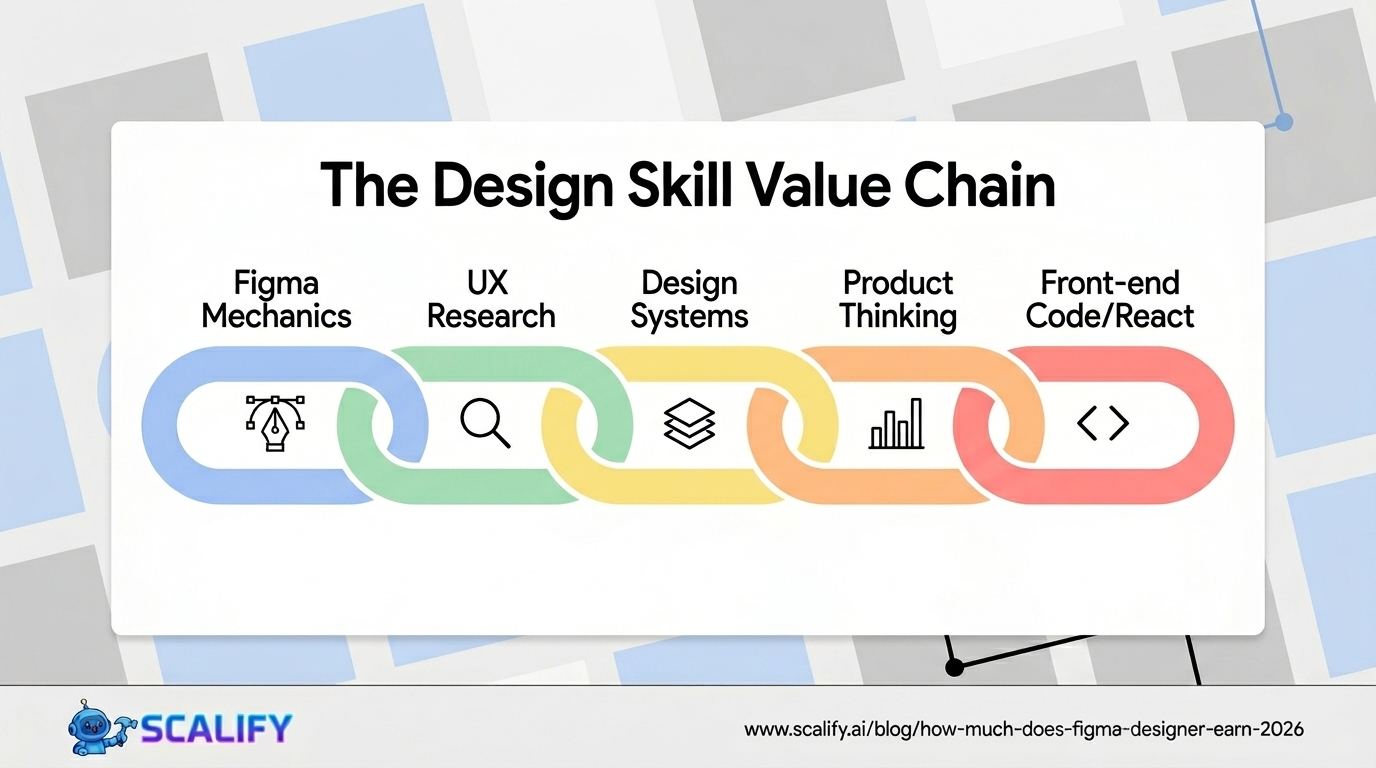
Figma proficiency is necessary but not sufficient for high designer salaries. The skills that create genuine salary differentiation above the Figma baseline:
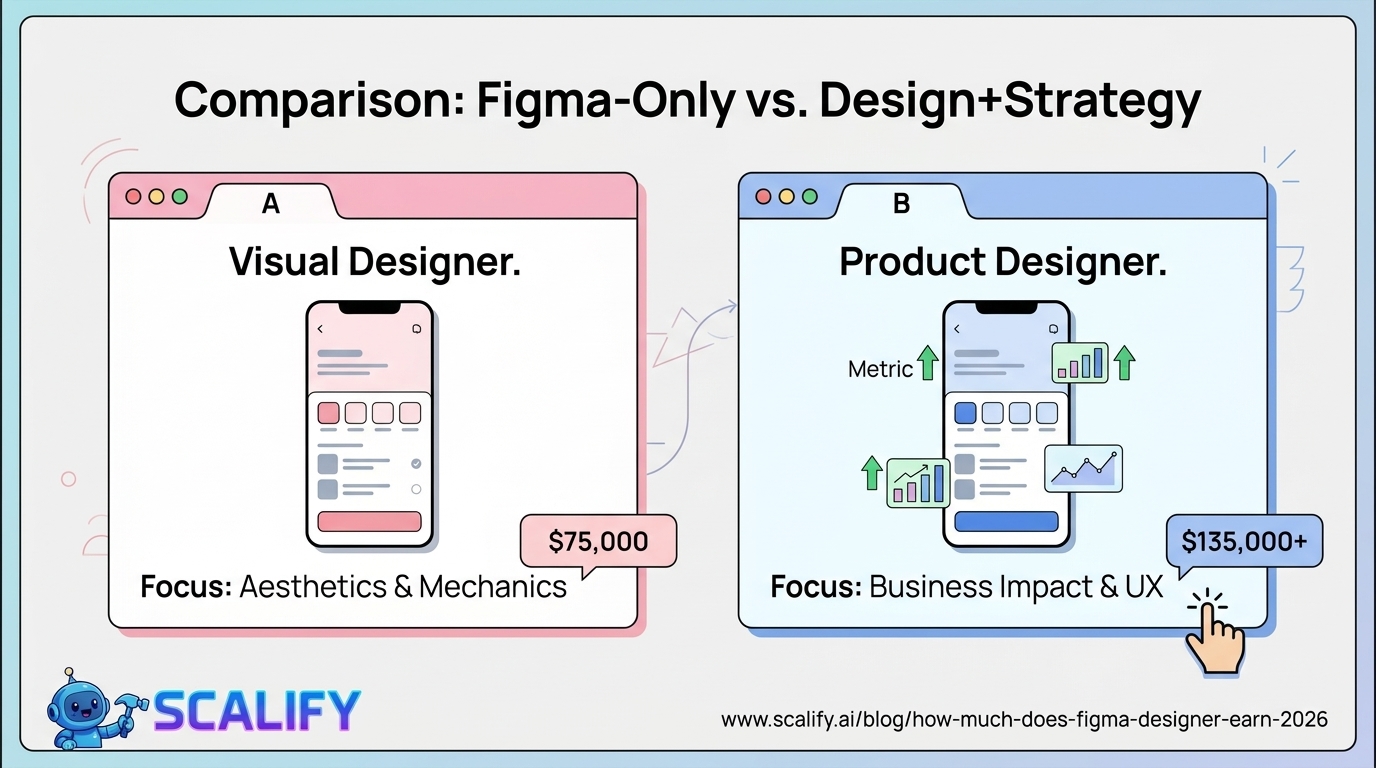
Product thinking. Designers who understand business metrics, user research methodologies, and how to make design decisions that affect conversion rates and business outcomes earn significantly more than those who produce beautiful Figma files without connecting their work to measurable impact. Product designers at growth-stage startups and tech companies who demonstrate quantified impact on product metrics (conversion rate improvements, feature adoption increases, user satisfaction scores) command senior and staff-level compensation that pure visual designers rarely achieve.
Design systems expertise. The 20–30% salary premium for design systems expertise reflects genuine skill scarcity and high commercial value. Building and maintaining a design system that enables a team of 10 designers to work consistently and efficiently has quantifiable productivity impact. Figma's Variables, Components, and Advanced Prototyping features require significant expertise to leverage at the system level — and the developers who know how to design for handoff (translating Figma variables to CSS custom properties, structuring components to match React component APIs) are doubly valuable.
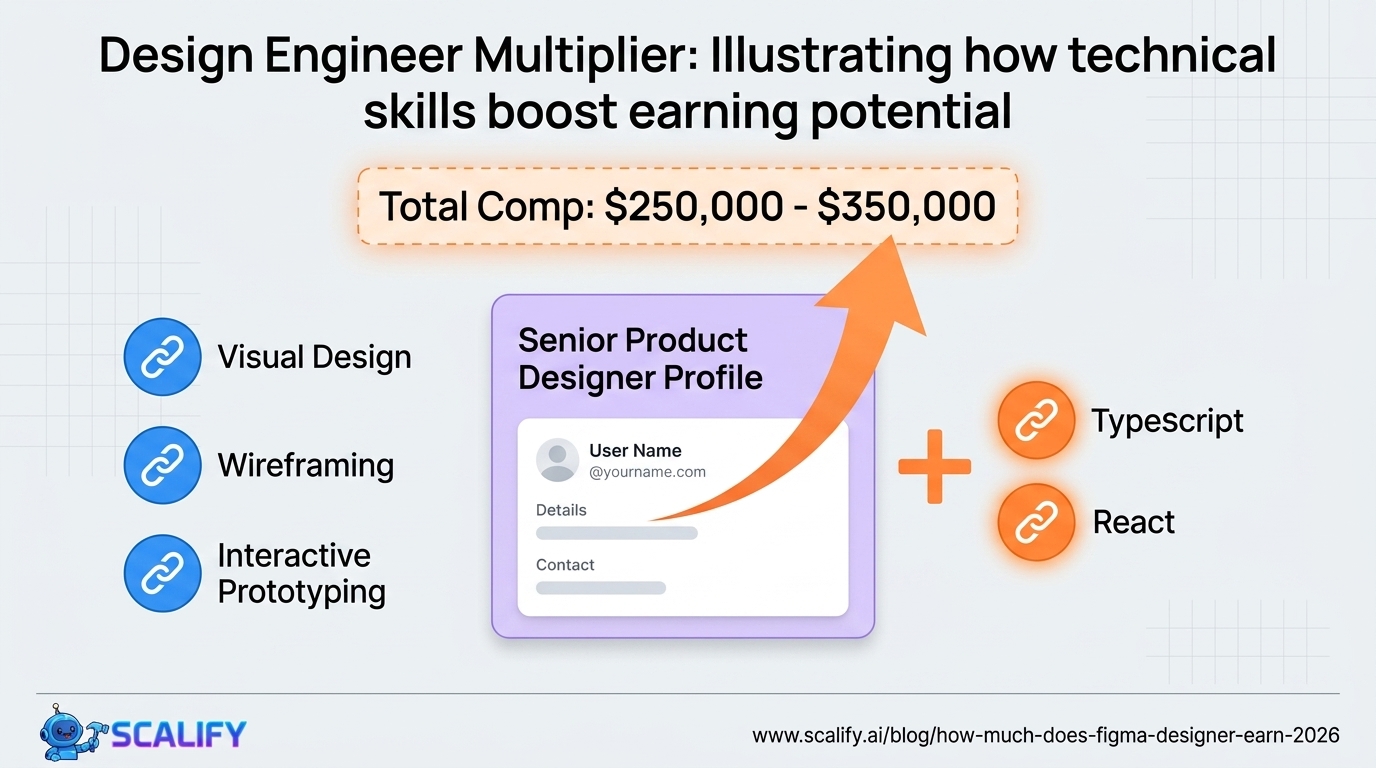
Front-end coding capability. Designers who can turn their Figma mockups into functional HTML/CSS or React components blur the traditional designer-developer divide and command a premium that reflects both skill combination and reduced handoff friction. The 25–35% coding premium for designers has grown as the role of "design engineer" — someone equally comfortable in Figma and code — has become one of the most sought-after specializations at design-forward companies.
Figma Designer Salary by Industry
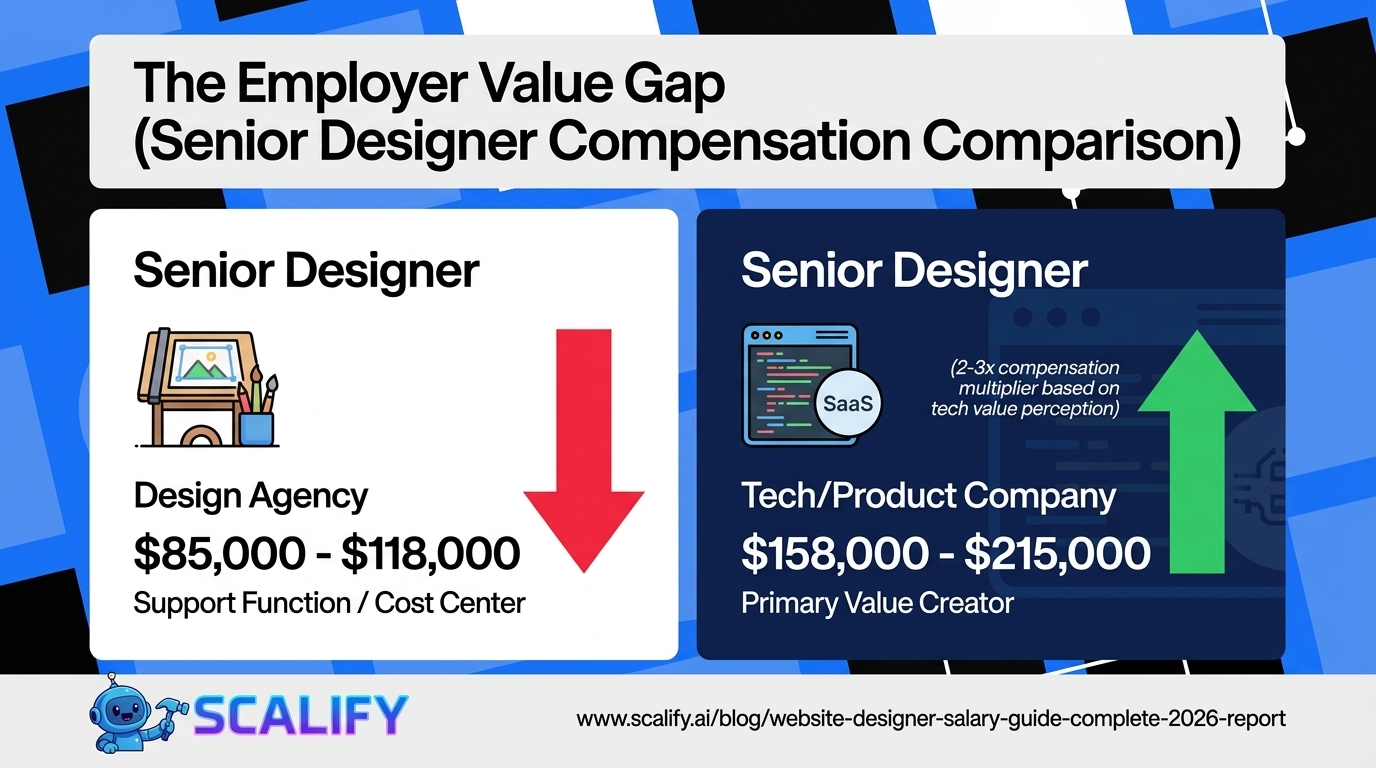
IndustryMid-Level MedianSenior MedianDesign CultureFAANG / Top Tech$142,000 – $178,000$185,000 – $280,000World-class — highest expectations and compGrowth SaaS / Startup$102,000 – $138,000$138,000 – $188,000Strong — design drives product differentiationMid-Size Tech$92,000 – $125,000$125,000 – $162,000Good — multiple design team membersAgency / Studio$72,000 – $102,000$102,000 – $138,000Broad variety — client workNon-Tech Enterprise$78,000 – $108,000$108,000 – $145,000Variable — depends on design maturityFreelance (specialist)$90,000 – $150,000$150,000 – $240,000Autonomous — direct client relationships
The Design Engineer Role: Figma's Highest-Paid Adjacent Career
The design engineer role — combining Figma design expertise with front-end coding capability — is one of the most in-demand and highest-compensated positions in product design in 2026. Design engineers sit at the intersection of design and engineering, equally comfortable producing high-fidelity Figma prototypes and implementing them in React with pixel-perfect accuracy. Companies like Vercel, Linear, Loom, and many other design-forward tech companies have built design engineering as a core function rather than a specialty, and they pay accordingly: senior design engineers earn $145,000–$200,000 at tech companies, with FAANG-level design engineer total compensation reaching $250,000–$350,000.
The path to design engineering: strong Figma expertise first, then HTML/CSS proficiency, then JavaScript/TypeScript, then React components. The sequence matters — design foundations ensure the engineering work maintains design quality, not just technical functionality. A designer who learned to code is often more valuable than a developer who learned Figma, because design quality standards are harder to develop than coding skills once the fundamentals are established.
Getting More From Figma: Skills That Increase Salary
Beyond basic Figma proficiency, these specific Figma capabilities command market premiums:
Figma SkillSalary PremiumLearning TimeVariables and design tokens+$8,000 – $15,0002–4 weeks focused studyComponent variants and properties+$5,000 – $10,0001–3 weeksAdvanced prototyping (variables, conditions)+$8,000 – $15,0003–6 weeksAuto-layout mastery+$5,000 – $10,0002–4 weeksDev Mode and handoff+$5,000 – $12,0001–2 weeksFigma plugins development+$15,000 – $25,0002–4 months (requires JavaScript)
The Bottom Line
Figma designers earn $80,000–$178,000 at mid-to-senior levels in standard product design roles, with design engineers, design system specialists, and FAANG designers reaching $200,000–$280,000 total compensation. Figma alone is table stakes — the salary premiums come from combining Figma excellence with product thinking, UX research capability, design systems expertise, and front-end coding. For designers targeting the highest compensation available in the field, the design engineer path (Figma + TypeScript + React) represents the most financially rewarding combination in 2026's design job market.
At Scalify, our designers work in Figma and build in Webflow — combining design expertise with platform implementation capability that delivers professional-quality websites in 10 business days.
Top 5 Sources
Figma Designer Career Progression
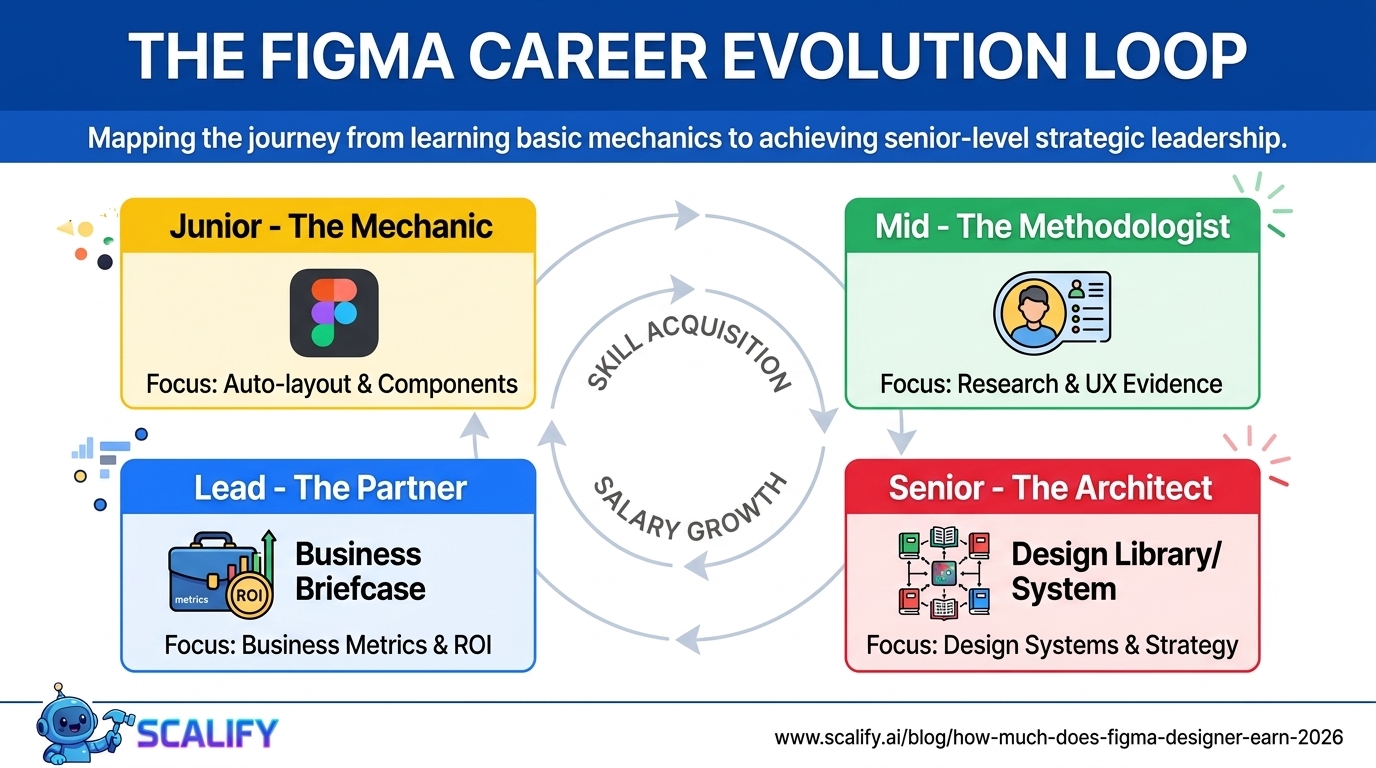
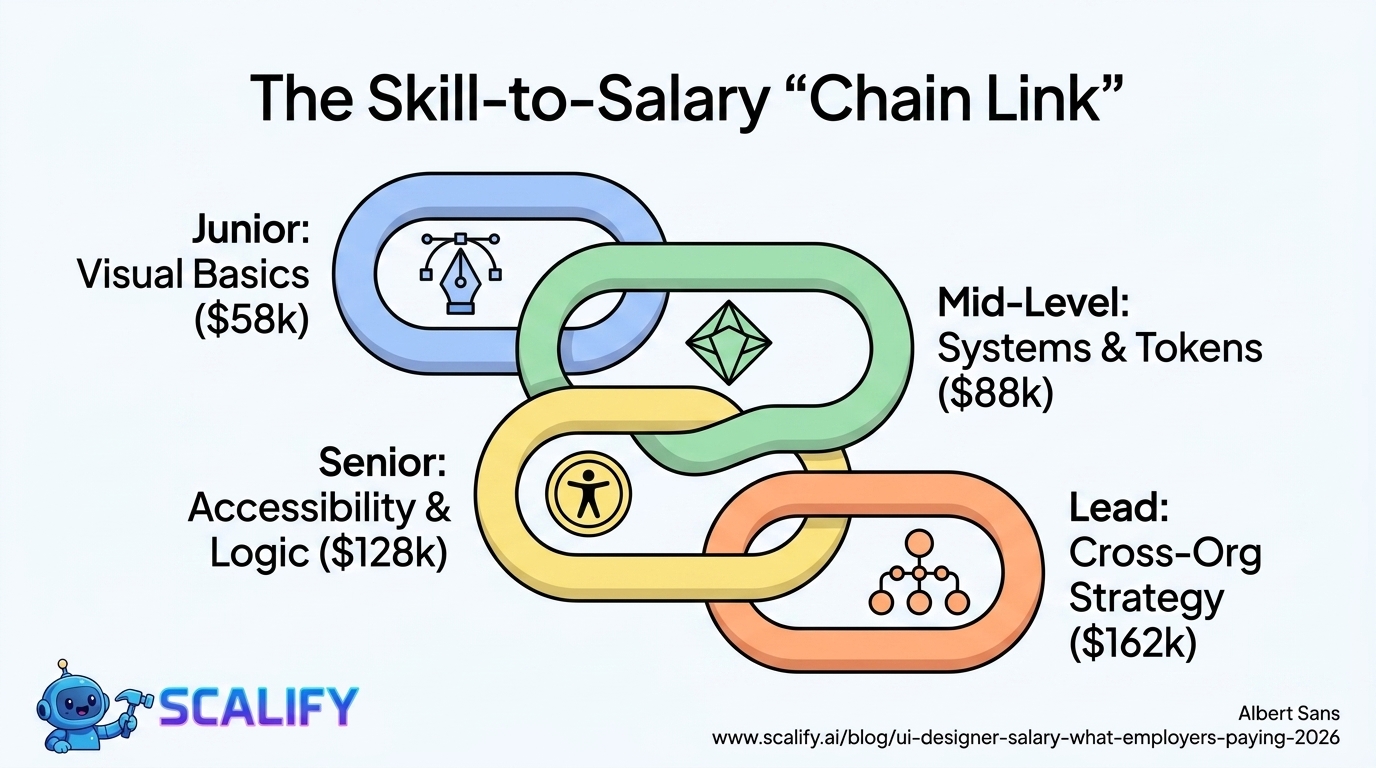
The standard design career trajectory from Figma proficiency to senior compensation runs through several distinct stages, each with different skill priorities:
Junior designer (0–2 years): Focus on Figma mechanics — components, auto-layout, prototyping basics, and understanding design principles (typography, color, hierarchy, spacing). Build a portfolio of 5–8 well-executed projects that demonstrate clean execution and attention to detail. At this stage, the quality of visual execution matters more than strategic design thinking.
Mid-level designer (2–5 years): Develop UX methodology alongside visual skills — user research, usability testing, information architecture, interaction design patterns. Learn to justify design decisions with evidence and reasoning rather than aesthetic preference. Begin contributing to or building components for design systems. Salary jumps at this stage come from demonstrating measurable product impact, not just attractive mockups.
Senior designer (5+ years): Lead design of significant product areas; define design standards for the team; mentor junior designers; contribute strategically to product direction. Senior designers are expected to be advocates for design quality and user experience in product planning conversations — not just executors of features as defined by PMs. The difference between a senior designer who earns $135,000 and one who earns $168,000 is almost always this strategic design leadership capability rather than Figma skill level.
Freelance Figma Design: Building a Practice
Freelance Figma designers can earn $90,000–$240,000+ annually depending on specialization and client type. The highest-value freelance design specializations:
SaaS product design: Startups and scale-ups frequently need senior-level design work for specific product areas or feature launches without full-time hiring commitment. Experienced product designers working as freelance contractors for SaaS companies at $120–$180/hour represent some of the highest hourly rates available in design.
Design system work: Building or auditing design systems for established companies is one of the most financially rewarding freelance design specializations. Organizations with established products often have messy, inconsistent design systems that a skilled Figma systems designer can rationalize into clean, scalable component libraries. This work is project-based ($15,000–$60,000 per engagement), high-expertise, and has a clear deliverable that companies are willing to pay substantial fees for.
Brand and web design: Marketing sites, landing pages, and brand identity work for growing companies. Senior Figma designers handling brand + web design command $8,000–$25,000 per project depending on scope and company size. Building retainer relationships with 2–3 regular clients provides stable income alongside project work.
The UX Research Premium
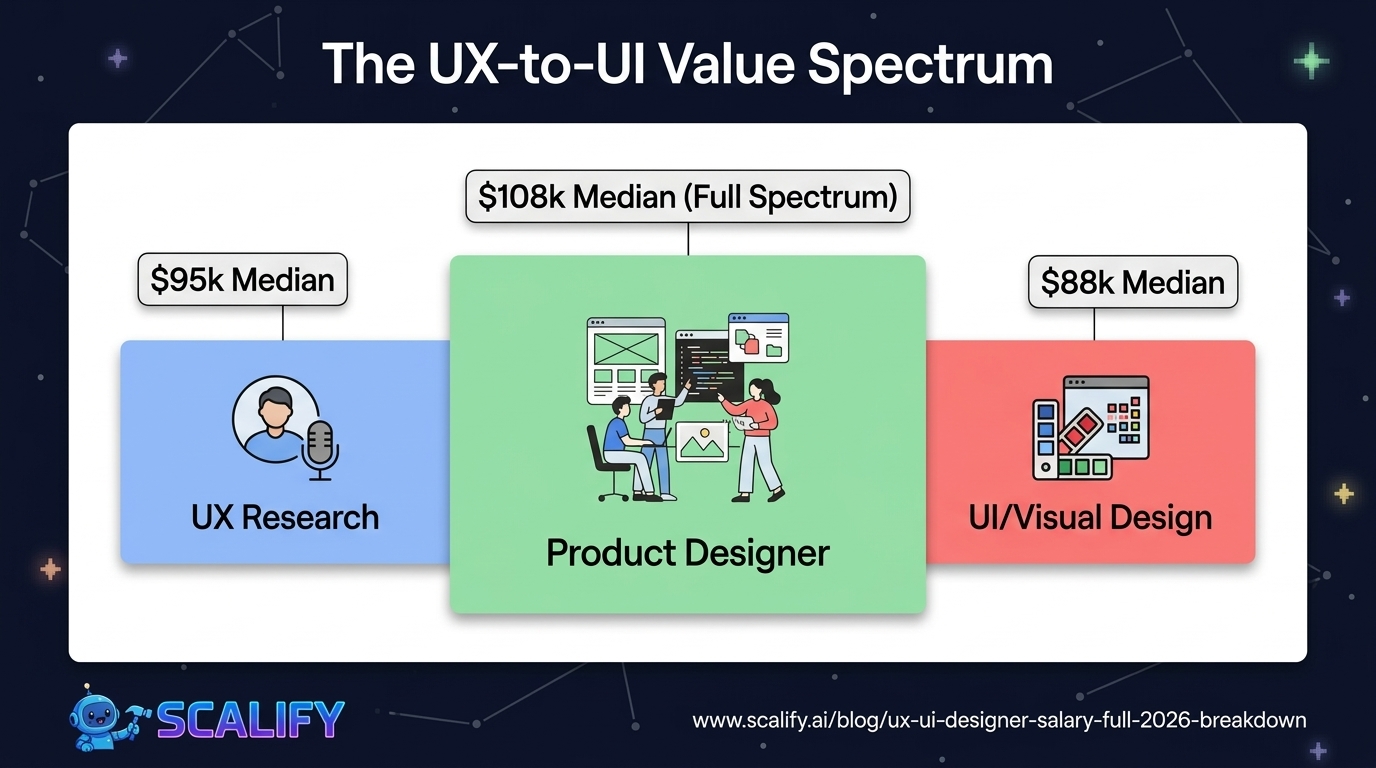
Designers who add genuine UX research capability to their Figma expertise — user interviews, usability testing, survey design, heuristic evaluation, card sorting, journey mapping — are accessing a premium that reflects both skill scarcity and high commercial value. The 20–35% premium for research-capable designers reflects that most companies have more design execution capacity than research capacity. The designers who can conduct user interviews, synthesize findings into actionable insights, and connect design decisions to measured user outcomes are solving a problem that "Figma-only" designers cannot.
The most practical path to UX research capability for designers already proficient in Figma: conduct usability tests on existing products (free tools like Maze make this accessible), learn to write effective interview scripts and conduct structured interviews, practice synthesizing qualitative data into design recommendations, and document research findings in shareable formats that communicate to non-designers. 3–6 months of deliberate research practice alongside design work produces enough experience to begin marketing research capability — and the salary improvement follows within 1–2 job cycles.
Tools Alongside Figma: The Design Professional's Stack
Professional designers use Figma as their primary design tool but typically complement it with a specific set of supporting tools. Understanding this stack is useful for designers building their skill profiles:
Tool CategoryCommon ChoicePurposeUser flow / diagramsMiro or FigJamCollaborative whiteboarding, user journey mappingUsability testingMaze or UserTestingUnmoderated user testing of prototypesAnalytics / heatmapsMicrosoft Clarity or HotjarUnderstanding how users interact with live productHandoff / developer specsFigma Dev ModeCSS values, spacing specs, assets for engineersPresentationFigma Prototype or KeynotePresenting design work to stakeholdersVersion controlFigma branching + AbstractManaging design file versions and changesImage editingPhotopea or PhotoshopPhoto editing and compositing beyond Figma
How to Get More Figma Work: Portfolio and Client Acquisition
Figma designers competing for premium clients and roles need to present their Figma work in ways that demonstrate more than visual taste — they need to demonstrate process, decision-making, and measurable impact. The portfolio elements that command the highest attention from hiring managers and premium clients:
Case studies over screenshots. A case study that walks through the design challenge, the research informing the approach, the iterations considered, the final design, and the measured outcome is more persuasive than a gallery of beautiful mockups. It demonstrates that the designer solves problems, not just produces deliverables.
Prototypes accessible from the portfolio. Linking directly to Figma prototypes (view-only) allows reviewers to experience the interaction design, not just see static screens. Designers who can build high-fidelity interactive prototypes in Figma that feel close to the real product are demonstrating a capability that screenshots cannot convey.
Systems work. Showing a design system — component libraries, token structures, documentation — demonstrates senior-level capability that junior portfolios don't include. Even a small, well-documented design system for a personal project signals the type of thinking that earns higher-level consideration.
The Bottom Line: What Figma Designers Actually Earn
Figma is now a required baseline skill for design professionals, not a differentiator. Mid-level product designers with solid Figma expertise earn $88,000–$135,000; seniors earn $132,000–$172,000. The skills that produce salary premiums above this baseline are product thinking, UX research, design systems expertise, and front-end coding. Design engineers — combining Figma design with React implementation capability — command some of the highest individual contributor design salaries available, reaching $175,000–$250,000+ at FAANG and growth-stage tech companies. For designers targeting premium compensation, the clear investment direction is skill adjacency to engineering: not replacing design craft, but extending it into the technical implementation that makes designs real.
Figma expertise positions designers for successful careers in product design, UX, and the emerging design engineering role — a trajectory with a salary ceiling that continues rising as design becomes more central to technology product differentiation.
Figma Certification and Credentials
Unlike some design tools with formal certifications, Figma doesn't offer an official certification program. Designer credentials in the Figma ecosystem come through portfolio quality, professional experience, and community recognition. The most respected credentials for Figma designers are: a strong portfolio on Behance, Dribbble, or a personal portfolio site showcasing real product work with case studies explaining design decisions and outcomes; Figma Community contributions (free resources, UI kits, or plugins published to the Figma Community that have high adoption); and professional endorsements from colleagues and clients who can speak to design quality and work ethic. These reputation signals — though less formal than certifications — are what actually move hiring decisions for design roles at companies that evaluate design quality rigorously.
For designers seeking formal credentials in adjacent skills: the Google UX Design Certificate (Coursera) provides a structured introduction to UX methodology that complements Figma proficiency; the Nielsen Norman Group UX Certification is recognized by enterprise employers for its rigor; and IDEO's Design Thinking courses are valued at companies where design thinking methodology is part of the product process. These credentials are more relevant for designers targeting UX researcher and senior product designer roles than for junior visual design positions.
The Bottom Line on Figma Designer Salaries
The ceiling on Figma designer compensation is higher than many designers realize — not from Figma proficiency alone, but from combining it with the capabilities that genuinely differentiate design professionals: product thinking, UX research, design systems expertise, and increasingly, front-end coding ability. The design engineer who is as comfortable building in React as designing in Figma, and who can translate between the two worlds fluently, represents the highest-value design professional in 2026's market. Invest in Figma depth, then expand into one adjacent domain — research, systems, or code — and the salary trajectory above the $100,000 median becomes straightforwardly achievable for dedicated designers in meaningful markets.








.jpeg)
.jpeg)




78 SW 7th St, Miami, FL 33130