


What's the Difference Between a Website and a Web App?
By Josh Ternyak

March 28, 2026
Website or web app — which one do you actually need? This guide breaks down exactly what separates the two, with real examples, and helps you figure out which one makes sense for your project.
The Line That Everyone Draws Differently
Ask ten developers to explain the difference between a website and a web app and you'll get ten slightly different answers. Some will draw the line at interactivity. Some at authentication. Some at whether the thing is built with React. Some will shrug and say the distinction doesn't really matter anymore.
They're all partially right, which is why this question is genuinely confusing for business owners and non-technical people trying to make decisions about what they need to build.
The confusion has gotten worse over the last decade as the line between the two has genuinely blurred. Modern websites are more interactive than ever. Web apps often look and feel identical to marketing sites. A Webflow site can have forms, user authentication, e-commerce functionality, and animations — is it a website or a web app?
Here's what we're going to do: cut through the semantic argument and give you something actually useful. By the end of this guide, you'll understand the functional differences, the practical implications, and — most importantly — how to figure out which one you actually need to build (and what that means for your budget, timeline, and team).
The Traditional Definitions
Let's start with where these terms came from, because the original distinction was clearer before the technology caught up and blurred everything.
A website, in the traditional sense, is a collection of web pages that primarily deliver information to visitors. The visitor comes to read, learn, watch, or browse. The interaction is mostly one-directional — the site talks, the visitor listens. A company homepage, a blog, a news publication, a portfolio, a restaurant's menu — these are all websites in the traditional sense.
A web application is software that runs in a web browser and enables users to perform tasks, manipulate data, and interact with the system in meaningful ways. The visitor isn't just consuming — they're doing something. Creating something. Making decisions that have real consequences. Your email inbox, your project management tool, your online banking dashboard — these are web apps.
The simplest way to think about it: a website tells you things; a web app lets you do things.
That distinction holds up reasonably well as a starting point, even if reality is messier.
The Four Core Differences
When you look at the actual functional differences between websites and web apps, four things stand out. These aren't absolute rules — exceptions exist — but they describe the pattern reliably enough to be useful.
1. Interactivity and User Agency
Websites are primarily read-only from the user's perspective. You navigate through them, read content, maybe fill out a contact form. But you're not manipulating data or producing outputs. The site looks essentially the same whether you visit it or someone else does.
Web apps are read-write. Users create things, modify things, save things, send things. The app responds to their inputs in meaningful, persistent ways. Every user's experience is different because the app is responding to what they've done and stored.
A recipe blog is a website — you read recipes. A meal planning tool that lets you save recipes, build weekly menus, and generate shopping lists is a web app. Same general content domain, completely different relationship between the user and the system.
2. Authentication and User Identity
Most websites don't require you to log in to access their core content. The experience is the same whether you're a first-time visitor or someone who's been coming back for years. There's no persistent "you" in the system.
Most web apps revolve around user identity. You create an account. You log in. The app knows who you are and what you've done, stores your data, and presents an experience personalized to you. Without authentication, most web apps don't function at all — there's nothing meaningful to show you because there's no context for who you are.
This distinction matters enormously from a development standpoint. Building user authentication correctly — with proper security, session management, password handling, and access control — is one of the more complex things you can do in web development. It's not hard in the sense of being intellectually impenetrable; it's hard in the sense that doing it wrong has serious security consequences and the surface area for mistakes is large.
3. Data Complexity and Real-Time Processing
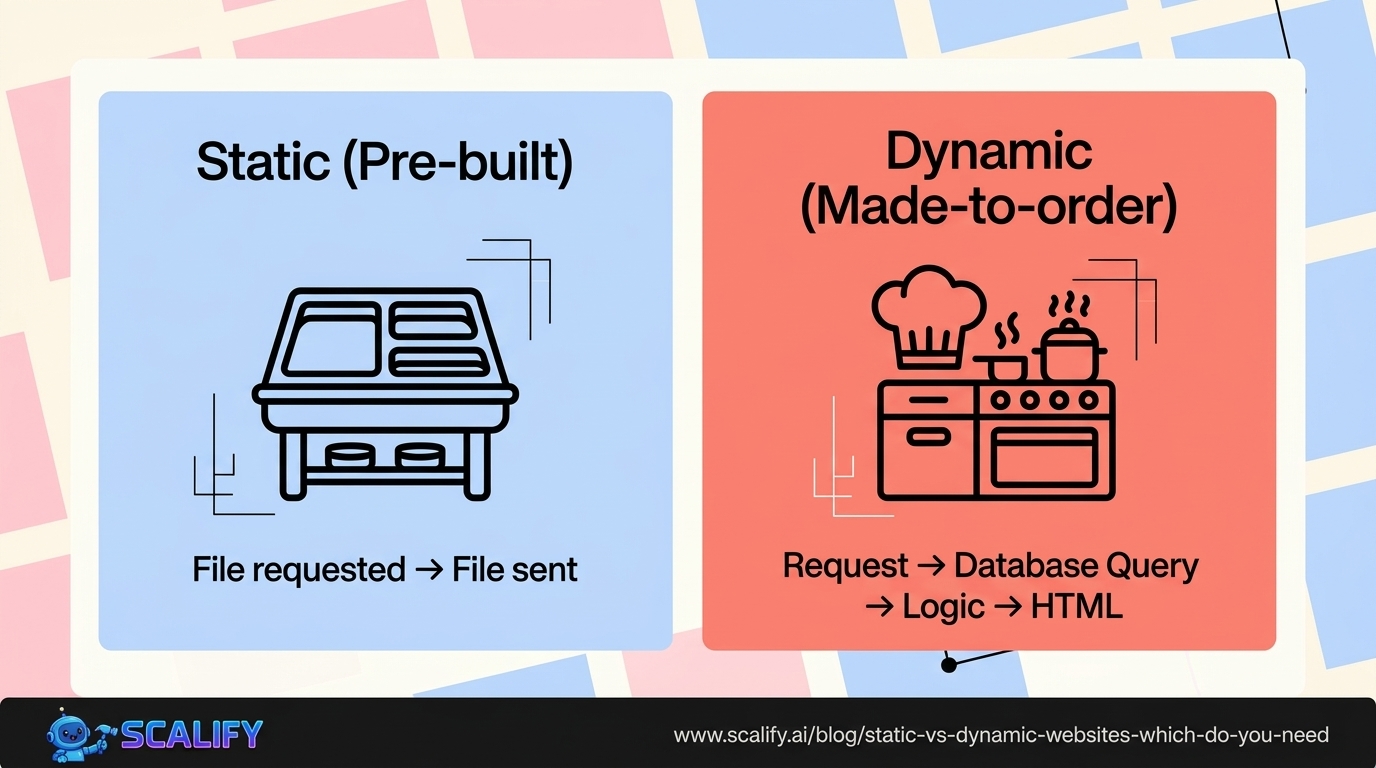
Websites typically have a relatively simple data model. There's content — blog posts, product descriptions, images, pages. It's stored in a database or flat files and served up to visitors. Updates happen when someone on the team adds or edits content.
Web apps deal with complex, user-generated, often real-time data. A project management tool needs to track tasks, assignees, due dates, comments, attachments, status changes, notification preferences, and project hierarchies — and update all of it in real time across multiple simultaneous users. A trading platform needs to process market data feeds, execute orders, and reflect changes across thousands of user portfolios in milliseconds.
The database design, the API architecture, the caching strategy, the real-time communication layer (often WebSockets) — all of this is more demanding for web apps than for most websites, and it drives up development complexity and cost significantly.
4. Business Logic and Rules
Websites have minimal business logic. Serve this content. Apply this styling. Maybe show this popup after 30 seconds. The rules governing what happens when are relatively simple.
Web apps are often defined by their business logic. A health insurance app needs to know which plans a user qualifies for based on their location, age, employment status, and dozens of other variables. A SaaS billing platform needs to correctly calculate prorated charges when someone upgrades mid-cycle, apply discount codes, handle failed payments, and send the right notifications at the right times. This logic is the core of the product — it's what makes it valuable.
Writing, testing, and maintaining complex business logic is expensive, time-consuming, and requires skilled engineers. It's a primary driver of why building a web app is significantly more expensive than building a website.
Real-World Examples to Make It Concrete
Theory is useful, but examples make it click. Let's look at some side-by-side comparisons.
News Site vs. Newsroom Dashboard
The New York Times website — the public-facing part where readers consume articles — is a website. It has login functionality for subscribers, but the core function is delivering content for people to read.
The internal dashboard NYT journalists use to write, edit, assign, track, and publish articles is a web app. It's software that enables complex workflows between many users, with permissions, version history, scheduling, and real-time collaboration.
Restaurant Website vs. Restaurant Ordering Platform
A restaurant's website showing their menu, hours, location, and story is a website. It informs. It might have a contact form or a link to a reservations platform.
The online ordering system where you choose items, customize them, pay, and track your delivery is a web app. It manages your session, your cart, payment processing, order routing to the kitchen, driver assignment, and real-time status updates.
Portfolio vs. Behance
A designer's personal portfolio site showing their work is a website. Visitors browse. Nothing changes based on what they do.
Behance — the platform where designers host portfolios, follow each other, like projects, leave comments, and discover work — is a web app. Every user has an identity, creates and stores content, interacts with other users, and experiences a personalized feed.
Marketing Site vs. SaaS Product
Stripe's marketing site (stripe.com) — explaining what Stripe does, pricing, documentation, case studies — is a website. Informational. Read-only for most visitors.
Stripe's dashboard (dashboard.stripe.com) — where merchants manage payments, refunds, subscriptions, customer data, payout schedules, and dispute resolution — is a web app. Complex, user-specific, data-driven, business-critical.
Many technology companies have both: a marketing website to attract customers and a web application that is the actual product. These are often built with different tools by different teams, even though they share a brand and domain.
The Blurry Middle Ground
Here's where it gets genuinely complicated: there's a massive amount of territory in the middle that doesn't fit cleanly into either category.
E-commerce sites are a great example. A Shopify store is more interactive than a brochure site — users add to cart, manage accounts, track orders. But it's also less custom than a purpose-built web app. Most people would call it a website with e-commerce functionality rather than a web app, even though it has many app-like characteristics.
Content sites with personalization sit awkwardly too. Netflix's public-facing marketing page is a website. But once you log in, Netflix itself — with its personalized recommendations, watch history, multiple profiles, and playback state — behaves like a web app even though you're mostly just watching content.
Webflow sites with CMS and membership functionality can have user authentication, gated content, dynamic data, and form submissions — capabilities that start to feel app-like — while still being fundamentally sites built around delivering content.
The practical takeaway: don't get too attached to the labels. What matters is understanding the specific capabilities you need and whether what you're trying to build leans toward the "delivering information" end of the spectrum or the "enabling users to do things with data" end. The label follows from that; it doesn't determine it.
How They're Built Differently
The technology differences are real and matter for decisions about who builds your thing and how much it costs.
Building a Website
Most modern websites are built with one of these approaches:
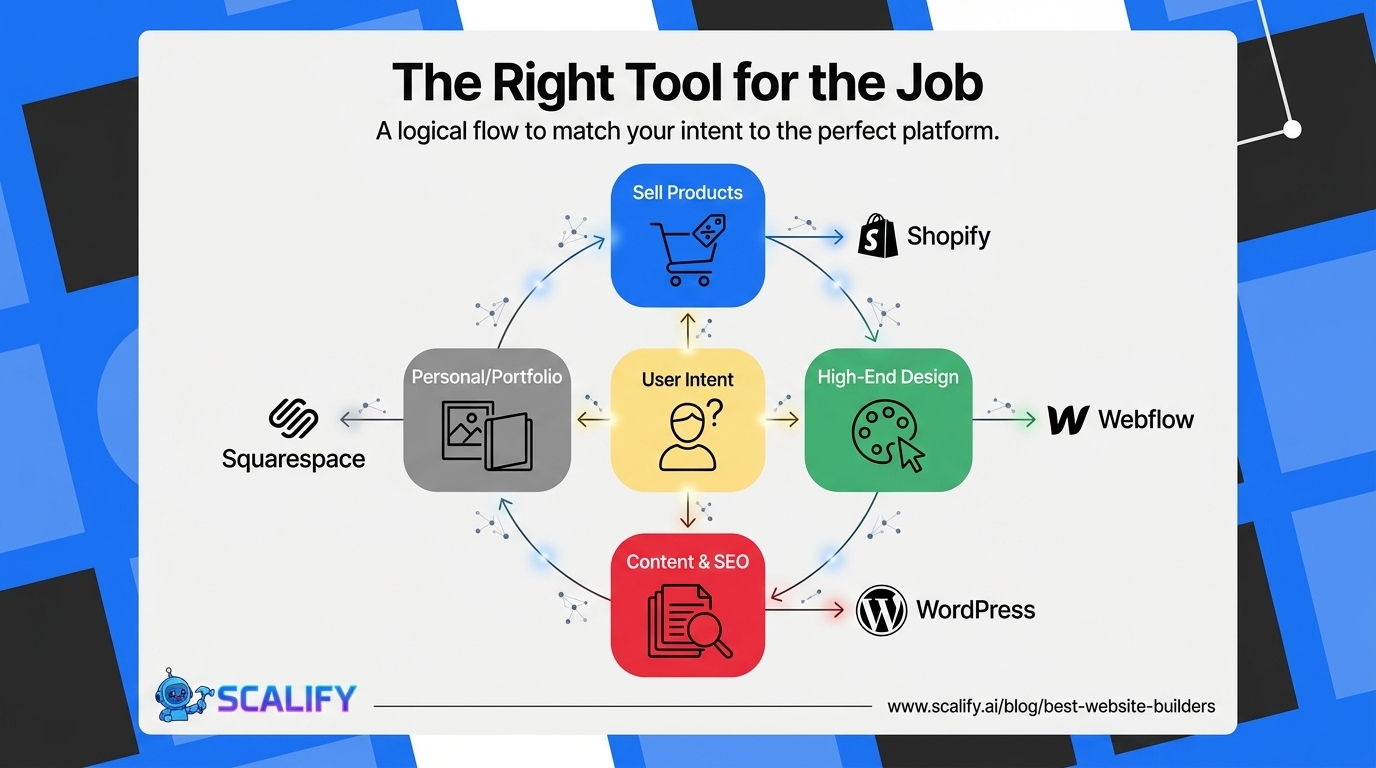
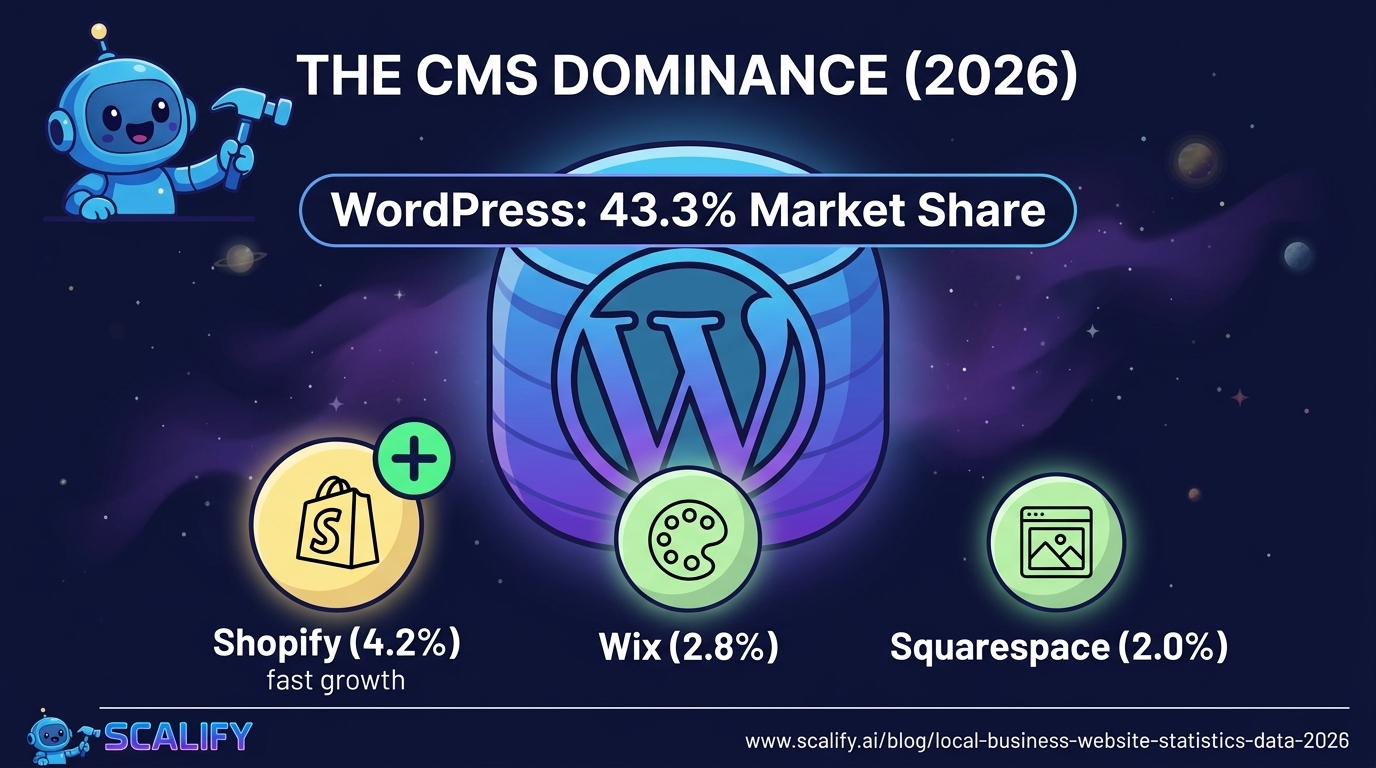
Website builders and CMS platforms — Webflow, WordPress, Squarespace, Wix. These provide the structure, the content management, the hosting, and varying degrees of design flexibility without requiring custom code. Great for most informational and marketing sites.
Static site generators — Next.js in static mode, Gatsby, Astro, Hugo. Developers write code (usually React or similar) and the build process generates static HTML files. Very fast, very scalable, great for content-heavy sites with some interactivity.
Custom development — building a site from scratch, typically with a modern JS framework for the front end and a headless CMS for content management. More expensive, more control.
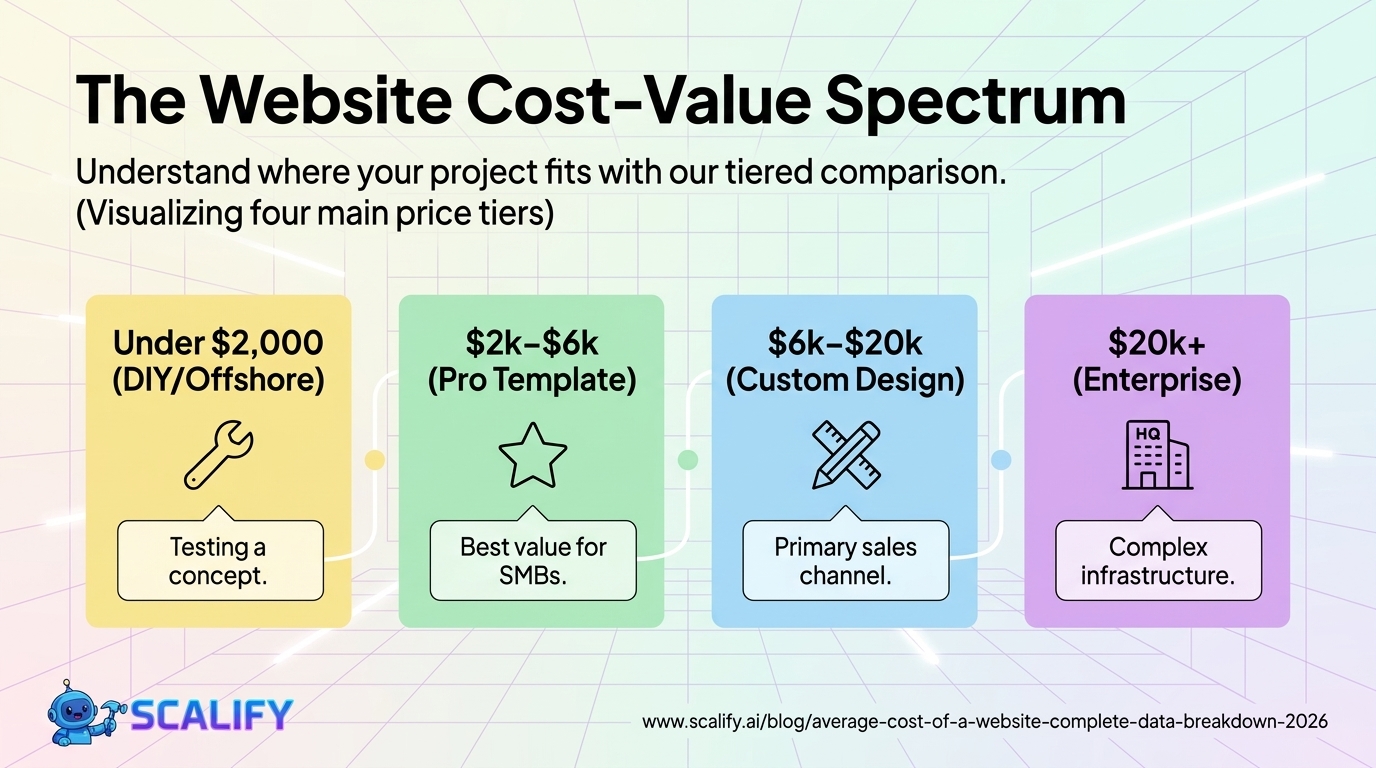
The timeline for a well-built website: days to weeks, depending on complexity. The cost range: from free (DIY on a website builder) to $5,000–50,000+ (fully custom design and development).
Building a Web App
Web apps almost always require custom development. There's no equivalent of Webflow for complex web applications — the business logic, data model, and user experience are too specific to any given product to be templated.
A typical web app tech stack involves a front-end framework (React, Vue, Angular, Svelte) that handles the user interface, a back-end server (Node.js, Python/Django, Ruby on Rails, Go, etc.) that handles business logic and data processing, a database (PostgreSQL, MySQL, MongoDB, etc.) that stores user data, and various infrastructure services (authentication, file storage, email, payments, etc.).
Building this well requires at minimum a full-stack developer with experience in all of these layers — ideally a small team with specialized skills on the front end and back end separately.
The timeline for an MVP web app: typically 3–6 months with a small dedicated team. The cost range: $30,000–$300,000+ depending on complexity, team composition, and location.
This is one of the most common costly mistakes business owners make: they want a web app but budget for a website. The two are not in the same category, and the gap in complexity and cost is substantial.
Progressive Web Apps (PWAs): A Different Kind of Blurring
While we're on the topic, it's worth briefly mentioning Progressive Web Apps — a technology that blurs a different line: the one between web and native mobile apps.
A PWA is a web app built with specific technologies that make it behave more like a native mobile application. It can be installed on your home screen, work offline (to a degree), send push notifications, access device hardware like the camera, and load nearly instantly.
Twitter Lite, Pinterest, Starbucks, and Uber all built PWAs alongside or instead of native apps in certain markets. PWAs can offer 90% of a native app's experience at a fraction of the development cost, since you're building one codebase that works across all platforms rather than separate iOS and Android apps.
PWAs are worth understanding if you're considering a mobile presence — they represent a genuine middle ground between "mobile-optimized website" and "native app" that's often overlooked in the planning process.
How to Decide What You Actually Need
Forget the labels for a moment and think through these questions. Your answers will tell you more concretely what category you're actually building in.
Do users need to create accounts and have persistent, personalized experiences? If yes, you're in web app territory. If no, you're probably building a website.
Does your product require users to create, modify, or manage data? Writing documents, managing tasks, processing transactions, tracking inventory — these are web app functions. Displaying information, collecting leads, showcasing products — these are website functions.
Do multiple users need to interact or collaborate in real time? If yes, you almost certainly need a web app with real-time data synchronization, which is technically complex.
Is the value in the information or in the tooling? If the value you're delivering is information, insight, or content — blog posts, documentation, product descriptions, company story — you need a website. If the value is in what users can accomplish using your product — managing their finances, running their business, communicating with their team — you need a web app.
What's your budget and timeline? If you have $10,000 and 6 weeks, you can build a great website. You cannot build a quality web app. Setting realistic expectations based on resources is critical before committing to either path.
Common Mistakes to Avoid
Building a web app when you need a website. A lot of early-stage startups over-engineer their initial online presence. They think "we need a product" and build a custom web app when a well-designed Webflow site would have served them equally well for 18 months while they validated their idea. Custom development is expensive and slow. Use website builders until your requirements genuinely exceed them.
Building a website when you need a web app. The opposite problem. Business owners sometimes want to "start with a website" when their core value proposition fundamentally requires interactive, user-specific functionality. A half-built thing that sort of does what it needs to do but not really is worse than either a properly scoped website or a properly scoped web app.
Underestimating web app complexity. "We just need users to be able to do X" almost always takes five times longer to build than expected. The visible feature is the tip of the iceberg. Below it are authentication, error handling, edge cases, mobile responsiveness, performance under load, security audits, accessibility compliance, and the thousand other things that need to be right for software to actually work reliably.
Not planning for maintenance. Websites need content updates and occasional redesigns. Web apps need ongoing development — bugs get found, features get added, security vulnerabilities get patched, dependencies get updated. If you build a web app without a plan for ongoing engineering resources, you're building technical debt from day one.
The Bottom Line
The website vs. web app distinction comes down to this: if you're primarily delivering information to an audience, you need a website. If you're building software that users interact with to accomplish specific tasks with their own data, you need a web app. Most things are clearly one or the other once you think about what the user actually does when they arrive.
The practical implications — in terms of cost, timeline, team requirements, and technology choices — are significant. Getting this decision right before you start building saves you from either over-investing in complexity you don't need or under-investing in a solution that can't do what your business requires.
If you've done this analysis and concluded that what you need is a professional, well-built website — done right, fast, without the headache of managing a development project — Scalify was built exactly for that. A custom website ordered and delivered like a product, so you can move fast on what matters.


.jpeg)
.jpeg)

78 SW 7th St, Miami, FL 33130