

How to Create a Website Mood Board That Guides Your Entire Design
By Josh Ternyak

March 29, 2026
A mood board is the visual contract that keeps your website design from going off the rails. This guide explains what makes an effective mood board, how to build one, and how to use it to get the design you actually want.
The Visual Tool That Prevents Expensive Misunderstandings
Website design projects go wrong in a specific, predictable way. The client describes what they want in words — "clean," "professional," "modern," "not too corporate" — and the designer hears those words and builds a mental picture. The client has a mental picture too. Both are confident they're imagining the same thing. Three weeks later, the designer presents the first design concept and the client says: "This isn't what I had in mind at all."
This is not a communication failure — it's a natural consequence of trying to communicate visual concepts through words. "Clean" means different things to different people. One person's "modern" is another person's "cold." "Professional" spans everything from conservative law-firm navy to innovative tech-startup white. Words are simply too imprecise a medium for conveying visual style, and any design process that relies on them as the primary alignment tool is set up for expensive, time-consuming revision cycles.
A mood board solves this problem by replacing word descriptions with visual evidence. Instead of telling a designer you want something "elegant but approachable," you show them fifteen images that embody what elegant-but-approachable means to you. The designer looks at those images and sees your aesthetic preferences directly — no translation required. The result is dramatically better design alignment from the first concept.
What a Website Mood Board Is
A mood board (also called a vision board or inspiration board in design contexts) is a curated collection of visual references — website screenshots, typography samples, color palettes, photography styles, graphic treatments, and other visual material — assembled to communicate the desired aesthetic direction for a design project.
It's explicitly not a design. A mood board doesn't show what the website will look like — it shows the feeling, the visual language, the aesthetic vocabulary that the design should draw from. A good mood board creates shared visual understanding between everyone involved in the project before design work begins, ensuring that when the designer starts creating, they're building toward a collectively understood aesthetic direction rather than their own interpretation of ambiguous verbal descriptions.
Mood boards exist at different stages and serve different purposes:
Discovery mood boards are exploratory — they help clarify what direction the client wants to go before design begins. They might include references from both desired and undesired aesthetics to define the creative boundaries.
Direction mood boards are more focused — they present a specific visual direction for the project and ask for alignment before design work begins. These are typically created by the designer based on discovery information and presented for client approval.
Style guide mood boards are reference materials — they establish the approved visual system for ongoing work, serving as a reference for any future design decisions that need to stay consistent with the established direction.
What a Good Mood Board Includes
Effective mood boards work because they cover multiple dimensions of visual style simultaneously. A mood board that only includes website screenshots, or only includes color palettes, is incomplete — visual style is multidimensional, and each dimension needs to be represented.
Typography Examples
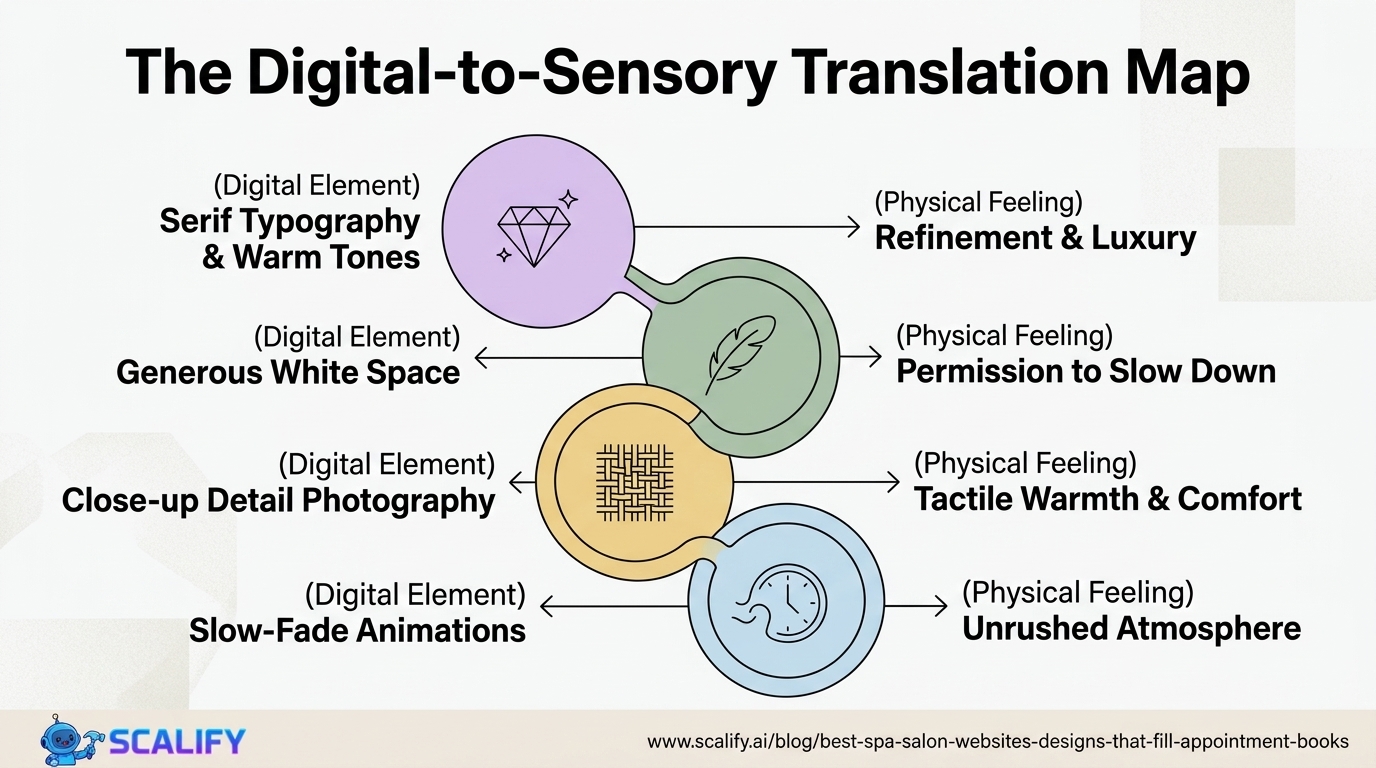
Typography shapes personality as powerfully as color. A brand that uses a geometric sans-serif communicates very different values than one using a humanist serif, even when the words are identical. Your mood board should include examples of typography that captures the tone you want — specific typefaces, type pairings, type size relationships, and typographic treatments you're drawn to.
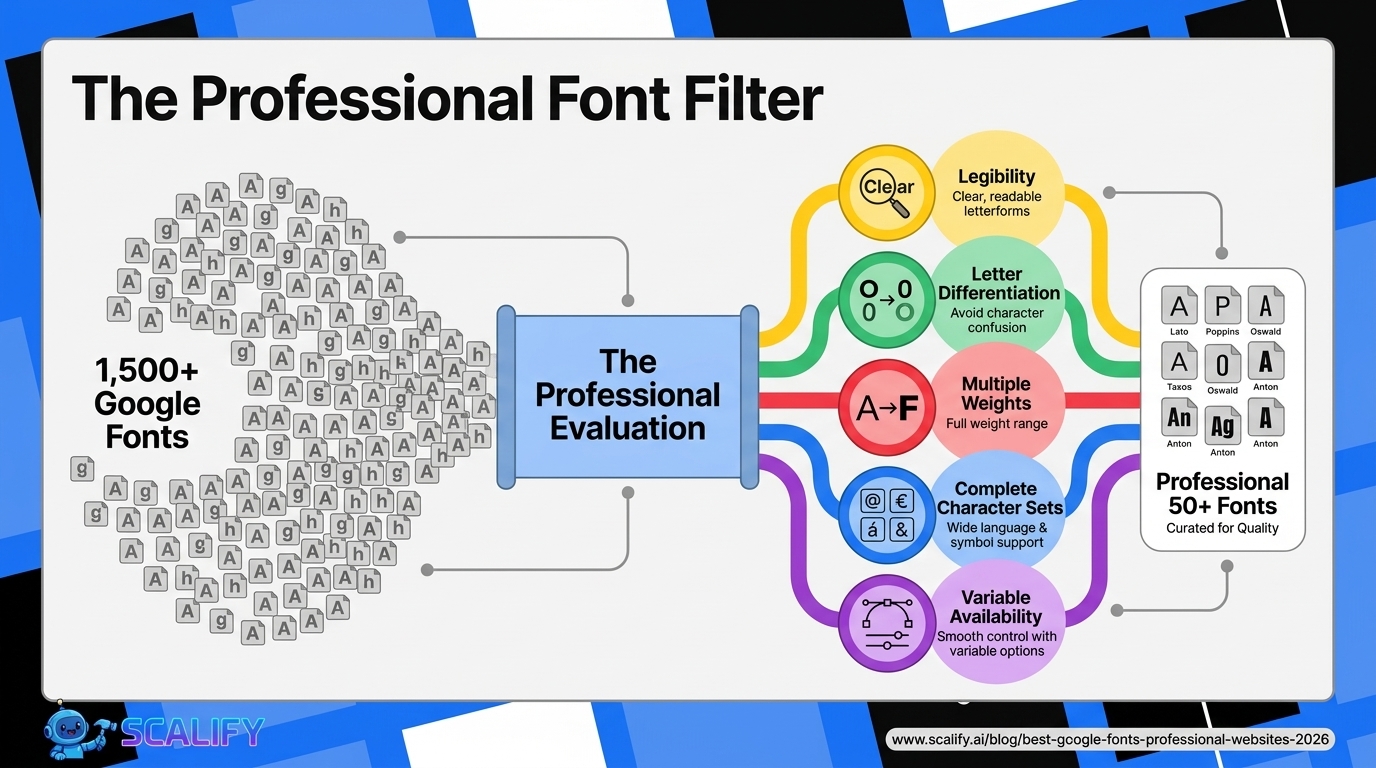
Sources for typography references: Google Fonts specimen pages (fonts.google.com), Typewolf (typewolf.com) for curated pairing examples, and screenshot examples from websites whose typography you admire.
Be specific about what attracts you to each typography example. "I like the way this site uses a large, bold serif for headings against a clean sans-serif for body text" is useful information. "I like this" is not, because it doesn't separate which aspect you like.
Color References
Color is typically the first visual element people respond to and often the most contentious to get right. Color reference in a mood board can take multiple forms:
Color palettes from existing sources — extracted from images, from palette tools like Coolors, from other brand materials you admire.
Photography with the right color temperature — images that have the warmth, coolness, saturation level, and overall color mood you want the website to evoke.
Specific brand references — other companies whose brand color systems feel right to you (while noting which specific aspect you want to capture rather than copying wholesale).
Including both positive references ("I want something in this color space") and negative references ("I specifically don't want anything that looks like this") dramatically sharpens the brief. Showing a designer three color systems you love and two you hate gives them much more to work with than showing them three you love alone.
Photography Style
Websites are heavily visual, and the photography or illustration style used throughout shapes the entire site's personality. A warm, candid photography style communicates very differently from cool, highly styled product photography. Natural light lifestyle imagery feels different from studio-lit flat lay photography.
Your mood board should include photography style references that capture the visual world you want your brand to inhabit. Include examples of:
- The kind of subject matter (people, products, environments, abstract)
- Lighting style (natural light, studio, high-contrast, soft and diffused)
- Color treatment (warm, cool, desaturated, vivid, filmic)
- Composition style (candid/editorial vs. arranged/styled)
Website Screenshots and UI Examples
Screenshots of websites whose visual style, layout approach, or interaction design you admire are the most direct reference type in a web design mood board. When collecting these, look beyond just websites you like aesthetically — look specifically at:
Navigation treatment — how the header and navigation are designed. Minimal floating nav or traditional fixed bar? Bold or subtle?
Hero section approach — full-viewport photography? Bold typography? Product-led? Video background? The hero section is often the most personality-revealing section on any website.
Content density — is the site spacious and minimal, or rich and information-dense? What's the ratio of whitespace to content?
Interactive elements — how do buttons look? How are hover effects handled? Any interesting scroll animations or transitions?
Annotate your website screenshots with notes about what specifically attracts you to each example. The designer needs to know whether you love the whole aesthetic of a referenced site or just a specific element of it.
Texture, Pattern, and Graphic Elements
Modern web design often incorporates graphic elements beyond photography and typography — abstract shapes, illustrated elements, background textures, iconography styles, dividers and separators, gradient treatments. If you have preferences or reactions to these types of design elements, including examples in your mood board helps define the graphic vocabulary the design can draw from.
Where to Source Mood Board Material
Websites and Design Galleries
Awwwards (awwwards.com): Curated showcase of excellent website design. Searchable by industry, style tags, and design features. The nomination and award structure means most sites included represent genuine quality.
Dribbble (dribbble.com): Designer portfolio platform with millions of design shots including web UI, illustration, typography, and brand work. Good for finding specific design treatments (button styles, card designs, color systems) rather than full website references.
Behance (behance.com): Adobe's portfolio platform with more complete project showcases than Dribbble — full case studies, branding systems, and website projects rather than individual design shots.
Mobbin (mobbin.com): Screenshots from real apps and websites, useful for UI pattern reference. Particularly strong for mobile UI examples.
Siteinspire (siteinspire.com): Curated web design gallery with strong filtering by style, color, and type. Good for finding clean, contemporary design references.
Godly (godly.website): Curated selection of exceptionally designed websites, updated frequently. Good for finding current design trends and high-quality references.
Visual Discovery Platforms
Pinterest: The most comprehensive visual reference library available. Any aesthetic you can describe has extensive Pinterest boards dedicated to it. The recommendation algorithm also surfaces adjacent aesthetics you might not have found through direct searching. Good for initial exploration when you're still defining what direction you want to go.
Instagram: Designers, studios, and brands post visual work constantly. Following designers, studios, and brands whose work you admire builds an ongoing stream of visual reference material.
Design Resource Libraries
Google Fonts (fonts.google.com): Test any of thousands of free typefaces at actual sizes. Particularly useful for finding typography references because you can see the exact typeface rather than screenshot approximations.
Coolors (coolors.co): Color palette generator and explorer. Good for creating precise color reference material and exploring color relationships.
Unsplash (unsplash.com) and Pexels (pexels.com): Free stock photo libraries with excellent quality. Search by mood, color, or subject to find photography style references.
How to Build an Effective Mood Board
Step 1: Brief Yourself Before You Browse
Before opening any reference tools, spend 15 minutes writing answers to these questions:
- Who is our primary audience and what does their visual world look like?
- What 5 adjectives describe how we want the website to feel?
- What 3 adjectives describe what we specifically don't want?
- What are 3 competitors or industry peers? How do we want to look different from them?
- Are there any visual elements that are absolutely off-limits (certain colors, styles, imagery types)?
These answers become the filter for everything you collect. They prevent the mood board from becoming a collection of things you randomly find beautiful, which happens constantly when people browse visual references without a brief. Visual browsing is addictive and the brain gravitates toward what it finds aesthetically pleasurable rather than what's strategically appropriate.
Step 2: Collect Broadly, Edit Ruthlessly
Start with broad collection — bookmark, screenshot, or pin everything that has potential. Don't edit during this phase. You're looking for material to work with, not making final decisions.
Collect across multiple dimensions (typography, color, photography, UI, graphic elements) and from multiple sources (design galleries, social platforms, competitor analysis, category research). Cast a wide net initially.
After collecting broadly — ideally after a break, with fresh eyes — edit ruthlessly. A mood board with 80 references communicates nothing because there's too much noise. A mood board with 15–25 carefully selected, consistently cohesive references communicates a clear, specific aesthetic direction.
Editorial criteria for what stays: Does this genuinely represent the aesthetic direction we're going for, or do I just personally like it? Is it consistent with the other references, or does it pull in a different direction? Does it add something specific that other references don't cover?
Step 3: Organize into Sections
A well-organized mood board is a usable reference document, not a random collection. Organize your references into clear sections:
- Overall feel / hero examples (the 3–5 references that best capture the overall direction)
- Typography references
- Color direction
- Photography/imagery style
- UI/interaction elements
- Any specific sections needing special treatment (navigation examples, footer examples, etc.)
This organization makes the mood board a reference tool that designers can use throughout the project — not just at the start, but any time a specific design decision needs aesthetic validation.
Step 4: Annotate Everything
An unannotated mood board forces the designer to interpret what about each reference you want to capture. An annotated mood board removes that guesswork. For each reference, note:
- What specifically you like about it
- What you don't like about it (particularly if you love one aspect but not the whole)
- Any reservations or concerns it raises
"I love the typography treatment here but not the dark background" prevents the designer from assuming you want dark backgrounds because you included a dark-background example in your mood board.
Step 5: Create the Document
Mood boards live in a few common formats:
Figma: The best tool for collaborative mood boards. Create a frame, drop in your references and screenshots, add text annotations. Multiple people can view and comment in real time. Easy to share with a link.
Miro or Milanote: Free digital whiteboard tools designed for this kind of visual organization. Milanote in particular is specifically designed for mood boards with a card-and-board interface that makes organizing references intuitive.
PowerPoint or Keynote: Work perfectly well for static mood boards that will be shared as files or PDFs. Less good for collaborative editing but universally accessible.
Pinterest boards: Good for the collection phase, but limited for the annotated final version since annotation capability is minimal. Better as a source than as the final deliverable.
Using the Mood Board Through the Project
A mood board that's created and then filed away has accomplished only part of its potential. Used actively, it continues to be valuable throughout the project:
At design kickoff: Walk through the mood board explicitly with the designer before they begin. Don't just share it — discuss it. Cover what's included and why, what elements matter most, what the non-negotiables are, and what questions the mood board raises for both parties.
During design review: When reviewing design concepts, refer back to the mood board explicitly. "Does this feel consistent with the photography style we captured in the mood board?" is a more productive design review conversation than "I don't know, something just feels off."
When scope questions arise: "Should we add illustrations?" "Should the background be dark or light?" "What kind of iconography should we use?" The mood board provides direction for these questions when they come up during design or development.
For future work: New landing pages, new marketing materials, updated sections — the mood board remains a valid visual reference for maintaining consistency in future design work, even years after the initial project.
Common Mood Board Mistakes
Including aspirational references that don't fit your actual brand: It's easy to fall in love with the visual style of a luxury fashion brand when you're building a website for a plumbing company. The luxury aesthetic communicates entirely the wrong things for a plumber's audience. References should be aesthetically excellent AND appropriate for your specific context and audience.
Too many contradictory references: A mood board with minimalist Scandinavian-inspired design alongside maximalist art-direction-heavy editorial references is pulling in incompatible directions. If the references don't have a coherent visual throughline, the designer has no clear direction to pursue. Edit for consistency.
All website references, no other materials: A mood board that only includes website screenshots gives the designer visual references at the execution level but no context for the deeper brand personality the design should evoke. Including photography, brand imagery, texture, and typography references from outside the website context enriches the brief significantly.
No annotations: A mood board with no explanatory notes forces the designer to guess what about each reference you want to capture. This guessing is where misalignment gets reintroduced.
The Bottom Line
A mood board is not extra work — it's risk reduction work. The time invested in creating a clear, annotated visual brief at the start of a project consistently reduces the number of revision cycles, shortens the overall project timeline, and produces final designs that are more closely aligned with client expectations. The absence of a mood board doesn't save time; it just moves the alignment problem further into the project where it's more expensive to resolve.
Build it before design begins, organize it by visual dimension, annotate every reference, use it actively throughout the project, and revisit it whenever design decisions need aesthetic validation. The investment is a few hours; the return is a design process that actually produces what you had in mind.
At Scalify, our design process includes a visual direction alignment step before we begin any mockups — ensuring that what we build reflects a shared, explicit aesthetic vision rather than our best guess at what clients describe in words.


.jpeg)
.jpeg)



78 SW 7th St, Miami, FL 33130