


How to Write a Website Brief That Gets Great Results
By Josh Ternyak

April 1, 2026
A clear website brief is the single most important factor in getting a great result. This guide covers all 9 required brief sections, writing specific measurable goals, defining target audience precisely, scope of work decisions, communicating design direction with examples, content planning, honest budget and timeline conversations, a complete template, common mistakes (Apple syndrome, no budget, no content plan), using the brief to evaluate proposals, and keeping the brief alive through the project.
How to Write a Website Brief That Gets Great Results
A website brief is the document that defines what you want built, who it's for, what it needs to achieve, and the constraints within which it needs to be delivered. A clear, comprehensive brief is the single most important factor in getting a great website back — because developers and designers can only produce results proportional to the clarity of the direction they receive. Vague briefs produce generic websites. Specific briefs that clearly articulate goals, audience, constraints, and examples produce websites that actually solve the business problem they were commissioned to solve.
What a Good Website Brief Must Include
| Section | What to Cover | Common Mistake |
|---|---|---|
| Business overview | What the business does, who it serves, what makes it different | Skipping this — developer can't design for unknown context |
| Project goals | Specific, measurable outcomes the website must achieve | "Look modern" — not measurable or actionable |
| Target audience | Who visits the site, their problems, how they make decisions | Saying "everyone" — means designing for no one |
| Scope of work | Pages/sections needed; features required; out-of-scope items | Listing every possible feature — scope creep from day one |
| Technical requirements | CMS needs, integrations, performance targets, browser support | Assuming the developer knows without being told |
| Design direction | Brand guidelines, examples of sites you like/dislike and why | "Modern and clean" — every brief says this, means nothing |
| Content | Who provides content, in what format, by what deadline | Leaving content unresolved — kills timelines |
| Budget and timeline | Actual budget range; hard deadlines and why they matter | Hiding budget — prevents developers from right-sizing solution |
| Success metrics | How you'll know the website worked | No success metrics — impossible to evaluate the result |
The Business Goals Section: Be Specific
The most important section of any website brief — and the one most often done poorly — is the project goals section. Vague goals produce vague results; specific goals produce websites built to achieve something measurable.
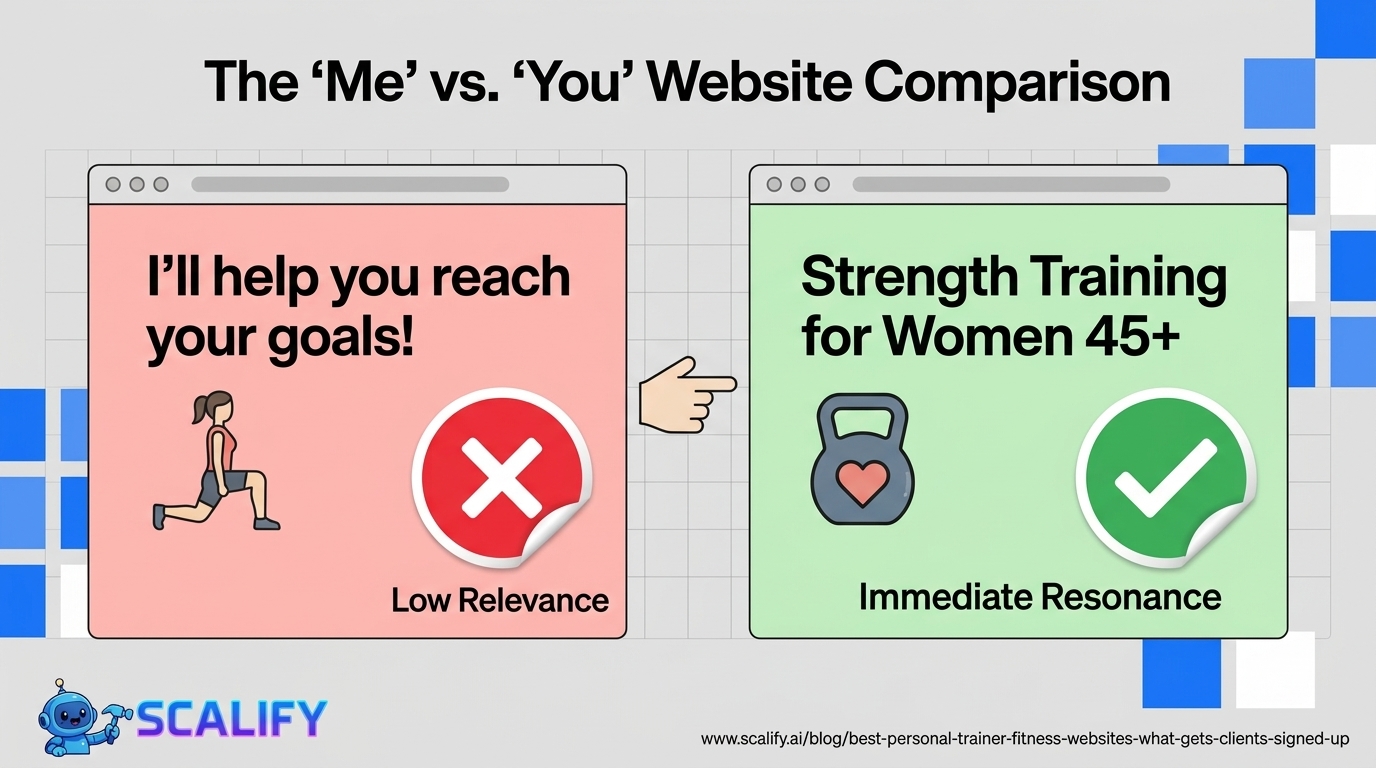
Compare these goal statements: "We want a website that looks professional and modern" vs. "We want a website that generates 15 qualified consultation requests per month from small business owners in the Miami area who need web design services." The first is decoration. The second is a brief that a developer can design toward — layout choices, CTA placement, content strategy, and success measurement are all shaped by knowing specifically what success looks like.
For each goal, apply the SMART framework: Specific (exactly what), Measurable (by what metric), Achievable (realistic given the constraints), Relevant (connected to business outcomes), and Time-bound (by when). "Increase contact form submissions by 30% within 90 days of launch" is a SMART goal. "Get more leads" is not.
Defining Your Target Audience
A website can't serve everyone well — every design decision that helps one type of visitor often hurts another. A brief that clearly defines the primary audience enables design decisions that are genuinely optimized rather than compromised to be generic. The target audience section should answer:
- Who are they? Job title, industry, company size, age range, technical sophistication
- What problem brought them to the site? The specific need or pain point they're trying to resolve
- What alternatives are they considering? Your competitors and what differentiates you
- How do they make decisions? What evidence do they need before committing (price, case studies, certifications, speed of delivery)?
- What are they afraid of? The risks and concerns that prevent them from converting
The more specifically you can define the person making the decision to contact or buy, the better the website can speak directly to them — addressing their specific objections, building the specific trust that matters to them, and presenting your offer in the terms they actually care about.
Scope of Work: The Hard Decisions
Scope creep is the most common cause of website projects running over budget and timeline — and most scope creep originates from scope that was never clearly defined in the brief. Every feature and page that seems obvious to you might not be obvious to your developer. Specifying scope explicitly — including what is explicitly out of scope — prevents the mid-project discoveries that add cost and delay delivery.
The scope section should include: a complete list of pages required (home, about, services/products, contact, blog, case studies, etc.), specific functionality required (contact forms, newsletter signup, booking system, payment processing, user login, search), third-party integrations needed (CRM, email marketing, analytics, chat), and explicit out-of-scope exclusions ("User portal and account management is out of scope for this phase"). The more specific, the less ambiguity for both parties.
Design Direction: How to Communicate Visually Without Being Vague
The phrase "modern, clean, professional" appears in almost every website brief — and provides almost no actionable direction because every developer interprets these words differently. The most effective design direction communicates through examples and contrast:
Reference sites: List 3–5 websites whose design you admire, with specific notes about what you like: "The typography hierarchy on [URL] — the way H1s are very large and bold while body text is smaller creates a clear reading structure." The key is specificity about what you like, not just listing beautiful websites.
Sites to avoid: List 2–3 websites that exemplify what you don't want, with notes about why: "Our competitor's site at [URL] feels cluttered and overwhelming — I don't want that density of information per page." Anti-examples are often more clarifying than examples.
Brand words: 3–5 adjectives that describe the brand personality the site should convey — "authoritative but approachable," "technical but accessible," "premium but not intimidating." These guide tone, color choices, typography weight, and copy voice.
Content Planning: The Brief's Most Neglected Section
Content — the actual text, images, videos, and media that populate the website — is the most commonly neglected element of website briefs and the most common cause of project delays. A website project that launches with placeholder text while content is "still being worked on" is a project that will have an indefinite launch delay, because content is never truly finished until there's a hard deadline forcing completion.
The brief should answer: who is responsible for writing content? What's the content delivery deadline? Are there existing assets (old website copy, product descriptions, photography)? Who approves content? Is professional copywriting or photography in scope? The answers determine project timeline more than any technical factor.
Budget and Timeline: Having the Honest Conversation
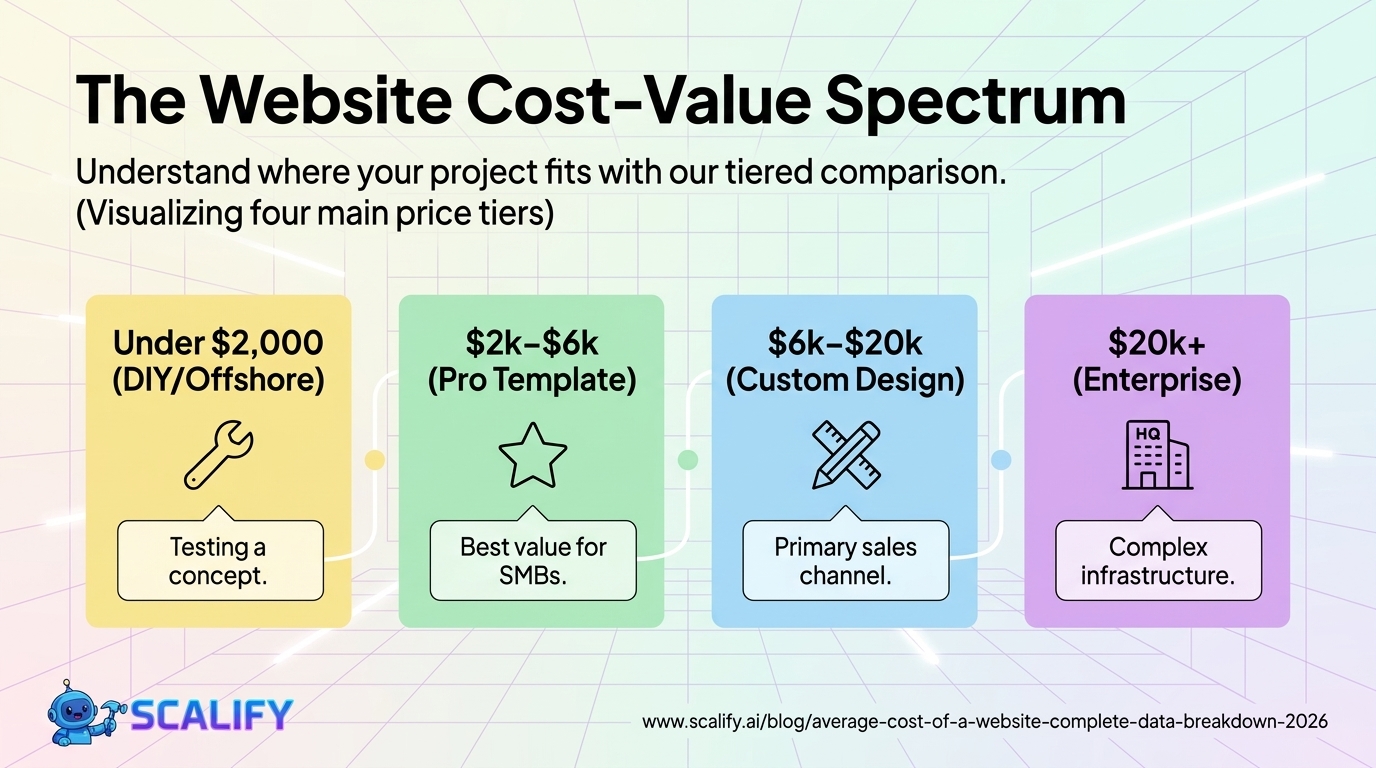
The two most uncomfortable sections of a website brief are budget and timeline — and the instinct to be vague about both produces worse outcomes. Withholding your budget doesn't protect you from overcharging; it means the developer proposes a solution that may be significantly over or under your actual budget. Sharing a budget range enables the developer to propose the right solution for that range rather than guessing. A $5,000 website and a $30,000 website are different products — both can be excellent at their price point, but only if the developer knows which one to propose.
Timeline should specify hard deadlines (trade show, product launch, board meeting) and why they exist. "We need the site live by March 15 because our product launches at a conference that week" is actionable. "As soon as possible" means nothing. Developers plan projects backward from deadlines; without a deadline, there's no plan.
Sample Website Brief Template
A minimal complete brief covers all of these elements concisely — it doesn't need to be long:
Business: [Name, what you do, who you serve, why you're different from competitors]
Goals: [3–5 specific, measurable outcomes the website must achieve]
Audience: [Primary: who they are, their problem, how they decide. Secondary: any other audience]
Scope: [List all required pages and features; explicitly list what is out of scope]
Technical: [CMS requirements, integrations, hosting, performance targets, browser support]
Design: [3–5 reference sites with specific notes; 2–3 sites to avoid with notes; brand words]
Content: [Who writes, what deadline, existing assets, copywriting/photography in scope?]
Budget: [$X–$Y range]
Timeline: [Hard deadlines with reasons; preferred launch date]
Success metrics: [How you'll evaluate the website 90 days after launch]
The Bottom Line
A website brief that clearly defines goals, audience, scope, design direction, content responsibilities, budget, and success metrics produces better websites than any combination of talented developers and designers working from an ambiguous brief. The brief is your only leverage over the final output before work begins — invest 2–4 hours writing it well and save weeks of misalignment during the project. The best website projects start with the clearest briefs; the worst start with "we want something modern and clean."
At Scalify, we work with clients through a structured brief process before starting any project — ensuring every website we build in 10 business days is built toward specific, measurable goals rather than generic best practices.
Top 5 Sources
- Nielsen Norman Group — Website Requirements and Briefing
- Smashing Magazine — How to Write a Creative Brief
- HubSpot — Website Project Management Research
- Creative Bloq — Website Brief Writing Guide
- CXL — Website Brief Best Practices
Common Brief Mistakes That Lead to Project Failure
"Just make it look like Apple." This is one of the most common and least actionable design references. Apple's website works because of Apple's product, brand recognition, photography budget, and minimalism philosophy that took decades to develop. Asking a web developer to "make it like Apple" without Apple's brand context produces a generic minimal site with no personality. Reference specific elements you like about Apple's design (the product photography approach, the white space philosophy, the typography scale) not the brand as a whole.
No budget provided at all. "We'll work with your quote" sounds flexible but signals to developers that you haven't thought seriously about what you can invest. It results in proposals that are either over budget (developer guesses high and you're shocked) or under-scoped (developer guesses low and the site isn't what you needed). Every project has a budget ceiling — stating it in the brief ensures proposals are designed to maximize value within that reality.
Listing every possible future feature. "We might want user login, and maybe an online store, and potentially a member forum, and a job board, and..." is not scoping — it's wishful thinking. Include what you need for launch and explicitly mark future features as "Phase 2." Phase 1 of any website should be the minimum viable product that achieves the primary goals; everything else is scope that can be added once the foundation is working.
No content plan. The most common reason website projects miss launch deadlines is content. Copy isn't written, photography isn't taken, product descriptions aren't finished. A brief that specifies content responsibilities and deadlines — and that books a copywriter or photographer in advance — delivers on time. A brief that leaves content unaddressed will deliver late regardless of how well the technical work progresses.
Using the Brief to Evaluate Developer Proposals
A well-written brief doesn't just guide the project — it's a filter for evaluating developer proposals. Developers who respond to a clear, detailed brief with a generic proposal that doesn't address your specific goals haven't read the brief or don't care about the fit. Developers who respond with specific questions about your audience, goals, and technical requirements are demonstrating the engagement that predicts good project outcomes. Use your brief as a test: the quality of the response correlates strongly with the quality of the website you'll receive.
Specifically look for: whether the proposal addresses your stated goals (not just services the developer provides), whether they ask clarifying questions about anything ambiguous in the brief (good sign — means they're thinking about execution, not just winning the contract), whether they provide a project approach that reflects your timeline and budget constraints realistically, and whether they identify any risks or dependencies in the brief that you hadn't considered (expert-level awareness of what could go wrong).
Keeping the Brief Alive Through the Project
A brief shouldn't be filed and forgotten after the kickoff meeting. The best website projects reference the brief throughout development — using the stated goals to evaluate design decisions, the audience definition to assess content choices, and the success metrics to focus the launch checklist. When scope questions arise mid-project ("Should we add a FAQ page?"), returning to the brief's goals and audience definition provides the answer ("Will a FAQ page help our target audience make their decision faster? If yes, it's worth adding; if not, it's out of scope"). The brief is the project's constitution — the reference document that resolves disputes and keeps decisions grounded in purpose rather than preference.










.jpeg)
.jpeg)







78 SW 7th St, Miami, FL 33130