


IP Address vs Domain Name: What's the Difference?
By Josh Ternyak

April 1, 2026
Comprehensive 2026 guide: IP Address vs Domain Name: What's the Difference?
Two Ways to Find the Same Place on the Internet
Here's a question that seems simple but leads somewhere interesting: when you type "scalify.ai" into your browser, how does the internet know where to go? The domain name "scalify.ai" doesn't physically locate anything — it's just a string of text. Somewhere behind that text is a physical server sitting in a data center, and that server has a specific numerical address that computers use to find it.
That numerical address is an IP address. The human-friendly name that maps to it is the domain name. Together they form the addressing system that makes the web usable for both humans and machines simultaneously — and understanding the relationship between them makes a lot of seemingly confusing web concepts click into place.
What an IP Address Is
An IP address (Internet Protocol address) is a numerical label assigned to every device connected to the internet. It's the actual locator — the specific identifier that routing infrastructure uses to deliver data from one point to another across the global network.
Think of the internet as a massive postal system. An IP address is like a physical street address: precise, specific, and directly usable by the delivery system. When data needs to travel from your computer to a web server, it follows IP addresses at each routing hop — exactly like a package following street addresses across a delivery network.
There are two versions of IP addresses currently in use:
IPv4 — the original protocol, using a 32-bit address space that produces addresses in the format 192.168.1.1 or 104.21.45.67. Four numbers separated by dots, each between 0 and 255. IPv4 provides approximately 4.3 billion unique addresses — a number that seemed enormous in the 1970s when the protocol was designed and has been exhausted as internet-connected devices multiplied into the billions.
IPv6 — the newer protocol, using a 128-bit address space that produces addresses like 2001:0db8:85a3:0000:0000:8a2e:0370:7334. Eight groups of four hexadecimal digits separated by colons. IPv6 provides 340 undecillion unique addresses — roughly 340 trillion trillion trillion — more than enough for every atom on Earth to have its own address with room to spare. IPv6 adoption is ongoing; most servers and devices now support both protocols.
IP addresses can be static (permanently assigned to a specific server) or dynamic (assigned from a pool and potentially changing over time). Web servers typically have static IP addresses — they need to be findable reliably. Home internet connections typically have dynamic IP addresses that can change when they reconnect.
What a Domain Name Is
A domain name is the human-readable identifier for a website or internet resource. Where an IP address is designed for machines to process, a domain name is designed for humans to read, remember, type, and share.
Domain names have a hierarchical structure, read right to left:
In "blog.scalify.ai":
- .ai — the top-level domain (TLD), highest in the hierarchy
- scalify — the second-level domain, the registered name
- blog — the subdomain, a prefix indicating a specific section
Domain names are registered through domain registrars (GoDaddy, Namecheap, Google Domains) and maintained in the global Domain Name System — the distributed database that maps names to addresses. When you register a domain, you're securing the exclusive right to use that name-to-address mapping for the registration period.
Why Both Exist: The Human-Machine Interface Problem
IP addresses and domain names both exist because of a fundamental tension: the internet's routing infrastructure works on numbers, but humans work on names.
Computers need precise, unambiguous numerical addresses to route packets of data correctly. There's no ambiguity in 104.21.45.67 — it refers to exactly one location on the internet. Computers can process this efficiently.
Humans cannot reliably work with numerical addresses. We can't remember which IP address belongs to which service. We can't type them reliably without errors. We can't share them conversationally ("have you seen this website? Go to 104.21.45.67/content/articles/2023/05/interesting-piece"). Names are how humans identify things, and names are what humans need for the web to be navigable.
Domain names solve the human side of the problem. The DNS (Domain Name System) solves the translation problem — converting human-friendly names to machine-friendly numbers on demand, invisibly, fast enough that neither side has to compromise.
The One-to-Many and Many-to-One Relationships
One of the more interesting aspects of the IP-to-domain relationship is that it's not strictly one-to-one. Multiple configurations are possible and commonly used:
Multiple domains pointing to one IP address. This is extremely common in shared hosting environments. A single server with one IP address hosts hundreds or thousands of websites, each with its own domain name. All those domain names resolve to the same IP address, but the web server uses the HTTP Host header to determine which website's files to serve. This is how the economics of shared hosting work — many websites share the physical resources of one server.
It's also how one company might have multiple domains pointing to the same website: "yourcompany.com" and "yourcompany.net" and "yourcompany.co" might all resolve to the same IP address, with the .com version configured as canonical and the others redirecting to it.
One domain resolving to multiple IP addresses. For high-traffic, distributed services — think Google, Amazon, Netflix — a single domain name might resolve to different IP addresses for different visitors based on their geographic location. This is load balancing and geographic routing in action: a visitor in Tokyo gets routed to a server in Asia, a visitor in London gets routed to a server in Europe, a visitor in New York gets routed to a server in the US — all looking up the same domain name, all getting different IPs based on what will give them the best performance.
Cloudflare's CDN works this way: domains pointing through Cloudflare resolve to Cloudflare's nearest edge server, which then proxies the request to the actual origin server. The visitor never sees the origin server's real IP address — they see Cloudflare's edge IP.
One IP address serving multiple protocols and services. A server at a single IP address might host a website on port 80/443, an email server on port 25/587, and other services on other ports simultaneously. The IP address locates the server; the port number distinguishes which service on that server is being accessed.
Public vs. Private IP Addresses
Not all IP addresses are reachable from the public internet. There's an important distinction between public and private addresses:
Public IP addresses are globally routable — they're unique on the internet and accessible from anywhere. Your web server has a public IP address. Your ISP assigns your home internet connection a public IP address (though it may change). These are the addresses that matter for hosting websites and internet-accessible services.
Private IP addresses are reserved ranges used within local networks that aren't directly accessible from the internet. The most common private ranges are 192.168.x.x, 10.x.x.x, and 172.16.x.x through 172.31.x.x. Your home router's internal IP address, your laptop's IP on your home WiFi, your phone's IP on that same network — these are private addresses. They're routed internally on your local network by your router, which handles translating between the private local addresses and the public address your ISP assigns to your network (through a process called NAT — Network Address Translation).
This two-tier system partially addresses IPv4's address exhaustion problem — instead of every device needing a unique public IP address, multiple devices on a local network share a single public IP through NAT while using private addresses internally.
Localhost: The Special Case
The address 127.0.0.1 — and the domain name "localhost" — refers to your own machine. When a developer runs a web server on their laptop for testing, they access it at "localhost:3000" or "127.0.0.1:3000." The request never leaves the machine. This loopback address is how software communicates with other software on the same device as if it were a network request, without actually using any network infrastructure.
Developers frequently work with localhost during website development, running a local version of the site before deploying to a public server. The hosts file on any computer can map custom domain names to 127.0.0.1 for local testing — allowing "myproject.local" to work in a browser while only being accessible on that specific machine.
What You Actually Need to Manage
For most website owners, the practical implications of understanding IP addresses vs. domain names come down to a few specific scenarios:
When you set up hosting: Your hosting provider gives you a server IP address. You go to your domain registrar's DNS management and create an A record pointing your domain name to that IP address. This is the fundamental connection that makes your site accessible under your domain.
When you change hosting providers: Your new host gives you a new server IP address. You update the A record in your DNS to point to the new IP. After propagation (which takes up to the TTL duration), traffic starts going to the new server. This is why "update your DNS" is one of the most common instructions in hosting migrations.
When you use a CDN or platform like Cloudflare: Instead of pointing your domain directly to your origin server's IP, you point it to the CDN's IP address (or use a CNAME to the CDN's provided hostname). The CDN handles routing to your origin server. You may not even need to manage your origin server's IP directly — the CDN handles the translation.
When you use platforms like Webflow, Shopify, or Squarespace: These platforms handle the IP address entirely. You provide a CNAME record pointing your domain to their platform's hostname, and they handle routing your traffic to the right server. You never interact with an IP address at all.
Tools for Checking IP Addresses and DNS
Several free tools help you work with IP addresses and DNS:
nslookup / dig — command-line tools for querying DNS. "nslookup scalify.ai" returns the IP address your system resolves for that domain. "dig scalify.ai A" queries specifically for the A record. Available on Mac and Linux by default; installable on Windows.
whatsmydns.net — shows what IP address different DNS resolvers around the world return for your domain. Useful during DNS propagation to see which regions have the new value and which are still serving the old one.
mxtoolbox.com — comprehensive DNS lookup tool showing all record types, mail server configuration, blacklist checking, and more. The go-to diagnostic tool for anything DNS or email related.
ipinfo.io — given an IP address, returns information about who owns it, where it's geographically located, and what ISP or hosting provider it belongs to. Useful for confirming that a domain is hosted by the provider you think it is.
The Bottom Line
IP addresses are the numerical coordinates computers use to locate servers. Domain names are the human-readable names mapped to those coordinates through DNS. Both are necessary — one for machine routing efficiency, one for human usability. The DNS system provides the invisible translation layer between them.
For website management, the practical knowledge is: your domain name needs an A record pointing to your server's IP address. Change hosting and you update that record. Use a CDN and the CDN's IP (or CNAME) sits in between. The conceptual framework is simple even when the implementation details get complex.
When you build with Scalify, DNS configuration is handled as part of the launch process — no hunting through DNS management panels trying to figure out which record to change. It just works.
Key Takeaways and Next Steps
The principles and data in this guide reflect what actually works in professional web development and digital marketing in 2026 — not theoretical best practices but measured, documented outcomes from implementations at scale. The gap between knowing these principles and benefiting from them is always execution: the businesses that act on what they read, implement changes systematically, and measure the results consistently outperform those who consume information without converting it to action.
For any improvement described in this guide, the implementation sequence that produces the best outcomes: assess your current situation against the benchmarks provided, identify the 2–3 highest-impact improvements specific to your situation, implement them with measurement tracking in place, evaluate results after 30–60 days, and plan the next iteration based on what you learned. This cycle — assess, prioritize, implement, measure, iterate — is the operational foundation of continuous improvement that compounds into significant competitive advantage over the 12–24 month horizon.
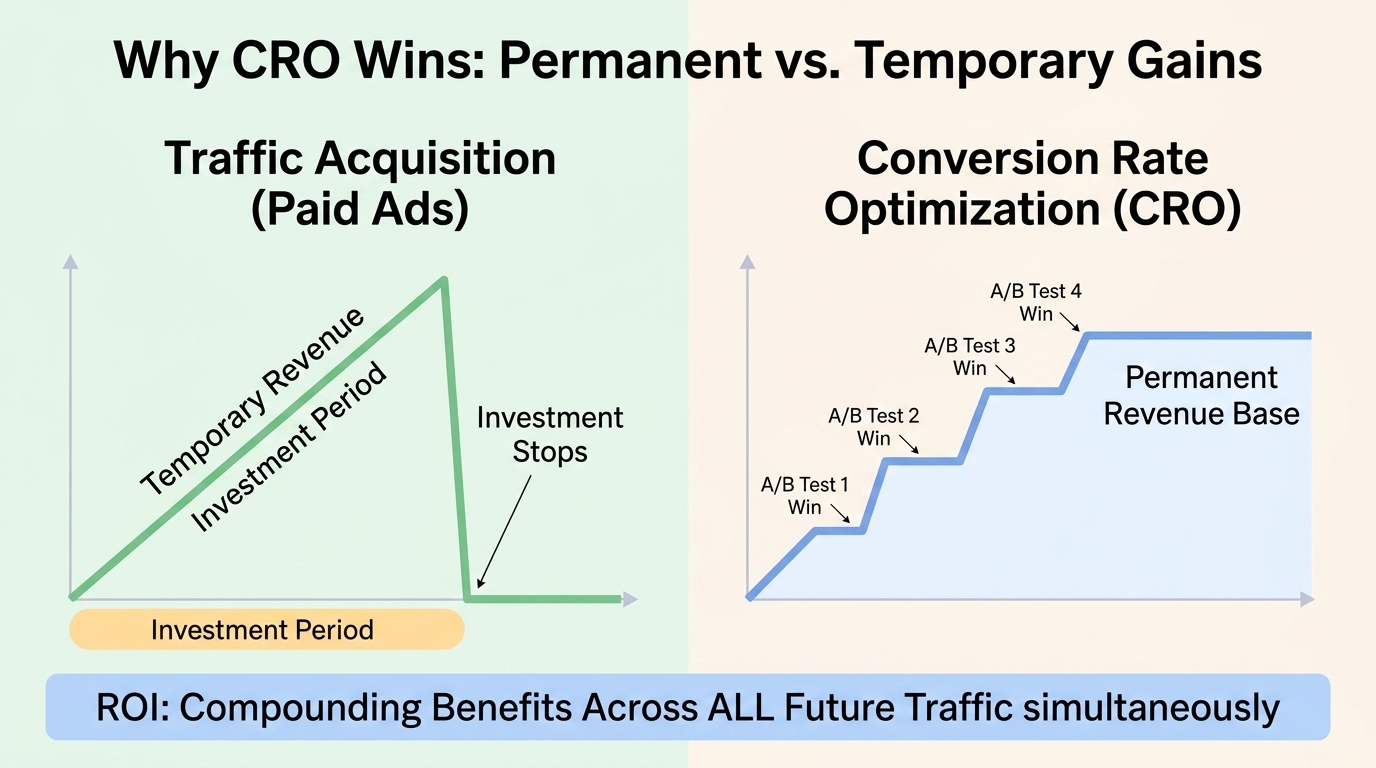
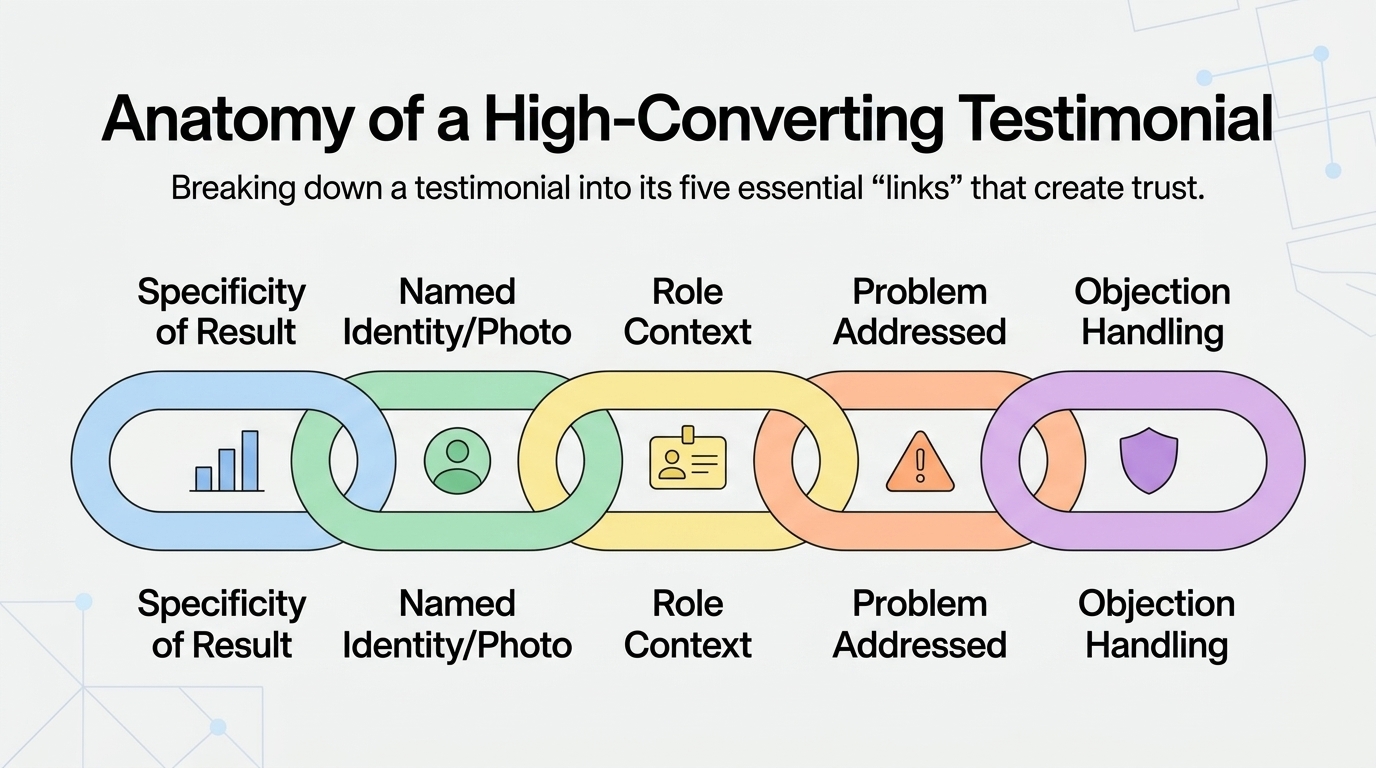
The compounding returns from consistent web presence investment are not linear: a website that improves slightly each month accumulates to dramatic improvements over a year, and those improvements multiply with each other. Faster load times improve both search rankings and conversion rates simultaneously. Better content attracts backlinks that improve rankings that attract more traffic. More testimonials build trust that improves conversion rates that improve revenue that funds more investment. The interconnected nature of website performance means that each improvement amplifies the value of every other improvement — making the decision to invest consistently, across multiple dimensions simultaneously, the highest-ROI approach to digital marketing available to most businesses.
At Scalify, every website we build reflects these principles — technically optimized, conversion-focused, SEO-ready, and designed to compound in value over time as content, backlinks, and organic authority accumulate on the strong foundation we deliver in 10 business days.






















.jpeg)

.jpeg)




78 SW 7th St, Miami, FL 33130