


The Psychology of Website Layout: What the Eye Does First
By Josh Ternyak

March 31, 2026
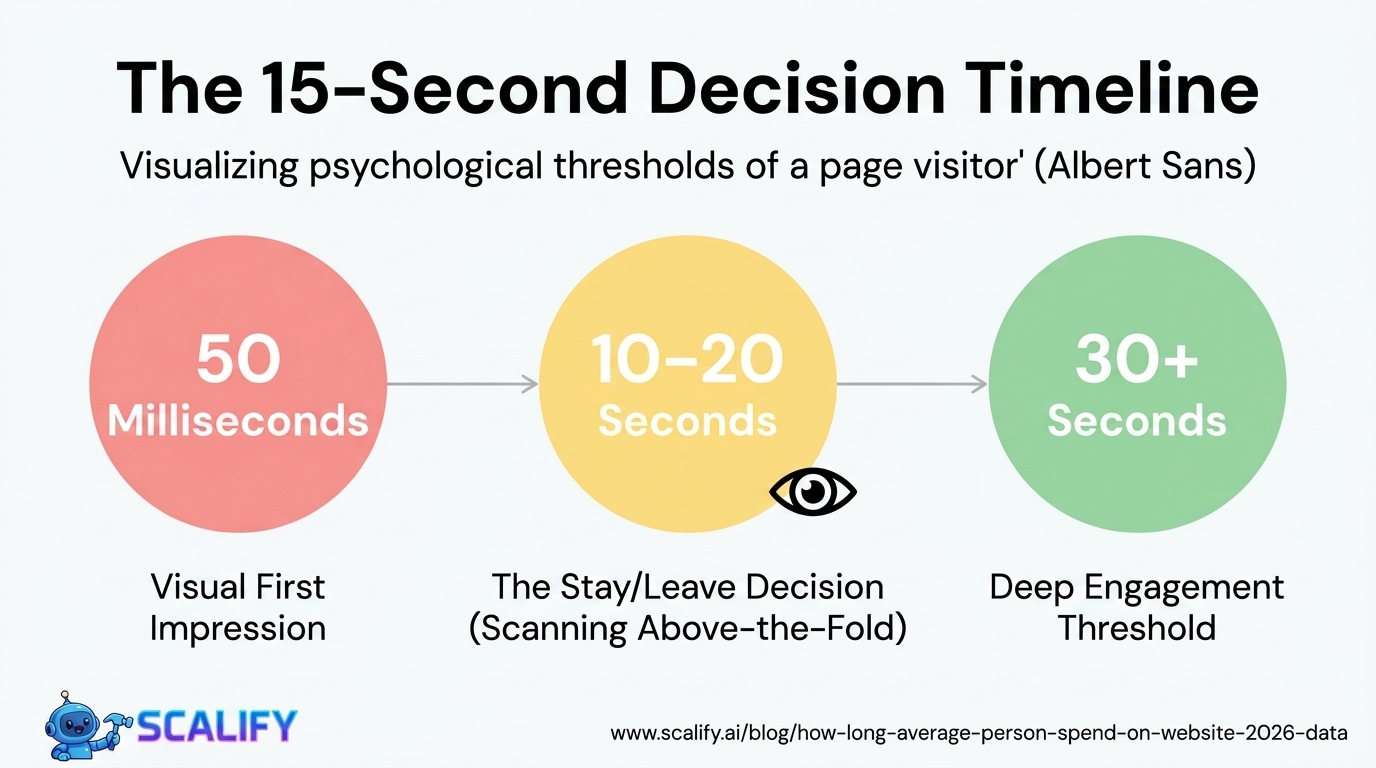
Visitors form first impressions in 50ms; 80% never scroll without compelling above-fold content. This comprehensive guide covers F-pattern and Z-pattern reading behaviors, the fold's real meaning, visual hierarchy tools, color psychology, whitespace as attention management, Gestalt principles in web design, mobile vs desktop layout psychology differences, and social proof placement for maximum conversion impact.
The Psychology of Website Layout: What the Eye Does First
Website layout decisions are not primarily aesthetic — they're psychological. The order in which elements are presented, their size and weight relative to each other, the use of whitespace and contrast, and the visual hierarchy created by all of these together directly determines what visitors notice first, what they skip, and whether they take the action the page is designed to produce. Understanding the psychology of visual attention is the difference between designing a website that converts and designing a website that looks good in screenshots but fails in practice.
Key Website Psychology and Eye-Tracking Statistics
- Visitors form a first impression of a website in 50 milliseconds — before reading a single word
- The "F-pattern" reading pattern is the most common for text-heavy pages — users read the first line fully, scan the second, then move down the left edge
- The "Z-pattern" is common for visual, less text-heavy pages — eye follows from top-left to top-right, diagonally down, then left to right again
- Web users spend 69% of their viewing time on the left half of a web page
- 80% of visitors never scroll below the fold if the above-fold content doesn't engage them
- Content in the top-left corner receives the most visual attention of any page position
- Faces in website imagery attract immediate eye gaze — people naturally follow where faces look
- Increasing text size by 50% more than standard reduces reading difficulty and increases engagement by up to 40%
- The golden ratio (1.618:1) appears naturally in compositions that humans perceive as balanced and visually appealing
- Color contrast between elements influences reading order — the highest contrast element on a page attracts first fixation
Reading Patterns: F-Pattern and Z-Pattern
Eye-tracking research from Nielsen Norman Group and others has identified consistent visual scanning patterns that most web users follow without conscious awareness. Understanding these patterns allows designers to position the most important information where eyes naturally land first.
The F-Pattern
For text-heavy pages (blog posts, documentation, news articles), users typically follow an F-shaped reading pattern: read the first line horizontally across the full width, read a second horizontal movement somewhat below (but shorter than the first), then scan vertically down the left side. The F-pattern means that: the first line of any section receives the most attention, the first few words of each line receive more attention than the end, and left-aligned content receives more attention than right-aligned content on text-heavy pages. Content placed in the right column on text-heavy pages is often completely missed by visitors using F-pattern reading.
The Z-Pattern
For visually-oriented pages with less dense text (landing pages, homepages, product pages), users often follow a Z-shaped pattern: horizontal movement across the top, diagonal movement to the lower-left, then horizontal movement across the bottom. The Z-pattern is why landing page design follows the structure: brand/value proposition in the top-left → supporting visual in the top-right → proof/benefits in the middle → CTA in the bottom-right. Each point of the Z receives attention; the diagonal connections are visual transitions.
The Fold: What It Actually Means
"Above the fold" — content visible without scrolling — receives disproportionate attention, but the fold is not a hard conversion barrier. The 80% of visitors who don't scroll below the fold didn't scroll because the above-fold content didn't give them a compelling reason to — not because they're incapable of scrolling or refuse to. Engaging above-fold content (a clear value proposition, compelling imagery, a CTA that resonates) draws visitors to scroll. Weak above-fold content produces the 80% bounce statistic. The fold is not a design constraint to work within; it's a quality threshold to clear.
The practical implication: the single most important design decision on any web page is what appears in the first viewport — because it determines whether the rest of the page is ever seen. Every element above the fold competes for attention that is genuinely scarce: a complex above-fold layout with logo, navigation, hero image, headline, subheadline, and two CTAs dilutes attention across too many elements. A clean above-fold layout with a clear hierarchy — brand, compelling headline, supporting visual, single CTA — focuses attention on what matters most.
Visual Hierarchy: Guiding the Eye Without Narrating It
Visual hierarchy is the design principle that creates a clear order of importance among page elements, guiding the viewer's eye through the page in the sequence the designer intends. The tools of visual hierarchy:
| Tool | How It Works | Example |
|---|---|---|
| Size | Larger elements attract more attention first | H1 headline larger than body text; hero image larger than sidebar |
| Color contrast | High-contrast elements attract first fixation | Bright orange CTA button on white background; black text on white |
| Whitespace | Elements with more surrounding space appear more important | Isolating a CTA with padding makes it more prominent than crowded one |
| Weight/boldness | Bold text attracts eyes before regular text | Bold key terms in paragraphs; bold CTA text |
| Position | Top-left receives most attention; center above fold receives attention | Most important message in primary viewport position |
| Direction (arrows, faces) | Directional cues guide where eyes look next | Photo of person looking toward CTA directs attention to CTA |
Color Psychology in Web Design
| Color | Common Psychological Associations | Common Use Cases | Conversion Effect |
|---|---|---|---|
| Blue | Trust, reliability, professionalism, calm | Finance, healthcare, technology, SaaS | High trust-building; widely used for CTAs in high-trust contexts |
| Green | Growth, health, success, nature, "go" | Finance ("money"), health, environmental, success/completion | Works well for positive action CTAs |
| Orange | Energy, enthusiasm, action, urgency | CTAs, deals, consumer brands, food | High-converting CTA color — action-oriented without aggression |
| Red | Urgency, passion, danger, stop/error | Sale/discount badges, error states, urgency CTAs | Strong urgency effect; can create anxiety in excess |
| Black | Luxury, sophistication, exclusivity | Premium products, fashion, high-end brands | Signals premium — appropriate for luxury positioning |
| White | Cleanliness, simplicity, space, healthcare | Apple, healthcare, minimalist brands | Primarily enables other elements through contrast and whitespace |
The Role of Whitespace
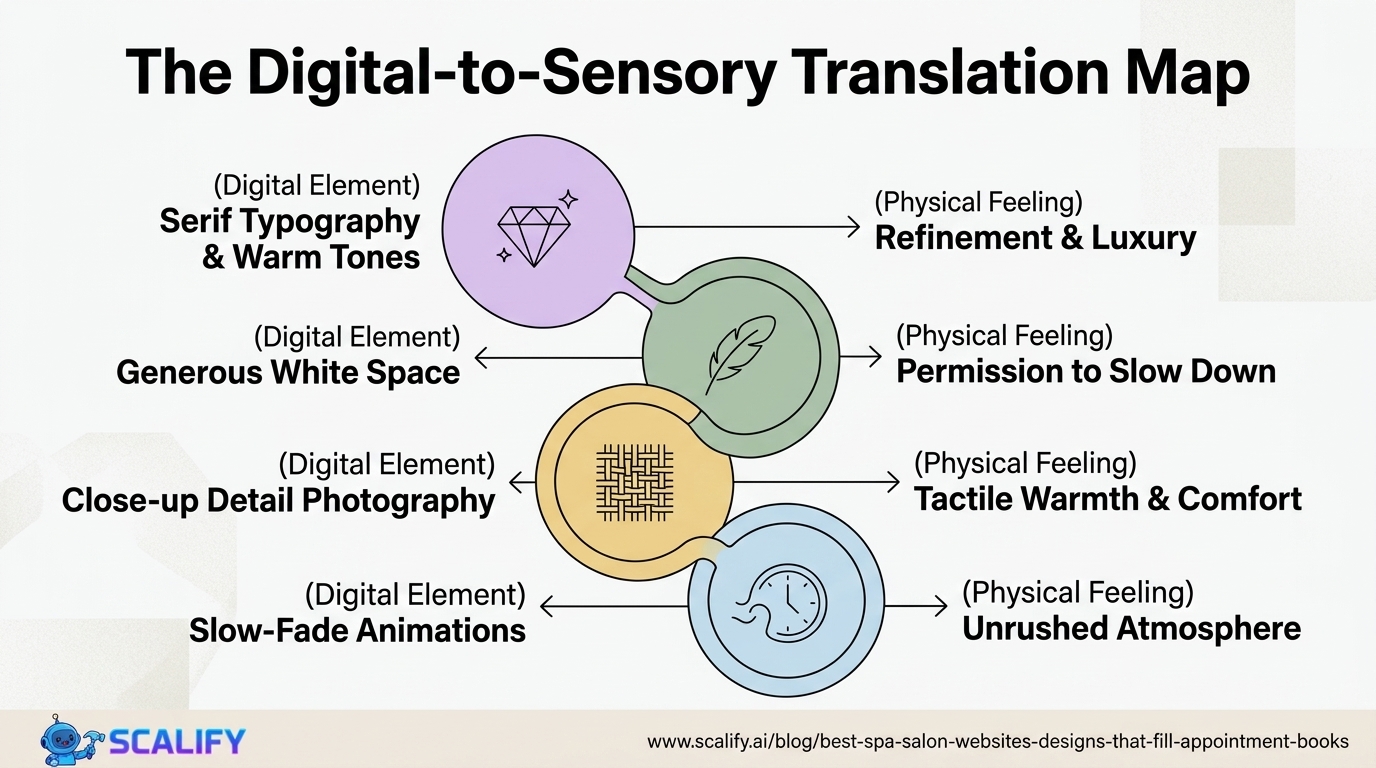
Whitespace (also called negative space) — the empty space between and around elements — is not wasted space. It's an active design element that: separates elements to create visual grouping (things close together are perceived as related), gives important elements room to breathe and appear more prominent, improves readability by reducing cognitive load of dense layouts, and signals quality (premium brands like Apple and luxury fashion use generous whitespace to signal that they don't need to compete for attention).
The most common whitespace mistake in web design is compressing elements to fit more on the screen — creating a dense, cluttered layout that paradoxically gets less attention for each element because everything is competing simultaneously. A homepage with 60% content density and 40% whitespace converts better than one with 90% content density and 10% whitespace — even though the latter appears to "use the space more efficiently." Whitespace is not inefficiency; it's attention management.
The Psychology of Scrolling and Interaction
Website visitors are not passive readers — they're active participants who bring specific expectations about how pages should behave. Violating these interaction expectations creates friction that reduces engagement and conversion:
Scroll behavior expectation: Visitors expect pages to scroll vertically by default. Horizontal scrolling is strongly disliked and typically indicates a mobile layout problem. Sticky headers that don't disappear on scroll can obscure content and frustrate users. Long scroll distances are acceptable when they're filled with progressively revealed relevant content — the problem is scrolling without new value appearing.
Click expectation: Underlined blue text is universally understood as a link. Buttons are understood as interactive if they look three-dimensional or have clear visual affordance. Elements that look interactive but aren't (fake buttons, styled text that looks like a link) create frustration when they don't respond. Elements that are interactive but don't look it (invisible navigation, unmarked interactive zones) get missed entirely.
Loading expectation: Instant response to interactions is expected. Every 100ms of additional response latency reduces engagement. Progress indicators (loading spinners, progress bars) manage expectation during unavoidable delays. The expectation has only become more demanding over time — visitor tolerance for slow sites has decreased as device and connection speeds have increased.
The Bottom Line
Website layout decisions are psychological decisions that determine what visitors notice, what they skip, and whether they take action. The F-pattern and Z-pattern reading behaviors mean content placement determines what gets read. Visual hierarchy using size, contrast, whitespace, and position guides visitor attention in a designed sequence. Color psychology reinforces brand positioning and action triggers. Whitespace is active attention management. And interaction expectations, when violated, create friction that loses conversions without any visitor realizing why they left. Understanding these psychological principles and applying them deliberately to layout decisions produces websites that work in the real world of human attention, not just in design screenshots.
At Scalify, every website we design applies visual hierarchy, reading pattern optimization, and psychological design principles — ensuring layouts that direct attention intentionally and convert at above-average rates.
Top 5 Sources
- Nielsen Norman Group — F-Pattern Eye Tracking Research
- Nielsen Norman Group — Scrolling and Attention Research
- CXL Institute — Visual Hierarchy in Web Design
- Smashing Magazine — Web Design Psychology
- Interaction Design Foundation — Gestalt Principles in UX
The Gestalt Principles in Web Design
Gestalt psychology — developed in the early 20th century but directly applicable to web design — describes how the human brain organizes visual information into meaningful patterns. The Gestalt principles that most directly affect web design decisions:
Proximity: Elements close together are perceived as belonging together. Navigation links are placed together because proximity signals they're related. Product images are placed adjacent to their descriptions. This principle means that white space between groups of elements communicates "these are separate" just as effectively as borders or lines — often more elegantly.
Similarity: Elements that look alike are perceived as belonging to the same group. All primary CTAs on a page should look the same (same color, shape, and size) — their visual similarity communicates that clicking any of them initiates the same type of action. If some CTAs look different, visitors don't know whether they trigger the same or different actions.
Continuity: The eye prefers to follow smooth, continuous paths rather than abrupt changes in direction. A Z-pattern or F-pattern layout works with the brain's preference for continuous motion. Page layouts that create visual flows — leading the eye from the headline, to the value proposition, to the social proof, to the CTA — use continuity to guide conversion.
Figure-Ground: The brain distinguishes between the primary focus (figure) and the background (ground). High-contrast elements become the figure; low-contrast elements recede to the ground. This principle explains why CTA buttons need to be visually distinct from the page background — if they recede into the page, they become part of the ground rather than the figure, and visitors don't see them as actionable.
Closure: The brain fills in missing information to create complete shapes. Partially visible elements suggest more content continues off-screen — a common technique for encouraging scroll on mobile pages, where showing the top of an image or card below the visible area signals "there's more if you scroll."
Designing for Different Screen Sizes: Layout Psychology Differences
The psychological principles above apply across screen sizes, but their implementation differs significantly between desktop and mobile layouts:
On desktop, users have a wide viewport where information can be arranged horizontally. Left-aligned primary content with right-side supporting elements (or two-column layouts) can work with F-pattern reading behavior. Multiple elements can appear in the above-fold viewport without overwhelming. Navigation can be comprehensive and detailed.
On mobile, the vertical scroll is the primary navigation mechanism and the viewport is narrow. The F-pattern is compressed to a single-column layout where the reading eye moves straight down rather than horizontally. Above-fold real estate is significantly limited — typically showing only the headline and CTA before requiring a scroll. Tap targets must be large enough (minimum 44px) for accurate finger tapping. Text must be larger than desktop minimums because it's read at arm's length on a handheld device.
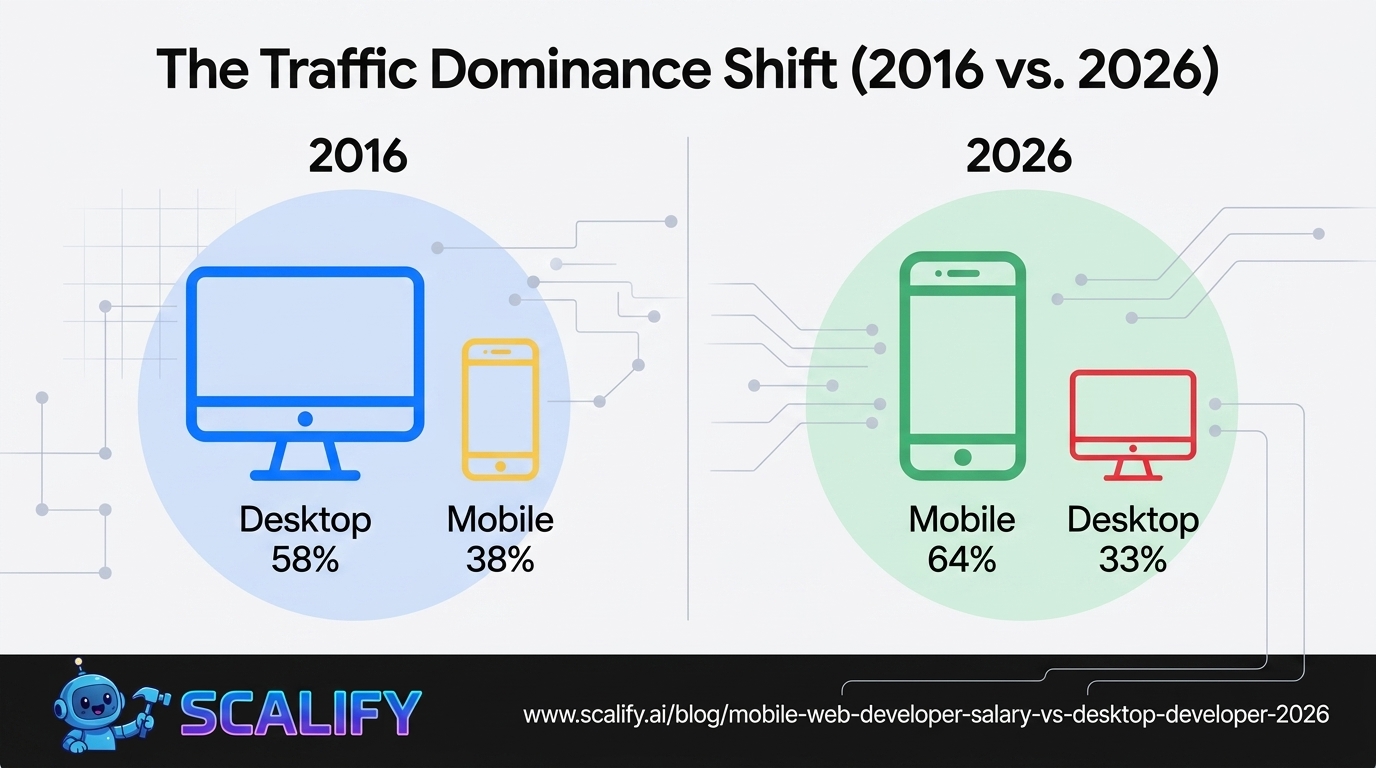
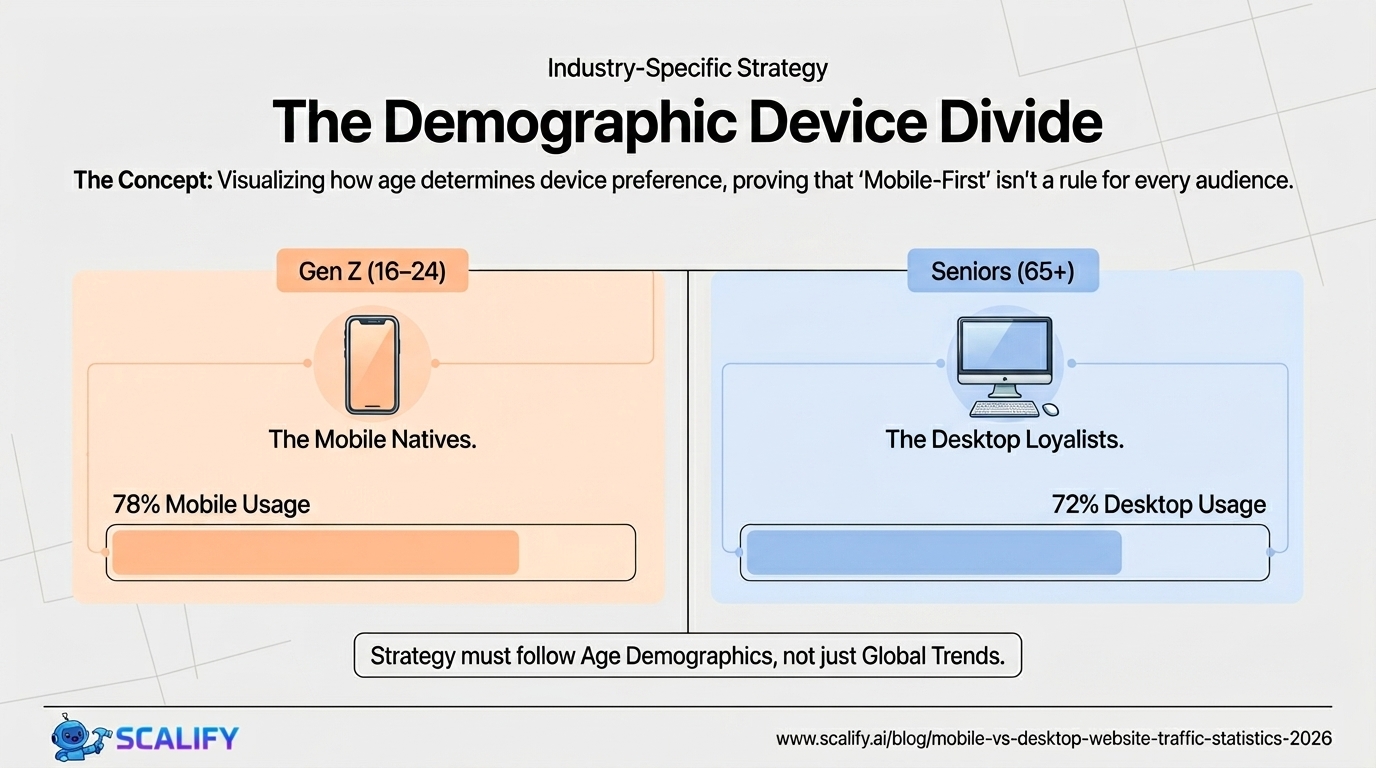
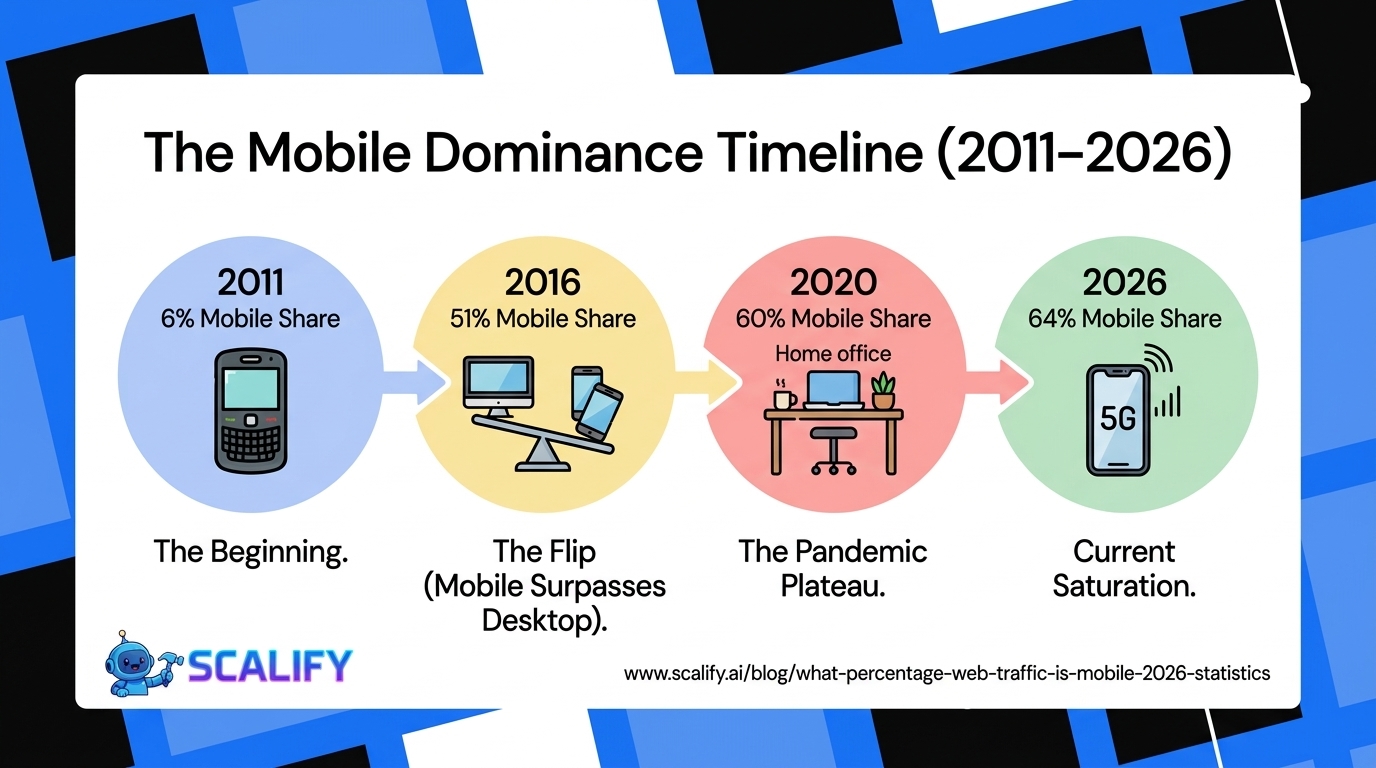
The most common mobile layout mistake is designing mobile views as compressed versions of desktop layouts — removing content from the sidebar and collapsing it into a single column without rethinking the hierarchy for a single-column context. Mobile designs should be conceived separately from desktop designs, with the single-column reading experience as the primary design context rather than an afterthought. Given that 55-65% of most website traffic is now mobile, the mobile layout is increasingly the primary design context and the desktop layout the secondary one.
Social Proof Placement: Where Psychology Meets Conversion
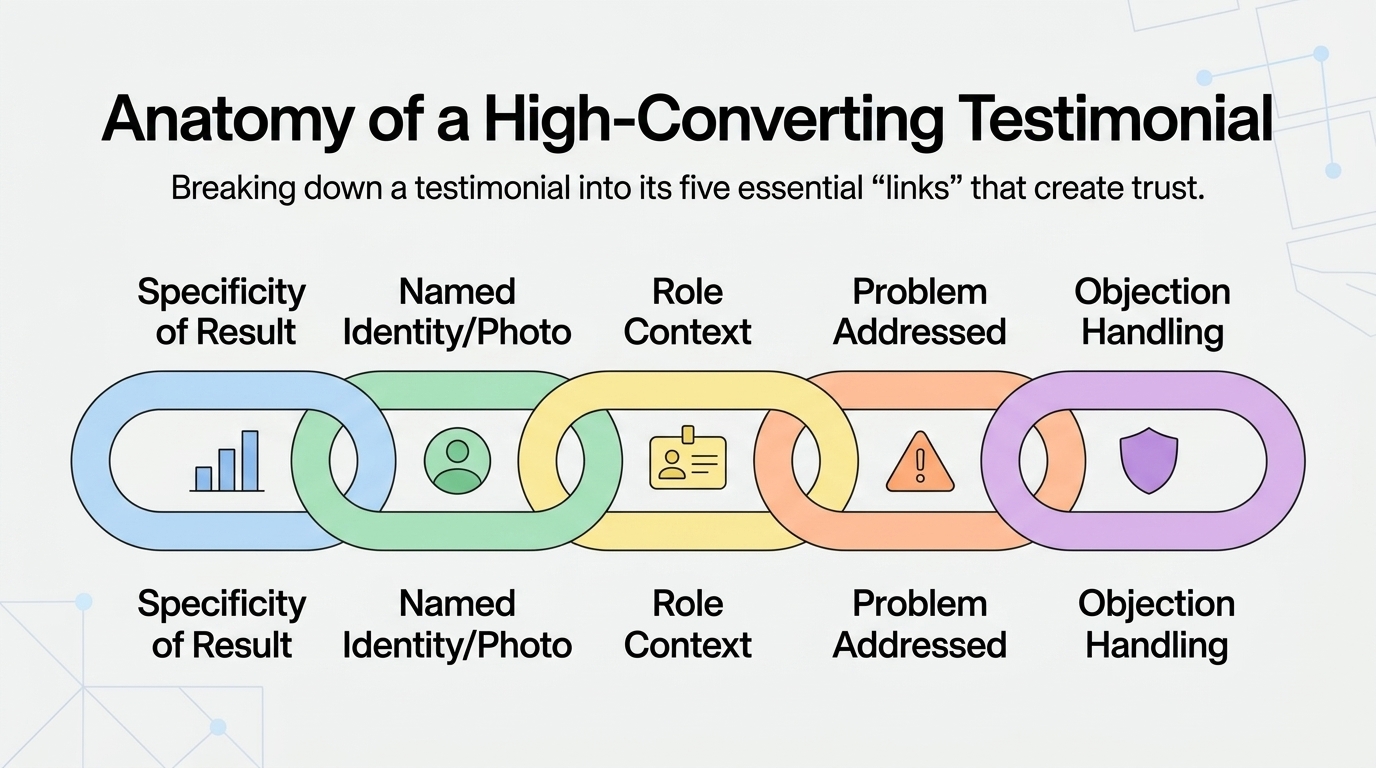
Social proof — testimonials, review counts, client logos, case statistics — works through a psychological mechanism called social validation: when people are uncertain about a decision, they look to others' choices and experiences as evidence of what the right choice is. The psychological power of social proof is highest at the moment of maximum uncertainty — which for most websites is just before the conversion action. This is why testimonials placed immediately before a CTA consistently outperform those placed in a separate section or below the fold: the timing aligns the social proof with the moment of decision rather than providing it too early (before the visitor has a decision to make) or too late (after they've already decided to leave).
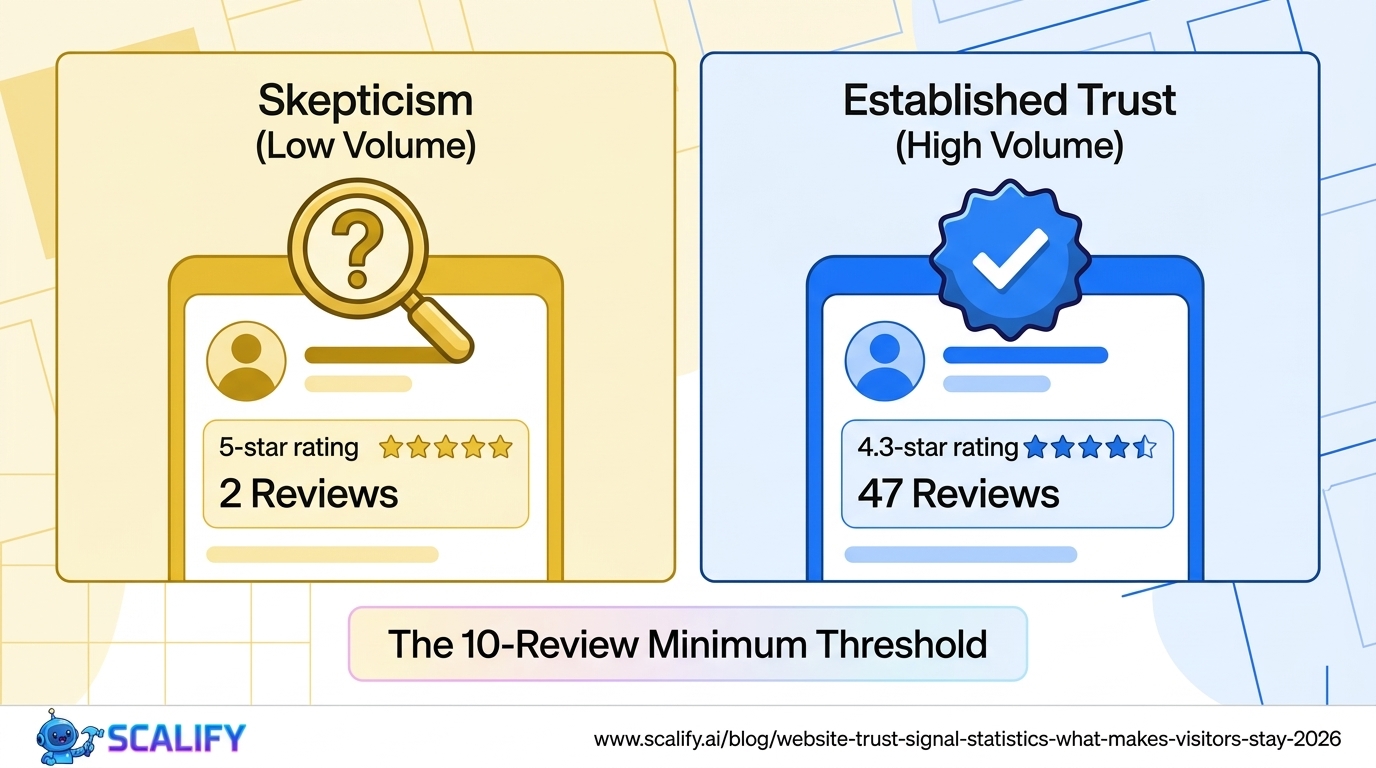
The visual presentation of social proof amplifies or diminishes its psychological impact. Testimonials with real names, photos, and specific outcomes trigger more genuine social validation than anonymous quotes. Star ratings with review counts provide quantitative social proof that anonymous testimonials don't. Company logos from recognizable brands provide status-by-association proof that personal testimonials complement but don't replace. Layering these different forms of social proof — quantitative review count, qualitative testimonials, institutional logos — creates a multi-dimensional social proof architecture that addresses different aspects of a visitor's uncertainty simultaneously.







.jpeg)
.jpeg)


78 SW 7th St, Miami, FL 33130