


Website Developer Salary Guide: What Web Developers Earn in 2026
By Josh Ternyak

March 31, 2026
Web developers earn $52k to $480k+ depending on specialization, experience, location, and employer. This comprehensive salary guide covers salary by specialization (from WordPress to AI integration), by location (SF to Miami), by employer type (FAANG to agency), the fastest paths to higher pay, total compensation breakdown, remote work premium, tactical negotiation guide, 2026-2030 outlook, and international salary context.
Website Developer Salary Guide: What Web Developers Earn in 2026
Web developer salaries span one of the widest ranges of any professional field — from $42,000 for entry-level template builders in low-demand markets to $480,000+ in total compensation for staff engineers at top technology companies. The salary you earn as a web developer is determined by a specific intersection of factors: your specialization, your experience level, your geographic market, your employer type, and how effectively you've negotiated. This guide covers what web developers actually earn across every dimension of that intersection, with real data from 2026's labor market.
Overall Web Developer Salary Statistics
- The median web developer salary in the United States is $108,000 across all experience levels and specializations
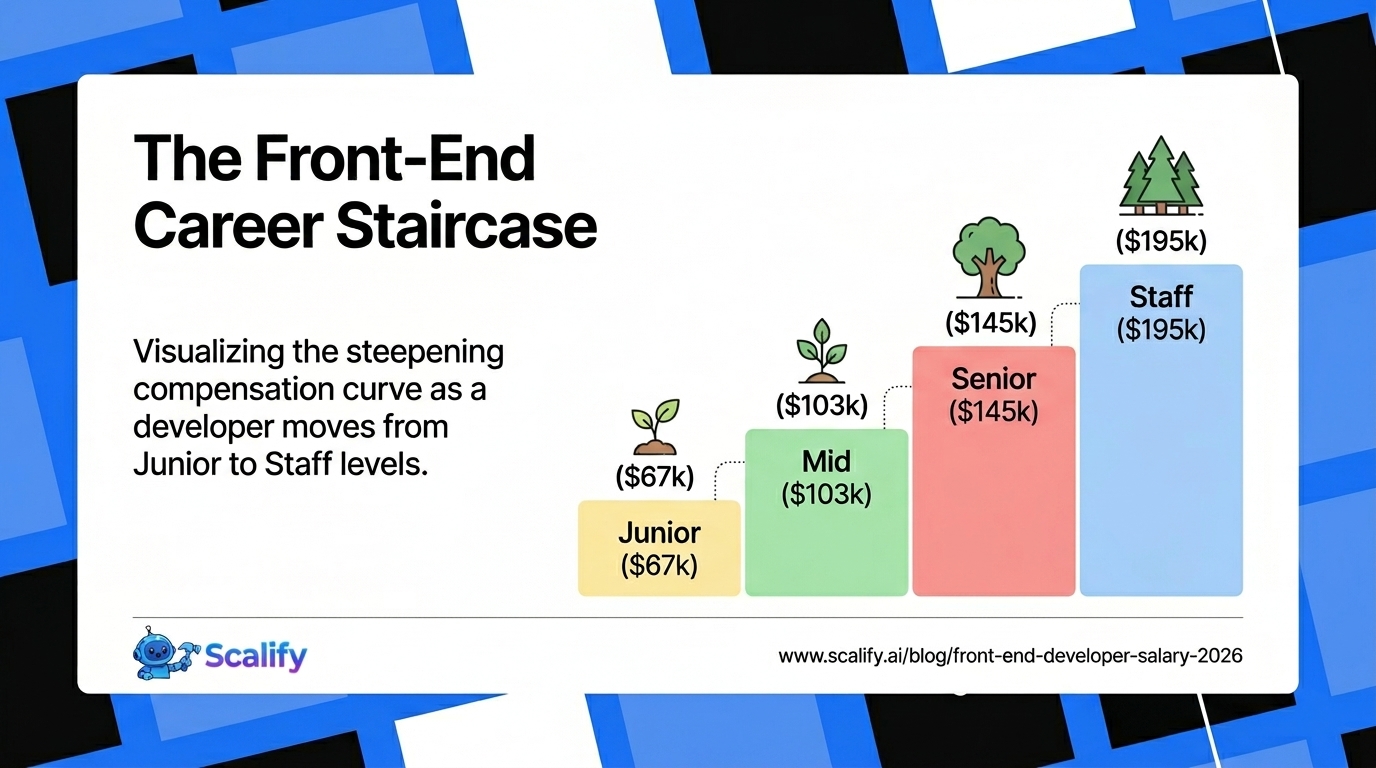
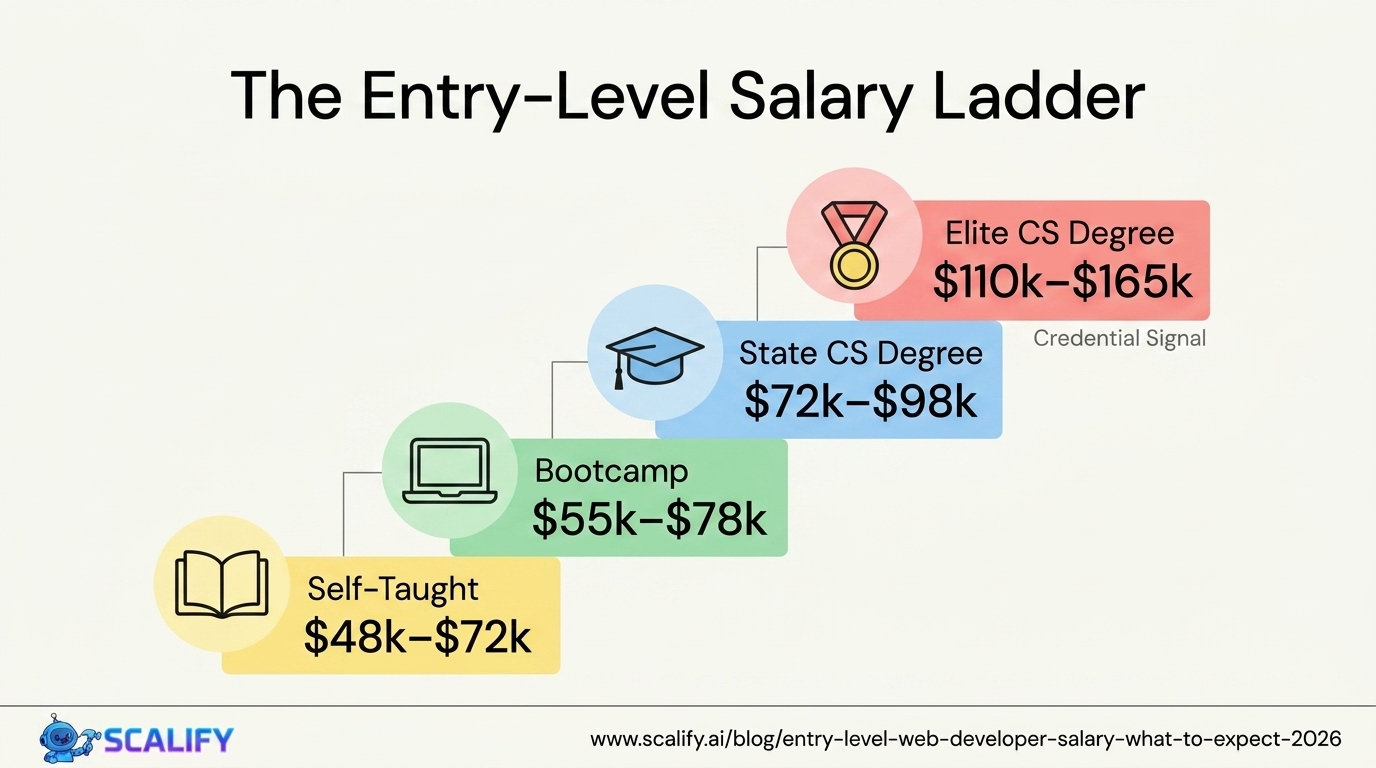
- Entry-level web developers earn $52,000–$82,000
- Mid-level web developers earn $82,000–$142,000
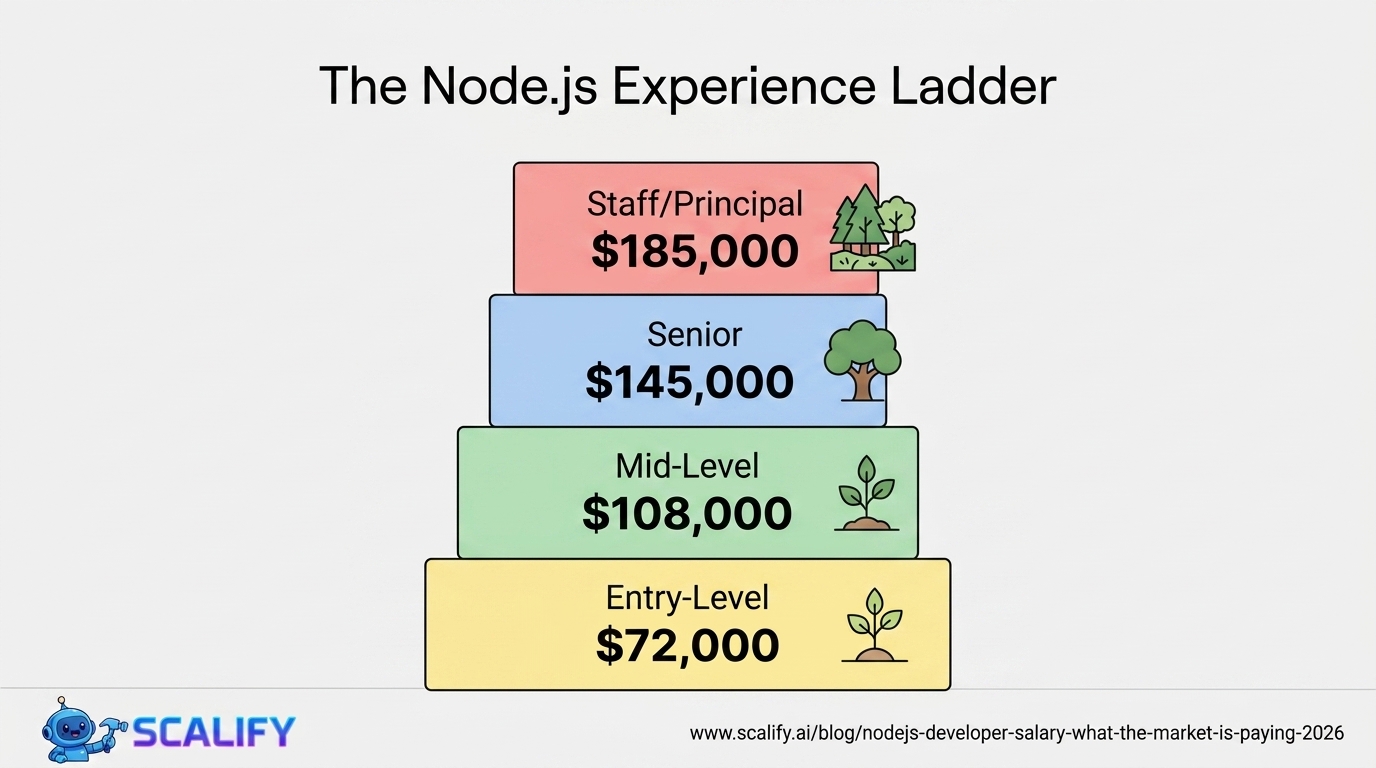
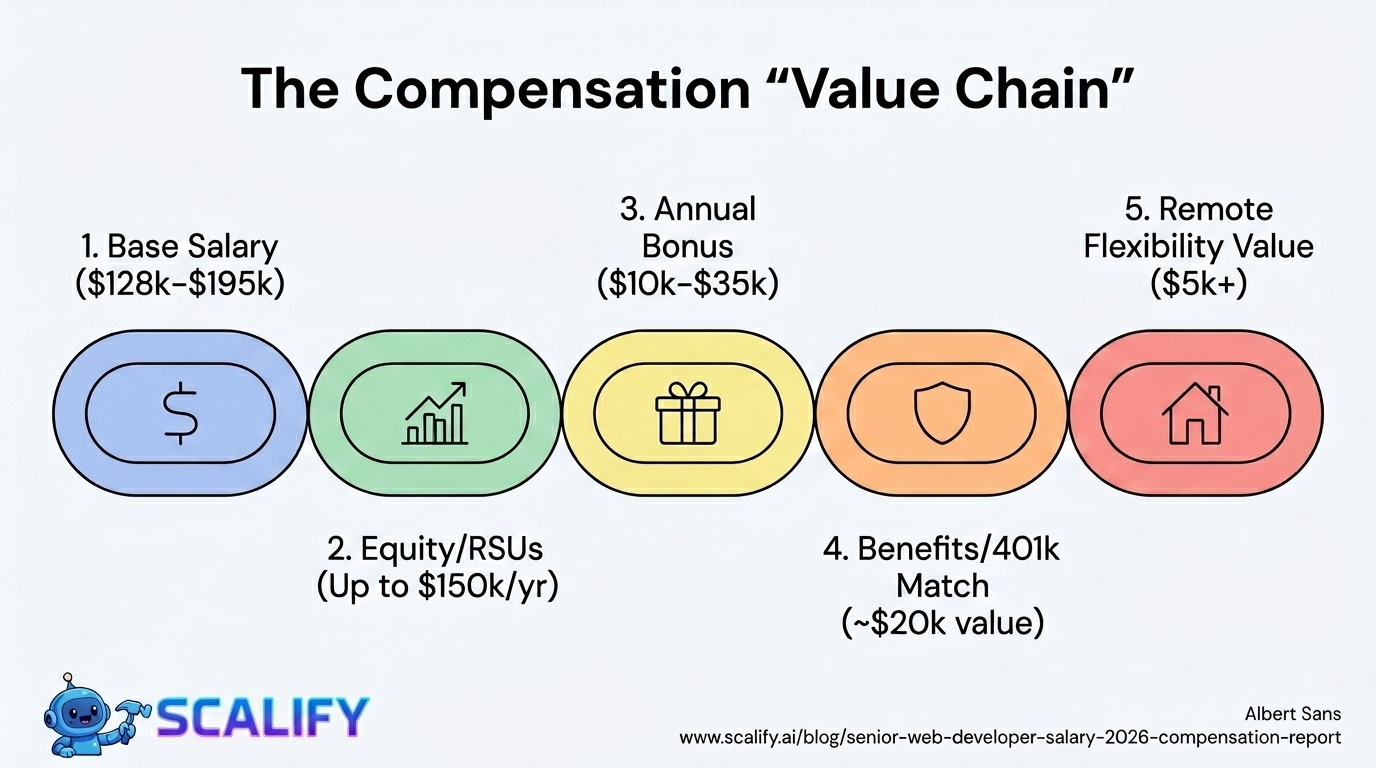
- Senior web developers earn $128,000–$195,000
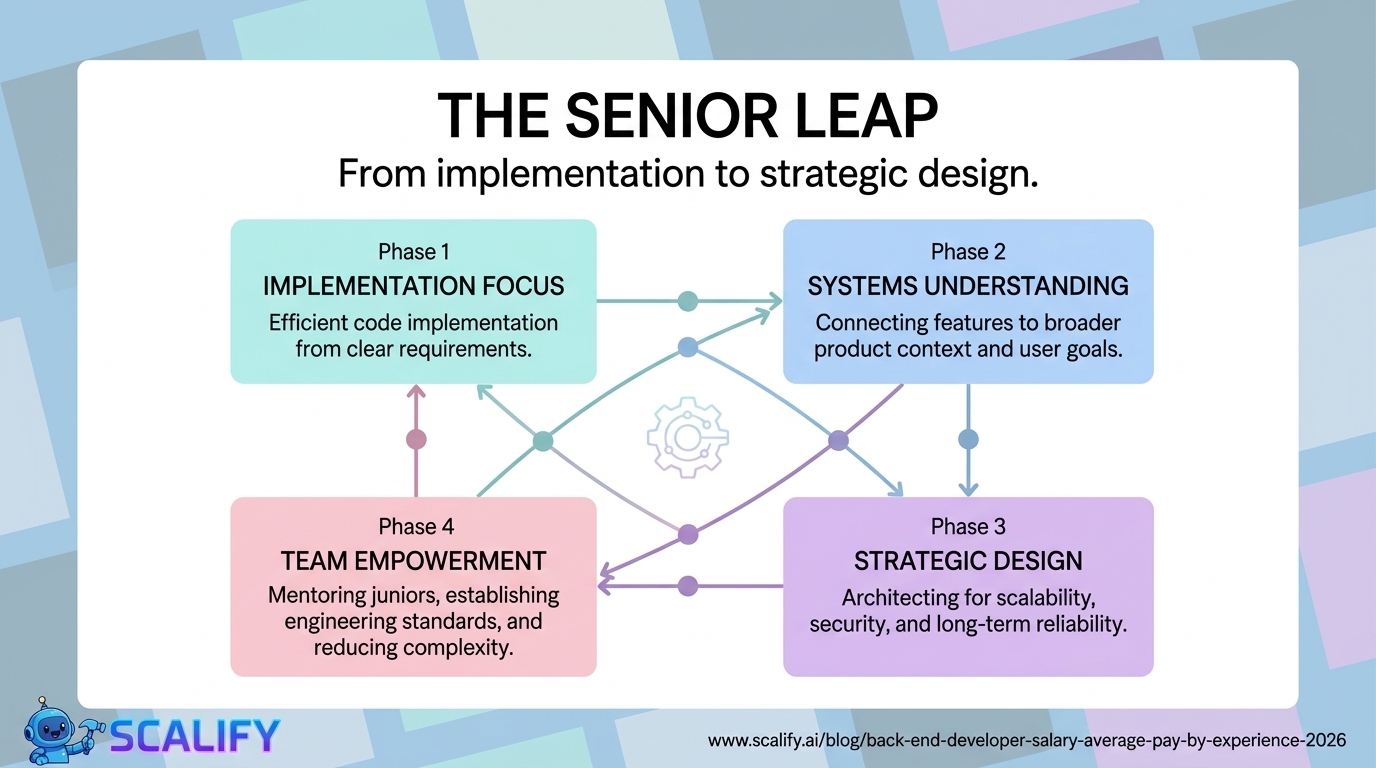
- Staff / Principal engineers earn $178,000–$265,000
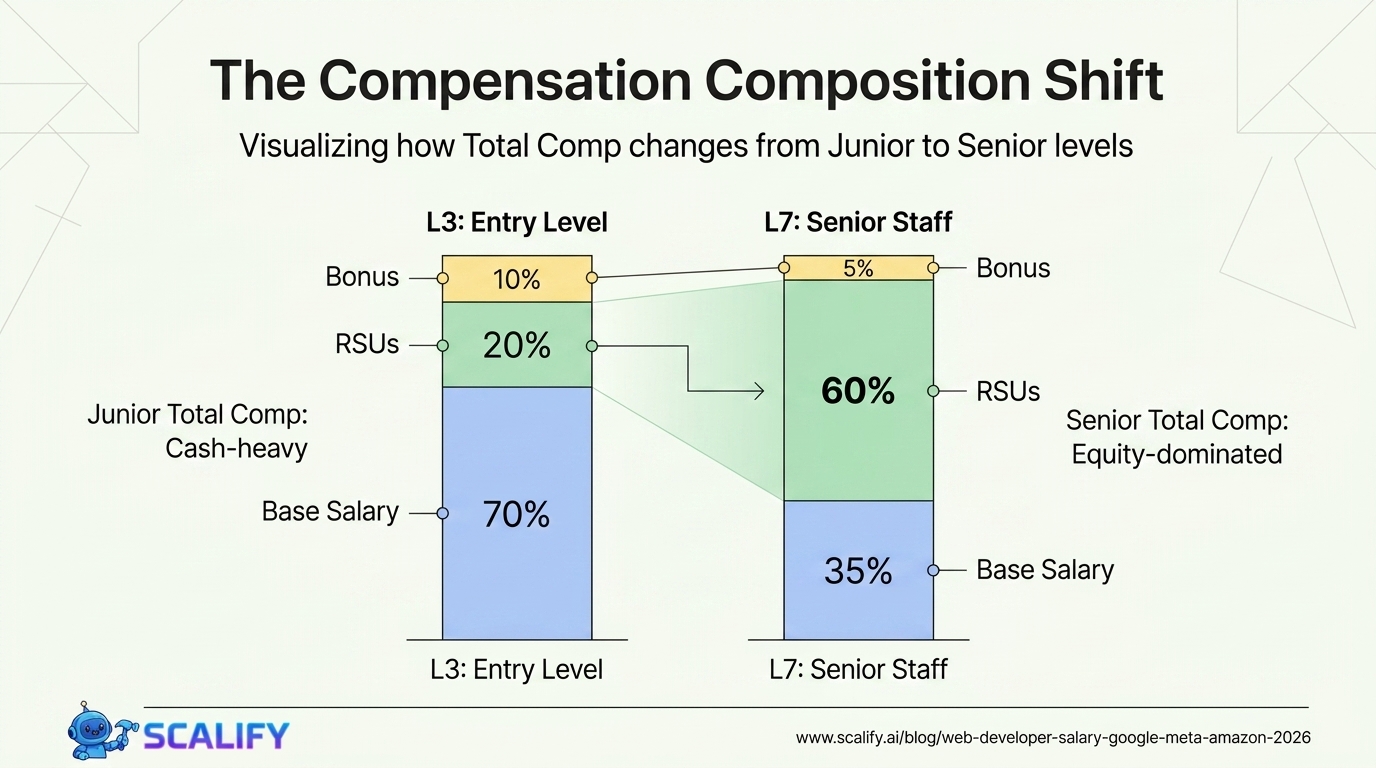
- FAANG total compensation ranges from $185,000 to $600,000+ depending on level
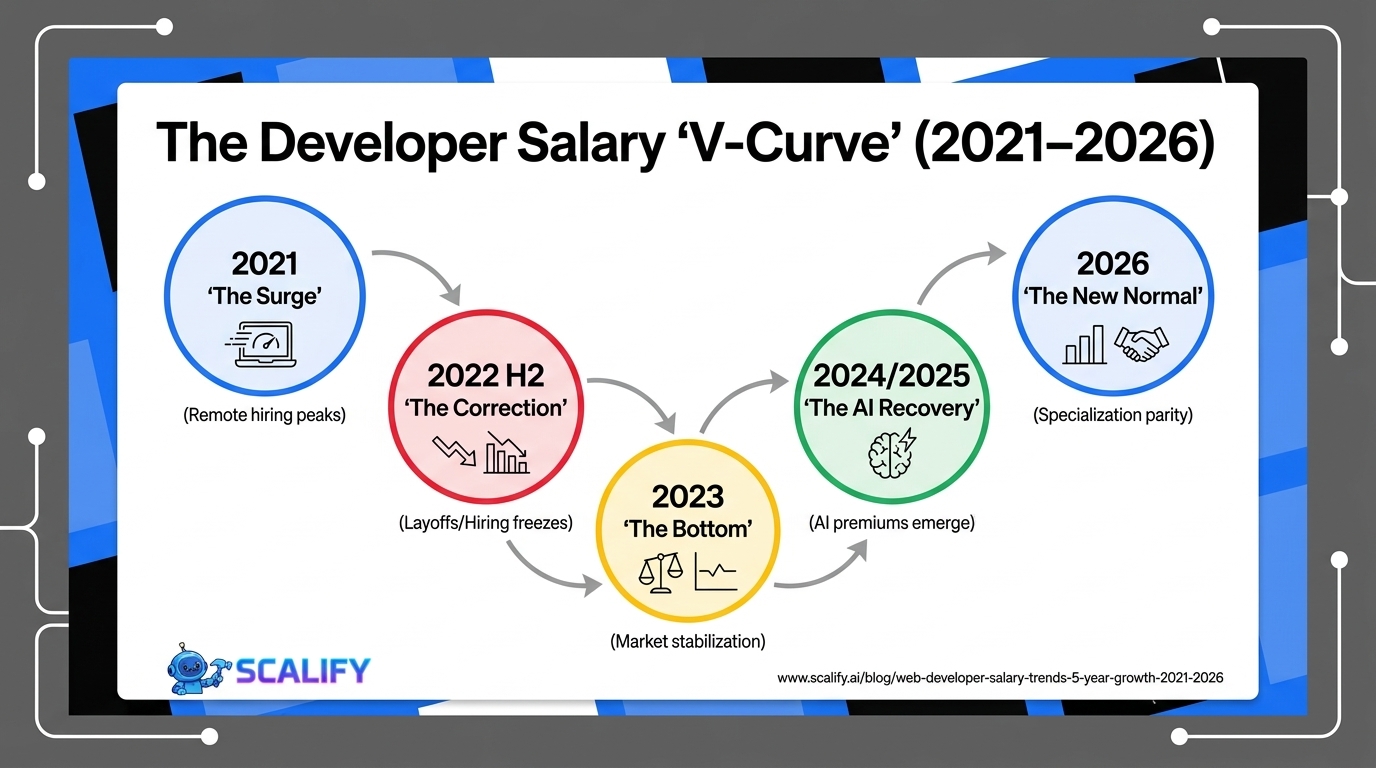
- Web developer salaries have grown 22% since 2020 — outpacing inflation significantly
- The demand for web developers is projected to grow 16% through 2032 — faster than average (BLS)
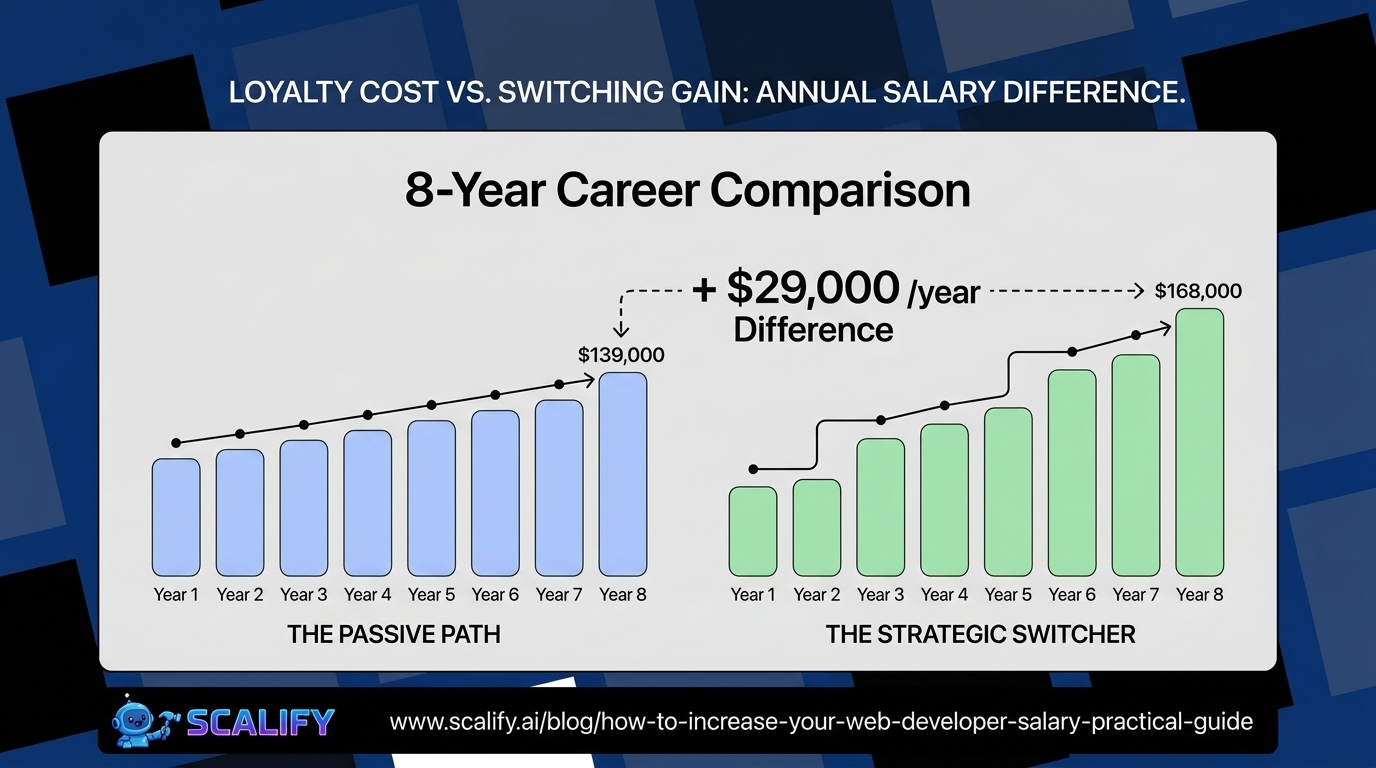
- Developers who switch jobs earn on average 15–25% more than those who stay and wait for internal raises
- Freelance web developers earn $35–$250/hour depending on specialization
Salary by Specialization: The Complete Picture
| Specialization | Entry-Level | Mid-Level | Senior | Market Trend |
|---|---|---|---|---|
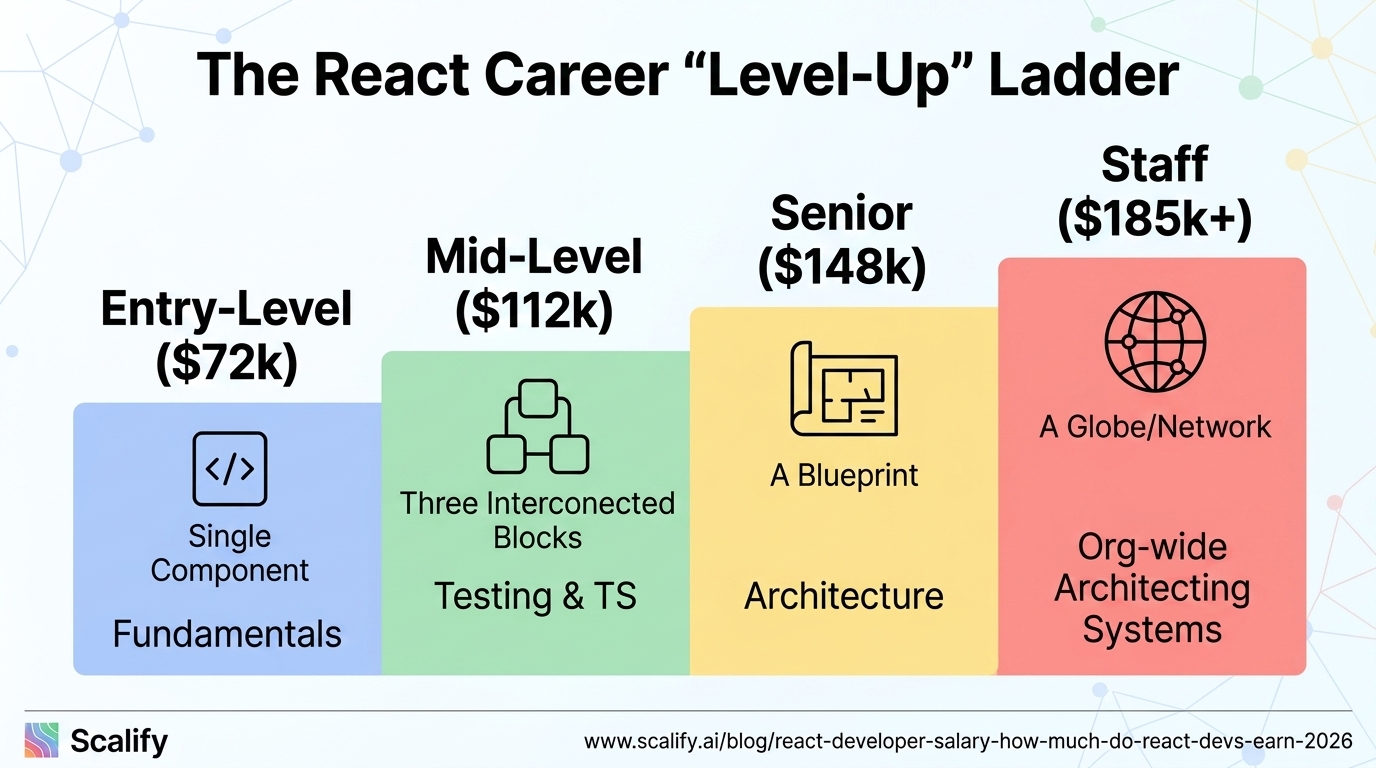
| Front-End (React/TypeScript) | $65,000 – $88,000 | $108,000 – $142,000 | $142,000 – $175,000 | Growing |
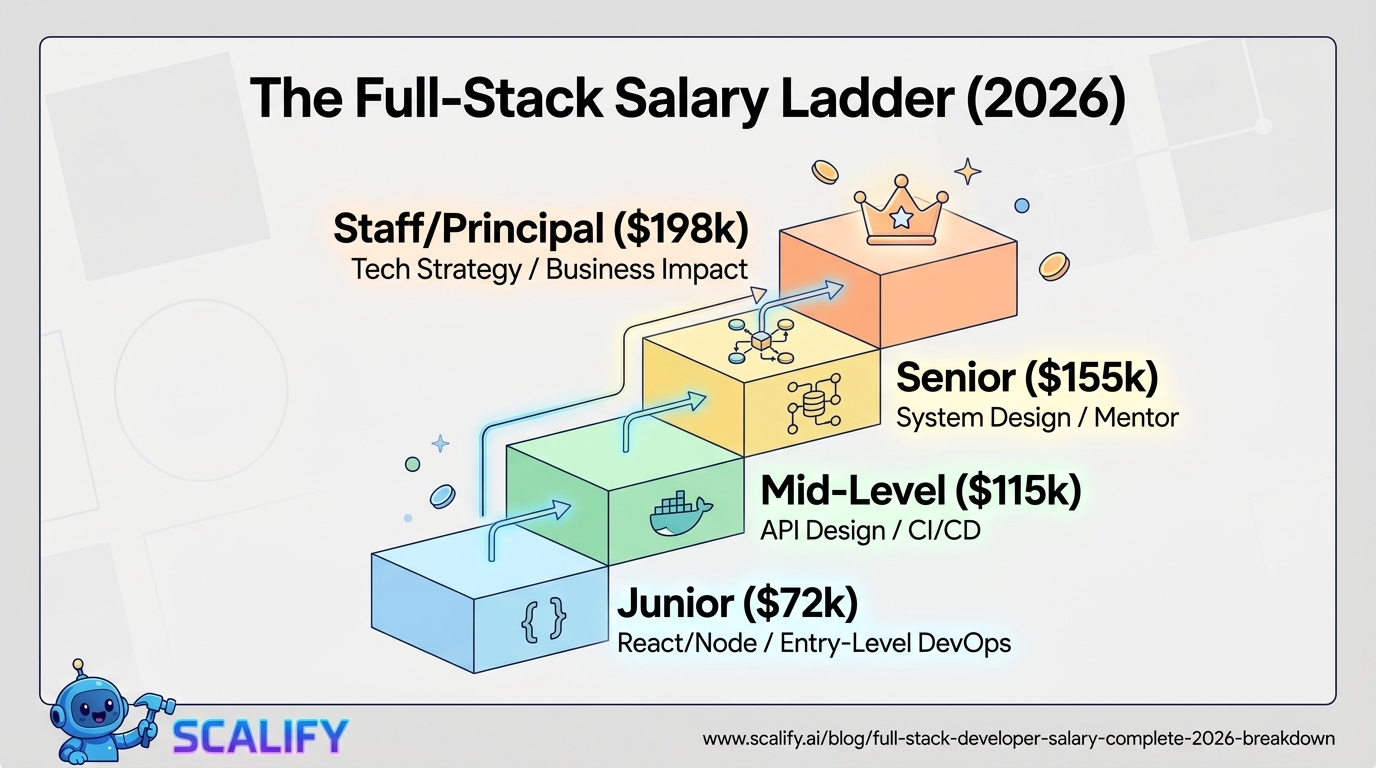
| Full-Stack (React + Node) | $68,000 – $90,000 | $112,000 – $145,000 | $148,000 – $178,000 | Growing |
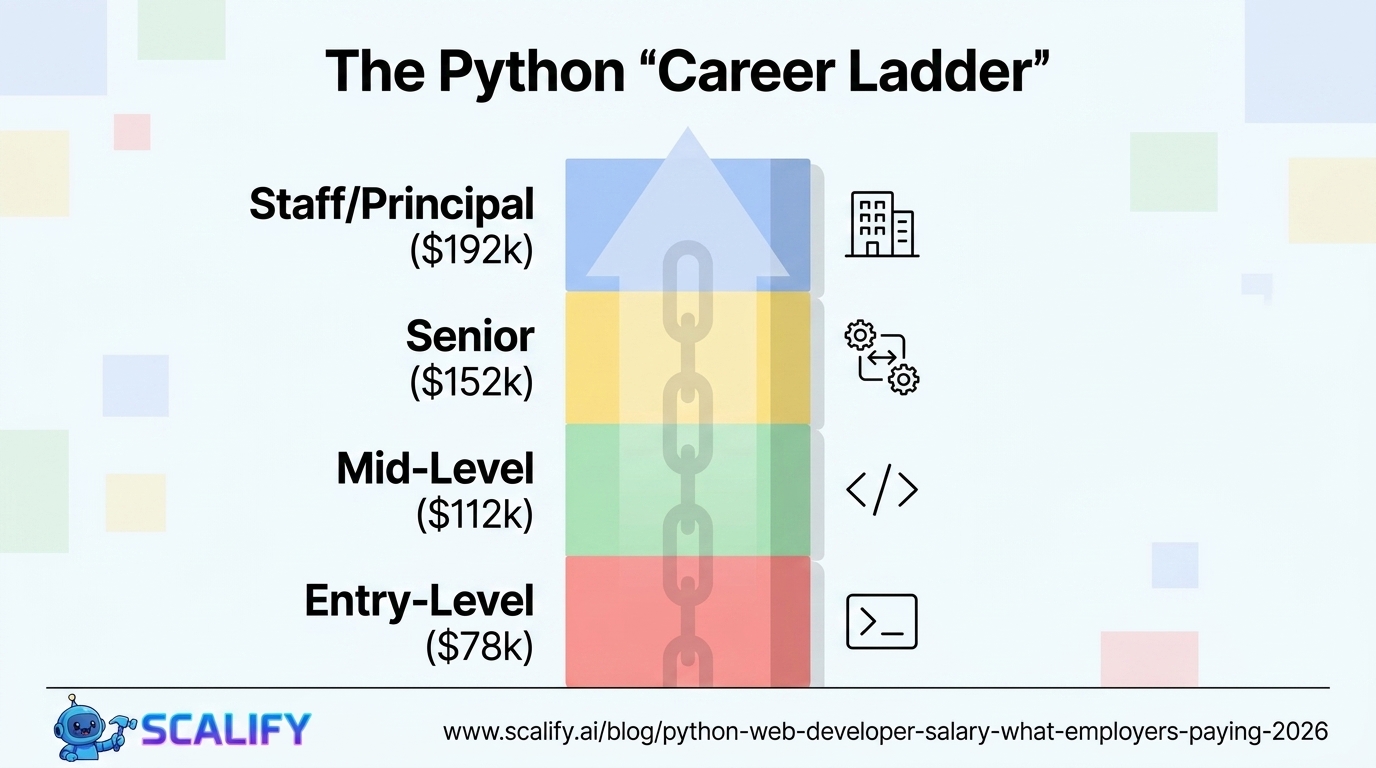
| Back-End (Python/FastAPI) | $65,000 – $88,000 | $112,000 – $145,000 | $148,000 – $178,000 | Strongly Growing (AI) |
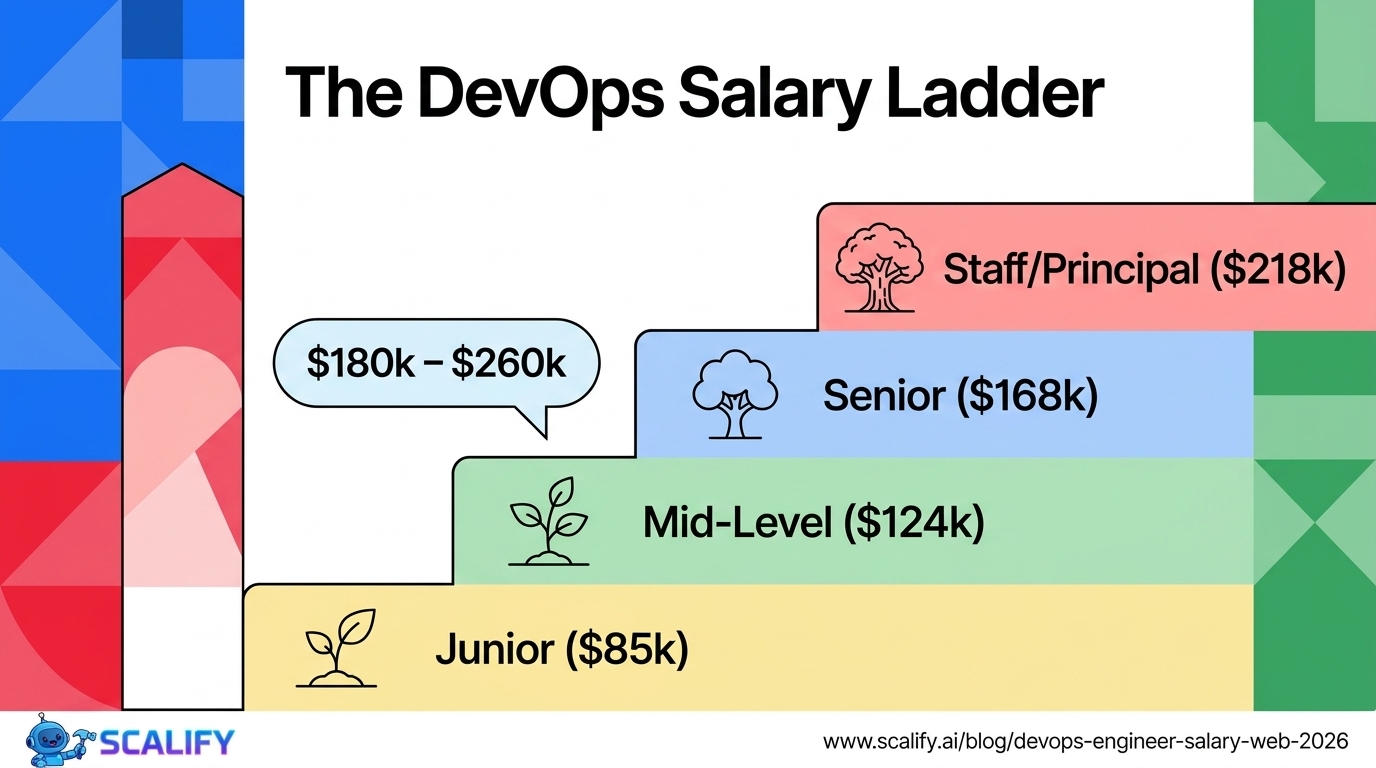
| DevOps/Platform Engineer | $72,000 – $95,000 | $122,000 – $158,000 | $158,000 – $200,000 | Very High Demand |
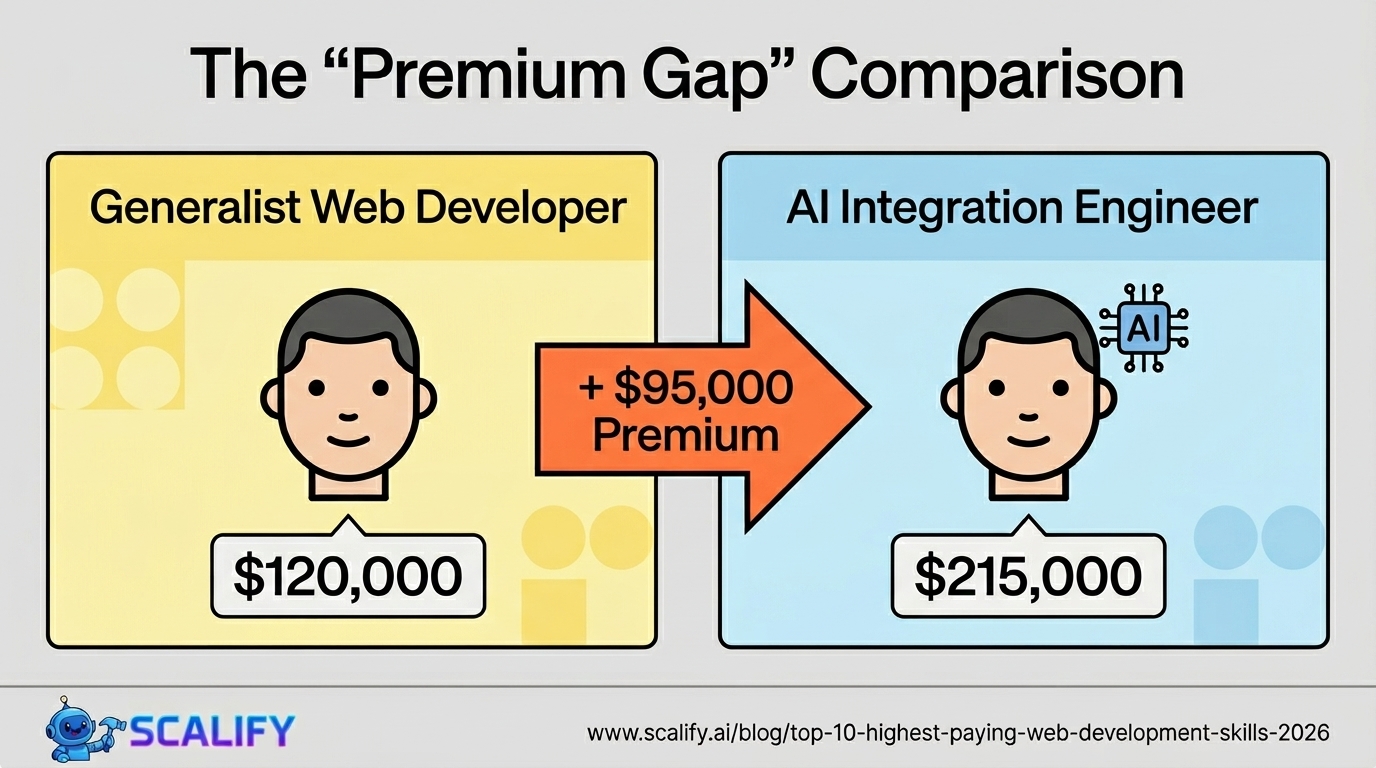
| AI/LLM Integration | $80,000 – $108,000 | $130,000 – $168,000 | $165,000 – $215,000 | Fastest Growing |
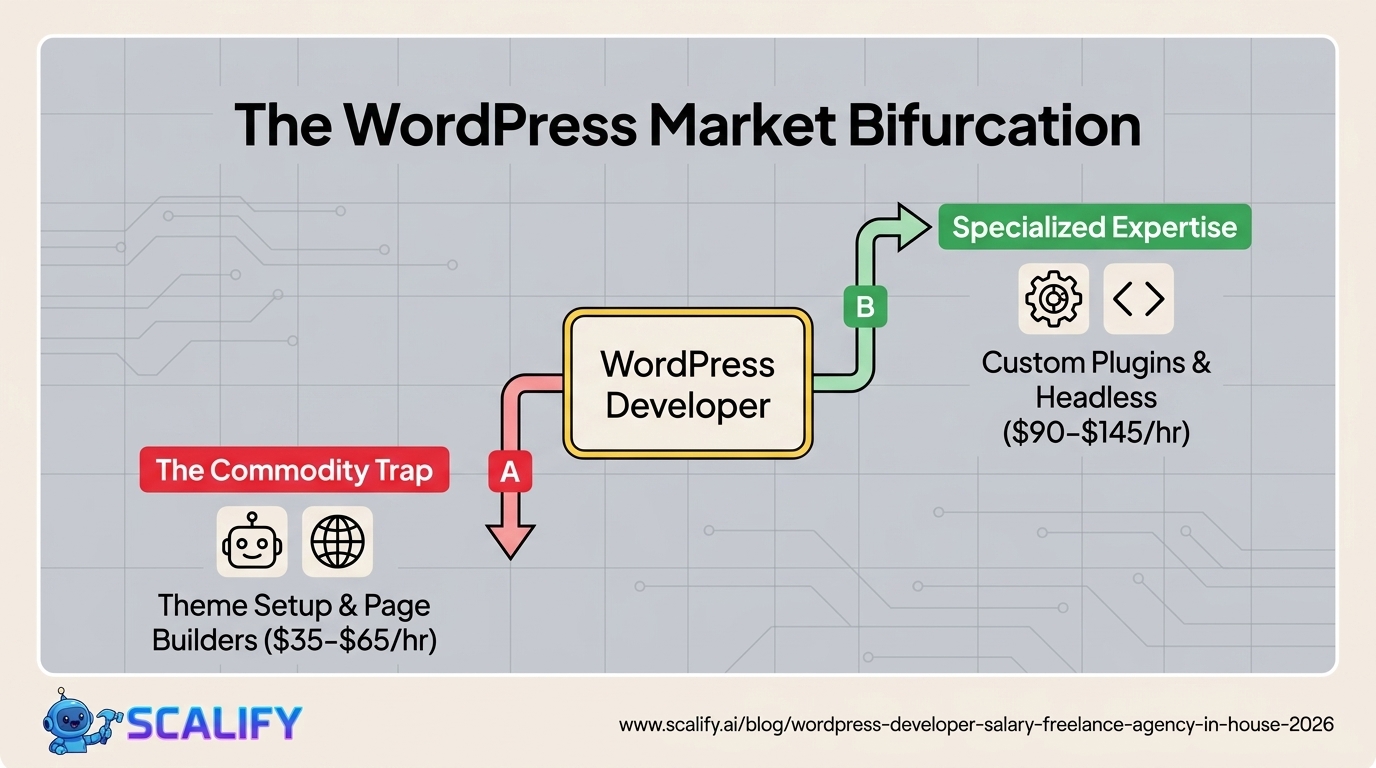
| WordPress (custom dev) | $45,000 – $65,000 | $68,000 – $95,000 | $95,000 – $130,000 | Stable, bifurcating |
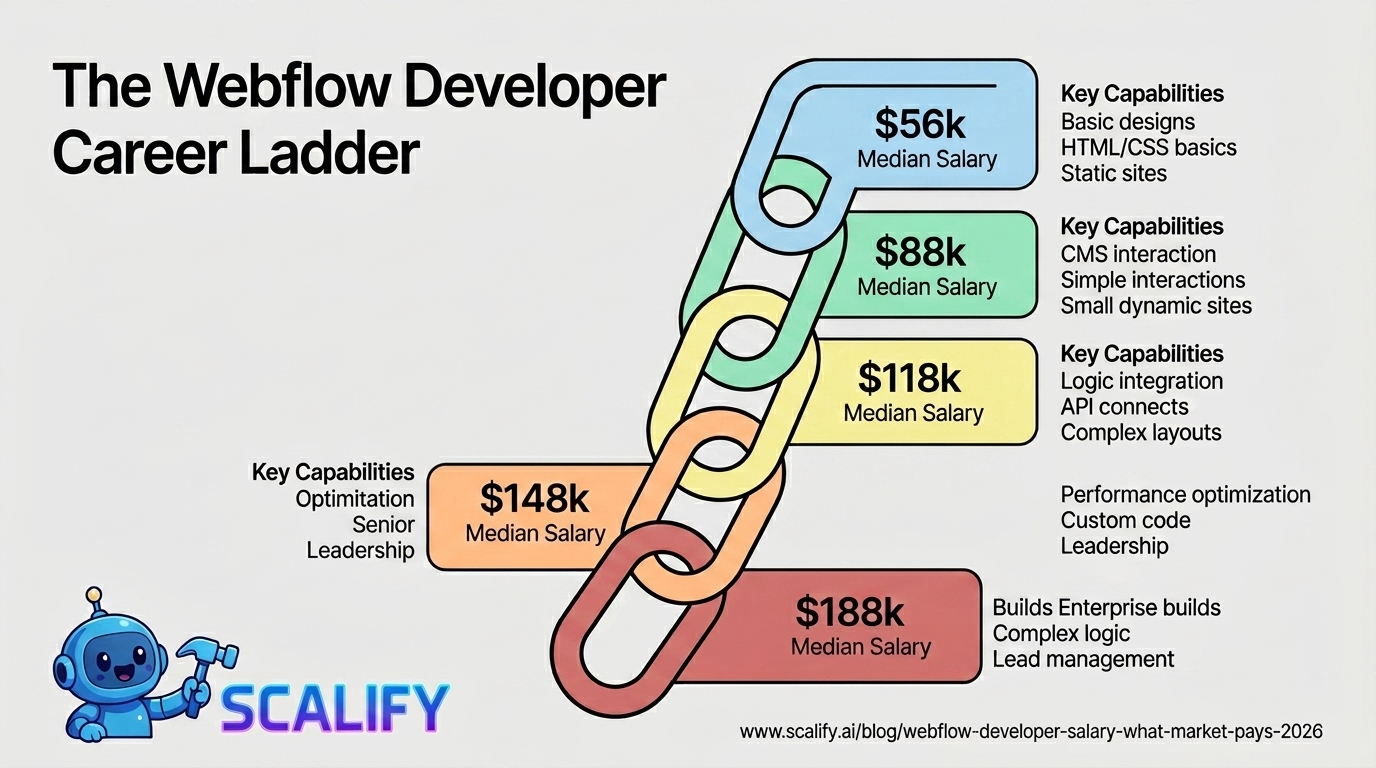
| Webflow Specialist | $48,000 – $68,000 | $72,000 – $105,000 | $105,000 – $142,000 | Growing |
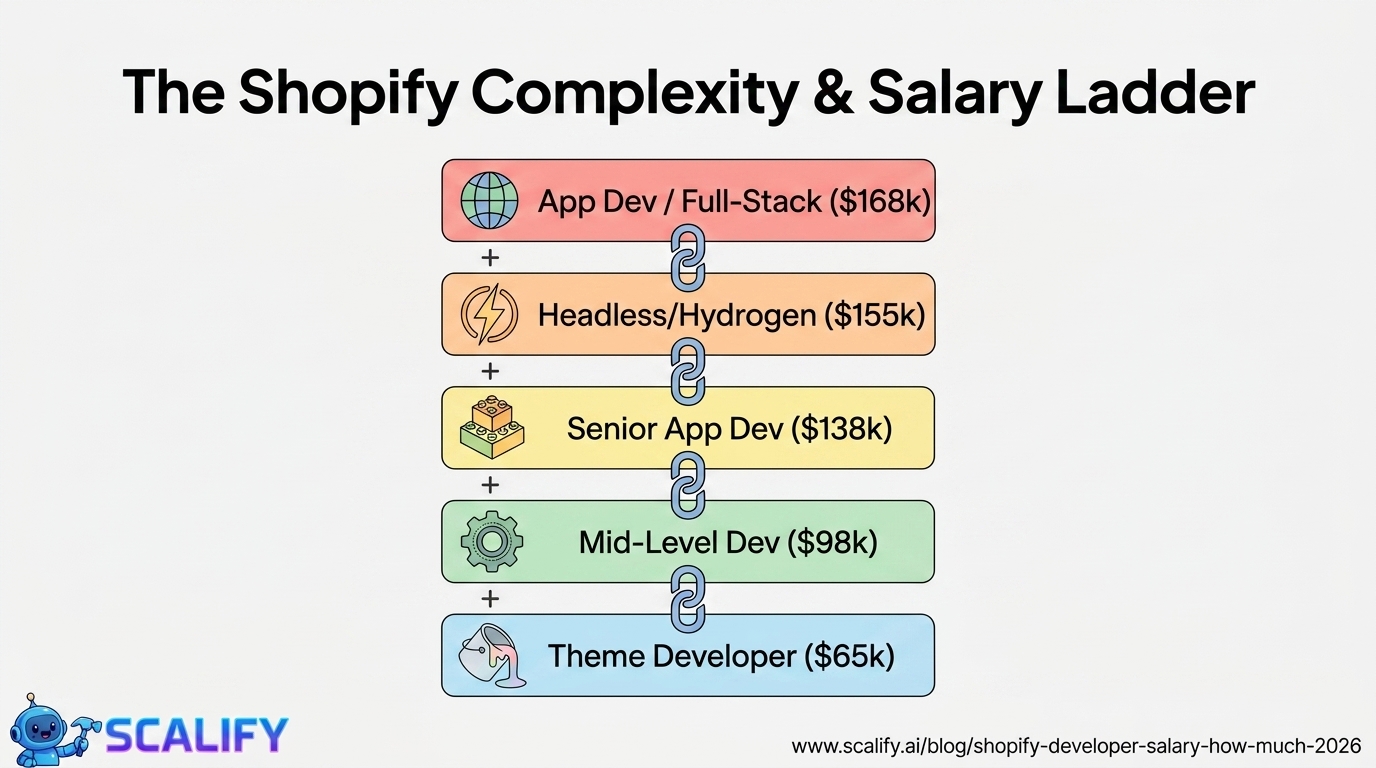
| Shopify/E-Commerce | $55,000 – $75,000 | $88,000 – $118,000 | $118,000 – $155,000 | Stable-Growing |
Salary by Location: The Geographic Premium
| Market | Mid-Level Median | Senior Median | State Tax | Effective Ranking |
|---|---|---|---|---|
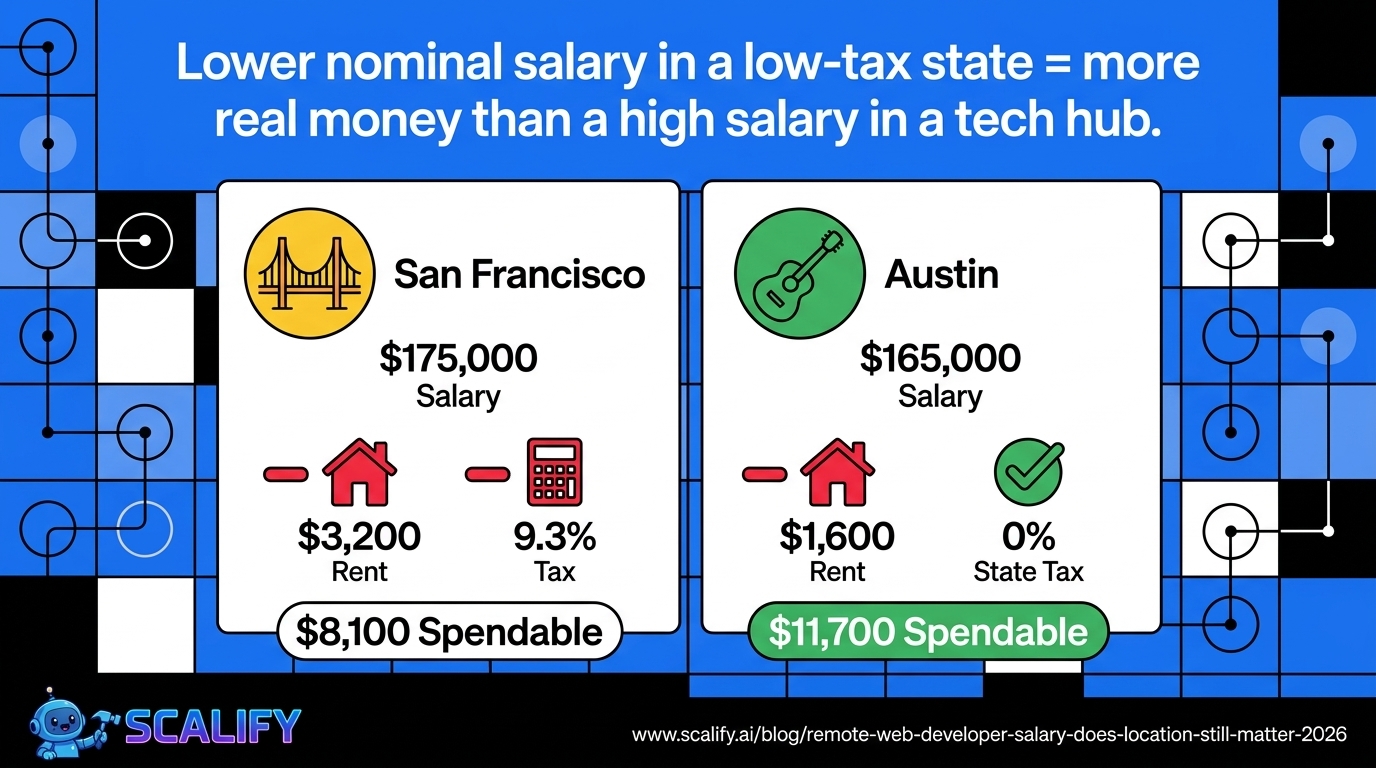
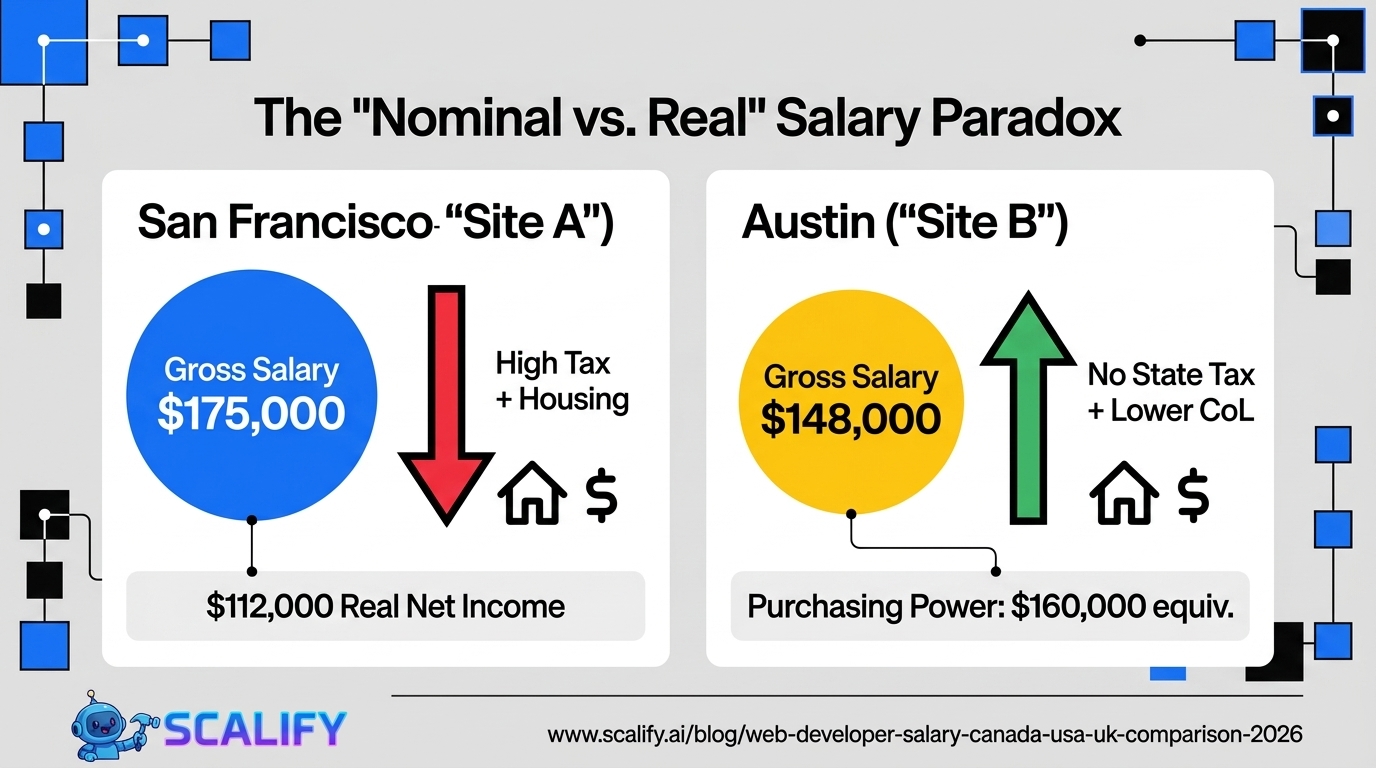
| San Francisco / Bay Area | $125,000 | $185,000 | 9.3% CA | High nominal, moderate real |
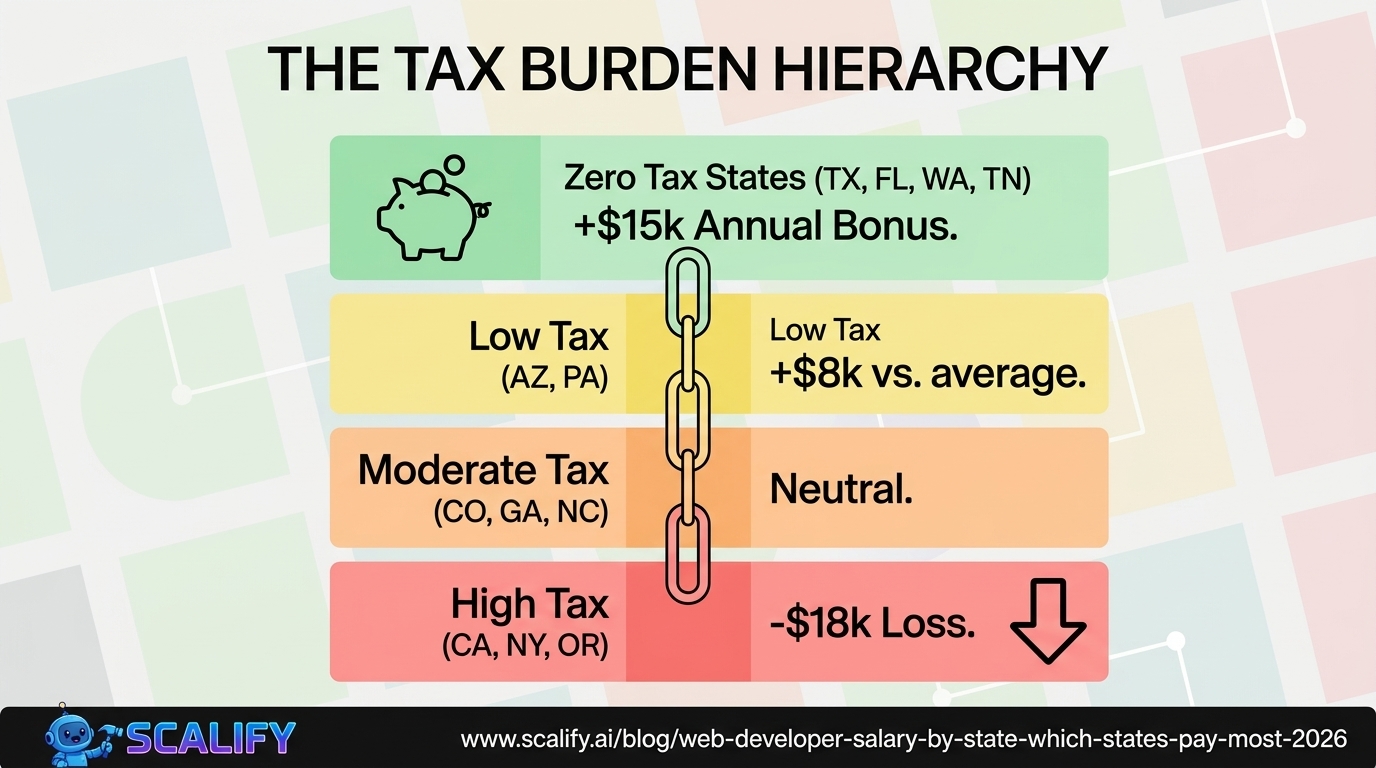
| Seattle, WA | $122,000 | $178,000 | $0 | Best after-tax major hub |
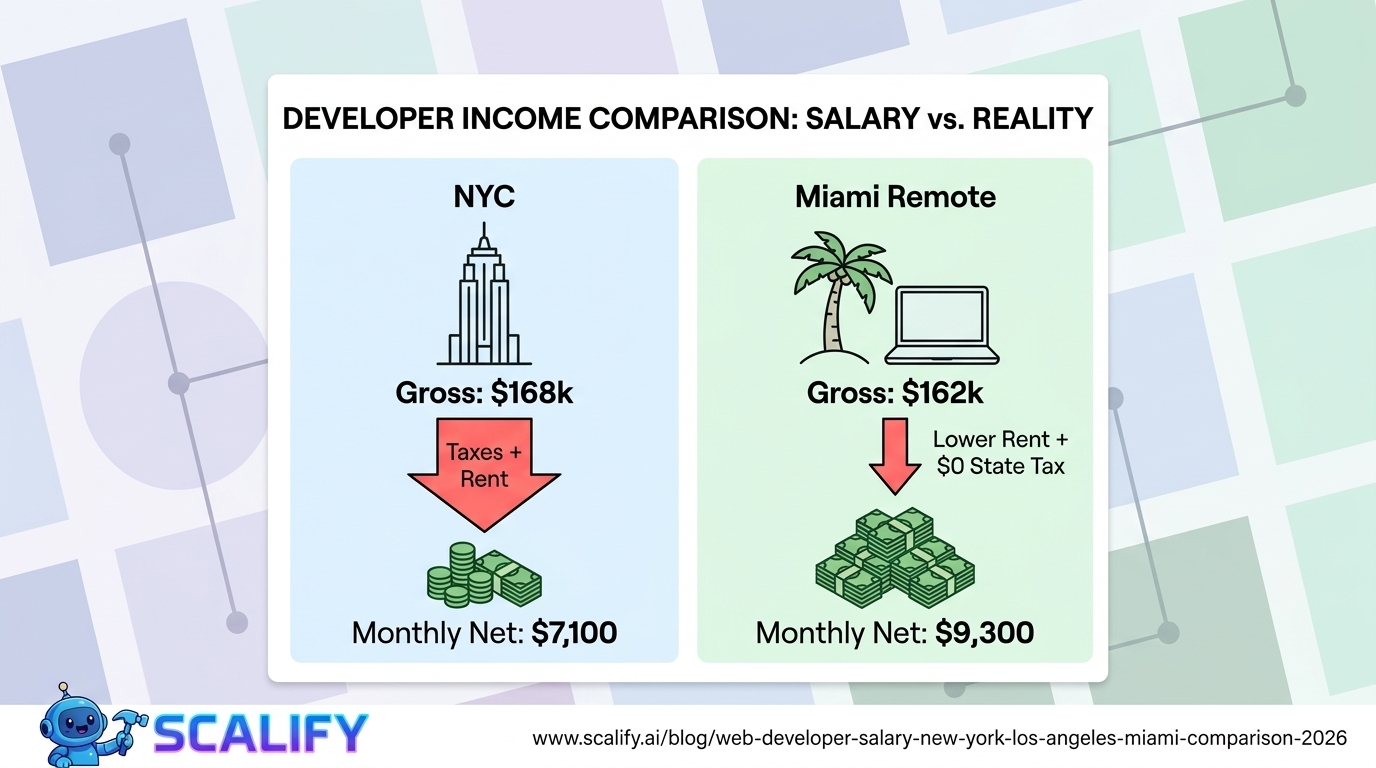
| New York City, NY | $118,000 | $172,000 | ~10.8% | High nominal, moderate real |
| Austin, TX | $108,000 | $155,000 | $0 | Excellent purchasing power |
| Denver, CO | $105,000 | $148,000 | 4.4% | Strong purchasing power |
| Miami, FL | $92,000 | $135,000 | $0 | Strong purchasing power |
| Remote (US company, any state) | $105,000 | $152,000 | Varies | Highest in no-tax states |
Salary by Employer Type
| Employer Type | Mid-Level Range | Senior Range | Total Comp Boost | Career Benefit |
|---|---|---|---|---|
| FAANG / Top Tech | $155,000 – $200,000 | $210,000 – $320,000 | RSUs +$80,000–$250,000/yr | Credential + maximum comp |
| Growth Startup (Series A–C) | $125,000 – $168,000 | $162,000 – $220,000 | Equity upside potentially huge | Speed + optionality |
| Mid-Size Tech Company | $108,000 – $145,000 | $148,000 – $195,000 | Modest equity, solid bonus | Balance of stability + growth |
| Enterprise / Fortune 500 | $98,000 – $135,000 | $132,000 – $175,000 | Strong benefits + stability | Predictability, excellent benefits |
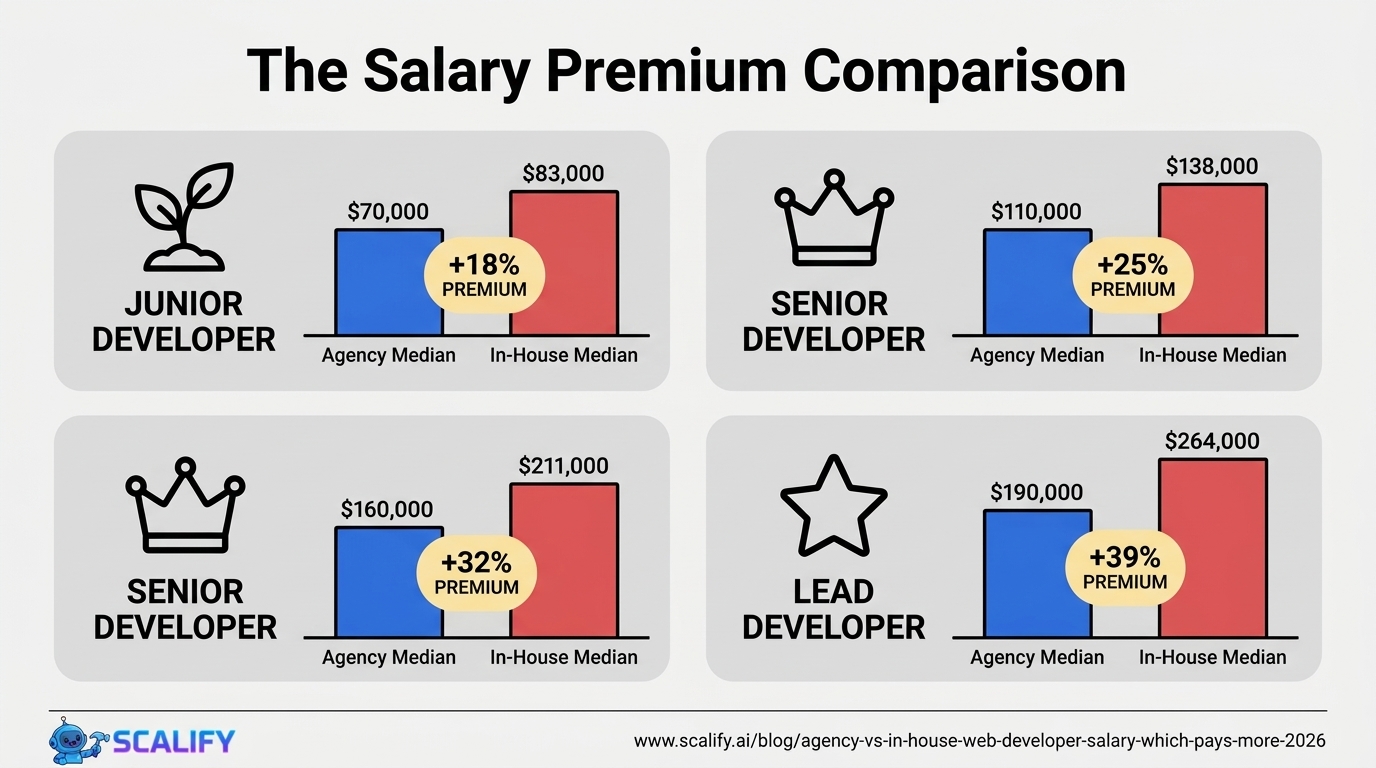
| Agency / Consultancy | $72,000 – $102,000 | $95,000 – $132,000 | Minimal equity | Breadth, client variety |
| Freelance (specialist) | $100,000 – $180,000 | $150,000 – $280,000 | Full rate, no employer cut | Autonomy, location flexibility |
The Fastest Path to Higher Salary: What Actually Works
The developers who maximize their compensation don't wait passively for annual raises — they make deliberate moves that force the market to price their skills correctly. The strategies that produce the largest salary jumps:
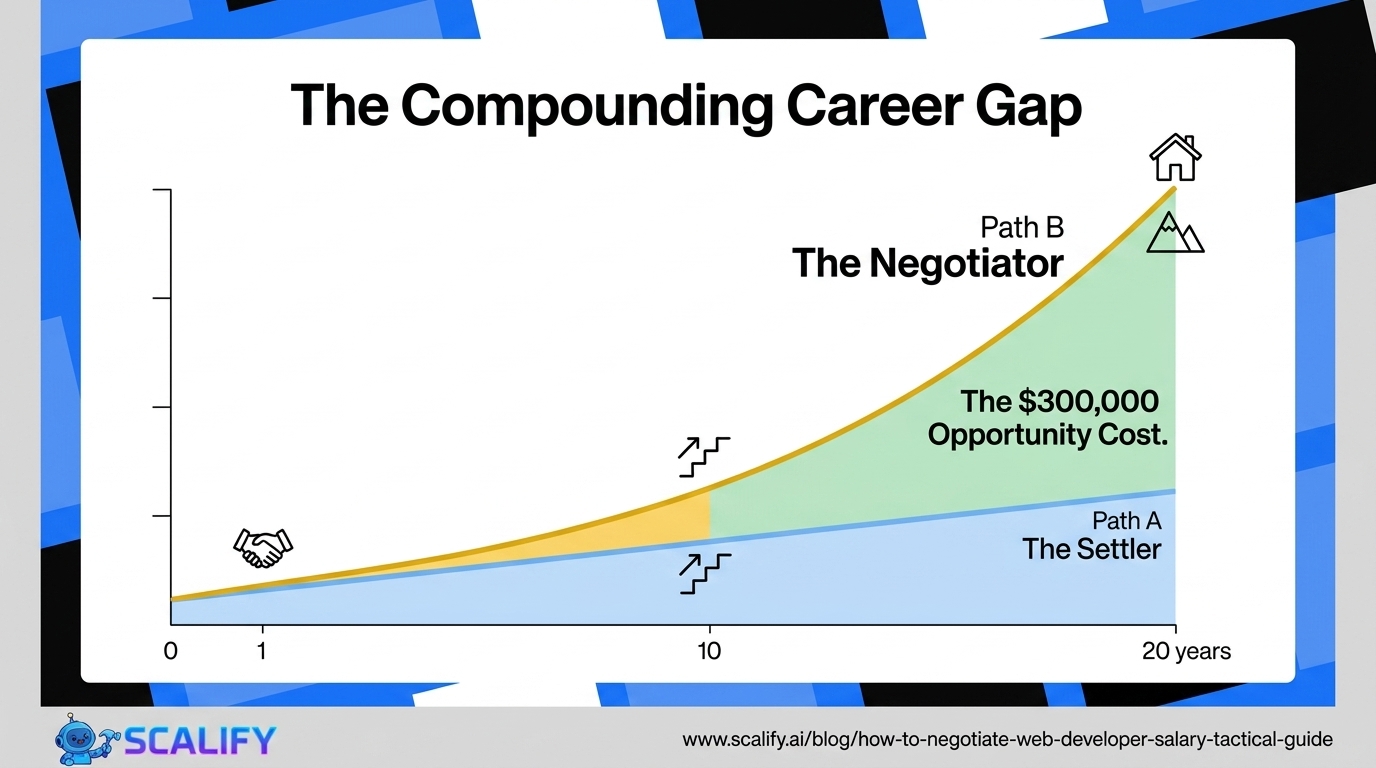
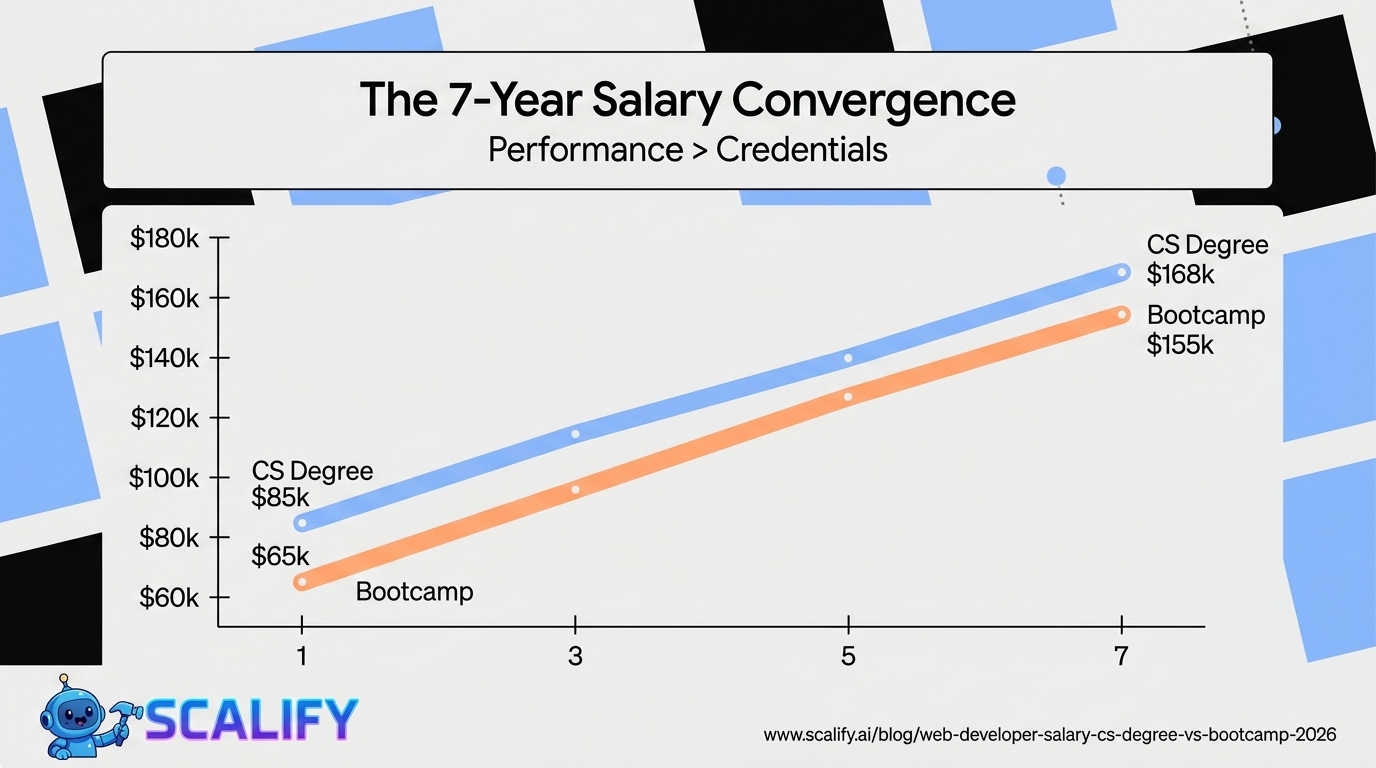
Job switching every 2–3 years. Internal raises at most companies average 3–5% annually. Switching jobs captures the full market rate for your current skills — typically 15–25% above your current compensation. A developer who stays at one company for 7 years and receives 4% annual raises ends up earning $120,000 by year 7. A developer who switches every 2–3 years, each time capturing a 20% increase, earns $175,000 by year 7 — a $55,000 annual difference for the same skills and experience. The compounding effect of market-rate job changes is the single most powerful salary lever available to developers at any level.
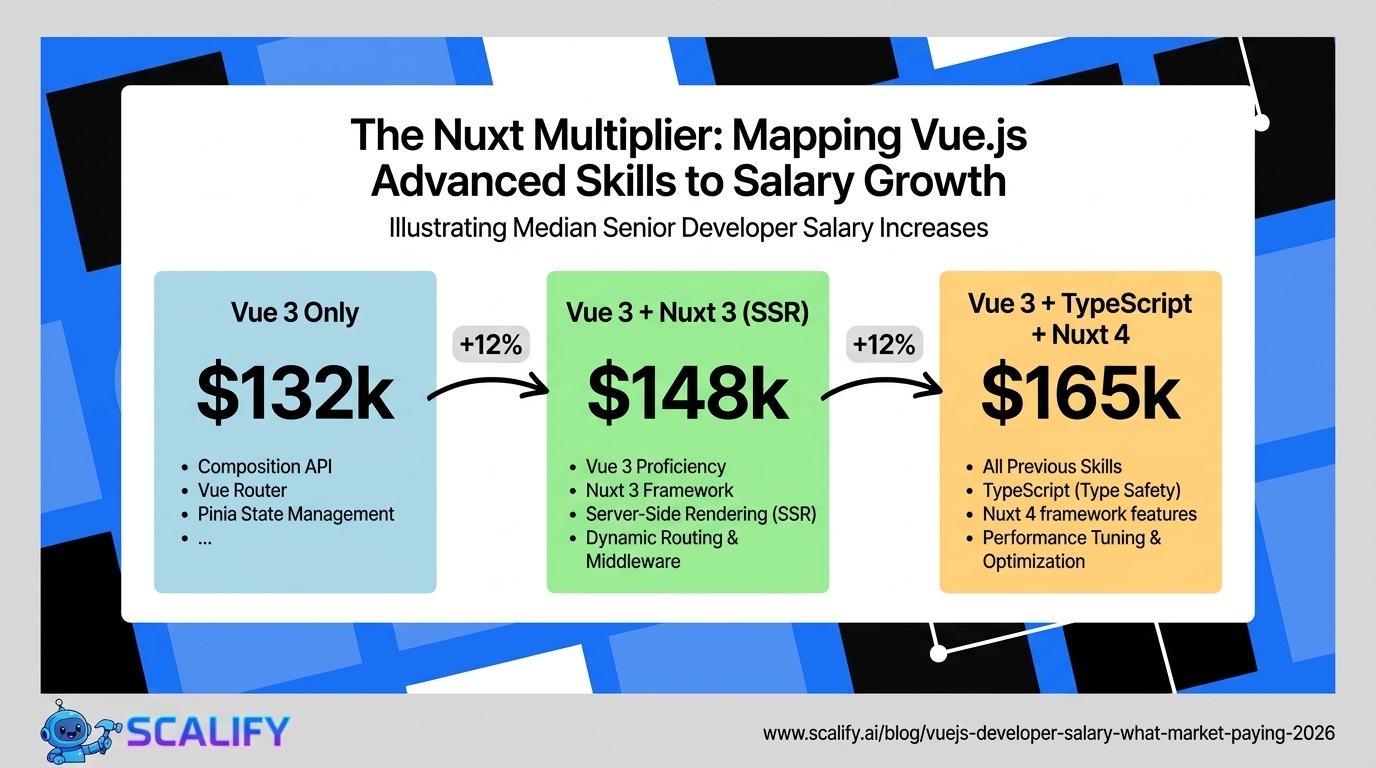
Developing premium skills. TypeScript (+$12,000–$18,000), AI integration (+$30,000–$50,000), DevOps (+$20,000–$40,000), and security expertise (+$20,000–$40,000) each command documented salary premiums. The investment required — 3–6 months of focused learning and project work — produces ROI in the first year from the resulting salary increase.
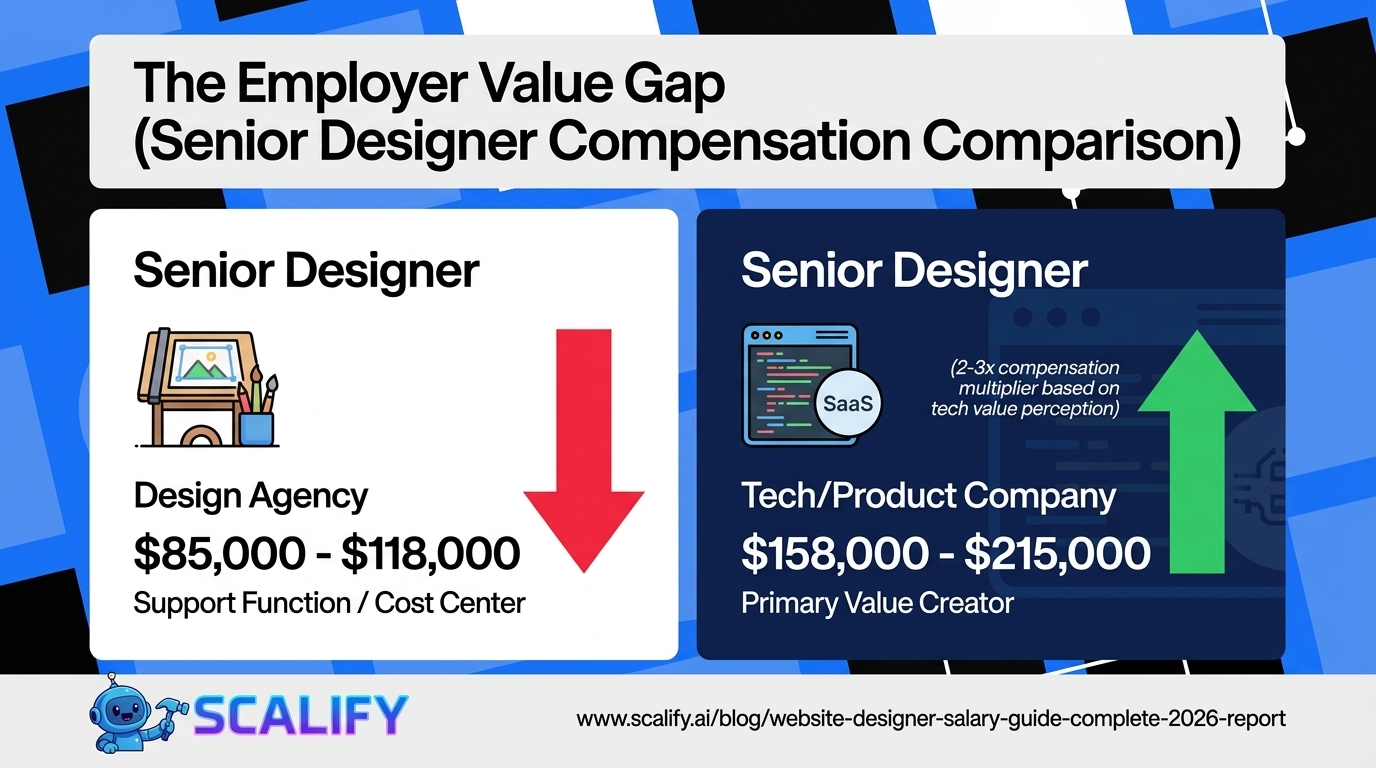
Moving to high-salary employers. The largest single salary jump available to most developers is moving from an agency or non-tech employer to a tech company or high-growth startup. The difference between a senior developer at a marketing agency ($108,000) and a senior developer at a mid-size SaaS company ($155,000) is $47,000 — for the same skills, experience, and title. Targeting tech company roles rather than staying in agency/consultancy structures produces permanent salary elevation that compounds over career.
Negotiating every offer. 70% of developers accept the first offer they receive without countering. The 30% who counter receive $5,000–$15,000 more on average. Always counter; almost always get it. The employer low-balls because they can and because most candidates won't push back. Negotiating is expected, professional, and consistently successful for developers with competing options or market data supporting their counter.
Web Developer Salary vs. Other Tech Roles
| Role | Mid-Level Median | Senior Median | vs. Web Developer |
|---|---|---|---|
| Web / Software Developer | $108,000 | $152,000 | Baseline |
| Data Scientist | $118,000 | $165,000 | +10% |
| Machine Learning Engineer | $135,000 | $188,000 | +24% |
| Cloud/DevOps Engineer | $122,000 | $168,000 | +11% |
| Product Manager | $125,000 | $172,000 | +13% |
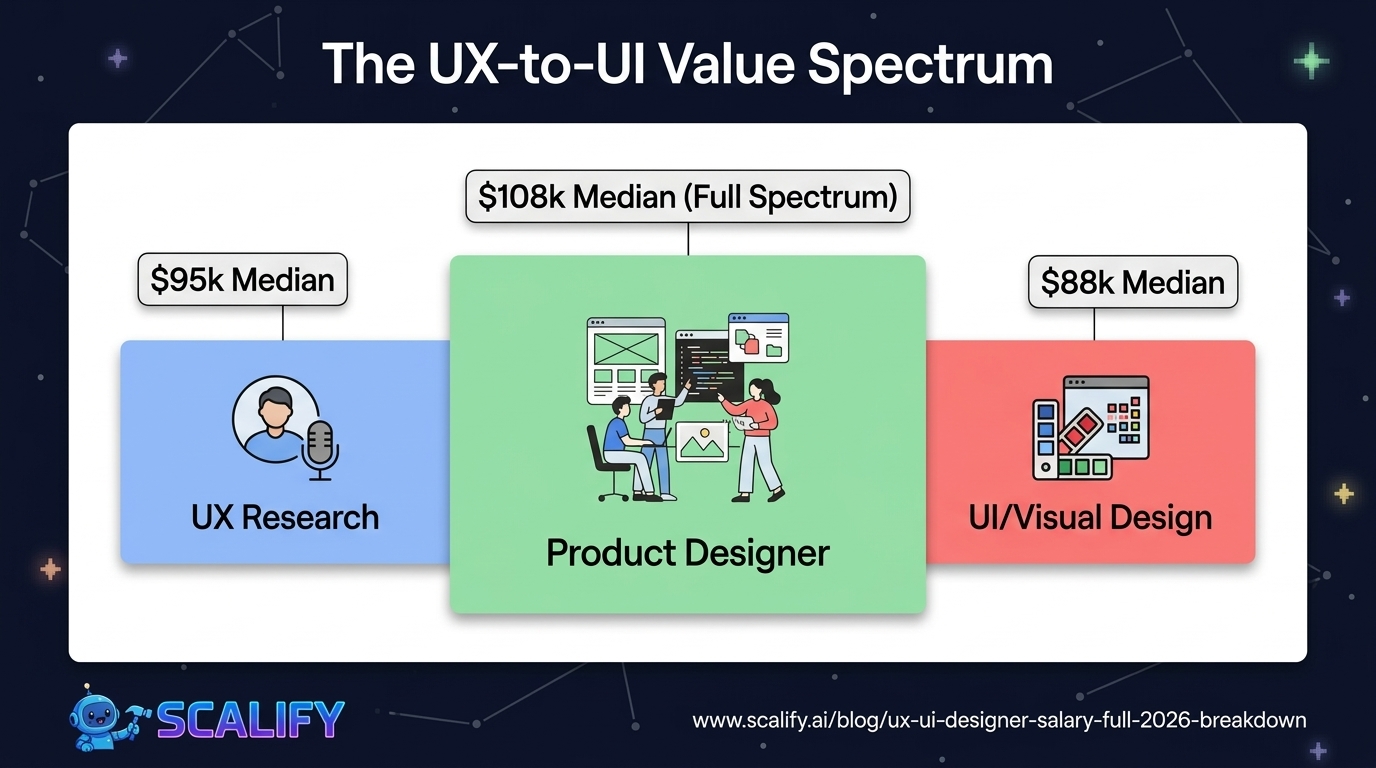
| UX Designer | $92,000 | $128,000 | -15% |
| Digital Marketer | $72,000 | $98,000 | -33% |
Benefits and Total Compensation: Beyond Base Salary
Total developer compensation extends significantly beyond base salary, especially at tech companies. The components that add meaningful economic value:
| Benefit | Annual Value | Where Most Available |
|---|---|---|
| 401(k) employer match (4% typical) | $4,320 at $108k salary | Most employers |
| Health insurance (employer contribution) | $6,000 – $18,000 | All full-time employers |
| Equity / RSUs (tech companies) | $25,000 – $250,000/yr | Tech companies, startups |
| Annual performance bonus | $5,000 – $50,000 | Tech companies, enterprises |
| Remote work (housing arbitrage value) | $5,000 – $25,000 | Remote-friendly companies |
| Professional development budget | $1,000 – $5,000 | Better tech companies |
The Bottom Line
Web developer salaries range from $42,000 to $480,000+ depending on specialization, experience, location, and employer — with the median sitting around $108,000 nationally. The fastest path to higher compensation is combining job switches every 2–3 years (capturing market-rate premiums), premium skill development (TypeScript, AI integration, DevOps), and targeting tech company employers over agencies. Total compensation at tech companies — base + equity + bonus + benefits — often runs 40–80% above the base salary number, making employer type and negotiation as important as raw skill level for lifetime earnings. The developers who maximize compensation treat their career as a deliberate strategy, not a passive accumulation of experience.
At Scalify, we work with web developers at every level — building the professional digital presence that helps developers showcase their expertise and command market-rate compensation.
Top 5 Sources
- Stack Overflow Developer Survey — Comprehensive salary data by specialization, location, and experience
- Levels.fyi — Total Compensation Database — Verified tech compensation by company and level
- Bureau of Labor Statistics — Web Developer Employment Data
- Glassdoor — Web Developer Salary Data
- Dice Technologists Report — Annual Developer Compensation
The Remote Work Premium: How Location Independence Changes Everything
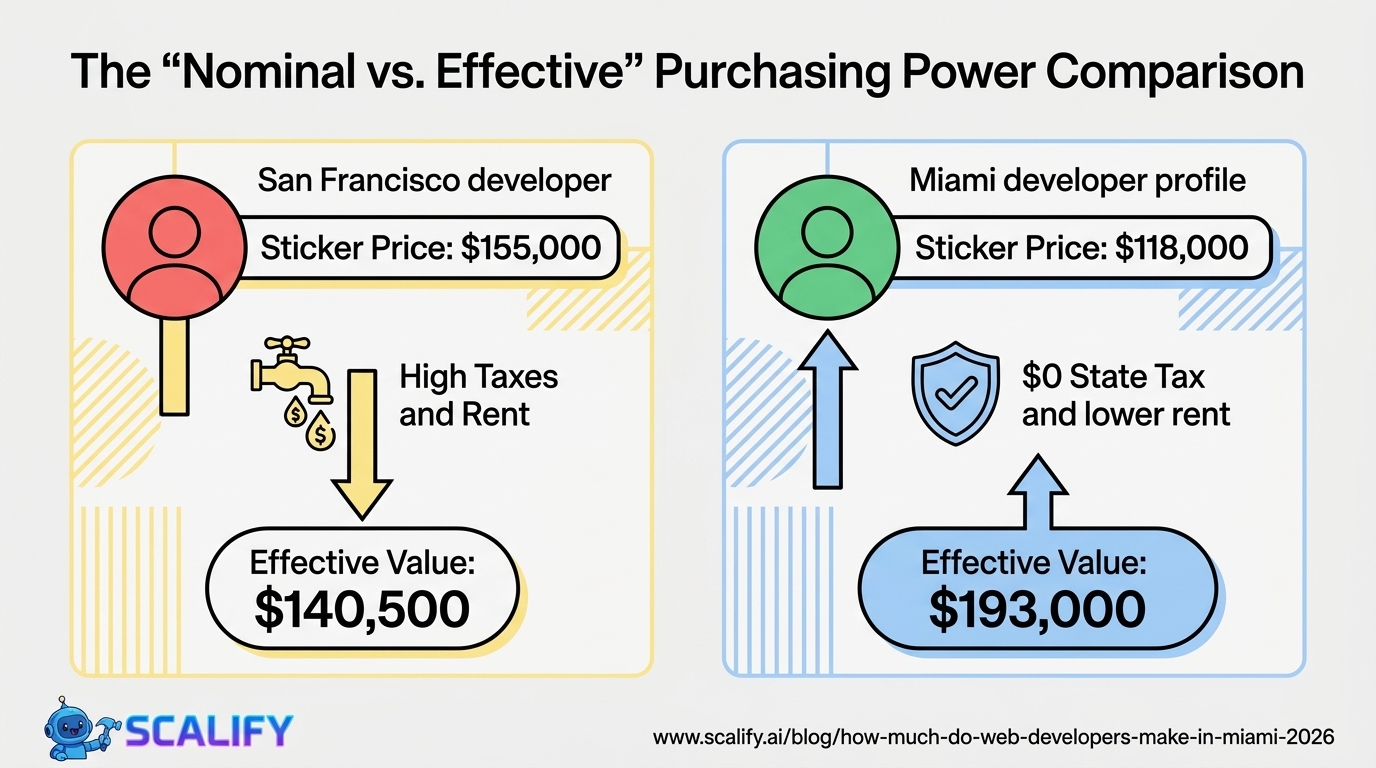
Remote work has fundamentally changed the web developer salary equation for developers outside major tech hubs. A web developer in Nashville, Tennessee — a city without a major established tech cluster — could previously only access Nashville market rates ($88,000–$118,000 for mid-level). Remote work has unlocked access to national-market tech company salaries at $108,000–$145,000 for the same skills — without the cost of relocating to San Francisco or Seattle. The combination of national-market remote salary plus zero Tennessee income tax plus Nashville's 30–40% lower cost of living than Bay Area produces a financial outcome that exceeds even the Bay Area developer's experience in real purchasing power terms.
Location-agnostic companies — Shopify, GitHub, Stripe, Basecamp, Buffer, and many others — pay the same salary regardless of where the developer lives. These represent the highest-value employment opportunities for developers in lower-cost markets. For any developer currently earning below national market rate due to geographic constraints, identifying and targeting location-agnostic companies is one of the highest-ROI career moves available.
Salary Negotiation: A Tactical Guide
Negotiation is the highest-ROI skill most developers don't practice. A single successful negotiation producing $10,000 more in base salary compounds to $150,000 over 15 years (assuming that base carries through to future jobs). The negotiation tactics that work:
Research the specific company's offer range. Glassdoor, Levels.fyi, LinkedIn Salary, and conversations with people at the company (via LinkedIn or tech communities) reveal what the company typically pays for the role. Knowing their range before receiving an offer prevents accepting the bottom of the band when the top is available.
Never name a number first. When asked "what salary are you looking for," deflect: "I'm focused on finding the right fit — I'm flexible on compensation and confident we can work something out once we've determined this is a great mutual match." Naming first anchors the negotiation at the wrong point; letting the company name first gives you a baseline to improve from.
Have a competing offer or market data. "Based on offers I'm seeing from similar companies and market data for this specialization and experience level, I was expecting closer to $X" is far more persuasive than "I think I deserve more." Data grounds the counter-offer in objective reality rather than subjective self-assessment.
Negotiate the full package. If base salary hits a ceiling, push on signing bonus, equity vesting schedule, professional development budget, and remote work arrangements. These have real financial value and are often more flexible than base salary. A $5,000 signing bonus, $2,500 professional development budget, and ability to work fully remote from a no-income-tax state can be worth $15,000+ annually — more than a $10,000 base salary increase in many situations.
Web Developer Salary Outlook: 2026–2030
The 5-year salary outlook for web developers is positive, driven by: continued growth in software-driven businesses requiring web development, the AI skill premium expanding as AI integration becomes standard (not exceptional), continued global tech talent competition keeping salaries elevated, and the ongoing structural shortage of developers with genuine depth (versus breadth without mastery) in high-demand technology stacks. The BLS projects 16% employment growth for web developers through 2032 — faster than most occupations and indicating persistent demand. Developers who invest in premium skills (AI, TypeScript, DevOps) and manage their careers strategically (job switching, employer type targeting, negotiation) should expect to significantly exceed the median trajectory. Developers who remain in commodity work (template setup, basic HTML/CSS, non-TypeScript WordPress) will face increasing competition from automation and global labor arbitrage that has already begun compressing rates in those categories.
The International Salary Gap
Web developer salary differences internationally are relevant context for US developers — both for understanding why some US companies hire globally and for developers considering international career moves. Senior web developers earn approximately $85,000–$115,000 USD equivalent in Canada (with no state/provincial income tax in Alberta, Ontario rates varying), $88,000–$120,000 in the UK (with NHS healthcare eliminating the US's $6,000–$18,000 annual health insurance cost), and $20,000–$60,000 in India, Eastern Europe, and Latin America — markets that US companies increasingly use for cost reduction. The US developer's competitive advantage over lower-cost global markets is primarily speed of communication (no timezone issues with US-based teams), cultural context for US product/market fit, and the depth of specialization that global talent markets are increasingly providing competition in at the commodity tier but haven't yet fully matched at the premium specialization level.
The web development salary market in 2026 rewards preparation and strategy as much as raw technical skill. The developer who researches company salary bands before interviewing, practices negotiation responses, understands their total compensation package, and makes deliberate moves toward high-paying employers and premium specializations will substantially outperform the developer who relies on passive tenure and hoped-for recognition to advance their compensation. Treat salary optimization as a professional discipline — not a one-time conversation at the end of an interview process — and the compounding returns over a 10–15 year career are substantial.


.jpeg)
.jpeg)




78 SW 7th St, Miami, FL 33130