

Website vs Social Media Profile: Why You Need Both
By Josh Ternyak

March 28, 2026
Some businesses skip having a website and rely entirely on Instagram or Facebook. Others build great websites but ignore social entirely. Both approaches leave money on the table. Here's why you actually need both — and how they work together.
The Either-Or Thinking That's Costing Businesses Growth
It happens constantly. A small business owner decides their Instagram profile is their website. They've got 5,000 followers, post consistently, get decent engagement — why pay for and maintain a separate website when their social presence is clearly working?
On the other end: a company invests in a beautiful, well-built website, drives good SEO traffic, but has essentially no social media presence because "our website does the selling." Social feels like a time sink and they don't see the direct ROI.
Both of these are partially right and substantially wrong. Websites and social media profiles serve genuinely different functions in a business's digital presence. Using one as a replacement for the other isn't just suboptimal — it creates real vulnerabilities that compound over time. Understanding why each exists, what each is actually good at, and how they amplify each other is the foundation of a digital strategy that actually works in 2026.
What Your Website Is and What It Actually Does
A website is infrastructure you own. The domain is yours, the content is yours, the design is yours, the visitor data is yours, the customer relationships established through it are yours. No algorithm, no platform policy change, no acquisition by a tech company can take any of that from you without your consent.
This ownership dimension is fundamental and often underappreciated until something goes wrong on a social platform. A website gives you a permanent, controlled, fully customizable home on the internet that operates entirely on your terms.
Beyond ownership, a website does several specific things that social profiles simply cannot:
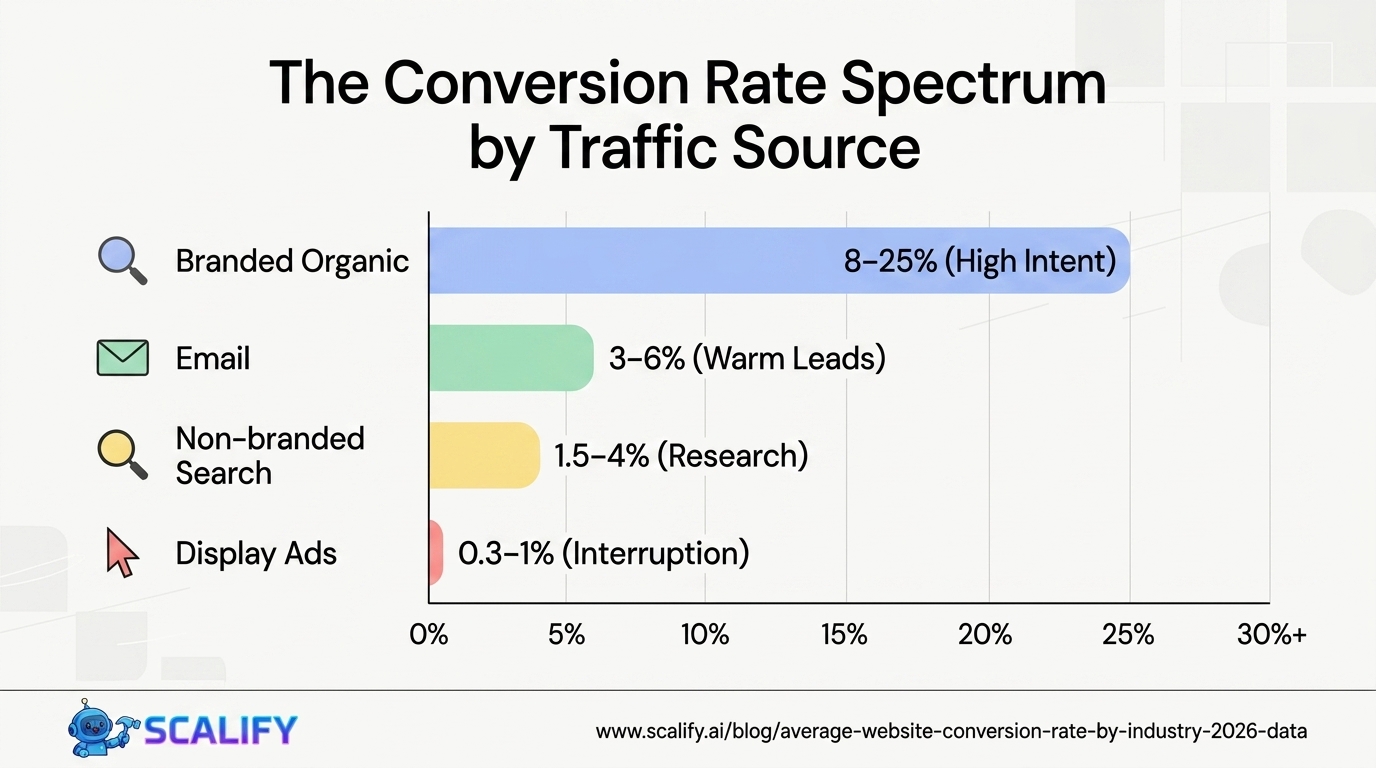
It converts intent-based traffic from search. When someone searches Google for "web design agency Miami" or "best coffee shop Brooklyn" or "how to write a business plan," they're expressing active intent to find something specific. Your website — if optimized correctly — can appear in those results and capture that intent-driven traffic. Social profiles rank very poorly for most commercial and informational queries. SEO-driven website traffic is one of the most valuable traffic sources available because it connects you with people actively looking for what you offer.
It tells your complete story on your terms. Social media is constrained — you're limited to the platform's format, character counts, feature set, and visual language. Your website has no such constraints. You control the narrative completely: the visual hierarchy, the messaging sequence, the evidence you present, the customer journey you design. A visitor to your website experiences exactly what you've designed for them to experience.
It provides a professional credibility baseline. For many industries and customer segments, the absence of a website is a red flag. When someone is considering hiring a consultant, a contractor, a designer, a service provider — they Google. Finding nothing, or finding only a social profile, creates doubt. A professional website signals: this is a real business, invested in their presence, capable of following through on professional commitments.
It captures leads and drives conversion. Forms, booking systems, e-commerce checkout, newsletter subscriptions — the conversion mechanisms that turn visitors into customers are native to websites and generally unavailable or constrained on social platforms. The website is where the business transaction typically happens, even if social media initiated the relationship.
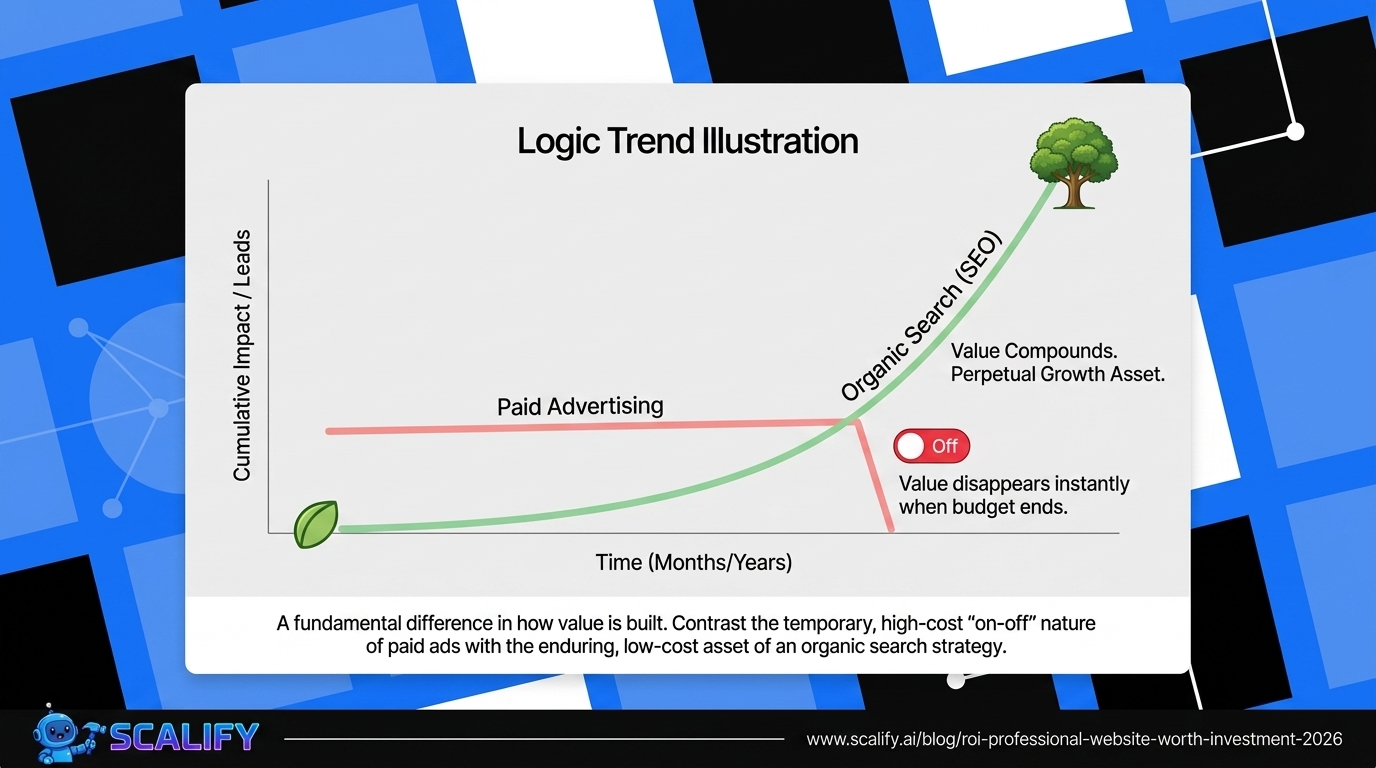
It supports SEO as a compounding asset. Blog content, service pages, case studies — content on your website accumulates authority over time. An article you published two years ago can still be driving traffic today. Social posts from two years ago are effectively invisible. Website SEO compounds; social media presence doesn't in the same way.
What Social Media Is and What It Actually Does
Social media profiles are discovery and relationship platforms. They're where potential customers encounter your brand — often before they've visited your website, sometimes before they even had a reason to look for you. They're where you reach people who weren't already looking for what you offer.
Social media's distinct strengths:
Algorithmic amplification and organic reach. A great post can reach thousands or millions of people who have never heard of your brand, through shares, algorithm-driven discovery, and viral mechanics. This kind of unsolicited exposure to new audiences is something websites alone cannot produce. Your website is findable; social media is discoverable.
Real-time engagement and community building. Social platforms are two-way communication channels. Comments, DMs, replies, reactions — the social layer creates relationships and community around your brand that a static website can't replicate. The ability to respond directly to a customer's question, thank someone publicly for sharing your work, or engage in ongoing conversations builds a different kind of connection than any website interaction can.
Content distribution and amplification. Social media is one of the most efficient channels for distributing content you've created. A blog post on your website has limited initial reach — primarily from search traffic. Sharing that post on social media, where your followers can like, comment, and share, multiplies its reach significantly. Social media is the amplifier for your website's content.
Lower barrier to discovery for new audiences. Starting a social account on an established platform means your content can be discovered from day one through hashtags, the platform's recommendation algorithm, and engagement with other accounts' content. A brand new website has no inherent discovery mechanism — it has to earn its visibility through SEO over months or years. Social media provides faster access to initial audience building.
Social proof that visitors check. Before making a purchasing decision, many customers check a company's social profiles — not necessarily to contact them there, but to assess activity level, audience engagement, and social legitimacy. An Instagram profile with recent posts and real comments tells a different story than one that hasn't been updated in two years. Social profiles function as credibility validators that website visitors actively seek out.
Why Relying on Social Media Alone Is a Serious Risk
The businesses that live entirely on social media platforms are building on rented land. This metaphor has been used so often it risks sounding like a cliché, but it describes a real and serious vulnerability:
Algorithm changes can zero out your reach overnight. Facebook's organic reach for business pages declined from approximately 16% of followers in 2012 to under 5% by 2014 to under 2% for many page types today. Years of content, years of audience building, and your reach to that audience is now essentially controlled by an ad business that has an incentive to make you pay for access. Instagram has gone through similar shifts. TikTok's algorithm changes have affected businesses built on its platform. Every platform's reach to your own audience is determined by rules you don't control and can't predict.
Platforms can disable or restrict accounts.** Businesses have had Instagram accounts with hundreds of thousands of followers disabled for policy violations — sometimes correctly, sometimes in error. The appeals process is often opaque and slow. During the period your account is restricted, you have no presence on that platform at all. Businesses that have no website — no home base outside the platform — lose their entire digital presence in these situations.
Platforms can decline or become irrelevant. Remember Vine? Periscope? Google+? MySpace? All platforms that once had real business value, all now dead or irrelevant. Businesses that built their presence exclusively on any of these platforms lost it when the platform disappeared. Facebook has been losing younger demographics to Instagram, which has been losing the same to TikTok, which faces its own uncertainty. Platform demographics and relevance shift.
You don't own the data. Your Instagram follower list is not a business asset you own. If Instagram shuts down tomorrow, you have no way to contact those followers. Your email list on your website, built through your own forms — that's yours. The principle is simple: social media audiences are borrowed; direct contact data from your own platform is owned.
Discovery through social doesn't compound. A post from two years ago is essentially invisible on most platforms. You have to continuously produce content to maintain presence. The work doesn't accumulate the way blog content and SEO does. When you stop posting, your social presence declines rapidly. When you stop publishing on your website, your existing content continues generating traffic.
Why Relying on Your Website Alone Is Also a Mistake
The flip side: a business with a great website but no social presence is missing a significant distribution and trust channel.
Social proof validation is expected. Many prospects, especially younger demographics, verify businesses through social channels before purchasing or committing. A business with a slick website but no Instagram, LinkedIn, or Twitter presence can feel inauthentic — like a facade without substance behind it. The social presence, even if modest, says: real people run this, real activity is happening.
You're invisible to non-search discovery. SEO is powerful but it only captures people actively searching. Social media reaches people who weren't searching — who encounter your brand through a friend's share, through the platform's discovery algorithm, through a viral moment. Businesses without any social presence have no access to this category of organic discovery.
Content amplification requires a distribution channel. Your website content — blog posts, case studies, guides — can generate significant SEO value over time. But in the short term, when you publish new content, social media is the primary channel for getting immediate eyes on it. Without any social presence, new content reaches only the people who are already finding you through search — a closed loop with limited growth potential.
Relationship building happens on social. Following a brand on Instagram, seeing their behind-the-scenes posts, interacting with their content, commenting on their stories — this builds a kind of ongoing familiarity that one-time website visits don't. Customers who have a social relationship with your brand before purchasing convert at higher rates and have higher lifetime value than cold visitors who found you once through search.
How Websites and Social Media Work Together
The real power is in the combination, and the relationship is directional: social media drives traffic and builds awareness; the website captures, converts, and retains.
A typical effective digital journey looks something like this: A potential customer discovers your brand through a social media post — maybe something they saw in their feed, maybe a post a friend shared, maybe content that appeared in their Explore or For You page. They're intrigued enough to check your profile, then visit your website to learn more. The website does the heavy lifting of presenting your full value proposition, building trust through detailed information and social proof, and converting the visit into a lead, subscriber, or customer.
The website then maintains the relationship: email sequences, customer portal, content they can return to. Future social media posts bring them back. The cycle continues.
Specific synergies worth building deliberately:
Use social media to distribute website content. Every blog post, every case study, every resource you publish on your website should be shared on your social platforms. Social distribution gives your content immediate reach; your website gives it permanent searchability.
Use your website to capture social visitors. Traffic from social media that lands on your website should be given opportunities to convert — email subscription, download, consultation booking. Social followers are borrowed; email subscribers from your own list are owned. The website is where borrowed audience becomes owned audience.
Use social proof from social media on your website. Embed review widgets, showcase user-generated content, display your follower count if it's significant — all of this takes the credibility you've built on social platforms and presents it to your website visitors.
Use your website as the anchor for social content. Social posts should frequently link back to your website. Every promotional post, every resource mention, every case study reference should drive people to a specific page on your site where they can learn more and take action.
The Right Mindset for Managing Both
The businesses that do both well don't treat them as separate strategies — they treat them as two parts of one digital presence, each doing what it does best.
Your website is headquarters. Your social profiles are outposts. Outposts generate awareness and drive people to headquarters. Headquarters converts and retains them.
You don't need to be on every social platform. Pick one or two that your specific audience actually uses and where your content format makes sense. A visual product or lifestyle brand belongs on Instagram and Pinterest. A B2B service company belongs on LinkedIn. A personality-driven brand with entertainment value belongs on TikTok. A local service business gets significant value from a well-maintained Google Business Profile alongside any social presence.
Quality beats quantity on both. One great piece of website content that attracts 500 organic visitors per month is worth more than ten mediocre posts. Ten well-crafted, genuine social posts per month are more effective than daily filler. The throughline across both: give people something genuinely useful or genuinely interesting, and they'll keep coming back.
The Bottom Line
Your website and your social media profiles aren't alternatives to each other — they're complementary infrastructure that serve different stages of the customer journey and perform different functions. Neither is optional if you're serious about building a business with a durable digital presence. Social media without a website is borrowed land with no foundation. A website without social media is infrastructure with no distribution engine.
Build both. Use each for what it's best at. And connect them deliberately — so the audience awareness social media creates flows to the website that converts it into something lasting.
If you're ready to build the website side of this equation properly, Scalify delivers custom professional websites that are built to receive social traffic, capture leads, and convert visitors — your headquarters, ready from day one.



.jpeg)
.jpeg)

78 SW 7th St, Miami, FL 33130