


What Is a Breadcrumb Trail on a Website?
By Josh Ternyak

April 1, 2026
Comprehensive 2026 guide: What Is a Breadcrumb Trail on a Website?
The Navigation Tool Named After a Fairy Tale
In the Brothers Grimm story of Hansel and Gretel, the children drop breadcrumbs along their path through the forest to find their way back home. The metaphor is apt: breadcrumb navigation on websites does exactly the same thing — it leaves a trail showing you where you've come from and where you currently are in the site's structure.
If you've ever shopped on Amazon and seen a line like "Electronics > Computers > Laptops > Gaming Laptops" above a product page, or navigated a help center and noticed "Support > Account Settings > Password Reset" at the top of an article, you've used breadcrumb navigation. It's one of the most useful secondary navigation patterns on the web, particularly for sites with complex content hierarchies — and it has SEO benefits that make it worth implementing even when the UX value alone might not seem obvious.
This guide covers what breadcrumbs are, the different types, when to use them, their SEO implications, and how to implement them correctly.
What Breadcrumbs Are
A breadcrumb trail is a secondary navigation element — typically a horizontal row of links near the top of a page — that shows the page's position in the site's hierarchy. Each "crumb" in the trail is a link to a parent page, with the current page (usually not linked) at the end.
A typical breadcrumb trail looks like:
Home > Blog > Website Design > What Is a Breadcrumb Trail?
Each element except the last is a clickable link. The last element (the current page) is typically plain text. Separators between crumbs are most commonly " > " or " / " — simple visual indicators of hierarchy level.
Breadcrumbs exist at the intersection of navigation and wayfinding. They answer two questions that become relevant once a visitor has navigated beyond the homepage:
- Where am I right now?
- How did I get here, and how do I get back to a parent level?
On small websites with flat structures, breadcrumbs are rarely necessary — the main navigation is sufficient. On large sites with multiple hierarchy levels — e-commerce stores with categories and subcategories, content sites with sections and sub-sections, documentation with modules and articles — breadcrumbs become genuinely valuable navigation aids.
Types of Breadcrumbs
There are three main approaches to breadcrumb structure, each with different use cases and implications:
Location-Based Breadcrumbs
The most common type. Shows the current page's position in the fixed hierarchy of the website. The trail reflects the site's actual information architecture — the parent-child relationship between pages.
Example: Home > Products > Electronics > Smartphones > iPhone 15 Pro
This type is appropriate whenever your site has a consistent, hierarchical structure where pages have clear parent-child relationships. Most e-commerce sites, documentation sites, and large content sites use location-based breadcrumbs.
Path-Based (History) Breadcrumbs
Shows the specific path a visitor took to reach the current page — their personal navigation history. Essentially a dynamic trail based on actual click behavior rather than the site's fixed hierarchy.
Example: Home > Search Results > Product Category > Current Product (if that's the path they took)
Path-based breadcrumbs are less common today and are generally considered inferior to location-based breadcrumbs. The problem: the same page can show different breadcrumb trails to different visitors depending on how they arrived, which is confusing. They also don't help users understand the site's structure — they just reflect what they already know (where they came from). Most UX research recommends location-based breadcrumbs over path-based.
Attribute-Based Breadcrumbs
Used for filtered or faceted content — particularly on e-commerce sites — to show the attributes a visitor has selected. Rather than reflecting hierarchy, they reflect applied filters.
Example: All Products > Color: Blue > Size: Medium > Brand: Nike
These help users see and modify their active filters without requiring a separate filter interface. They're an elegant solution for e-commerce UX but require more sophisticated implementation than simple hierarchical breadcrumbs.
When to Use Breadcrumbs
Breadcrumbs are worth implementing when your site has most or all of these characteristics:
Multiple hierarchy levels. A flat site with one level of depth below the homepage doesn't benefit meaningfully from breadcrumbs. Two or more levels of meaningful hierarchy — category > subcategory > page, or section > article, for example — is where breadcrumbs start providing value.
Visitors arriving at deep pages from search or external links. Users who arrive from Google directly to a product page, a blog article, or a help center article have no context for where that page sits in the larger site. Breadcrumbs provide that context immediately and give them a quick way to explore related content at the parent level.
Content with logical parent-child relationships. E-commerce product pages that belong to categories. Documentation articles that belong to modules. Blog posts that belong to content pillars. Anywhere there's a natural "container" relationship between pages and their parents, breadcrumbs make that relationship navigable.
Large sites where the navigation can't represent full depth. A mega menu can show two levels of hierarchy. A site with four levels of hierarchy needs something like breadcrumbs to communicate the full structure to users who are deep in the content.
Breadcrumbs are generally not worth implementing for: small brochure sites (5–15 pages), sites with flat structures where everything is one level below the homepage, or any page that visitors arrive at primarily through the homepage navigation (rather than search or direct deep links).
The SEO Case for Breadcrumbs
The usability benefits of breadcrumbs are meaningful but context-dependent. The SEO benefits are consistent and apply to any large site, which is why breadcrumb implementation is a near-universal SEO recommendation for e-commerce and content-heavy sites.
Breadcrumb Rich Results in Search
Google can display breadcrumb information in search results rather than the raw URL. Instead of showing:
https://yoursite.com/category/subcategory/product-name
Google shows:
yoursite.com > Category > Subcategory > Product Name
This cleaner, more readable presentation in search results improves click-through rates by making the result's context clearer and more visually appealing than a raw URL string. The breadcrumb display requires implementing structured data markup (specifically BreadcrumbList schema) alongside the visible breadcrumb HTML.
Internal Linking Structure
Breadcrumbs add internal links from every deep page back up to its parent pages and the homepage. This creates a systematic internal linking structure that:
- Passes PageRank from high-traffic deep pages upward to category and section pages
- Makes category and section pages more discoverable for crawlers
- Creates clear content hierarchy signals that help search engines understand how your content is organized
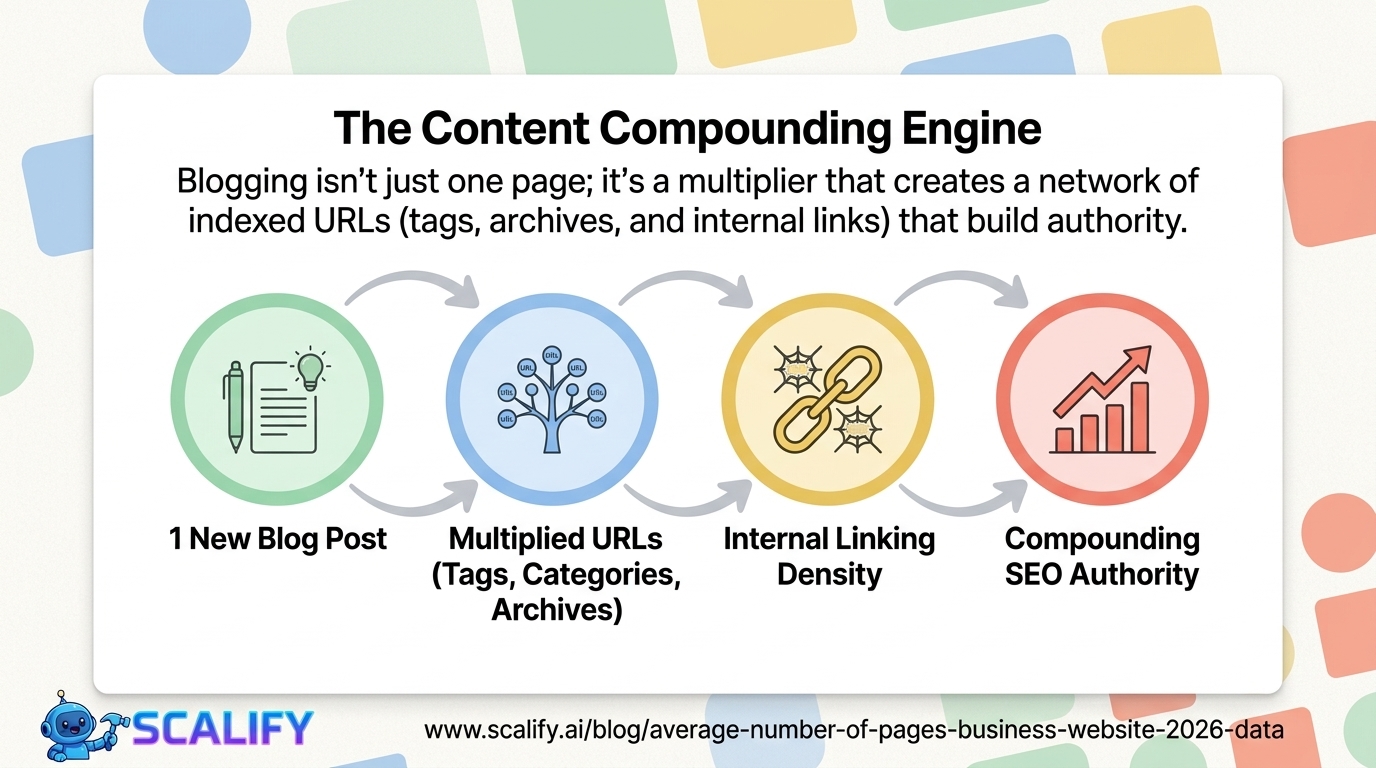
For a large e-commerce site with millions of product pages, breadcrumbs mean every product page is linking to its category page and its subcategory page, collectively creating an enormous number of internal links that support the ranking of those category pages. This is non-trivial SEO infrastructure at scale.
Keyword Context in Anchor Text
Breadcrumb links typically use category or section names as anchor text — "Electronics," "Laptops," "Gaming Laptops." These keyword-rich anchors provide context to search engines about what each parent page is about, supplementing whatever text links exist in other navigation elements.
Implementing Breadcrumbs Correctly
Visual Design Principles
Breadcrumbs should be prominent enough to be useful but subordinate to the main navigation and page content. They're a wayfinding aid, not a primary navigation element. Typical placement: below the header navigation, above the page title and main content area.
Text size should be smaller than the main content typography — usually 12–14px vs. body text at 16px. The links should be recognizable as links (either through color or underline) but the visual treatment should be less prominent than primary navigation links.
The current page (the last crumb) is typically non-linked and slightly visually distinct from the linked parent crumbs — a different color or weight to signal "this is where you are, not where you can go."
Structured Data Markup
To enable breadcrumb rich results in Google search, implement BreadcrumbList structured data as JSON-LD in the page's head section. Each item in the breadcrumb list requires a name and URL (except the current page, which may omit the URL). The markup is straightforward and well-documented in Google's structured data documentation.
For WordPress sites, Yoast SEO and Rank Math automatically generate both the visible breadcrumb HTML and the structured data markup. For Shopify, breadcrumb structured data is often included in theme code and can be verified using Google's Rich Results Test tool. For custom implementations, the JSON-LD breadcrumb format is clean and easy to implement.
Mobile Breadcrumbs
On mobile, full breadcrumb trails can be too long for the narrow viewport. A long trail like "Home > Electronics > Computers > Laptops > Gaming > ASUS ROG" wrapping across multiple lines on a 375px screen is ugly and wastes space.
Common solutions: truncate middle crumbs and show "... > Parent > Current Page" (an ellipsis representing the hidden middle of the trail), make the breadcrumb horizontally scrollable on mobile, or show only the immediate parent link on mobile ("< Back to Gaming Laptops") rather than the full trail. The last option sacrifices structural information for usability — often the right trade-off for mobile contexts where a compact navigation solution serves users better than a full hierarchy display.
Common Breadcrumb Mistakes
Including the current page as a link. The current page in the breadcrumb should not be linked — it's where you are, not where you can go. Linking the current page creates a link that goes nowhere useful and can confuse users who click it expecting navigation.
Inconsistent breadcrumb structure. Breadcrumb trails should consistently reflect the site's hierarchy. If a product page sometimes shows "Home > Products > Laptops > Product" and sometimes shows "Home > Sale > Product" depending on how the user arrived, the inconsistency undermines the structural clarity breadcrumbs are meant to provide. Breadcrumbs should reflect the canonical path, not the arrival path.
Implementing breadcrumbs on pages that don't benefit. Homepage, top-level category pages, and pages on flat sites generally don't need breadcrumbs. A breadcrumb on the homepage that just says "Home" is meaningless. Don't implement breadcrumbs site-wide out of convention — implement them on the pages and sections where the depth and hierarchy make them genuinely useful.
Forgetting structured data. A visible breadcrumb without corresponding structured data markup misses the SEO opportunity for rich results in search. The markup is low-effort and high-reward — don't skip it.
The Bottom Line
Breadcrumbs are a small UX detail with meaningful impact on large, hierarchically organized websites. They reduce disorientation for visitors who arrive at deep pages from search, provide clear paths back to parent categories, generate systematic internal linking that supports SEO, and enable enriched appearances in search results.
For small brochure sites, they're unnecessary complexity. For e-commerce stores, large content sites, documentation platforms, and any site with three or more levels of content hierarchy, they're worth implementing correctly — visible HTML, proper structured data, and appropriate mobile handling.
Technical details like breadcrumb implementation are part of the SEO-ready foundation in every website Scalify builds — small things done right that compound into meaningful search performance advantages over time.
Key Takeaways and Next Steps
The principles and data in this guide reflect what actually works in professional web development and digital marketing in 2026 — not theoretical best practices but measured, documented outcomes from implementations at scale. The gap between knowing these principles and benefiting from them is always execution: the businesses that act on what they read, implement changes systematically, and measure the results consistently outperform those who consume information without converting it to action.
For any improvement described in this guide, the implementation sequence that produces the best outcomes: assess your current situation against the benchmarks provided, identify the 2–3 highest-impact improvements specific to your situation, implement them with measurement tracking in place, evaluate results after 30–60 days, and plan the next iteration based on what you learned. This cycle — assess, prioritize, implement, measure, iterate — is the operational foundation of continuous improvement that compounds into significant competitive advantage over the 12–24 month horizon.
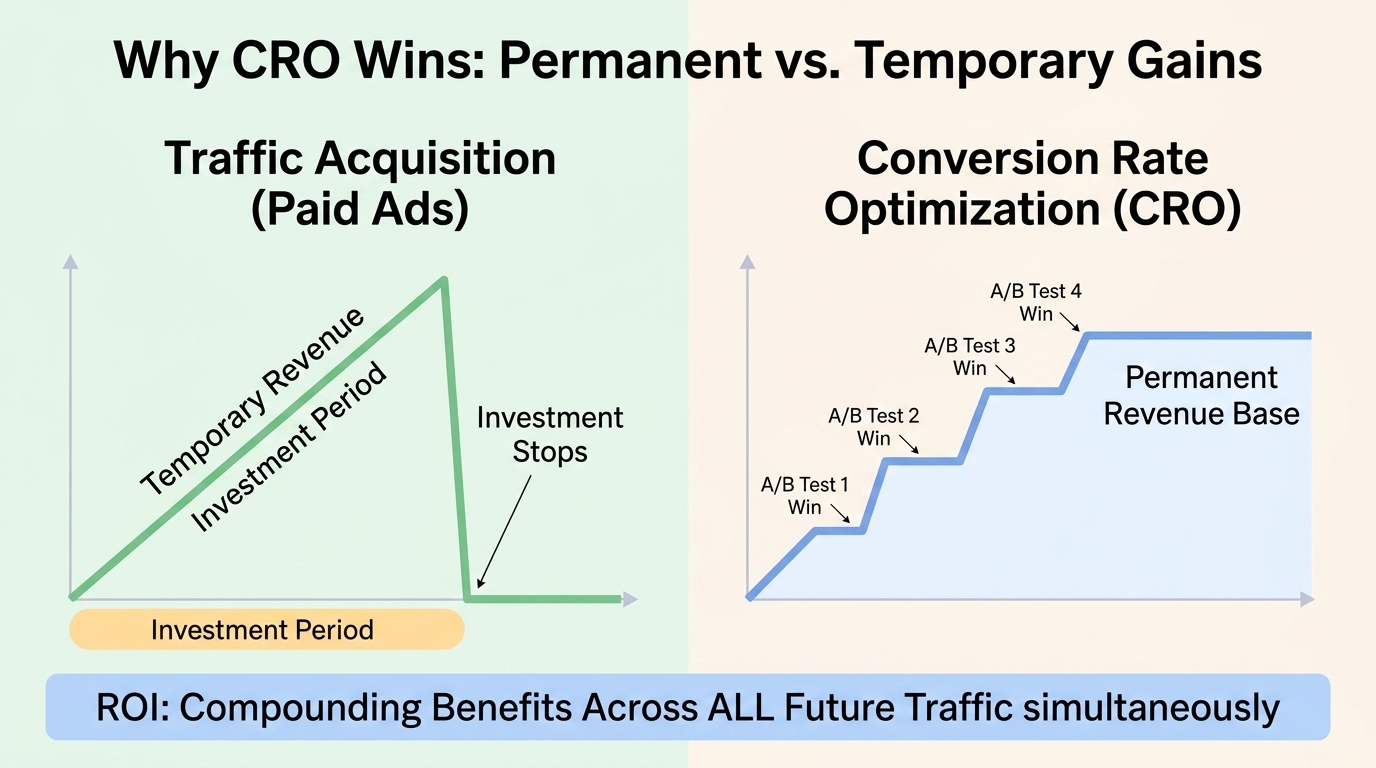
The compounding returns from consistent web presence investment are not linear: a website that improves slightly each month accumulates to dramatic improvements over a year, and those improvements multiply with each other. Faster load times improve both search rankings and conversion rates simultaneously. Better content attracts backlinks that improve rankings that attract more traffic. More testimonials build trust that improves conversion rates that improve revenue that funds more investment. The interconnected nature of website performance means that each improvement amplifies the value of every other improvement — making the decision to invest consistently, across multiple dimensions simultaneously, the highest-ROI approach to digital marketing available to most businesses.
At Scalify, every website we build reflects these principles — technically optimized, conversion-focused, SEO-ready, and designed to compound in value over time as content, backlinks, and organic authority accumulate on the strong foundation we deliver in 10 business days.







.jpeg)
.jpeg)

78 SW 7th St, Miami, FL 33130