

What Is a Chatbot on a Website and Should You Have One?
By Josh Ternyak

March 28, 2026
Chatbots promise 24/7 lead capture and instant answers — but they can also frustrate visitors if done badly. This guide explains what website chatbots actually do, which types work, and how to decide if one makes sense for your site.
The Tool That Can Either Impress Your Visitors or Drive Them Away
You've interacted with website chatbots hundreds of times. The little bubble that appears in the corner. "Hi! I'm here to help!" The question that pops up: "What brings you to our site today?" Or maybe you've tried to get a quick answer from a chatbot and ended up clicking through five unhelpful suggestions before giving up and leaving the site entirely.
Chatbots are one of the more polarizing elements in web design. When they work — when they're well-configured, genuinely helpful, and appropriately deployed — they increase lead capture, reduce friction in the buying process, and provide visitors with answers at 2am when no human is available. When they don't work — generic responses, inability to handle real questions, persistent interruption — they frustrate visitors and make the brand look less capable, not more.
The difference between a good chatbot and a bad one is everything. This guide covers what website chatbots are, how they work, which types exist, when they make sense, and how to implement one that actually helps your business rather than undermining it.
What a Website Chatbot Actually Is
A website chatbot is a software application that simulates conversational interaction with website visitors, typically through a messaging interface that appears as a widget (usually in the bottom corner of the page). Visitors type questions or choose from prompted options; the chatbot responds with answers, asks qualifying questions, collects information, or routes the conversation to a human agent.
The core purpose of most website chatbots is to handle visitor interactions at scale — answering common questions, capturing lead information, qualifying prospects, and routing complex inquiries — without requiring a human available at every moment.
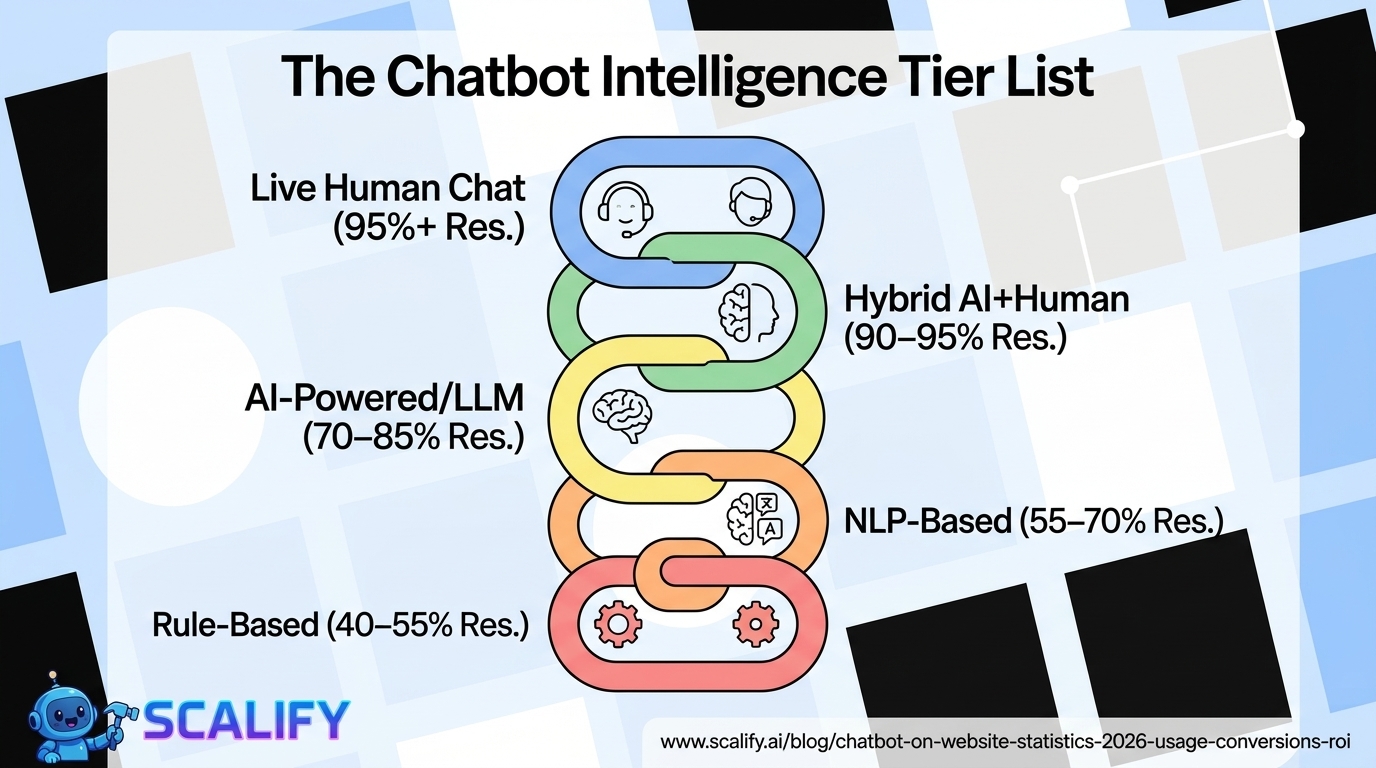
Chatbots exist on a spectrum from extremely simple (button-based decision trees with scripted responses) to extremely sophisticated (AI-powered conversational agents that can understand natural language, handle complex queries, and generate contextually appropriate responses). Understanding where on this spectrum any given chatbot sits is essential for setting appropriate expectations about what it can and can't do.
Types of Website Chatbots
Rule-Based Chatbots (Decision Tree Bots)
The simplest and most common type. Rule-based chatbots follow a decision tree of pre-defined paths: the visitor selects or types a trigger that matches a rule, and the bot responds with a pre-written response. The conversation follows a branching script, not real-time intelligence.
Example: "What can I help you with? [a] Learn about our services [b] Get a quote [c] Speak to someone." The visitor selects (b), the bot shows a quote request form.
Rule-based bots are reliable, predictable, and easy to configure. Their limitation: they can only handle scenarios explicitly scripted. A visitor who asks something outside the decision tree gets a response like "I didn't quite catch that — can you pick one of these options?" which can feel frustrating when the visitor has a legitimate question the bot simply wasn't configured to handle.
Tools like Tidio, ManyChat, and most basic live chat platforms offer rule-based bot builders. They're appropriate for businesses with predictable, limited question sets — primarily qualifying leads, routing to the right human, and handling a defined set of FAQs.
AI-Powered Chatbots (NLP Bots)
These use Natural Language Processing (NLP) and machine learning to understand intent from free-text input rather than requiring exact keyword matches or button selections. Instead of a rigid decision tree, they interpret the meaning of what the visitor types and generate responses from a knowledge base or trained model.
AI chatbots can handle a much wider range of phrasings and questions without explicit scripting for each variation. "What do you charge for a basic website?" and "How much does it cost to get a website built?" are the same question phrased differently — a rule-based bot needs to anticipate both phrasings; an NLP bot understands they're asking the same thing.
The gap between AI chatbots from 2019 and those available in 2026 is dramatic. Large language models have transformed what AI chatbots can do: they can now hold coherent multi-turn conversations, understand context from earlier in the conversation, access your knowledge base or documentation to answer specific questions, and generate responses that feel genuinely conversational rather than canned.
Platforms: Intercom (with AI-powered "Fin"), Drift, Zendesk AI, and specialized solutions built on GPT-4 or similar models.
Hybrid Chatbots (Bot + Human Handoff)
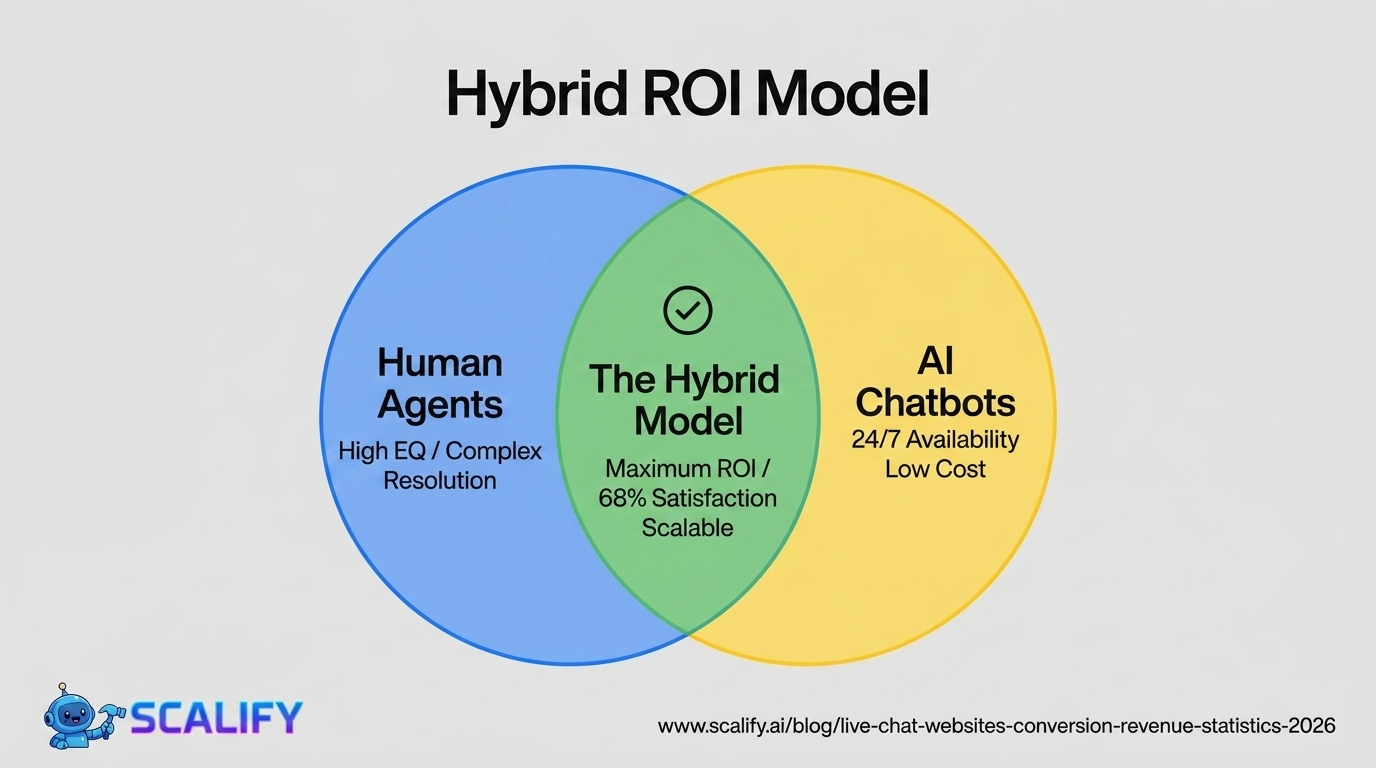
The most effective implementation for most businesses: a bot handles initial interactions (collecting information, answering common questions, qualifying intent) and can hand off to a human agent when the conversation requires it or when the visitor requests it.
The bot does the work when no human is available (nights, weekends, high-traffic periods) and when the query is simple enough to handle without human judgment. Complex questions, frustrated visitors, or high-value prospects get escalated to a human.
This hybrid model gets the efficiency benefits of automation without the experience degradation of forcing every visitor through a bot when a human would serve them better. It's the approach most enterprise tools (Intercom, Drift, Zendesk) support natively.
Live Chat with Bot Features
Some "chatbots" are primarily live chat platforms with automated features added. When a human is available, they chat directly with visitors. When no human is available, automated responses, FAQ suggestions, and lead capture forms activate. Tools like Crisp, Tidio, and Olark operate in this mode.
For small businesses with limited bandwidth, this is often the most practical approach: you get the live chat benefits when available, and basic bot functionality to catch visitors when you're not.
What Chatbots Are Actually Good At
Lead capture outside business hours. This is perhaps the strongest use case for most businesses. A visitor at 11pm on a Saturday who wants to inquire about your services would otherwise leave with nothing. A well-configured chatbot can collect their name, email, and a brief description of what they need — creating a lead record that your team follows up with the next business day. Businesses consistently report 15–30% of chatbot leads coming from outside business hours that would have been entirely lost without automation.
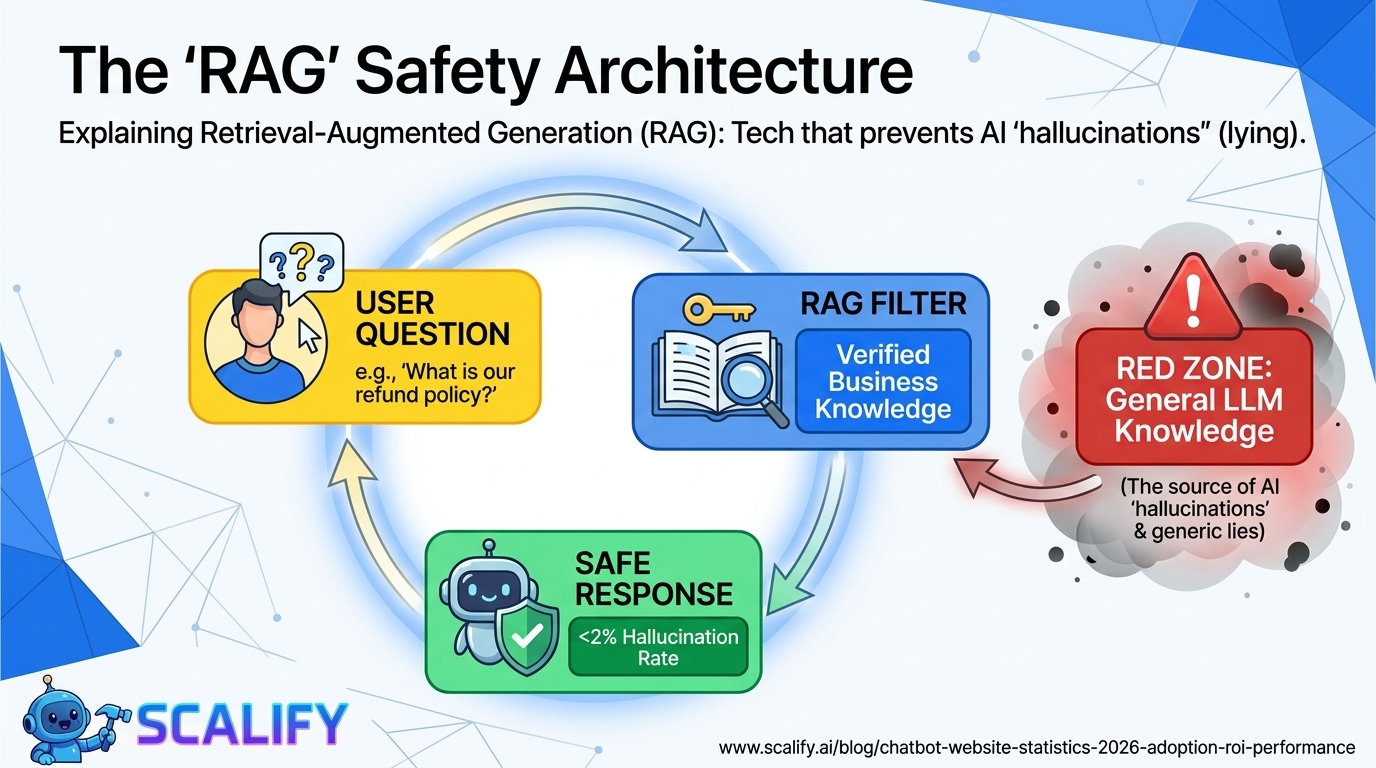
FAQ handling at scale. Questions like "What are your hours?", "Do you ship internationally?", "What's your refund policy?", "How long does a project take?" — these are asked constantly and the answers are the same every time. A chatbot configured to handle these with accurate answers reduces the volume of repetitive inquiries your team handles and gives visitors immediate answers rather than making them wait for email replies.
Lead qualification. Before routing a prospect to a sales rep or scheduling a call, a chatbot can ask qualifying questions: What's your budget? What's your timeline? What specifically are you looking to accomplish? This surfaces high-quality, ready-to-buy prospects from the broader pool of inquiries, letting sales focus on conversations most likely to convert.
Navigation assistance on large sites. "Where do I find pricing?" "Can you show me your portfolio?" "How do I contact support?" — navigation questions that help visitors find what they're looking for without hunting. A bot that efficiently points visitors to the right section saves frustration and reduces bounce.
Appointment and demo booking. Integrating a chatbot with a scheduling tool allows visitors to book calls, demos, or consultations directly through the chat interface — eliminating the friction of email back-and-forth. "Would you like to book a 20-minute intro call? Here's my calendar." Done.
What Chatbots Are Bad At (When They Hurt More Than Help)
Complex, nuanced questions. Rule-based bots fail here entirely. AI bots handle it better but still struggle with highly specific, technical, or context-dependent questions. A visitor asking something the bot hasn't been trained on either gets a wrong answer (dangerous) or a "I'm not sure, let me connect you with someone" (acceptable fallback, but the bot added no value).
Angry or frustrated visitors. Someone who has a problem, a complaint, or high frustration needs a human. A bot responding to emotional distress with scripted responses or decision tree navigation makes the situation worse. Detecting frustration signals (phrases like "this doesn't work," "I'm frustrated," "I need to speak to a person") and immediately offering human handoff is non-optional for any chatbot serving existing customers.
High-consideration purchases requiring trust-building. A visitor considering a $50,000 enterprise software contract isn't going to commit based on chatbot interaction. For high-consideration B2B sales, chatbots can help with initial qualification and meeting scheduling, but they can't replace the relationship-building that high-value sales require. Use the bot to get them to a human conversation faster, not to try to close through automation.
Brand experiences that require warmth. Luxury brands, premium service businesses, and high-touch professionals like therapists, financial advisors, and boutique consultancies often find that chatbots feel incongruous with their brand positioning. The "bot aesthetic" — impersonal, efficient, slightly mechanical — conflicts with brands built on relationship, exclusivity, or emotional resonance. In these cases, live chat from a real team member (when available) and an excellent contact form (when not) is often the better choice.
The Implementation Mistakes That Make Chatbots Annoying
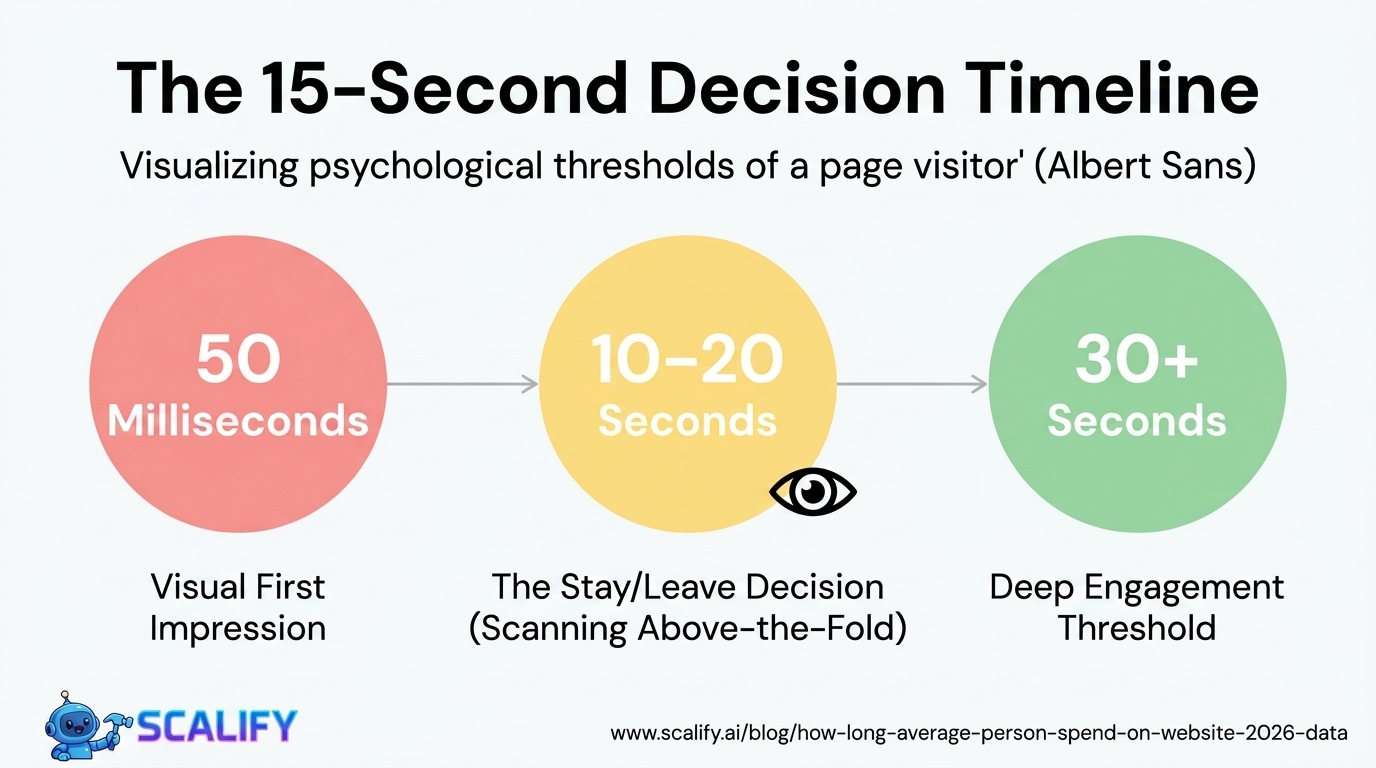
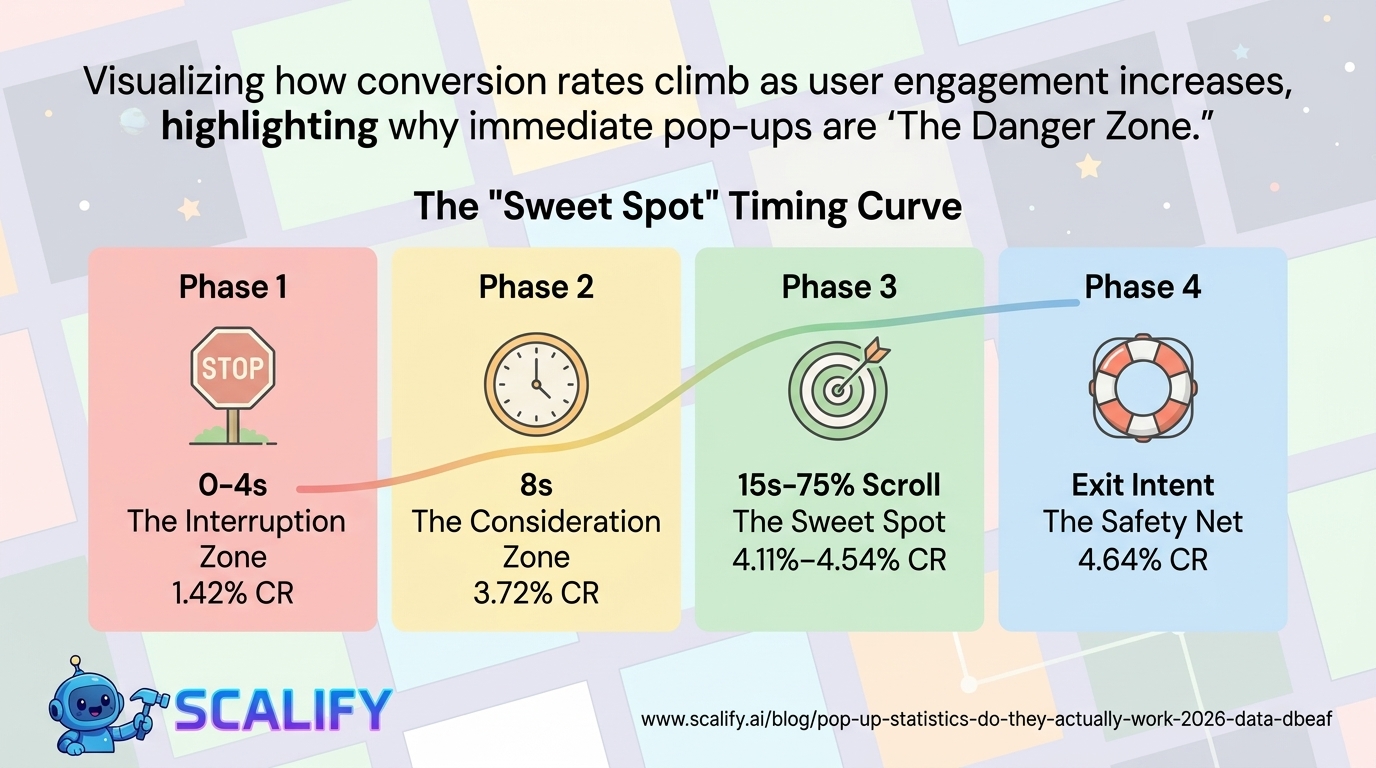
Appearing too soon. A chatbot that pops up and starts a conversation 2 seconds after arrival — before the visitor has read anything — is an interruption. Give visitors at least 15–30 seconds before any proactive engagement. Better: trigger based on behavioral signals like scroll depth, time on a specific page, or exit intent rather than a simple timer.
Persistent, unmissable presence. A chatbot bubble that repeatedly pulses, shows unread message indicators for automated messages, or displays intrusive pop-up messages over the page content is more likely to drive visitors away than to convert them. The chatbot should be accessible and visible, not dominant.
Inability to reach a human. A chatbot with no path to human contact is a dead end for visitors with complex needs. Always provide a clear way to either speak to a person or submit a message that a person will respond to. "I'll have one of our team members follow up within one business day" is an acceptable outcome. "I'm sorry, I can't help with that" with no further recourse is not.
Misleading about being human. Chatbots that represent themselves as human — real names, first-person claims of being a person — are a dark pattern that erodes trust when visitors realize they've been deceived. Being upfront that the visitor is talking to a bot ("Hi, I'm the Scalify assistant") is both more ethical and, in many cases, legally required under FTC regulations and GDPR provisions.
Asking for information already available. If a chatbot asks "What's your email?" when the visitor is already logged in, or asks "What service are you interested in?" on the specific Services page they just came from — the bot is demonstrating that it's not contextually aware, which feels clunky and undermines confidence.
Should Your Website Have a Chatbot?
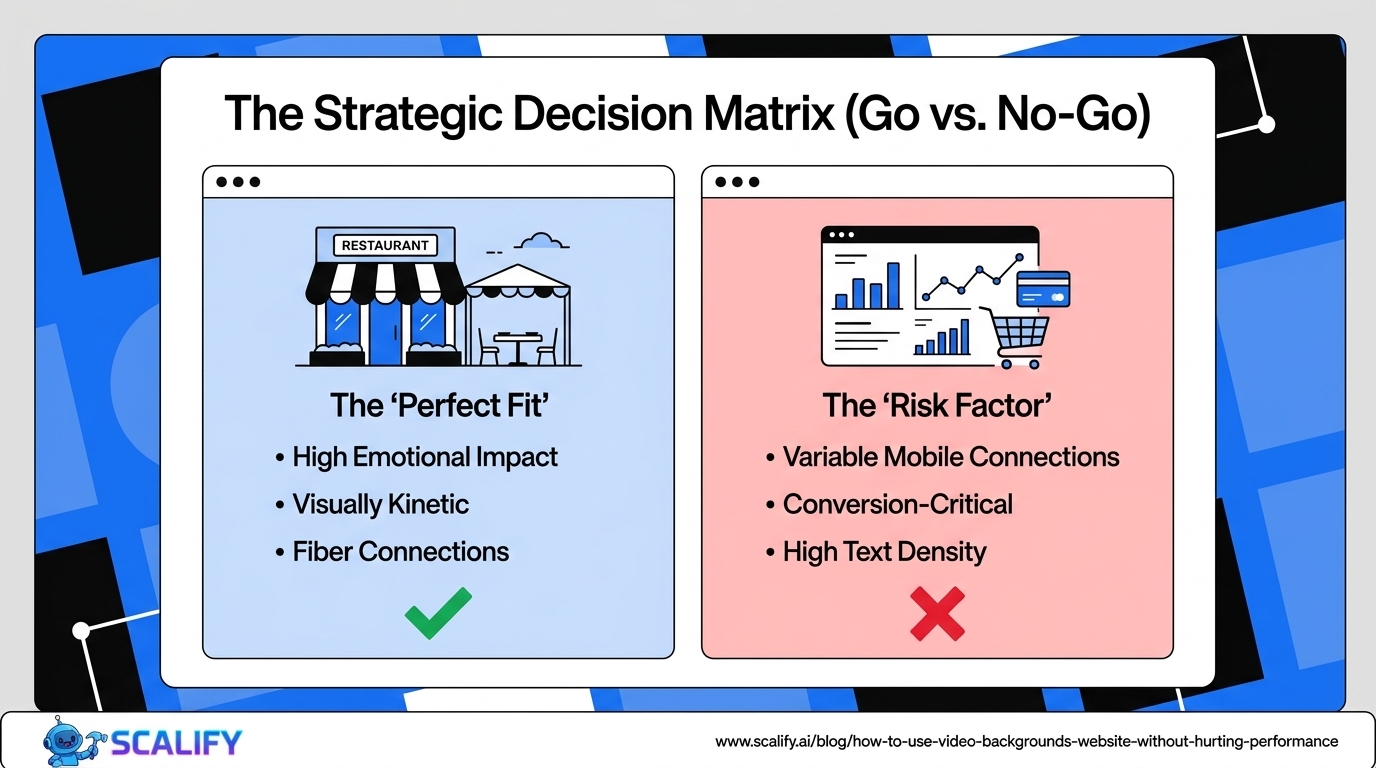
The honest answer is: it depends on your specific situation. Here's a decision framework:
Strong case for a chatbot: You receive frequent, repetitive inquiries with consistent answers. You have significant traffic outside business hours and want to capture leads during that time. Your sales process benefits from initial qualification before a human gets involved. You're a growing business where chatbot automation can handle volume that would otherwise require more headcount.
Weak case for a chatbot: Your inquiry volume is low enough that personal responses are feasible. Your brand is positioned around high-touch, premium, or deeply personal service. You don't have time to properly configure and maintain the bot. You're adding it because "it seems like something successful businesses have" rather than because of a specific problem it solves.
The minimum viable chatbot: If you add one and can only commit minimal setup time, at minimum configure it to: capture visitor name and email, respond to the 5–10 most common questions about your business, provide a way to reach a human or submit a detailed inquiry, and not be intrusive about when and how it appears. A minimal bot done well beats an ambitious bot done poorly.
The Bottom Line
Chatbots are a genuine conversion tool when deployed thoughtfully. The gap between a well-implemented chatbot and a poorly implemented one is enormous — one genuinely helps visitors and captures leads around the clock, the other frustrates visitors and makes the brand look amateurish. The decision to add one should be based on specific business needs rather than convention, and the implementation should prioritize genuine visitor value over lead capture at any cost.
Get it right and a chatbot becomes one of your most consistent lead generators. Get it wrong and you'll notice higher bounce rates and visitor complaints about the annoying pop-up. The difference is in the configuration details.
At Scalify, we build websites with the right tools for the right businesses — which sometimes means a well-configured chatbot and sometimes means the clean contact form is the better choice. One size doesn't fit all, and we build what actually works for each client.


.jpeg)
.jpeg)

78 SW 7th St, Miami, FL 33130