


What is a CMS? Content Management Systems Explained
By Josh Ternyak

March 28, 2026
A CMS lets you manage your website content without touching code — but not all of them work the same way. This guide explains what a CMS actually is, the main types, and how to choose the right one.
The Tool That Changed Who Could Run a Website
There was a time — not that long ago — when updating a website meant opening a code editor, finding the right HTML file, making your change, and re-uploading the file to a server via FTP. If you weren't a developer or had access to one, your website was essentially frozen the moment it launched.
Content Management Systems changed that permanently. They put the ability to publish, update, and manage website content into the hands of anyone who can navigate a word processor. Writers, marketers, business owners, journalists — all of them can create and publish content on a professional website without knowing a single line of HTML.
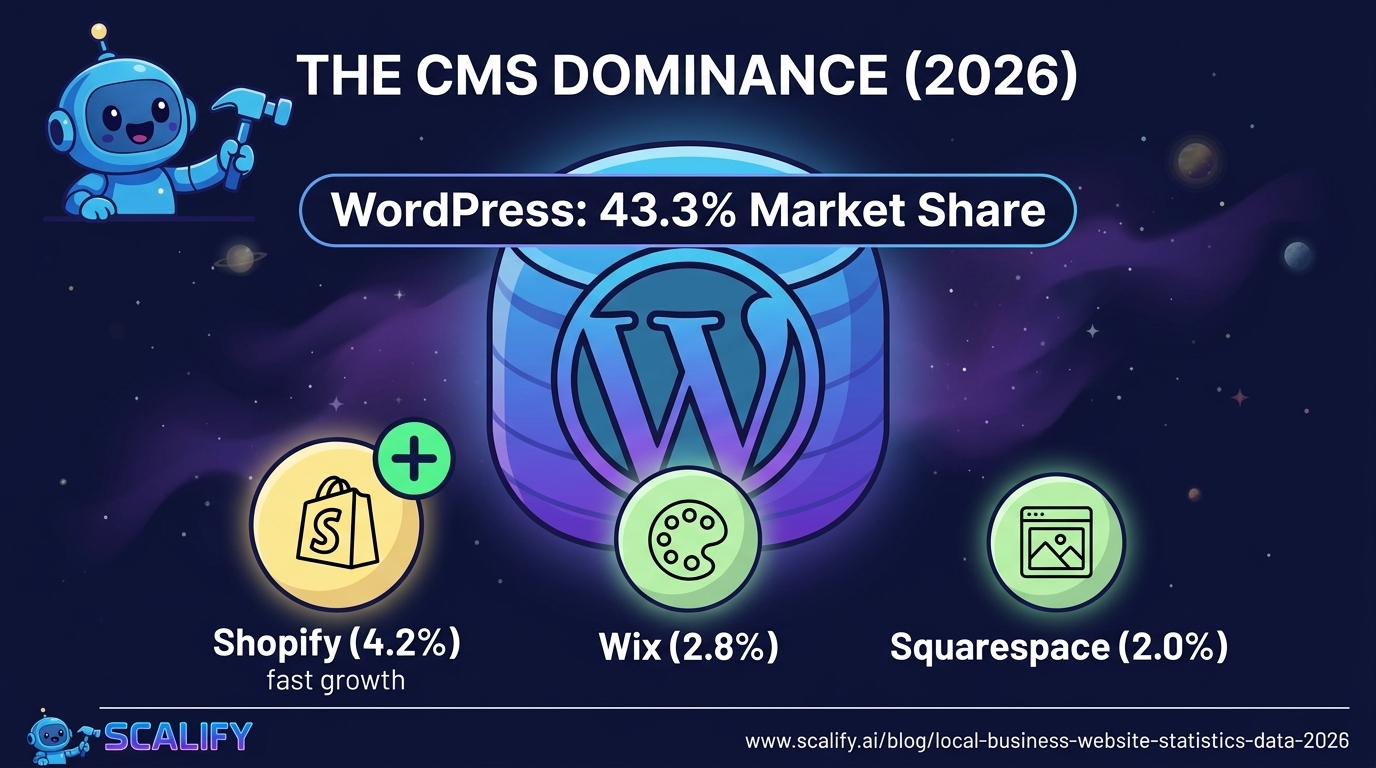
Today, CMSs power approximately 65% of all websites that use a recognizable content management system, and WordPress alone accounts for over 43% of the entire web. Understanding what a CMS is, how different types work, and which one fits your situation is one of the most practically useful things you can learn about building and running a website.
What a CMS Actually Is
A Content Management System is software that separates the management of content from the technical implementation of how that content is displayed on a website. It gives non-technical users a friendly interface — think of it like a dashboard — where they can create, edit, organize, and publish content without interacting with the underlying code.
The simplest way to understand it: a CMS has two sides.
The backend (sometimes called the admin area or dashboard) is where content creators work. They log in, see an interface not unlike Google Docs or a simple web form, write their content, add images, set a publication date, and click Publish. No code. No FTP. No technical knowledge required.
The frontend is what visitors see — the public-facing website that renders the content the editors created, styled according to a theme or custom design. The CMS handles the machinery that connects these two sides: storing the content in a database, applying the appropriate templates, and serving the result to visitors.
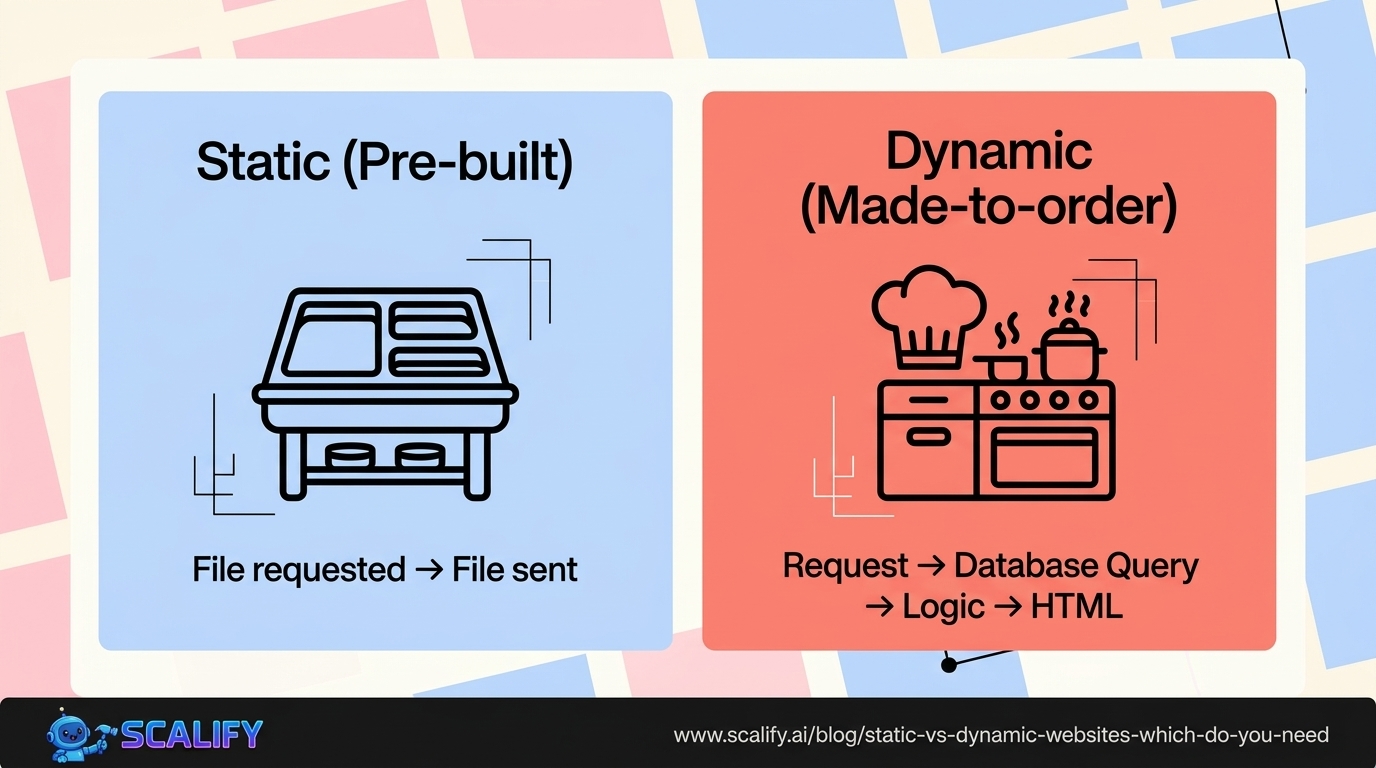
Before CMSs, the content and the presentation were tangled together in the same HTML files. A CMS decouples them: content lives in a database, presentation is defined by templates, and the CMS assembles them on demand.
The Core Components of a CMS
Understanding what a CMS is made of helps explain why different systems behave differently and have different strengths.
Content Repository (Database)
The database is where all your content lives — every blog post, every page, every product description, every image reference. Most traditional CMSs use relational databases (MySQL, PostgreSQL) that organize content in tables with rows and columns. The CMS reads from and writes to this database every time someone creates content or a visitor loads a page.
The quality and structure of the database layer affects performance significantly. A bloated database with thousands of revisions, spam comments, and unoptimized queries is one of the most common reasons WordPress sites slow down over time.
Content Editor Interface
This is the editor experience — the interface where content creators actually do their work. Early CMSs had primitive text editors. Modern ones offer rich WYSIWYG (What You See Is What You Get) editors that let you format text, embed media, drag and drop blocks, and preview how content will look before publishing.
The editor quality varies significantly across CMSs and is one of the most important factors in day-to-day usability. A great editor (like Webflow's Designer or Contentful's rich text editor) makes content creation fast and enjoyable. A clunky one creates friction that slows down your publishing cadence and frustrates your team.
Content Types and Structure
A CMS needs to handle different types of content — blog posts, product listings, team member profiles, events, testimonials — each with its own set of fields. A blog post has a title, body, author, publish date, and categories. A product has a name, price, description, images, SKU, and inventory count. These are different content types with different structures.
How a CMS handles content types is one of the key differences between systems. WordPress's traditional content types (posts and pages) are simple and familiar but limiting. Webflow CMS lets you define custom content types with custom fields visually. Contentful and Sanity are built around fully flexible content modeling. Understanding this distinction becomes important as your content needs grow beyond simple blog posts.
User Management and Permissions
Most CMSs support multiple users with different roles and capabilities: administrators who can change anything, editors who can publish content, authors who can write but not publish, contributors who can draft but not edit others' work. This role-based access control becomes essential for larger teams where you want a junior writer to be able to draft posts but not accidentally delete pages or change site settings.
Theme and Template System
The template system defines how content is visually presented on the frontend. Traditional CMSs like WordPress have a large ecosystem of themes — pre-built design frameworks you can install and customize. Modern visual builders like Webflow let you design templates with complete control directly in the browser. Headless CMSs (more on these shortly) leave the frontend entirely to the development team, with no built-in template system at all.
Plugin and Extension Architecture
Most established CMSs have plugin ecosystems that extend core functionality: SEO tools, contact forms, e-commerce, social sharing, analytics integration, membership systems, and thousands of other capabilities. WordPress has over 60,000 plugins in its official directory. This extensibility is one of the primary reasons WordPress became so dominant — almost any feature you could want already exists as a plugin.
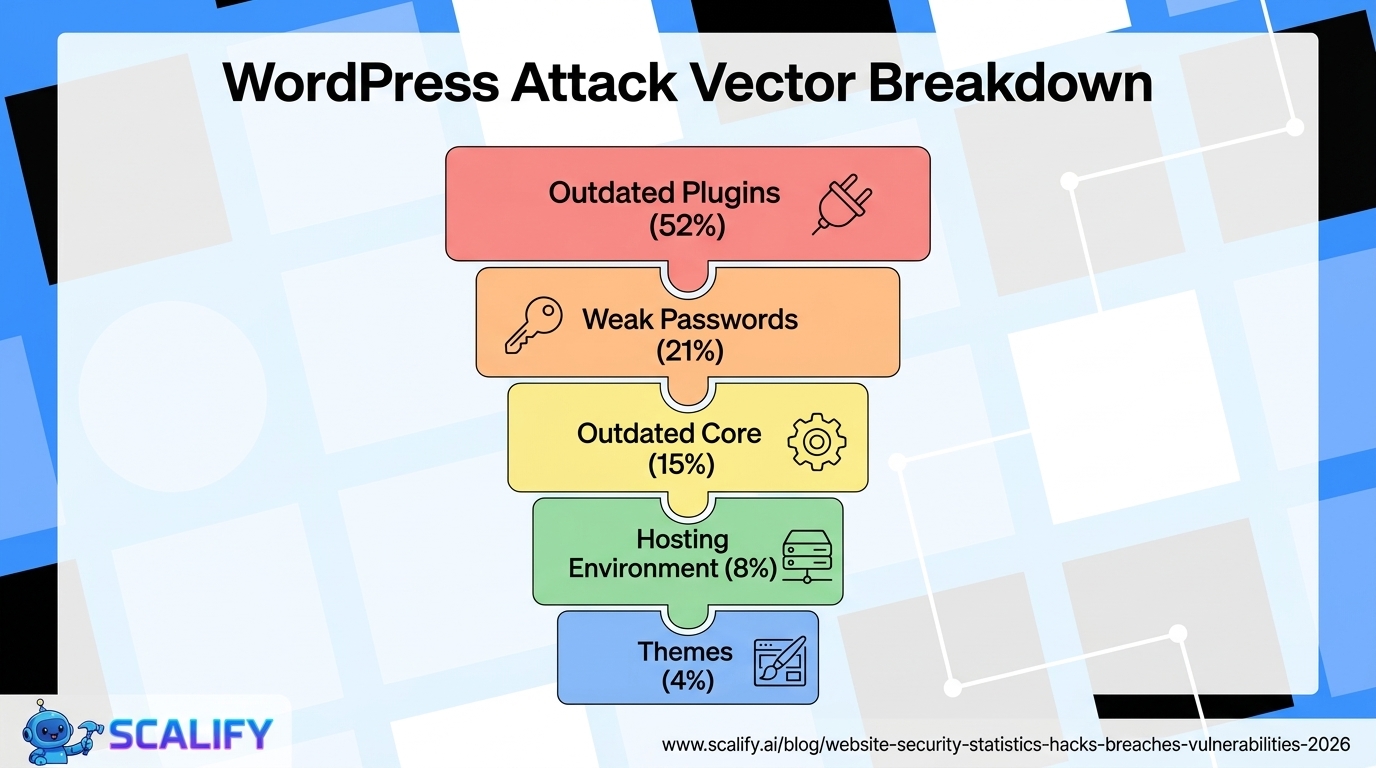
The plugin ecosystem is also one of the biggest sources of WordPress problems: outdated plugins, conflicts between plugins, security vulnerabilities in poorly maintained plugins, and performance bloat from too many plugins running simultaneously.
The Main Types of CMS
Not all CMSs work the same way. There are three meaningfully different architectural approaches, and the differences have significant practical implications.
Traditional (Coupled) CMS
In a traditional CMS, the content management system and the frontend presentation layer are tightly integrated — they're the same platform. WordPress is the canonical example. You install WordPress, and it handles everything: the admin interface for content creation, the database storage, the template system for frontend display, and the serving of pages to visitors.
Everything lives in one place. Updates to content affect the live site immediately. The same system manages both editing and displaying. This tight coupling is why traditional CMSs are easy to get started with — one installation, one dashboard, one system to learn.
The downsides of coupling: the CMS architecture constrains your frontend choices. You're building your site in WordPress's paradigm, using WordPress's template system, subject to WordPress's performance characteristics. For most informational and content sites, this is completely fine. For high-performance applications or sites with complex, custom design requirements, the constraints start to chafe.
Other traditional CMSs in common use: Drupal (powerful, complex, favored by enterprise and government), Joomla (less popular than it once was), Craft CMS (developer-friendly, excellent content modeling), and many industry-specific platforms.
Headless CMS
A headless CMS is a content management system without a frontend. It provides the backend — content storage, editing interface, APIs — but has no built-in mechanism for displaying that content to website visitors. The "head" (the presentation layer) is removed; hence "headless."
Instead of rendering pages directly, a headless CMS exposes content through an API (typically a REST API or GraphQL endpoint). Developers then build the frontend using whatever technology they want — Next.js, React, Vue, a mobile app, a digital signage system — and pull content from the CMS via that API.
The advantages are significant:
Frontend freedom. Developers aren't constrained by the CMS's template system. They can build any kind of frontend experience using modern tools.
Performance. Decoupled frontends are often built as static sites (JAMstack architecture), delivering the performance benefits of static files with the editorial convenience of a CMS.
Multi-channel publishing. The same content can be served to a website, a mobile app, a voice interface, an email system, and a digital kiosk — all from the same CMS. Write once, publish everywhere.
No security exposure from the CMS. Since the CMS isn't publicly accessible (only its API is), it has a much smaller attack surface than a traditional CMS with a publicly accessible admin login.
The tradeoff: headless CMSs require developer involvement to build and maintain the frontend. You can't install a headless CMS and immediately have a working website — you need to build the presentation layer. This makes headless appropriate for teams with technical resources, not for business owners who want to manage their site without developer dependency.
Popular headless CMSs: Contentful, Sanity, Strapi, Storyblok, Prismic, DatoCMS.
Visual/Hybrid CMS (Webflow and Its Category)
A newer category has emerged that attempts to capture the benefits of both traditional and headless approaches: visual CMSs that provide a no-code frontend builder alongside a structured content management system.
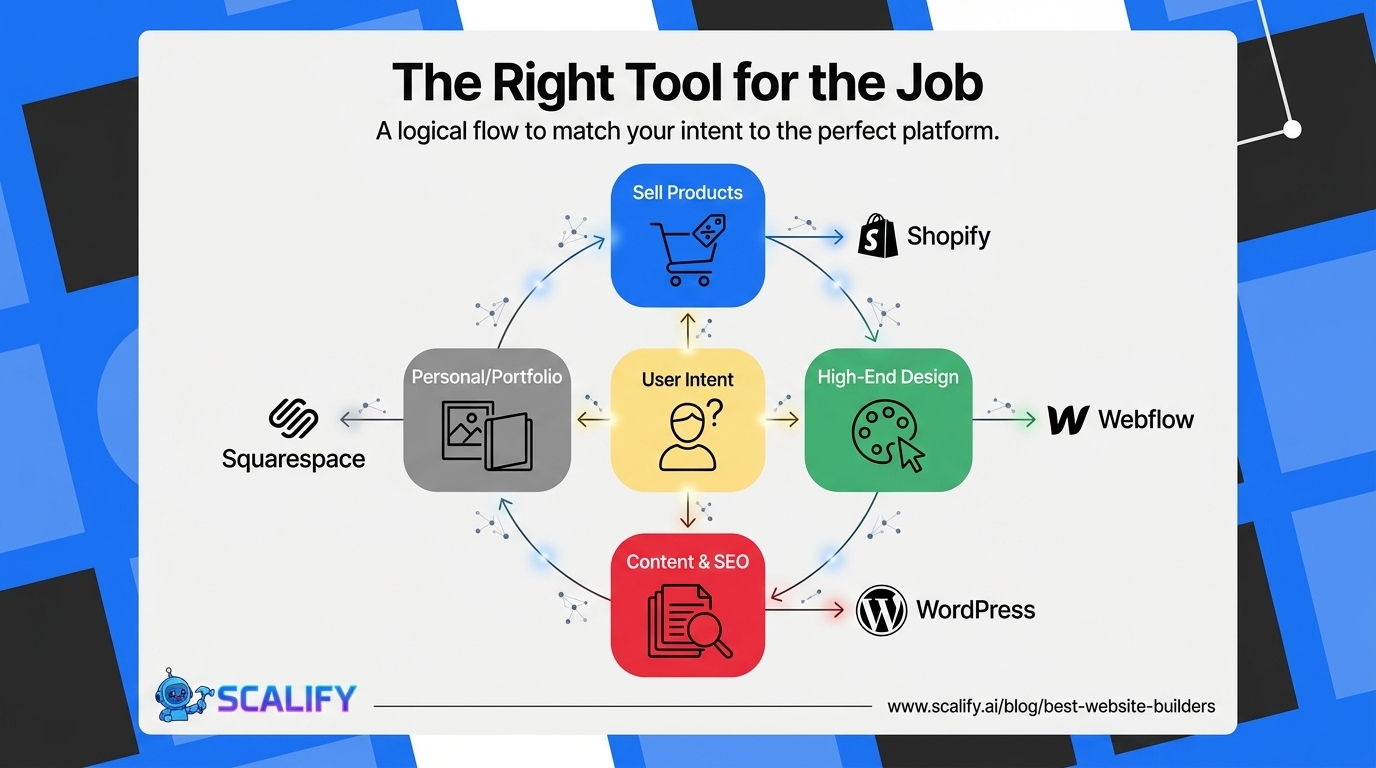
Webflow is the most prominent example. It's simultaneously a visual website builder (drag-and-drop, direct manipulation), a CMS with custom content types and a friendly editorial interface, and a hosting platform — all in one. Editors can manage content in a clean CMS interface. Designers can build the frontend visually without writing code. The resulting site is fast and performant, hosted on Webflow's infrastructure.
This category also includes Squarespace (more consumer-oriented), Editor X (Wix's professional-focused platform), and increasingly Framer.
The advantage: the editorial-developer-designer divide is bridged in a single platform. Less coordination overhead. Less technical debt. Accessible to non-developers without sacrificing design quality.
The limitation: you're within the platform's ecosystem. Deeply custom behavior requires workarounds or developer expertise to implement. And you're dependent on the platform's continued existence and pricing decisions.
The Most Popular CMSs: An Honest Assessment
WordPress
WordPress powers an almost surreal percentage of the internet — roughly 43% of all websites. It's been the default answer to "what CMS should I use?" for over a decade.
The reason for its dominance: it's free, open-source, has an enormous ecosystem of themes and plugins, benefits from massive community support, and has a low barrier to entry. Any web developer in the world knows WordPress. Hosting providers have optimized specifically for it. Content creators are familiar with it.
Its genuine strengths: flexibility and extensibility. With the right combination of plugins, you can build almost any kind of website on WordPress. The content editor (particularly since the Gutenberg block editor was introduced) is solid. The ecosystem of developers, designers, and support resources is unmatched.
Its genuine weaknesses: security (the most-targeted CMS on the internet), performance (requires significant optimization to be fast by default), and maintenance overhead (core updates, plugin updates, security patches — a WordPress site needs regular attention to stay healthy). The plugin ecosystem that is its greatest strength is also its greatest liability.
WordPress is the right choice when: your team is already familiar with it, you need a specific plugin that nothing else offers, you need a large pool of available developers, or the breadth of its ecosystem is genuinely necessary for your use case.
Webflow
Webflow has emerged as the professional designer's CMS of choice — a platform that offers genuinely sophisticated design capabilities without requiring code, combined with a clean CMS and reliable hosting.
Its strengths: design freedom (the visual builder is the most capable no-code tool available), performance (clean, optimized output with good default performance), hosting reliability, and an editorial interface that non-technical users can genuinely use without training.
Its weaknesses: price (more expensive than WordPress hosting), learning curve for designers coming from traditional tools, and some limitations in content modeling complexity compared to dedicated headless CMSs.
Webflow is the right choice when: design quality matters and you want it to be achievable without being a developer. When you want an all-in-one platform that handles design, CMS, and hosting. When you're willing to pay a premium for a more polished system.
Shopify
Shopify is the dominant CMS for e-commerce — a specialized platform built specifically for online stores. If your primary website purpose is selling products, Shopify is in a different category than WordPress or Webflow and deserves separate consideration.
It handles the full stack of e-commerce functionality — product management, inventory, checkout, payments, shipping, tax, customer accounts — with a level of reliability and optimization that custom WordPress/WooCommerce builds struggle to match. The admin interface is polished and non-technical users can run a full e-commerce operation from it.
The limitation: outside of e-commerce, Shopify's CMS capabilities are limited. For a business that's primarily content-focused with some products, the content management side of Shopify doesn't compare to WordPress or Webflow.
Contentful and Other Headless CMSs
Contentful is the most widely used headless CMS, particularly in enterprise and agency contexts. Its content modeling capabilities are sophisticated, its API is well-designed and reliable, and its editorial interface is clean enough for non-technical content teams.
Sanity is the developer community's current favorite — extremely flexible content modeling, a real-time collaborative editor, an open-source studio you can customize, and a generous free tier. It's become the go-to for teams that want maximum flexibility.
These platforms are right for teams with developer resources who want complete frontend freedom and potentially multi-channel publishing. They're wrong for business owners who want to manage their site independently without engineering involvement.
How to Choose the Right CMS for Your Situation
The right CMS depends on several intersecting factors:
Who will manage content? If non-technical people need to publish independently without developer help, you need a CMS with an excellent, accessible editorial interface. Webflow and WordPress both serve this well. Headless CMSs require more technical involvement for initial setup but can be made editor-friendly.
How complex is your content structure? A blog and a few pages is simple — almost any CMS handles it. Complex content types with relationships (products with variants, events with speakers, articles with authors that have their own profiles) require more capable content modeling. Webflow CMS, Contentful, and Sanity handle this better than basic WordPress setups.
How important is design quality? If you want a genuinely custom, high-quality design without writing CSS, Webflow is unmatched. If you have developer resources to build a custom frontend, headless gives you complete freedom. WordPress themes range from excellent to mediocre.
What's your technical capacity? Do you have developers available? Are you comfortable managing a platform with ongoing maintenance requirements? WordPress requires more ongoing technical attention than Webflow or a hosted headless CMS. Static-site-plus-headless-CMS architectures require developer setup but less ongoing maintenance.
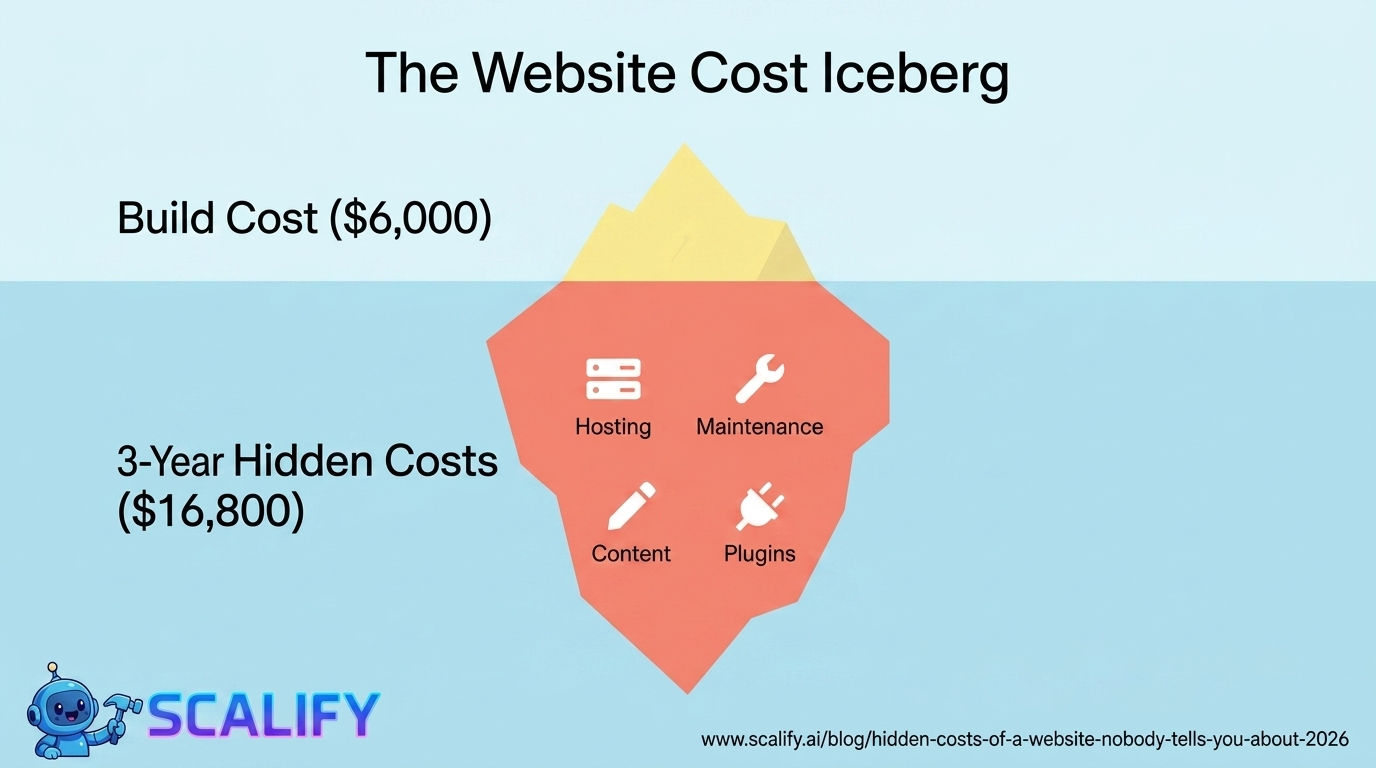
What's your budget? WordPress core is free but hosting, premium themes, and plugins add up. Webflow plans start at $23/month for basic sites, more for CMS and e-commerce. Contentful has a free tier but costs scale with usage. Build your full cost picture before committing.
The Bottom Line
A CMS is the infrastructure that makes maintaining a website practical for humans. The right one depends on your team, your content complexity, your design requirements, and your technical capacity. There's no universally correct answer — but there are definitely wrong answers for specific situations.
For most small businesses: Webflow offers the best combination of design quality, CMS capability, and editorial accessibility. WordPress remains the safe default with the widest ecosystem. Shopify is the right choice if e-commerce is your primary purpose.
If you want a website built on the right foundation with the right CMS for your specific needs — without having to become an expert in the options yourself — Scalify handles the technical decisions as part of delivering your complete website. You get the result you need without the research rabbit hole.



.jpeg)
.jpeg)

78 SW 7th St, Miami, FL 33130