


What Is a CTA and How Do You Write One That Actually Converts?
By Josh Ternyak

March 28, 2026
A call to action is the most important sentence on any web page — and most CTAs are written badly. This guide explains what makes a CTA work, shows real examples, and gives you a framework for writing ones that actually get clicked.
The One Sentence That Everything Else on Your Page Is Building Toward
You can have the most compelling headline on the internet, the most persuasive copy, the most beautiful design, the most credible testimonials. But if your call to action is weak, vague, or buried — none of it matters. The CTA is the instruction that tells a visitor what to do with all that persuasion. Without a clear, compelling one, the visitor has no obvious next step, and most will simply leave.
CTAs are simultaneously one of the simplest and most studied elements in web design. Simple because they're often just a few words on a button or link. Studied because those few words have a measurable, direct impact on conversion rate — and small changes in wording, color, size, placement, and context can move conversion rates by double-digit percentages.
This guide covers what a CTA is, the principles behind effective ones, how to write CTA copy that converts, common mistakes, and how to think about CTAs across different pages and contexts on your website.
What a CTA Actually Is
A call to action (CTA) is an instruction that prompts a visitor to take a specific, desired action. On a website, it's most commonly a button, a link, or a form with associated text that tells visitors what to do and invites them to do it now.
CTAs exist at every stage of the customer journey and serve many functions:
- "Get a Free Quote" — converting a visitor to a lead
- "Start Your Free Trial" — converting a prospect to a user
- "Add to Cart" — converting a browser to a buyer
- "Subscribe to Our Newsletter" — building an owned audience
- "Download the Guide" — gating a lead magnet
- "Book a Call" — initiating a sales conversation
- "Read More" — driving deeper content engagement
Every page that has a goal — which should be every page on your site — should have at least one CTA. The goal determines what the CTA should be, and the CTA should reflect that goal unambiguously.
Why Most CTAs Are Weak
Look at most business websites and you'll find variations of the same failure modes:
"Submit" — tells the visitor nothing about what they're submitting or what happens next. It's a technical label, not a conversion prompt.
"Contact Us" — so generic it could mean anything. What happens when I contact you? How long until I hear back? What should I expect?
"Learn More" — ubiquitous to the point of meaninglessness. Learn more about what? How long will it take? What will I know afterward that I don't know now?
"Click Here" — the original lazy CTA from the early web, which says nothing about the destination or the action's value.
These weak CTAs share a common failure: they don't tell visitors what they're getting or why it's worth clicking. They describe the mechanical action (submit, click) rather than the outcome or value the visitor receives from taking it.
The Anatomy of a High-Converting CTA
Research into CTA performance across millions of tests has revealed consistent patterns in what makes them work. A strong CTA typically has several components working together.
Action-Oriented Verb
CTAs begin with a verb — they tell you to do something. The most effective CTAs use specific, action-oriented verbs that describe the action clearly:
Get, Start, Download, Schedule, Book, Claim, Try, Join, Discover, See, Watch, Read, Build, Create.
Weaker verbs — Submit, Click, Go, Enter — describe mechanical actions rather than outcomes. "Get Your Free Website Quote" is more compelling than "Submit" because the former tells you exactly what you're getting; the latter is just a button label.
The Outcome or Object of the Action
After the verb: what are you getting, doing, starting, or claiming? Be specific. The more concrete the object, the lower the perceived risk and uncertainty.
"Download the 10-Point Website Audit Checklist" is more compelling than "Download the Guide" because you know exactly what you're getting. "Start Your 14-Day Free Trial" beats "Start Free Trial" because the "14-Day" adds specificity that reduces the fear of commitment.
Value Communication
The best CTAs communicate value — either in the CTA itself or in the supporting text immediately around it. "Get Your Free Quote" includes value in the word "free." "Book a 15-Minute Strategy Call — No Sales Pressure" includes value (15-minute = low time commitment) and addresses a common objection (no sales pressure).
When the CTA itself can't carry all the value communication, the text immediately below or above it — sometimes called a CTA support statement — handles that job: "No credit card required." "Free for 30 days." "Cancel anytime." "Most teams are up and running in under an hour." These micro-copy elements remove friction and lower the perceived risk of clicking.
First-Person Language
Consistently across A/B tests, first-person CTA phrasing outperforms second-person:
"Start My Free Trial" vs "Start Your Free Trial" — first person wins.
"Get My Custom Quote" vs "Get Your Custom Quote" — first person wins.
The shift from "your" to "my" creates a subtle sense of ownership and psychological possession before the click. The visitor mentally rehearses having the thing as they read the CTA. This is a small change with consistently measurable impact.
Urgency and Scarcity (When Genuine)
Urgency and scarcity are powerful conversion drivers — but only when they're genuine. "Only 3 spots left this month" when there are actually unlimited spots is a dark pattern that erodes trust when visitors realize it's not true. "Limited-time offer ends Sunday" for an offer that runs every week is transparent manipulation.
Genuine urgency: a cohort that starts on a specific date, a limited number of consulting slots that you actually have, a promotional pricing window with a real end date. When scarcity or urgency is real, communicating it in or near the CTA increases conversion meaningfully.
Primary vs. Secondary CTAs
Many pages have two CTAs: a primary CTA for the main conversion goal and a secondary CTA for visitors who aren't ready for the primary action.
Example for a web design agency homepage:
- Primary CTA: "Get a Free Website Quote" (direct conversion action)
- Secondary CTA: "View Our Portfolio" (lower-commitment action for visitors evaluating quality)
The primary CTA should be more visually prominent — larger, higher contrast, more eye-catching. The secondary CTA should be clearly present but visually subordinate — typically a text link or an outlined button rather than a solid-fill button.
The secondary CTA serves visitors who need more information or more trust before converting. It keeps them engaged with the site rather than leaving, and gives them a path toward eventual conversion through a lower-friction first step.
Common mistake: making the primary and secondary CTAs visually equal. When both CTAs look the same, visitors experience decision paralysis, and the conversion rate for both typically decreases.
CTA Placement: Where to Put Them
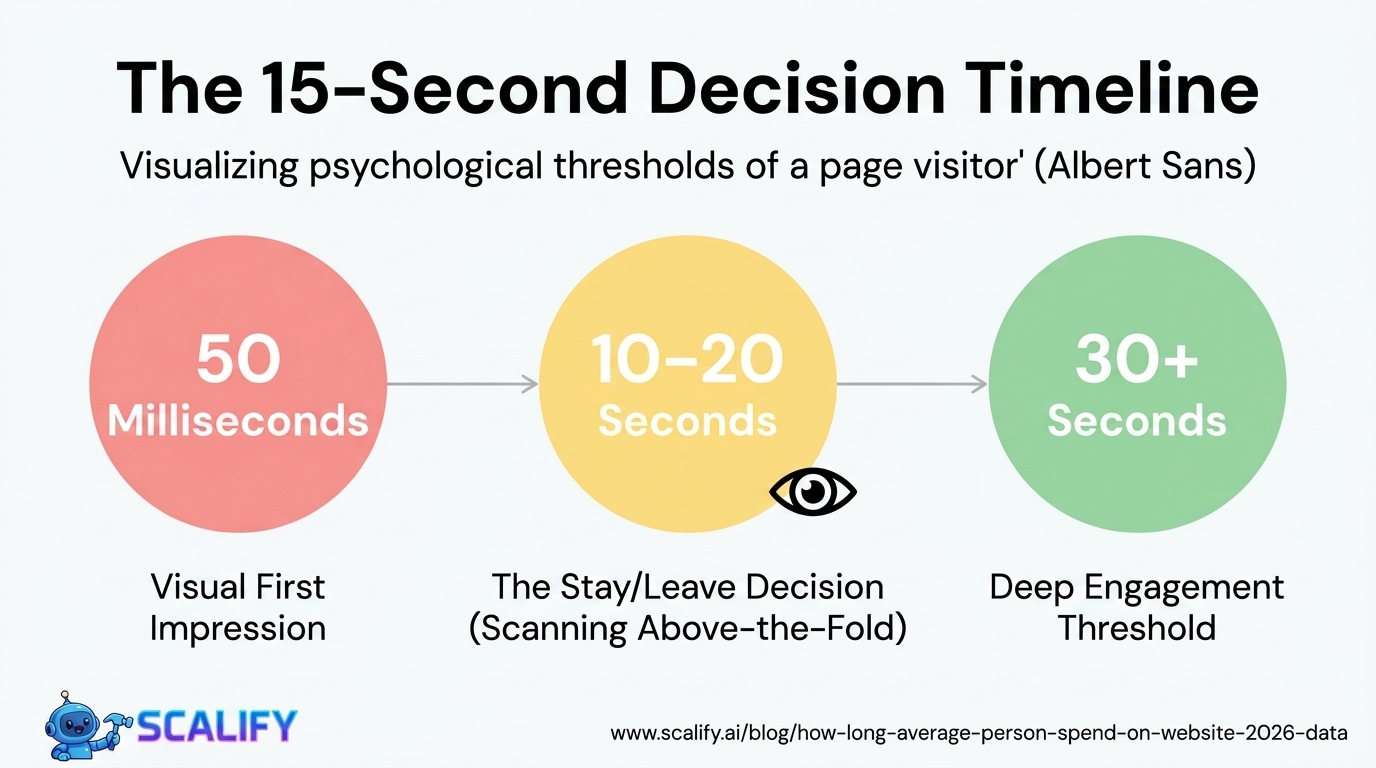
Above the fold. The first CTA should appear without scrolling. Visitors who decide immediately that this site is for them should be able to act immediately without scrolling down. The hero CTA is typically the highest-converting CTA on the page.
After sections that build the case. Following a testimonial section, a benefits breakdown, a results-focused section, or any content that builds conviction — add a CTA. The visitor who has just read three compelling case studies is warmed up. Give them a conversion opportunity in the moment while interest is high.
At the end of the page. A CTA at the bottom of a long page catches visitors who scrolled to the end actively evaluating whether to act. These are often the most engaged visitors on the page — they've invested the time to read everything. Reward their engagement with a clear next step.
In the navigation. A CTA button in the header navigation (typically in the top-right) is persistently visible as visitors scroll and navigate. This is often the second or third highest-converting CTA on a site, simply from persistent visibility.
Contextual CTAs within content. Blog posts and content pages should include relevant CTAs within the content — not just at the end. A blog post about website planning might include a CTA mid-article: "Already know what you need? Get a custom quote in minutes." These contextual CTAs catch visitors who are ready to convert before they finish the article.
CTA Design: The Visual Elements That Drive Clicks
Copy is the foundation of CTA effectiveness, but design amplifies or undermines it.
Color contrast. The CTA button should stand out from its surroundings. This means the button color should not be the same as the dominant background color and should not be similar to the secondary brand colors used throughout the page. A button that "blends in" doesn't register as a clickable element. High contrast — within the brand's aesthetic — is more important than picking the "right" color based on psychological principles of color (the "red button vs. green button" debate is far less meaningful than simply making the button visually prominent).
Size. The button should be large enough to notice at a glance and large enough to tap comfortably on mobile (44×44 pixels minimum touch target). The primary CTA should be larger than secondary CTAs. "Small but tasteful" buttons consistently underperform larger, more prominent ones in split tests.
Whitespace around the button. A CTA button surrounded by visual clutter competes for attention. Whitespace around the button focuses attention on it. Give your primary CTAs breathing room.
Directional cues. Design elements that draw the eye toward the CTA — arrows, eye contact from people in photos (people's eyes in hero images direct attention where they look), visual flow from headlines to CTA — amplify the CTA's prominence without increasing its size.
CTA Best Practices by Page Type
Homepage: One clear primary CTA (your main conversion goal), one secondary CTA (for visitors who need more nurturing), and repeated CTAs throughout the page following persuasive content sections.
Service or product pages: CTAs that are specific to that service or product — not generic "contact us" but "Get a Quote for [Specific Service]" or "Start Your [Product Name] Free Trial." The specificity reduces friction and increases relevance.
Blog posts: A mix of content upgrade CTAs (download the related guide), newsletter subscription, and relevant service/product CTAs where contextually appropriate. Don't turn every blog post into a sales pitch, but don't miss the opportunity to convert engaged readers either.
Landing pages (paid traffic): A single, highly specific CTA aligned with the ad campaign that drove the traffic. Landing pages should have one goal and one primary CTA — removing competing options reduces cognitive friction and improves conversion rate.
Pricing pages: Clear CTAs for each pricing tier ("Start Starter," "Start Pro," "Start Enterprise"), with visual hierarchy that guides visitors toward the recommended tier. Add a secondary CTA for visitors not ready to buy: "Book a Demo" or "Talk to Sales."
Testing Your CTAs
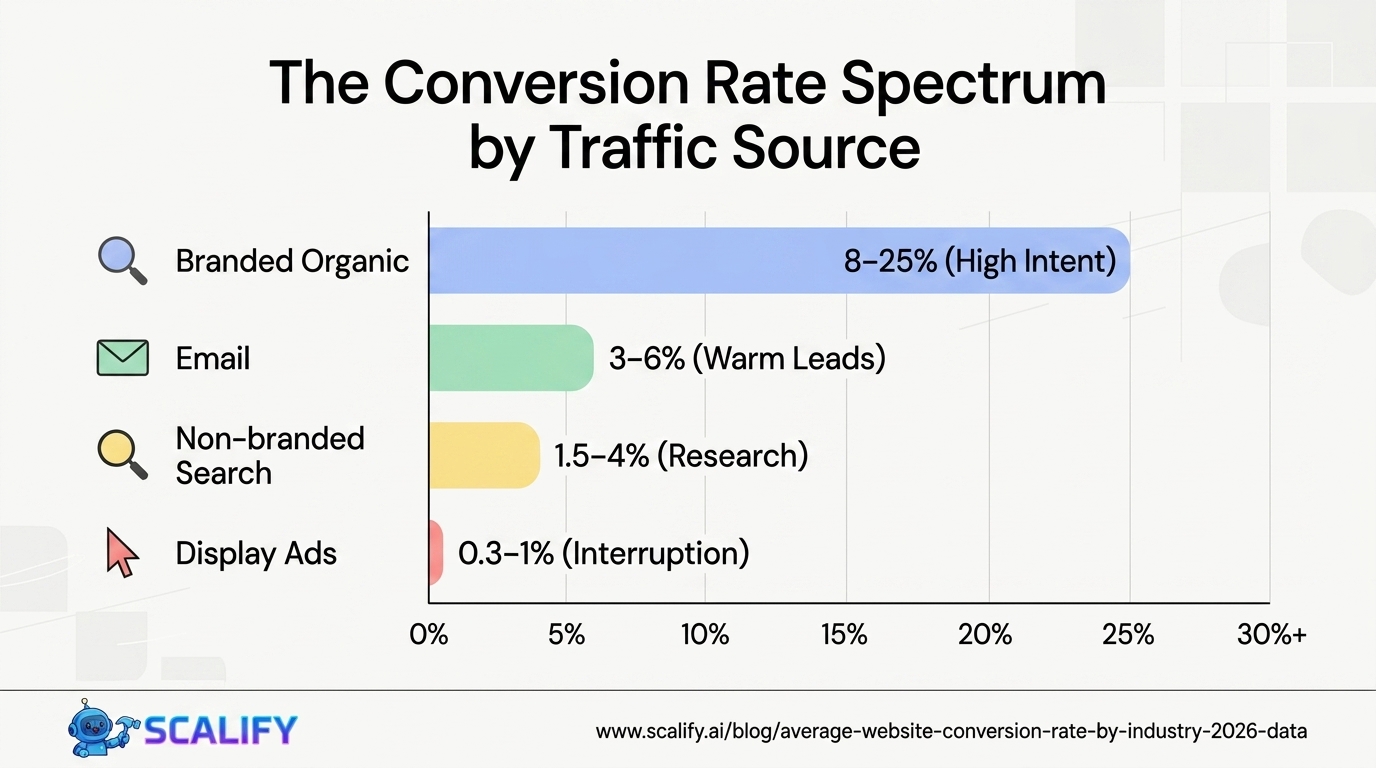
Despite all the principles above, the honest truth is that CTA performance is context-specific. A CTA that converts at 8% for one business might convert at 3% for another, even with identical copy, because the audience is different, the offer is different, the trust level is different.
This is why A/B testing CTAs is one of the highest-return optimization activities available. Testing CTA copy (the button text), CTA design (color, size), and CTA placement (where on the page) with tools like Google Optimize, VWO, or Optimizely provides data-backed answers that beat any prediction based on principles alone.
Testing priorities: start with CTA copy (highest impact per test), then placement (where on the page), then design (color and size), and finally supporting micro-copy. Run each test until you have statistical significance — don't declare winners based on 50 visitors.
The Bottom Line
A CTA is the point where visitor interest becomes business action. It's the most commercially important text on any page of your website, and it deserves the same care and deliberateness as your headline or your value proposition.
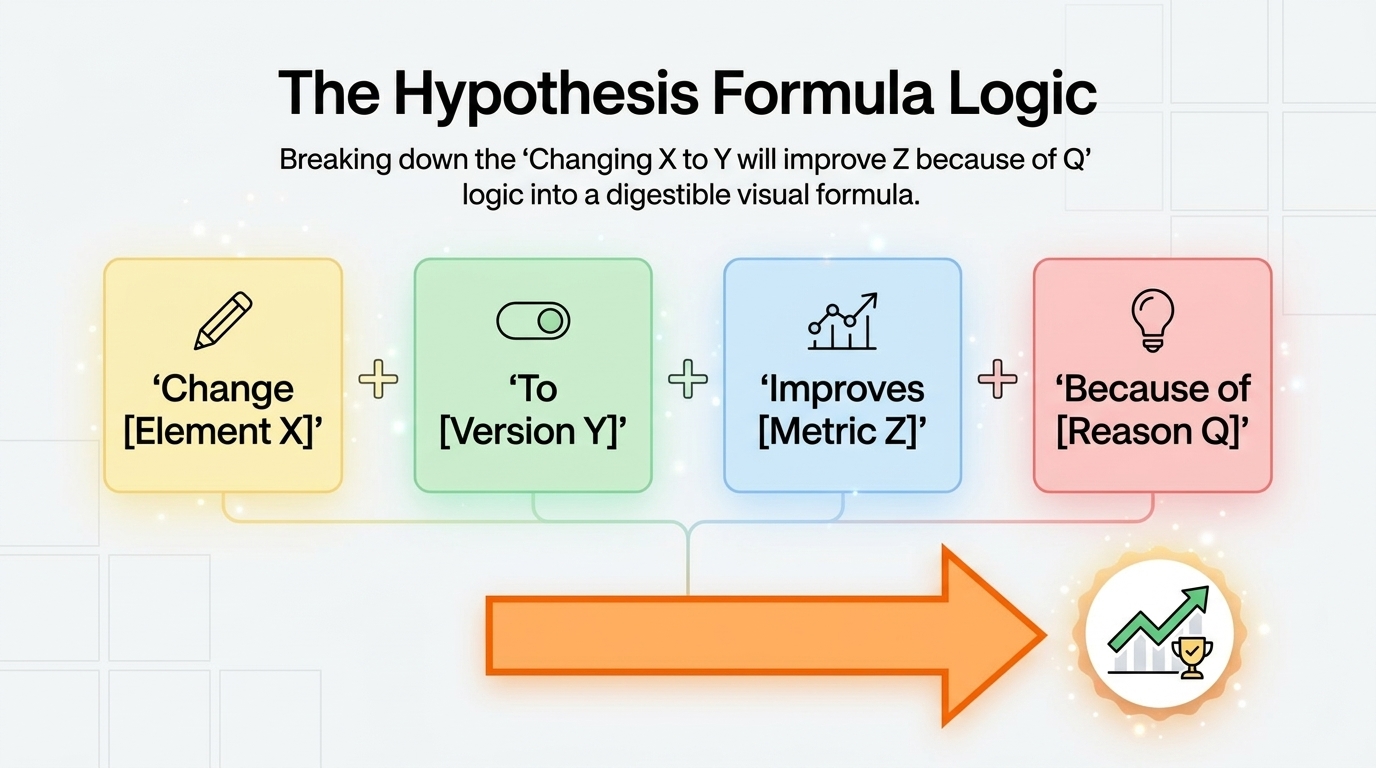
The formula is consistent: action-oriented verb + specific outcome + value communication + low-risk framing. First person where possible. High visual contrast. Prominent placement both above the fold and throughout the page. And then test, because data always beats assumption.
If you want a website where the CTAs, the copy, and the conversion architecture have been thought through deliberately from the start — not added as an afterthought — that's exactly the difference between what Scalify builds and what most web projects produce.


.jpeg)
.jpeg)

78 SW 7th St, Miami, FL 33130