


What Is a Sitemap and Why Does Your Website Need One?
By Josh Ternyak

March 28, 2026
A sitemap helps search engines find and index every page on your site. Here's what it is, why it matters for SEO, and how to create and submit one correctly.
The File That Tells Google Where to Look
Most website owners have heard the word "sitemap" tossed around in SEO conversations. Fewer could tell you what one actually is, what it contains, or what happens if they don't have one. Even fewer have taken the time to verify that theirs is set up correctly.
That's a gap worth closing, because a sitemap is one of the simplest and most direct ways to improve how search engines discover and index your content. It won't magically move you to the first page of Google — nothing that simple does. But it removes a category of friction between your content and the crawlers responsible for finding it, and in SEO, removing friction is always worth doing.
This guide covers what sitemaps are, why they exist, the different types, how to create them, and how to make sure Google is actually using yours.
What a Sitemap Is
A sitemap is a file — typically an XML file — that lists the URLs on your website and provides metadata about each one: when it was last updated, how frequently it changes, and how important it is relative to other pages on your site.
It's essentially a map of your website designed specifically for search engine crawlers, not human visitors. When Googlebot or another crawler comes to your site, it can read your sitemap and get a complete inventory of all the pages you want indexed, rather than having to discover them all by following links.
Here's a stripped-down example of what an XML sitemap entry looks like:
<url>
  <loc>https://yoursite.com/services/web-design</loc>
  <lastmod>2026-03-15</lastmod>
  <changefreq>monthly</changefreq>
  <priority>0.8</priority>
</url>
The loc tag is the only required element — it's the URL of the page. The others (lastmod, changefreq, priority) are optional hints that help crawlers allocate their time more intelligently, though Google has been candid that it doesn't weight these as heavily as they once did. The URL itself is what matters most.
Why Sitemaps Exist: The Crawl Discovery Problem
Search engines discover pages primarily by following links. Googlebot starts from a set of known URLs, crawls those pages, finds links to other pages, follows those links, and so on — a process called crawling. In theory, if every page on your site is reachable from the homepage through a chain of links, Google will eventually find them all.
In practice, this doesn't always work cleanly. A few scenarios where link-based discovery fails or struggles:
Orphaned pages. Pages that exist on your site but aren't linked from anywhere. Maybe it's an old landing page, a product variant, a resource you forgot to link from the main navigation. Googlebot can't follow a link that doesn't exist — orphaned pages don't get crawled or indexed regardless of how good their content is.
Large sites with deep hierarchies. On a site with thousands of pages, some content is buried 5, 6, or 7 clicks deep from the homepage. Crawlers have a crawl budget — a limit on how many pages they'll crawl per site per visit. Deep pages may not get crawled frequently, or at all, if the crawler runs out of budget before reaching them.
New sites with few inbound links. A brand new website has very few external sites linking to it. Googlebot discovers sites primarily through links from already-known sites. A site with no external links pointing to it may not be discovered at all through organic crawling — a sitemap submitted directly to Google Search Console bypasses this problem.
Sites with poor internal linking. If your navigation and content don't do a good job of linking pages together, the crawler's path through your site is limited by those gaps in your link architecture.
Dynamic or frequently updated content. Sites that publish new content regularly — news sites, e-commerce stores, blogs — benefit from sitemaps that flag recently updated pages, helping crawlers prioritize them for re-crawling.
A sitemap solves all of these problems by providing a complete, authoritative list of the pages you want indexed, independent of your link structure.
Types of Sitemaps
Not all sitemaps are the same. Different types are designed for different kinds of content, and large sites often use a combination.
XML Sitemaps
The standard, most commonly used format. An XML sitemap lists page URLs with optional metadata (last modified date, update frequency, priority). This is what most people mean when they say "sitemap" in an SEO context.
XML sitemaps can contain up to 50,000 URLs and up to 50MB uncompressed per file. For larger sites, this means using a sitemap index file — a master file that links to multiple individual sitemap files, each covering a subset of URLs. Many large e-commerce sites and content platforms have sitemap indexes with dozens of child sitemaps.
HTML Sitemaps
An HTML sitemap is a human-readable page on your website listing your pages and their links, organized in a logical hierarchy. These are designed for visitors, not crawlers — they help users navigate large sites and find content they're looking for.
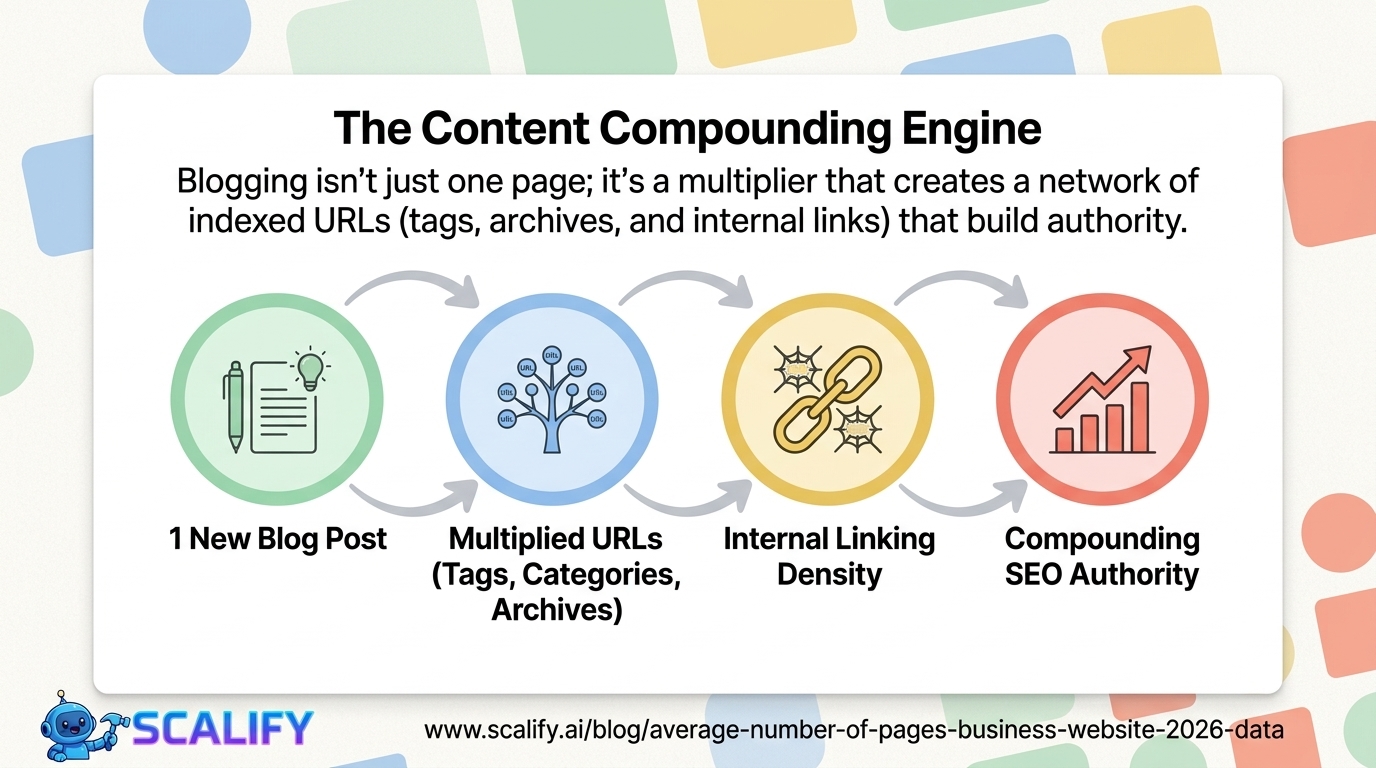
HTML sitemaps have declined in importance as website navigation has become more sophisticated, but they're still useful for large sites, especially those with complex content structures. From an SEO perspective, they also serve as internal linking pages that ensure every listed URL is at least one link away from a crawlable page.
Image Sitemaps
Image sitemaps tell Google about images on your site that might be difficult to discover otherwise — particularly images loaded via JavaScript or images you specifically want indexed for Google Image Search. They can be standalone image sitemaps or image entries embedded in standard XML sitemap files.
For visually-focused businesses — photographers, designers, product retailers — image sitemap implementation can improve how comprehensively your images appear in image search results.
Video Sitemaps
Video sitemaps provide metadata about video content on your site: title, description, duration, thumbnail URL, and other details. They help Google index your video content for video search and can enable rich results in regular search (like video carousels).
If video is a significant part of your content strategy — tutorials, product videos, testimonials embedded on key pages — a video sitemap is worth implementing.
News Sitemaps
A specialized format for news publishers that enables inclusion in Google News. News sitemaps have specific requirements — they should only include articles published in the last two days, must include a news-specific namespace, and require approved publisher status from Google. Relevant only for legitimate news publications.
How to Create a Sitemap
The creation process depends on how your site is built. In most cases, you don't need to generate a sitemap manually.
CMS Platforms
Most major CMS platforms generate sitemaps automatically:
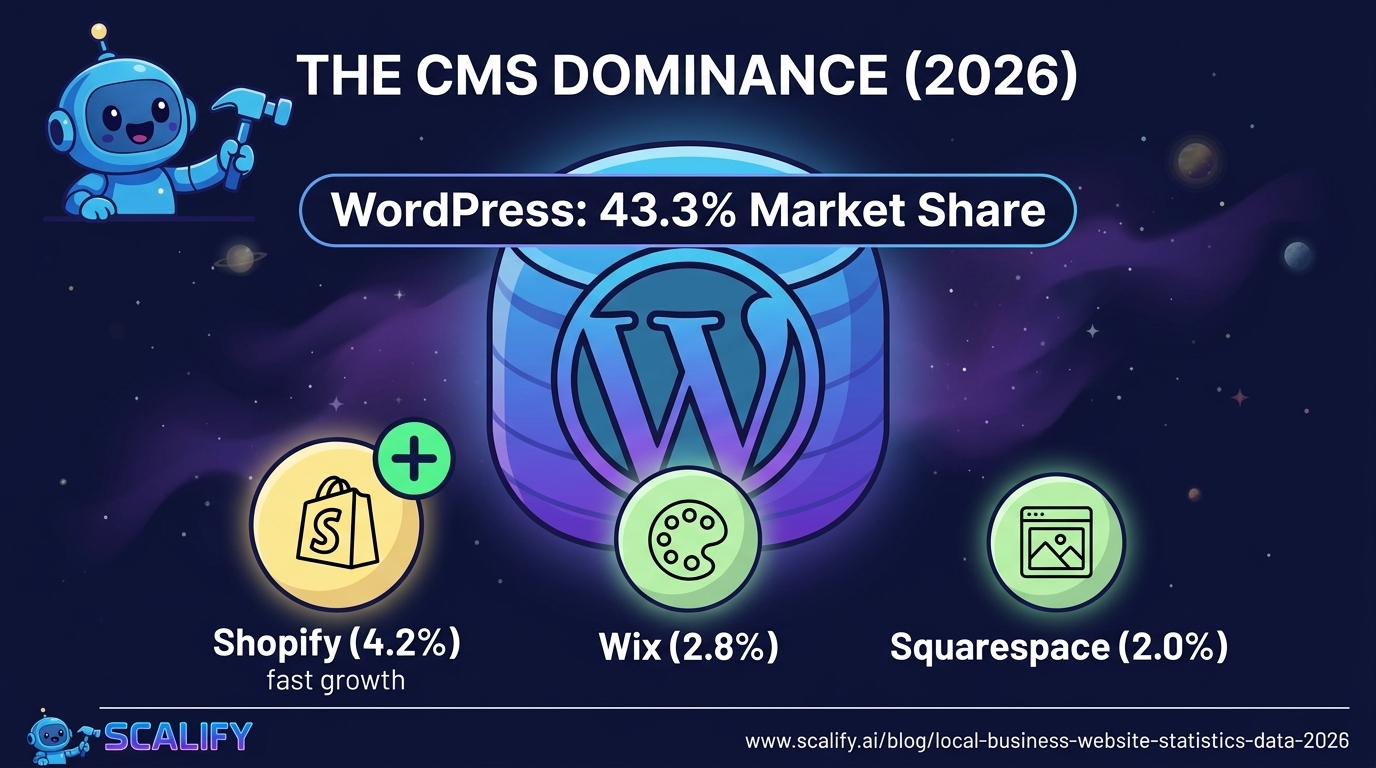
WordPress: Plugins like Yoast SEO, Rank Math, and All in One SEO automatically generate and update your XML sitemap. The sitemap is typically accessible at yoursite.com/sitemap_index.xml or yoursite.com/sitemap.xml. These plugins let you control which content types and taxonomies are included, and they update automatically as you publish new content.
Webflow: Generates a sitemap automatically for all published pages. Accessible at yoursite.com/sitemap.xml by default. You can exclude specific pages from the sitemap in page settings.
Shopify: Generates a sitemap automatically at yoursite.com/sitemap.xml, covering products, collections, pages, and blogs.
Squarespace: Automatically generates and maintains a sitemap. No configuration needed.
Static Site Generators
Most SSGs have sitemap plugins or built-in sitemap generation. Next.js, Gatsby, and Astro all support automatic sitemap generation through plugins or built-in features. You typically configure what to include and the output is generated at build time.
Custom Builds
For custom-built sites without CMS or framework sitemap support, you have a few options: use a dedicated sitemap generation tool or library (many exist for every major language/framework), write a script that queries your database or file system to generate the sitemap programmatically, or use an online sitemap generator tool for smaller sites that crawls your site and produces a sitemap file.
For sites up to a few hundred pages, online tools like XML-Sitemaps.com can generate a sitemap you download and upload to your server root. Not elegant, but functional for simple situations.
What to Include (and Exclude) in Your Sitemap
Not every URL on your site belongs in your sitemap. Including the wrong pages can confuse search engines and dilute the signal of which content you actually want indexed.
Include:
- All indexable pages with unique, valuable content
- Blog posts and articles
- Product and service pages
- Category and collection pages (where they have unique content, not thin filter pages)
- Landing pages you want indexed for organic search
Exclude:
- Pages with noindex meta tags (critical — if a page is noindexed, it should not be in your sitemap; having noindexed pages in your sitemap sends conflicting signals)
- Redirect URLs (include the final destination URL, not redirecting URLs)
- Duplicate content pages (include only the canonical version)
- Paginated pages (usually exclude page 2, 3, etc. of paginated archives — include only page 1)
- Admin pages, login pages, thank-you pages
- URLs with parameters that create near-duplicate content (filtered e-commerce pages, tracking parameters)
- Staging or development pages
The goal is a sitemap where every listed URL is a page you actively want Google to index and that has enough value to deserve indexing. A bloated sitemap with thin, duplicate, or irrelevant pages is worse than a lean sitemap of high-quality content.
How to Submit Your Sitemap to Google
Having a sitemap is half the job. Getting it in front of Google is the other half.
Google Search Console
The most direct and reliable method. Log into Google Search Console (search.google.com/search-console), select your property, go to Sitemaps in the left sidebar, and enter the URL of your sitemap file. Click Submit. Google will crawl the sitemap and begin processing the URLs it contains.
Search Console shows you the sitemap status: how many URLs were submitted, how many have been indexed, and any errors encountered. This is invaluable diagnostic information. If 200 URLs are in your sitemap but only 80 are indexed, something is preventing the other 120 from being indexed — and Search Console gives you the starting point to investigate.
Robots.txt
You can also reference your sitemap location in your robots.txt file — the file that tells crawlers about rules for your site. Adding this line to robots.txt ensures any crawler visiting your site knows where to find the sitemap:
Sitemap: https://yoursite.com/sitemap.xml
This approach works for all crawlers, not just Google — Bing, DuckDuckGo, and others respect sitemap declarations in robots.txt. It's a good practice to have alongside Search Console submission, not instead of it.
HTTP Ping (Programmatic Notification)
You can also notify Google when your sitemap has been updated by sending an HTTP request to a specific Google endpoint. Most SEO plugins handle this automatically when you publish new content. For custom implementations, this is worth setting up so Google receives immediate notification when your sitemap changes rather than waiting for the next scheduled crawl.
Sitemap Best Practices That Actually Move the Needle
Keep it current. A sitemap is only useful if it reflects your actual current content. Platforms and plugins that update sitemaps automatically on publish are handling this for you. Custom implementations need a process that updates the sitemap whenever content is added, removed, or significantly changed.
Use accurate lastmod dates. The lastmod value should reflect genuine, meaningful content updates — not just cosmetic changes. If you're auto-updating lastmod timestamps on every page every day, you're training Googlebot to ignore those signals. Save lastmod updates for actual content changes.
Don't include URLs that return errors. Every URL in your sitemap should return a 200 status code. URLs that return 301 redirects, 404 errors, or 500 server errors in your sitemap are wasted entries that take up crawl budget and signal a poorly maintained site.
Use canonical URLs. Only include the canonical version of each URL — the preferred version you want indexed. If both yoursite.com/page and www.yoursite.com/page exist, include only the canonical one (whichever matches your canonical tag).
Monitor index coverage in Search Console regularly. The gap between submitted URLs and indexed URLs is a diagnostic signal. A high ratio of submitted-but-not-indexed pages indicates quality or duplication issues that are worth investigating and addressing. Don't just submit your sitemap and forget it — check the coverage report monthly.
Do Small Sites Need a Sitemap?
Google has said that small, well-linked sites generally don't need a sitemap — their crawlers can discover all the pages through normal link following. But "small and well-linked" covers a narrower range than most people think, and the cost of having a sitemap is essentially zero.
Situations where a sitemap genuinely matters:
- Your site has more than a few dozen pages
- Your site is new and has few external links pointing to it
- Some pages aren't well-linked internally
- You publish content frequently and want it indexed quickly
- Your site has multimedia content (images, video) you want indexed
The only situation where skipping a sitemap is fine: a simple 5-page brochure site with excellent internal linking and some external links already pointing to it. Even then, submitting one takes ten minutes and provides no downside.
The Bottom Line
A sitemap is a basic, low-effort, high-value piece of technical SEO infrastructure. It removes a category of discovery friction between your content and search engines, gives you diagnostic visibility into what's being indexed through Search Console, and ensures that even your least-linked pages have a direct path to being discovered by crawlers.
If your platform generates one automatically, make sure it's submitted to Search Console and monitor it. If it doesn't, generate one and get it submitted — it's an hour of work that pays indefinite dividends.
At Scalify, every website we deliver includes proper sitemap setup as part of the technical foundation — submitted, configured, and ready to help Google index your content from day one.






























.jpeg)
.jpeg)










78 SW 7th St, Miami, FL 33130