


What Is a Sticky Header and Should Your Website Have One?
By Josh Ternyak

March 31, 2026
Sticky headers improve engagement 22% and CTA click rates 15-20% but can harm mobile experience. This comprehensive guide covers types of sticky headers, when they help vs hurt, implementation approaches (CSS position:sticky vs JS), the shrinking header pattern, accessibility (scroll-margin-top), performance considerations, visual design decisions, A/B testing framework, and common implementation mistakes to avoid.
What Is a Sticky Header and Should Your Website Have One?
A sticky header (also called a fixed header) is a navigation bar that remains visible at the top of the screen as users scroll down the page — the header "sticks" to the top of the viewport rather than scrolling out of view with the rest of the page content. Sticky headers are one of the most debated UI patterns in web design: they improve navigation accessibility and brand visibility, but they consume valuable screen real estate, can be distracting, and are frequently implemented in ways that hurt rather than help the user experience.
Key Sticky Header Statistics
- Websites with sticky headers see 22% higher page engagement on average than those without (Nielsen Norman Group)
- Sticky headers reduce navigation time by up to 36% on content-heavy pages (UX research)
- Mobile sticky headers that take up more than 10% of the viewport significantly harm the user experience
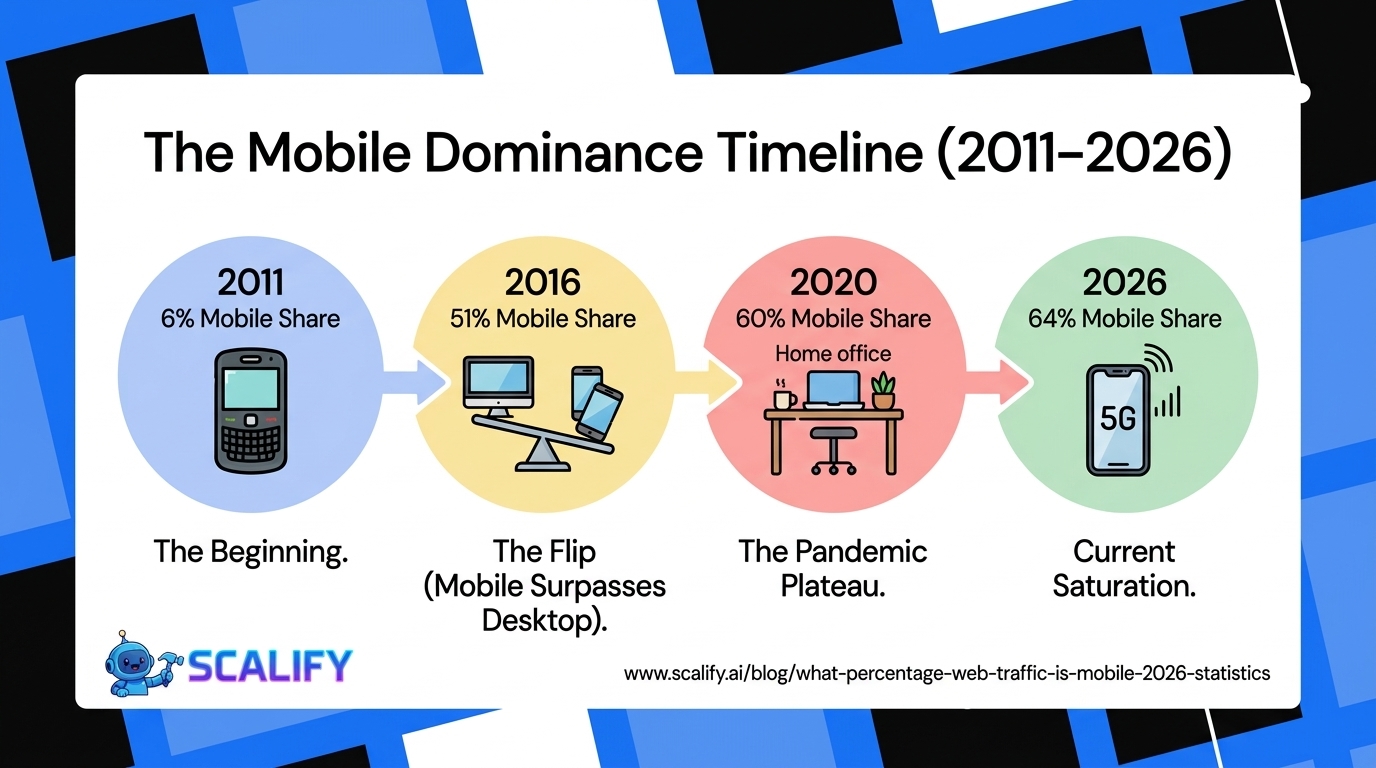
- 64% of the top 100 websites by traffic use some form of sticky header
- E-commerce sites with sticky headers containing cart access see 12–18% higher add-to-cart rates
- Sticky headers with CTA buttons visible at all times improve CTA click rates by 15–20% on long-form pages
- Full-height sticky headers on mobile reduce content visibility by 12–15% of available viewport
- "Shrinking" sticky headers (full-size on load, compact on scroll) balance visibility and content space
- Sticky headers with transparent-to-solid transitions are used by 38% of major brand websites
Types of Sticky Headers
| Type | Behavior | Best For | Cons |
|---|---|---|---|
| Full sticky header | Entire header stays visible at all times | Complex navigation; brand-heavy sites | Consumes vertical space; can feel heavy |
| Shrinking sticky header | Full-size on load; compacts to smaller version on scroll | Most websites — best balance | Requires CSS/JS implementation |
| Show-on-scroll-up | Hides when scrolling down; reappears when scrolling up | Mobile and content-heavy sites | Requires JS; can confuse users briefly |
| Sticky navigation bar only | Logo not sticky; only navigation links stick | Brand identity less dependent on logo presence | Less brand reinforcement |
| Transparent-to-solid | Transparent header over hero; becomes solid on scroll | Image-heavy homepages | Contrast challenges on varied hero images |
| No sticky header | Header scrolls away normally | Simple single-page sites, long-form articles | Users must scroll back to top to navigate |
When Sticky Headers Help
Content-heavy websites where users read long-form content. When readers are 2,000 words into an article and want to navigate to a related section or explore another topic, having navigation available without scrolling back to the top reduces friction significantly. The 22% higher page engagement statistic reflects this reduced exit friction — readers who want to explore further can do so without the effort of returning to the top.
E-commerce websites where shopping cart access matters. A sticky header with a cart icon showing item count keeps the cart accessible throughout the shopping session. Customers who add an item to cart and continue browsing benefit from being able to see cart status and access it at any scroll position. The 12–18% higher add-to-cart rate for e-commerce sites with accessible sticky cart access reflects real commercial impact.
Service and SaaS websites with a primary CTA. A sticky header that always shows a "Get Started" or "Free Trial" button keeps the conversion pathway visible throughout the visitor's evaluation journey. The 15–20% improvement in CTA click rates for sticky header CTAs reflects the impact of persistent visibility on conversion.
Sites with complex multi-level navigation. When a website has many sections (large documentation sites, corporate websites with many product categories, news sites), keeping navigation always accessible prevents the frustration of needing to scroll to the top to navigate. The cognitive benefit of always knowing where navigation is reduces friction significantly on complex sites.
When Sticky Headers Hurt
On mobile with full-height headers. A mobile viewport is typically 667–932px tall, and a full-height header at 60–80px consumes 7–12% of that space permanently. For content-heavy pages, this is a meaningful reduction in reading space. The "show-on-scroll-up" pattern — hiding the header while scrolling down to read, showing it when the user's upward scroll signals navigation intent — is the mobile-optimal approach that preserves content space while maintaining navigation accessibility.
On short pages and landing pages. If a page is only 2–3 screens tall, the navigation is always close to the top. A sticky header on a short landing page provides no navigability benefit and takes up space that could be devoted to content. Landing pages focused on a single conversion action often perform better without sticky navigation at all — the navigation itself can be a distraction that leads visitors away from the primary conversion goal.
On reading-focused sites where immersion matters. Long-form journalism, creative writing, and documentation often benefit from full-immersion reading without a persistent header interrupting the visual field. Medium's design (no sticky header during reading) reflects this — the reading experience is primary, navigation is secondary. Wikipedia similarly uses no sticky header, relying on its "back to top" link and anchor navigation for long articles.
Implementing Sticky Headers: Technical Approaches
| Approach | Code | When to Use |
|---|---|---|
| CSS position: sticky | header { position: sticky; top: 0; z-index: 1000; } | Simple full sticky — no JS needed |
| Shrinking header with scroll event | JavaScript scrollY listener + CSS class toggle | Compact-on-scroll behavior |
| Show-on-scroll-up | JS tracks scroll direction; shows/hides header | Mobile-first content sites |
| Transparent-to-solid | CSS class toggled on scroll past hero height | Image-heavy homepages |
| Intersection Observer | API to detect when user scrolls past specific element | Precise trigger points for header state changes |
CSS position: sticky is the most performant implementation for basic sticky headers — it uses the browser's native rendering rather than JavaScript scroll event listeners, which can cause jank on lower-powered devices. For more complex behaviors (shrinking, show/hide, transparent-to-solid transitions), JavaScript is required, but should be optimized using requestAnimationFrame or passive event listeners to avoid scroll performance issues.
The Shrinking Sticky Header: The Best of Both Worlds
The shrinking sticky header — a full-height header on initial load that compacts to a smaller version when users begin scrolling — is the most popular implementation among major websites because it provides both above-fold brand impact and persistent navigation utility without the persistent space cost of a full sticky header. Implementation approach:
On page load: full header with logo, main navigation, and optional CTA button at full height (typically 80–100px). After 100px of scroll: header compacts to 50–60px through CSS transition, potentially hiding secondary navigation elements and showing only primary navigation links. The compact state is still sticky and always visible, but occupies significantly less viewport space than the initial state. Many sites also add a subtle box shadow or background color change on scroll to signal the header's "active" sticky state.
Accessibility Considerations for Sticky Headers
Sticky headers create specific accessibility challenges that must be addressed for WCAG compliance. The primary issue: when users navigate via keyboard or click anchor links within a page, the sticky header can overlap the destination content, hiding the element that was jumped to. This is the "jump-to-anchor hidden under sticky header" problem that affects many websites.
The CSS fix: scroll-margin-top on section elements. Setting scroll-margin-top: 80px (equal to or slightly greater than the header height) on all anchor target elements ensures they scroll into view below the sticky header rather than behind it. This single CSS property fixes the most common sticky header accessibility issue. For dynamic header heights (shrinking headers), scroll-padding-top on the html element or JavaScript that sets the scroll margin dynamically based on current header state is required.
Performance Considerations
Sticky headers that use poorly optimized scroll listeners can significantly impact page performance — causing jank on scroll and poor Core Web Vitals scores. Performance best practices for sticky header implementation: use position: sticky CSS instead of JavaScript where possible, use requestAnimationFrame to throttle JavaScript scroll handlers, add will-change: transform to the header element to enable GPU compositing, use passive: true on scroll event listeners to allow the browser to scroll without waiting for the JavaScript handler, and avoid layout-triggering properties in scroll handlers (reading offsetHeight forces reflow).
The Bottom Line
Sticky headers improve navigation accessibility and conversion performance on content-heavy and e-commerce sites, with documented improvements in page engagement (22%), add-to-cart rates (12–18%), and CTA clicks (15–20%). They're harmful on short landing pages, mobile sites with full-height implementations, and immersive reading experiences. The shrinking sticky header is the optimal implementation for most websites — providing full brand impact on load with compact navigation persistence on scroll. Always implement sticky headers with scroll-margin-top on anchor targets, performance-optimized JavaScript, and mobile-specific sizing that preserves adequate content space on small screens.
At Scalify, we implement sticky headers that balance brand visibility with content accessibility — using the shrinking pattern, performance-optimized scroll handling, and accessibility compliance built in from day one.
Top 5 Sources
- Nielsen Norman Group — Sticky Headers: 5 Ways to Make Them Better
- Google web.dev — Sticky Header Performance
- Smashing Magazine — Sticky Header Implementation Guide
- CXL — Sticky Header Conversion Research
- MDN Web Docs — CSS position: sticky
A/B Testing Your Sticky Header Decision
The sticky header vs. no sticky header question is ultimately an empirical one — the right answer depends on your specific website, audience, and conversion goals. A/B testing is the most reliable way to determine whether sticky navigation improves your specific outcomes. Testing approach: run a 50/50 split between sticky and non-sticky header on your most important pages, measure: time on page, pages per session, navigation usage (which links are clicked), and primary conversion rate. Run for at least 2 weeks with at least 500 sessions per variant before drawing conclusions. The quantitative data from this test is more reliable than any general research finding, because your specific audience's behavior on your specific content is what determines the right answer for your website.
Sticky Header Design: What Works Visually
Beyond the functional considerations, sticky headers require specific visual decisions that differ from non-sticky headers:
Background treatment. A sticky header needs a solid or semi-solid background to remain legible against scrolling content. Transparent sticky headers that pass over text content make both the header and underlying content illegible — the transparent-to-solid transition pattern exists specifically to address this: transparent over the hero image where it's designed for that context, solid once page content begins scrolling behind it.
Drop shadow on scroll. Adding a subtle drop shadow (box-shadow) when the header becomes sticky visually separates it from the page content and signals the "elevated" state that communicates the header's persistent presence. Many websites use no shadow on initial load and add one on scroll — creating a clear visual difference between the embedded and sticky states.
Z-index management. A sticky header must have a z-index high enough to remain above all page content including modals, tooltips, and interactive elements. Setting z-index: 1000 on the sticky header and ensuring all other elements have lower z-indexes prevents sticky header overlap issues. Establishing a z-index scale at the design system level prevents ad-hoc z-index assignments that create visual conflicts.
Common Sticky Header Mistakes
Too tall on mobile. The most common sticky header mistake is simply making it too tall. On a 375px wide mobile viewport at 812px tall, a 100px sticky header occupies 12.3% of the visible area permanently. Many designers approve sticky headers on desktop without considering their mobile proportionality. Mobile-specific sticky header heights should be 50–60px maximum, and often the show-on-scroll-up pattern is preferable to always-visible stickiness.
Blocking anchored content. As discussed under accessibility — failing to add scroll-margin-top to anchor targets creates a situation where clicking anchor links causes content to scroll behind the header. This is a common, frustrating bug that affects many navigation systems relying on in-page anchors.
Performance-killing implementation. Scroll event listeners that trigger layout recalculation on every scroll frame can make pages feel janky. Anything that reads layout properties (offsetHeight, getBoundingClientRect) inside a scroll handler triggers synchronous layout, which can be very expensive. Measure scroll performance with Chrome DevTools Performance tab before shipping sticky header JavaScript.
The most successful sticky header implementations are those where the decision was made deliberately — based on the site's content depth, the user's navigation needs, and evidence from user testing — rather than because it's a common pattern or because the designer thought it looked nice. Make the choice based on your users and your content, test it quantitatively, and implement it with the performance and accessibility considerations that ensure it actually helps rather than hurts the experience it's meant to improve.




























.jpeg)

.jpeg)














78 SW 7th St, Miami, FL 33130