

What Is a Website? A Complete Beginner's Guide
By Josh Ternyak

March 28, 2026
Confused about what a website actually is? This beginner's guide breaks down exactly how websites work, what they're made of, and why your business needs one — in plain English, no tech degree required.
You're Looking at One Right Now
Let's start with something obvious: you're reading this on a website. But if someone asked you to explain what a website actually is — not just that it lives on the internet, but what it's made of, how it gets to your screen, and why it even exists — could you do it?
Most people can't. And that's fine. You don't need to know how an engine works to drive a car.
But here's the thing: if you're a business owner, a freelancer, or anyone trying to build a meaningful presence online, understanding the basics of what a website is will save you thousands of dollars and dozens of headaches. You'll know what to ask for, what to pay for, and what to watch out for.
So let's fix that gap. This is the guide I wish someone had handed me when I was first trying to make sense of it all.
The Short Answer: What Is a Website?
A website is a collection of web pages stored on a server and accessible through the internet via a domain name.
That's the textbook definition. But let's make it human.
Think of a website like a building. The domain name (like scalify.ai) is the street address — it's how people find you. The server is the plot of land the building sits on. The actual web pages are the rooms inside. And the internet is the road system that lets people drive from wherever they are straight to your front door.
When someone types your domain name into a browser, their computer sends a request down that road, finds your building, opens a specific room, and renders everything they see on their screen.
Simple. Now let's go deeper.
What Actually Makes Up a Website?
Under the hood, every website is built from a combination of three core technologies. These aren't optional layers — every single website on the internet uses all three.
1. HTML (HyperText Markup Language)
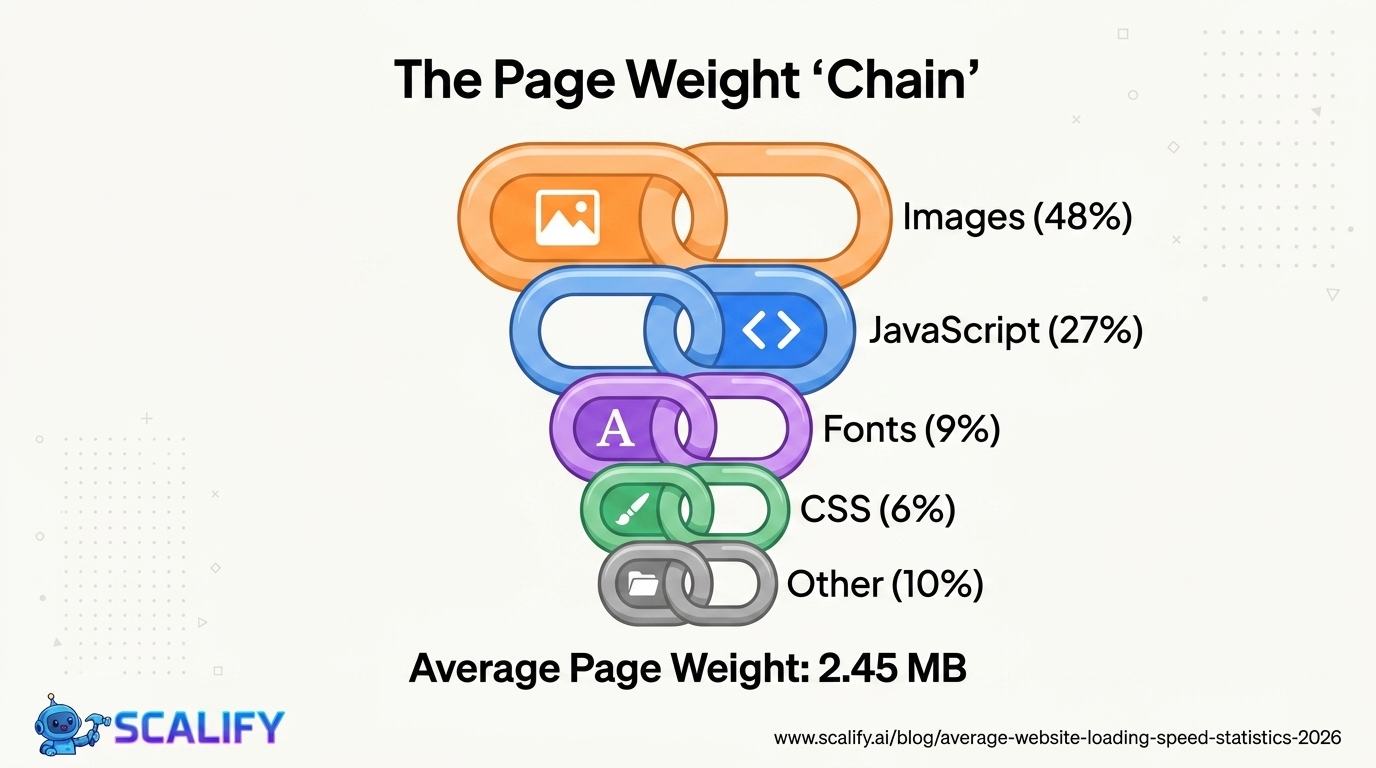
HTML is the skeleton. It defines the structure and content of a page — headings, paragraphs, images, links, buttons. If you stripped away everything visual from a webpage, the raw HTML is what you'd be left with. It's not pretty, but it's the foundation everything else sits on.
2. CSS (Cascading Style Sheets)
CSS is the skin and clothing. It controls how everything looks — colors, fonts, spacing, layout. The same HTML content can look completely different depending on the CSS applied to it. A well-designed website has CSS that makes the experience feel intentional, professional, and on-brand.
3. JavaScript
JavaScript is the muscle. It adds interactivity and behavior. Drop-down menus, pop-ups, form validation, live chat widgets, animations — all of that is JavaScript at work. It makes websites feel alive rather than like a static printed page.
When a browser loads a web page, it reads these three layers together and paints the result onto your screen in milliseconds. The fact that this happens seamlessly billions of times per day is honestly kind of incredible when you stop to think about it.
How Does a Website Actually Get to Your Screen?
Here's the part most people have never thought through. Let's trace what actually happens the moment you type a URL and hit enter.
Step 1: You type a domain name (like scalify.ai) into your browser and press enter.
Step 2: Your browser contacts a DNS server (Domain Name System) — essentially the internet's phone book. The DNS server converts that human-readable domain into a numerical IP address, like 104.21.45.67.
Step 3: Your browser uses that IP address to send a request to the web server where the website files live. This server can be anywhere in the world — a data center in Virginia, a cloud facility in Ireland, a rack in Singapore.
Step 4: The server receives the request, finds the right files, and sends them back to your browser.
Step 5: Your browser reads the HTML, CSS, and JavaScript files and renders them visually on your screen.
This entire process — from the moment you press enter to the moment the page appears — typically takes less than two seconds. Often less than one. It's genuinely one of the engineering marvels of the modern world, and most of us take it completely for granted.
Types of Websites: Not All Sites Are the Same
When most people think "website," they picture a company homepage. But websites come in wildly different forms, each built for a different purpose. Knowing the difference matters when you're deciding what to build.
Static Websites
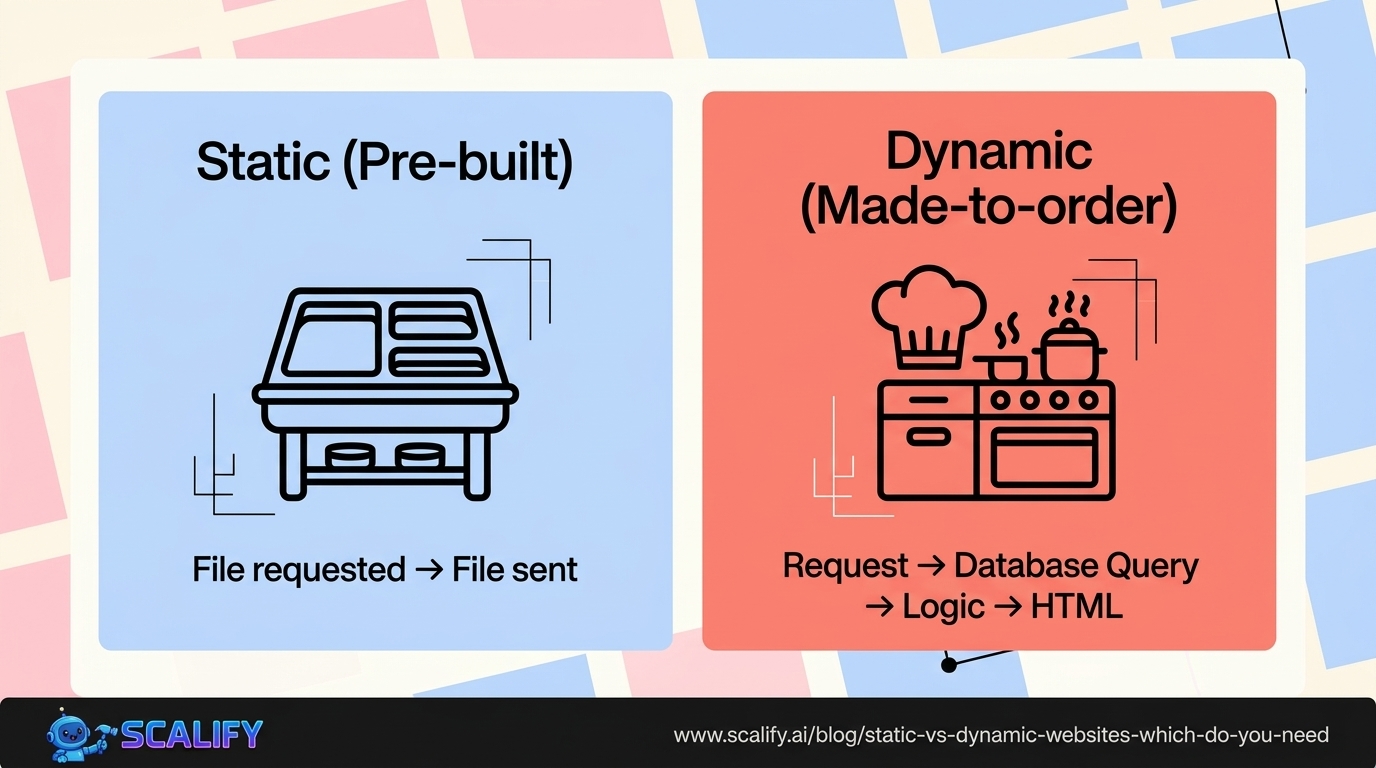
A static website serves the same fixed content to every visitor. There's no dynamic data being pulled from a database — what you see is what's stored on the server. These are fast, secure, and cheap to host. A simple portfolio, a landing page, or a brochure site for a local business often doesn't need to be anything more than static.
Dynamic Websites
A dynamic website generates content in real-time based on who's visiting and what they're doing. When you log into your bank account and see your balance, that data is being pulled from a database and assembled on the fly. Amazon showing you "products you might like"? Dynamic. Your Gmail inbox? Dynamic. These sites are more complex to build and maintain, but they're essential for anything requiring user accounts, personalized content, or real-time information.
E-Commerce Websites
Online stores — like Shopify or WooCommerce sites — are a type of dynamic website with specific features layered on top: product catalogs, shopping carts, payment processing, inventory management. Building a solid e-commerce site is significantly more involved than a brochure site, which is why so many businesses get it wrong by trying to cut corners.
Blogs and Content Sites
Sites built around written content — news publications, personal blogs, resource libraries. These are typically powered by a CMS (Content Management System) that makes it easy to add new posts without touching code. What you're reading right now lives on one of these.
Web Applications
The line between a "website" and a "web app" is blurry, but generally a web app is more interactive and function-focused than an informational website. Figma, Notion, Canva — these are accessed through a browser and look like websites, but behave more like desktop software. When someone says "SaaS product," they usually mean a web application.
Domain Names: Your Address on the Internet
A domain name is the unique address of your website — the thing people type to find you. Domain names are registered through companies called registrars (GoDaddy, Namecheap, Google Domains, etc.) and you pay an annual fee to keep yours.
The bit at the end — .com, .net, .io, .ai — is called a TLD (Top Level Domain). .com is still the gold standard for credibility. But .io has become popular with tech startups, and .ai is increasingly used by AI and technology companies. These choices matter for perception, even if they don't technically affect how a website functions.
One critical thing to understand: owning a domain name does not mean you have a website. A domain is just an address. You still need to build the building. This is where a lot of first-time business owners get confused — they buy a domain thinking they've "set up a website" and then wonder why nothing appears when they type it in.
Web Hosting: Where Your Website Lives
Web hosting is the service that stores your website files and makes them accessible on the internet. When someone visits your site, they're essentially downloading files from the hosting server to their browser.
Hosting comes in several flavors, and knowing the difference can save you from seriously overpaying — or underpaying for something that can't handle your traffic.
Shared hosting means your site lives on a server alongside hundreds or thousands of other sites. It's cheap (often $3–15/month), but performance can be inconsistent and resources are limited. Fine for a low-traffic site just starting out.
VPS hosting (Virtual Private Server) gives you a dedicated slice of a server's resources. More control, better performance, higher cost. Good for growing businesses with moderate traffic.
Dedicated hosting means you rent an entire physical server. Maximum performance and control, but expensive and requires technical management. Typically only needed for high-traffic, resource-intensive sites.
Cloud hosting (AWS, Google Cloud, Cloudflare Pages, Vercel) distributes your site across a network of servers globally. Scales automatically, highly reliable, and increasingly the default choice for modern websites.
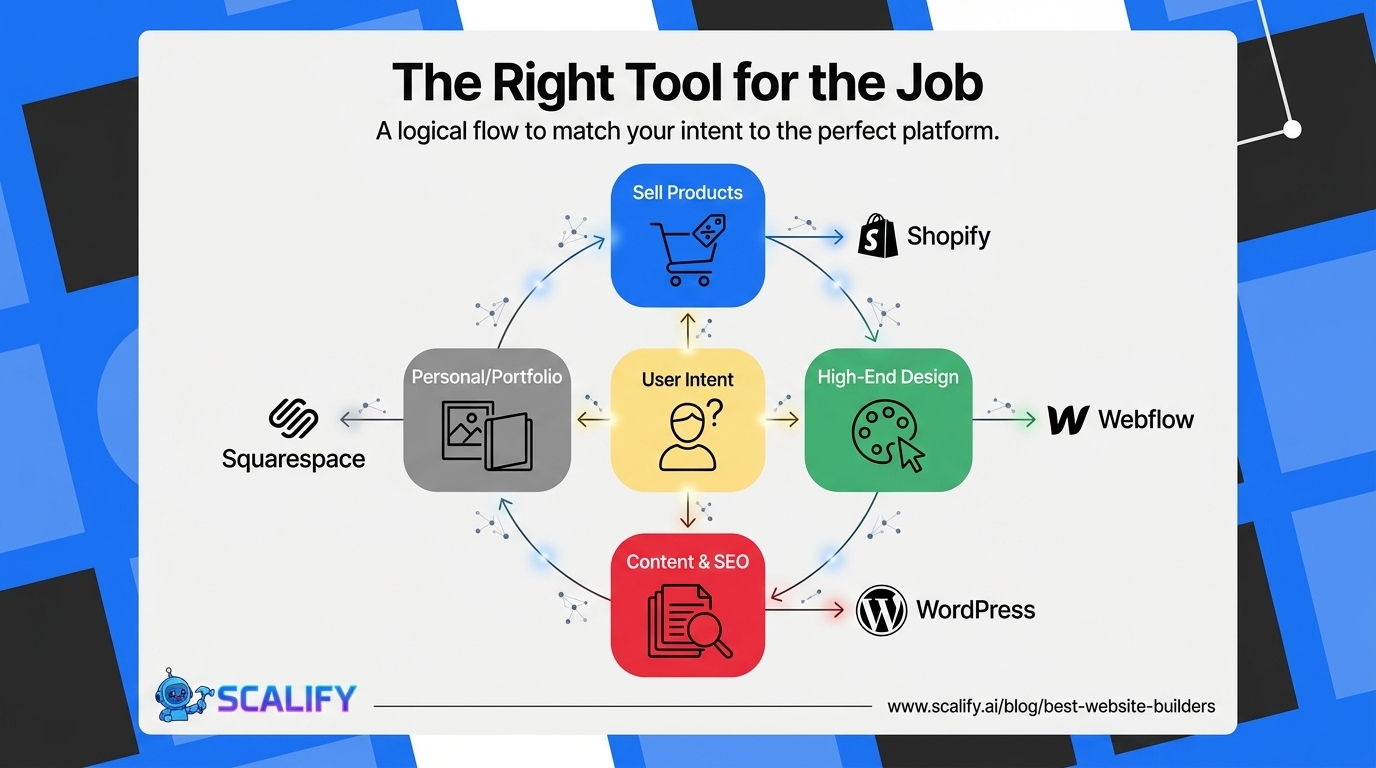
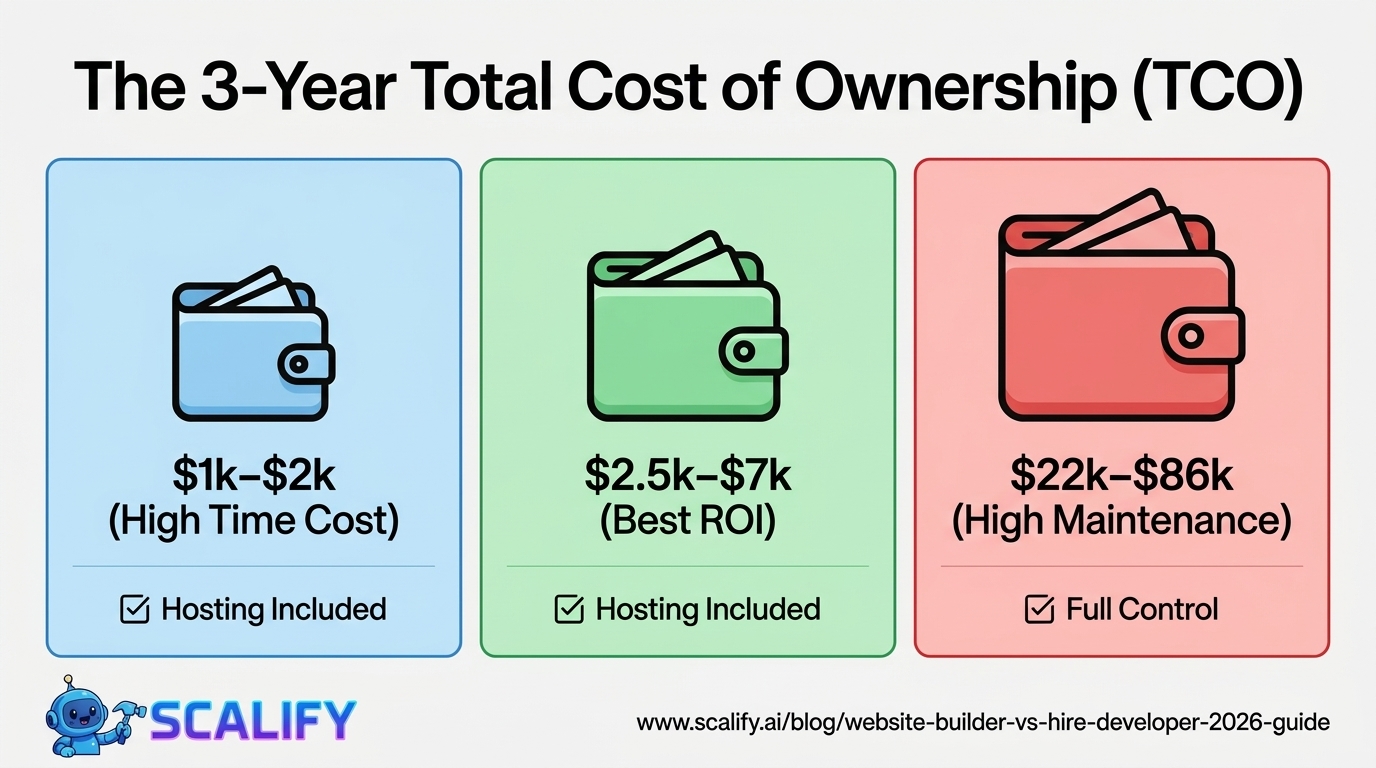
If you're building a website through a platform like Webflow, Squarespace, or Shopify, hosting is bundled into your subscription — you don't have to think about it separately. This is part of why these platforms are appealing for non-technical users.
Why Does Your Business Need a Website?
I know this sounds like a question with an obvious answer. But you'd be surprised how many small businesses are still operating in 2026 with either no website at all, or a site so outdated it might as well not exist.
Here's the straightforward case for why a professional website is non-negotiable.
Credibility
When someone hears about your business — through a referral, a social media post, a business card — the first thing they do is Google you. If nothing comes up, or if your site looks like it was built in 2009, that's a trust signal. And not a good one. A professional website is the digital equivalent of a clean, well-maintained storefront. The moment someone lands on it, they've already made an unconscious judgment about whether you're worth their time and money.
Discoverability
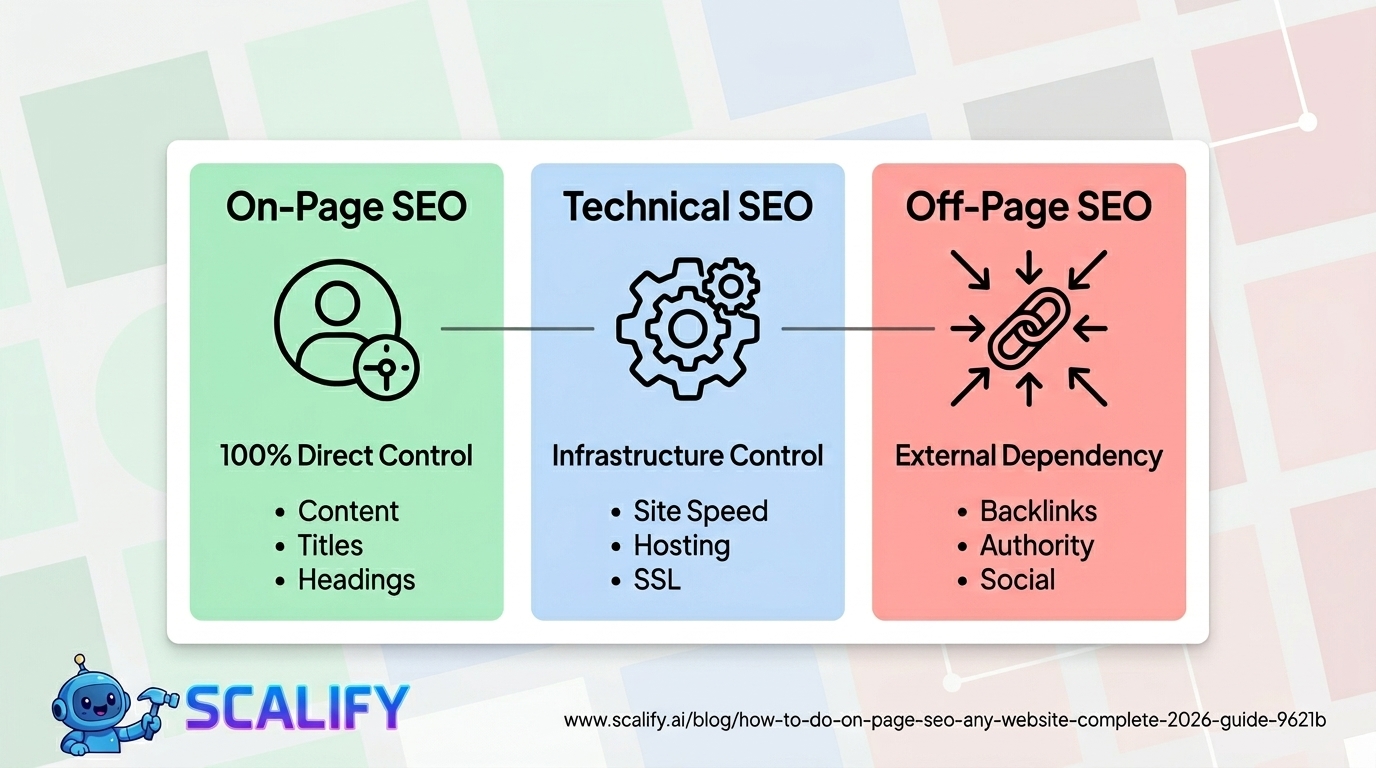
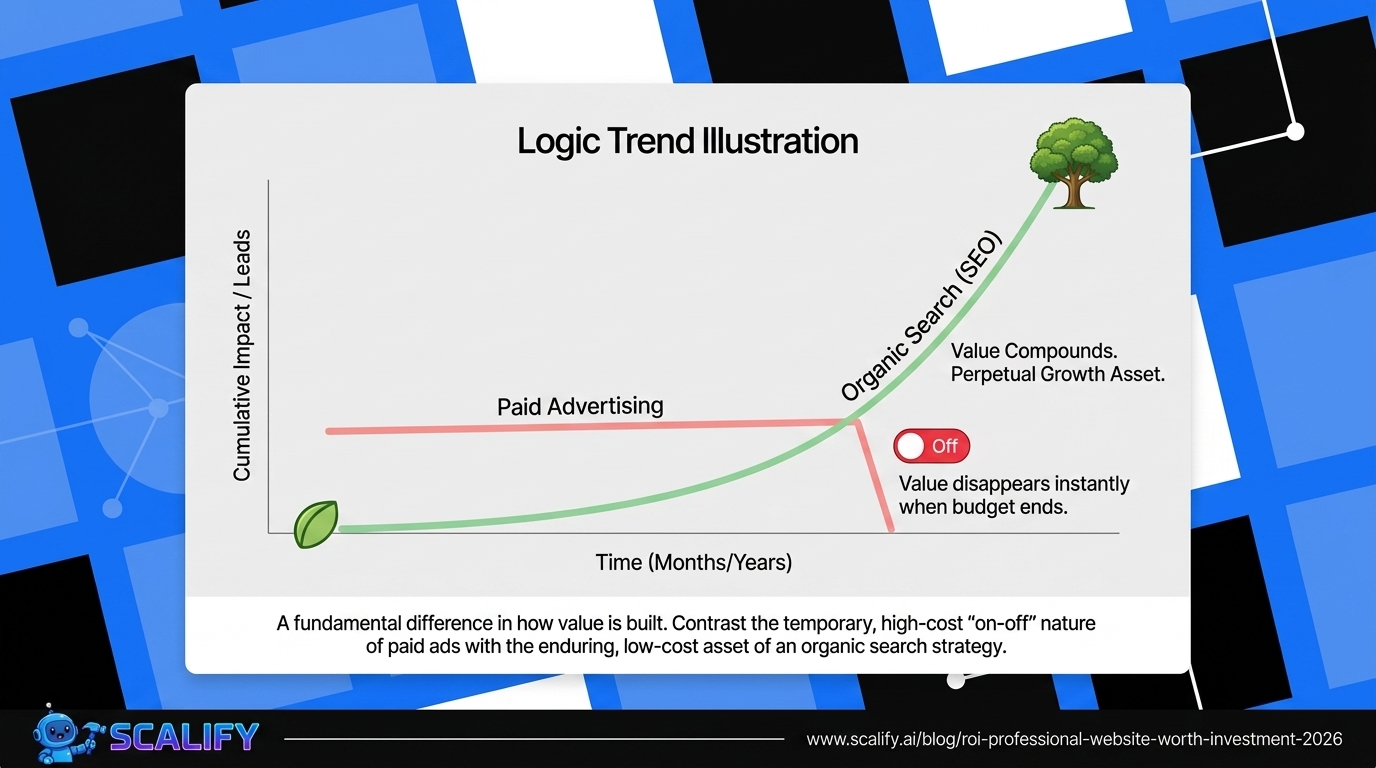
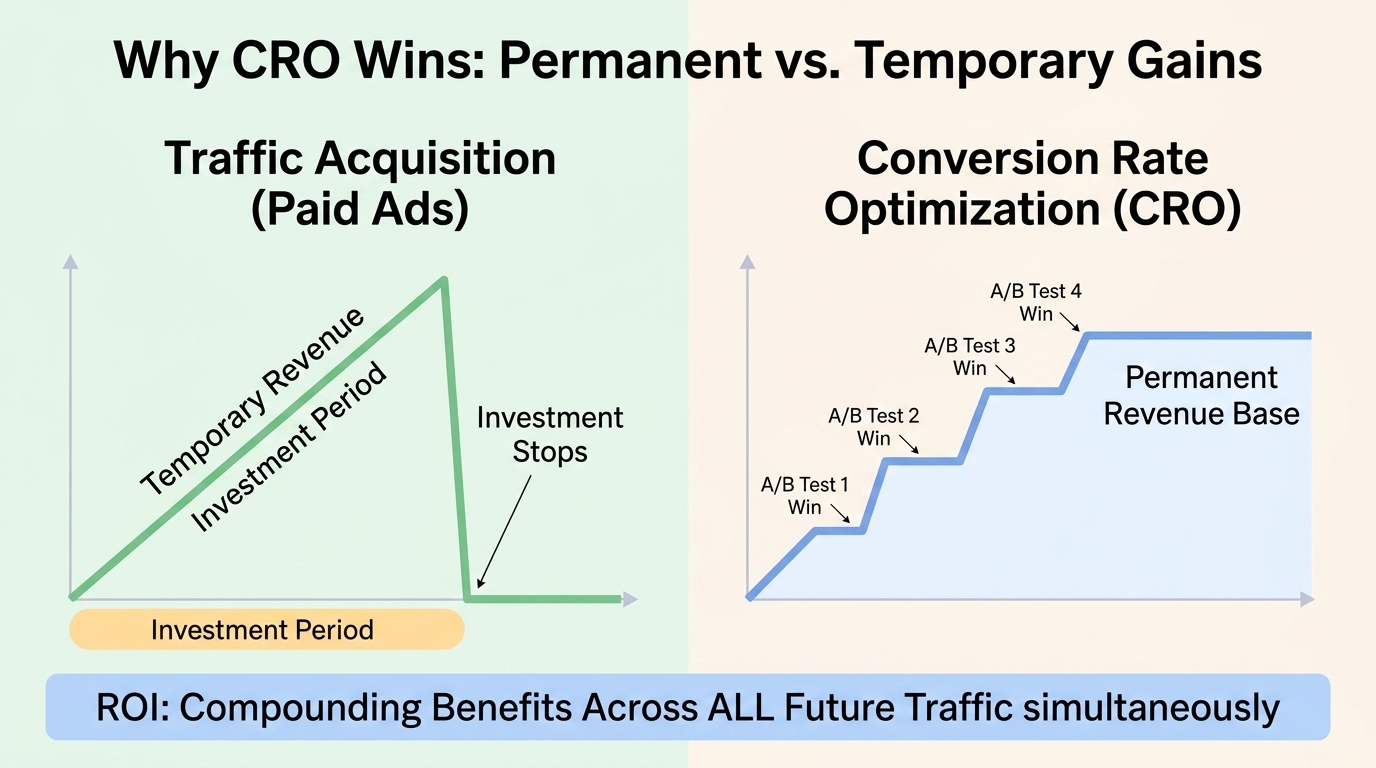
Social media profiles are rented land. Algorithms change, platforms die, accounts get suspended. A website that ranks on Google is an asset you own. Good SEO (Search Engine Optimization) can bring you a steady stream of potential customers searching for exactly what you offer — without paying for ads every single month to stay visible.
Control
Your Instagram page shows your content the way Instagram wants to show it. Your website shows your content exactly how you want to show it. You control the layout, the messaging, the calls to action, the customer journey. There's no competing noise, no algorithm suppression, no platform forcing ads between your posts.
Conversion
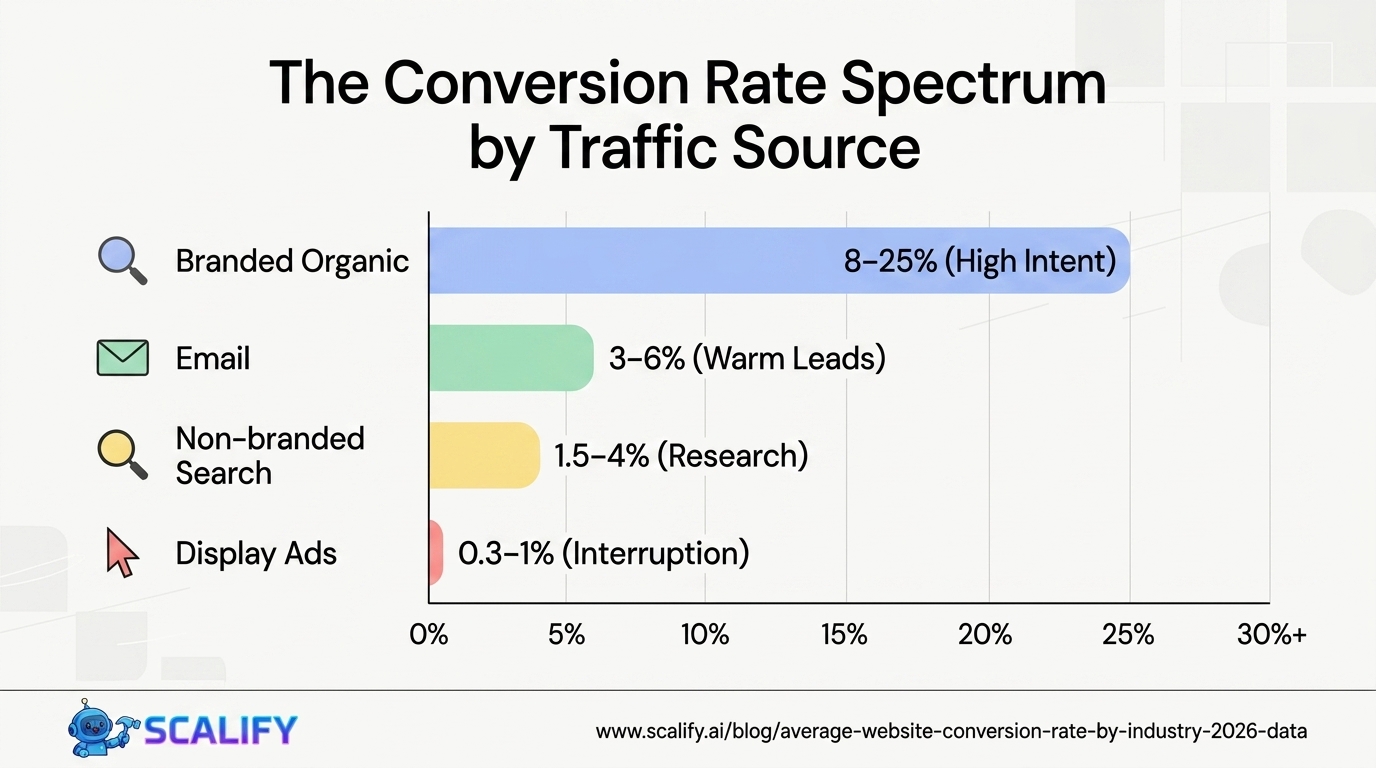
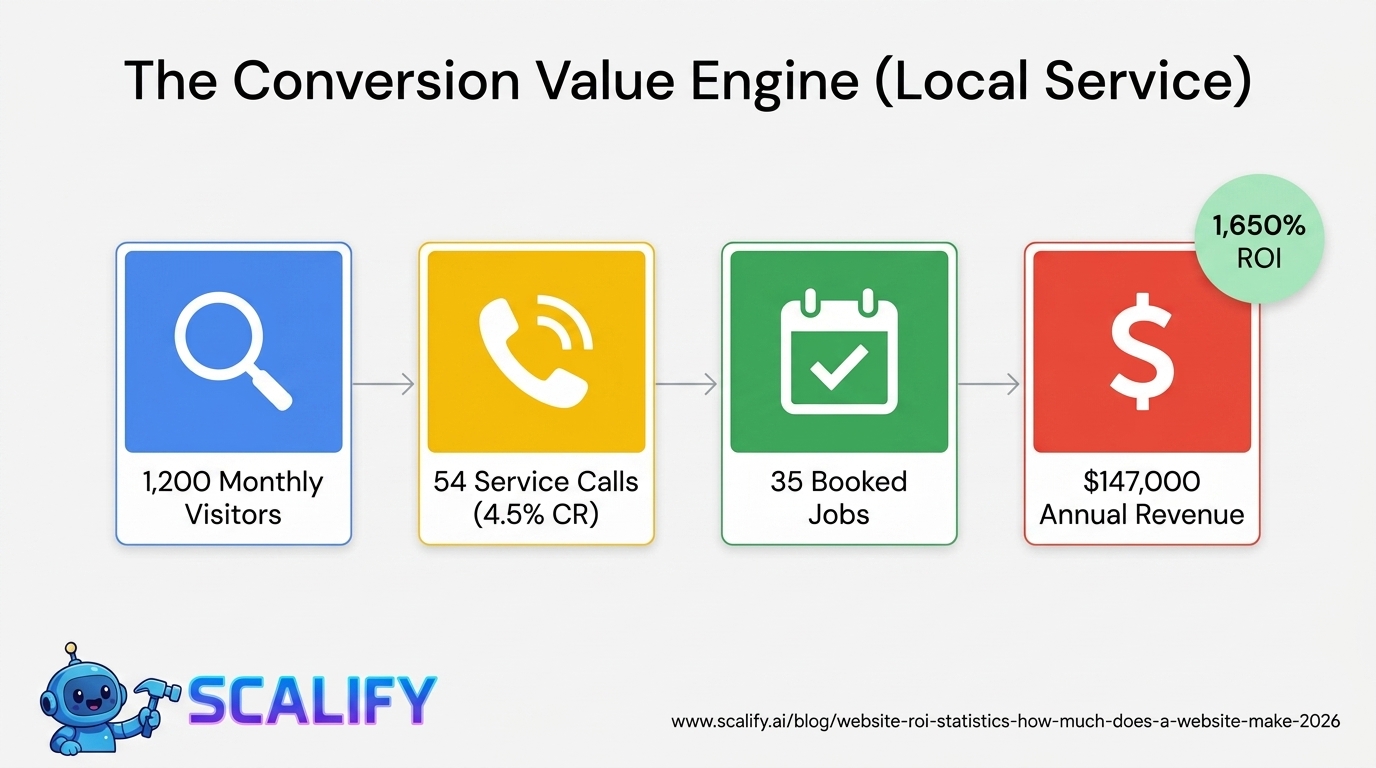
A website that's properly designed and optimized converts visitors into leads, customers, or subscribers. A good website isn't just a digital brochure — it's a sales tool working for you 24 hours a day, seven days a week, while you sleep.
Common Website Myths Worth Busting
Before we wrap up, let me clear up a few misconceptions I see constantly when talking to business owners about their online presence.
Wrong. Facebook is a platform you're borrowing. You don't control it. It can change its algorithm, reduce your organic reach to near-zero (which it already has for most businesses), or simply cease to be relevant. A website is infrastructure you own.
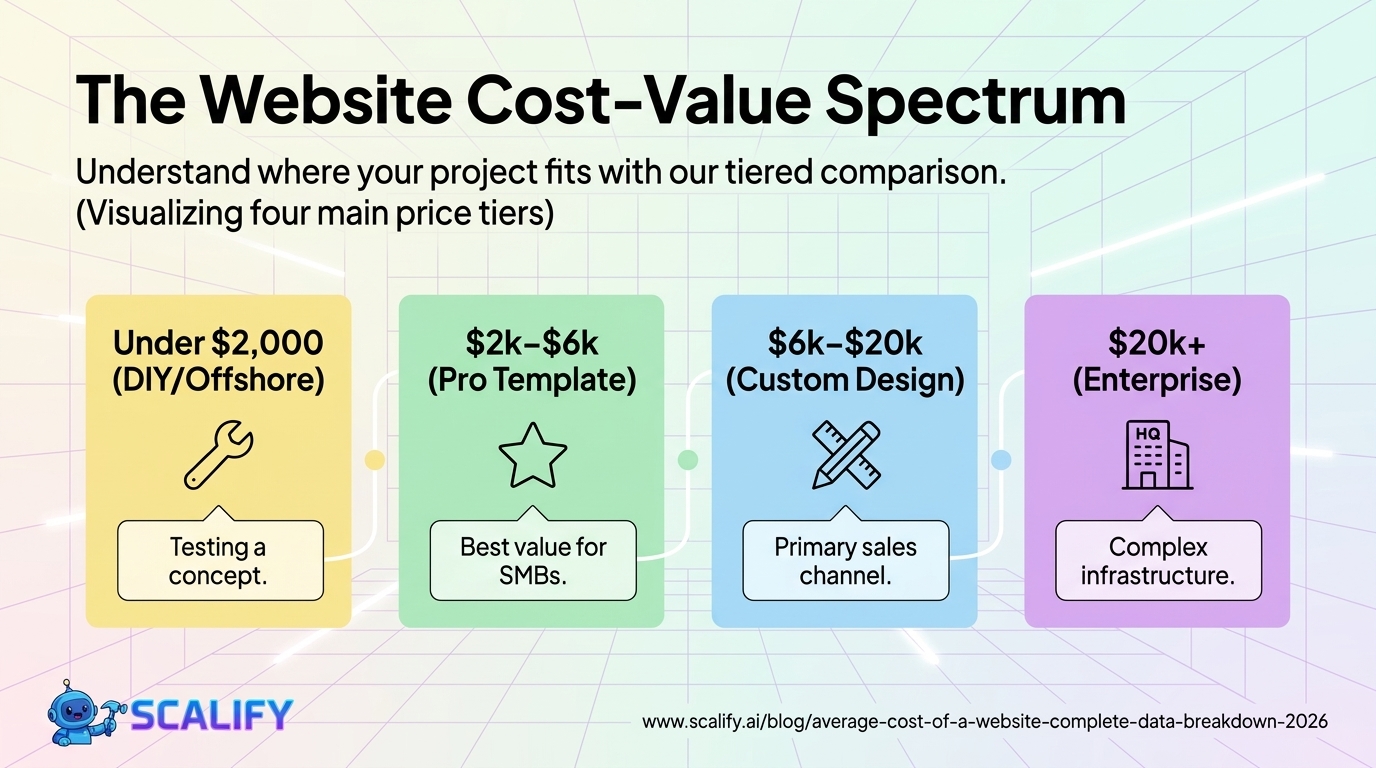
They used to be. A decade ago, getting a professional website built meant paying an agency $10,000+. Today, platforms like Webflow have made world-class design accessible to everyone. And services like Scalify have taken it even further — letting you order a custom professional website like you'd order a product, with everything handled from design to launch.
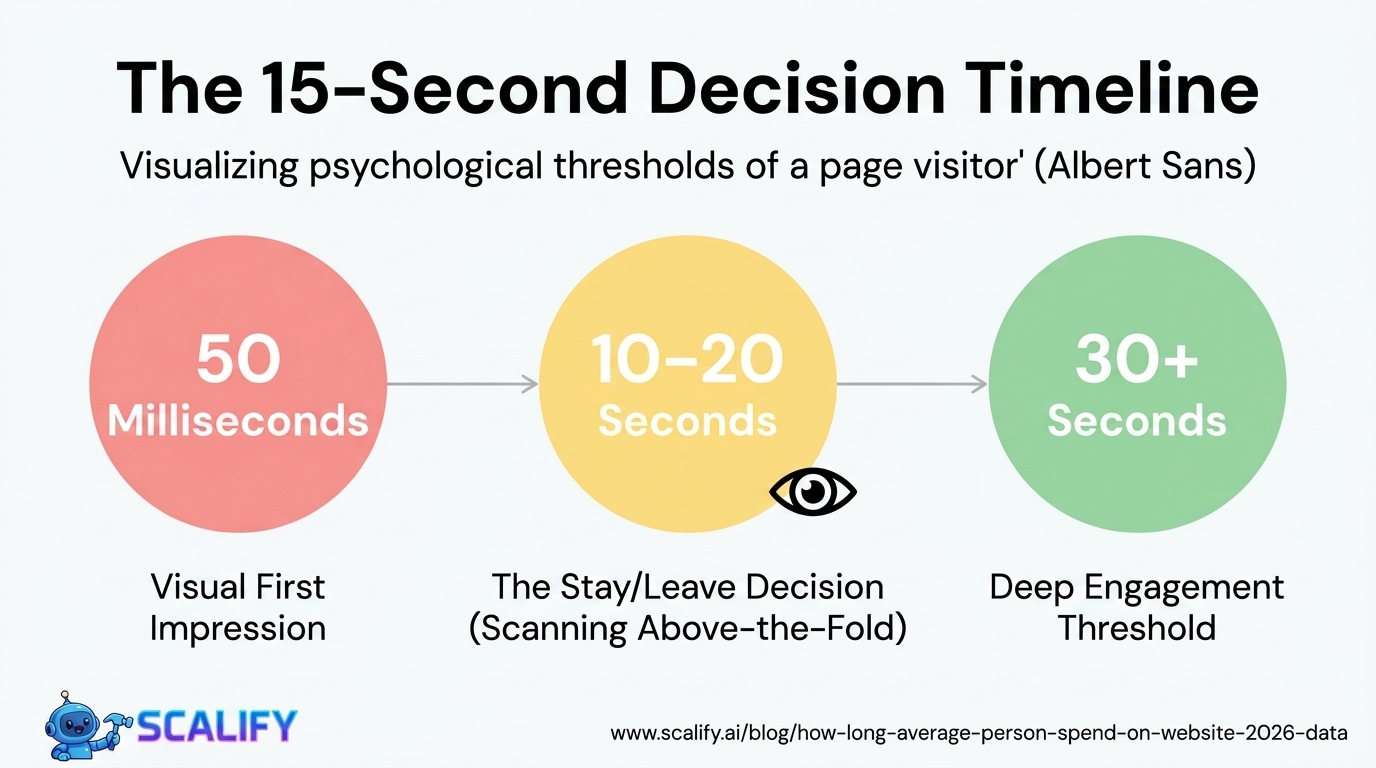
A bad website is genuinely worse than no website. If someone lands on a slow, confusing, visually outdated site, they don't give you the benefit of the doubt — they leave and go to your competitor. First impressions online are brutally fast. Research consistently shows users form an opinion about a website in under a second.
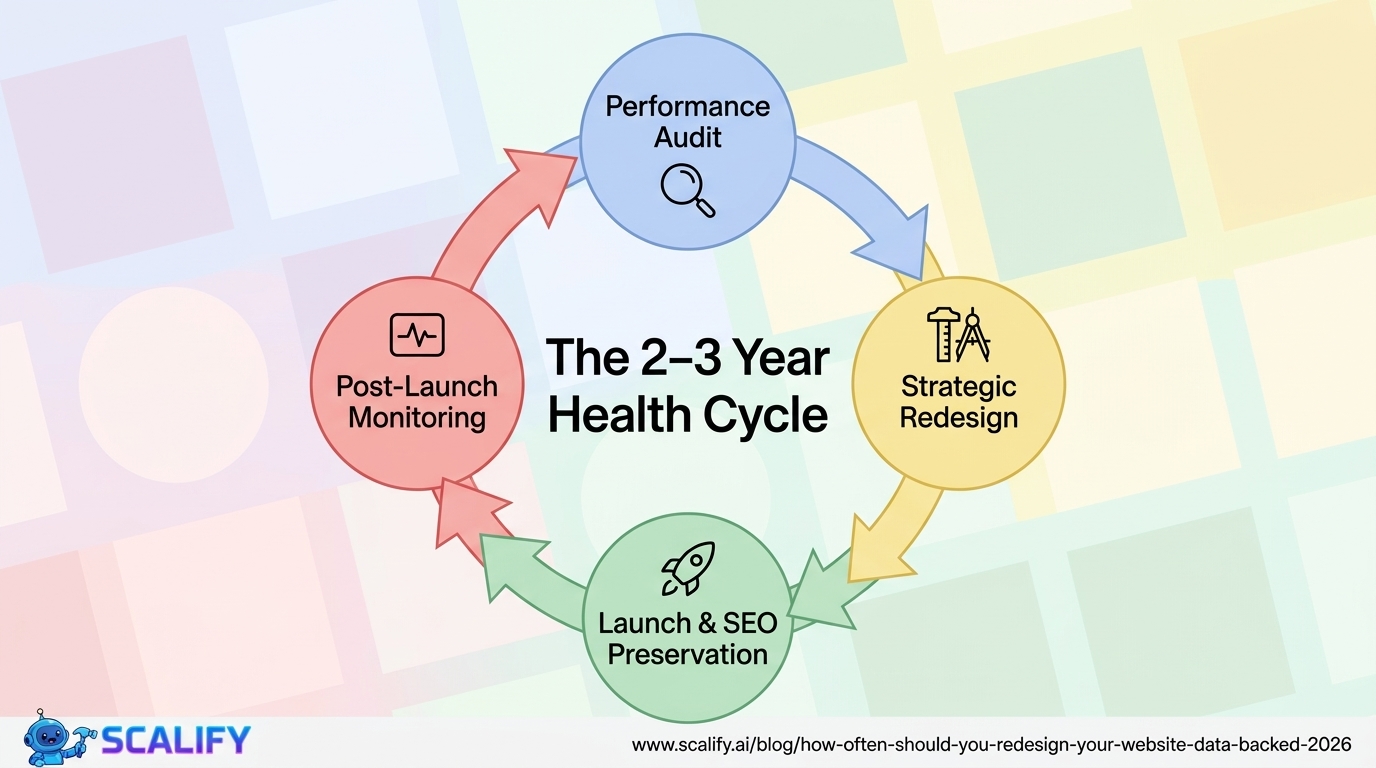
A website is not a set-it-and-forget-it thing. The best websites are living documents — updated with fresh content, optimized for search, monitored for performance, and refined based on how users actually behave on them. Launching is the starting line, not the finish line.
What Makes a Good Website?
Since we're here, let's talk briefly about what separates a website that actually works from one that just technically exists.
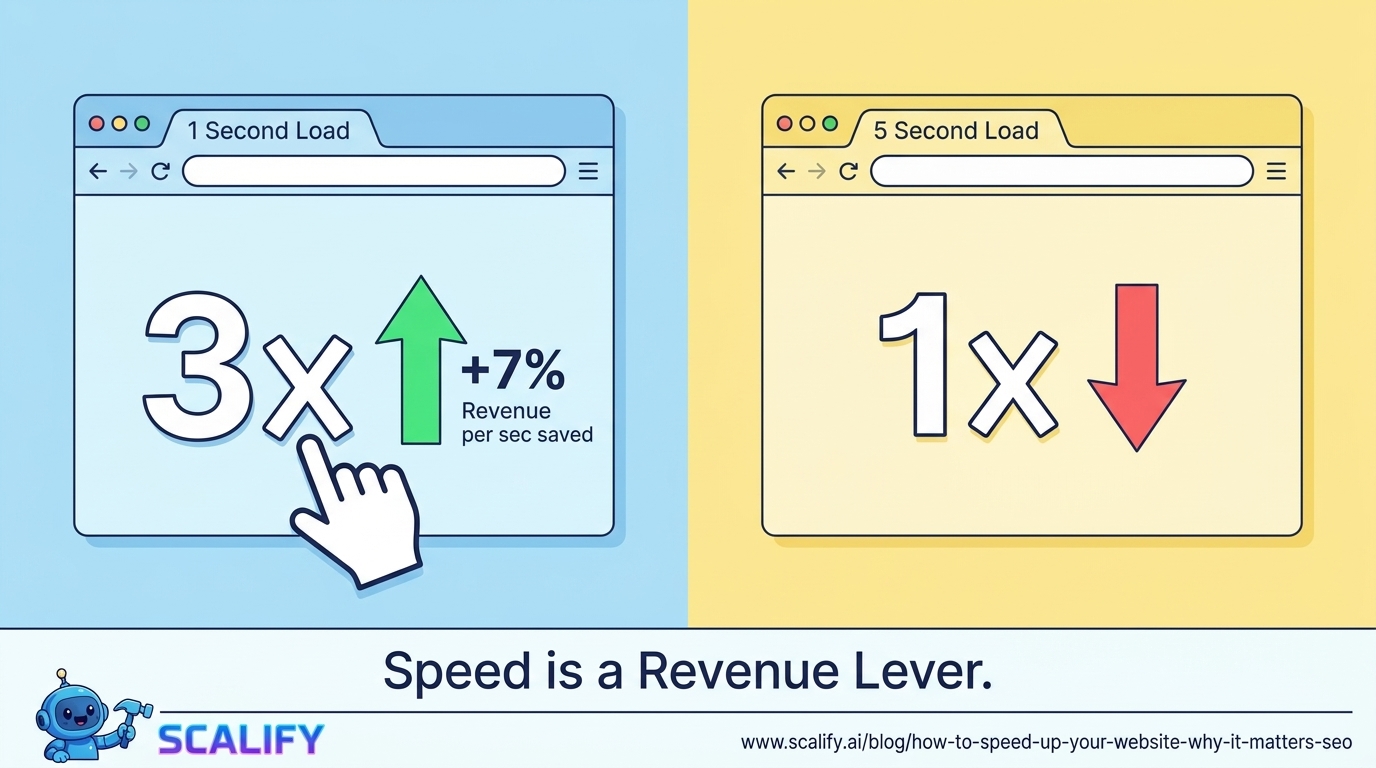
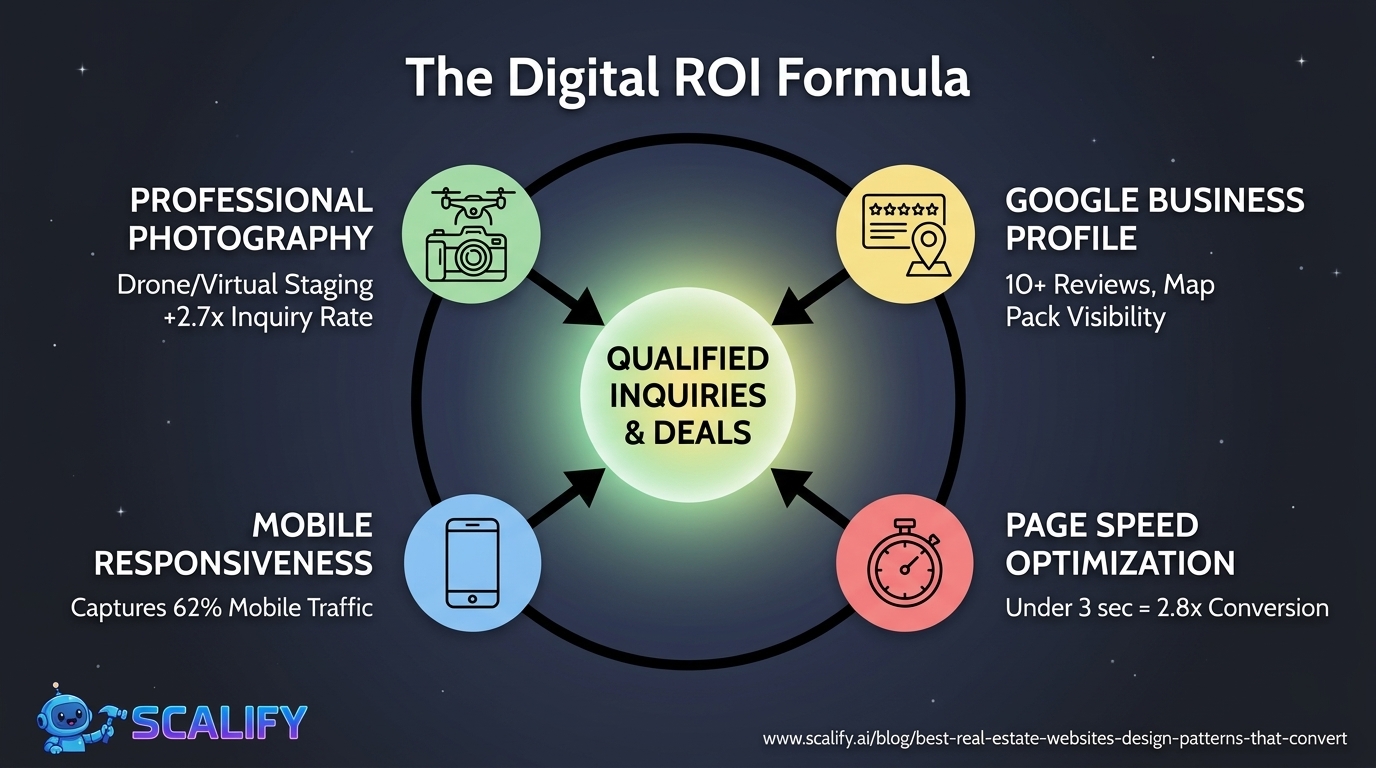
Speed. If your site takes more than 3 seconds to load, you've already lost a significant chunk of your visitors. Page speed isn't just a user experience issue — it's a direct Google ranking factor. A slow website is costing you traffic and conversions simultaneously.
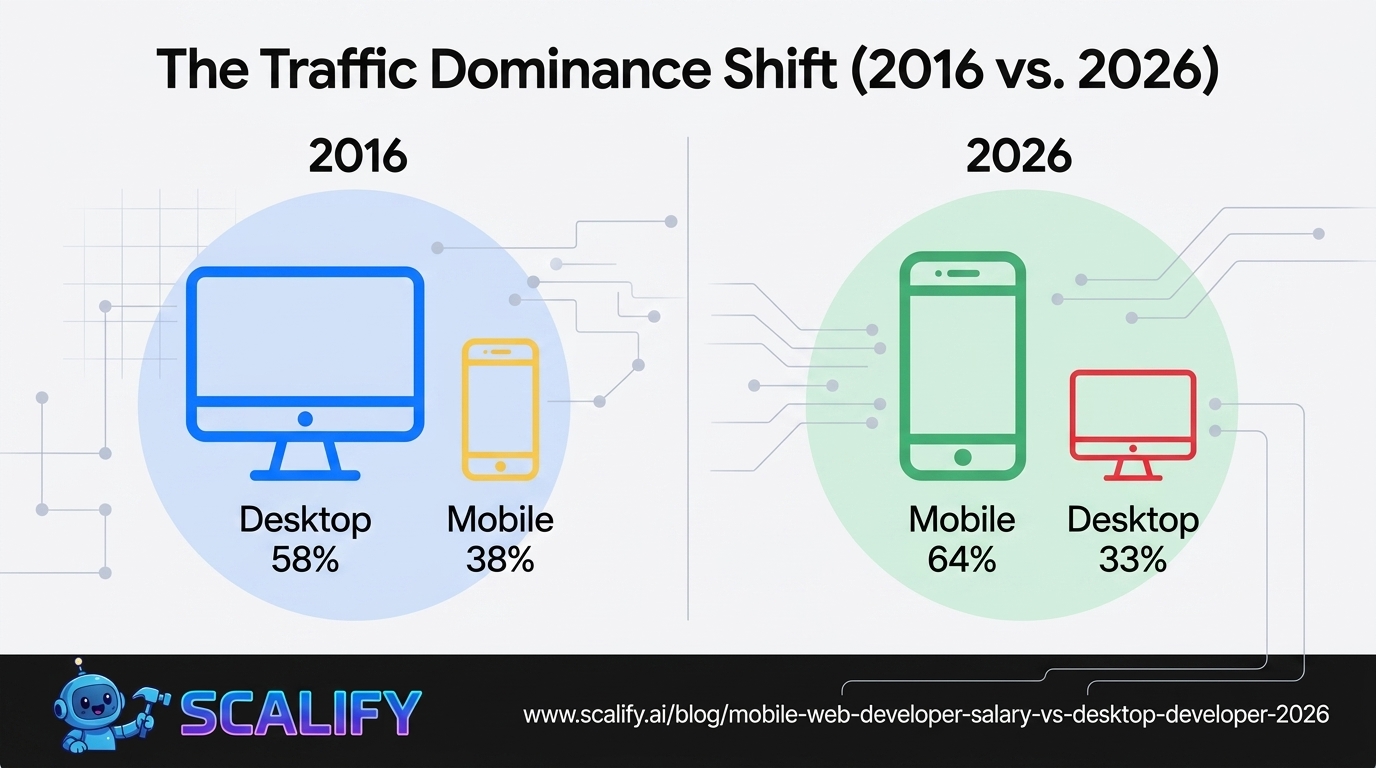
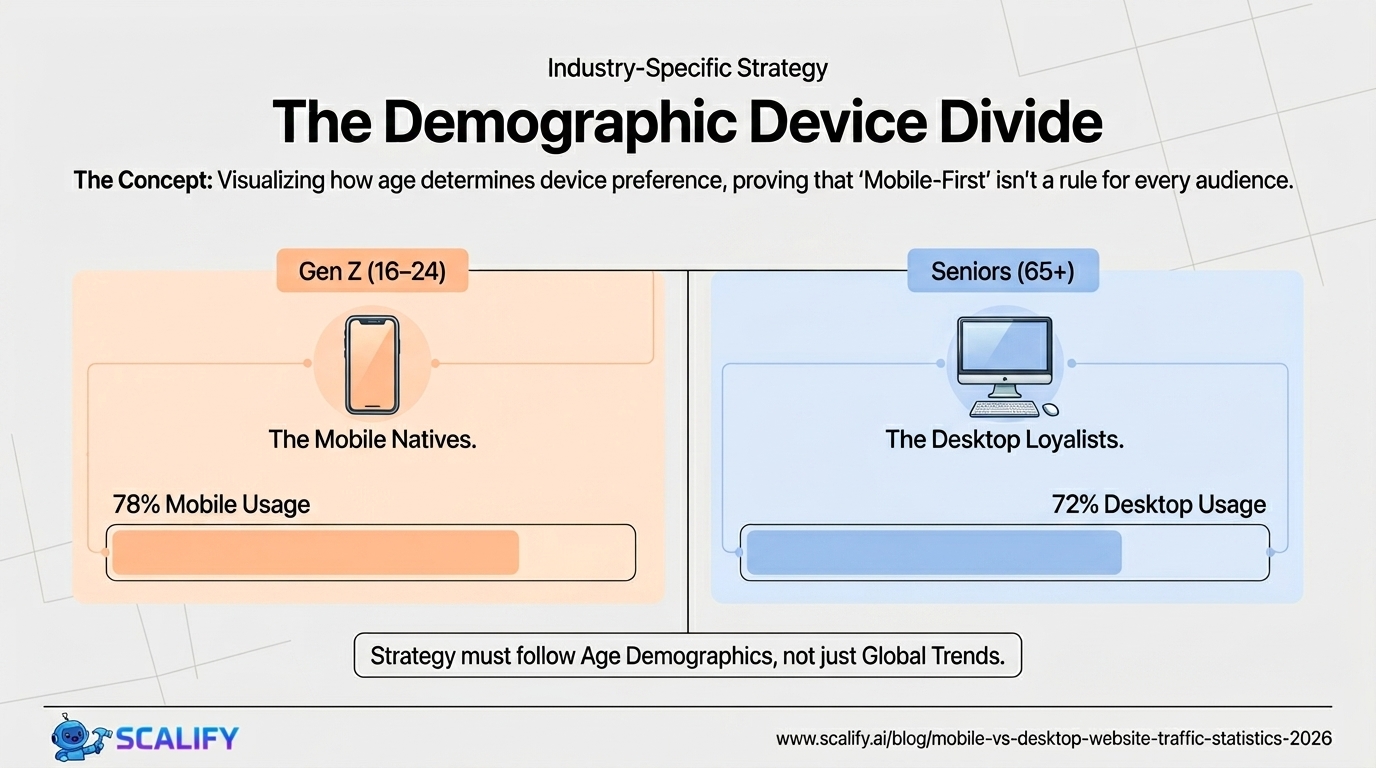
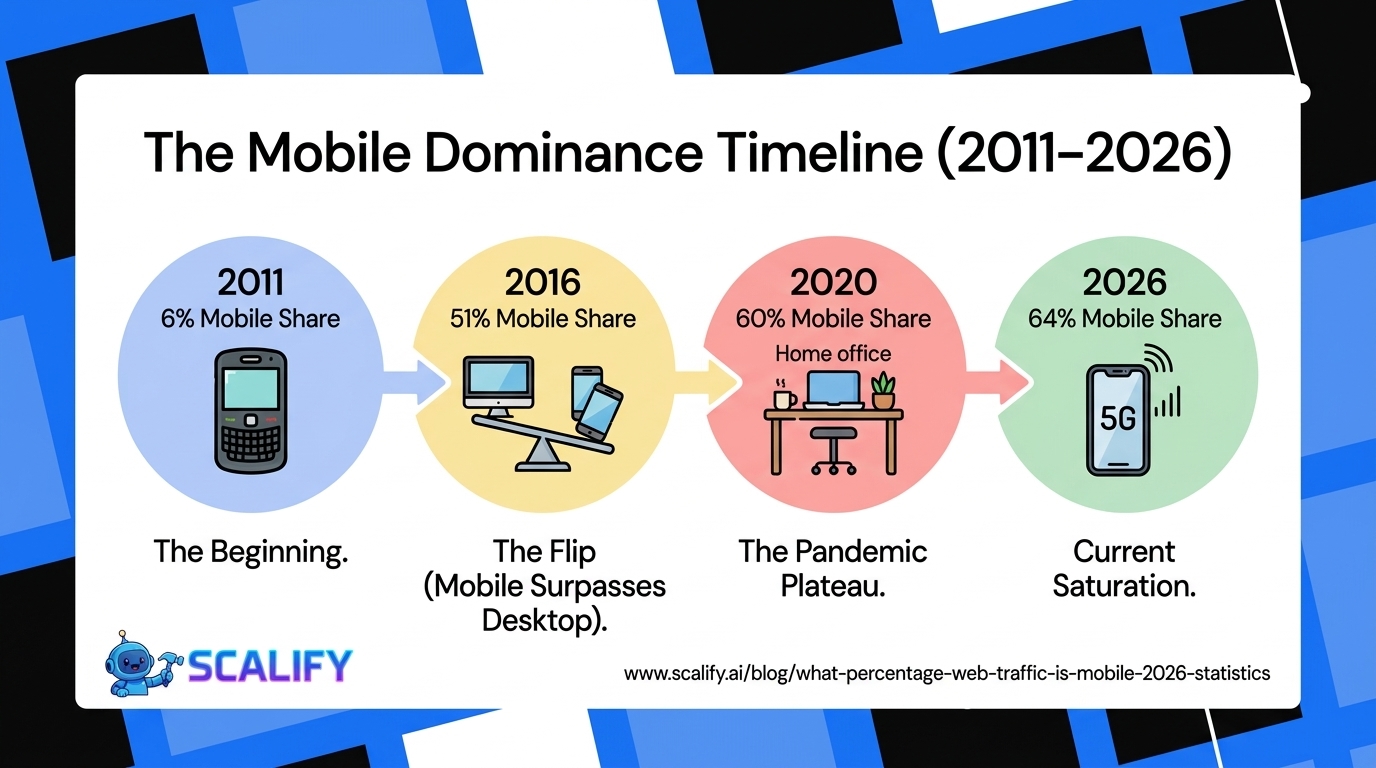
Mobile responsiveness. Over 60% of web traffic now comes from mobile devices. A website that looks great on desktop but breaks on a phone is alienating the majority of your potential visitors. Responsive design — where the layout adapts fluidly to any screen size — is the baseline expectation, not a nice-to-have.
Clear navigation. Users don't want to hunt for information. They want to land on your site, immediately understand what you do and who it's for, and find what they're looking for in as few clicks as possible. Good navigation is invisible — you only notice it when it's bad.
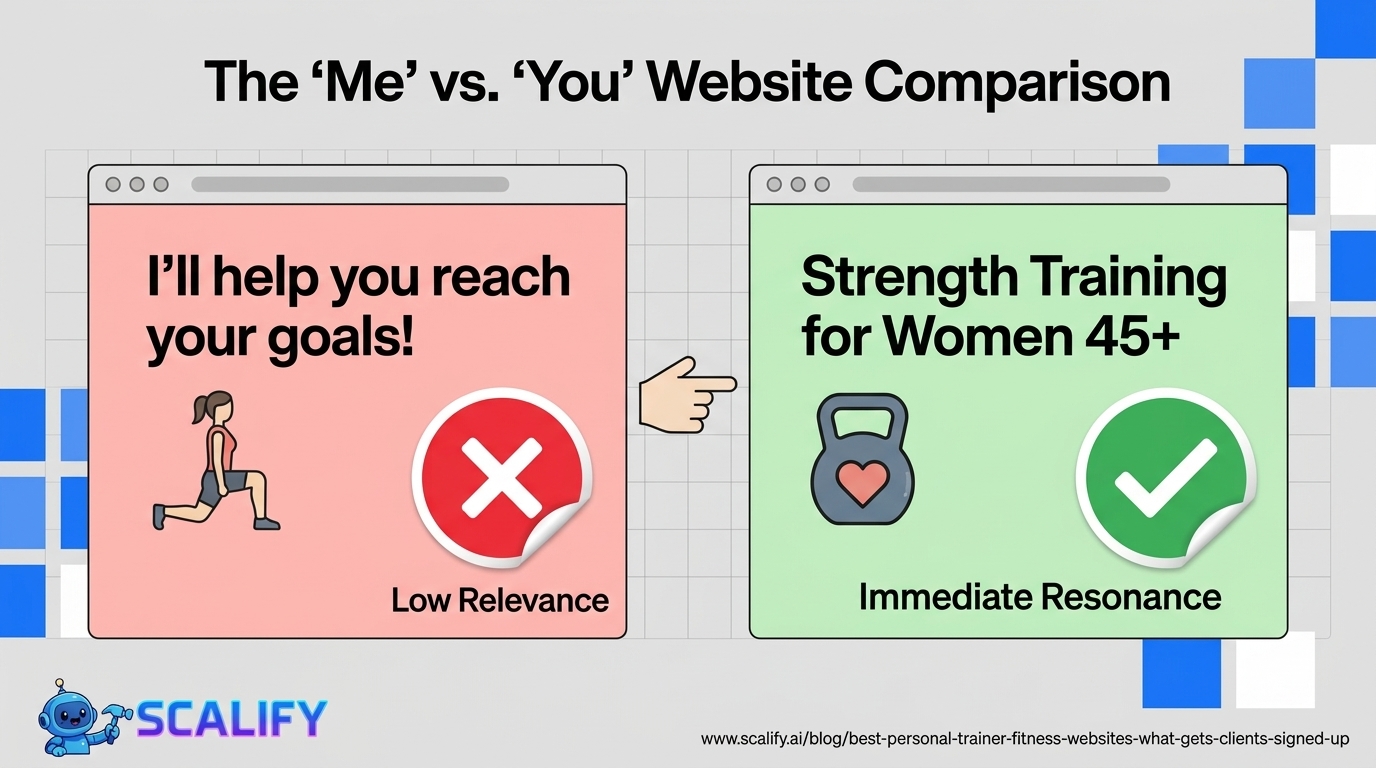
Compelling copy. The words on your website matter enormously. Great design can get someone to stay for a moment. Great copy gets them to take action. Your headline should answer "what do you do and why should I care" within the first three seconds of landing on the page.
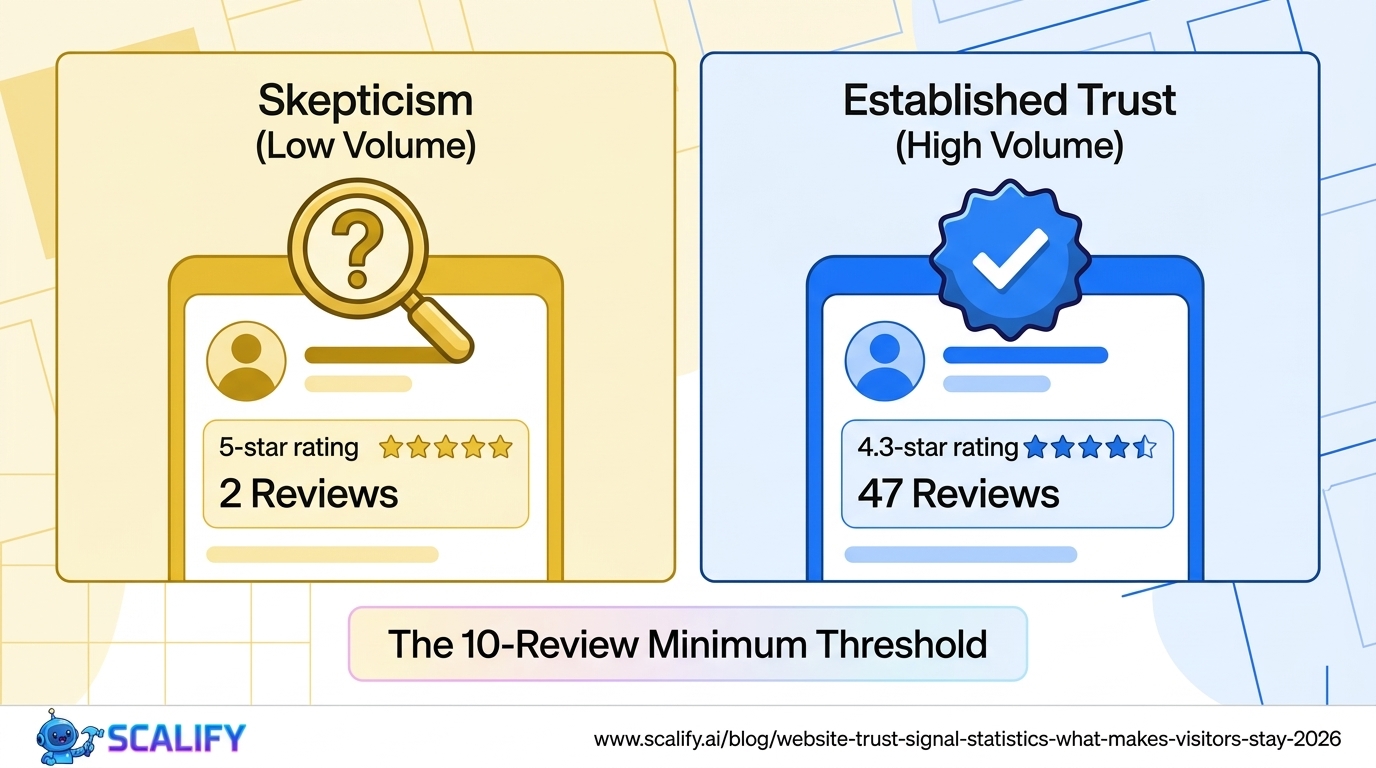
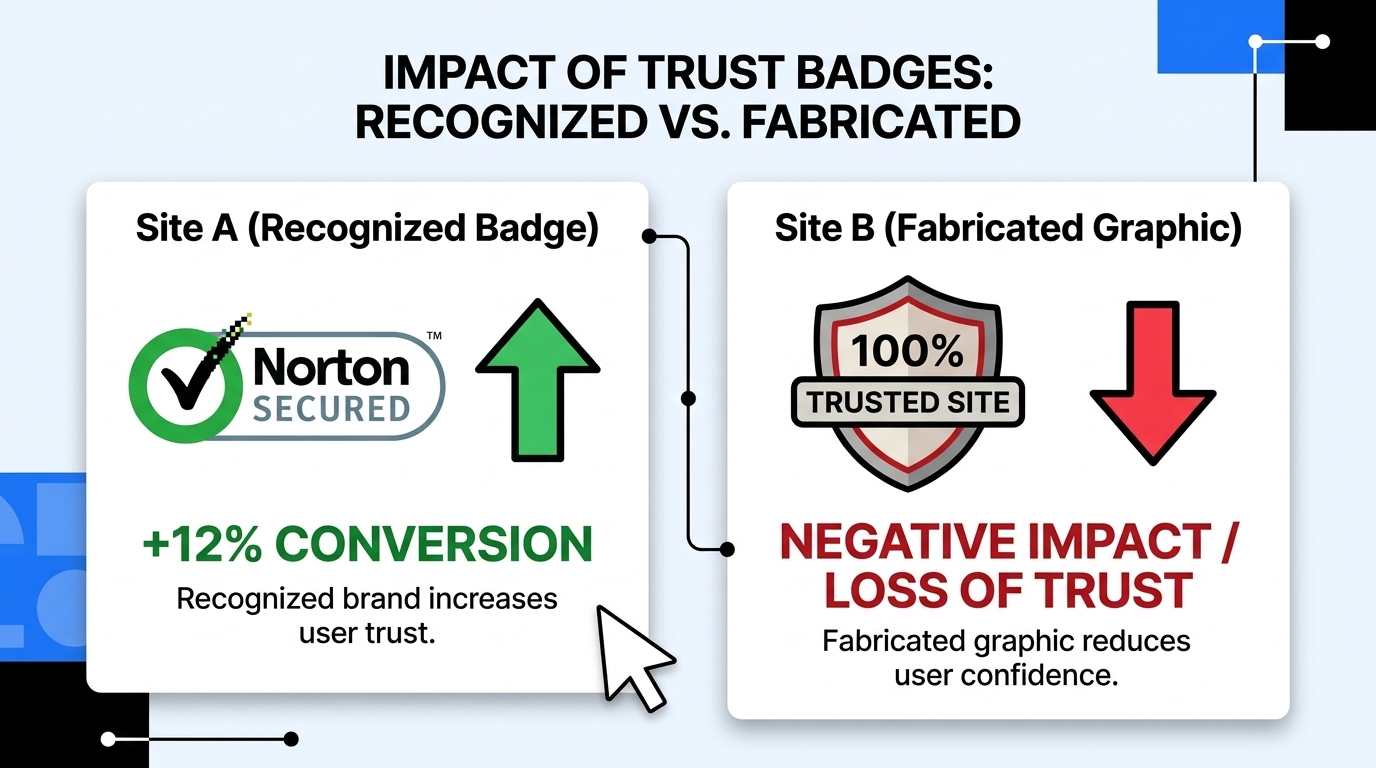
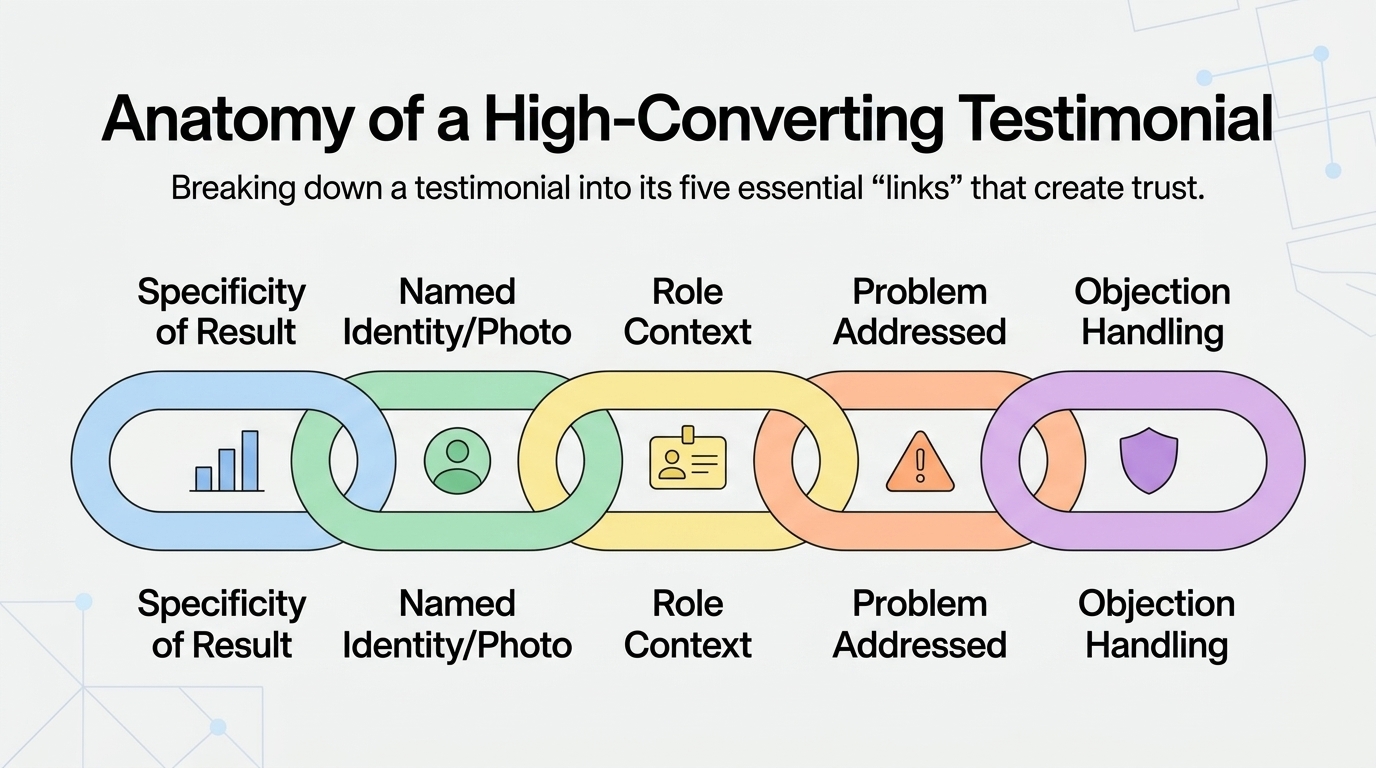
Trust signals. Testimonials, reviews, case studies, client logos, certifications — these all serve the same function. They tell a skeptical stranger that other people have trusted you and it worked out. Social proof is one of the most powerful conversion tools available, and most small business websites don't use it nearly enough.
Clear calls to action. What do you want someone to do when they visit your website? Call you? Fill out a form? Buy a product? Book a demo? Every page should have a clear, prominent next step. If a visitor leaves without knowing what action to take, your website has failed its primary job.
The Bottom Line
A website is your business's most important piece of digital real estate. It's a 24/7 salesperson, a credibility signal, and an owned channel that no algorithm can take away from you. Understanding what it is — not just that it exists, but how it works and what makes it effective — puts you in a much stronger position to make smart decisions about building or improving yours.
Whether you're starting from scratch, thinking about a redesign, or just trying to understand why your current site isn't performing the way it should, the fundamentals are the same. A fast, well-designed, clearly written website built on solid technical foundations is one of the best investments a business can make.
And if you want one without the headache of managing developers, timelines, and back-and-forth revisions? That's exactly what Scalify was built for — professional custom websites, ordered like a product, delivered like clockwork.


.jpeg)
.jpeg)

78 SW 7th St, Miami, FL 33130