


What Is a Website Footer and What Should Go In It?
By Josh Ternyak

March 28, 2026
The footer is prime real estate that most websites waste. Here's what a well-designed footer should contain, what to leave out, and how to turn your site's bottom section into a conversion and trust asset.
The Most Underestimated Section of Your Website
The footer gets almost no respect in web design conversations. Hours are spent agonizing over the hero section, the navigation, the homepage layout. The footer gets a few minutes of thought at the end of the project, usually involving the question "what do we legally need to put down here?" and then a quick dump of links and legal text.
That's a mistake. Here's why: visitors who scroll to your footer are telling you something. They've been engaged enough with your content to reach the bottom of the page. They didn't find what they were looking for in the main content. They're actively investigating — checking for contact information, looking for a specific link, evaluating your company's legitimacy through the details in the footer. This is an engaged visitor, and engaged visitors are worth designing for.
The footer is also the section of your site that aggregates key trust signals, navigational fallbacks, and legal requirements in one place. Getting it right contributes meaningfully to the overall impression of professionalism and completeness that shapes whether visitors trust your brand enough to do business with you.
This guide covers what every effective footer should contain, what's optional, what to leave out, and how to think about footer design for different types of businesses.
What Visitors Actually Look For in a Footer
Before designing a footer, it's worth understanding visitor intent. What are people looking for when they scroll to the bottom of a page?
Research and user testing consistently identifies a few primary footer use cases:
Contact information. This is the number one thing people look for in footers. When someone wants to call you, email you, or find your address, they often go straight to the footer — either because they can't find it elsewhere or because convention has trained them to look there. A footer without easily found contact information forces visitors to hunt, and hunting leads to abandonment.
Legal information. Privacy policies, terms of service, and compliance-related pages are universally expected in the footer. Users looking for these specifically know to look in the footer — it's a web convention that's been consistent for 25+ years.
Navigation fallback. Users who arrived from a specific source and didn't immediately find what they needed often scroll to the footer to get a broader view of what the site contains. A well-organized set of secondary navigation links in the footer gives these visitors a second chance to find a relevant section.
Social media links. Visitors who want to follow or connect with your brand on social platforms often look for social icons in the footer. This is where convention places them — not in the primary navigation where they'd distract from the main user journey, but in the footer where interested visitors know to find them.
Business legitimacy signals. A properly filled-out footer — with a physical address, phone number, registration information, trust badges, or professional certifications — communicates that this is a real, established business. The absence of these signals can create doubt in visitors who are evaluating whether to trust you.
The Essential Footer Elements
Logo and Brand Identity
Most well-designed footers include the brand logo, typically at the top of the footer or in the leftmost column. This serves two purposes: it confirms to the visitor they're still on your site (especially important if they've navigated from another domain), and it provides a consistent brand touchpoint at the end of the page experience.
A short tagline or mission statement below the logo — one or two sentences — gives the footer a brand voice that turns it from a pure functional space into a brand space. "Custom websites, built and launched in 10 days" is more useful and more memorable than no copy at all.
Contact Information
Make it direct and complete. At minimum: email address (the primary contact method for most online businesses), phone number if you have one and want calls, and physical address if location relevance is important for your business.
Physical addresses matter for local businesses — they signal local presence and contribute to local SEO signals. For businesses serving clients nationally or globally from a home office, an address may not be appropriate or desirable to display publicly.
For service businesses, the contact section of the footer is also a good place for a secondary CTA — a short "Ready to start a project? Get in touch" with a button — for visitors who've scrolled the entire page but haven't yet clicked a primary CTA.
Secondary Navigation
The footer navigation should be a curated set of useful links — not a replica of your main navigation, but a collection of the most important destination pages organized clearly. Common organizations:
By section: Company (About, Team, Careers), Services (list of key services), Resources (Blog, Guides, Case Studies), Legal (Privacy, Terms, Cookie Policy).
By importance: Highlight the most commonly visited pages regardless of category.
Avoid creating enormous "mega footers" with links to every page on your site. The goal is useful navigation, not comprehensive coverage. The pages that most commonly need a footer link are: About, Services/Products, Blog, Contact, and the legal pages.
Social Media Links
Social icons in the footer — linking to your active profiles on relevant platforms — are expected and appropriate. The key word is "active." Linking to a Twitter/X account that hasn't been posted to in 18 months, an Instagram grid with 12 posts from 2021, or a LinkedIn page with no updates signals neglect rather than legitimacy.
Only link to social profiles you actually maintain. If you're only active on Instagram and LinkedIn, include only those two. Empty or abandoned social profiles linked from your footer undermine the credibility they're meant to support.
Legal Pages
Every website that collects any user data — which includes analytics, contact forms, email subscriptions, or e-commerce — needs a Privacy Policy. For e-commerce or service businesses with terms that govern the business relationship, a Terms of Service page is also necessary.
These pages belong in the footer. They're important for legal compliance, they're expected there by users looking for them, and placing them anywhere more prominent would be unnecessary and distracting.
If you use cookies that require consent under GDPR or similar regulations, a Cookie Policy page (and ideally a cookie preferences link that lets users adjust their settings) is required in the footer as well.
If you're operating as a registered business, adding your legal entity name and registration number (or LLC designation) can add legitimacy, particularly for B2B businesses.
Copyright Notice
A simple copyright notice — "© 2026 Your Company Name. All rights reserved." — is standard footer practice. Keep it simple. It doesn't need to be elaborate or legalistic. Its primary function is to establish that the content is owned and provide a current year that signals the site is maintained.
Use a dynamic year in the copyright rather than a hardcoded one — seeing "© 2022" in a footer in 2026 immediately signals neglect and raises doubt about whether the information on the site is current.
Optional But High-Value Footer Elements
Newsletter Subscription
A simple email capture form in the footer — just an email field and a subscribe button — gives engaged visitors (the kind who scroll to the bottom of pages) a low-friction way to stay connected. These subscribers tend to be higher quality than average because they've demonstrated enough interest to scroll to the footer and make a deliberate choice to subscribe.
Keep the pitch concise: "Weekly tips on [topic]" or "Subscribe for [specific value]" followed by the email field. This is not the place for a full-length lead magnet pitch — that belongs on a dedicated opt-in page or pop-up.
Trust Badges and Certifications
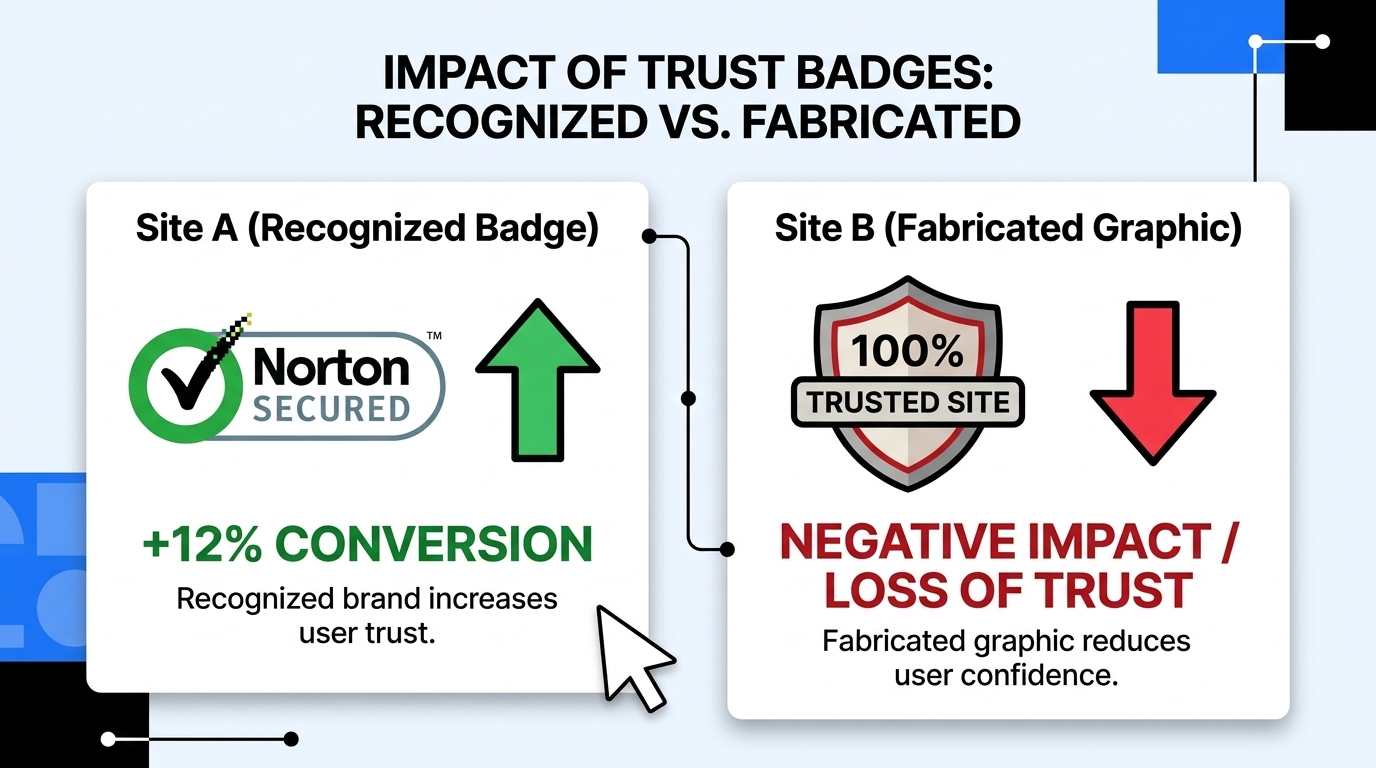
For businesses with relevant certifications, memberships, or accreditations — BBB membership, industry association certifications, payment security badges (for e-commerce), partner badges from platforms like Google or HubSpot — the footer is the appropriate place to display these trust signals without cluttering the primary content areas.
Be selective. Displaying irrelevant badges to appear more credible than you are is transparent and counterproductive. Only display certifications and memberships that are legitimate and relevant to your audience's decision-making.
Recent Blog Posts or Featured Content
For content-driven sites, a dynamic display of recent blog posts in the footer keeps the section fresh, provides additional navigation options for engaged visitors, and creates internal links to your latest content from every page of the site — a modest but real SEO benefit.
Google Map Embed
For physical location businesses — restaurants, retail stores, studios, local service companies — embedding a small Google Map in the footer showing your location is genuinely useful. It confirms your physical presence, makes you findable for visitors navigating to you, and contributes to local SEO signals. Keep it small (a static map image or a small embedded interactive map) to avoid performance impact.
Payment Method Icons
For e-commerce sites, displaying the payment methods you accept — Visa, Mastercard, PayPal, Apple Pay, etc. — in the footer provides two benefits: it sets expectations so visitors know their preferred payment method is accepted before they reach checkout, and the familiar payment logos act as subtle trust signals.
What to Leave Out of Your Footer
Links to social profiles you don't maintain. Already covered, but worth repeating — an abandoned social profile is worse than no social profile in the footer.
Excessive links. A footer that links to 50+ pages looks like it was built to stuff SEO links rather than help visitors. Google has become increasingly sophisticated at identifying low-quality internal linking practices. Focus on genuinely useful navigation links.
Generic filler copy. "We are committed to excellence and delivering exceptional value to our clients since 2018." Nobody reads this. It takes up space that could be used for something useful. If you're going to put brand copy in the footer, make it specific and memorable, not generic filler.
Flashy animations or interactive elements. The footer is a functional utility section. Animations here are rarely appropriate and often inappropriate — they distract from the utility function and can feel jarring after a content-focused page experience.
Duplicate header navigation. If your footer navigation duplicates your main header navigation exactly, you've missed an opportunity. The footer is for secondary and complementary navigation, not a repeat of what's already visible at the top of the page.
Footer Design Principles
Visual hierarchy still matters. Even in the footer, some elements are more important than others. The logo, contact information, and key navigation links should be more visually prominent than the legal pages and copyright notice.
Use sufficient contrast. Footers are often designed with dark backgrounds and light text. Ensure the contrast ratio between text and background meets accessibility guidelines (WCAG minimum: 4.5:1 contrast ratio for normal text). Low-contrast footer text fails accessibility standards and makes content harder to read.
Mobile footer layout requires attention. Desktop footers often use a multi-column layout that stacks into a single column on mobile. Test how your footer looks on mobile — stacked content that made sense in four columns often needs reordering when it becomes four sections stacked vertically. The most important elements (contact info, key links) should appear first in the mobile stacked order.
Keep it proportionate. A footer that's longer than multiple pages of content is a problem. While it's fine to have a comprehensive footer on a large website, the footer's height should be roughly proportionate to the site's complexity and content volume. A 5-page brochure site with a sprawling footer of 200+ links and extensive copy looks disproportionate.
The Bottom Line
Your footer isn't an afterthought — it's a functional, trust-building, navigational component that visitors who are specifically looking for information actively engage with. A well-designed footer includes the essential elements (contact info, legal pages, secondary navigation, social links, copyright), avoids the common mistakes (duplicate navigation, abandoned social links, irrelevant badges), and takes a few optional opportunities to capture email subscribers, showcase trust signals, and provide discovery content.
It takes maybe an hour to get right and it stays there on every page of your site, doing its job quietly. That's a pretty good return on the investment.
Every website Scalify delivers includes a carefully designed footer — every essential element covered, every trust signal in place, every link purposeful.








.jpeg)
.jpeg)


78 SW 7th St, Miami, FL 33130