


What Is a Pop-Up on a Website? Best Practices and When to Use Them
By Josh Ternyak

March 28, 2026
Pop-ups are either conversion tools or visitor annoyances — the difference is entirely in how they're implemented. This guide covers every type of pop-up, when to use them, and the rules that separate effective from obnoxious.
The Most Hated Feature That Still Drives Massive Results
If you asked most internet users what they dislike most about websites, pop-ups would appear near the top of the list. Survey after survey shows they're among the most irritating elements in the online experience. People install ad blockers partly to get rid of them. UX researchers have written extensively about their negative effects on perceived quality.
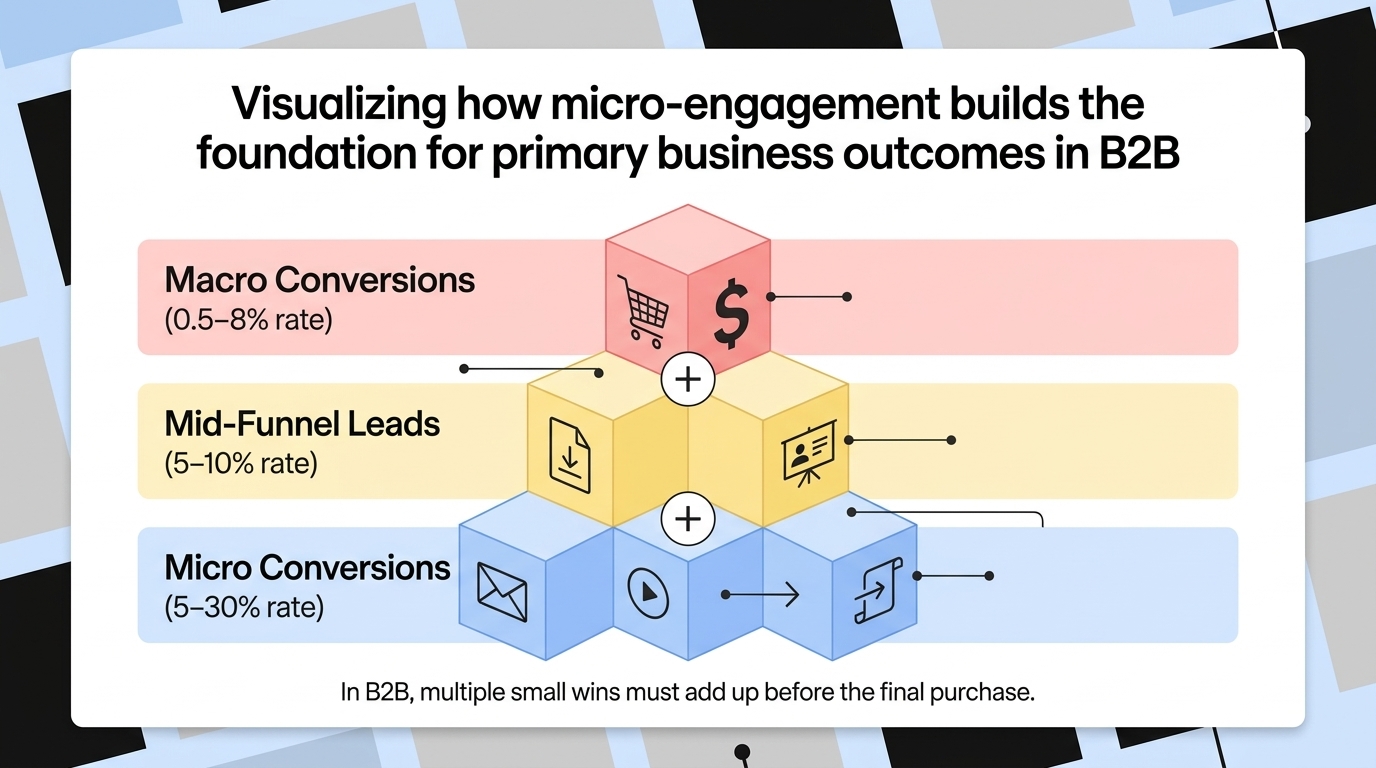
And yet — the data is unavoidable — pop-ups work. Email list growth rates 3–5x what passive forms achieve. Cart abandonment pop-ups recovering 10–15% of about-to-leave shoppers. Lead generation forms that convert at 3–9% when a contextually relevant offer appears at the right moment. The businesses that have tested both worlds consistently show meaningful uplifts from well-implemented pop-ups over no pop-ups.
The reconciliation of these two truths — users hate pop-ups; pop-ups produce results — is where the nuance lies. The pop-ups users hate and the pop-ups that produce results are almost entirely different animals. Bad pop-ups are intrusive, irrelevant, poorly timed, and designed to manipulate. Good pop-ups are contextually relevant, value-providing, properly timed, and easy to dismiss. Understanding the difference, in detail, is the point of this guide.
What a Pop-Up Is
A pop-up is a user interface element that appears over the main content of a web page, typically to present information, collect input, or prompt an action. Unlike inline elements that exist within the page flow, pop-ups overlay the page content, demanding attention — for better or worse.
The terminology has expanded significantly. When most people say "pop-up," they might mean any of a half-dozen distinct overlay mechanisms with different trigger conditions and behaviors. Understanding these variants matters because they have different appropriate use cases and different performance characteristics.
Types of Pop-Ups and Overlays
Modal Pop-Ups
The classic pop-up: a content box that appears centered over the page, typically with a darkened or blurred background that obscures the underlying content. The page content is "locked" behind the modal — users can't interact with it until they dismiss the modal or take the prompted action.
Modals demand full attention because they literally prevent access to everything else on the page. This makes them effective for high-priority messages and low-friction offers, but they're also the most interruptive form factor. The wrong modal at the wrong time produces the worst user experience outcomes.
Slide-In Pop-Ups
A panel that slides into the visible area from the side or bottom of the screen without fully blocking the main content. Less interruptive than a modal — the visitor can continue scrolling and reading while the slide-in is visible. They can choose to engage or ignore it without being forced to interact.
Slide-ins are generally better received than modals because they're non-blocking. The tradeoff is that they're less prominent and therefore typically convert at lower rates than modals for the same offer. The right choice depends on how disruptive you're willing to be in exchange for conversion rate.
Exit-Intent Pop-Ups
Pop-ups triggered when the visitor's cursor moves toward the top of the browser window — the behavioral signal that they're about to navigate away. Exit-intent technology detects this movement and fires a pop-up before the visitor leaves.
Exit-intent is one of the most effective pop-up implementations because it targets only visitors who are already leaving — there's no disruption to the active browsing experience, and the cost of one last engagement attempt is essentially zero. If the visitor was going to leave anyway, a compelling exit-intent offer has nothing to lose and potentially significant conversion value to gain.
Common uses: email opt-in offers for content sites (one final value proposition before they leave), discount offers for e-commerce (a percentage off to complete the purchase they were abandoning), content upgrades (download the PDF version of this guide), and cart abandonment interventions.
Scroll-Triggered Pop-Ups
These fire when a visitor scrolls to a specific percentage of the page — typically 50–70%. The logic: a visitor who has scrolled halfway through a blog post has demonstrated genuine interest in the content. An offer related to that content is more relevant to them than to someone who just landed on the page.
Scroll-triggered pop-ups applied to blog content convert well for content upgrades (downloadable resources that extend the post's value) and newsletter subscriptions (an offer to get more content like this). They're generally well-received when the content quality has been high enough to earn 50%+ scroll depth.
Time-Delayed Pop-Ups
These fire after a visitor has been on the page for a specified number of seconds — typically 30–60 seconds. The timer-based trigger is a proxy for engagement: someone who's been on the page for 45 seconds has probably read something and demonstrated some interest.
Time delays are a simple way to avoid triggering pop-ups for bounce visitors (who arrive and immediately leave) while still reaching engaged visitors. The limitation: time spent on page is a noisier signal than scroll depth. Someone who left the tab open while doing something else for 60 seconds isn't the same as someone actively reading for 60 seconds.
Entry Pop-Ups (Timed Immediately)
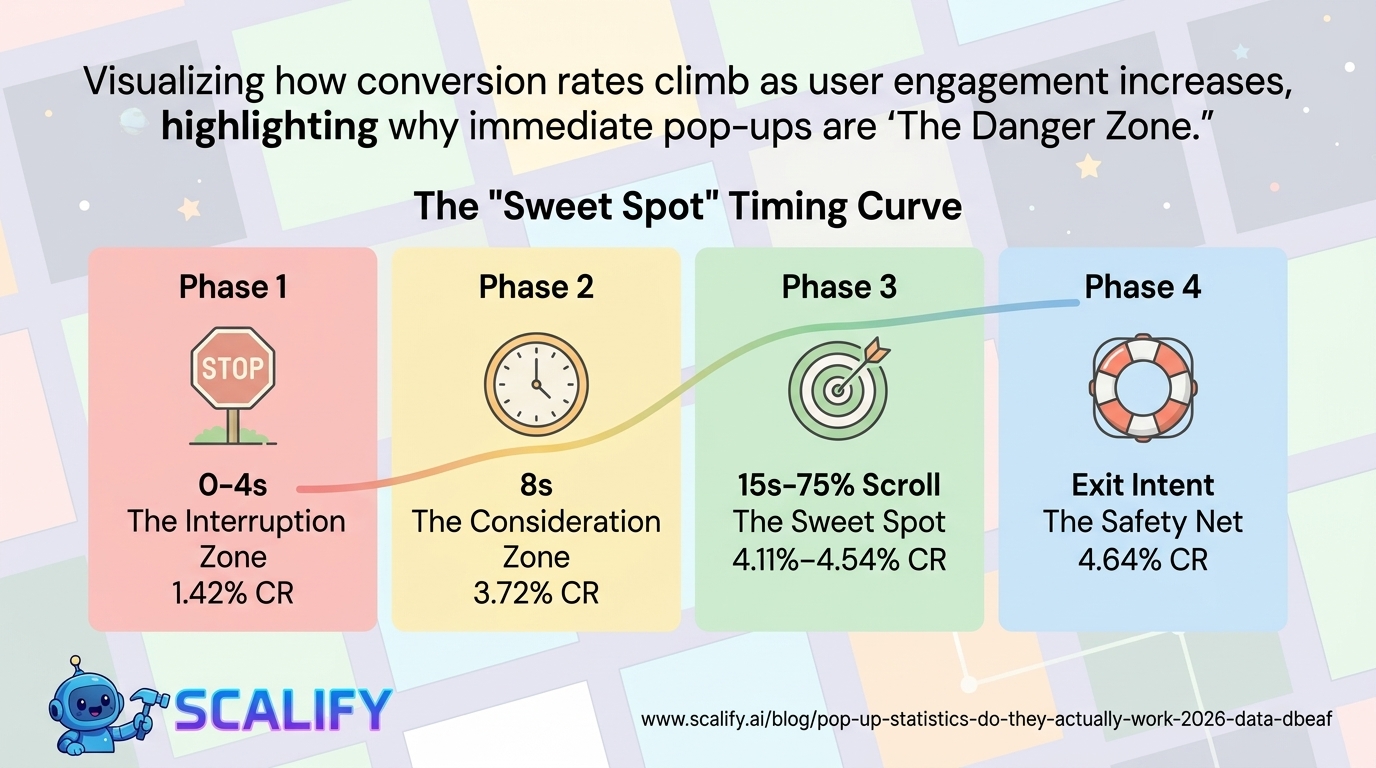
Pop-ups that trigger immediately or within a few seconds of page load. These are the most contentious form. An immediate pop-up presents an offer to someone who literally just arrived and has seen almost nothing of the site yet — before any value has been delivered, before any trust has been established.
Entry pop-ups perform poorly for most content offers (why would someone subscribe before they've seen the content?). The exception is offers with genuinely compelling immediate value regardless of context: a sitewide discount for first-time visitors, an age verification gate, a geolocation-based notice, or a promotional announcement. Even then, a delay of at least 5–10 seconds is almost always better than immediate.
Sticky Bars (Floating Bars)
A non-modal variant: a persistent horizontal bar fixed to the top or bottom of the screen that stays visible as the visitor scrolls. Sticky bars are less interruptive than any overlay format because they don't obscure content — they simply occupy a portion of screen real estate at the edge of the viewport.
Common uses: promotional announcements, sitewide offers, email capture with a single field, countdown timers, and free shipping thresholds. Lower conversion rates than modals but essentially zero interruption cost — and they stay visible the entire session, providing repeated exposure.
Full-Screen Takeovers
The nuclear option: the entire screen is occupied by the pop-up, completely replacing the page content. These are the highest-friction format and are rarely appropriate for standard marketing purposes. Legitimate uses include age verification gates (legally required in some jurisdictions for age-restricted content), region selection for international sites, and occasionally high-impact promotional launches. Outside of these contexts, full-screen takeovers produce significant negative brand reactions and high abandon rates.
When Pop-Ups Are Worth Using
The situations where pop-ups produce meaningful results without significantly damaging user experience:
Exit-intent email capture on content sites. A visitor who read 2,000 words of your blog post and is now leaving was clearly interested in your content. A well-designed exit intent offer — "Enjoyed this? Get our weekly guide to [topic]" — catches a percentage of these visitors before they're gone. Email subscribers acquired this way have genuine interest in the content.
Cart abandonment recovery on e-commerce sites. A visitor who added items to their cart and started moving toward the exit was close to purchasing. An exit-intent offer — a discount, free shipping threshold reduction, or simply "Did you forget something?" — recovers a meaningful portion of these near-purchases. This is typically the highest-ROI pop-up implementation in e-commerce.
Content upgrades on specific blog posts. A downloadable resource that directly extends a specific article's value — the spreadsheet template that goes with a tutorial, the checklist version of a how-to guide, the video walkthrough that accompanies written instructions — converts well when offered via a contextually placed pop-up at the relevant point in the reading experience.
Lead capture for high-value offers. Free consultations, detailed ROI calculators, personalized assessments — offers with clear, specific value that a visitor would be genuinely interested in claiming. These work because the offer is worth interrupting someone for.
Promotional announcements for existing visitors. A limited-time sale, a new product launch, a major content update — announcing this to engaged visitors via a sticky bar or light overlay is appropriate when the information is genuinely relevant and time-sensitive.
When Pop-Ups Hurt More Than They Help
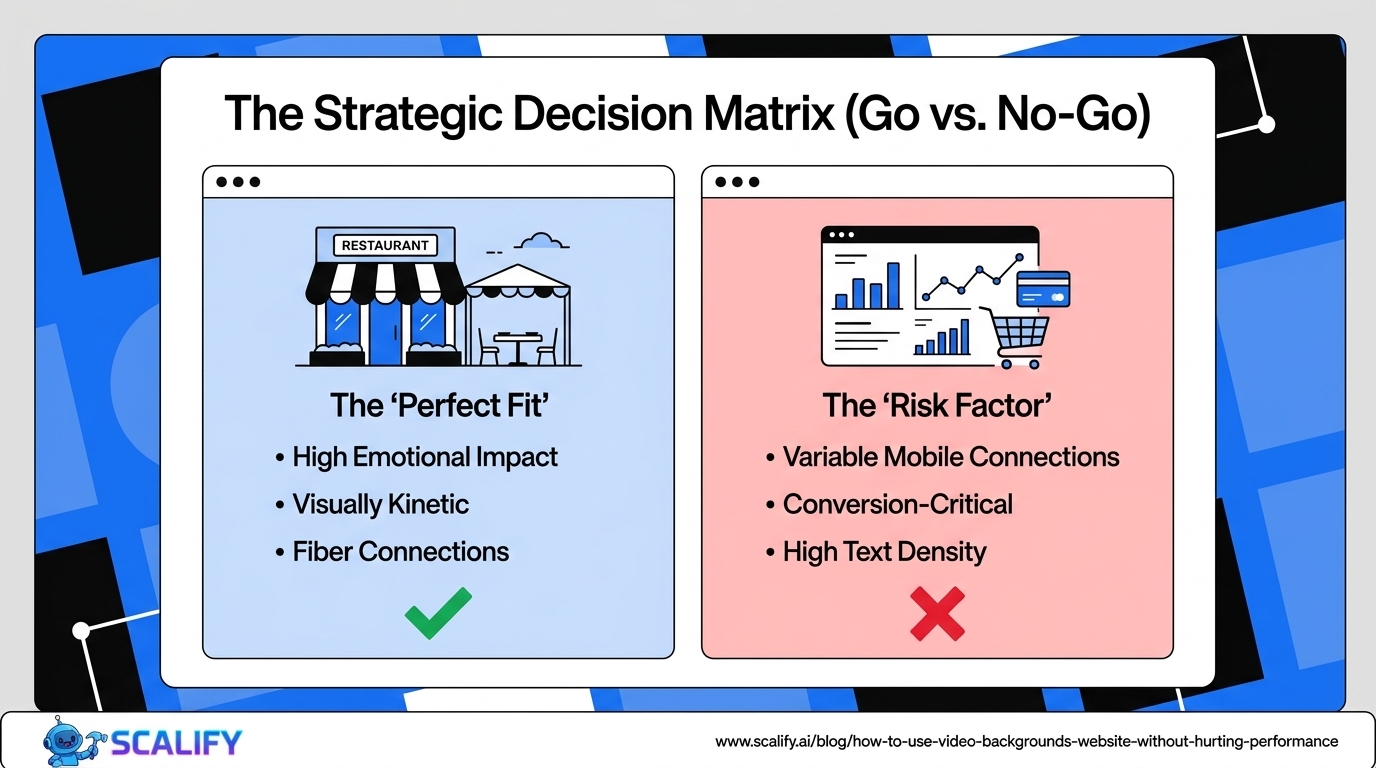
Immediate interruption of new visitors. Showing a "Subscribe to our newsletter" pop-up 2 seconds after someone arrives from Google — before they've seen any of the content they came for — is optimizing for list building at the expense of the experience that makes your list worth building. The visitor who subscribes to a newsletter before consuming any content is a lower-quality subscriber than one who subscribes after reading three posts.
Pop-ups on mobile without proper sizing. A modal designed for desktop that appears full-screen on mobile and can't easily be dismissed is one of the most frustrating experiences on the mobile web. Google penalizes sites in mobile search rankings for intrusive interstitials that cover content on mobile — specifically for pop-ups that appear immediately after arrival on a page from a mobile search result. If you use pop-ups and have significant mobile traffic, ensure mobile implementations are properly sized and easy to dismiss.
Multiple pop-ups in a single session. One well-timed pop-up is a feature. Three back-to-back pop-ups in a session is a warning sign that the site is optimizing for short-term conversions at the expense of the long-term user relationship. Users who feel bombarded associate that feeling with your brand.
Pop-ups that can't be closed. An "X" button that's too small to tap, a close button outside the visible area on mobile, or a pop-up that reappears immediately after being dismissed — these feel manipulative because they are. Visitors who feel trapped become frustrated, and frustrated visitors become former visitors.
Irrelevant offers to returning customers. An email subscription pop-up targeting a visitor who is already in your email list is a failure of segmentation. Most pop-up tools allow you to suppress display for users who have already converted — use this feature.
The Rules That Separate Good Pop-Ups from Bad Ones
Delay appropriately. For non-exit-intent pop-ups, a minimum delay of 30 seconds or 50% scroll depth is a reasonable starting point. Test longer delays — many sites find that 60+ second delays or 70%+ scroll depth produces better quality leads at acceptable volume, even if the raw number of displays decreases.
Match the offer to the context. A pop-up on a blog post about SEO should offer something SEO-related. A pop-up on a product page should relate to that product category. Generic "subscribe to our newsletter" offers underperform contextually relevant offers significantly.
Make dismissal easy and obvious. The close button should be clearly visible, large enough to tap on mobile, and actually close the pop-up. Don't use dark patterns: don't label the close option as "No thanks, I hate saving money" (the so-called "humiliation close" — it's manipulative and users recognize it as such). Don't make the close button the same color as the background.
Suppress for returning converters. Users who have already subscribed, already made a purchase, or already taken the prompted action should not see the same pop-up again. Most pop-up tools set a cookie after conversion; ensure this is configured.
Test rigorously and measure holistically. Pop-up conversion rate is one metric; its impact on overall session quality, page views per session, time on site, and return visit rate are equally important. A pop-up that converts 5% of visitors into subscribers but reduces return visit rate by 20% may be net negative for the business.
Technical Implementation Notes
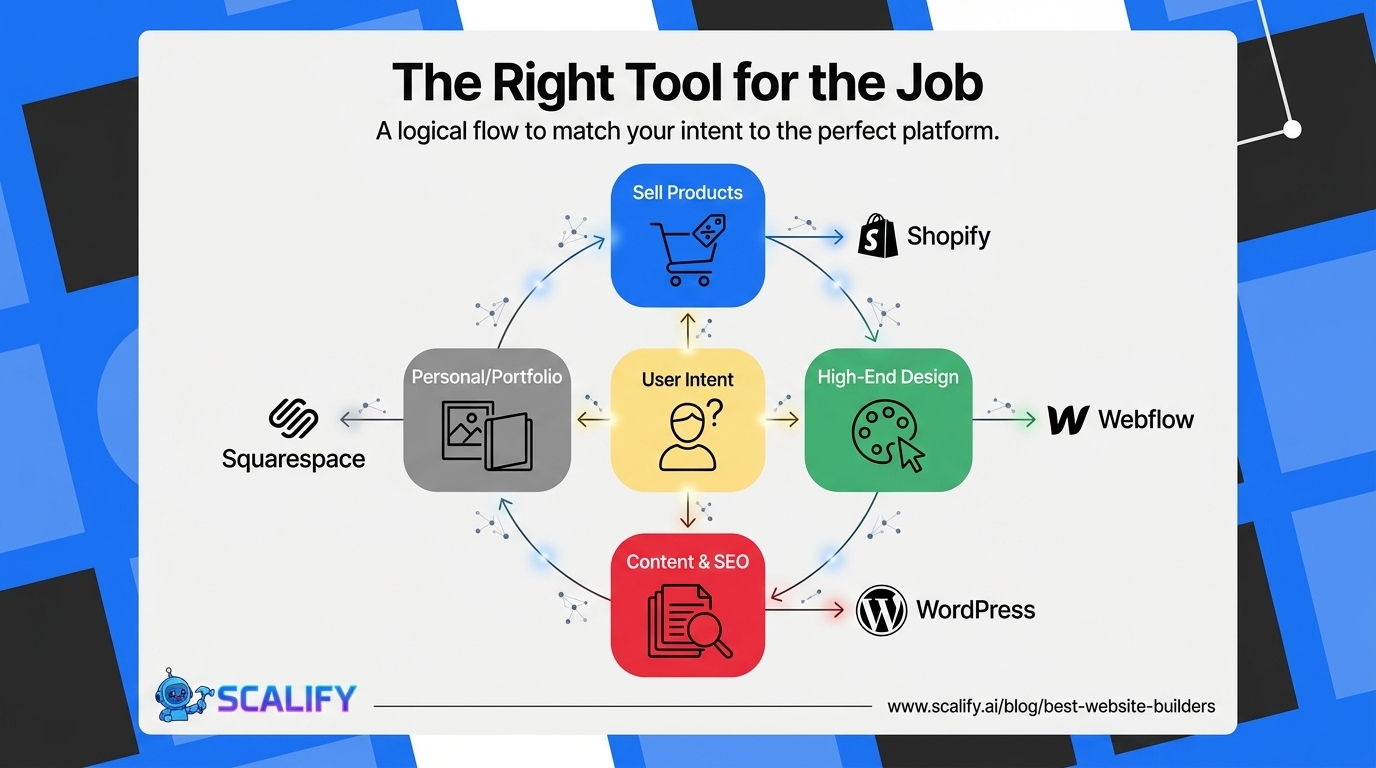
For WordPress sites, OptinMonster, Popup Maker, and Sumo are among the most capable pop-up tools, offering extensive targeting rules, A/B testing, and integration with email marketing platforms. For Webflow, there are native interaction-based approaches and embed-code solutions from tools like ConvertKit or Klaviyo.
For e-commerce specifically, Klaviyo and Privy are the dominant tools for pop-up-based lead capture and cart abandonment, with sophisticated segmentation based on purchase history, cart contents, and email list membership.
If you're implementing pop-ups and have European visitors, ensure your cookie consent management platform correctly handles the cookies that pop-up tools set. Pop-up tools typically set cookies to track display frequency, suppress repeat displays, and attribute conversions — these may require consent under GDPR depending on the data they process.
The Bottom Line
Pop-ups are a conversion tool, not a user experience feature. Used correctly — with relevant offers, appropriate timing, easy dismissal, and proper segmentation — they can meaningfully accelerate email list growth, lead generation, and e-commerce recovery without significantly damaging user experience. Used incorrectly, they're one of the most reliable ways to frustrate visitors and damage brand perception.
The investment required to do them right — properly configured triggers, relevant offers matched to page context, mobile optimization, returning visitor suppression — is modest compared to the conversion uplift they can produce when implemented thoughtfully.
Building websites with conversion fundamentals built in from the start — including smart, non-intrusive conversion mechanisms — is part of what Scalify delivers.


.jpeg)
.jpeg)



78 SW 7th St, Miami, FL 33130