


What Is Google Analytics and How Do You Use It for Your Website?
By Josh Ternyak

March 29, 2026
Google Analytics is the most powerful free tool for understanding your website — but most businesses barely scratch the surface. This guide explains what GA4 is, how to set it up correctly, and how to actually use it to make decisions.
The Free Intelligence System for Every Website
You've launched your website. Traffic is coming in. But what do you actually know about that traffic? Who are these visitors? Where did they come from? What pages did they look at? Did they do anything useful — fill out a contact form, click your phone number, buy something? Which pages are working and which are quietly driving everyone away?
Without analytics, the honest answer to all of these questions is "I don't know." You're running a business with a significant public-facing asset and no visibility into how that asset is performing. You're making decisions about content, design, and marketing based on intuition rather than evidence.
Google Analytics 4 (GA4) is the tool that converts this fog into clarity. It's free, it tracks every meaningful interaction on your website, and it provides the behavioral data that makes the difference between guessing and knowing. This guide covers what it is, how to set it up, what to actually look at, and how to use the data to make decisions that improve your website's performance.
What Google Analytics Is
Google Analytics is a free web analytics service provided by Google that tracks and reports website traffic and user behavior. When installed on a website, it collects data on every visit — where visitors came from, which pages they viewed, how long they stayed, what actions they took, and much more — and makes this data available through a reporting interface.
The current version, Google Analytics 4 (GA4), replaced Universal Analytics (UA) in July 2023. GA4 represents a significant architectural shift from its predecessor:
Event-based model: In UA, almost everything was a session with pageview hits. In GA4, every interaction is an "event" — page views, scrolls, clicks, form submissions, video plays, purchases. This event-based model provides more granular data and flexibility to track whatever matters for your specific business.
Cross-platform tracking: GA4 is designed to track users across web and apps in a unified view — important for businesses with both web and mobile app presences.
Privacy-first architecture: GA4 includes cookieless measurement capabilities and modeling to fill gaps where cookies are blocked, anticipating the privacy-focused future of web tracking.
Machine learning integration: GA4 includes predictive metrics and anomaly detection that automatically surface insights, including: predictive purchase probability, churn probability for e-commerce, and automatic alerts when metrics deviate significantly from expected patterns.
Setting Up GA4 Correctly
Most GA4 installations are technically working but not properly configured to track what matters. Setup that's actually useful:
Installation
The recommended installation method for most websites: Google Tag Manager (GTM).
1. Create a Google Analytics 4 property at analytics.google.com (Admin → Create Property)
2. Create a Google Tag Manager account at tagmanager.google.com
3. Install the GTM snippet on every page of your website (in the <head> and <body> as specified)
4. In GTM, create a tag for GA4 Configuration using your GA4 Measurement ID (format: G-XXXXXXXXXX)
5. Publish the GTM container
Why GTM over direct installation: GTM allows you to add and modify tracking tags without touching website code. Adding conversion events, modifying GA4 settings, adding advertising pixels — all done in GTM without deploying code changes. Significantly reduces the technical overhead of tracking management.
For WordPress: Google Site Kit plugin provides a simpler installation path that handles both GTM and GA4 configuration without manual GTM setup.
For Webflow, Shopify, Squarespace: All have native GA4 integration in their settings panels — add your Measurement ID in the site settings, and GA4 tracking is live without any code manipulation.
Configuring Conversion Events
GA4's most important configuration step after installation: telling it what "conversions" are for your business. Without this, you have traffic data but no business outcome data.
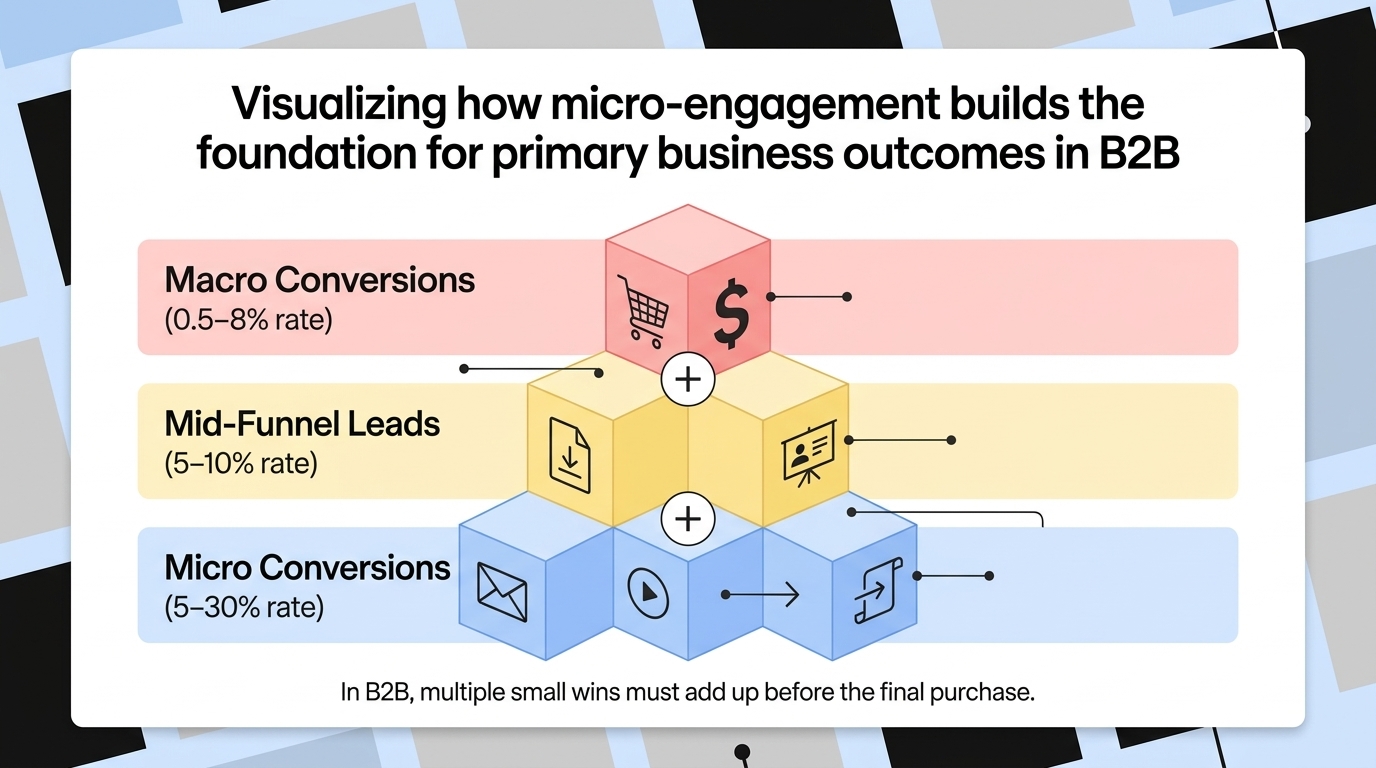
For lead generation sites: Mark contact form submissions as conversions. The cleanest method: configure a thank-you page (a separate page visited after successful form submission), then mark the page_view event for that thank-you page URL as a conversion in GA4.
In GA4: Admin → Events → select the event → toggle "Mark as conversion." Or create new conversion events by filtering the page_view event for the thank-you page URL.
For e-commerce: Enable Enhanced E-commerce measurement and implement e-commerce tracking that fires purchase events with revenue, transaction ID, and item details. This is more complex implementation but produces the revenue attribution data that makes GA4 genuinely powerful for online stores.
For content sites: Scroll depth events (how far users scroll), time on page milestones, video engagement, and PDF downloads as conversions help measure content effectiveness even without form submissions.
Setting Up Internal Traffic Filters
Your own visits to your website inflate traffic data and distort metrics. Create an internal traffic filter in GA4 to exclude your IP addresses:
Admin → Data Streams → your stream → Configure tag settings → Define internal traffic → add your office and home IP addresses → Admin → Data Filters → Create filter → Internal Traffic → activate.
Linking Search Console
Linking Google Search Console to GA4 creates a powerful combination: Search Console's keyword and query data (what people searched to find you) plus GA4's behavioral data (what they did after arriving). Link in: Admin → Product Links → Search Console Links.
The Reports That Actually Matter
GA4 has hundreds of reports and metrics. Most of them don't matter for most businesses. The ones that do:
Acquisition Overview
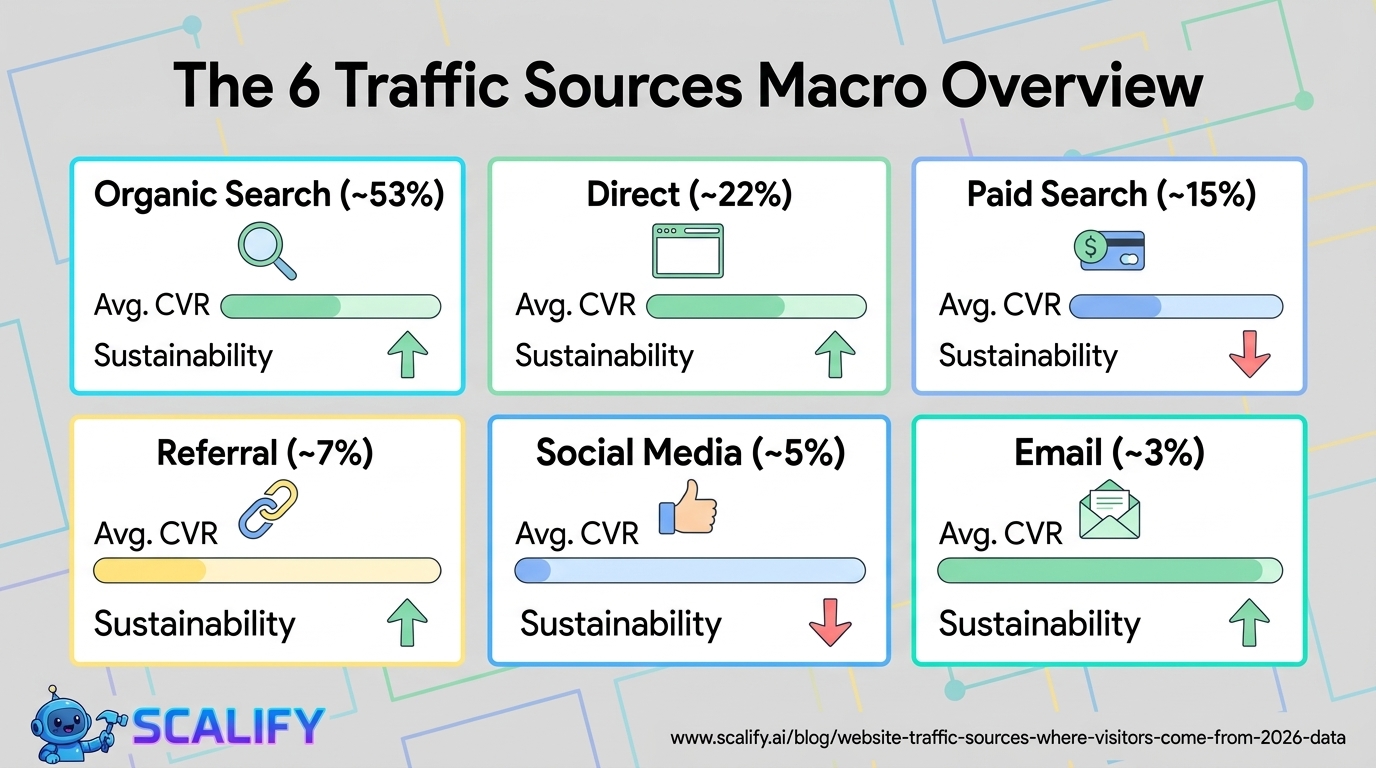
Where is your traffic coming from? GA4's Traffic Acquisition report (Reports → Acquisition → Traffic Acquisition) shows sessions by channel: Organic Search, Direct, Paid Search, Organic Social, Email, Referral.
What to look for: which channels drive the most traffic, which drive the most conversions (not the same thing), and how the mix is changing over time. A site that's 90% direct traffic with no organic search presence has a distribution problem — one channel failure (people stop typing the URL directly) collapses traffic. A diversified channel mix is more resilient.
Engagement Metrics
GA4's Engagement section shows: engagement rate, average engagement time, pages per session. These are aggregate measures of whether visitors are finding your content valuable enough to stay and explore.
The engagement rate (sessions where users engaged meaningfully — stayed 10+ seconds, converted, or viewed 2+ pages) is GA4's replacement for bounce rate. An engagement rate below 40% on a content site suggests either traffic quality issues (the wrong visitors are arriving) or content quality issues (visitors aren't finding what they expected).
Pages and Screens Report
Reports → Engagement → Pages and Screens shows every page on your site ranked by views. Critically: you can also see which pages get the most entrances (visitors landing there from search or external links) and which have the best engagement metrics.
The most valuable insight from this report: which blog posts or pages are driving organic traffic, and are those the pages converting? If your most-visited organic page has 0 conversions recorded, there's a content-to-conversion gap to address — either a missing CTA or a mismatch between who's arriving (informational query visitors) and what the page is designed to do (convert them into leads).
Conversions Report
Reports → Engagement → Conversions shows conversion counts and conversion rates by event. With properly configured conversion tracking, you can see: total form submissions, which channels drove them, which pages generated them, and conversion rate trends over time.
The most important business metric on the site: how many conversions happened this month, from which sources, and is that number growing?
Funnel Exploration
In GA4's Explorations section (the compass icon), the Funnel Exploration report is custom-built — you define the steps. For a lead generation site: Homepage → Services Page → Contact Page → Thank You Page. The funnel shows how many visitors progress through each step and where the biggest dropout occurs.
This is the report that identifies where to focus conversion optimization effort — not gut feeling about what might be wrong, but data showing exactly where the most visitors leave the intended path.
User Acquisition (New Users by Source)
Separate from Traffic Acquisition (which shows sessions), User Acquisition shows new users — first-time visitors — by source. This tells you which channels are bringing new people to your brand vs. which are driving repeat visitors. For growth-focused businesses, new user acquisition channels deserve particular attention.
Common GA4 Setup Mistakes
No conversion events configured: GA4 with no conversions is a traffic dashboard without business outcomes. The traffic data is interesting; the conversion data is where decisions get made. If you haven't configured at least contact form submission as a conversion event, do it before reading another report.
Not filtering internal traffic: Visits from your office IP skewing traffic data, inflating session counts, and distorting channel data. Set up the internal traffic filter before analyzing any data.
No Search Console link: GA4 alone can't show you which keywords are driving organic traffic — that requires Search Console data. The linked view in GA4 creates search keyword attribution that's unavailable otherwise.
Relying on "not provided" for keyword data: This was a UA problem and remains in GA4 for most organic traffic. Solution: use Google Search Console's Performance report directly for keyword data, and the GA4/Search Console integration for combined behavioral + keyword data.
Looking at too many metrics simultaneously: The most productive use of analytics is focused: pick a question ("which pages are converting organic traffic into leads?"), use the relevant report to answer it, and act on the answer. Browsing all available metrics without a specific question produces data overload without insight.
Using GA4 Data to Make Decisions
Analytics data is only valuable when it drives decisions. A structured monthly review process that produces action:
Question 1: Is overall organic traffic growing? Traffic Acquisition report → filter to Organic Search → compare to last period. Growing: the SEO work is producing results. Declining: investigate which pages lost traffic (Pages report filtered to organic) and why (keyword ranking changes in Search Console).
Question 2: Are conversions growing proportionally? Conversions report → compare to last period. If traffic grew 20% but conversions only grew 5%, conversion rate declined — something changed that reduced the effectiveness of converting visitors. Investigate which pages have conversion rate drops.
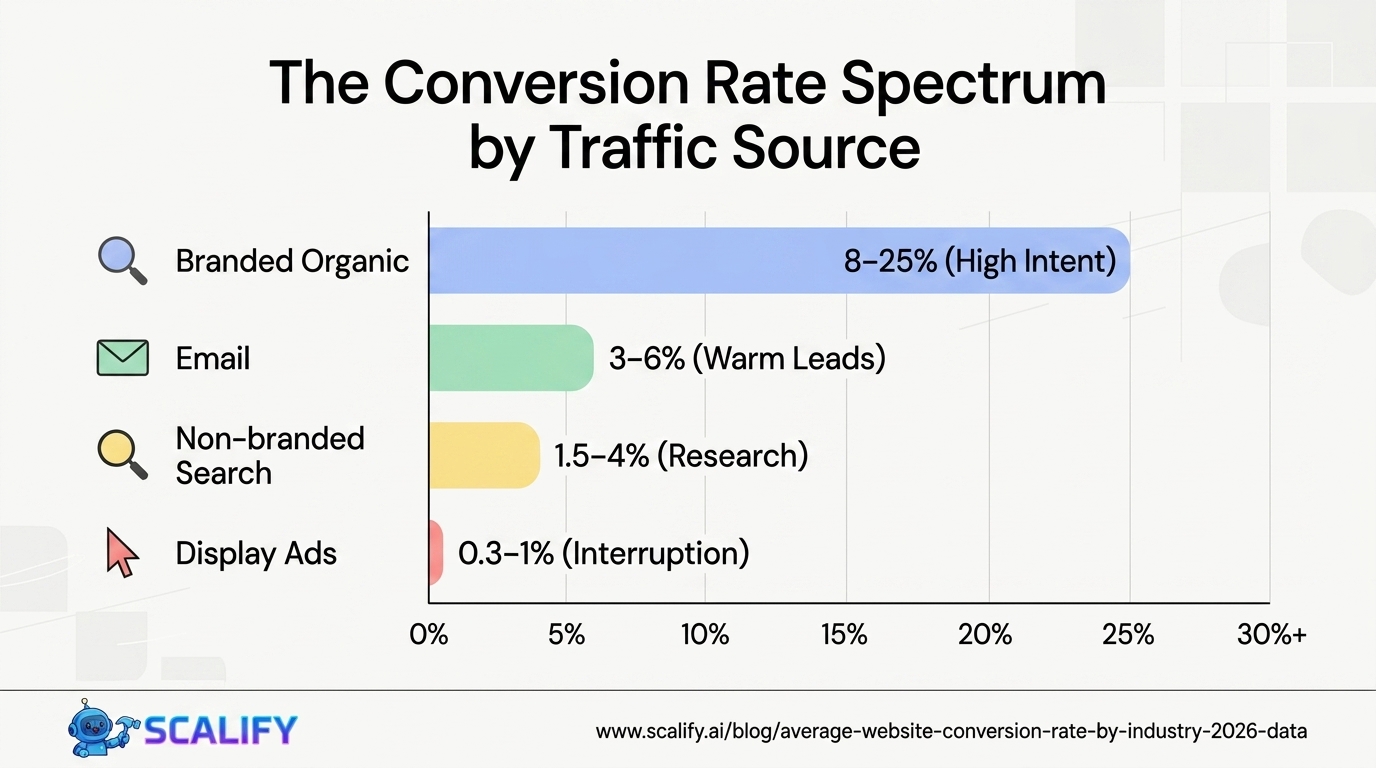
Question 3: Which traffic sources convert best? Traffic Acquisition report → add Conversions column → compare conversion rates by channel. The channel with the highest traffic volume and the channel with the highest conversion rate are often different. This informs where to invest marketing attention.
Question 4: Where are visitors dropping out of the funnel? Funnel Exploration → identify the step with the highest dropout percentage → investigate that page with session recordings and heatmaps → form hypotheses about why dropout is happening → test changes → measure whether dropout improves.
Question 5: Which content drives the most leads? Pages report → filter to your blog/content section → sort by conversions → identify which content is generating the most conversion events. Produce more content similar to the top performers; improve the content that has high traffic but low conversions.
GA4 and Privacy: What You Should Know
GA4 collects personal data — IP addresses, identifiers — that falls under GDPR, CCPA, and other privacy regulations. For EU visitors specifically, collecting GA4 data typically requires consent under the EU's ePrivacy Directive.
GDPR-compliant GA4 implementation options:
- Cookie consent management platform that blocks GA4 until consent is given
- Google's consent mode v2, which allows GA4 to send limited signals and use modeling when consent isn't given
- Server-side tracking for more complete data with reduced cookie dependency
Sign the Data Processing Addendum (DPA) with Google — required for GDPR compliance. Available in GA4 Admin → Account Settings.
The Bottom Line
Google Analytics 4 is the most powerful free tool available for understanding how your website performs. With proper setup — correct installation, configured conversion events, internal traffic filtering, Search Console integration — it provides the behavioral data that makes the difference between managing a website by instinct and managing it by evidence.
The return from investing time in GA4 setup and regular review compounds over time: every improvement made based on data produces measurable results that the data confirms, creating a feedback loop of evidence-based improvement that consistently outperforms intuition-driven decision making.
At Scalify, GA4 setup is part of every website launch — properly configured with conversion tracking, Search Console linked, and the basic report views explained, so every client can actually use the data their website generates from day one.

















.jpeg)
.jpeg)





78 SW 7th St, Miami, FL 33130