


What Is Lazy Loading and Why Does It Help Your Website?
By Josh Ternyak

April 1, 2026
Comprehensive guide: What Is Lazy Loading and Why Does It Help Your Website?
The Performance Technique That Most Sites Should Be Using But Aren't
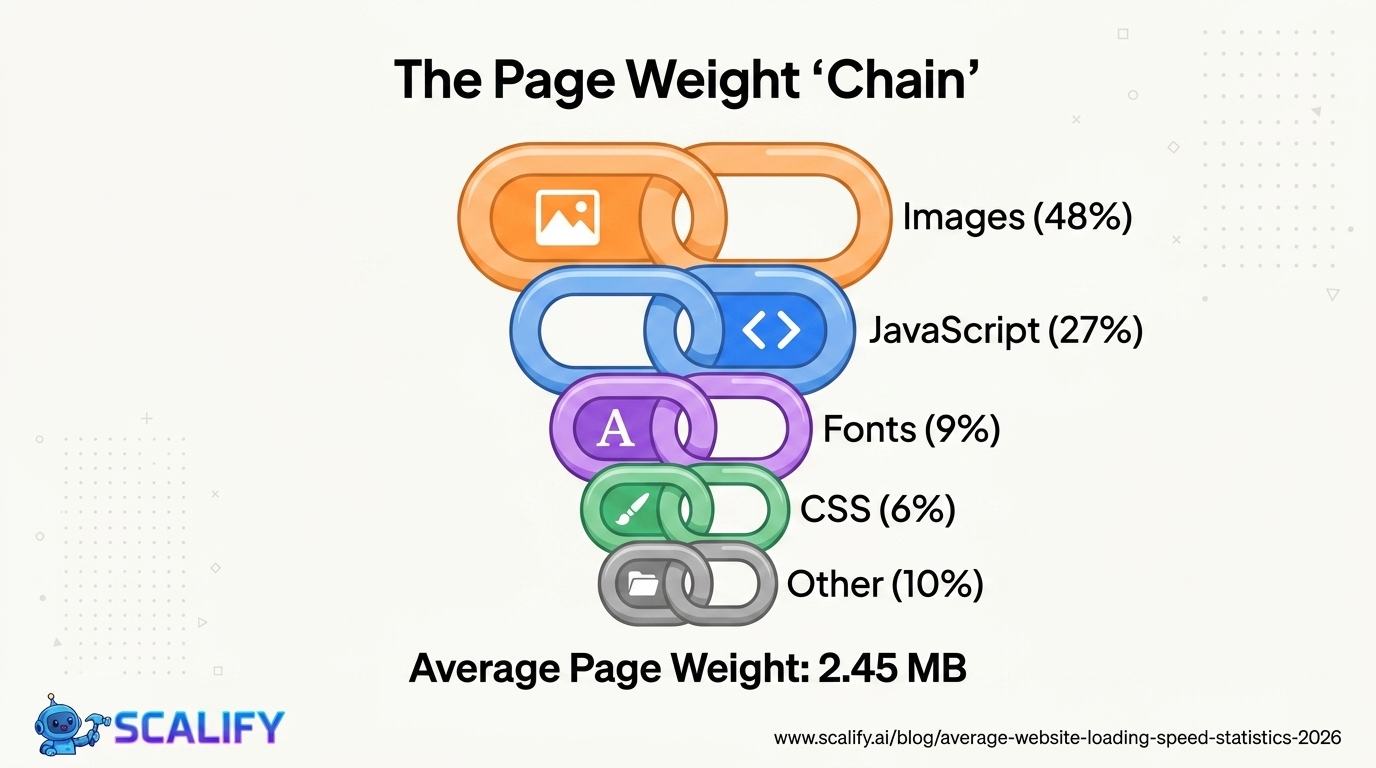
Here's a performance problem that affects almost every website: when a visitor loads a page, their browser downloads every image on that page — including images at the very bottom that the visitor won't see unless they scroll all the way down. On a page with 20 images, the browser is loading all 20, even if the average visitor only sees the top 5 before they leave.
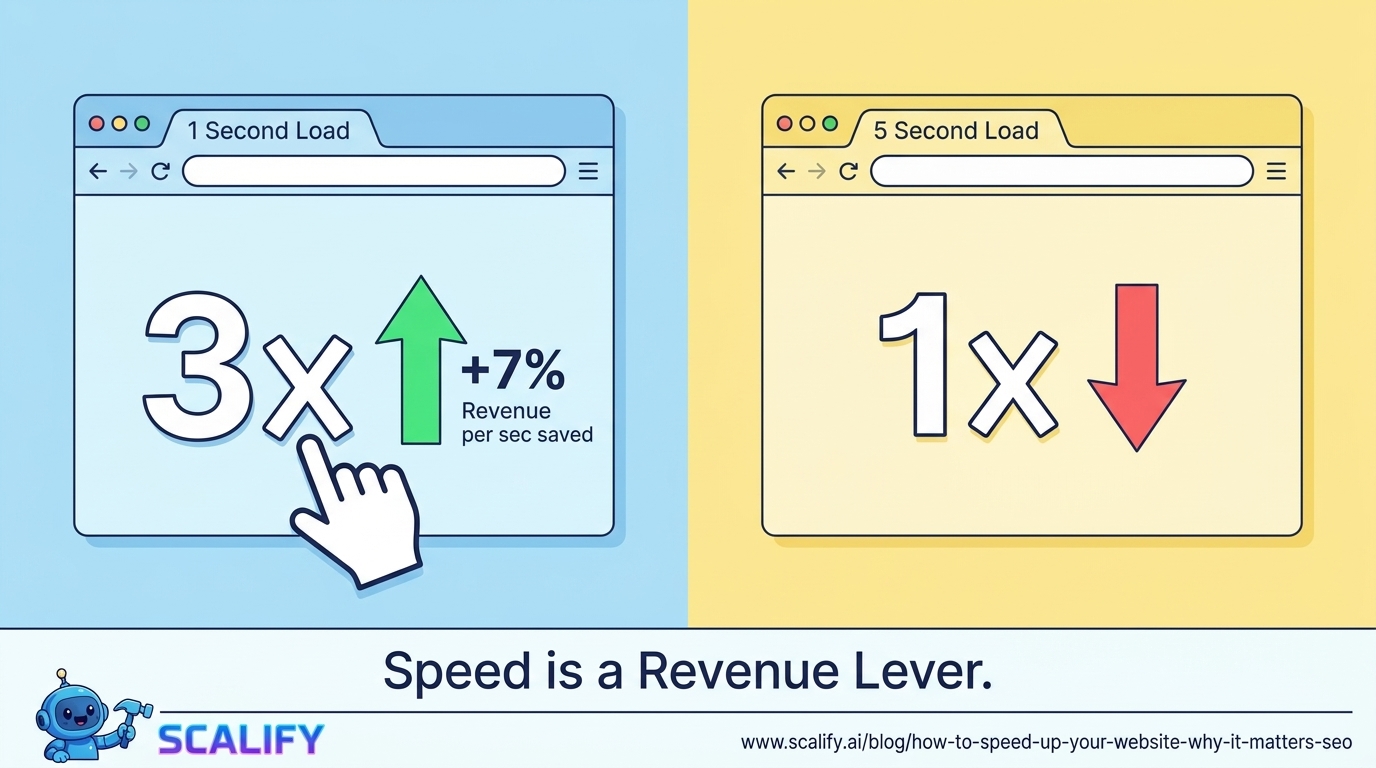
This wastes bandwidth, slows down the initial page load, and delays the first meaningful content from appearing on screen — all for images that most visitors will never see. It's a performance tax paid universally for a benefit delivered partially.
Lazy loading is the solution. It's one of the most impactful, easiest-to-implement performance optimizations available to any website, and understanding how it works helps you make better decisions about your site's speed and user experience.
What Lazy Loading Is
Lazy loading is a technique that defers the loading of non-critical resources — primarily images and videos — until they're actually needed. Instead of loading everything on page load, lazy loading loads resources on-demand: when a visitor is about to see them.
The typical implementation: images below the fold start as placeholders (either a very small blurred version of the image, a solid color, or simply nothing). As the visitor scrolls down the page and an image approaches the visible viewport, the browser triggers the actual full-resolution image download. By the time the visitor reaches the image, it's loaded — often imperceptibly.
The opposite of lazy loading is "eager loading" — loading everything immediately, regardless of whether it's visible. Eager loading is still the default behavior for most resources on the web, which is why lazy loading is typically something you opt into rather than the automatic behavior.
How Lazy Loading Works Technically
There are two main technical approaches to lazy loading images in 2026:
Native Lazy Loading (The Modern Standard)
Modern browsers support lazy loading natively, built directly into the HTML specification. The implementation is a single attribute added to any image tag:
<img src="photo.jpg" loading="lazy" alt="Description">
That's it. The loading="lazy" attribute tells the browser: "Don't download this image immediately. Wait until it's close to the viewport, then load it." No JavaScript required. No library to install. No configuration. One attribute on each image.
Browser support for native lazy loading is now excellent — over 95% of global browsers support it, including all modern versions of Chrome, Firefox, Safari, and Edge. For the remaining browsers, images load immediately (the same as without the attribute) — a graceful degradation that degrades to normal behavior rather than breaking.
Native lazy loading is now the recommended approach for most implementations. It's simpler, more reliable, and better performing than JavaScript-based alternatives for standard image lazy loading.
JavaScript-Based Lazy Loading (IntersectionObserver)
Before native lazy loading support, the standard approach was JavaScript using the IntersectionObserver API. This JavaScript-based method uses an observer that watches each image element and fires a callback when it enters the viewport, at which point the actual image source is loaded.
The typical pattern: images are given a data-src attribute (rather than src) containing the real image URL, and a placeholder src. When the observer detects the image entering the viewport, JavaScript copies the data-src value to src, triggering the actual load.
JavaScript-based lazy loading is still relevant for: non-image elements (custom components, complex embeds), more precise control over load timing thresholds, and environments where native lazy loading support is insufficient for the required use case. Libraries like lozad.js and lazysizes provide this functionality with minimal code.
What Can Be Lazy Loaded
Images. The primary and most impactful use case. Any image below the fold is a candidate. The savings are proportional to the number and size of below-fold images — a page with 15 large product images loads dramatically faster when only the top 3 load initially.
Iframes and embedded content. YouTube video embeds, Google Maps, Typeform embeds, and other iframes can be lazy loaded. A YouTube embed that loads its full JavaScript payload on page load — even when it's below the fold and the visitor hasn't scrolled to it — adds significant weight to every page load. Lazy loading it or using a facade (a clickable thumbnail that only loads the actual YouTube player on interaction) dramatically reduces this cost.
Videos. Video elements on pages can be lazy loaded similarly to images. Background videos in hero sections are typically excluded (they're above the fold and need immediate loading), but video content further down the page benefits from deferred loading.
JavaScript components and modules. In modern JavaScript-based applications, component-level code splitting and lazy loading means JavaScript for features not immediately needed (a modal, a chart, an advanced form) isn't downloaded until the user triggers it. This is a more advanced use case primarily relevant for single-page applications and React/Vue/Angular codebases.
The Performance Impact: What the Numbers Say
The performance improvement from lazy loading is proportional to the number and size of below-fold images. For typical pages, the improvements are significant.
Google's case study on lazy loading across a sample of web pages found that implementing lazy loading reduced page weight by 15-20% on average for image-heavy pages. For pages with many large below-fold images (product galleries, photo portfolios, news sites), the reduction can be substantially larger.
More importantly for SEO and user experience: lazy loading directly improves Google's Core Web Vitals metrics:
Largest Contentful Paint (LCP) — the time until the largest above-fold content element is visible. By not blocking page resources on below-fold image downloads, the above-fold content loads faster. LCP improvements from lazy loading can be 0.5–2 seconds on image-heavy pages, moving sites from "Needs Improvement" to "Good" on this critical ranking factor.
Time to Interactive (TTI) — how long until the page is fully interactive. Deferring image loads means the browser can focus network bandwidth and processing on critical rendering path resources first, making the page interactive sooner.
Total Blocking Time (TBT) — time the main thread is blocked from responding to user input. JavaScript-heavy implementations can affect TBT negatively, which is one reason native lazy loading (which requires no JavaScript) is preferred.
The "Threshold" — How Far Ahead Lazy Loading Loads
One important nuance: lazy loading doesn't wait until an image is exactly at the viewport edge before loading. There's a distance threshold — typically 1,250–2,500 pixels below the current viewport — at which lazy loading triggers the download. This means images are loading slightly before the visitor reaches them, preventing the jarring experience of seeing a blank placeholder where an image should be.
Native lazy loading automatically manages this threshold intelligently — adjusting based on network speed and other signals. On a fast connection, the threshold is smaller (images load closer to viewport entry). On a slow connection, the threshold is larger (images start loading further in advance so they have time to download before the visitor reaches them). This adaptive behavior is one of the advantages of native lazy loading over simpler custom implementations.
Common Lazy Loading Mistakes
Lazy loading above-the-fold images. This is the most common mistake and it will harm your LCP score. Images that are visible in the initial viewport — hero images, top-of-page graphics, above-fold product images — should never be lazy loaded. They need to load immediately and with maximum priority. Apply loading="lazy" only to images that are genuinely below the fold. For your LCP image specifically, consider adding fetchpriority="high" to tell the browser to prioritize it.
Not specifying image dimensions. Lazy loading images without explicit width and height attributes causes Cumulative Layout Shift (CLS) — the page "jumps" as images load and take up space that wasn't reserved for them. Always specify width and height on img elements (or use CSS aspect-ratio containers) so the browser can reserve the right space before the image loads.
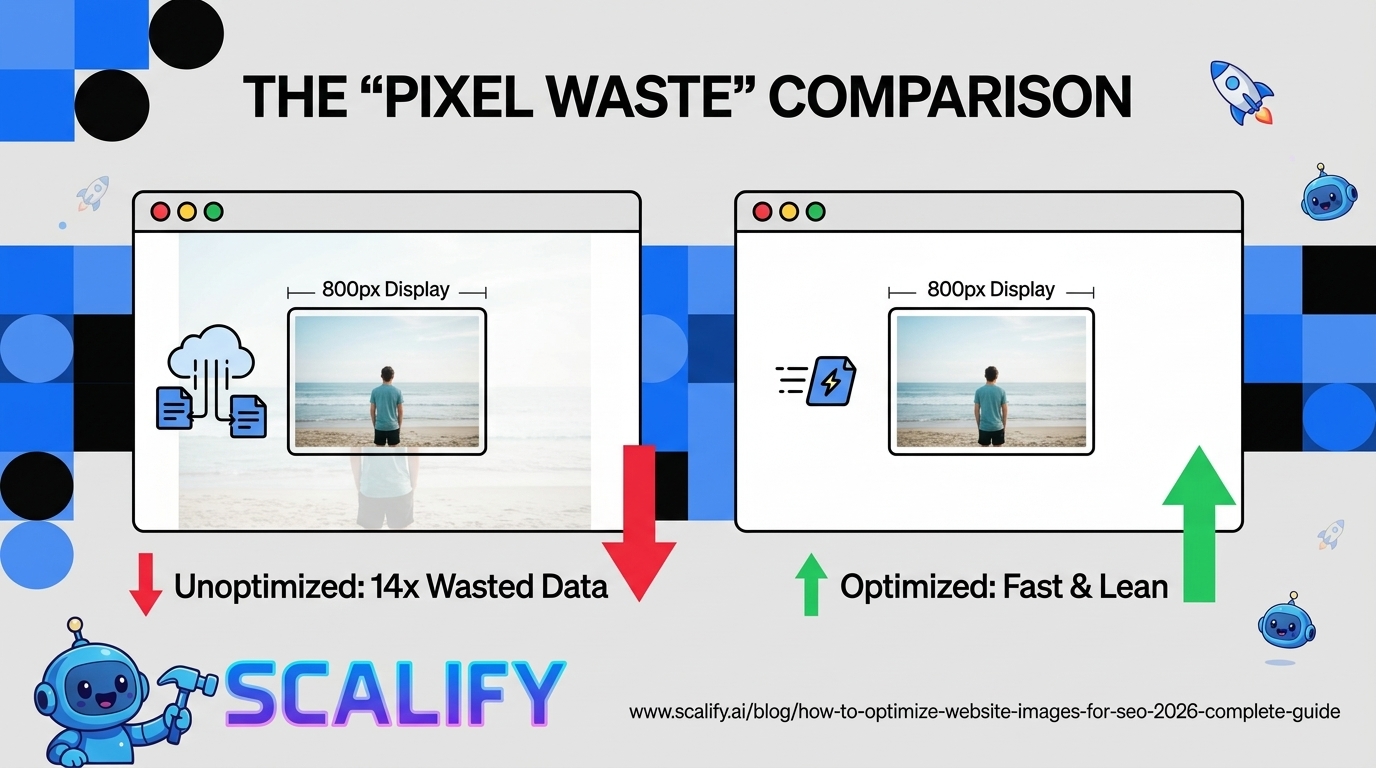
Over-relying on lazy loading instead of optimizing images. Lazy loading defers the load of below-fold images; it doesn't reduce their file size. An unoptimized 3MB image below the fold is still a 3MB image when lazy loaded — it just downloads later. Lazy loading and image compression are complementary strategies. Both are necessary for comprehensive image performance optimization.
Lazy loading images in SEO-critical contexts. Google's crawler can execute JavaScript and index lazy-loaded images, but for maximum indexing reliability of important images (key product photos, infographics, featured images), ensure they're accessible even without JavaScript execution. Native lazy loading is crawlable; JavaScript-only implementations with no HTML fallback may prevent some images from being indexed.
How to Enable Lazy Loading on Your Specific Platform
WordPress: WordPress 5.5+ automatically adds loading="lazy" to images inserted through the block editor and the Media Library. Most images on WordPress sites have native lazy loading enabled by default. Verify with Page Source inspection — any img element should have loading="lazy" except above-fold images. Plugins like "Lazy Load by WP Rocket" or the broader optimization plugins (WP Rocket, NitroPack) provide additional control.
Webflow: Webflow automatically applies lazy loading to images in the CMS and most image elements. In the Image element settings, the lazy loading behavior can be verified and adjusted for specific images that should be eager-loaded (like hero images).
Shopify: Most modern Shopify themes include lazy loading for product and collection images. The Dawn and Debut themes include it natively. For older themes, adding loading="lazy" to image tags in the liquid templates is a straightforward customization.
Custom HTML: Add loading="lazy" to any <img> tag below the fold. For iframes: <iframe loading="lazy">. Two minutes of work for potentially significant performance improvement.
Lazy Loading and Core Web Vitals: The SEO Connection
Core Web Vitals are Google's framework of user experience metrics that feed directly into search rankings. LCP (Largest Contentful Paint), CLS (Cumulative Layout Shift), and INP (Interaction to Next Paint) are the three current CWV metrics, and lazy loading affects all three — positively when implemented correctly, negatively when not.
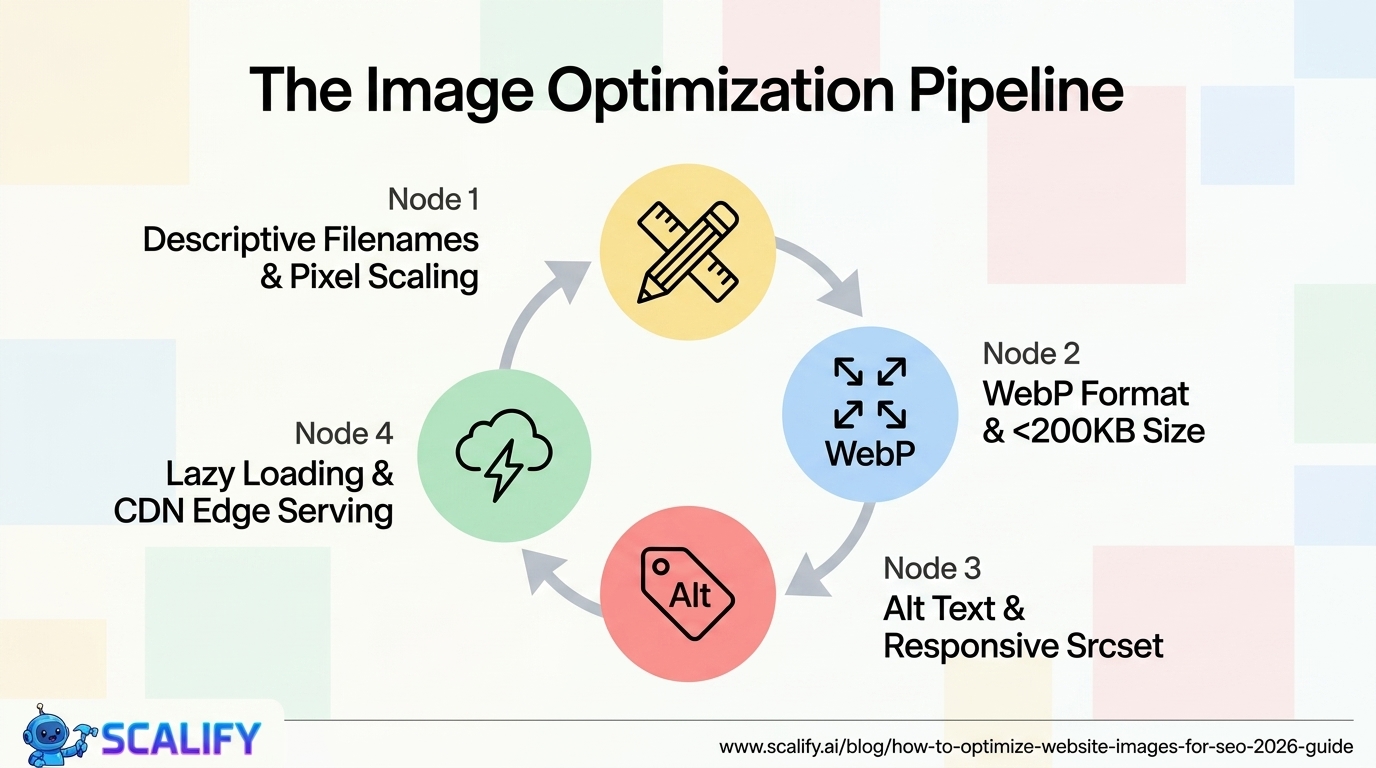
For any site trying to improve its search performance, addressing Core Web Vitals is one of the most direct technical SEO interventions available. Lazy loading is typically one of the first recommendations in any page speed audit, alongside image compression and format optimization, because it's one of the higher-impact changes relative to implementation effort.
Run your site through Google's PageSpeed Insights (pagespeed.web.dev) to see if "Defer offscreen images" appears in the recommendations. If it does, native lazy loading implementation is the fix, and the tool shows you the specific images causing the issue and the estimated impact of fixing it.
The Bottom Line
Lazy loading is one of the simplest performance wins available to any website — one HTML attribute on each below-fold image delivers measurable improvements to page load time, Core Web Vitals scores, and user experience. It's supported natively by nearly all modern browsers, requires no JavaScript, and degrades gracefully where unsupported.
If you haven't implemented it, add loading="lazy" to your below-fold images today. If you're on WordPress, Webflow, or Shopify, verify it's already active (most modern setups include it). The performance improvement is immediate and the implementation cost is minimal.
Every website Scalify delivers includes performance optimizations like lazy loading implemented correctly from day one — the kind of technical details that compound into real advantages in search rankings and visitor experience.
Putting It All Together: The Strategic Perspective
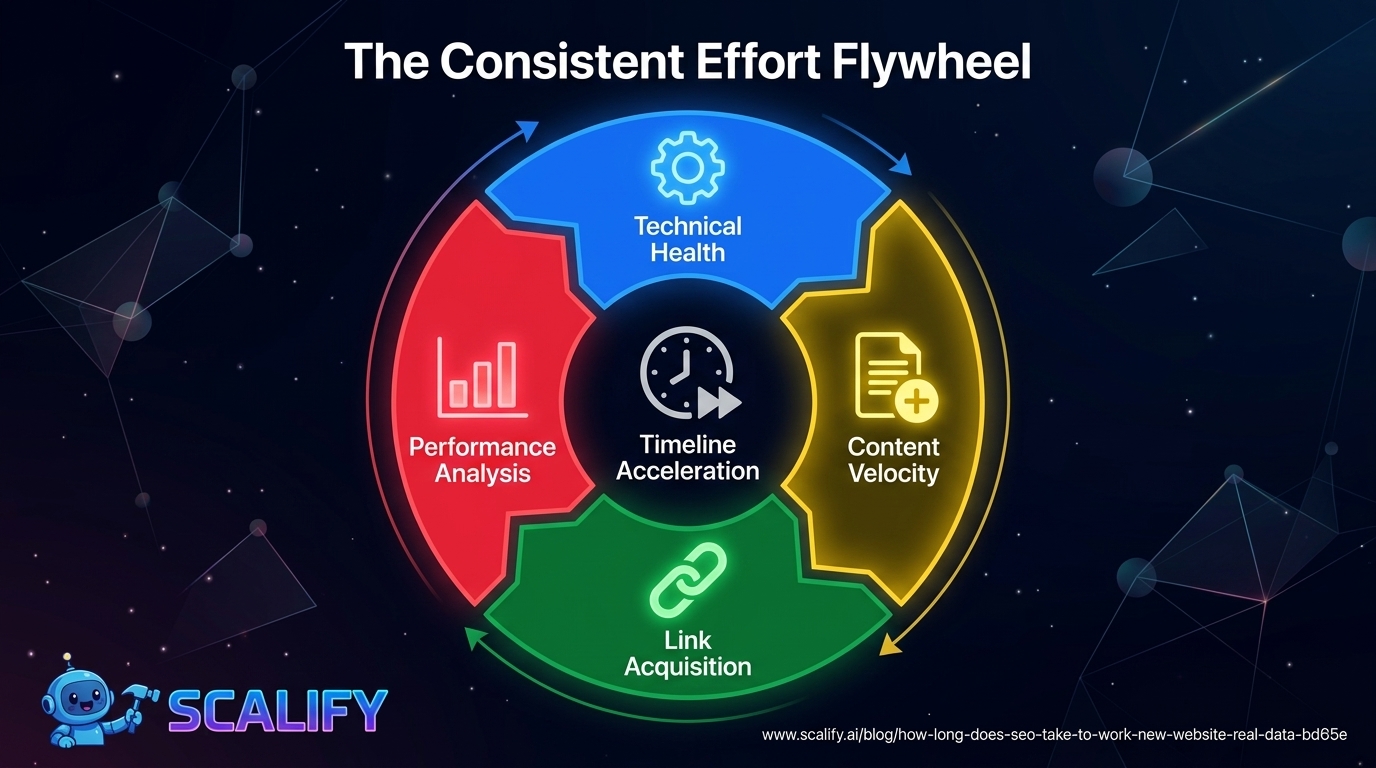
The most important takeaway from any technical or strategic guide is that individual tactics only produce results when they're embedded in a coherent strategy and executed consistently. A single well-optimized page, a single great testimonial, or a single speed improvement produces modest impact. The same investments compounded over 12–24 months — more optimized pages, more testimonials placed strategically, systematic performance maintenance — produce the compounding returns that separate high-performing websites from average ones in the same competitive landscape.
Every improvement documented in this guide is most valuable when it's implemented as part of a systematic, data-driven approach: measure current performance, identify the highest-impact opportunity, implement the improvement, measure again, and iterate. The businesses that achieve exceptional digital marketing results are almost never those who found a single breakthrough tactic — they're those who executed fundamentals consistently, measured what worked, and allocated their resources toward the highest-ROI improvements available at each stage of the






.jpeg)
.jpeg)





78 SW 7th St, Miami, FL 33130