


What Is an MVP Website and Do You Actually Need One?
By Josh Ternyak

March 31, 2026
An MVP website tests specific business assumptions with minimum build investment — not a cheap website, but minimum scope maximum quality. This comprehensive guide covers types of MVPs, when to use (and not use) them, famous examples, common mistakes that produce bad learning, how to measure success, building an effective MVP, the transition to full website, timeline guidance, and cost breakdown for different MVP types.
What Is an MVP Website and Do You Actually Need One?
The "MVP website" concept has become one of the most misunderstood ideas in startup product development. In theory, an MVP (Minimum Viable Product) website is the simplest version of a website that allows you to test your key business assumptions with real users before investing in a full-featured build. In practice, "MVP website" is often used as justification for shipping a mediocre website and calling it strategic when really it's just underresourced.
This guide cuts through the confusion: what an MVP website actually is, when it's the right approach, when it's the wrong approach, and how to build one that actually serves its purpose — testing specific assumptions about your market rather than just having a cheap website.
Key MVP Website Statistics
- 42% of startups fail because they build products the market doesn't want — MVPs exist to prevent this (CB Insights)
- MVP testing reduces the cost of product failure by an average of 65% compared to full product launches
- Startups that validate core assumptions before full builds are 2.6x more likely to raise their next funding round
- The average MVP website takes 2–8 weeks to build, depending on complexity
- The most successful MVP websites focus on testing one core assumption rather than multiple hypotheses simultaneously
- Landing page MVPs (no product, just a sign-up page) can validate demand in as little as 48 hours with paid traffic
- Buffer validated its concept with a 2-page MVP that had no actual product — just a description and a sign-up form
- Dropbox used a demo video MVP to drive 75,000 email sign-ups before building their actual product
- MVPs that include a direct purchase or sign-up mechanism are 4x more likely to produce actionable signal than pure waitlists
- The average time from MVP to product-market fit (when validated) is 12–18 months
What an MVP Website Actually Is
An MVP website is not a cheap website. It's a deliberately scoped website designed to test a specific hypothesis about your business with the minimum amount of build effort. The "minimum" in MVP refers to minimizing the investment needed to test the assumption — not minimizing quality, minimizing user experience, or minimizing design. An MVP website that provides a bad experience doesn't test your actual business assumption; it tests whether people will use a bad version of your concept, which is a different question with a misleading answer.
The distinction matters enormously in practice. A startup that builds a poorly designed, slow-loading "MVP" landing page and gets 0.3% conversion is not learning that there's no demand for their product — they're learning that 0.3% of people will sign up for a bad website. That's useless signal. An MVP that tests demand clearly, makes it easy for interested prospects to convert, and addresses the specific question "is there a market for this particular value proposition" produces actionable learning. The MVP is minimum viable, not minimum quality.
Types of MVP Websites
| MVP Type | What It Tests | Build Time | Cost | Famous Example |
|---|---|---|---|---|
| Landing page (smoke test) | Is there demand? Will people sign up? | 1–3 days | $500–$3,000 | Buffer (2010 sign-up page) |
| Explainer video MVP | Does this concept resonate enough to drive sign-ups? | 1–2 weeks | $1,000–$5,000 | Dropbox (demo video, 75K signups) |
| Concierge MVP | Do customers value this service? What do they actually need? | 1–2 weeks | $2,000–$8,000 | Zappos (manual photo/shipping) |
| Wizard of Oz MVP | Will customers pay for an automated version if it works? | 2–4 weeks | $3,000–$15,000 | Many marketplace businesses early-stage |
| Single-feature product | Which core feature drives retention and willingness to pay? | 4–12 weeks | $8,000–$40,000 | Instagram (photo filters only, originally) |
| Pre-launch / waitlist | Is there enough interest to justify building? | 2–5 days | $500–$2,000 | Superhuman's exclusivity launch |
When an MVP Website Is the Right Approach
When your core business assumption hasn't been validated. If you're building a product based on a belief about market demand that hasn't been tested with real customers who will pay real money, an MVP is the right starting point. The assumption "people will pay $99/month for a project management tool designed specifically for architecture firms" is a hypothesis, not a fact. A landing page MVP with a sign-up or pre-order mechanism tests that assumption with real behavioral data — sign-ups and pre-orders — rather than subjective market research.
When you're choosing between multiple directions. If you're considering three possible approaches to a product and don't know which resonates most with your target market, three MVP landing pages targeting different value propositions can answer that question faster and cheaper than building any of them fully.
When resources are genuinely limited. A first-time founder with $50,000 in savings shouldn't spend $30,000 on a full-featured website before testing whether anyone will pay for the product. An MVP that costs $5,000 and answers the core demand question preserves $25,000 for the next iteration.
When an MVP Website Is the Wrong Approach
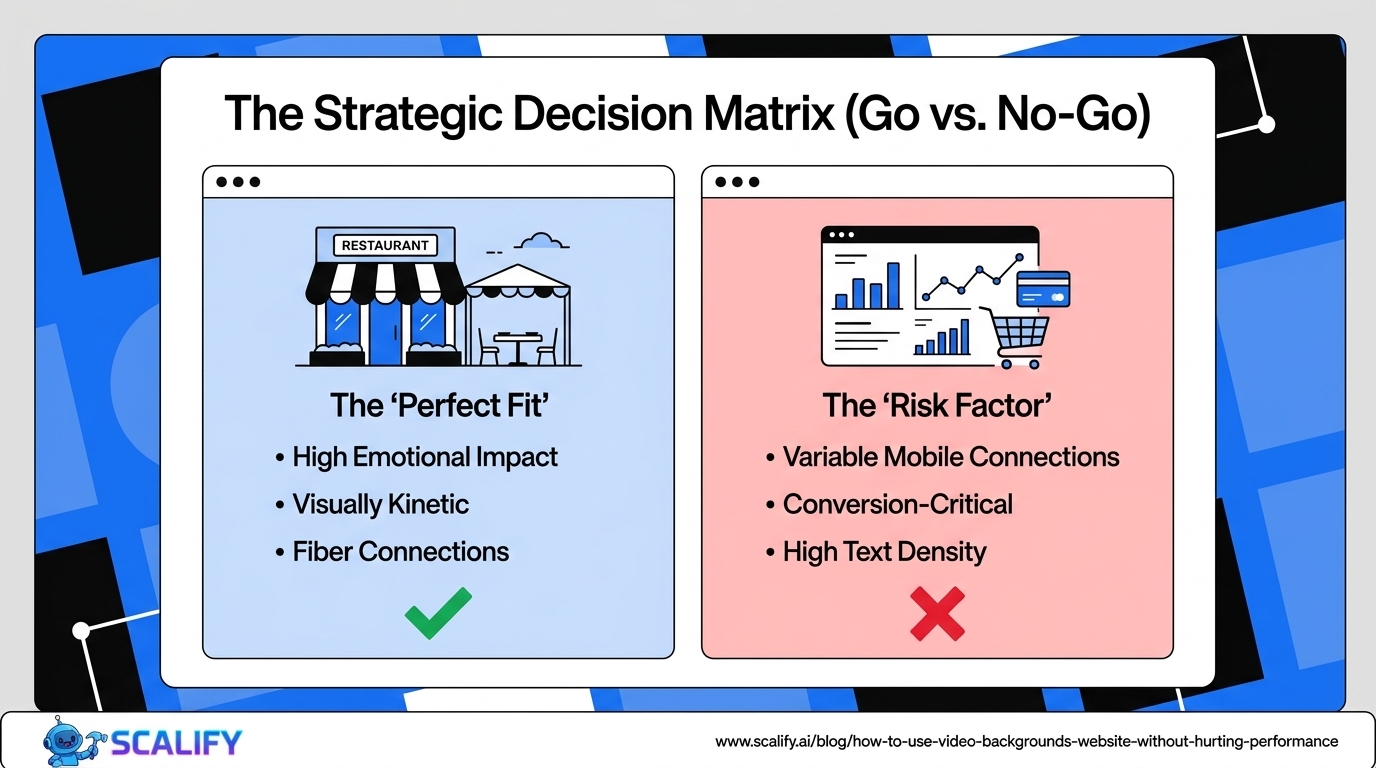
When your market already uses established competitors. If you're building an email marketing tool, project management software, or e-commerce platform to compete with established players, the market demand has already been validated. An MVP that tests "do people want email marketing software" is answering a question that's already been answered. The relevant question is "will your specific approach and differentiation be compelling enough to take market share" — which requires a more complete product to test.
When the experience IS the product. Design-forward products — premium consumer goods, luxury services, creative platforms — where the quality of the experience is inseparable from the value proposition can't be meaningfully tested with a stripped-down MVP. A luxury hospitality brand testing whether guests want premium experiences by running an MVP hotel in a converted office building is testing a different thing than its actual concept.
When trust is the primary purchase barrier. Financial services, healthcare, legal services, and other high-trust categories require credibility signals that minimum viable builds typically don't provide. A fintech MVP that looks under-resourced may validate nothing about actual demand because prospects are declining due to trust concerns rather than product interest.
MVP Website Mistakes That Produce Bad Learning
| Mistake | Why It Produces Bad Learning | Fix |
|---|---|---|
| No clear call to action | Nothing to measure means nothing to learn from | Every MVP must have a trackable conversion mechanism |
| Testing too many hypotheses at once | Can't attribute results to specific assumptions | One core hypothesis per MVP test |
| Undifferentiated value proposition | Tests a generic version, not your actual concept | Be specific about what's distinctive about your offer |
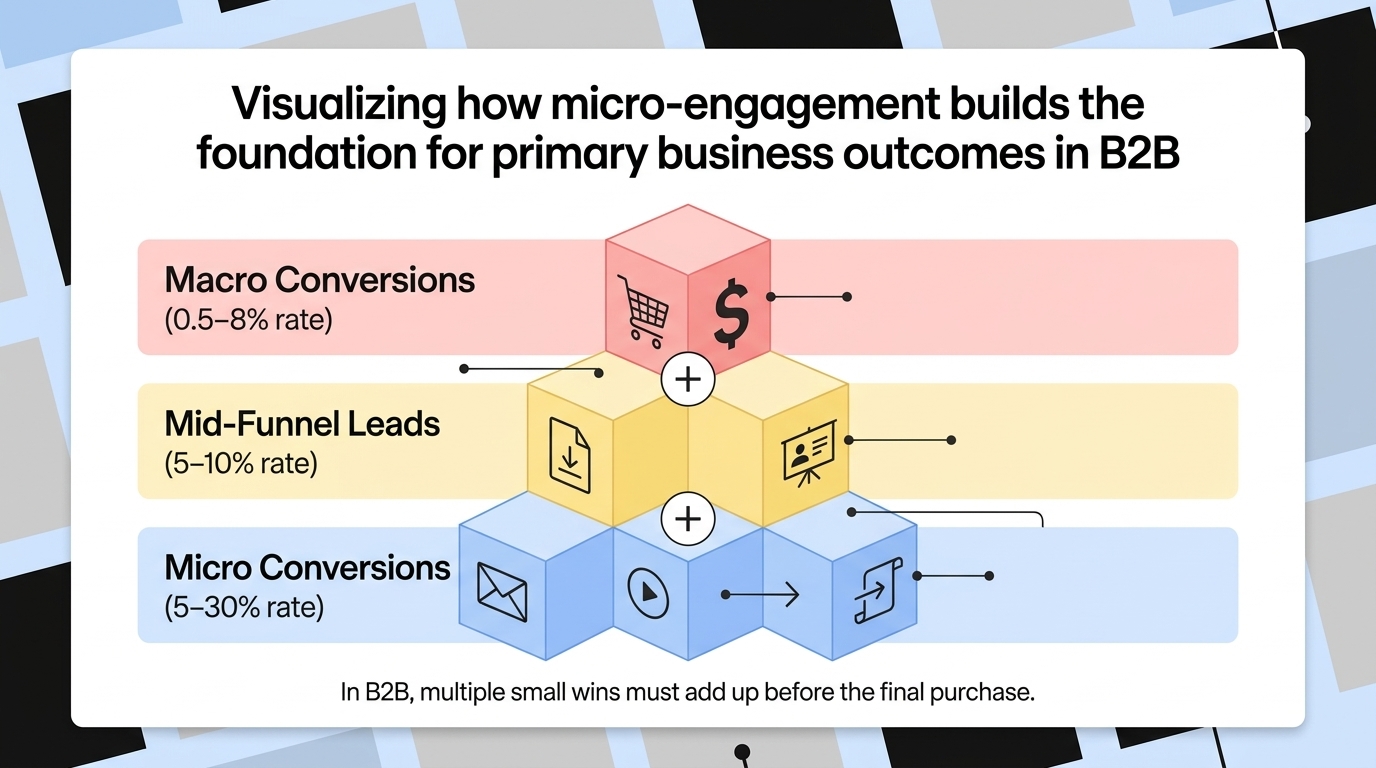
| No real commitment mechanism | Waitlists measure curiosity, not demand — email signups are nearly free | Pre-orders or paid sign-ups reveal actual intent |
| Testing with friends and family only | Biased sample — they want you to succeed | Test with cold traffic (paid ads to strangers) |
| Poor design on the MVP page | Tests bad design, not your concept | MVP quality should match expected product quality |
Building an Effective MVP Website
An effective MVP website is built around a single, clear hypothesis and a direct conversion mechanism that tests it. The structure that works: a headline that makes a specific promise for a specific audience ("The project management tool built for architecture firms"), 3–5 specific benefits or features that make the promise concrete, social proof relevant to the target audience (quotes from potential users, relevant data, partner logos if available), and a direct conversion mechanism — pre-order button, paid sign-up, or detailed lead form — that requires genuine commitment rather than a casual email drop.
The most important MVP website decision is whether the conversion mechanism requires real commitment. Email waitlists are nearly frictionless — people sign up for things they're mildly curious about with minimal intent to buy. Pre-orders or paid beta sign-ups require actual commitment of money or significant attention, producing data that meaningfully predicts actual purchase behavior. When possible, test with a mechanism that requires real commitment to generate useful signal.
MVP to Full Website: The Transition
Once an MVP has validated your core assumptions, the transition to a full website should be deliberate rather than reactive. The learnings from the MVP — which value propositions resonated, who signed up first, what questions prospective users asked — directly inform the full website's content, positioning, and conversion architecture. MVP learnings are some of the most valuable inputs available for building a high-converting full website, and teams that use them systematically build better websites faster than those who treat the MVP and full build as unrelated phases.
The Bottom Line
MVP websites are powerful tools for testing specific business assumptions before full investment — but only when they're built with the right design quality, clear hypotheses, and conversion mechanisms that require genuine commitment from prospects. An MVP that looks like a rushed website tests your design quality more than your business concept. Build MVPs that are minimum scope but maximum quality for what they include, test one specific assumption at a time, and treat the learnings as inputs to the next build rather than conclusions about the business's ultimate viability.
At Scalify, we build professional MVP websites for startups and new concepts in 10 business days — fast enough to test assumptions quickly without sacrificing the quality that ensures the test produces valid signal.
Top 5 Sources
- CB Insights — Top Reasons Startups Fail
- The Lean Startup — Eric Ries MVP Principles
- First Round Review — The MVP is a Process
- Y Combinator — Do Things That Don't Scale
- Indie Hackers — MVP Types and When to Use Each
Measuring MVP Success: What Metrics Actually Matter
Choosing the right metrics for an MVP test is as important as building the MVP correctly. The metrics that produce useful signal are those that require genuine behavioral commitment from prospects; the metrics that produce misleading signal are those that measure passive interest.
| Metric | Signal Quality | Why |
|---|---|---|
| Pre-orders / paid sign-ups | Very High | Real money = real intent |
| Detailed interest form completions | High | Effort to complete signals genuine interest |
| Free trial activations (with onboarding completion) | High | Active usage demonstrates value perception |
| Demo requests | Medium-High | Time commitment shows interest beyond casual |
| Email sign-ups (waitlist) | Medium | Low friction — includes casual curiosity |
| Social shares | Low | Sharing ≠ buying; easily inflated by outliers |
| Page views / visitors | Very Low | Measures reach, not demand |
How Long Should You Run an MVP?
MVP websites should run long enough to collect statistically meaningful conversion data from a representative audience. For most MVPs driving traffic through paid advertising, this means 2–4 weeks and 1,000+ qualified visitors to the page. The specific timeline depends on the strength of the signal you need — a product category with clear precedent (another SaaS tool) needs less validation than one creating a new category (entirely new business model). MVPs that produce very strong signal early (20%+ conversion on a paid pre-order mechanism within the first week) can proceed to full build with high confidence. MVPs with weak signal at typical traffic levels (under 2% conversion on any mechanism) after 4 weeks warrant either a significant pivot on the value proposition or a more fundamental reconsideration of the concept before committing to full build investment.
Cost Guide: Building MVP Websites
| MVP Type | DIY Cost | Professional Build Cost | Timeline |
|---|---|---|---|
| Basic landing page (Webflow/Squarespace) | $50–$200 (platform fees) | $1,500–$4,000 | 1–5 days |
| Landing page with payment (Stripe) | $100–$400 (platforms + Stripe) | $3,000–$6,000 | 3–7 days |
| Multi-page MVP with email capture | $200–$500 | $4,000–$10,000 | 1–2 weeks |
| Single-feature web app | $500–$2,000 (infra + tools) | $10,000–$30,000 | 3–8 weeks |
| Full MVP with basic product functionality | $1,000–$5,000 (hosting + services) | $20,000–$60,000 | 6–16 weeks |
For most early-stage founders, the professional build cost for a landing page MVP ($1,500–$6,000) is the appropriate starting point before any product investment. A professionally built, high-quality landing page that clearly communicates the value proposition and drives to a conversion mechanism is significantly more likely to produce valid demand signal than a DIY page built by a non-designer founder — and the cost difference ($1,500 vs. $200) is small relative to the decision it informs.
The MVP framework rewards speed and learning over completeness. The founders who ship a good-enough MVP quickly, learn from real user behavior, and iterate toward product-market fit consistently outperform those who spend months building a comprehensive first version based on untested assumptions. Build the simplest thing that produces valid signal, measure real behavioral commitment rather than passive interest, and use what you learn to build the full product with genuine confidence rather than expensive hope.


.jpeg)
.jpeg)


78 SW 7th St, Miami, FL 33130