


What Is Next.js and Why Do Developers Love It?
By Josh Ternyak

March 31, 2026
Next.js is the most popular React framework, used by 6 million websites and commanding an $8,000-15,000 salary premium. This comprehensive guide covers what Next.js adds to React, App Router vs Pages Router, React Server Components, SEO advantages, built-in performance features, when to use it, learning path, ecosystem tools (Prisma, NextAuth, tRPC), and deployment options.
What Is Next.js and Why Do Developers Love It?
Next.js is a React framework built by Vercel that extends React with the server-side capabilities and developer conveniences that production applications need — and that plain React doesn't provide out of the box. It is the dominant React meta-framework in 2026, used by companies ranging from early-stage startups to Fortune 500 enterprises, and it has fundamentally changed how React applications are built, deployed, and optimized for search engines and performance.
Understanding Next.js means understanding why React alone is often insufficient for production applications: React is a client-side library that renders in the browser, which creates challenges for SEO (search engines must execute JavaScript to see content), performance (users see nothing until JavaScript loads and renders), and data fetching (all data must be fetched from the client). Next.js solves all of these problems by enabling server-side rendering, static site generation, and incremental static regeneration — rendering React on the server when needed while keeping the interactivity that makes React valuable.
Key Next.js Statistics
- Next.js is used by over 6 million websites in 2026 (BuiltWith data)
- Next.js is the #1 most wanted web framework in Stack Overflow's 2024 Developer Survey
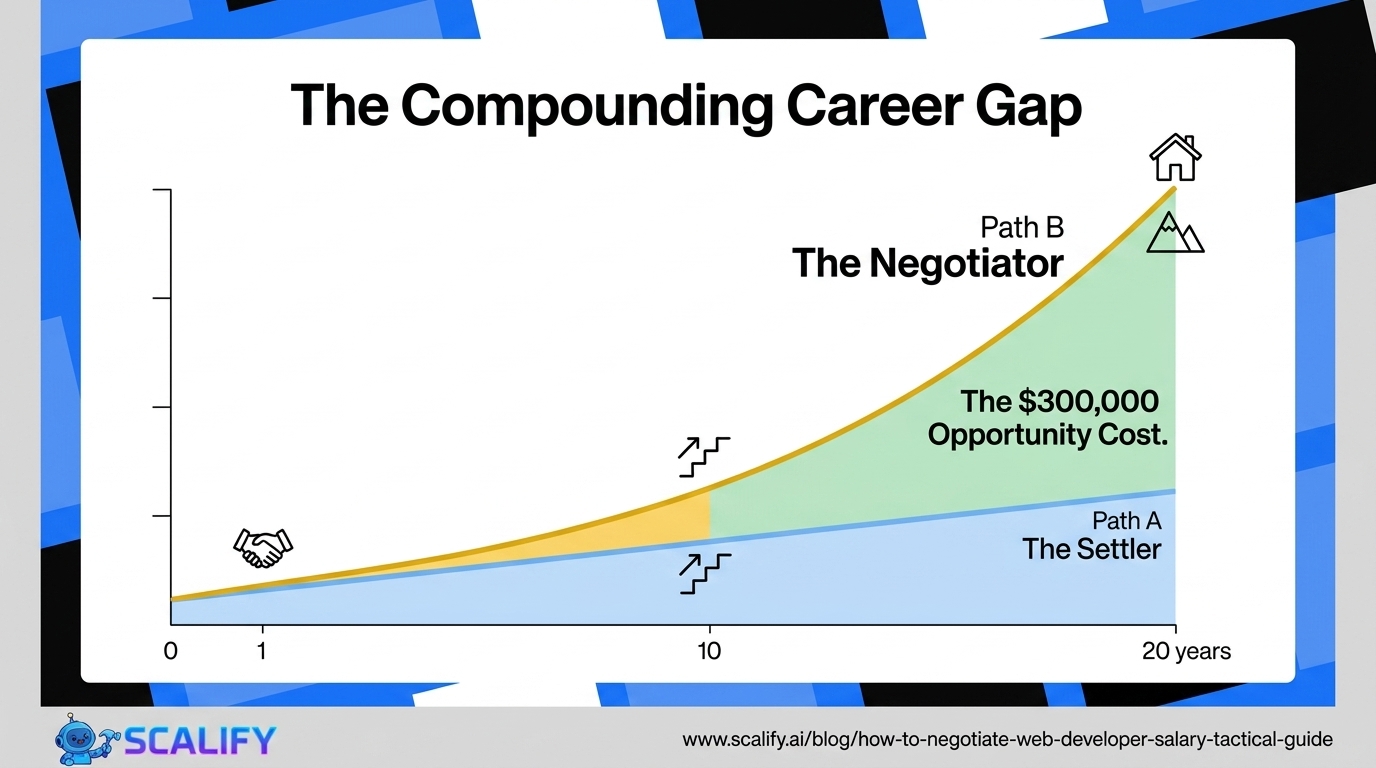
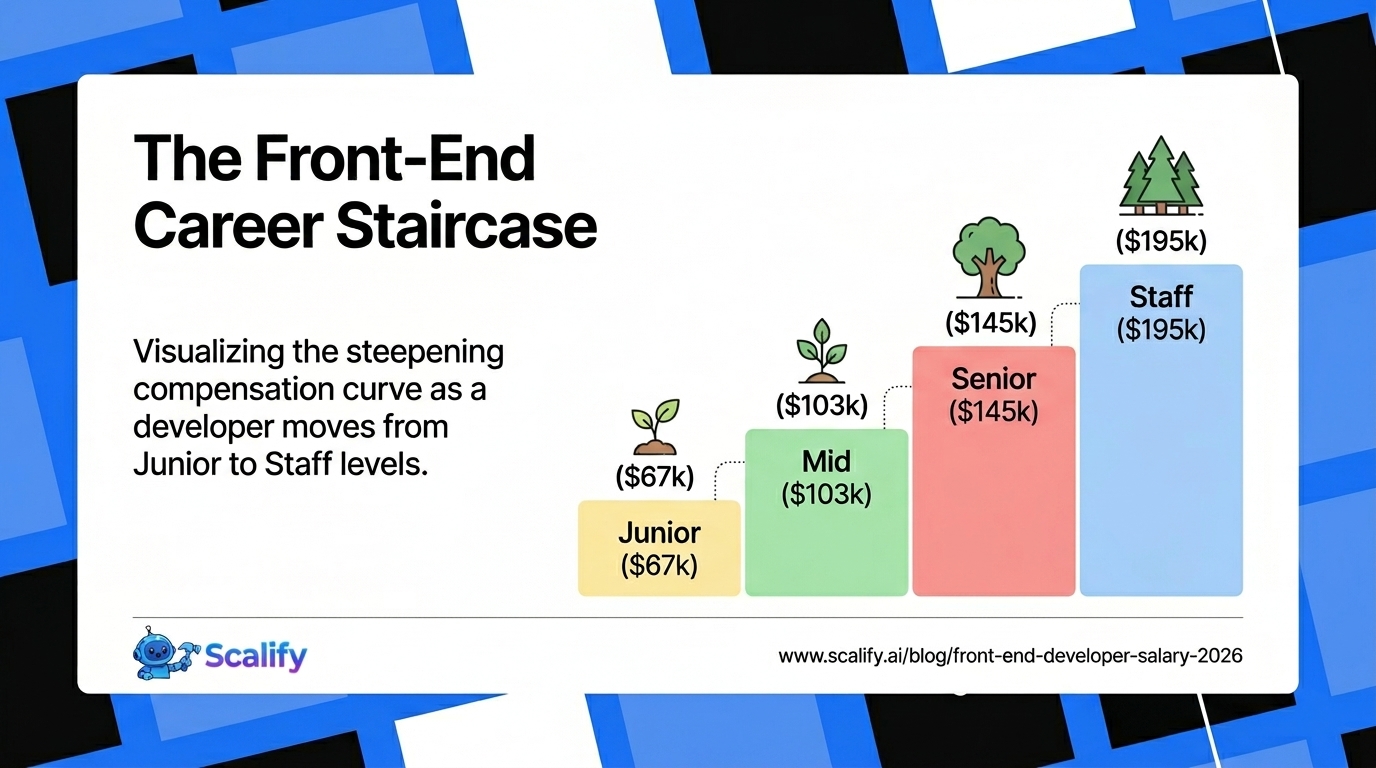
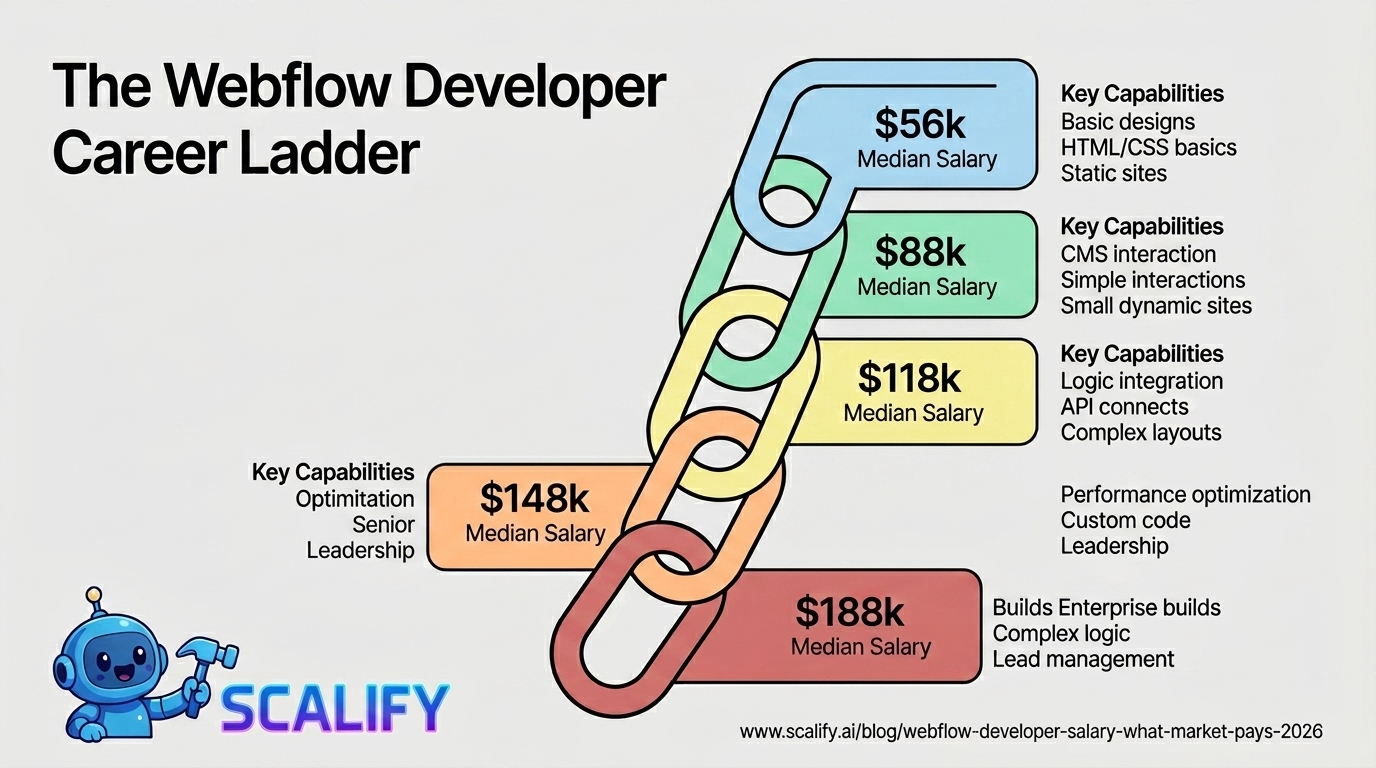
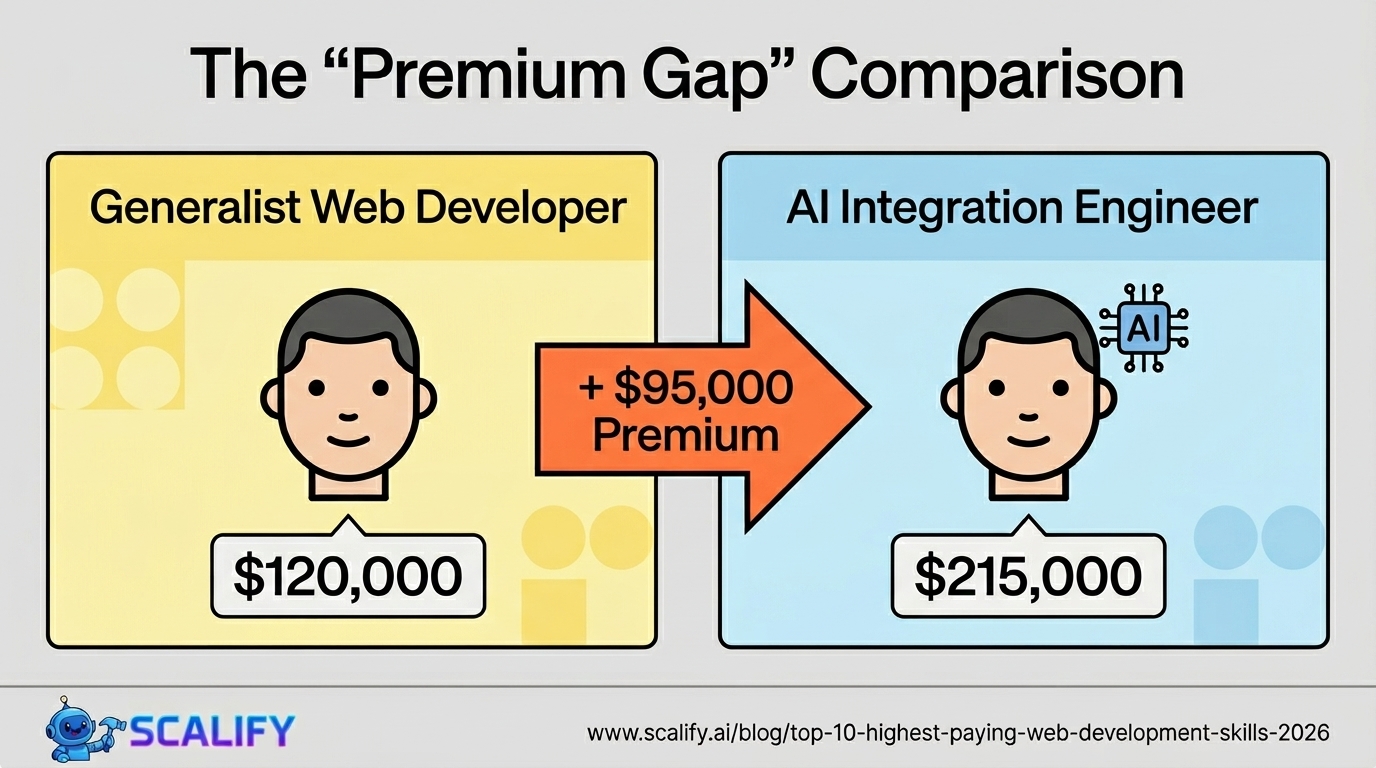
- Next.js developers earn a $8,000–$15,000 premium over equivalent React-only developers
- Vercel, Next.js's creator, has raised over $2.5 billion in funding — signaling strong ecosystem investment
- Companies using Next.js include TikTok, Twitch, Hulu, Target, and Nike
- The Next.js App Router (introduced in Next.js 13) has been adopted by 60%+ of new Next.js projects
- Next.js sites built with the App Router show average 15–25% improvement in Core Web Vitals vs equivalent React SPAs
- The Next.js GitHub repository has over 125,000 stars — one of the most-starred JavaScript repositories
- 78% of front-end job postings that list React also mention Next.js as a preferred or required skill
- Next.js documentation receives over 8 million monthly visits
What Next.js Adds to React
| Capability | Plain React | Next.js | Why It Matters |
|---|---|---|---|
| File-based routing | Requires React Router setup | Built-in — create a file, get a route | Dramatically faster to create new pages |
| Server-side rendering (SSR) | Not available | Built-in with getServerSideProps or Server Components | Full HTML served to crawlers and first users |
| Static site generation (SSG) | Not available | Built-in with getStaticProps | Pre-built pages served from CDN — fastest possible |
| API routes | Need separate back-end project | Built-in — /api/endpoint creates a serverless function | Full-stack in one project |
| Image optimization | Manual | Built-in next/image component | Automatic WebP, lazy loading, size optimization |
| Font optimization | Manual | next/font — zero layout shift, self-hosted | Eliminates font-related Core Web Vitals failures |
| SEO-ready HTML | Requires hydration before crawlable | Full HTML in initial response | Dramatically better search engine indexing |
| Middleware | Not available | Edge middleware runs before page renders | Auth, A/B testing, redirects without server round-trip |
The App Router vs. Pages Router: Understanding Next.js Architecture
Next.js has two routing systems that reflect different architectural approaches. The Pages Router (the original Next.js architecture, introduced in 2016) treats each file in the /pages directory as a route with getServerSideProps or getStaticProps functions for data fetching. The App Router (introduced in Next.js 13 in 2022, stable in Next.js 13.4) uses the /app directory with a new paradigm: React Server Components as the default, nested layouts, server actions for form handling, and streaming. The App Router represents the direction of Next.js's future and the direction React itself is moving — React Server Components are the most significant architectural evolution in React since hooks.
| Feature | Pages Router | App Router |
|---|---|---|
| Default component type | Client components | Server components |
| Data fetching | getServerSideProps, getStaticProps | async/await in Server Components, fetch with caching |
| Layouts | _app.js and custom layout components | Built-in nested layout.js files |
| Loading states | Manual with state | Built-in loading.js files with Suspense |
| Error handling | _error.js | Built-in error.js files per route segment |
| Streaming | Limited | Native with Suspense and streaming responses |
| Stability | Stable — battle-tested | Stable since Next.js 13.4 — new default for projects |
React Server Components: The Core Concept
React Server Components (RSC) are components that render exclusively on the server and never ship JavaScript to the client. This is a fundamental shift from the traditional React model where all components run in the browser. Server Components can: directly access databases and file systems without an API layer, import heavy libraries without increasing client bundle size, keep sensitive data (API keys, business logic) on the server, and compose with Client Components (traditional interactive React) that handle user interaction. The result is applications that are smaller on the client, faster to first paint, and capable of data fetching patterns that were impossible in client-only React.
Why Next.js Dominates: The Developer Experience
Next.js's market dominance is not just about technical capabilities — it's about developer experience. The framework makes the right thing the easy thing: creating a page is creating a file, fetching data is writing async/await code, handling images is using a component, handling fonts is importing a function. The number of decisions Next.js makes for developers — routing, rendering strategy defaults, optimization — dramatically reduces the cognitive overhead of starting a new React application versus configuring React from scratch with webpack, React Router, and a custom data fetching layer.
The Vercel deployment platform — though not required — provides the tightest integration with Next.js's capabilities, including preview deployments for every pull request, edge network deployment for global performance, and Analytics integration for real-user performance monitoring. The combination of Next.js as the framework and Vercel as the deployment platform is the most popular React deployment stack in 2026 for good reason: the integrated developer experience from local development to production deployment is genuinely exceptional.
Next.js for SEO: Why It Matters
One of the most commercially significant reasons organizations choose Next.js over create-react-app or Vite-based React is SEO. A React application rendered entirely on the client (a Single Page Application) requires JavaScript execution before search engine crawlers can see its content. While Googlebot has improved its JavaScript rendering, it's slower, less reliable, and less comprehensive than serving full HTML — and other search engines (Bing, DuckDuckGo) have significantly weaker JavaScript rendering capabilities.
Next.js's server-side rendering and static generation options ensure that search engines receive complete HTML content in the initial server response — the same content users see, without any JavaScript execution required. For content-rich websites, landing pages, e-commerce product pages, and any page where organic search traffic is commercially significant, this difference in search engine indexing quality can mean 30–200% more organic traffic from the same content investment. This SEO advantage is one of the clearest commercial justifications for choosing Next.js over plain React for any application where search visibility matters.
When to Use Next.js (And When Not To)
| Use Case | Next.js? | Reason |
|---|---|---|
| Marketing website / landing pages | ✅ Yes | SEO critical; static generation is ideal |
| E-commerce store | ✅ Yes | SEO for product pages; fast static generation with ISR for inventory |
| Blog / content site | ✅ Yes | Static generation + excellent SEO is perfect fit |
| Full-stack web application | ✅ Yes | API routes + SSR + client interactivity in one framework |
| SaaS dashboard (auth-gated) | ✅ Recommended | App Router with Server Components excellent for data-heavy dashboards |
| Internal admin tool (no SEO needed) | ⚡ Optional | Works well but React without Next.js is simpler if SEO isn't needed |
| Mobile app | ❌ No | Use React Native for native mobile; Next.js is web-only |
| Static HTML site (no React needed) | ❌ Overkill | Astro, 11ty, or plain HTML is simpler and faster for no-JS sites |
Learning Next.js: The Path
Next.js requires solid React fundamentals before it makes sense — the framework extends React, so understanding React hooks, component composition, state management, and the virtual DOM is the prerequisite. The official Next.js Learn tutorial (nextjs.org/learn) is genuinely excellent and covers the fundamentals in approximately 10 hours. After completing it, building a real project — a blog, a product catalog, or a simple SaaS landing page — is the fastest path to productive Next.js proficiency. The App Router documentation is comprehensive and the framework's error messages are among the clearest in the JavaScript ecosystem, making self-directed learning significantly easier than with less mature frameworks.
The Bottom Line
Next.js is the default choice for React applications that need SEO, performance optimization, or full-stack capabilities in 2026. Its combination of server-side rendering, static generation, React Server Components, built-in API routes, and exceptional developer experience has made it the most widely used React framework and one of the most rapidly growing frameworks in web development. For any developer building with React professionally, Next.js proficiency is effectively mandatory — it's present in 78% of React job postings, commands an $8,000–$15,000 salary premium, and represents the direction React itself is evolving. Learn React first, then learn Next.js immediately after.
At Scalify, we build professional websites using Next.js and Webflow — delivering technically excellent, SEO-optimized sites in 10 business days.
Top 5 Sources
- Next.js Official Blog — Framework updates, App Router documentation, release notes
- Stack Overflow Developer Survey — Next.js adoption and sentiment data
- State of JavaScript Survey — Annual Next.js satisfaction and usage tracking
- BuiltWith — Next.js Website Adoption Data
- React Blog — Server Components and Future Direction
Next.js Performance Features: Built-In Optimization
One of the most practically significant advantages of Next.js over plain React is its built-in performance optimization tooling. These features don't require any developer configuration to work — they're on by default and produce measurable improvements in Core Web Vitals metrics that directly affect both search rankings and user experience.
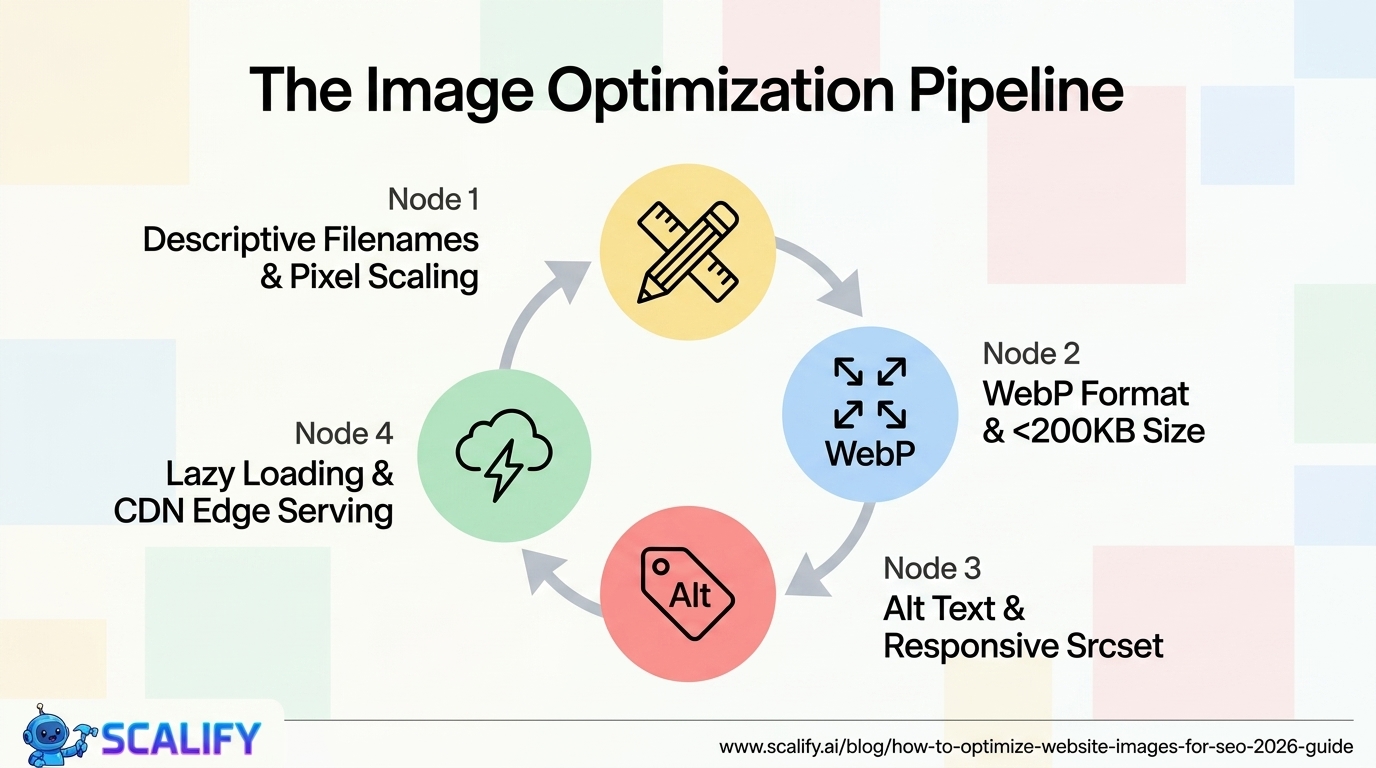
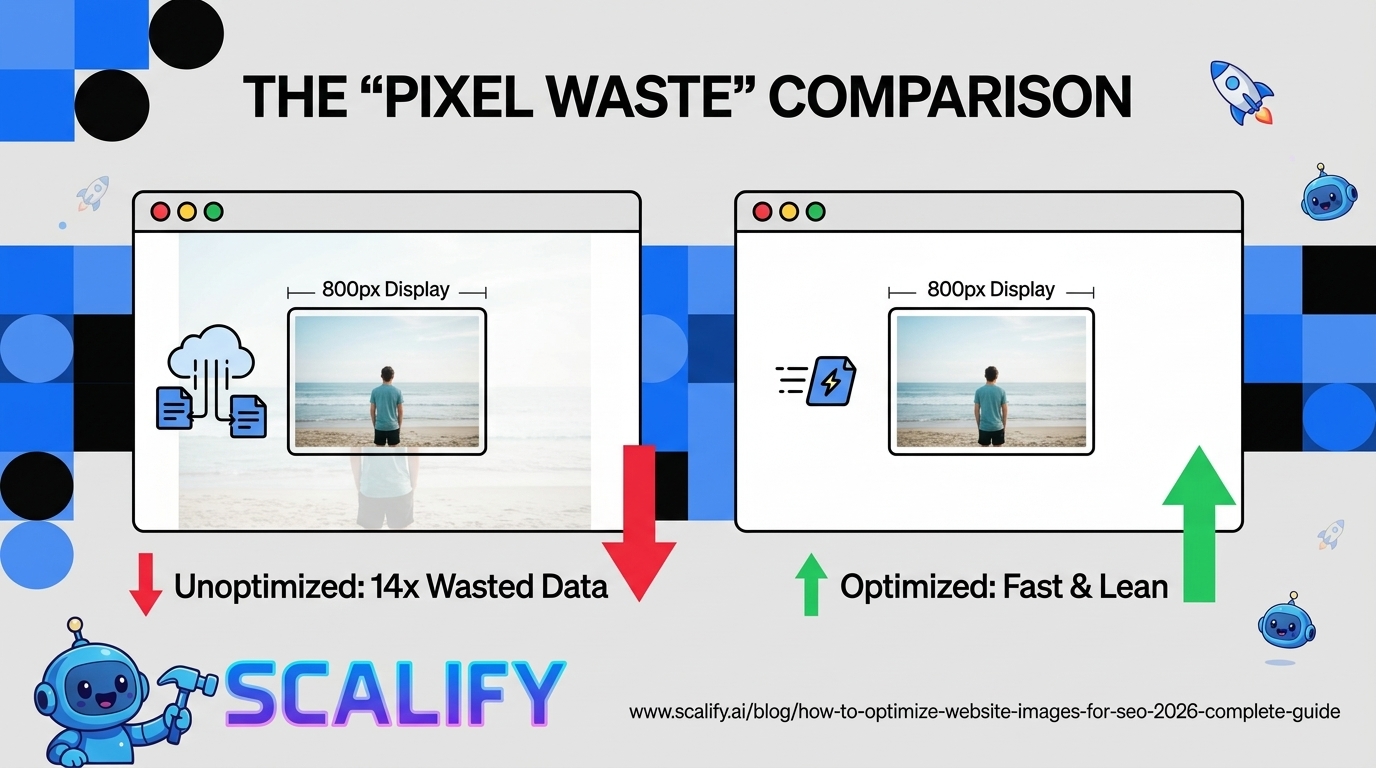
next/image is the component that replaces standard HTML <img> tags. It automatically serves images in WebP format (25–35% smaller than JPEG at equivalent quality), implements lazy loading for below-fold images without any configuration, generates multiple sizes for responsive displays, and prevents layout shift by requiring explicit width and height props. Sites that migrate from standard img tags to next/image consistently see significant LCP and CLS improvements — often moving from failing to passing Core Web Vitals thresholds purely from this component change.
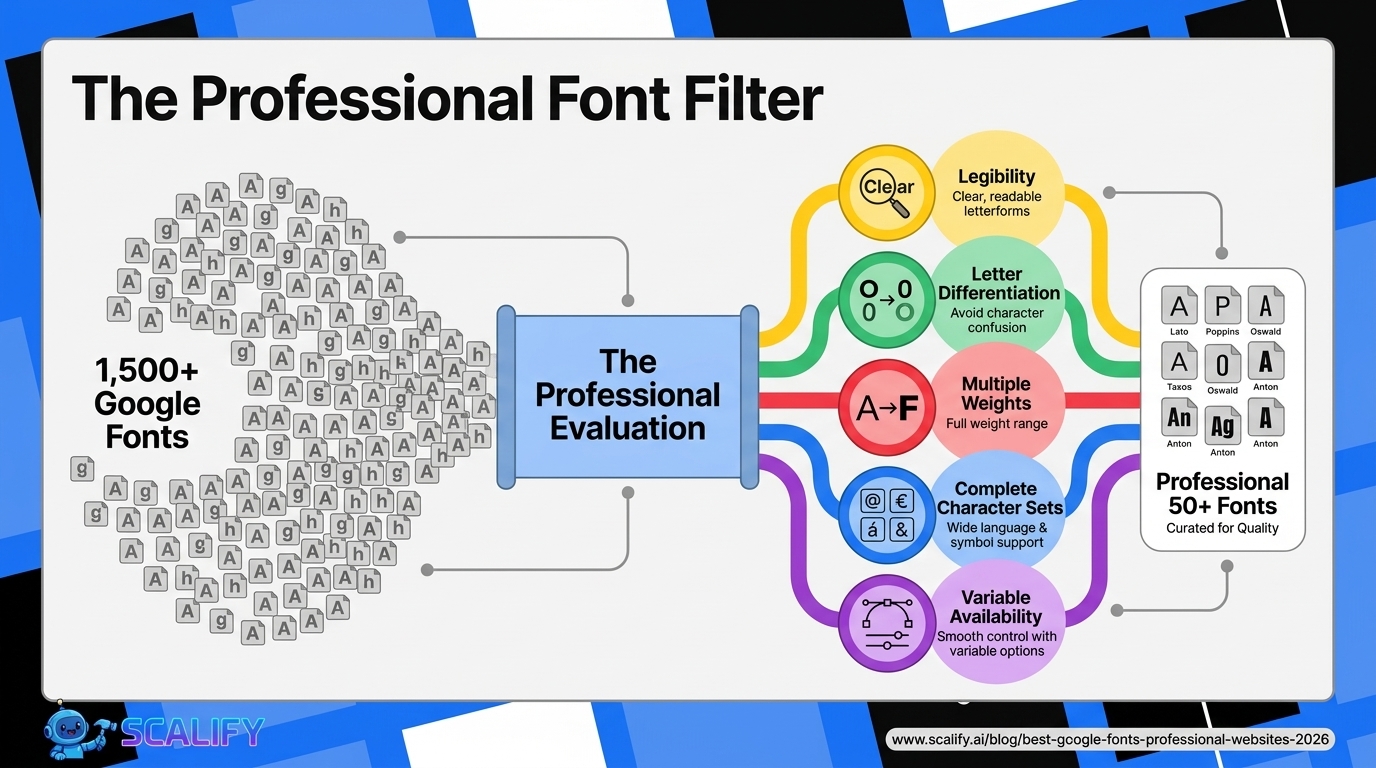
next/font handles web font loading in a way that eliminates layout shift from font loading. It downloads fonts at build time, self-hosts them (eliminating the Google Fonts DNS lookup), and applies size-adjust CSS to the fallback font so the text occupies the same space before and after the web font loads. Cumulative Layout Shift (CLS) from font swapping is one of the most common Core Web Vitals failures — next/font eliminates it automatically.
Automatic code splitting in Next.js means that each page only loads the JavaScript required for that specific page, not the entire application bundle. A user visiting the homepage doesn't download the JavaScript for the checkout page, the blog post page, or the settings page. This keeps initial page load sizes small and makes Time to Interactive fast — especially important on mobile connections where bundle size directly affects performance.
Next.js Deployment Options
| Deployment Option | Best For | Next.js Feature Support | Cost |
|---|---|---|---|
| Vercel (creator's platform) | Most teams — optimal integration | Full — all features supported natively | Free tier, then $20/mo per team member |
| AWS (Amplify, Lambda, ECS) | Teams with existing AWS infrastructure | Full — requires configuration | Usage-based — variable |
| Netlify | Simple deployments, JAMstack-adjacent | Good — most features supported | Free tier, then $19/mo per member |
| Railway / Render | Simple Node.js deployments | Full — runs as Node.js server | $5–$25/mo |
| Self-hosted (VPS + PM2) | Teams wanting full control | Full — maximum flexibility | VPS cost ($10–$100/mo) |
| Static export (no server) | Fully static sites with no server features | Limited — no SSR, no API routes | Free (CDN only) |
The Next.js Ecosystem: Tools That Work With It
Next.js has spawned a rich ecosystem of tools built specifically for its patterns. The most widely used complementary tools:
Prisma is the most popular ORM (Object-Relational Mapper) for Next.js database access — providing a type-safe interface to PostgreSQL, MySQL, SQLite, and MongoDB that integrates naturally with TypeScript and Next.js Server Components. Prisma's generated types flow through the entire stack, giving TypeScript visibility into database queries that previously required manual type declarations.
NextAuth.js (now Auth.js) is the standard authentication library for Next.js, providing OAuth integration (Google, GitHub, Twitter, etc.), email/password authentication, and session management that works with both the Pages Router and App Router. Setting up authentication in a Next.js application with NextAuth.js takes hours rather than days.
tRPC enables end-to-end typesafe APIs between Next.js server and client code — without REST or GraphQL. Type definitions for API procedures propagate from the server route to the client call automatically, so TypeScript catches breaking API changes before they reach production. tRPC combined with Next.js and Prisma forms the T3 Stack (with Tailwind CSS) — one of the most popular full-stack TypeScript setups in 2026.
Vercel Analytics and Vercel Speed Insights provide real user performance monitoring — Core Web Vitals data from actual visitors — integrated directly into the Next.js development workflow. This data makes performance regression detection automatic rather than requiring separate monitoring setup.




















.jpeg)

.jpeg)










78 SW 7th St, Miami, FL 33130