


What is Web Hosting? The Ultimate Plain-English Guide
By Josh Ternyak

March 28, 2026
Web hosting is one of the most misunderstood parts of owning a website. This guide explains exactly what it is, what the different types mean, how to choose the right one, and what most people get wrong.
The Part of Your Website Nobody Talks About (Until It Breaks)
When people talk about building a website, most of the conversation focuses on design, content, and functionality. What color scheme. What pages to include. Whether to use a slider on the homepage. The conversations rarely start with "and where exactly are the files going to live?"
That's web hosting — and despite being completely invisible when things are working, it's one of the most consequential decisions you'll make about your website. Get it right and you'll never think about it. Get it wrong and you'll be dealing with slow load times, mysterious downtime, security vulnerabilities, and customer support tickets that go nowhere — all while your website is the problem and you can't pinpoint why.
This guide covers everything you actually need to know about web hosting: what it is, how the different types compare, what you should be looking for, and how to avoid the mistakes that cost people money and headaches every day.
What Web Hosting Actually Is
Every file that makes up your website — the HTML pages, the CSS stylesheets, the JavaScript files, the images, the videos, the database that stores your content — needs to live somewhere. Not on your laptop. Not on your phone. Somewhere that's connected to the internet 24 hours a day, 365 days a year, reliable enough to respond to requests from visitors around the world in under a second.
That somewhere is a web server. And web hosting is the service of providing that server space — renting you access to the computer infrastructure that keeps your website accessible to the world.
When someone visits your website, their browser sends a request to your hosting server. The server finds the files it needs, packages them up, and sends them back. If the server is fast and well-configured, this happens in milliseconds. If it's slow, overloaded, or offline, visitors get loading spinners, error messages, or that familiar blank white screen.
The hosting provider — companies like Bluehost, SiteGround, WP Engine, Cloudflare, or AWS — owns and maintains the physical data center infrastructure. You're renting space and computing resources from them, usually on a monthly or annual subscription.
The Five Main Types of Web Hosting
Web hosting isn't one thing. There are five meaningfully different types, each with different performance characteristics, price points, and appropriate use cases. Understanding the differences will save you from both underpaying for something that can't do what you need and overpaying for infrastructure that's completely unnecessary for your situation.
1. Shared Hosting
Shared hosting is exactly what it sounds like: your website shares a physical server with dozens, hundreds, or even thousands of other websites. You're all drawing from the same pool of CPU, RAM, and storage resources. The hosting company divides those resources among all the tenants, and everyone keeps their piece of the pie until someone starts taking more than their share.
The upside: shared hosting is extremely cheap. You can find plans for as little as $2–5/month. For a brand new website with minimal traffic, a personal project, or a simple landing page, shared hosting does the job perfectly fine.
The downside: the "noisy neighbor" problem. If another site on your shared server suddenly gets a surge of traffic — their blog post goes viral, they launch a big promotion — they start consuming more server resources, and every other site on that server gets slower. You have no control over this, and you often don't even know it's happening.
Shared hosting performance tends to be inconsistent. Your site might load in 0.8 seconds on a Tuesday afternoon and 3 seconds on a Friday evening when traffic across the server is heavier. For a small personal site or an early-stage project, this is acceptable. For a business where your website is actively generating revenue, it's a risk you're better off not taking.
Shared hosting is also the most common environment for security issues. Because many sites share the same server, if one site gets compromised, there's potential for cross-contamination — though reputable hosts implement isolation to mitigate this.
Who it's for: Beginners, personal projects, low-traffic informational sites, early-stage businesses testing the waters.
2. Virtual Private Server (VPS) Hosting
VPS hosting is the step up from shared. A physical server is divided into multiple virtual machines using software — each one behaves like a completely separate server with its own dedicated allocation of CPU, RAM, and storage. Your virtual slice is yours. What other tenants on the same physical machine do doesn't affect your performance.
A VPS gives you significantly more control than shared hosting. You typically have root access to the server, meaning you can install software, configure the environment, and customize the setup in ways that shared hosting doesn't allow.
The tradeoff: more power requires more technical knowledge. Managing a VPS well — keeping the operating system updated, configuring server software like Nginx or Apache, monitoring resource usage, setting up backups — requires either technical skills or a willingness to learn them. Unmanaged VPS plans are cheaper but entirely your responsibility. Managed VPS plans include technical support and server management from the hosting provider, at higher cost.
Price range: typically $20–100/month depending on resources and whether it's managed.
Who it's for: Growing businesses with real traffic, developers who want more control, anyone who's outgrown shared hosting but doesn't need a full dedicated server.
3. Dedicated Server Hosting
A dedicated server means you're renting an entire physical machine — no sharing with anyone else. You get all of its CPU cores, all of its RAM, all of its storage. No noisy neighbor problem. Maximum performance. Maximum control.
Dedicated servers are used by high-traffic websites, resource-intensive applications, businesses with strict compliance or security requirements, and anyone who needs guaranteed performance that shared infrastructure can't provide.
The downsides are cost and complexity. Dedicated servers run $100–500+/month. Unmanaged dedicated servers require serious system administration expertise. And unlike cloud hosting (which we'll cover next), they don't automatically scale — if you need more capacity than your single server can provide, you need to provision additional servers manually.
Who it's for: High-traffic sites, enterprise applications, businesses with specific security or compliance needs, large e-commerce stores.
4. Cloud Hosting
Cloud hosting distributes your website across a network of virtual servers rather than residing on a single physical machine. When one server in the network gets overloaded, traffic automatically shifts to others. If a server fails, your site keeps running on the rest of the network. You can scale resources up or down on demand, paying for what you actually use.
The major cloud providers — Amazon Web Services (AWS), Google Cloud Platform, and Microsoft Azure — provide the infrastructure that powers a significant percentage of the entire internet. Vercel, Netlify, and Cloudflare Pages provide developer-friendly cloud hosting on top of these infrastructure layers, with simple deployment workflows and optimized performance.
Cloud hosting is generally priced on usage (pay-per-request, pay-per-GB-of-traffic, pay-per-compute-hour) rather than a flat monthly fee, which means costs scale with your traffic. This is great when you're small and paying very little; it requires more attention when you get large, since costs can spike unexpectedly with viral traffic.
The main advantages of cloud hosting are reliability (no single point of failure), scalability (handle any amount of traffic without manual intervention), and global distribution (serve users from whichever data center is closest to them).
Who it's for: Modern web applications, startups expecting to scale, businesses with variable or unpredictable traffic patterns, developers who want deployment simplicity.
5. Managed Platform Hosting (Website Builders and CMS Platforms)
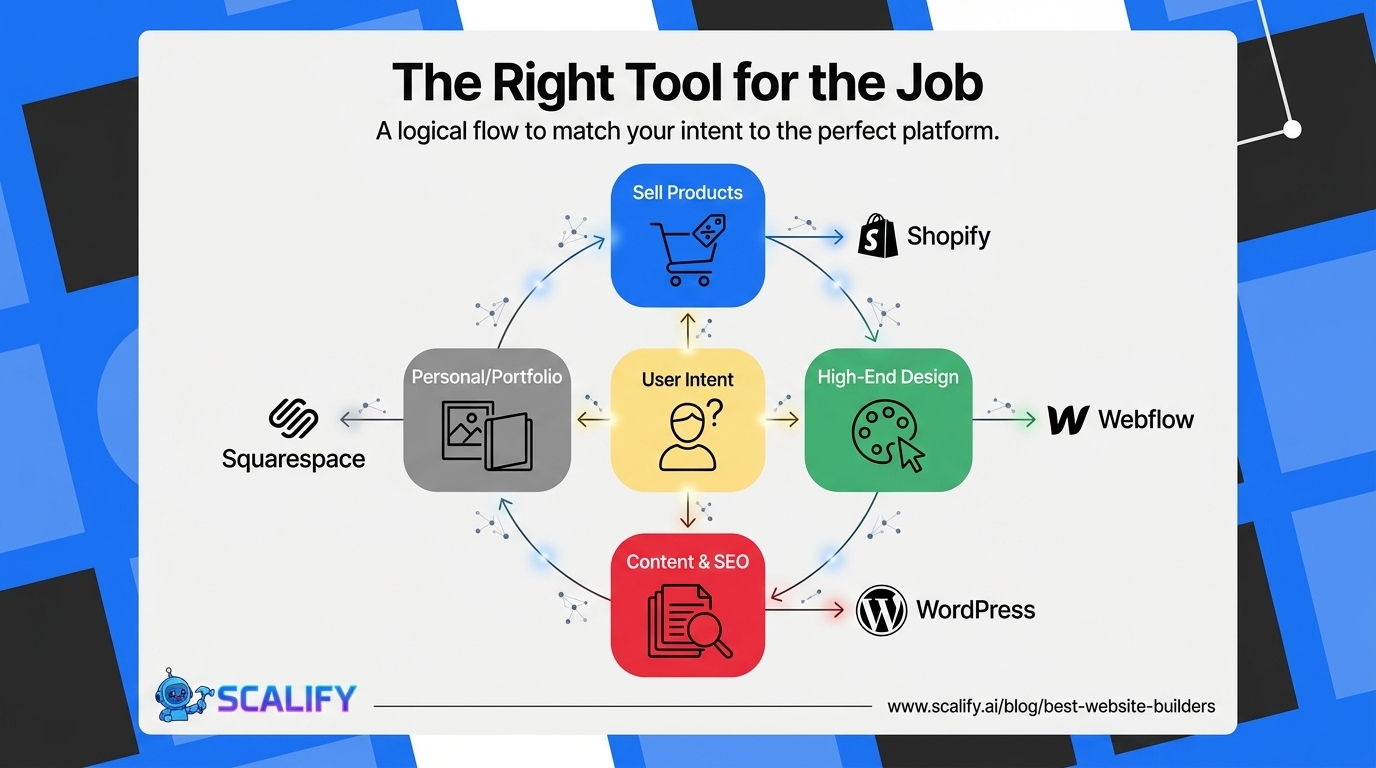
If you're building on Webflow, Shopify, Squarespace, Wix, or similar platforms, hosting is bundled into your subscription. You pay one fee that covers the platform (design tools, CMS, e-commerce functionality, etc.) and the hosting infrastructure. You never think about servers, configurations, security patches, or uptime monitoring — the platform handles all of it.
This is an enormous practical advantage for non-technical business owners. The trade-off is that you have less control over the infrastructure, you're somewhat dependent on the platform's performance and reliability, and you pay a premium for the convenience compared to raw hosting on AWS or a VPS.
For most small businesses and entrepreneurs, managed platform hosting is the right choice. The time savings, reduced technical overhead, and built-in reliability more than justify the cost differential.
Who it's for: Business owners who want to focus on their business rather than their infrastructure, non-technical users, anyone whose website fits within the capabilities of a major platform.
Key Metrics to Evaluate Any Hosting Provider
When you're evaluating hosting options, here are the specific things you should be looking at — and the marketing language you should be skeptical of.
Uptime and Reliability
Uptime refers to the percentage of time your server is online and accessible. The industry standard promise is "99.9% uptime" — which sounds impressive until you do the math. 99.9% uptime means roughly 8.7 hours of downtime per year. 99.99% uptime means less than an hour. 99.999% means about 5 minutes.
For most small businesses, 99.9% uptime is acceptable. For an e-commerce store doing significant revenue, even an hour of downtime has real cost — downtime during peak season could be genuinely damaging.
The important thing to know: uptime guarantees are only meaningful if they're backed by a Service Level Agreement (SLA) with actual remedies (credits, refunds) if the promise is broken. And you need independent monitoring (services like UptimeRobot offer free monitoring) to verify the promise, because you can't rely solely on the hosting company's self-reporting.
Server Response Time (TTFB)
Time to First Byte (TTFB) is the time between a browser sending a request and receiving the first byte of the response. This is a measure of raw server speed, before any loading of CSS, JavaScript, or images.
A good TTFB is under 200 milliseconds. Above 600ms is a performance problem. TTFB affects both user experience and Google rankings. Test your current host with tools like WebPageTest or GTmetrix to see where you stand.
Data Center Location
Physical distance between your server and your visitors adds latency. A server in New York serving visitors in New York is fast. The same server serving visitors in Sydney is slower, because data has to travel farther.
If most of your visitors are in a specific geography, choose a hosting provider with data centers in or near that region. If you have a globally distributed audience, a CDN (Content Delivery Network) that caches your content on edge servers around the world is more important than where your origin server lives.
Bandwidth and Storage Limits
Bandwidth is the total amount of data that can be transferred to and from your server in a given period. Storage is how much space you have for files.
Many shared hosting plans advertise "unlimited" bandwidth and storage — which is marketing language, not a technical guarantee. Read the fine print. "Unlimited" typically comes with acceptable use policies that allow the host to throttle or suspend accounts that use "too much" — a vaguely defined threshold you won't find spelled out clearly.
For most small business websites, actual bandwidth and storage needs are modest. A typical 20-page business website with images might use 5–10 GB of storage and generate 1–5 GB of bandwidth per month. Even shared hosting plans typically have enough headroom for this.
Security Features
At minimum, a reputable host should provide: automatic SSL certificates (HTTPS), regular malware scanning, DDoS protection (defense against distributed attacks designed to overwhelm your server), and automated backups.
Backup policy is particularly important and frequently overlooked. Does the host perform daily backups? How long are backups retained? Can you restore from backup yourself or do you have to contact support? What does a restoration cost?
Having automatic daily backups with 30 days of retention, restorable with one click from your control panel, is a standard that good hosts meet. Anything less is a risk you're carrying.
Customer Support
When something goes wrong with your hosting — and eventually something will — the quality of support you can access determines how quickly it gets fixed. Look for 24/7 support via live chat and phone, not just ticket-based systems that might take 24–48 hours to respond.
Before committing to a host, test their support by asking a technical question. See how quickly they respond, how knowledgeable the answer is, and whether they actually engage with the specifics of your question or send a generic template response. That interaction tells you a lot about what you'll get when things actually matter.
Common Web Hosting Mistakes (And How to Avoid Them)
Choosing Based on Price Alone
$1.99/month hosting exists. It performs like $1.99/month hosting. Cheap shared hosting plans frequently feature overloaded servers, poor support, aggressive upselling, and introductory rates that triple on renewal. The website is often your most important business asset — treating its foundation as a pure cost to minimize is a false economy.
The sweet spot for a professional small business site is usually $15–50/month on a quality host — fast, reliable, with real support. That's less than most business owners spend on coffee in a week.
Not Testing Before Going Live
Many hosting issues only reveal themselves under real traffic conditions. Before launching a new site or migrating to a new host, test performance with tools like Google PageSpeed Insights, GTmetrix, and Pingdom. Test from multiple geographic locations. Simulate traffic spikes if you're expecting a launch or campaign.
Ignoring Backups Until It's Too Late
The most expensive backup is the one you didn't have. Database corruption, accidental deletion, malware infection, botched plugin updates — any of these can destroy your site's content in seconds. Daily automated backups, stored in multiple locations, with tested restoration procedures, should be non-negotiable.
Mixing Email and Website Hosting
Many hosts offer bundled email hosting alongside website hosting. This seems convenient but creates a single point of failure: if your hosting goes down, your email goes down too. For business email, dedicated email hosting (Google Workspace, Microsoft 365) is almost always the better choice — more reliable, better spam filtering, better security, and independent from your web hosting.
Not Planning for Growth
The hosting plan that's perfect today might not be able to handle your traffic in 12 months. Look for a host that makes it straightforward to upgrade your plan — increasing resources without requiring a full migration to a new server. Many businesses end up on hosting that's too small for their current traffic because switching feels like too much work. Don't box yourself into a corner.
Managed WordPress Hosting: A Special Case Worth Knowing
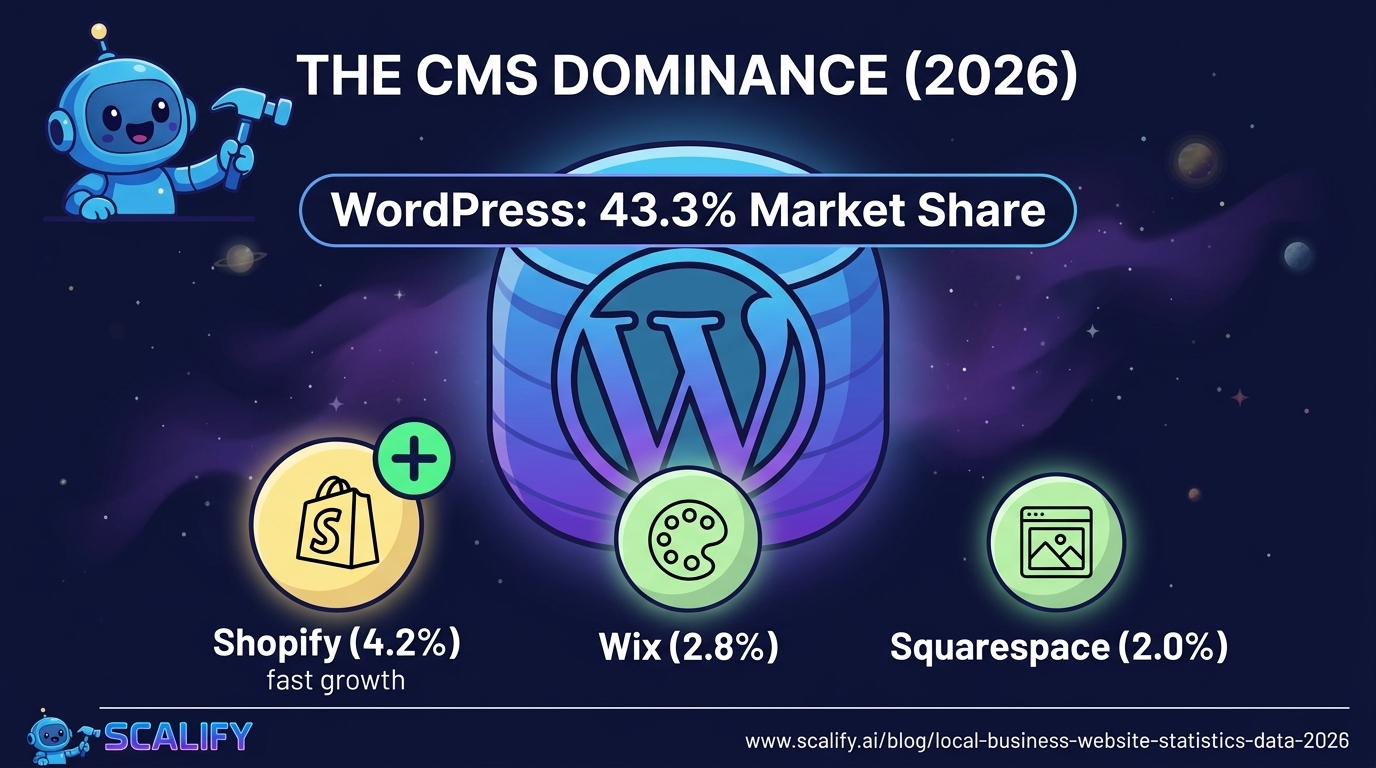
If your website runs on WordPress — which powers roughly 43% of the web — managed WordPress hosting is worth a dedicated mention. It's a specialized category of hosting optimized specifically for WordPress sites.
Managed WordPress hosts like WP Engine, Kinsta, and Flywheel handle WordPress-specific concerns automatically: core updates, plugin conflict management, WordPress-optimized caching, staging environments for testing changes before pushing them live, and support teams that actually know WordPress rather than just general hosting.
The price premium over generic shared hosting is substantial — $25–100+/month vs. $5–15/month. But the performance, security, and operational simplicity improvements are significant. For a business whose website runs on WordPress and actually matters to revenue, managed WordPress hosting is generally worth it.
What About Free Hosting?
Free hosting options exist — from older services like 000webhost and InfinityFree to modern platforms that offer free tiers like Netlify, Vercel, and GitHub Pages. Here's how to think about them.
For static websites (no server-side processing, no database), modern free tiers on platforms like Netlify or Vercel are genuinely excellent. Many serious production websites and applications run on these free tiers with no meaningful limitations. They use global CDN infrastructure and deliver great performance. If your site fits this profile, there's no shame in using a free tier — it's not a sign that you're "not serious."
For dynamic websites, CMS-based sites, or anything with a database, free hosting is almost always a bad idea. The constraints (CPU limits, storage limits, bandwidth throttling, forced downtime, no custom domain) undermine the user experience in ways that matter. More critically, free hosting for business sites sends a credibility signal — your email domain won't match your website domain, you'll likely have ".wordpress.com" or similar branding in your URL, and the limitations will show up in ways visitors notice.
The bottom line on free hosting: fine for learning and experimentation, inappropriate for a business you're serious about.
The Bottom Line
Web hosting is the foundation your entire online presence sits on. It affects how fast your site loads, how often it's accessible, how secure it is, and how well it can handle growth. It's not glamorous, but it matters enormously.
Most small businesses are well-served by managed platform hosting (Webflow, Shopify, etc.) or quality shared/VPS hosting with a reputable provider. The key is matching the hosting to your actual needs and budget — not defaulting to the cheapest option and hoping for the best, and not overpaying for enterprise infrastructure you don't need.
If you're building a new website and want the infrastructure decisions handled for you — hosting included — that's part of what Scalify provides. Professional custom websites built on solid foundations, delivered ready to perform from day one.















.jpeg)


.jpeg)







78 SW 7th St, Miami, FL 33130