


What Is Website Bandwidth and How Much Do You Need?
By Josh Ternyak

March 28, 2026
Hosting plans throw around bandwidth numbers constantly — but most site owners have no idea what bandwidth actually is or how much they actually need. This guide clears it all up.
The Number in Your Hosting Plan You've Been Ignoring
If you've ever signed up for web hosting, you've seen it: "10GB bandwidth per month," "100GB bandwidth," "Unlimited bandwidth." These numbers appear prominently in hosting plan comparisons, and most people either pick a number that sounds big enough or gravitate toward "unlimited" without fully understanding what they're buying.
That's understandable. Bandwidth is one of those technical terms that sounds more complicated than it is. But understanding it — even at a basic level — helps you make smarter hosting decisions, avoid surprise overage charges, and actually interpret what's happening when your site slows down under traffic.
Let's break it down completely.
What Website Bandwidth Actually Is
Bandwidth, in the context of web hosting, refers to the total amount of data that can be transferred between your web server and your visitors over a given period — typically a calendar month.
Every time someone visits your website, data flows from your server to their browser. The HTML files, CSS stylesheets, JavaScript, images, fonts, videos — all of it travels across the network. The sum of all that data transfer, across all visitors and all their page views, is your bandwidth consumption.
Think of it like water through a pipe. The pipe has a certain capacity. Every visitor who loads a page is drawing some of that water. The monthly bandwidth limit is the total amount of water you're allowed to use in a given month before you either get charged extra or get your flow restricted.
Bandwidth is measured in bytes — most commonly gigabytes (GB) or terabytes (TB) for hosting plans. A gigabyte is 1,000 megabytes. A terabyte is 1,000 gigabytes.
Bandwidth vs. Speed: Clearing Up the Confusion
Bandwidth is frequently confused with internet speed, and the distinction is worth clarifying because they're related but different things.
Bandwidth (in hosting) = the total volume of data you can transfer per month. It's a monthly allowance, like a data cap on a mobile phone plan.
Speed (or throughput) = how fast data can be transferred at any given moment, measured in megabits per second (Mbps) or gigabits per second (Gbps).
A server might have a physical connection speed of 1 Gbps (gigabit per second) — meaning it can theoretically push 1 gigabit of data per second — but your monthly bandwidth cap limits how much total data you can send across that connection over 30 days before incurring extra charges.
In everyday language outside of hosting, "bandwidth" is often used interchangeably with "internet speed." In the hosting context specifically, it almost always refers to the monthly data transfer allowance.
How to Calculate How Much Bandwidth Your Site Uses
You can estimate your bandwidth needs with a relatively simple calculation, though the variables involved mean it's always an estimate.
Step 1: Determine your average page size. Tools like GTmetrix and Google PageSpeed Insights report the total size of a page when you run a speed test. This includes the HTML, CSS, JavaScript, images, and other resources that load when a visitor opens the page. A typical small business website page might be 1–3 MB. An image-heavy e-commerce product page might be 3–8 MB.
Step 2: Estimate your average pages per visit. Look at your Google Analytics data. How many pages does the average visitor view per session? For a simple brochure site, it might be 2–3. For a blog or e-commerce site, it could be 4–6 or more.
Step 3: Multiply by monthly visitors.
Monthly Bandwidth = Average Page Size × Pages Per Visit × Monthly Visitors
Example: a site with an average page size of 2 MB, 3 pages per visit, and 5,000 monthly visitors:
2 MB × 3 × 5,000 = 30,000 MB = 30 GB per month
Now add a buffer for bots (search engine crawlers, monitoring services, and other automated traffic that doesn't show up in GA but does consume bandwidth), RSS feed readers, direct file downloads, and any media files (audio, video) hosted on the server. A practical buffer is 30–50% above your calculated visitor-driven estimate.
In this example: 30 GB × 1.4 = 42 GB estimated monthly bandwidth need.
How Much Bandwidth Different Sites Actually Use
Abstract numbers are hard to contextualize. Here's a rough breakdown of what different types and sizes of websites typically consume:
Small brochure site (5–15 pages, minimal images, 500–1,000 monthly visitors): 1–5 GB per month. This is well within the range of even the most basic shared hosting plans. Most small local business sites never get close to hitting a bandwidth limit.
Growing blog or content site (50+ posts, 5,000–20,000 monthly visitors): 10–50 GB per month. Still manageable with standard hosting, but worth monitoring as traffic grows.
Mid-size e-commerce store (hundreds of products, image-heavy, 10,000–50,000 monthly visitors): 50–200 GB per month. Requires a hosting plan that explicitly supports this level of transfer without excessive overage charges.
High-traffic content or media site (100,000+ monthly visitors, rich media): 500 GB to several TB per month. At this scale, serious hosting infrastructure — cloud hosting with CDN — is a necessity, not a luxury.
Video hosting: Video is bandwidth-intensive in a completely different category. A single 10-minute HD video can be 1–2 GB. If you're hosting video directly on your server (as opposed to embedding from YouTube or Vimeo), even modest video viewership can consume hundreds of gigabytes rapidly. For any meaningful video content, use a dedicated video hosting platform rather than serving video files from your web host.
The Truth About "Unlimited Bandwidth"
Many shared hosting plans advertise "unlimited bandwidth." This is not technically possible — all servers have physical capacity limits — and reading the fine print reveals the reality.
What "unlimited" actually means in hosting marketing: there's no hard monthly cap that triggers an automatic charge. But there is an acceptable use policy that defines what constitutes "normal" usage, and accounts that significantly exceed that threshold can be throttled (slowed down) or suspended, often with little warning.
The fine print typically includes language like: "Unlimited usage applies to accounts functioning as ordinary personal or small business websites. Accounts using excessive resources that impact other users may be suspended or required to upgrade."
For a small business website with modest traffic, "unlimited" shared hosting is practically fine — you'll never come close to the invisible threshold. For a growing site with real traffic, "unlimited" shared hosting can lead to unexplained slowdowns or sudden account suspension right when you need the site most.
The better approach for any serious business: choose hosting where the bandwidth limits are clearly stated and the overage policy is transparent. Know exactly what you're buying and what happens if you exceed it.
What Happens When You Exceed Your Bandwidth Limit
This depends entirely on the hosting provider and plan:
Overage charges: Some hosts charge per-GB beyond your monthly allowance. Rates vary widely — from $0.05/GB to $1/GB depending on the provider. Without monitoring, a traffic spike from a viral post or a launch campaign can result in a surprisingly large bill at the end of the month.
Throttling: Some providers don't charge extra but slow your site down significantly when you approach or exceed your bandwidth limit. Your site stays online but loads slowly — sometimes painfully slowly — for the rest of the billing period.
Suspension: Some budget shared hosting providers simply take your site offline until the next billing period or until you upgrade your plan. Your visitors see an error page. This is the worst outcome and relatively common with very cheap hosting.
Automatic scaling (cloud hosting): On cloud hosting platforms like AWS, Google Cloud, Vercel, or Netlify, there's no bandwidth "limit" in the same sense. You pay for what you use. Traffic spikes are handled automatically; you just pay for the data transfer at the end of the month. This is generally the right model for sites with unpredictable or growing traffic.
How to Reduce Your Bandwidth Usage
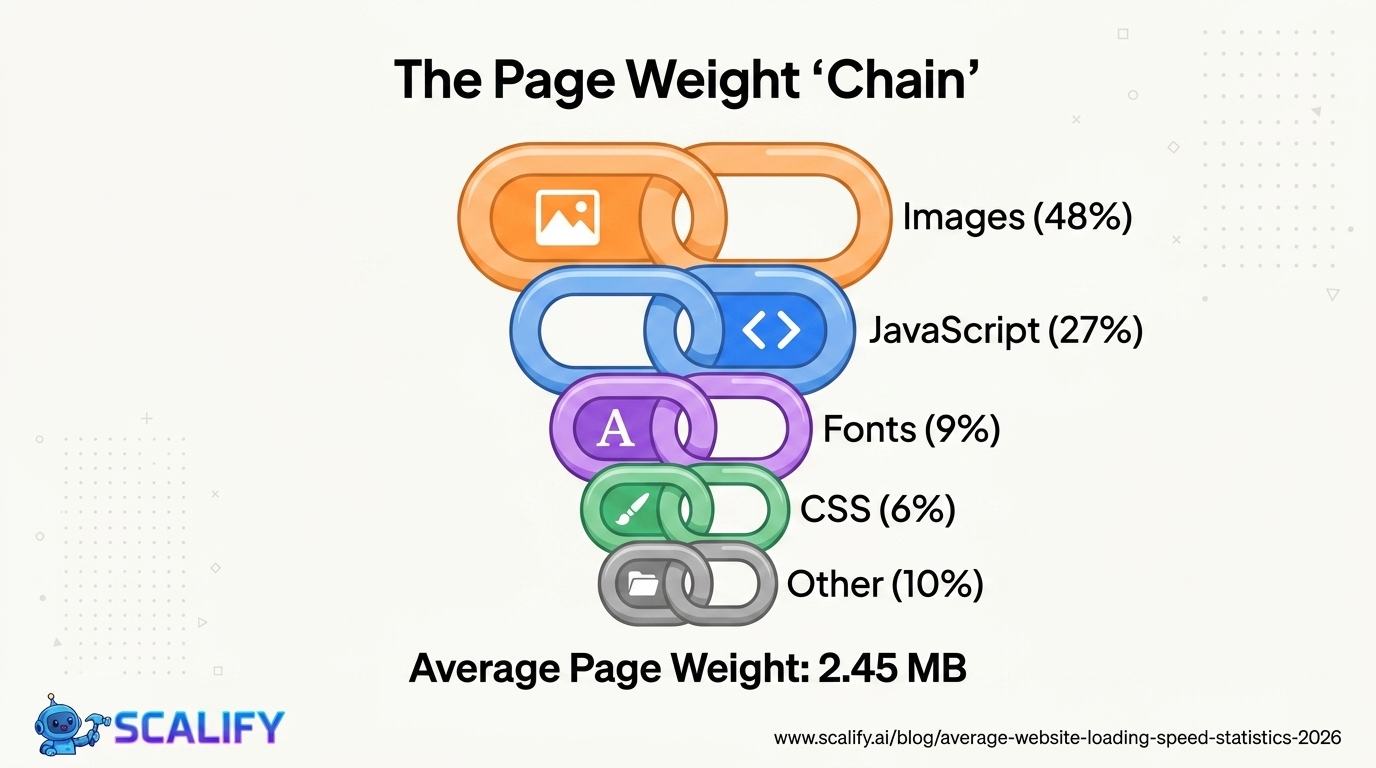
If you're hitting bandwidth limits or trying to reduce hosting costs, bandwidth optimization is the lever to pull. Most bandwidth is consumed by large files — particularly unoptimized images — and there's often significant room to reduce without affecting quality.
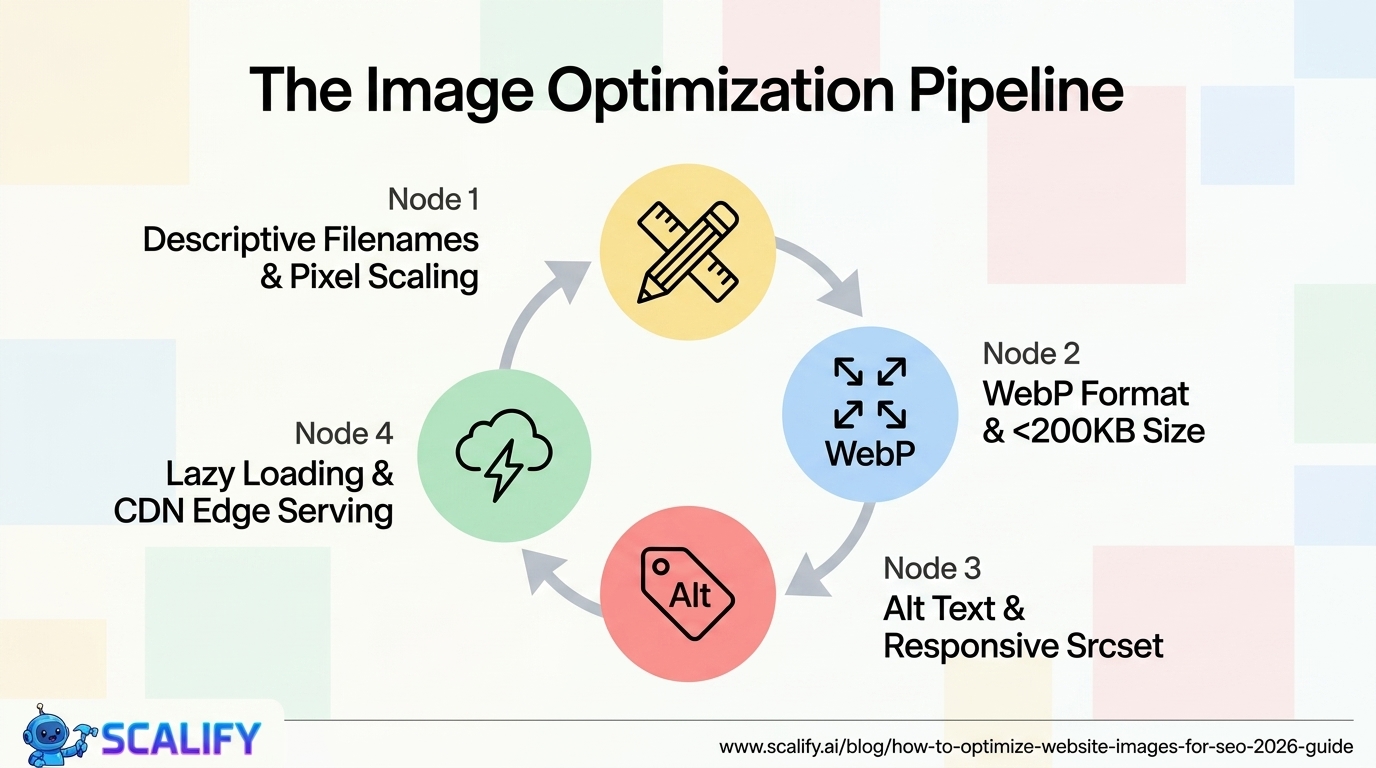
Optimize images. Images are typically responsible for 50–80% of a website's total page weight. Compressing images with tools like TinyPNG, Squoosh, or similar, and serving them in modern formats like WebP (which is 25–35% smaller than JPEG at the same quality), can dramatically reduce bandwidth consumption. A page with 5 images that are 2 MB each is the same visual quality as a page with the same 5 images at 200 KB each — but uses 10x less bandwidth per pageview.
Use a CDN. A Content Delivery Network caches your static assets (images, CSS, JavaScript) on edge servers distributed around the world. When a visitor loads your page, these assets are served from the nearest CDN node rather than from your origin server. Depending on your setup, CDN traffic may not count against your hosting bandwidth limit at all — the CDN provider handles that data transfer separately, often at a much lower cost per GB.
Enable browser caching. When a visitor's browser caches static files from your site, subsequent page views and return visits don't need to re-download those files. A returning visitor who loads your homepage for the second time downloads only the HTML (dynamically generated) and not the CSS, JS, or images (served from their local cache). This can reduce bandwidth consumption by 30–60% for return visitors.
Lazy load images. Images below the fold don't need to load until the visitor scrolls to them. Lazy loading defers these loads, reducing bandwidth consumption for visitors who don't scroll through the entire page — which, statistically, is most visitors.
Avoid hosting large files directly. PDFs, video files, audio files, and software downloads should ideally be hosted on services optimized for that content (Amazon S3, Cloudflare R2, YouTube, SoundCloud) and linked from your site, rather than stored on your web hosting. This keeps your bandwidth consumption focused on actual website traffic rather than file downloads.
Monitoring Your Bandwidth Usage
Most hosting control panels (cPanel, Plesk, Kinsta's dashboard, Webflow's analytics) show your current bandwidth consumption for the billing period. Make it a habit to check this monthly — not obsessively, but enough to know your baseline and notice if something unusual is happening.
A sudden spike in bandwidth that doesn't correspond to a spike in Google Analytics traffic can indicate a problem: a DDoS attack (a bot-based flood of traffic designed to overwhelm your server), hotlinking (other sites directly linking to your images and consuming your bandwidth to serve them), or a crawler aggressively indexing your site.
Monitoring tools and hosting dashboards alert you to anomalies. Acting on those alerts before you hit a hard limit or an overage bill is much easier than explaining an unexpected charge to your accountant.
Choosing the Right Hosting Plan Based on Bandwidth Needs
Now you have the framework to make an informed decision rather than just guessing at a plan based on what sounds sufficient.
For a new small business website (under 1,000 monthly visitors): virtually any shared hosting plan has more than enough bandwidth. Focus on speed, reliability, and support rather than bandwidth limits — you won't come close to any cap.
For a growing business site (1,000–20,000 monthly visitors): standard shared or managed hosting is usually sufficient, but verify the bandwidth allowance explicitly and confirm the overage policy. "Unlimited" shared hosting is fine here too if you understand the fair use constraints.
For an established site with significant traffic (20,000+ monthly visitors) or a content-heavy site: look at managed hosting tiers with explicitly stated high-bandwidth or unlimited plans, or move to cloud hosting where you pay for actual usage and have no risk of hitting an artificial cap at a bad time.
For e-commerce with significant transaction volume or media-heavy sites: cloud hosting with CDN integration is the appropriate infrastructure. The bandwidth cost is variable but predictable based on traffic, and the performance and reliability benefits justify the more complex pricing model.
The Bottom Line
Bandwidth is simply the total data your site sends to visitors over a month. Most small business sites use far less than their hosting plan allows. The places where bandwidth becomes a real consideration: sites with significant traffic, image-heavy or media-rich content, and situations where a traffic spike (a viral moment, a launch, a press mention) could push you over a plan limit at exactly the worst time.
Understand your baseline usage, optimize your largest files, use a CDN where appropriate, and choose a hosting plan with a clear, transparent bandwidth policy. Do those things and bandwidth is rarely a problem — it becomes one of those infrastructure details that runs quietly in the background without demanding your attention.
Every site built by Scalify is optimized for performance from day one — compressed assets, efficient code, and hosting infrastructure that handles traffic without surprises.






































.jpeg)


.jpeg)












78 SW 7th St, Miami, FL 33130