

What Is Website Copy and How Do You Write It So People Actually Buy?
By Josh Ternyak

March 29, 2026
Most website copy is written for the business, not for the customer — and it's silently costing revenue every day. This guide covers the principles and frameworks for writing website copy that actually converts visitors into buyers.
The Words That Make or Break Whether Your Website Works
A website with exceptional design and weak copy will lose to a website with mediocre design and excellent copy, almost every time. Design creates a first impression. Copy makes the sale. People buy what they understand and believe in — and copy is what creates understanding and belief. If your copy doesn't communicate clearly why someone should choose your business over alternatives, no amount of visual polish will compensate.
This is not a comfortable observation for anyone who has invested significantly in web design. But the evidence is consistent: conversion optimization experiments that test copy changes against design changes find that copy changes frequently produce dramatically larger conversion improvements. The headline test that increases conversion rate by 40% is not unusual. Finding a design change that does the same is much harder.
Website copy is not "the words on the website" in the sense of any words that describe the business. Website copy is strategic, deliberate persuasive writing designed to move a specific person from a specific starting state (unaware, skeptical, interested but unconvinced) to a specific action. That's a craft, and like any craft, it has learnable principles.
What Website Copy Is
Website copy is the written text on a website — headlines, subheadlines, body paragraphs, button text, navigation labels, form fields, microcopy, and every other piece of written content that visitors read and respond to. It's distinct from other written content like blog posts (which are primarily informational rather than persuasive) and from design elements like imagery and layout.
Good website copy accomplishes specific jobs:
- Clarifies what the business does and who it serves, immediately and unambiguously
- Differentiates the business from alternatives by communicating what makes it distinctively valuable
- Connects the business's capabilities to the customer's specific desires and fears
- Builds trust through evidence, specificity, and authentic voice
- Reduces friction by answering objections before they're voiced
- Compels action by making the next step clear and appealing
Weak copy describes the business. Strong copy persuades the customer. The difference between "We provide comprehensive digital marketing solutions" (description) and "Double your website leads in 90 days or we'll work for free until you do" (persuasion) illustrates the gap.
The Foundation: Know Who You're Writing For
Every word of website copy should be written for a specific person with specific desires, fears, and vocabulary. Before writing a single word, the copywriter needs to know:
Who is the ideal customer? Not a demographic profile ("35–55 year old business owner") but a vivid portrait of a specific person: what keeps them up at night about this problem, what they've already tried, what language they use to describe their situation, what they ultimately want (not just the functional goal but the emotional driver behind it).
What is their biggest fear related to this purchase? For web design: "I'll spend a lot of money on a website that doesn't generate any leads." Knowing this specific fear allows the copy to address it directly rather than hoping the customer's anxiety resolves itself.
What have they already tried? Have they had a bad experience with a previous agency? Tried DIY and been disappointed? Understanding what hasn't worked shapes how you position your approach as different.
What are their exact words? The most powerful copy often uses language the customer uses themselves — because it creates an immediate "that's me, they understand my situation" response. Reading customer reviews, sales call transcripts, support tickets, and forum discussions where the target audience discusses their problems is the research that produces this language.
The Most Important Copy on Any Page: The Headline
The headline has one job: keep the visitor reading. Everything else on the page — the subheadline, the body copy, the testimonials, the CTA — only gets seen if the headline succeeds in earning continued attention.
A headline that works:
Is specific: "Get More Website Leads" is vague. "Double Your Website Leads in 90 Days" is specific. Specific claims are more credible than vague ones and more compelling than generic ones.
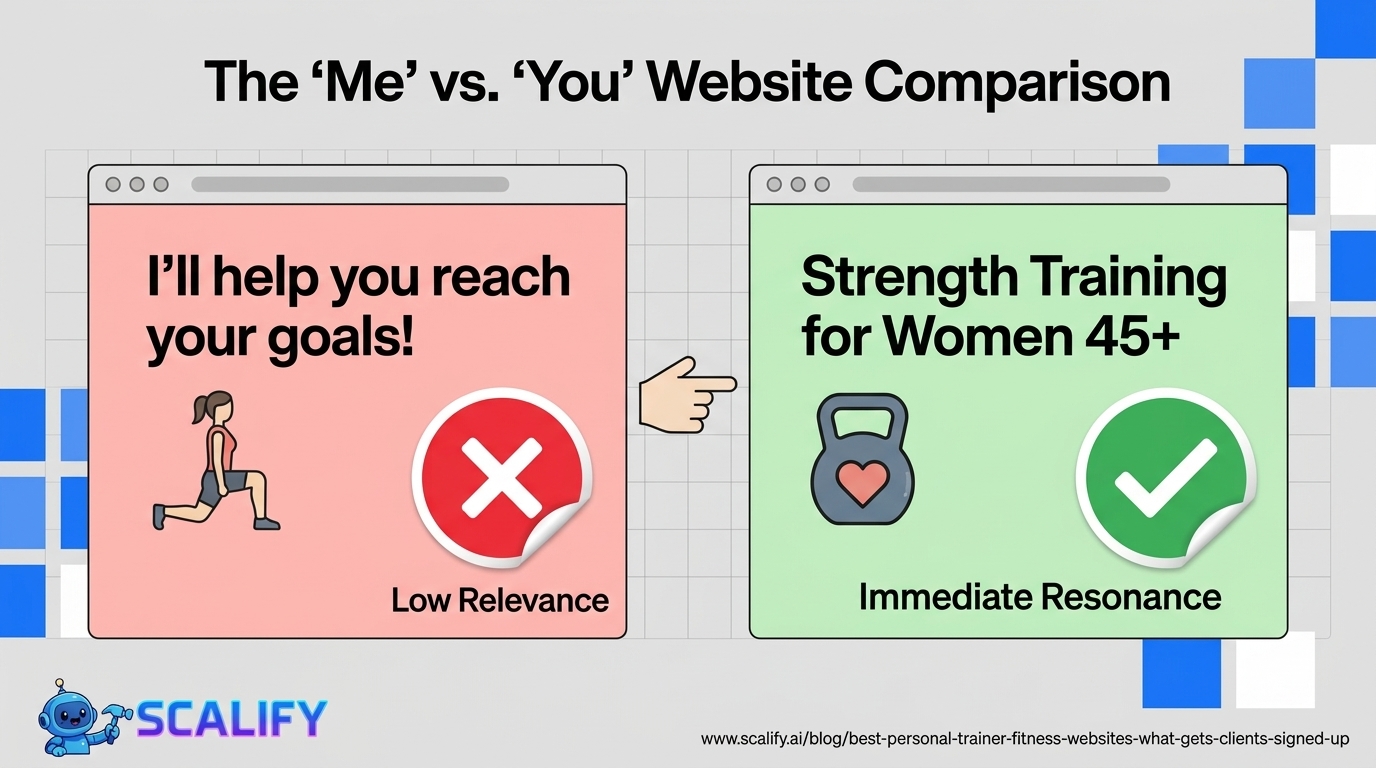
Addresses the outcome the customer wants, not the service you provide: Customers don't want "web design" — they want more clients, more revenue, more credibility. The headline "Custom Websites That Generate More Leads" is outcome-focused. "Professional Web Design Services" is service-focused.
Passes the "Who else could say this?" test: If your headline could appear on any competitor's website without sounding wrong, it's not differentiating. "We Help Businesses Grow" could be on 40 million websites. "Custom Websites Delivered in 10 Business Days" can only be said by a company that actually does that.
Addresses a real desire or real fear: The most powerful headlines speak to either what someone desperately wants ("Double Your Revenue From Website Traffic") or what they desperately don't want ("Stop Losing Clients to Competitors With Better Websites").
The Subheadline: Expand and Earn the Scroll
The subheadline's job is to take the compressed promise of the headline and expand it just enough to earn the visitor's continued attention. It should answer the questions the headline raises without answering them completely. It should provide enough context to make the specific visitor think "yes, this is what I need."
If the headline is "Custom Websites That Generate More Leads, Built in 10 Business Days," the subheadline might be: "No 3-month agency timelines. No generic templates. A professionally designed, SEO-ready website built to convert visitors into clients — live in two weeks."
The subheadline adds: the specific mechanism (SEO-ready, conversion-focused), the specific differentiator against the alternative (vs. 3-month agency timelines, vs. generic templates), and the specific outcome with timing detail.
Writing About Features vs. Benefits: The Core Distinction
The most common website copy mistake: describing features (what the product/service has or does) instead of benefits (what it produces for the customer).
Feature: "Responsive design included"
Benefit: "Your website works perfectly on every phone and tablet — no mobile visitors lost to a broken layout"
Feature: "30-day post-launch support"
Benefit: "If anything isn't working exactly right after launch, we're on it — at no extra cost for 30 days"
Feature: "SEO setup included"
Benefit: "Your website is findable on Google from day one — not something you have to add later and pay extra for"
The feature describes what's there. The benefit explains why the customer should care. Customers care about what a feature does for them, not what it is. Translate every feature into its customer benefit before writing it into copy.
A useful exercise: after each feature description, ask "So what?" until you reach the real customer value. "We use Webflow for development." So what? "Pages load 40% faster than standard WordPress builds." So what? "Your visitors get a faster experience that reduces bounce rate and improves Google rankings." There it is — that's the benefit.
Specificity as Persuasion
Specific claims are more persuasive than general claims. This is counterintuitive — you might expect that bigger, broader claims would be more impressive. But credibility research consistently shows that specific details signal honesty while vague claims signal marketing speak.
General: "Our clients see great results"
Specific: "Our clients average 340% more website leads in the first 90 days after launch"
General: "We deliver quickly"
Specific: "Your website goes live in 10 business days — not 10 weeks"
General: "Many satisfied clients"
Specific: "500+ custom websites delivered since 2019"
When you're writing website copy and a sentence feels vague, ask: what's the specific number, timeframe, or detail that would make this claim concrete? Sometimes you don't have the number. In those cases, the appropriate response is to not make the claim vaguely — either find the specific data or describe the outcome qualitatively in a way that's honest about the specificity.
Social Proof: Let Others Say What You Can't
The best website copy strategically integrates social proof — evidence from third parties that validates the claims you're making. Not as a separate testimonials page that visitors may or may not discover, but integrated throughout the copy where it reinforces specific claims.
Types of social proof and their uses:
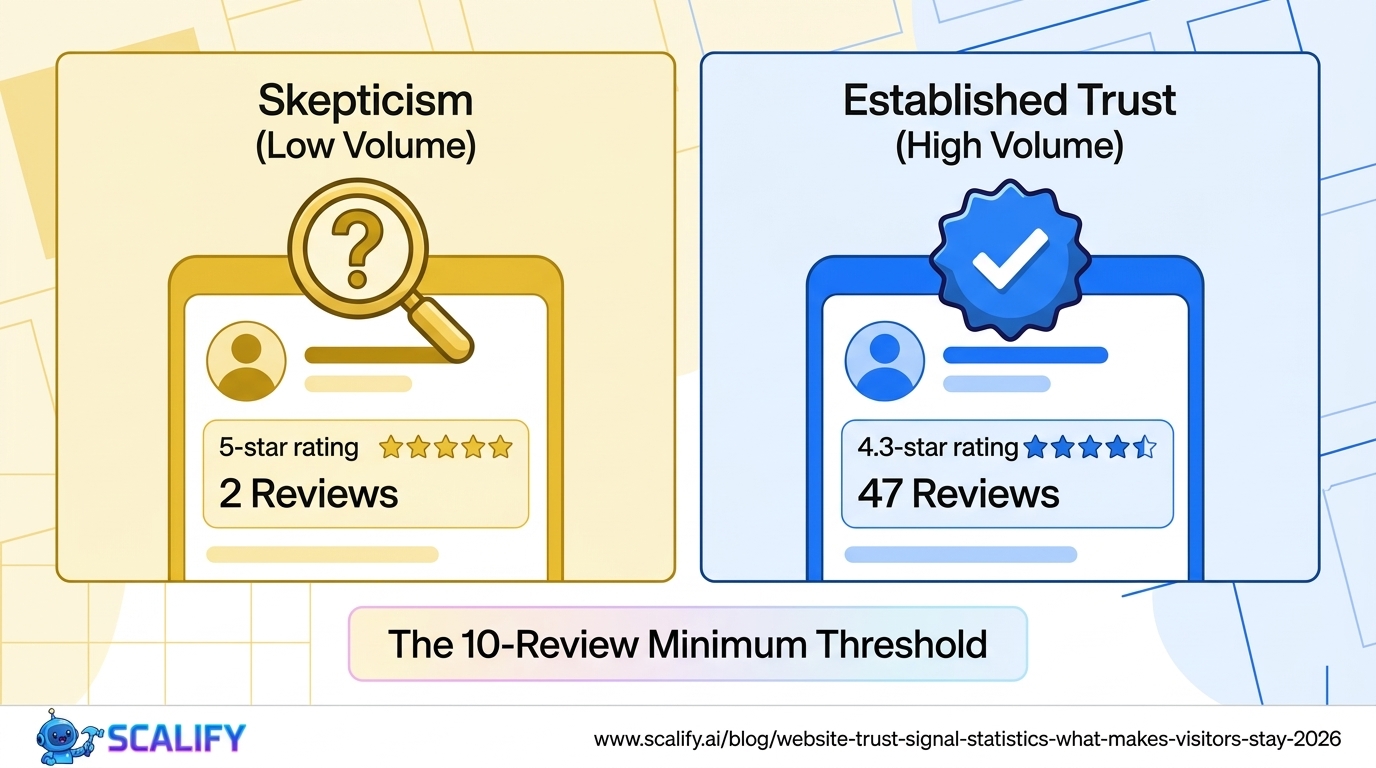
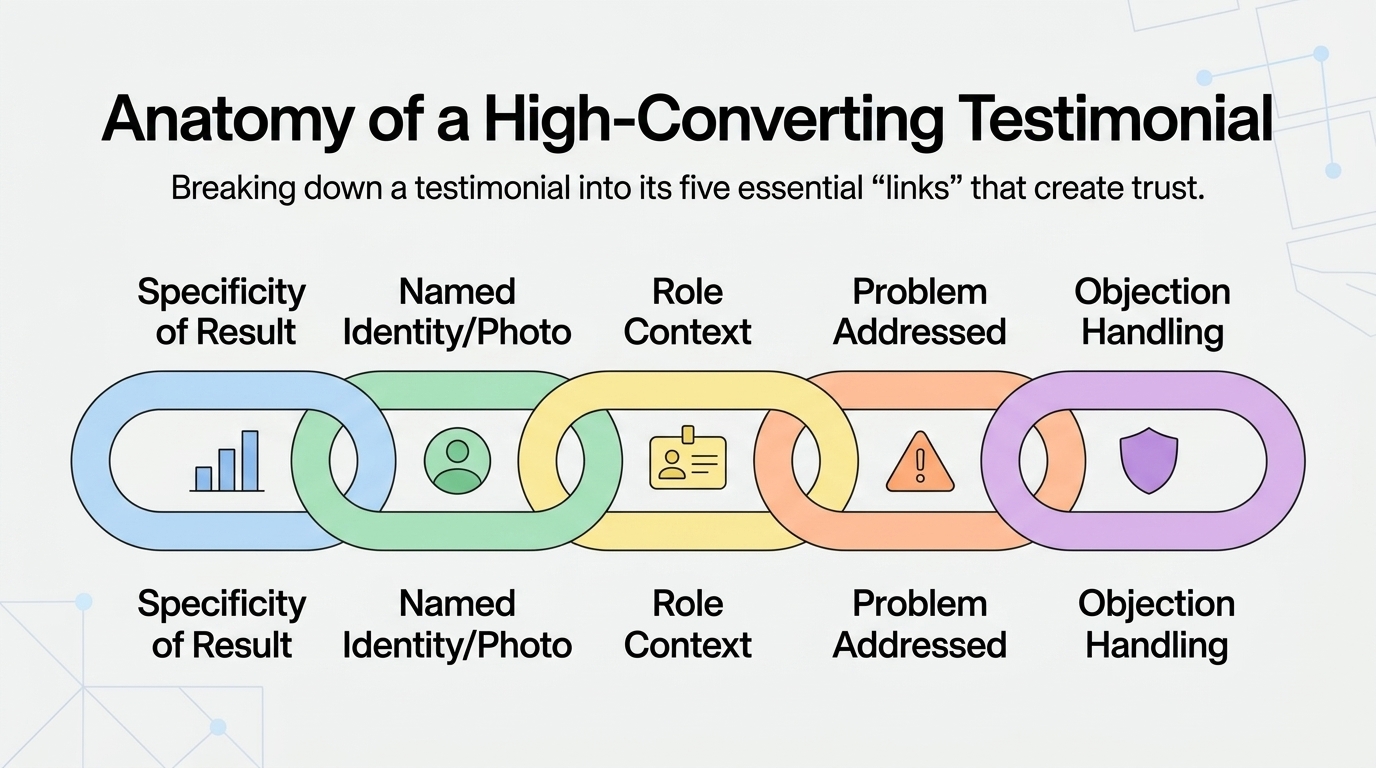
Testimonials: Specific quotes from real clients about specific outcomes. "Our website went live in exactly 10 days as promised, and we booked 3 new clients in the first month who said they found us online" — specific, credible, outcome-focused. The most persuasive testimonials address the specific concern of the prospect reading them.
Statistics: Quantified evidence. "500+ websites delivered," "97% client satisfaction score," "Average 340% increase in website leads" — data that makes claims concrete and credible.
Client logos: Recognition through association. Logos of recognizable clients transfer credibility by association — if they trusted you, prospects can extend their trust in those brands to you.
Case studies: Full stories of specific client transformations. The most persuasive but most effort-intensive form of social proof — compelling when the client situation closely matches the prospect's situation.
Handling Objections in Copy
Every prospect has objections — reasons not to buy. Some of these objections will be voiced in a sales conversation; most will not. They'll just be unaddressed reservations that prevent conversion. Website copy that proactively addresses common objections removes these silent barriers.
For web design specifically, common objections:
"I've been burned by agencies before" → Address by describing specifically how your process is different: "We don't disappear for 3 months and show up with a surprise. You see the design in week 1, provide feedback, and nothing is built until you've approved it."
"I don't have time to manage this process" → Address by describing what you handle vs. what you need from them: "We need 2 hours from you in week 1 for a kickoff call and content review. That's it — we handle everything else."
"What if I don't like what you make?" → Address with your revision policy: "Two rounds of design revisions included. We work until you love it."
The objection-handling copy doesn't need to be in a formal FAQ section — it can appear as supporting copy adjacent to the section where the objection would arise. Near the pricing section: "Not sure if this is in your budget? Here's what our clients typically make back in the first 60 days."
CTAs That Actually Get Clicked
Call-to-action copy is disproportionately important. The button text is the last piece of copy between the visitor and the conversion action. Generic button text (Submit, Click Here, Learn More) tells visitors nothing about what happens when they click. Specific, outcome-oriented CTA text does.
CTA copy principles:
First-person framing outperforms second-person: "Get My Free Quote" consistently outperforms "Get Your Free Quote" in A/B tests. Subtle but measurable.
Describe the outcome of clicking, not the action: "Send Message" describes the action. "Get My Free Strategy Session" describes the outcome. Outcome-focused CTAs convert better.
Reduce perceived risk: "Start Your 14-Day Free Trial — No Credit Card Required" removes a major conversion barrier (concern about being charged). "Book a 15-Minute Call — No Obligation" removes the commitment anxiety.
Match specificity to offer specificity: The more specific the offer, the more specific the CTA should be. "Get a Free Quote" is appropriate. "Get a Free Custom Website Quote for [Your Industry]" might be appropriate on industry-specific pages.
Common Website Copy Mistakes
"We" instead of "you" dominated copy: "We offer...," "We specialize in...," "We are committed to..." — copy that's all about the business rather than the customer. Rewrite with "you" as the subject: "You get...," "Your website will...," "You'll never have to..."
Leading with how instead of what and why: Prospects care about what they'll get (the outcome) and why you're the right choice (your differentiator) before they care about how you deliver it (your process). Lead with outcome and differentiation; save the how for later in the page or a dedicated process page.
Passive voice: "Websites are designed and built by our experienced team" → "Our experienced team designs and builds your website." Active voice is stronger, clearer, and more confident.
Jargon that customers don't use: "Leveraging omnichannel strategies to optimize digital touchpoints" — this is not how customers describe their needs. Write in plain language using the words customers actually use when they describe their problems.
Copy written before understanding the customer: Copy written from inside the business without genuine understanding of the customer's language, fears, and desires produces copy that feels generic and self-promotional. Research precedes writing.
The Bottom Line
Website copy is the strategic persuasive writing that moves visitors from arrival to action. It's built on deep understanding of the target customer's language, desires, and objections. It leads with outcomes and benefits rather than features and credentials. It's specific enough to be credible, validates with social proof, proactively handles objections, and ends with CTAs that make the next step clear and appealing.
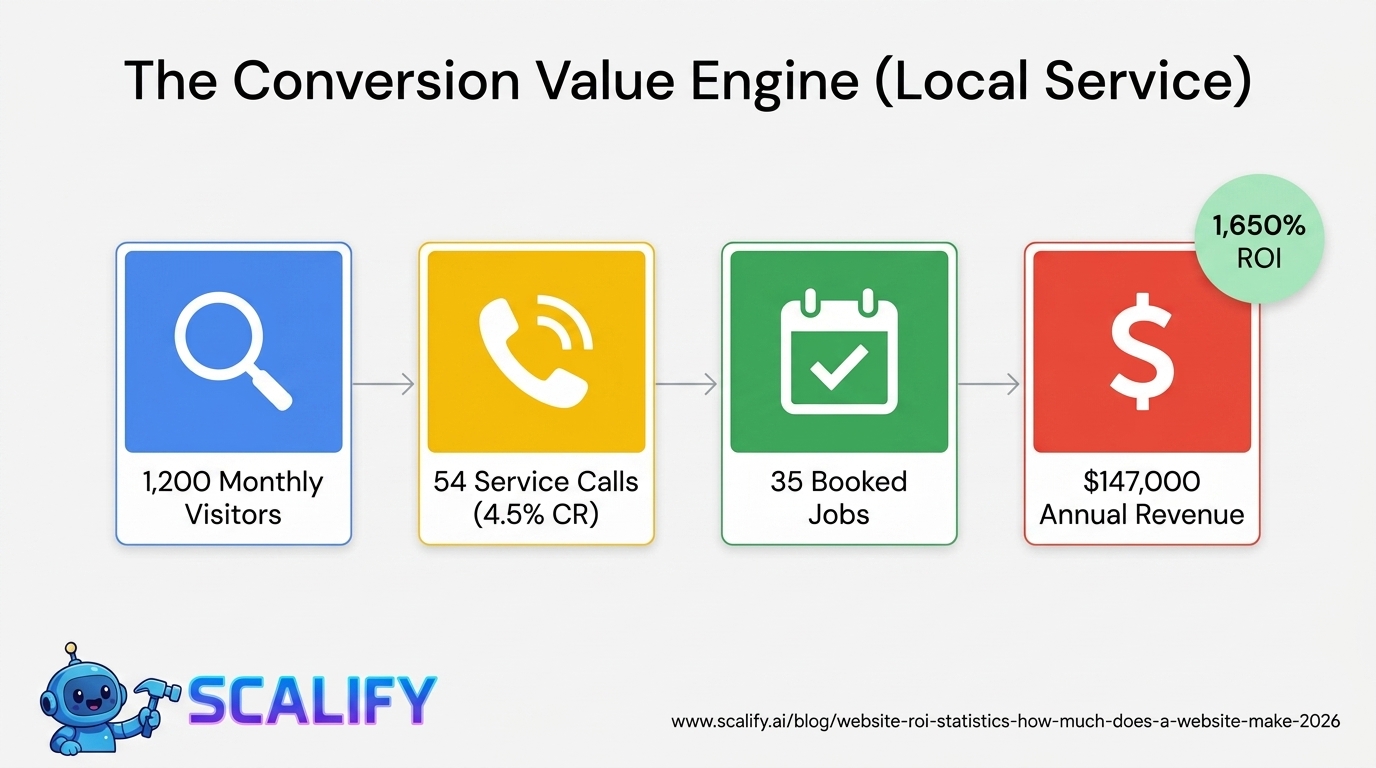
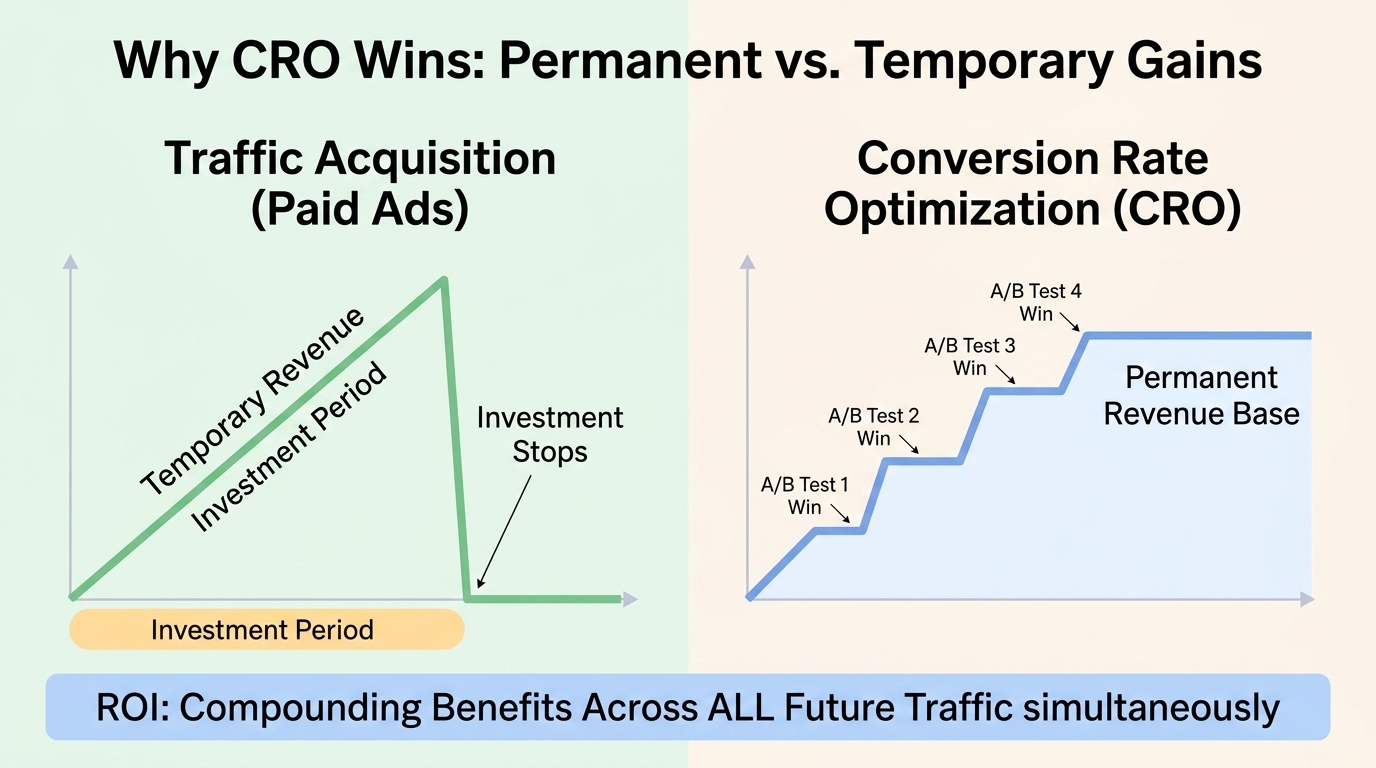
The investment in excellent copy pays dividends in conversion rate — the multiplier that determines how much revenue results from a given traffic volume. A website with 5% conversion rate generates 2.5× more leads from the same traffic as a website with 2% conversion rate. That 2.5× multiplier comes more from copy quality than from any other single factor.
At Scalify, copywriting guidance is part of every project — we don't just build the container for your words, we help ensure the words that go in it are doing their job to convert visitors into clients.


.jpeg)
.jpeg)

78 SW 7th St, Miami, FL 33130